
Note: This article contains affiliate links. If you click on these links and make a purchase, we may earn a small commission at no extra cost to you. This helps support our research and content. Read our full affiliate disclosure here.
When you are heading into the backcountry, the way you handle water can make or break a trip. A good drinking water filter for camping removes pathogens and particulates while keeping filtration fast enough for group use and lightweight enough for a pack. This guide presents the top shortlisted options across common trail scenarios, from solo overnight hikes to multi-day group outings. We evaluated items for real-world useability, including filtration performance, flow rate, durability, and weight so you can match a filter to the kind of trip you take. Read on for concise buying guidance and the key specs that matter before you pick a filter.
Top Picks at a Glance
| Best Overall The best all-around choice for most situations | Sawyer Squeeze Filter SP129 |  |
| Best Quality Built to a higher standard if you want something more solid | Katadyn Vario Dual Mode Hand Pump |  |
| Best Value The sweet spot between price and what you get | Membrane Solutions Water Filter Straw S1 |  |
| Best Budget The cheapest option that still gets the job done reliably | Timain 4-Stage Water Filter Straw |  |
| Top Rated A top-rated pick with lots of positive feedback | LifeStraw Personal Water Filter |  |
| Most Popular A crowd favorite that many people choose with confidence | Sawyer MINI Water Filter SP128 |  |
| Best Seller A high-volume bestseller chosen again and again | Camco Tastepure RV Water Filter |  |
Sawyer Squeeze Filter SP129

| Purification Method | Hollow Fiber Membrane |
|---|---|
| Other Special Features of the Product | Removes bacteria, protozoa, and microplastics (0.1 micron) |
| Maximum Flow Rate | 1.7 liters per minute |
| Upper Temperature Rating | 40 °C |
| Included Components | 32-oz collapsible pouches, adapters, pop-up drink spout |
The Sawyer Squeeze is a lightweight, pocketable water filtration system designed for hiking, backpacking, and emergency use. It uses a 0.1 micron hollow fiber membrane to block bacteria, protozoa and microplastics while delivering water through a squeeze pouch, directly into a bottle, or as part of a gravity or inline setup. Included 32-oz collapsible pouches, bottle-thread compatibility, and hydration pack adapters make it versatile on the trail, and the removable cap and pop-up drink spout simplify drinking without extra gear. With a claimed capacity up to 100,000 gallons and a flow rate around 1.7 L/min, the filter balances long life and usable flow for small groups. The main practical compromises are manual squeezing or gravity patience compared with pump systems and the need to backflush or clean the filter periodically to maintain flow. Its minimal weight and proven filtration performance make it an easy pack-and-forget choice for multiday trips and preparedness kits.
Best for: Buyers who want a proven, ultralight filtration solution for backpacking, camping, or emergency preparedness and prioritize reliability and long service life over powered convenience.
Less Ideal for: People who need rapid, high-volume filtered water without manual effort or those who primarily filter very muddy water without access to pre-filtering methods.
- Very fine 0.1 micron hollow fiber membrane that removes bacteria, protozoa and 100% of microplastics
- Includes reusable 32-oz collapsible pouches and adapters for bottles and hydration packs for flexible use
- Lightweight and compact for backpacking and emergency kits
- High stated service life (up to 100,000 gallons) with straightforward backflushing maintenance
- Requires manual squeezing or gravity feed so filling multiple liters takes time compared with powered pumps
- Flow slows if not regularly backflushed or when filtering very turbid water
Verdict: A superlight, reliable filter that delivers proven microfiltration performance for backpackers and campers who value durability and low weight.
Katadyn Vario Dual Mode Hand Pump
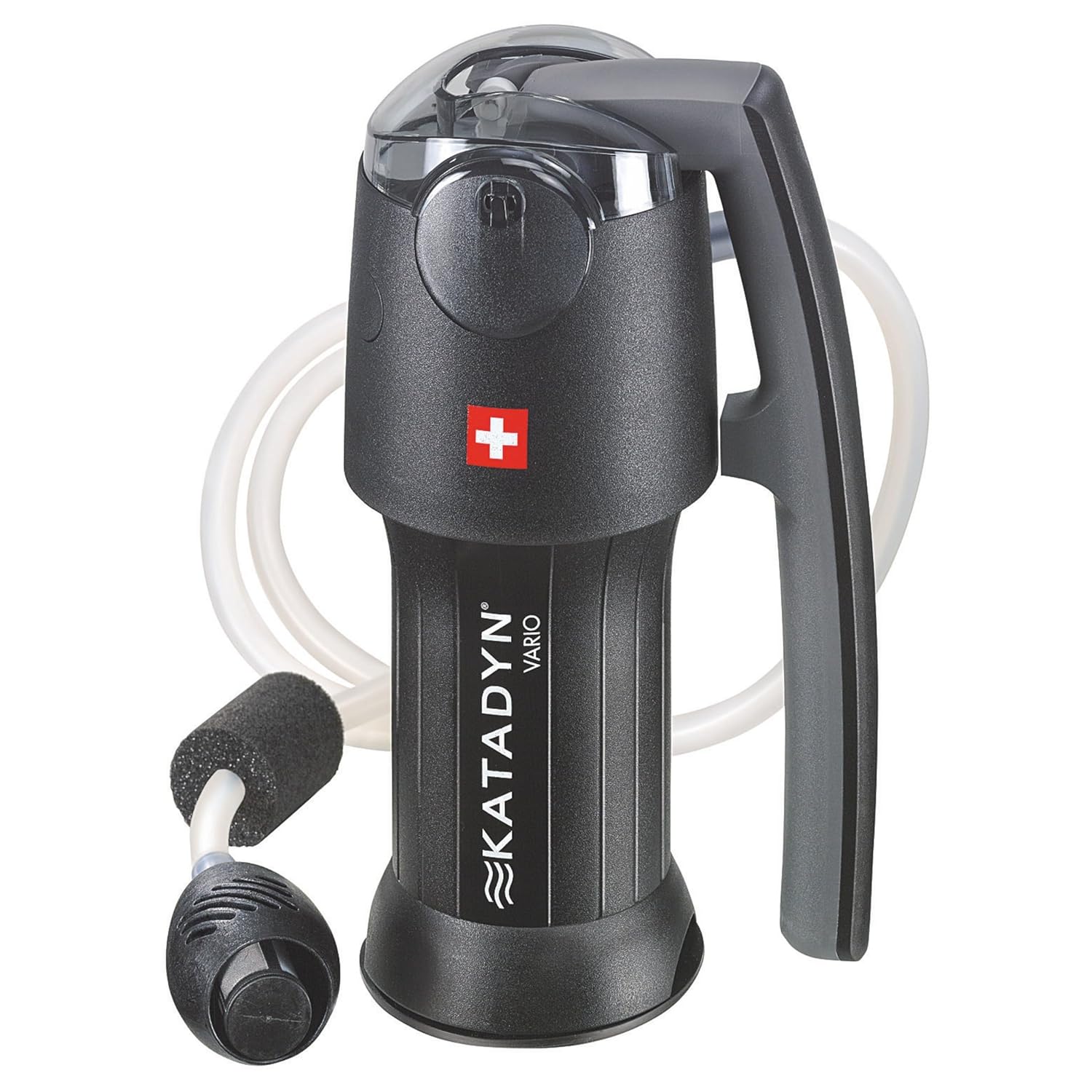
| Purification Method | Pleated Glass-Fiber |
|---|---|
| Maximum Flow Rate | 2 liters per minute |
| Supported Water TDS Level Maximum (PPM) | 1000 |
| Capacity | 2 quarts |
The Katadyn Vario is a compact manual water filter designed for camping, backpacking, and emergency use where reliable drinking water is needed. It pumps directly from streams or lakes into bottles or hydration packs and offers two modes: Faster Flow for clear water and Longer Life, which engages a ceramic pre-filter for turbid conditions to protect the main cartridge. The three-stage filtration (0.2-micron glass-fiber, ceramic pre-filter, activated carbon) removes particulates and improves taste and can deliver up to about 530 gallons before cartridge replacement. At roughly 15 ounces and capable of up to 2 L/min, it balances speed and durability and the adjustable dial makes it simple to match the source without tools. The product includes hoses, a bottle adapter, and a carry bag, and the ceramic element is cleanable to extend life. Limitations are typical of pump filters: you must pump to operate, cartridge life is finite, and very high-TDS or chemically contaminated water may exceed its design parameters.
Best for: Buyers who prioritize fast, reliable gravity-free filtration in the backcountry and want a durable manual system they can tune for clear or silty water.
Less Ideal for: Not a good fit for users who need hands-free or very high-volume filtering without effort, or who must treat chemically contaminated or high-TDS water sources.
- Dual-mode dial lets you prioritize faster flow or extended cartridge life depending on water clarity
- Three-stage filtration (0.2-micron glass-fiber, ceramic pre-filter, activated carbon) for particle removal and improved taste
- Up to 2 liters per minute flow gives near-immediate drinking water for a small group
- Includes hoses, bottle adapter, cleaning pad and carry bag so it is ready to use out of the box
- Ceramic pre-filter is cleanable to prolong cartridge life
- Requires manual pumping which can be tiring for large-volume needs
- Cartridge rated to about 530 gallons so replacements are needed for extended deployments
- Not intended to remove dissolved salts or some chemical contaminants
Verdict: Choose the Katadyn Vario when you want a lightweight, high-flow manual filter you can quickly switch between speed and longevity for dependable drinking water in the field.
Membrane Solutions Water Filter Straw S1
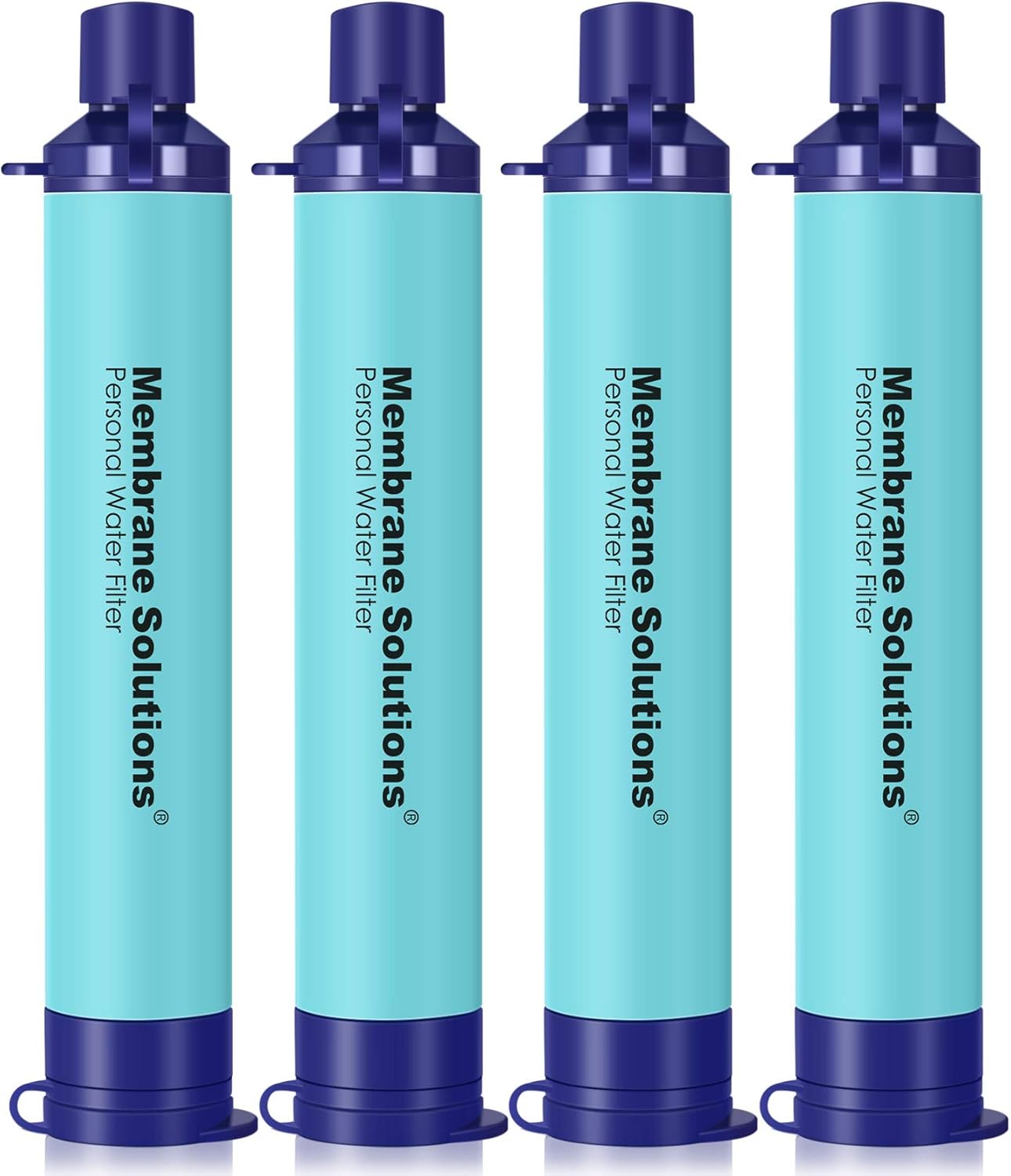
| Pore size | 0.1 micron |
|---|---|
| Filtration stages | 5-Stage (Hollow Fiber, Activated Carbon, PP Cotton, Coarse Filter) |
| Maximum flow rate | 500 milliliters_per_minute |
| Capacity | 1320 gallons |
| Power source | Non Electric |
The Membrane Solutions S1 is a handheld water filter straw built for hiking, travel, and emergency use; you drink directly through the straw or attach it to 28mm threaded bottles and gravity bags. It uses a 5-stage system—coarse prefilter, double PP cotton, activated carbon, and hollow-fiber ultrafiltration—to deliver 0.1-micron filtration and an advertised flow up to 500 ml/min, so you get a steady sip rate without waiting. Triple NSF/ANSI certifications (42, 372, 401) back up claims for chlorine/taste improvement, lead-free materials, and reduction of microplastics and particulates, and the manufacturer states microbiological removal rates up to 99.9999% for total coliforms. The unit is very light and compact, making it easy to pack, and it can be backflushed to extend life; capacity is listed at 1,320 gallons. Limitations: it is not electric and does not desalinate seawater, and like other straw filters it requires a reasonable source of relatively clear water and routine backflushing to maintain flow. For a budget-conscious camper wanting certified, portable protection, the S1 is a practical pick.
Best for: Campers and travelers who want a lightweight, certified straw filter that delivers reliable microbiological protection and improved taste without added bulk or power needs.
Less Ideal for: People who need to treat seawater, highly turbid water without prefiltering, or those who want a pump or gravity system for treating water for larger groups.
- NSF/ANSI 42, 372, and 401 certifications for chlorine taste, lead-free materials, and certain contaminants
- Very fine 0.1 micron hollow-fiber membrane for removal of bacteria and particulates
- Compact, lightweight design that fits 28mm threaded bottles and gravity bags for versatile use
- 5-stage filtration with activated carbon improves taste and allows backflushing to extend life
- Not suitable for desalination or removing dissolved salts; does not lower TDS
- Requires relatively clear source water and periodic backflushing to maintain flow
Verdict: A compact, NSF-certified straw filter that gives campers certified microbiological protection and improved taste in a very packable, low-maintenance form.
Timain 4-Stage Water Filter Straw
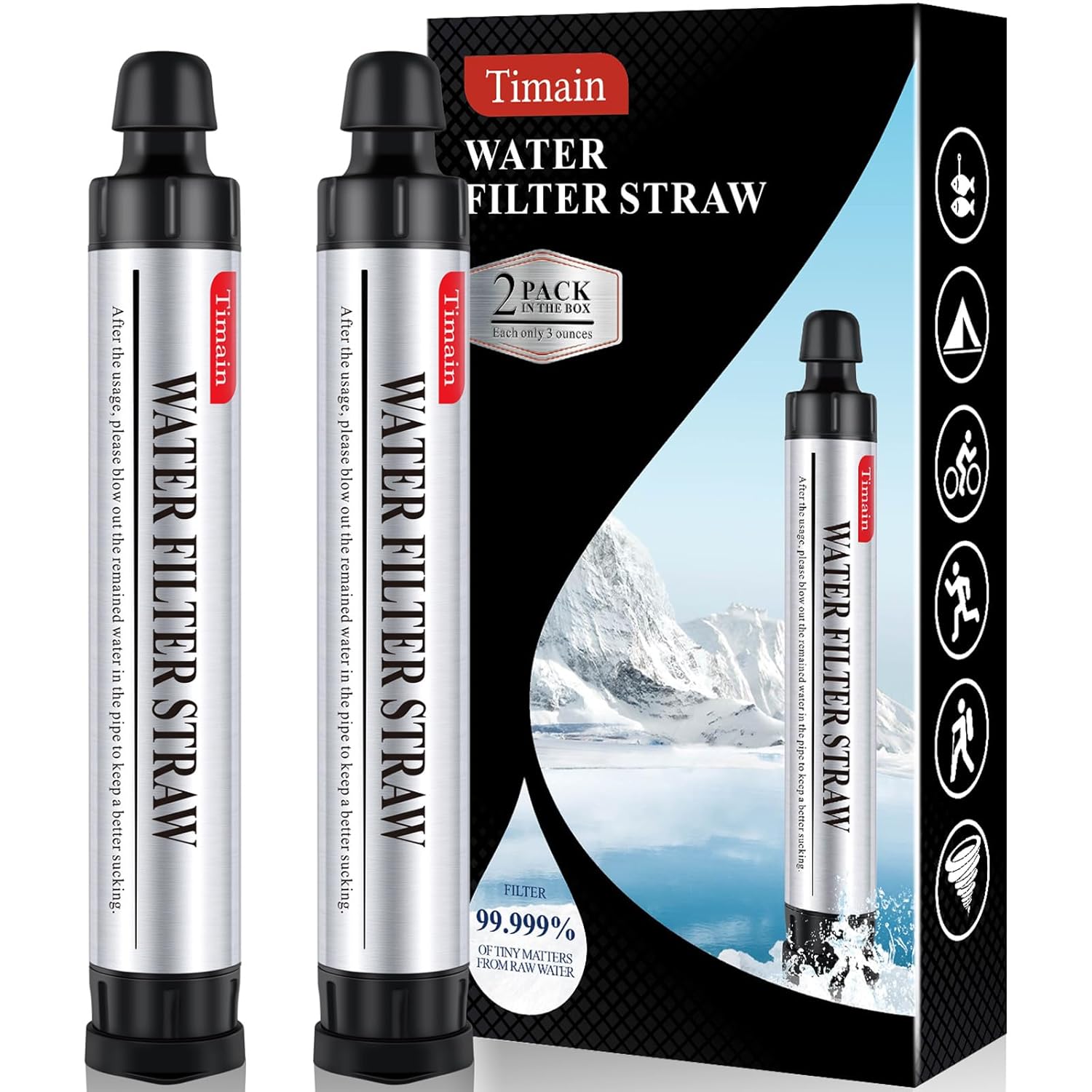
| Purification Method | Activated Carbon, Hollow Fiber Membrane |
|---|---|
| Maximum Flow Rate | 500 liters per minute |
| Supported Water TDS Level Maximum (PPM) | 1000 |
| Capacity | 1000 gallons |
| Power Source | Manual |
The Timain 2-pack water filter straws are compact, manual personal filters built for camping, hiking, and emergency kits. Each pen-sized straw uses a 4-stage system with an ultrafiltration hollow fiber membrane and activated carbon to cut particulates, E. coli, and microplastics while improving taste and odor. They can be used directly from a water source by sucking, connected to 28mm bottles, or attached to hydration bladders with the included silicone hoses, and the package includes ropes for carrying. The filters claim a high flow rate and a long service life up to 1000 gallons per filter when maintained properly, which makes them practical for multi-day outings or backup emergency use. Because they are manual, expect slower intake and the need to prime and periodically backflush by blowing water out after use; the plastic construction is lightweight but less durable than metal-bodied alternatives. For basic, budget-focused outdoor drinking needs these staws offer effective filtration and easy portability, though frequent heavy use will require attention to cleaning and eventual replacement.
Best for: Buyers looking for an inexpensive, portable drinking-water solution for short trips, emergency kits, or occasional backcountry use who prioritize light weight and basic microbial filtration.
Less Ideal for: Users planning heavy daily use, long-term group outings, or who need faster hands-free flow should consider larger pump or gravity filters instead.
- 4-stage filtration (hollow fiber membrane plus activated carbon) removes bacteria, microplastics, and improves taste
- Very compact and lightweight two-pack that fits in pockets, backpacks, and emergency kits
- Includes silicone hoses and cords for bottle/bladder attachment and convenient carrying
- Rated to filter up to 1000 gallons per filter with proper care
- Manual suction operation can be slow and requires priming and occasional backflushing
- Plastic body is lightweight but not as impact-resistant as metal alternatives
Verdict: A budget-friendly, ultra-portable two-pack that delivers reliable microbial filtration and improved taste for casual campers and emergency kits.
LifeStraw Personal Water Filter

| Material Type | Plastic |
|---|---|
| External Testing Certification | NSF |
| Product Benefits | Reduce Parasites, Removes Bacteria |
| Unit Count | 1 Count |
The LifeStraw Personal Water Filter is a simple, ultralight straw that lets you drink directly from lakes, streams, or treated containers by filtering out bacteria, parasites, microplastics and visible turbidity. You use it by placing the intake end in the water source and sipping through the mouthpiece or by attaching it to a bottle to draw filtered water. Its hollow fiber microfilter is laboratory tested to meet EPA and NSF protocols and is rated to provide up to 4,000 liters (about 1,000 gallons) of safe drinking water with proper maintenance. That long service life and the product's compact plastic construction make it an easy pick for day hikes, international travel, or emergency kits. The design has few moving parts so it is low maintenance, but it does not remove chemical contaminants or improve taste beyond reducing particulates, and users must avoid freezing and follow backflush guidance to maintain flow rate. For straightforward, reliable biological filtration when weight and simplicity matter, this product performs well in real-world outdoor use.
Best for: Buyers who prioritize a lightweight, dependable biological filter for camping, hiking, travel, or emergency preparedness and want a low-maintenance device they can rely on in the field.
Less Ideal for: If you need to remove chemicals, heavy metals, or guarantee viral removal, choose a different treatment method or a multi-stage purifier instead.
- Removes 99.999999% of bacteria and 99.999% of parasites per laboratory testing claims.
- Ultralight, compact straw design that is easy to carry in a pack or emergency kit.
- Long rated service life up to 4,000 liters with proper use and maintenance.
- Simple, no-battery operation with minimal moving parts reduces failure points.
- Does not remove chemical pollutants, heavy metals, or viral pathogens in all situations.
- Flow rate can slow with heavy sediment and requires regular backflushing to restore performance.
Verdict: Choose the LifeStraw when you want a proven, ultralight, long-life biological filter that reliably lets you drink from natural water sources.
Sawyer MINI Water Filter SP128

| Purification Method | Hollow Fiber Membrane |
|---|---|
| Other Special Features of the Product | Removes bacteria, protozoa, and microplastics |
| Power Source | Manual Operation |
| Upper Temperature Rating | 100 °F |
| Supported Water TDS Level Maximum (PPM) | 1000 |
The Sawyer MINI is a pocket-sized, manual water filter that gives you multiple ways to get safe drinking water on the trail. It uses a 0.1 micron hollow fiber membrane to remove bacteria, protozoa, and microplastics and can be used as a squeeze filter with the included 16-ounce pouch, as a straw to drink directly from a source, attached to standard 28 mm disposable bottles, or inline with hydration packs. Its ultralight construction and simple cleaning plunger make it easy to carry and maintain for extended trips, and the manufacturer rates the filter to 100,000 gallons, which translates to a very long usable life for solo or small-group use. Because it is entirely manual, there is no pump or battery to worry about, but that also means flow is limited by squeezing or suction and it is not a fast solution for filling large containers. The MINI excels as a reliable, proven personal filter for campers who prioritize low weight, verified contaminant removal, and longevity, while groups needing high flow or treatment for viruses should plan a supplemental solution.
Best for: Buyers who want a lightweight, proven personal water filter for camping, hiking, or travel and who value verified contaminant removal and long service life.
Less Ideal for: Large groups, basecamp use, or anyone who needs fast high-volume filtering or virus-specific treatment without additional purification steps.
- 0.1 micron hollow fiber membrane removes bacteria, protozoa, and microplastics
- Extremely lightweight and portable for backpacking or travel
- Multiple use modes: squeeze pouch, straw, bottle attachment, or inline with hydration packs
- Rated up to 100,000 gallons for long service life and low replacement frequency
- Manual operation limits flow rate and makes filling large volumes slower
Verdict: Choose the Sawyer MINI when you need an ultralight, long-lasting personal filter that reliably removes bacteria, protozoa, and microplastics on camping trips.
Camco Tastepure RV Water Filter

| Model Number | 40043 |
|---|---|
| Material Type | Polypropylene (PP) |
| Certifications | NSF/ANSI 42, NSF/ANSI 53, NSF/ANSI 372 |
| Included Components | Adapter |
The Camco Tastepure RV Water Filter is an inline hose filter made for campers and boaters who want better-tasting water from campground hookups. It installs between a standard garden or drinking water hose and the supply, using a wide-body, high-flow design so you get steady water pressure while trapping sediment with a 20-micron element. Filtration layers combine granular activated carbon (GAC) with KDF to reduce chlorine, bad tastes and odors and to inhibit bacteria and mold growth when not in use. The unit is certified to NSF/ANSI 42 and 53 and is made in the USA, which helps reassure buyers who prioritize tested performance and lead-free materials. A flexible hose protector reduces kinks and strain at the connection for more reliable hookups. Expect routine replacement of the filter element over time; this is a consumable item rather than a permanent treatment system. The design is straightforward and user-friendly, making it a practical choice for campers who want immediate improvement to potable water from external sources.
Best for: Buyers who want a tested, easy-to-install inline filter to improve campground or marina water taste and reduce common contaminants without complex setup.
Less Ideal for: People seeking a permanent whole-camper treatment system or filters that remove a wide range of industrial contaminants should consider alternative or additional purification methods.
- Multi-stage filtration (GAC + KDF) reduces chlorine, taste and odor
- NSF/ANSI 42 and 53 certified for tested contaminant reduction
- Wide-body, high-flow design preserves water pressure during use
- Includes flexible hose protector to prevent kinks and connection strain
- Filter cartridges are consumable and require periodic replacement
Verdict: If you want a simple, certified inline hose filter that noticeably improves campground water taste with reliable flow, the Camco Tastepure is a dependable choice.
Choosing the Right Drinking Water Filter for Camping: Key Factors to Consider
Filtration Effectiveness
A filter's ability to remove bacteria, protozoa, and, if applicable, viruses is the primary safety consideration. Different technologies offer different protection levels: mechanical ceramic or hollow-fiber filters trap particulates and many microbes, while chemical and UV systems address viruses and certain chemical contaminants.
Understanding the specific contaminants you need protection from affects your choice. For typical freshwater sources in many regions, a filter rated for bacteria and protozoa is sufficient. If you expect viral risk or chemical pollution, choose a system designed for broader purification. Certification claims and pore-size ratings help compare effectiveness but remember that real-world performance also depends on maintenance and correct use.
Flow Rate and Throughput
Flow rate determines how quickly you can fill bottles or a hydration bladder and affects how suitable a system is for groups. Pump filters, gravity filters, and squeeze filters all have different typical flow behaviors; pumps can be fast but tiring for long volumes, gravity systems often allow hands-free filling but may be slower initially, and straw-style filters are immediate but not practical for filling containers.
Throughput — the total water volume a filter can handle before replacement — matters for extended trips or frequent use. High-throughput filters reduce long-term weight and running cost. Also consider whether the system allows backflushing or cleaning to restore flow when sediment clogs the element, since field maintenance greatly extends usable throughput.
Weight and Packability
Weight matters most for backpacking, less so for car camping. Filters designed for ultralight use often sacrifice throughput or convenience, while heavier pump or gravity systems may be preferable for groups or basecamp use.
Consider not only the filter head but the hoses, collection bags, and spare cartridges you may need to carry. Compactness and how the system stows in your pack influence daily comfort. A small lightweight filter that meets your capacity needs can save effort over long miles, whereas a bulkier but faster unit may be better for short walks with a group.
Durability and Field-Serviceability
Backcountry gear faces drops, freezing temperatures, and abrasion. Durable housings, kink-resistant tubing, and robust connectors reduce failure risk in the field. Filters with replaceable elements or components that can be cleaned without special tools let you continue a trip if performance degrades.
Check how easy it is to procure replacement parts or cartridges before buying if you plan frequent use. Systems that are fragile or that rely on proprietary components that are difficult to replace can leave you stranded or force premature equipment retirement.
Ease of Use and Setup
A filter that is fiddly to set up, leaks, or requires complex steps for each fill will be frustrating on multi-day trips. Look for straightforward connectors, clear orientation marks, and intuitive operation under cold or tired conditions. Gravity systems that only need a bag hung from a branch or pumps with ergonomic handles reduce setup time.
Consider how the system performs in different temperatures and whether it needs special handling to avoid freezing. Also think about how easy it is to clean the inlet and outlet when drawing from silty sources; simpler maintenance procedures are better for most campers.
Compatibility With Bottles and Hydration Systems
Practical compatibility determines how seamlessly a filter integrates into your existing gear. Many filters include adapters for common bottle threads and hydration bladders, which makes refilling and drinking easier on the trail. Mismatched fittings force you to carry extra parts or to decant water, which slows down routine tasks.
Verify that hose lengths and connector types match your preferred bottles or bladders. Systems designed to connect directly to a hydration pack or to act as an inline filter can simplify daily use and reduce the number of containers you need to handle.
Filter Types and How They Work
Understanding the core filter technologies helps you match a system to your trip. Hollow-fiber and ceramic elements physically remove microbes and particulates by forcing water through tiny pores. These systems are reliable against bacteria and protozoa and are commonly used in pump and gravity filters.
Chemical and UV purification complement mechanical filtration in situations where viral contamination or chemical pollutants are a concern. UV devices require batteries or charging and are best combined with a mechanical prefilter to remove turbidity that can shield microbes from UV exposure.
- Hollow-fiber: lightweight, effective against bacteria and protozoa, susceptible to clogging from sediment.
- Ceramic: durable and cleanable, often heavier and slower flow.
- Pump filters: fast flow for filling containers but require manual effort.
- Gravity filters: hands-free operation suitable for groups; slower initial flow.
- Straw and squeeze filters: immediate access, best for drinking directly or single users.
Field Maintenance and Cleaning Tips
Regularly backflush or gently scrub filter elements when performance drops due to sediment. Many hollow-fiber and ceramic filters allow simple field cleaning with the supplied tools or by swabbing with a clean cloth. Doing maintenance promptly preserves flow and extends element life.
Protect filters from freezing by storing them partially wet only when temperatures are above freezing, or by draining and keeping them warm in your sleeping bag overnight. Replace seals or O-rings if you notice leaks and carry small spares on longer trips.
- Carry a small cleaning syringe for backflushing hollow-fiber elements.
- Avoid using soapy water on filter elements; plain water is usually sufficient for mechanical cleaning.
- Dry filters thoroughly before long-term storage to prevent mold and smells.
Packing Strategies by Trip Type
For solo or ultralight overnight trips, prioritize minimal weight and low bulk. Straw-style filters or lightweight squeeze systems are often ideal because they let you drink directly from a stream and avoid carrying extra water weight. Remember to assess flow rate if you need to fill a bottle quickly at camp.
For group or basecamp trips, choose higher-throughput systems such as pump or larger-capacity gravity filters. These are heavier but reduce time spent processing water for multiple people and enable filling larger containers for cooking and cleaning.
- Ultralight: small straw or compact squeeze filter, minimal spare parts.
- Backpacking with partner: medium-capacity pump or hybrid system with moderate weight.
- Group/basecamp: gravity or high-throughput pump with spare cartridges.
Safety Practices When Sourcing Water
Select the clearest, fastest-moving source available, and avoid stagnant pools when possible. Surface water near human activity or animal concentrations increases contamination risk. Where turbidity is high, prefiltering through a bandanna or settling container helps protect the filter element.
Be mindful of chemical contamination signs such as unusual color, odor, or proximity to industrial runoff. Mechanical filters do not remove most chemical pollutants, so avoid suspect sources or use a system specifically designed to address chemical contaminants.
- Prioritize flowing water from springs or streams over still ponds.
- Use a cloth prefilter for visibly silty water before feeding a mechanical filter.
Battery and Power Considerations for Electronic Purifiers
If your chosen system uses UV or an electronic pump, plan for power needs on multi-day trips. Check battery life, charging options, and whether the unit accepts standard battery types or requires proprietary cells. Electronic devices can speed purification but add weight for batteries and potential failure points.
Consider bringing a small solar charger or power bank if you rely on rechargeable electronics. Also evaluate how the device performs in cold weather since battery efficiency drops at low temperatures and may require you to keep spare cells warm.
- Bring spare batteries or a charged power bank for multi-day use.
- Store batteries close to your body overnight to preserve charge in cold conditions.
How We Chose the Best Drinking Water Filter for Camping
We selected products that perform reliably in typical backcountry and car-camping situations. Selection prioritized filtration technologies proven to remove bacteria and protozoa and, where applicable, viruses or chemical contaminants depending on the filter type. We favored units that balance fast, sustainable flow rate with low maintenance, since slow filters or frequent backflushing reduce practical usefulness on trips. Durability and packability were central filters: rugged housings, abrasion-resistant hoses, and dependable connectors matter when gear is tossed in a pack. We also considered ease of use under field conditions, such as one-handed pump action, gravity-bag simplicity, or lightweight straw designs that minimize setup time. Serviceability was factored in, including whether filters can be cleaned in the field and how easy replacement cartridges are to install. We excluded any units lacking third-party filtration claims or those that depend solely on chemical treatment without a mechanical filtration stage. Inflatable or non-self-contained purification methods were not considered. Our final picks reflect a mix of technologies appropriate for different trip lengths and group sizes, and the evaluation criteria below mirror the performance dimensions we used to rank options.
Our full evaluation process is outlined in our review methodology.
FAQ
How often should I backflush my camping water filter?
Backflush frequency depends on water turbidity and filter type. In clear water you may only need occasional cleaning, but in silty conditions plan to backflush after several liters or whenever flow slows noticeably.
Can I rely on a straw-style filter for group trips?
Straw-style filters are best for individual use or emergency backups. They are lightweight and instant, but impractical for filling multiple containers or serving a group because they do not process large volumes quickly.
Do mechanical filters remove viruses?
Most mechanical hollow-fiber and ceramic filters effectively remove bacteria and protozoa but do not reliably remove viruses. If viral contamination is a concern, choose a purifier or combine mechanical filtration with an appropriate disinfectant or UV device.
How should I store a filter between trips?
Drain and dry the filter thoroughly before long-term storage to prevent microbial growth and odors. Store in a cool, dry place and keep associated hoses and bags loosely coiled rather than compressed.
Is chemical treatment alone sufficient for backpacking?
Chemical treatment can inactivate many pathogens and is lightweight, but it does not remove particulates and can be less effective against some protozoa. Combining chemicals with a mechanical prefilter offers broader protection in turbid water.
Final Verdict
When choosing a drinking water filter for camping, prioritize the contaminant protection you need and match that to your trip profile. Solo hikers will value lightweight, immediate-use designs, while groups and basecampers should prefer higher-throughput systems that reduce time spent processing water. Balance flow rate against weight and consider durability and serviceability for frequent use. Focus on the tradeoffs that matter most to your trips: filtration spectrum, how much water you need to process, and whether you can maintain the system in the field. With those priorities clear, you can confidently pick a camping water filter that keeps your trips hydrated and safe.