
Note: This article contains affiliate links. If you click on these links and make a purchase, we may earn a small commission at no extra cost to you. This helps support our research and content. Read our full affiliate disclosure here.
Picking the right dryer makes a big difference in how quickly you finish laundry and how long your clothes last. The right machine balances drying speed, energy use, and fabric care so you spend less time rewetting loads or dealing with shrinkage and wear. This guide covers the top shortlisted dryers across common home configurations and lists the evaluation criteria we used, including energy efficiency, drying performance, and cycle versatility. Read on for practical guidance to match a dryer to your household habits and laundry priorities.
Top Picks at a Glance
| Best Overall The best all-around choice for most situations | GE GFD55ESSNWW 7.8 cu ft Electric Dryer |  |
| Best Quality Built to a higher standard if you want something more solid | Kenmore 7.0 cu. ft. Electric Dryer |  |
| Best Value The sweet spot between price and what you get | EUHOMY 3.5 Cu. Ft. Dryer CD-14 |  |
| Best Budget The cheapest option that still gets the job done reliably | MOJOCO Portable Dryer MJC-T03 |  |
| Top Rated A top-rated pick with lots of positive feedback | GE Profile 7.2 cu ft Electric Dryer |  |
| Most Popular A crowd favorite that many people choose with confidence | BLACK+DECKER BCED26 Compact Dryer |  |
| Best Seller A high-volume bestseller chosen again and again | BLACK+DECKER Compact Dryer BCED37 | |
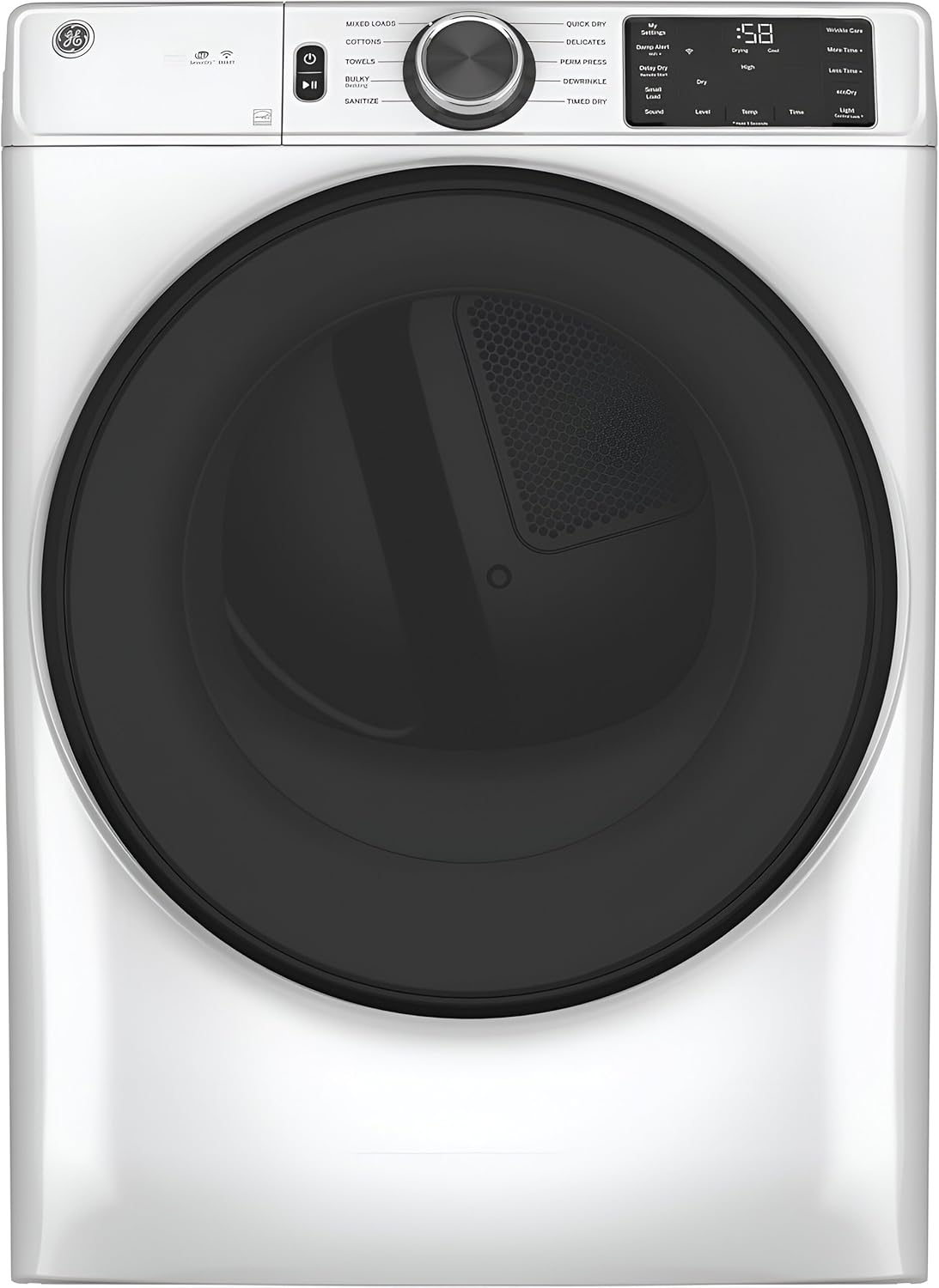
GE GFD55ESSNWW 7.8 cu ft Electric Dryer
| Capacity | 7.8 cubic feet |
|---|---|
| Form Factor | Front Load |
| Door Orientation | Reversible |
| Specification Met | Energy Star |
| Material Type | Stainless Steel |
This GE front-load electric dryer is built for family-sized laundry with its 7.8 cubic foot stainless steel drum that handles bulky items and large loads. It offers a broad cycle selection including quick dry, sanitize, wrinkle care, and damp alert, and the reversible door increases installation flexibility. Built-in Wi‑Fi lets you start, stop, and monitor cycles from the SmartHQ app and receive status alerts, which is helpful when you multitask. The dryer is Energy Star qualified, so it aims to reduce energy use compared with standard models, and the stainless drum is durable and promotes even airflow for more consistent drying. Practical limits include a relatively conventional control set—there are no advanced steam or ultra-high-efficiency heat-pump features—and installation requires standard electric dryer hookups and space for front access. For buyers who want a straightforward, roomy electric dryer with smart controls and solid drying performance, this unit delivers a useful balance of capacity, convenience, and efficiency.
Best for: Buyers who want a roomy, reliably performing electric dryer that balances smart connectivity, practical cycles, and energy efficiency for everyday family laundry.
Less Ideal for: If you prioritize the highest possible energy savings or advanced steam refresh features, consider specialized heat-pump or steam-capable models instead.
- Large 7.8 cu ft stainless steel drum handles bulky loads and bedding
- Built-in Wi‑Fi for remote start, stop, and status alerts via the SmartHQ app
- ENERGY STAR qualification for better energy efficiency than standard models
- Multiple practical cycles including quick dry, sanitize, wrinkle care, and damp alert
- Reversible door adds flexibility for laundry room layout
- Uses conventional electric drying technology rather than a heat-pump system for maximum efficiency
- No mention of a dedicated steam refresh cycle or advanced sanitizing technology beyond the sanitize cycle
Verdict: A spacious, Energy Star qualified electric dryer that pairs large-capacity drying with built-in Wi‑Fi for a practical, family-ready laundry solution.
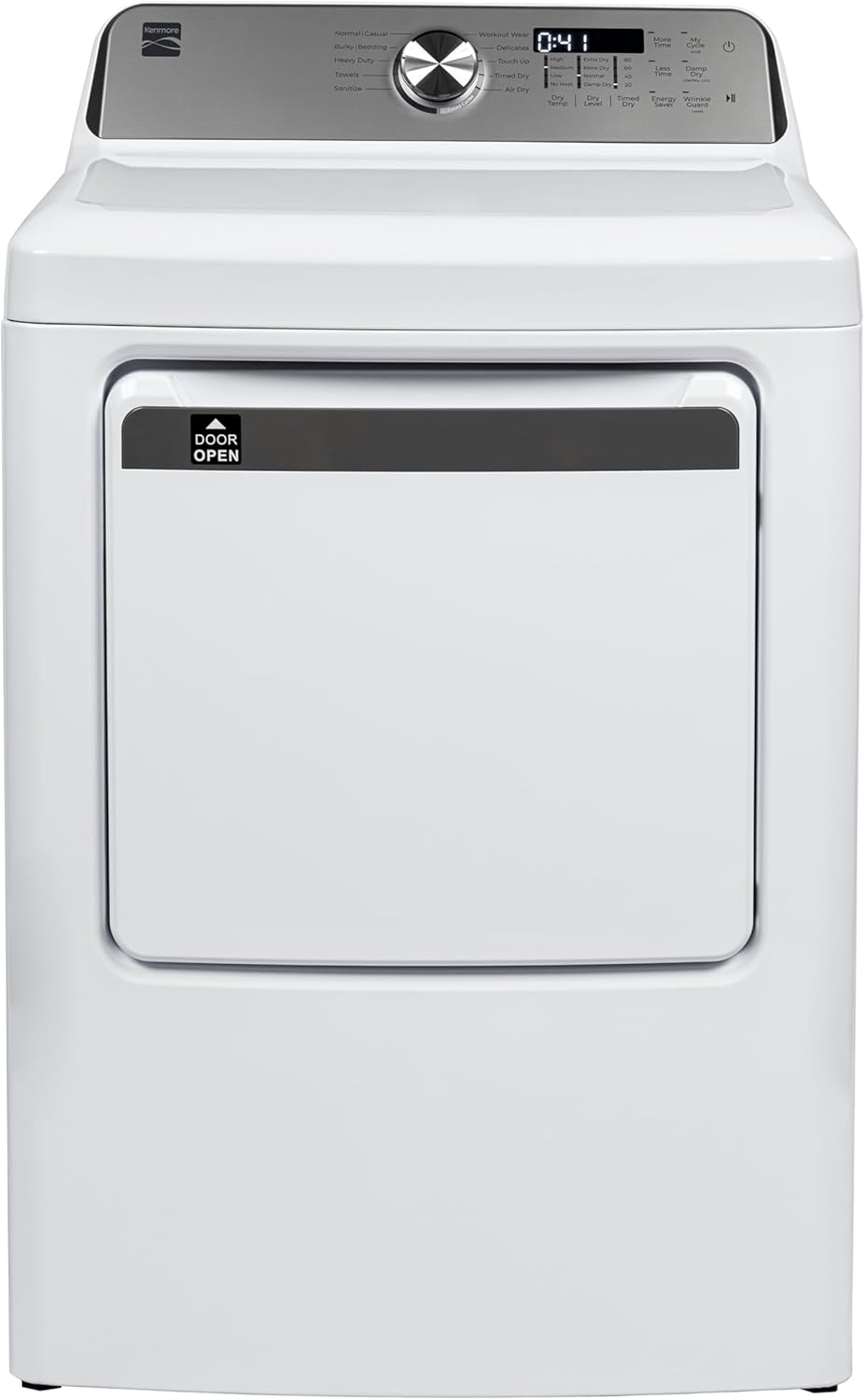
Kenmore 7.0 cu. ft. Electric Dryer
| Form Factor | Front Load |
|---|---|
| Capacity | 7 cubic feet |
| Door Orientation | Reversible |
This Kenmore 7.0 cu ft front-load electric dryer is designed for household performance with smart moisture detection, a Sani Dry option and a Wrinkle Guard that intermittently tumbles items after a cycle to reduce creasing. It offers ten drying cycles and six options including Energy Saver and Express Dry, letting you balance speed, fabric care and running cost depending on the load. The capacitive LED touch display is simple to use and shows cycle status and time remaining, and the large drum gives bedding and bulky items room to tumble for more even drying. Sensor drying helps avoid over-drying while Sani Dry and steam-related features address refreshing and sanitizing needs. Trade-offs are typical for value-oriented dryers: advanced connectivity and premium steam features are not emphasized on this model and some buyers may prefer higher-end controls or additional specialty cycles, but for everyday loads it delivers reliable, fabric-friendly drying.
Best for: Buyers who prioritize reliable, fabric-safe drying performance and a roomy drum for regular household and bulky loads and who value sensor-controlled cycles over smart-home extras.
Less Ideal for: People who want built-in Wi-Fi, app control or the most advanced steam-refresh features should consider higher-end models.
- 7.0 cubic foot drum provides ample space for bedding and bulky items
- Smart moisture sensor stops drying when items are dry to prevent over-drying
- Multiple cycles and options including Energy Saver and Express Dry for flexible performance
- Wrinkle Guard tumbles after the cycle to reduce creases without re-washing
- No integrated Wi-Fi or advanced connectivity features listed
- Premium steam and refresh technologies are limited compared with higher-end models
Verdict: Choose this Kenmore if you want a spacious, sensor-driven dryer that focuses on reliable, fabric-friendly performance for everyday and bulky loads.
EUHOMY 3.5 Cu. Ft. Dryer CD-14

| Capacity | 99.11 liters |
|---|---|
| Rated Input | 1500W |
| Power Source | 120V/60Hz |
| Access Location | Front Load |
The EUHOMY CD-14 is a compact freestanding electric dryer built for small households and apartments. It handles a 3.5 cu ft load and uses a 1500W heating element with a timer and Sensor Dry function to detect moisture and cut heating early when items are dry. ECO mode runs an extended low-heat cycle that alternates cold and hot air to save energy on longer loads. A stainless steel drum and wide 105° front door make loading easier and should resist wear better than plastic interiors, while the included exhaust hose and adjustable base let you place the unit on a countertop or floor. Practical touches include a lint filter and simple knob controls for straightforward operation, though the dryer is vented and requires space for the exhaust. Expect longer cycle times in ECO mode and for very heavy loads to take multiple cycles to fully dry. For buyers wanting a space-saving, feature-light dryer that still offers sensor drying and energy-minded modes, this model delivers sensible performance without complex electronics.
Best for: Buyers who prioritize practical, no-frills drying capacity and energy-saving options for apartments or small homes and want a durable, easy-to-use freestanding unit.
Less Ideal for: Households that need rapid, high-volume drying or truly ventless installations should look at larger-capacity or condenser/heat-pump alternatives instead.
- Generous 3.5 cu ft capacity suitable for small family loads
- Sensor Dry automatically adjusts heating time based on moisture
- ECO mode reduces energy use by combining cold and hot air cycles
- Durable stainless steel drum and wide 105° door for easy access
- Requires venting via exhaust hose which limits placement options
- Longer run times in ECO mode and on heavier loads compared with high-power dryers
Verdict: A practical, space-conscious freestanding dryer that balances sizable capacity with sensor-driven and ECO modes for energy-aware small-home use.
MOJOCO Portable Dryer MJC-T03

| Form Factor | Top Load |
|---|---|
| Capacity | 22 pounds |
| Power | 600W |
| Included Components | Dryer, Dryer Bag |
The MOJOCO Portable Dryer is a lightweight, foldable top-load dryer aimed at small loads and tight spaces. It uses a 600W heating system with two temperature modes and a timer to dry lightweight garments; the brand claims light items can finish in about 1–2 hours while heavier pieces may take longer. Setup is simple: hang items inside the collapsible drum, select low or high heat, and run the timer. Notable features include built-in LED UV sanitizing for added freshness and automatic overheat protection for safety. Its compact, whisper-quiet design and included storage bag make it convenient for apartments, RVs, or travel where a full-size dryer is impractical. Performance is best with lightly damp clothes and small batches — expect longer cycles for thicker fabrics and occasional need to reposition items for even airflow. The unit does not replace a full-size dryer for large loads or heavy towels, but it offers a low-energy, space-saving option for quick refreshes and delicates.
Best for: Buyers on a tight budget who need a low-energy, space-saving dryer for small loads, travel, or apartments and prioritize portability and convenience.
Less Ideal for: Households that routinely need to dry large or bulky loads or want a full replacement for a conventional dryer should consider other options.
- Compact, foldable design that is easy to store and transport
- 600W heater with two temperature settings for gentle or faster drying
- Built-in LED UV sanitizing adds a freshness step to cycles
- Automatic overheat protection and quiet operation suitable for indoor use
- Includes a storage bag and can handle multiple lightweight garments at once
- Longer drying times for heavier fabrics compared with full-size dryers
- Not suitable for large loads or bulky items like bath towels
Verdict: A budget-friendly, compact dryer that delivers low-energy, portable drying and UV sanitizing for small loads and travel needs.
GE Profile 7.2 cu ft Electric Dryer

| Form Factor | Front Load |
|---|---|
| Capacity | 7.2 cubic feet |
| Venting | Up to 120 ft venting |
| Access Location | Front Load |
The GE Profile 7.2 cu ft electric dryer is a straightforward, high-capacity machine built for frequent household use. It handles large loads efficiently thanks to its roomy drum and Auto Dry sensor that monitors temperature to prevent overdrying, while the Extended Tumble option helps reduce wrinkles and shake loose extra pet hair after a cycle. Controls are simple and intuitive with clearly labeled settings and smooth-turn knobs, and an interior drum light makes loading and unloading easier. The dryer accepts up to 120 feet of venting, which gives installers flexibility in placement, and the front-load form factor matches standard laundry setups. Practical limitations include the lack of advanced smart features or a large preset cycle library, so buyers wanting app control or specialty cycles may find it basic. For reliability-minded households this dryer emphasizes dependable drying performance, sensible features, and an easy-to-use interface rather than novelty extras.
Best for: Buyers who prioritize steady, no-nonsense drying performance and a roomy drum for family-sized laundry loads will appreciate this model.
Less Ideal for: If you want Wi-Fi control, a broad menu of specialty cycles, or luxury extras, consider a model with connected features and more cycle options.
- Large 7.2 cu ft drum for handling big or bulky loads
- Auto Dry sensing to reduce overdrying and protect fabrics
- Extended Tumble option to minimize wrinkles and remove pet hair
- Simple, intuitive controls that are easy to operate
- Interior drum light improves visibility when loading and unloading
- No smart connectivity or mobile app control
- Limited advanced or specialty drying cycles compared with premium models
Verdict: Choose this GE Profile dryer if you want a reliable, high-capacity electric dryer with practical dry-sensing and straightforward controls for everyday family laundry.
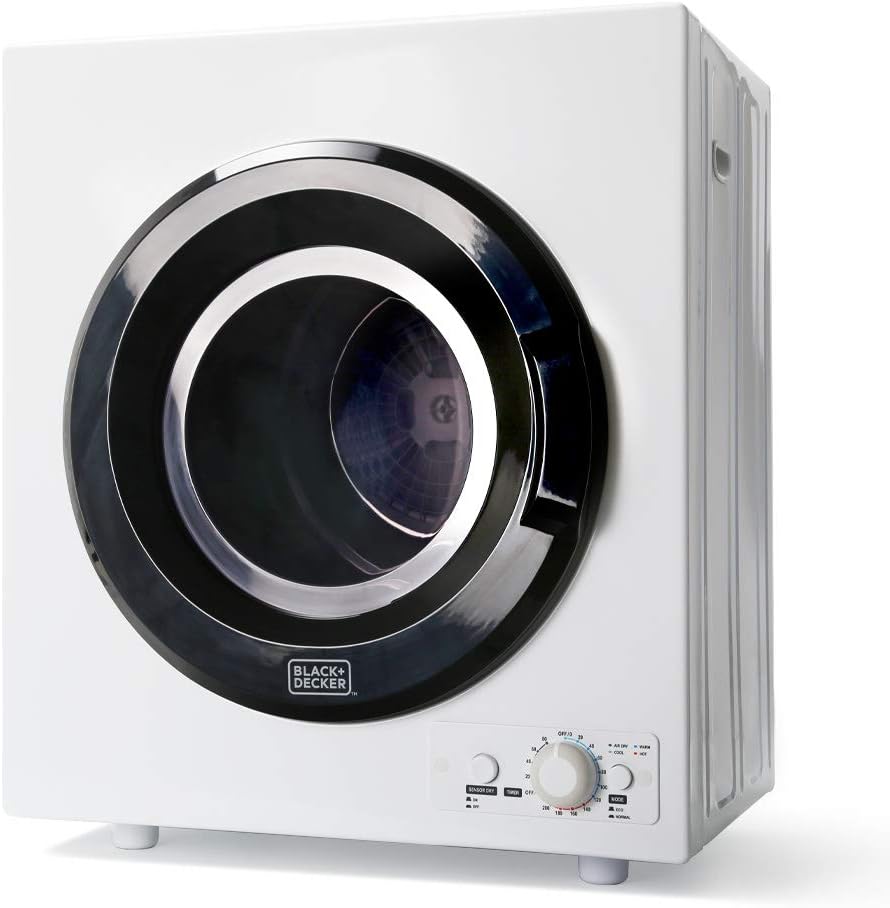
BLACK+DECKER BCED26 Compact Dryer
| Capacity | 2.65 cubic feet |
|---|---|
| Power | 1400W, 120V |
| Load Weight | 8.8 lbs |
| Form Factor | Front Load |
| Vent Connector | 4" diameter |
The BLACK+DECKER BCED26 is a compact, front-load vented dryer aimed at apartments and small homes where a standard 120V outlet is the only power source. It dries up to about 8.8 lb per load in a 2.65 cu ft stainless steel drum and offers five modes including Air Dry, Cool, ECO, Warm and Hot plus a Sensor Dry function that detects moisture and adjusts runtime. Installation is straightforward with the included 4" exhaust connector and vent hose, and adjustable leveling legs make placement easier in tight spots. Because it runs on 1400W/120V, expect longer cycle times compared with full-size 240V dryers; the manufacturer lists 30 to 200 minutes depending on load and mode. Practical benefits include portability, simple controls, and features like ECO mode for energy-conscious drying. Limitations are slower drying speed for heavy loads and the need for venting space, so it is best used for everyday garments, towels, and smaller loads rather than large bedding or frequent heavy use.
Best for: Buyers who prioritize a reliable, vented dryer that installs easily in apartments or small homes and value features like sensor drying and multiple modes over commercial capacity.
Less Ideal for: People who regularly need to dry large loads, heavy bedding, or want the fastest possible cycles should consider a full-size 240V dryer instead.
- Compact footprint fits small spaces and apartments
- Runs on standard 120V outlet so no hardwiring required
- Stainless steel drum and Sensor Dry help protect fabrics and prevent overdrying
- Multiple drying modes including ECO for energy-conscious cycles
- Includes 4" vent hose and exhaust connector for easy setup
- Slower drying times compared with full-size 240V dryers
- Limited to about 8.8 lb per load, not ideal for bulky items
Verdict: A practical, easy-to-install vented compact dryer for apartment dwellers who need reliable, energy-conscious drying without hardwiring.
BLACK+DECKER Compact Dryer BCED37
| Capacity | 3.5 cubic feet |
|---|---|
| Load volume | 13.2 lbs. |
| Power | 1500W, 120V |
| Drum material | Stainless steel |
| Vent connector | 4-inch exhaust |
The BLACK+DECKER BCED37 is a portable vented dryer made for apartments and small homes that cannot support a 240V full-size unit. It holds up to about 13.2 lb per load in a 3.5 cu ft stainless steel drum and runs on a standard 120V outlet using 1500W, so drying times are longer than a full-size dryer but you get the convenience of plug-and-play installation. The control set offers multiple modes including Air Dry, Cool, ECO, Warm and Hot plus a Sensor Dry function that detects moisture to avoid over-drying. Practical touches include a transparent front lid, adjustable leveling legs, reusable lint and exhaust filters, and a 4-inch exhaust connector for venting. Expect cycle lengths from roughly 30 to 200 minutes depending on load and mode, which makes this best for smaller, partial loads or for situations where permanent laundry hookups are unavailable. The unit is portable relative to full-size machines but still weighs nearly 50 pounds and requires proper venting for best performance.
Best for: Buyers who want a reliable, easy-to-install dryer for small spaces and value straightforward operation and factory-style features over fastest cycle times.
Less Ideal for: Large households or anyone who needs to run frequent, full loads quickly should choose a full-size 240V dryer instead.
- Plugs into a standard 120V outlet so no special wiring is required
- Sensor Dry helps prevent over-drying by measuring moisture
- Multiple drying modes (Air Dry, Cool, ECO, Warm, Hot) for fabric care
- Stainless steel drum and reusable filters reduce maintenance and wear on clothes
- Drying times are significantly longer than 240V full-size dryers due to 120V power
- Requires venting with the included 4-inch exhaust connector so placement is limited
Verdict: A practical plug-in dryer that brings full-size dryer features and plug-and-play convenience to small homes and apartments.
Choosing the Right Dryer: Key Factors to Consider
Capacity and Drum Size
Capacity affects how many items you can dry per load and influences cycle efficiency. Larger drums let bulky items tumble freely, reducing dry time for bed linens and towels. If you routinely dry heavy loads, aim for a drum that accommodates those volumes without overfilling.
A correctly sized drum also helps preserve garment life by minimizing friction and clumping. Consider household habits: small households may prefer moderate capacity to save space and energy, while larger families will benefit from higher-capacity drums to cut down weekly cycles.
Drying Technology and Moisture Sensing
Moisture sensors adjust runtime automatically to stop the cycle when clothes reach the target dryness, preventing overdrying and saving energy. Sensor-based cycles are especially useful for mixed loads and delicate fabrics that suffer from excess heat exposure.
Also note the control options available: multiple sensor sensitivity levels, damp-dry presets, and anti-wrinkle or extended-tumble features give you finer control over end-of-cycle humidity and fabric condition. Machines without sensors rely on timed cycles, which require more attention and can lead to wasted energy or damp clothes.
Energy Efficiency and Operating Cost
A dryer's energy profile determines long-term operating cost and environmental impact. Look for features such as heat-pump technology, high-efficiency heating elements, or optimized airflow that reduce runtime while maintaining drying power.
Higher upfront efficiency often pays back over time through lower utility bills, particularly for households that run many loads weekly. Also consider eco modes and lower-heat cycles for lightly soiled items to cut consumption further without compromising results.
Cycle Options and Customization
A broad selection of cycles helps you tailor drying to fabrics and soil levels. Useful programs include presets for cottons, synthetics, delicates, bulky items, and timed dry. Customizable temperature, spin speed, and dryness level let you optimize each load for performance and garment care.
Advanced options such as steam refresh, sanitizing cycles, or cool-down phases can solve common laundry problems like wrinkles or odor without extra steps. Consider how many specialized cycles you will actually use; too many rarely-used presets add complexity without practical benefit.
Ventilation Type and Installation
Dryers are commonly configured for vented, condenser, or heat-pump operation, and the choice affects where you can place the machine and how it must be installed. Vented machines exhaust moist air through a duct to the outside, which typically gives faster cycle times but requires ductwork.
Condenser and heat-pump dryers do not need exterior venting and are useful in tighter spaces or apartments. Heat-pump units tend to be more energy-efficient but may have longer cycle times. Installation requirements, including electrical supply and available clearance, should match the chosen dryer type to avoid performance issues.
Maintenance and Filter Access
Regular maintenance keeps a dryer running efficiently and safely. Easy-access lint filters, simple condenser cleaning procedures, and clear indicators for required maintenance reduce service time and the chance of reduced performance.
Accessibility for basic tasks such as filter removal, drum inspection, and vent cleaning is important. A dryer that simplifies routine upkeep will typically maintain drying performance and extend service life compared with machines that hide filters or require tools for common tasks.
Matching Dryer Capacity to Household Needs
Think about weekly laundry volume and the types of items you wash most often. Singles or couples often get by with mid-size machines that are efficient on small loads, while families benefit from larger-capacity drums to reduce the number of cycles per week.
Also consider space and installation constraints. If you have limited laundry room space, a slightly smaller unit with sensible cycle choices can outperform a larger model that is rarely run full.
- Estimate typical weekly dry loads to pick appropriate drum size.
- Remember bulky items like bedding require more room to tumble.
- Stacking or compact installations influence capacity choices.
When to Choose Heat-Pump or Condenser Models
If you cannot run an exterior vent or want lower long-term energy use, condenser and heat-pump designs are worth considering. Heat-pump dryers recover heat from exhaust air to preheat incoming air, giving better efficiency for households running frequent loads.
These models can have longer cycle times, so weigh the energy savings against any impact on laundry throughput. Also check maintenance steps for condensers, as they require periodic cleaning to maintain airflow and efficiency.
- Heat-pump: best for energy savings, may have longer cycles.
- Condenser: vent-free but needs periodic condenser maintenance.
- Vented: typically faster but requires ducting to the outdoors.
Features That Improve Fabric Care
Look for moisture-sensing, low-heat delicates cycles, and anti-wrinkle or extended-tumble options that reduce wrinkling after the cycle ends. Drum interior finishes and gentle tumble patterns also affect how garments are treated.
Steam or refresh functions can reduce ironing needs for lightly worn clothes, and cool-down phases at the end of a cycle help stabilize fibers before you remove items.
- Moisture sensors prevent overdrying and shrinkage.
- Low-heat and timed-dry options protect delicates.
- Steam refresh reduces wrinkles without rewashing.
Noise, Vibration, and Laundry Room Placement
Noise and vibration matter if your laundry room is near living spaces. Look for units with balanced drums, vibration dampening, and quiet motor designs to minimize disruption. Installation on a solid, level floor reduces noise compared with uneven surfaces.
If placing the dryer on an upper floor or near bedrooms, prioritize quieter models or extra insulation in the laundry area to limit transmitted noise.
- Check for vibration-reduction features in spec sheets.
- Leveling feet and floor surface influence noise transmission.
- Consider rubber pads or isolation platforms for upper-floor installs.
Installation and Electrical Requirements
Verify that your laundry space meets the electrical and venting requirements for the dryer type you choose. Some larger-capacity models require a 240V circuit, while many compact or condenser units use standard household voltage. Duct routing and clearance around the machine affect airflow and performance.
If you are replacing an existing dryer, matching the new unit to existing connections simplifies installation. For new installs in tight spaces, verify door swing, stacking brackets, and vent termination points ahead of purchase.
- Confirm voltage and circuit availability before selecting a unit.
- Measure clearances, door space, and stacking needs.
- Plan vent routing to minimize bends and constrictions.
How We Chose the Best Dryer
Our shortlist focused on machines that strike a clear balance between rapid drying, fabric care, and long-term operating cost. We prioritized models with measurable energy-efficiency features, consistent moisture-sensing or timed-dry control, and a range of cycle options that protect both everyday garments and delicate pieces. Robust build quality and accessible maintenance were included to favor models that stay reliable through frequent use. Concrete evaluation criteria included drying performance across load sizes, energy consumption and available efficiency modes, cycle variety and customization, drum and airflow design that affect wrinkle reduction, and ease of maintenance such as lint access and filter cleaning. Noise level during operation and warranty/parts accessibility were secondary filters. We excluded specialty laundry machines designed solely for commercial or industrial use, compact units with severely limited capacity, and any models lacking basic moisture-sensing or adjustable-cycle features. The result is a focused set of dryers suitable for typical household laundry needs and varied fabric types.
Our full evaluation process is outlined in our review methodology.
FAQ
How do moisture sensors actually work and are they reliable?
Moisture sensors typically measure humidity or conductivity in the drum to detect remaining dampness and stop the cycle when target dryness is reached. They are generally reliable for mixed loads, but sensor accuracy can vary with load size and fabric type. Periodic cleaning of the sensor area helps maintain correct operation.
Can I use low-heat cycles for towels and heavy items?
Low-heat cycles protect fabrics but will increase dry time for heavy items. For towels and bulky loads, moderate to higher heat with moisture sensing provides faster results while avoiding overdrying. For recurring heavy loads, consider a higher-capacity drum to reduce cycle frequency.
Is a ventless dryer a good option for apartments?
Ventless models such as condenser or heat-pump dryers work well in apartments because they do not require exterior ducting. They may run longer than vented units but save installation complexity. Check for space and maintenance needs, since condensers require occasional cleaning.
How often should I clean lint filters and ducts?
Clean the lint filter after every load to preserve airflow and efficiency. Inspect and clean exterior ducts as needed, typically once a year or more often if you notice slower drying times. Regular cleaning reduces fire risk and maintains consistent performance.
Do steam refresh cycles actually reduce wrinkles?
Steam refresh cycles can relax fibers and reduce light wrinkles in garments without a full wash. They are most effective on lightly worn items and can cut down ironing for shirts and dresses. Heavily wrinkled or densely packed loads may not smooth out completely with a refresh.
What maintenance should I do to keep efficiency high?
Regularly clean lint filters and condenser elements where applicable, ensure vent ducts are free of obstructions, and follow manufacturer guidance for drum and seal inspection. Proper load sizing and using sensor modes also keep cycle times reasonable and efficiency optimized.
Final Verdict
Choosing the right dryer comes down to matching capacity, technology, and installation constraints to your household habits. Prioritize moisture sensing and appropriate drying technology to protect fabrics and reduce energy use, and pick drum size and cycle variety to suit load types you run most often. Weigh the tradeoffs between faster vented performance and ventless energy savings, and factor in maintenance accessibility and noise for your laundry location. Focus on the criteria that matter most to your routine to select a dryer that balances efficiency, care, and convenience.