
Note: This article contains affiliate links. If you click on these links and make a purchase, we may earn a small commission at no extra cost to you. This helps support our research and content. Read our full affiliate disclosure here.
Choosing the right energy efficient dryer can noticeably reduce your utility bills and keep clothes in better condition over time. You want a machine that minimizes electricity use but still dries reliably and treats different fabrics appropriately. This guide collects seven top picks narrowed for energy efficiency, drying performance, and user-friendly controls. Below we summarize the practical tradeoffs to expect, the performance criteria we prioritized, and the kinds of households that will benefit most from each shortlisted option. Read on for quick guidance before the product details.
Top Picks at a Glance
| Best Overall The best all-around choice for most situations | LG DLHC1455W Heat Pump Dryer |  |
| Best Quality Built to a higher standard if you want something more solid | Samsung 4.0 cu. ft. Heat Pump Dryer |  |
| Best Value The sweet spot between price and what you get | Avanti 4.0 Cu. Ft. Front-Load Dryer |  |
| Best Budget The cheapest option that still gets the job done reliably | EUHOMY 1.8 Cu.Ft Portable Dryer |  |
| Top Rated A top-rated pick with lots of positive feedback | TABU 3.5 Cu. Ft Portable Dryer |  |
| Most Popular A crowd favorite that many people choose with confidence | Kenmore Front Load Electric Dryer 8.0 cu ft |  |
| Best Seller A high-volume bestseller chosen again and again | BLACK+DECKER Heat Pump Dryer BDFH44M |  |
LG DLHC1455W Heat Pump Dryer

| Capacity | 4.2 cubic feet |
|---|---|
| Form Factor | Ventless compact |
| Programs | 14 dryer programs |
| Smart Control | Wi‑Fi (LG ThinQ) |
The LG DLHC1455W is a compact ventless heat pump dryer designed for small laundry spaces where energy use matters. It delivers a 4.2 cu ft drum in a 24-inch footprint and uses Dual Inverter Heat Pump technology to recycle moisture and reduce energy compared with conventional condenser dryers. Sensor Dry adjusts run time based on moisture for gentler care and lower power consumption, and 14 preset programs cover different fabrics and needs. The dryer is Wi‑Fi enabled through LG ThinQ for remote monitoring and control, and its reversible door and stackable design make it flexible for closet or stacked installations. Practical benefits include lower operating costs on typical loads, quieter operation from the inverter system, and fabric-friendly drying from a stainless drum and moisture sensing. Limitations are the smaller capacity compared with full-size units and the need to place it where ventless operation is acceptable; installation and stacked clearance should be checked against site dimensions.
Best for: Buyers who want a space-saving dryer that prioritizes energy efficiency and gentle fabric care while still offering smart controls and versatile installation.
Less Ideal for: Large households that run frequent, bulky loads or buyers who need the maximum single-load capacity of a full-size dryer.
- Dual Inverter Heat Pump technology for more energy-efficient drying than standard condenser dryers
- Sensor Dry that adjusts cycle time to reduce over-drying and save energy
- Wi‑Fi smart control via LG ThinQ for remote start and status monitoring
- Compact 24-inch footprint with reversible door and stackable option for tight spaces
- Smaller 4.2 cu ft capacity may require more frequent loads for larger households
- Ventless design may produce more ambient heat and require suitable placement
Verdict: Choose this dryer if you need a compact, ventless unit that cuts energy use with heat pump technology while still offering smart controls and fabric-friendly drying.
Samsung 4.0 cu. ft. Heat Pump Dryer

| Capacity | 4 cubic feet |
|---|---|
| Form Factor | Front Load |
| Model Number | DV25FG62B0BEA2 |
| Access Location | Front Load |
This Samsung heat pump dryer uses ventless heat pump technology to dry clothes more gently and with lower energy consumption than traditional vented electric dryers. It is intended for typical household loads up to its 4.0 cubic foot drum and offers sensor dry to adjust time and temperature automatically, which helps prevent overdrying and fabric damage. The AI Smart Dial learns common cycles and simplifies selection, while Wi-Fi and the SmartThings app enable remote starts, scheduling, and end-of-cycle alerts. Practical benefits include easy placement where venting is impractical, potential energy savings from the ENERGY STAR certified heat pump system, and convenient smart controls for busy households. Trade-offs are a larger upfront cost and longer cycle times common to heat pump dryers compared with high-heat vented models, and the compact 4.0 cu. ft. capacity may mean more frequent loads for larger households.
Best for: Buyers focused on energy efficiency and garment care who need a ventless installation option and appreciate smart controls for remote monitoring and scheduling.
Less Ideal for: Large households that run frequent bulky loads or buyers who prioritize the fastest possible dry times should consider larger-capacity or higher-heat vented alternatives.
- Ventless heat pump design for more energy-efficient, gentle drying
- ENERGY STAR certified for lower energy use
- AI Smart Dial simplifies cycle selection and adapts to user habits
- Wi-Fi connectivity and SmartThings app for remote control and notifications
- Sensor Dry optimizes time and temperature to protect garments
- Heat pump cycles are generally longer than traditional high-heat vented drying
- 4.0 cu. ft. capacity is smaller than many full-size dryers
Verdict: Choose this dryer if you want a ventless, ENERGY STAR heat pump model that prioritizes energy efficiency and gentle, smartphone-enabled drying.
Avanti 4.0 Cu. Ft. Front-Load Dryer
| Capacity | 4 cubic feet |
|---|---|
| Controls Type | Digital |
| Access Location | Front Load |
| Number of Drying Cycles | 15 |
| Operation Mode | automatic |
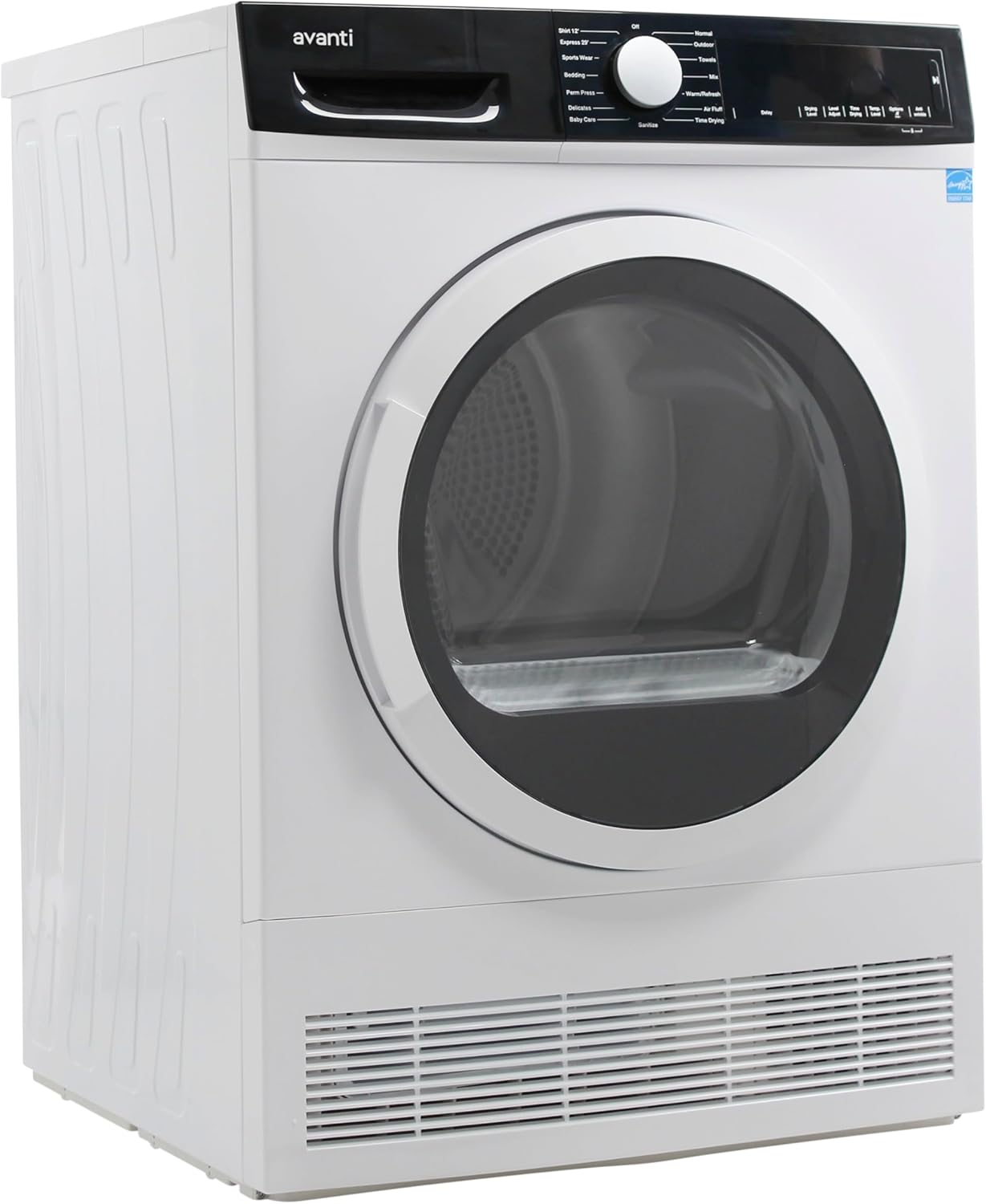
The Avanti 4.0 cu. ft. front-load dryer is a space-saving, energy-efficient option for apartments, dorms, and small laundry rooms. It offers 15 automatic drying cycles plus three drying level and temperature settings so you can tailor heat and time for delicates, normal loads, or bulkier items. The electronic control panel with LED display and a see-through door make cycle selection and load monitoring simple, and the stainless-steel drum should hold up to frequent use while being gentle on fabrics. Automatic load-size selection helps improve efficiency, and the anti-wrinkle function reduces the need for ironing. Because it is compact, it can be freestanding or stacked with the matching Avanti washer to save floor space. Expect solid basic performance for everyday laundry, but note this is a small-capacity dryer aimed at light to moderate household use rather than large families or heavy-duty loads.
Best for: Buyers who prioritize energy efficiency and space savings in small homes or rental units and want a reliable everyday dryer that fits tight laundry areas.
Less Ideal for: Households that regularly dry very large loads, bulky bedding, or need a commercial-grade dryer should look for larger-capacity or heavy-duty models.
- ENERGY STAR certified for lower energy use
- Compact footprint that stacks with a matching washer to save space
- 15 automatic cycles with multiple heat and dryness levels for fabric care
- Stainless-steel drum for durability and gentleness on clothes
- Electronic controls with LED display and a see-through door for easy monitoring
- 4.0 cu. ft. capacity may be small for large households or bulky items
- Not intended for heavy commercial or continuous large-load use
Verdict: Choose this compact, ENERGY STAR certified dryer if you need a reliable, space-saving, energy-efficient unit for small-home laundry needs.
EUHOMY 1.8 Cu.Ft Portable Dryer
| Capacity | 1.5 cubic feet |
|---|---|
| Form Factor | Front Load |
| Power | 850W motor |
| Door Orientation | Left |
| Certification | ETL |
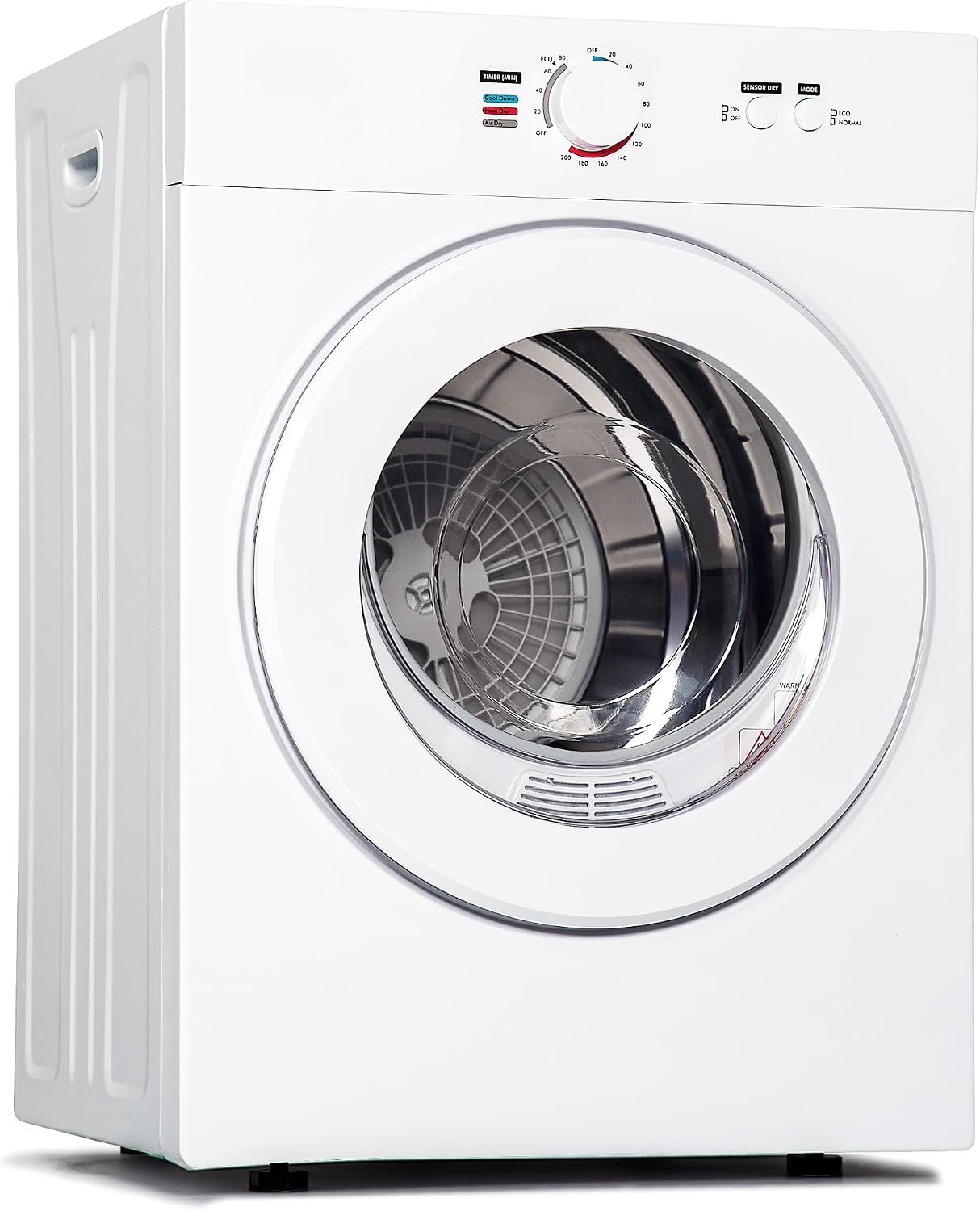
This EUHOMY portable dryer is a small, budget-friendly unit meant for apartments, dorms, RVs, or anywhere you need a compact drying option. It uses an 850W motor and claims temperatures up to 140°F to dry everyday items like tees, underwear, towels and small sheets, and the stainless steel drum helps distribute heat evenly to reduce wrinkles. Controls are simple: a knob with four modes (Cool, Warm, Hot, Air Dry) so you can tailor cycles for delicates or faster dries. The front door has a window and an automatic pause when opened, and maintenance is straightforward with a built-in exhaust duct and multi-layer lint filter. Because it is small and wall-mountable, it fits tight spaces and is easy to move. Expect slower throughput compared with full-size electric dryers and limited capacity that means larger loads will need multiple cycles, but for singles or small households it offers an energy-conscious alternative to vented full-size machines.
Best for: Buyers seeking an affordable, space-saving dryer for small households or temporary living situations who prioritize lower energy draw and compact footprint over large capacity.
Less Ideal for: Large families or anyone who routinely dries bulky loads, sheets, or multiple loads per day should look at full-size or higher-capacity models instead.
- Compact footprint that fits apartments, dorms, RVs and small laundry spaces
- Stainless steel drum for even heat distribution and reduced fabric tangling
- Four distinct drying modes for tailored fabric care
- Built-in exhaust duct and multi-layer lint filter for easier maintenance
- 1.8 cu ft capacity is small compared with full-size dryers, requiring multiple loads for larger households
- 850W motor and compact design mean longer cycle times versus standard electric dryers
Verdict: A low-power, space-saving portable dryer that delivers practical, energy-minded drying for singles or small households.
TABU 3.5 Cu. Ft Portable Dryer

| Form Factor | Front Load |
|---|---|
| Capacity | 3.5 cubic feet |
| Power | 1500W |
| Door Orientation | Left |
The TABU 3.5 cu ft portable dryer is a small front-load electric dryer designed for apartments, dorms, RVs, or homes that need a space-saving laundry solution. It offers four modes — Auto (humidity-sensing), Delicates, Air Dry, and a timed setting — so you can handle mixed loads, delicate items, or quick refresh cycles. The stainless steel inner tub and a 1500W heater aim to move moisture out efficiently while the unit supports three installation methods: freestanding, wall-mounted, or stacked on a rack. In practice it handles modest wet loads (the spec lists 13.2 lb wet capacity) and the Auto mode simplifies getting consistently dry results without guesswork. The dryer is marketed as quiet and straightforward to operate, which helps in shared or small living spaces. Trade-offs to expect are the limited raw capacity compared with full-size models and longer cycle times on heavy loads, plus the unit is intended for small-load convenience rather than high-volume household use.
Best for: Buyers who prioritize dependable, easy-to-use laundry in small spaces and want an energy-conscious, low-noise dryer that fits apartments, dorms, or RVs.
Less Ideal for: Large households or anyone who needs to dry multiple heavy loads quickly should choose a full-size or higher-capacity dryer instead.
- Multiple drying modes including humidity-sensing Auto for more consistent dryness
- Compact front-load design that can be freestanding, wall-mounted, or stacked
- Stainless steel inner tub for durability and easier cleaning
- Relatively quiet operation suited to apartments and dorms
- Smaller capacity and slower throughput compared with full-size dryers
- 1500W power and small drum mean best suited to small, occasional loads rather than heavy weekly laundry
Verdict: A reliable, compact dryer that delivers convenient, low-noise drying for small spaces and modest weekly laundry needs.
Kenmore Front Load Electric Dryer 8.0 cu ft

| Capacity | 8 cubic feet |
|---|---|
| Form Factor | Front Load |
| Door Orientation | Reversible |
This Kenmore front-load electric dryer is built for large households that need an energy-conscious, feature-rich appliance. It uses smart moisture detection to adjust drying time and prevent overdrying, and the Energy Saver option plus ENERGY STAR certification help reduce energy use. The extra-large 8.0 cu ft drum handles bulky items and bedding, while Accela Steam, Steam Refresh, and Wrinkle Guard reduce wrinkles, static, and odors without a full wash. Controls are LED touch-style with a clear status display and there are a dozen drying cycles and several specialty options including sanitize and timed dry. On the downside, the dryer is a full-size, heavier unit that requires sufficient space and proper installation, and advanced steam and sanitize cycles may add run time compared with simple timed drying. For buyers focused on energy savings and fabric care the Kenmore balances efficient sensor drying with useful steam features, but expect standard full-size installation needs and cycle times typical of feature-rich dryers.
Best for: Buyers who prioritize energy efficiency and reliable fabric care for large or frequent laundry loads and who want sensor-driven drying plus steam refresh options.
Less Ideal for: Those with very tight laundry spaces, minimal laundry needs, or who prefer the fastest possible basic timed-dry cycles without steam options.
- ENERGY STAR certified and Energy Saver option reduce energy consumption
- Smart moisture detection prevents over-drying for better fabric care
- Large 8.0 cu ft capacity fits bulky items and bedding
- Accela Steam, Steam Refresh, and Wrinkle Guard reduce wrinkles, static, and odors
- Multiple cycles and touch controls make specialized drying and status monitoring easy
- Full-size unit requires adequate floor space and professional installation for some setups
- Steam and sanitize cycles can increase cycle time compared with basic drying
- Relatively heavy appliance may be difficult to move for installation
Verdict: Choose this ENERGY STAR certified Kenmore dryer if you need a large-capacity, sensor-driven machine that cuts energy use while using steam features to keep fabrics looking fresh.
BLACK+DECKER Heat Pump Dryer BDFH44M

| Capacity | 4.4 cubic feet |
|---|---|
| Maximum load | 22 lbs. |
| Cycles | 16 cycles |
| Power | 240V/60Hz |
| Energy certification | ENERGY STAR certified |
This BLACK+DECKER heat pump dryer uses recirculated, compressor-cooled air to dry clothes without an outside vent and promises about 28% lower energy use than conventional dryers. It offers a 22 lb maximum capacity and 16 cycles including Delicates, Heavy Duty, Quick Dry, Wool, and a programmable My Cycle for repeat settings. Moisture is condensed into a removable tank that can be emptied or attached to a drain hose, which makes installation flexible for apartments or utility rooms where venting is not possible. The stainless steel drum and sensor-dry system help protect fabrics by adjusting run time based on moisture, but drying times are typically longer than vented models. Installation requires a 240V hardwired connection and professional setup, and the unit is heavier than standard dryers, which affects placement. For buyers prioritizing energy efficiency and a ventless installation, this model delivers solid savings and gentle drying, while those who need fast turnaround or a lightweight portable option may find its slower cycles and installation needs limiting.
Best for: Buyers who prioritize energy savings and need a reliable ventless dryer for an apartment or laundry room and prefer a straightforward machine with preset cycles and fabric protection.
Less Ideal for: People who need very fast dry cycles, frequent portability, or simple plug-and-play 120V installation should consider other dryer types.
- Heat pump design reduces energy use by at least 28% compared with conventional dryers
- Ventless operation with removable water tank or drain hose allows installation without external venting
- 16 cycle options and programmable My Cycle for tailored drying
- Sensor Dry technology and stainless steel drum provide gentler, fabric-safe drying
- Longer drying times than vented dryers
- Requires professional 240V hardwiring for installation
- Unit is heavy, which makes moving or repositioning difficult
Verdict: Choose this ventless heat pump dryer if you want Energy Star level efficiency and a non-vent installation that treats clothes gently while lowering electricity use.
Choosing the Right Energy Efficient Dryer: Key Factors to Consider
Energy Consumption
Energy consumption is the primary factor for buyers pursuing an energy efficient dryer. Look for clear specifications on kilowatt-hours per typical load or stated efficiency ratings. Lower per-cycle consumption directly reduces monthly utility bills and is especially important for households that run the dryer multiple times per week.
Beyond raw numbers, consider how consumption varies by cycle type. High-heat timed cycles may use significantly more energy than moisture-sensing or eco cycles. Understanding typical usage patterns in your home helps predict real-world savings.
Moisture Sensors And Cycle Control
Accurate moisture sensors prevent overdrying by stopping the cycle when garments reach the set dryness level. Reliable sensors cut unnecessary runtime, saving energy and reducing fabric wear. Check whether the dryer offers multiple dryness settings and how it reports progress to the user.
Also review cycle logic: some machines use staged heating or adaptive algorithms that learn load behavior. These smart controls can improve efficiency but add complexity; prioritize systems with straightforward user overrides if you prefer manual control.
Drying Speed Versus Efficiency
Faster drying uses more power over a shorter time, while slower cycles can be more energy efficient overall. The tradeoff matters when you balance convenience against operating cost. If you need quick turnaround for busy households, look for models that couple higher heat available on demand with reliable sensors to avoid waste.
For regular, non-urgent loads, eco or gentle cycles typically use less energy but extend runtime. Consider whether longer cycles fit your routine and whether the machine maintains fabric appearance during those extended programs.
Capacity And Load Matching
A dryer that matches your household load size will run efficiently. Overloading reduces airflow and increases drying time, eroding any energy advantage. Conversely, running many small loads wastes per-cycle energy overhead. Choose capacity based on typical wash size and family habits to maximize efficiency.
Also note drum geometry and airflow design: shallow drums or poor ventilation force longer cycles. When possible, size the dryer to allow full but not overloaded loads for balanced performance.
Ventilation And Installation
Proper venting and installation directly influence a dryer's ability to move moisture and heat. Restricted vents increase run time and energy use, and can create safety hazards. Inspect duct length, routing, and material when planning installation; shorter, straight runs with smooth ducting yield the best results.
If venting options are limited, consider condenser or heat-pump designs that reclaim or condense moisture. Those systems can improve installation flexibility but have different maintenance needs and efficiency profiles.
Maintenance And Long-Term Reliability
Regular maintenance keeps efficiency from degrading over time. Cleaning lint filters, inspecting vents, and servicing moisture sensors all preserve performance. Models with accessible filters and clear maintenance alerts make it easier to maintain peak efficiency.
Durable components and straightforward serviceability reduce lifetime energy costs by avoiding performance loss or premature replacement. Consider warranty coverage and reported reliability indicators when assessing long-term value.
Heat Pump Versus Conventional Heat
Heat-pump drying uses lower air temperatures and recycles heat, which can significantly reduce electricity consumption compared with conventional electric heating elements. These systems often take longer per cycle but can cut per-load energy use by a substantial margin, making them attractive for energy-conscious buyers.
Conventional electric dryers typically deliver faster drying because of higher available heat, but they rely on more energy per minute of operation. When speed is a priority, conventional models with accurate sensors can be an acceptable compromise.
- Heat-pump: higher upfront complexity, lower energy per load
- Conventional: faster but often higher per-cycle energy
- Consider your tolerance for longer cycles versus monthly savings
Ventless Options And When They Make Sense
Ventless designs, including condenser and heat-pump units, are useful when exterior venting is impractical. They condense moisture internally or reclaim heat, which simplifies placement and can improve overall home energy use in some setups.
Ventless machines may require more frequent maintenance and can have different efficiency tradeoffs compared with vented systems. For apartments or homes without easy duct runs, the convenience can outweigh modest efficiency differences.
- Good for locations without duct access
- Check condensation and drainage requirements
- Expect different maintenance patterns than vented units
Dryer Placement, Vent Routing, And Airflow
Where and how you install the dryer affects its real-world efficiency. Long or kinked vent runs, multiple bends, and undersized ducting all increase drying time and energy use. Aim for the shortest, straightest vent run practical with properly sized duct material.
Elevating the dryer or providing sufficient clearances helps airflow and service access. If the dryer shares a laundry room with other appliances, ensure adequate room ventilation to avoid heat buildup that can reduce efficiency.
- Short, straight ducts improve performance
- Use smooth, properly sized ducting material
- Allow clearance for service and airflow
Smart Features That Improve Efficiency
Connectivity and smart cycle management can enhance efficiency by offering reminders, cycle scheduling, and usage insights. Scheduling a dryer to run during off-peak hours does not change total energy consumed but can reduce grid-impact charges in some areas.
Automatic load detection and adaptive cycles that learn from previous loads can reduce wasted runtime. However, these benefits depend on how reliably the features sense moisture and adapt rather than simply extending or shortening default timers.
- Look for accurate auto-dry and adaptive algorithms
- Remote monitoring helps manage usage patterns
- Use scheduling features in combination with efficient cycles
Fabric Care And Cycle Variety
An energy efficient dryer should still provide cycles tailored to different fabrics. Gentle, low-heat programs preserve delicate items while eco cycles handle cottons and mixed loads. Properly matching cycle to load prevents re-drying and reduces total energy use.
Steam refresh or wrinkle-reduction features can cut down on ironing and re-washing, indirectly saving energy by extending the time between full wash-and-dry cycles.
- Match cycles to fabric types to avoid rework
- Steam or refresh cycles can reduce extra wash cycles
- Multiple dryness settings improve sensor effectiveness
How We Chose the Best Energy Efficient Dryer
We focused on appliances and features that deliver measurable reductions in energy use while preserving drying results and fabric care. Our evaluation prioritized realistic, buyer-relevant specifications and user-facing features rather than marketing claims. Key evaluation dimensions were measured or reported energy consumption per cycle, sensor and cycle accuracy, drying time, cycle variety for fabric care, and operational reliability indicators such as warranty coverage and maintenance needs. We also emphasized machines with efficient heat systems and moisture sensors because those directly reduce wasted runtime. Excluded were units without energy-use data, models with only limited cycle control, and any dryer designs unsuited to typical household laundry loads. We filtered out specialty commercial units and compact models that do not reflect standard home capacities. The final shortlist balances efficiency with drying speed, gentleness on fabrics, and practical controls or connectivity for everyday use.
Our full evaluation process is outlined in our review methodology.
FAQ
How much energy can I realistically save with an energy efficient dryer?
Savings depend on the dryer type and your usage pattern. Heat-pump or high-efficiency condenser models typically use noticeably less energy per load than conventional electric dryers, though exact savings vary by cycle selection and load size.
Are moisture sensors worth the extra cost?
Yes, moisture sensors often pay back in reduced runtime by preventing overdrying. They both save energy and extend fabric life when they are accurate and paired with appropriate dryness settings.
Do ventless dryers use more energy than vented ones?
Not necessarily. Modern ventless heat-pump dryers can be very efficient and may use less energy per load than older vented electric models. Performance depends on the specific technology and how you maintain the unit.
How does dryer maintenance affect efficiency?
Regular maintenance, like cleaning lint filters and ensuring clear vents, keeps drying times short and energy use low. Neglecting vents or sensors increases run times and poses safety risks.
Is it better to run full loads for efficiency?
Generally, running full but not overloaded loads is most efficient because it maximizes the utility of the hot air moved through the drum. Multiple small loads increase per-pound energy use due to repeated cycle startup overhead.
Final Verdict
Prioritize real-world energy use, sensor accuracy, and load-matching when choosing an energy efficient dryer. Expect tradeoffs between drying speed and per-load energy consumption, and decide whether longer eco cycles or faster conventional heat better suit your routine. Focus on capacity that matches your household, reliable moisture sensing, and a straightforward maintenance plan to preserve efficiency over years of use. With those priorities, you can confidently select a dryer that lowers energy costs while keeping garments in good condition.