
Note: This article contains affiliate links. If you click on these links and make a purchase, we may earn a small commission at no extra cost to you. This helps support our research and content. Read our full affiliate disclosure here.
If you store wine in a garage, temperature swings, humidity changes, and vibration can all shorten a bottle's lifespan. Choosing the right dual-zone wine cooler for garages helps you keep reds and whites at their optimal serving or aging temperatures while separating zones for different bottle types. This guide covers the top shortlisted dual-zone wine coolers designed with garage use in mind, focusing on temperature stability, insulation, vibration control, and usable storage capacity. Below you'll find the picks that performed best against those criteria and practical notes to help you match a cooler to your available space and storage goals.
Top Picks at a Glance
| Best Overall The best all-around choice for most situations | Ivation 33-Bottle Dual Zone Wine Cooler |  |
| Best Quality Built to a higher standard if you want something more solid | Zephyr Presrv 24" Dual-Zone Wine Fridge |  |
| Best Value The sweet spot between price and what you get | Yeego 15 Inch Dual Zone Wine Fridge |  |
| Best Budget The cheapest option that still gets the job done reliably | Elmonte 2-Bottle Wine Cooler |  |
| Top Rated A top-rated pick with lots of positive feedback | Velieta 24-Inch Dual Zone Wine Cooler |  |
| Most Popular A crowd favorite that many people choose with confidence | Tylza 15" Dual Zone Wine Fridge |  |
| Best Seller A high-volume bestseller chosen again and again | Kalamera 24" Dual-Zone Wine Fridge |  |
Ivation 33-Bottle Dual Zone Wine Cooler

| Capacity | 3.2 cubic feet |
|---|---|
| Bottle Capacity | 33 bottles |
| Temperature Range (Upper) | 54 – 64°F |
| Temperature Range (Lower) | 41 – 57°F |
| Power | 115V, 65W |
The Ivation 33-Bottle Dual Zone Wine Cooler is a compact freestanding cellar designed to store both red and white wines at their ideal serving or short-term aging temperatures. Its compressor cooling system and inverter help maintain stable temperatures across two independently controlled zones (upper 54–64°F, lower 41–57°F), and a digital touch display makes adjustments straightforward. Wire shelves are removable to fit larger bottles and the double-paned UV-resistant glass door with airtight gasket protects wines from light and helps insulation. The unit runs quietly with low vibration to avoid disturbing sediment and includes an internal LED light and a keyed door lock for security. Practical downsides are the limited 3.2 cu ft capacity if you plan a large collection and the wired shelving rather than wooden shelves preferred by many collectors, but for the price it delivers solid temperature stability and useful features for mixed collections.
Best for: Buyers who prioritize temperature performance and stability for mixed red and white collections and want a reliable compressor unit that fits in a kitchen or apartment.
Less Ideal for: Those needing a high-capacity wine cellar or a premium display unit with wooden shelving and built-in custom racking should consider larger or higher-end models.
- Dual independent temperature zones for storing reds and whites at different temps
- Compressor cooling with inverter for stable, low-vibration operation
- UV-resistant double-paned glass door and airtight gasket to protect wine from light and maintain internal conditions
- Touch control digital display with LED interior light and a keyed door lock for convenience and security
- 3.2 cubic foot capacity may be small for larger collections
- Wire shelves instead of wooden or beech-style shelving preferred by some collectors
Verdict: If you want dependable compressor cooling and independent temperature control for a mixed red and white collection under $500, this Ivation cooler delivers strong performance in a compact freestanding package.
Zephyr Presrv 24" Dual-Zone Wine Fridge

| Capacity | 45 bottles (750 ml) |
|---|---|
| Temperature range | 40 to 65 degrees Fahrenheit |
| Zones | 2 |
| Cooling method | Thermoelectric |
| Energy certification | ENERGY STAR Certified |
The Zephyr Presrv 24" dual-zone wine fridge is a compact under-counter or freestanding unit aimed at serious collectors who need separate temperatures for reds and whites. It uses PreciseTemp control with Active Cooling and an inverter to hold temperatures between 40 and 65°F across two independently controlled zones, and its vibration-dampening system and key lock protect bottle integrity. The layout fits 45 standard 750 ml bottles with a larger rack for champagnes and five wood-trim shelves that slide for access. Built-in LED three-color lighting and a reversible stainless steel door add convenience whether it sits in a garage hobby bar or a workshop kitchenette. Expect solid temperature stability and low vibration, but note the listed cooling method is thermoelectric while the specs also reference a rotary scroll compressor which may indicate mixed-platform components—verify installation guidance for unconditioned garage environments. It is ENERGY STAR certified and designed for compact, high-capacity storage rather than heavy-duty commercial use.
Best for: Buyers who prioritize precise, separate temperature control and low-vibration storage for a mixed collection and who plan to install a high-capacity unit in a garage bar or finished garage space.
Less Ideal for: Those needing a lightweight portable cooler, a unit rated specifically for unconditioned or very cold garage environments, or commercial-grade refrigeration should consider alternatives.
- Dual independent temperature zones for serving and long-term storage of reds and whites
- Holds up to 45 standard 750 ml bottles with a dedicated large-diameter rack for champagne
- PreciseTemp control, inverter-assisted cooling, and vibration dampening for stable cellar conditions
- Reversible stainless steel door and three-color LED lighting for flexible placement and visibility
- ENERGY STAR certified for better efficiency in continuous-use situations
- Design and spec sheet mixes thermoelectric and compressor terminology which could affect expected cooling performance in unconditioned spaces
- Relatively heavy and compact footprint requires planning for placement and ventilation in a garage setting
Verdict: Choose this Zephyr dual-zone fridge when you need stable, separate temperatures and low vibration for a sizable mixed wine collection in a finished garage or home bar.
Yeego 15 Inch Dual Zone Wine Fridge

| Capacity | 3 cubic feet |
|---|---|
| Size | 28 Bottles |
| Temperature range | 40-65°F |
| Installation Type | Freestanding/Built In/Under-Counter |
| Cooling Method | Compressor |
This Yeego 15-inch wine fridge is a compact dual-zone cooler aimed at reliable, everyday wine storage in kitchens, bars, or under-counter installations. It uses a rotary scroll compressor and 360° air circulation to deliver steady cooling across two independently controlled zones with 1°F adjustment precision and a power-failure memory to restore settings after outages. Five wooden, adjustable shelves minimize vibration and let you tailor the interior for standard Bordeaux and larger bottles, while the dual-pane tempered glass with an insulating layer blocks most UV to protect aging wine. The unit is ETL listed, runs quietly in the low 40 dB range, and offers a reversible door orientation and adjustable handle for built-in or freestanding setups. Practical limitations include its 28-bottle capacity, which is modest compared with wider models, and the need to let the compressor sit upright 24-36 hours before first use; buyers should also expect typical compressor maintenance over many years. For a small, reliable built-in cooler that prioritizes steady temperature and low vibration, this model performs well.
Best for: Buyers who need a compact, dependable under-counter cooler that keeps two temperature zones stable and minimizes vibration for aging bottles.
Less Ideal for: People who want high-capacity cellars or a purely silent, maintenance-free thermoelectric unit should consider larger or different cooling technologies.
- Dual-zone compressor cooling with precise digital controls allowing independent upper and lower temperatures
- Low vibration design and wooden adjustable shelves that protect sediment and accommodate different bottle sizes
- Quiet operation (about 41-43 dB) suitable for kitchen or bar environments
- Dual-pane tempered glass with insulating layer that blocks most UV and a stainless steel door frame for durable built-in use
- 28-bottle capacity is small for collectors who need larger storage
- Compressor units require initial upright settling and may need long-term maintenance compared with thermoelectric fans
Verdict: A compact, built-in-ready dual-zone cooler that prioritizes steady compressor cooling and low vibration for reliably preserving a modest wine collection.
Elmonte 2-Bottle Wine Cooler

| Bottle Count | 2 |
|---|---|
| Temperature Range | 41–64°F (5–18°C) |
| Cooling Type | Thermoelectric |
| Included Components | Dual Wine Chiller |
The Elmonte 2-Bottle Wine Cooler is a small countertop thermoelectric chiller with two independent compartments so you can keep a red and a white at different serving temperatures. You set temperatures on a digital display between 41 and 64°F, and the unit uses vibration-free cooling to avoid disturbing sediment and condensation. Its compact footprint and quiet operation make it easy to tuck onto a shelf, garage workbench, or home bar without adding noticeable noise. Because it is thermoelectric rather than compressor-based, it is energy efficient and low maintenance, but it will be less effective in very warm environments like an uninsulated garage on hot days. The cooler fits standard 750ml bottles and is intended for short-term chilling and serving rather than long-term cellar storage. For buyers who need a simple, space-saving dual-zone cooler for occasional use, it delivers straightforward temperature control and solid build materials for the price, but it is best placed in moderate-temperature locations for reliable performance.
Best for: Buyers who want an affordable, space-saving dual-zone cooler to keep a ready red and white at serving temperatures on a countertop or in a mildly climate-controlled garage.
Less Ideal for: People who need long-term wine storage, large capacity, or reliable cooling in hot, unventilated garages should consider compressor-based or larger cellar units instead.
- Independent dual chambers for serving red and white at different temperatures
- Digital temperature control with a 41–64°F range for precise chilling
- Whisper-quiet, vibration-free thermoelectric cooling suitable for nearby seating areas
- Compact countertop footprint that fits two standard 750ml bottles
- Energy-efficient and low maintenance compared with compressor units
- Thermoelectric cooling is less effective in very warm ambient conditions like hot garages
- Only two-bottle capacity limits storage to short-term or occasional use
Verdict: A compact, budget-friendly dual-zone chiller that keeps two standard bottles at separate serving temperatures with quiet, energy-efficient operation.
Velieta 24-Inch Dual Zone Wine Cooler
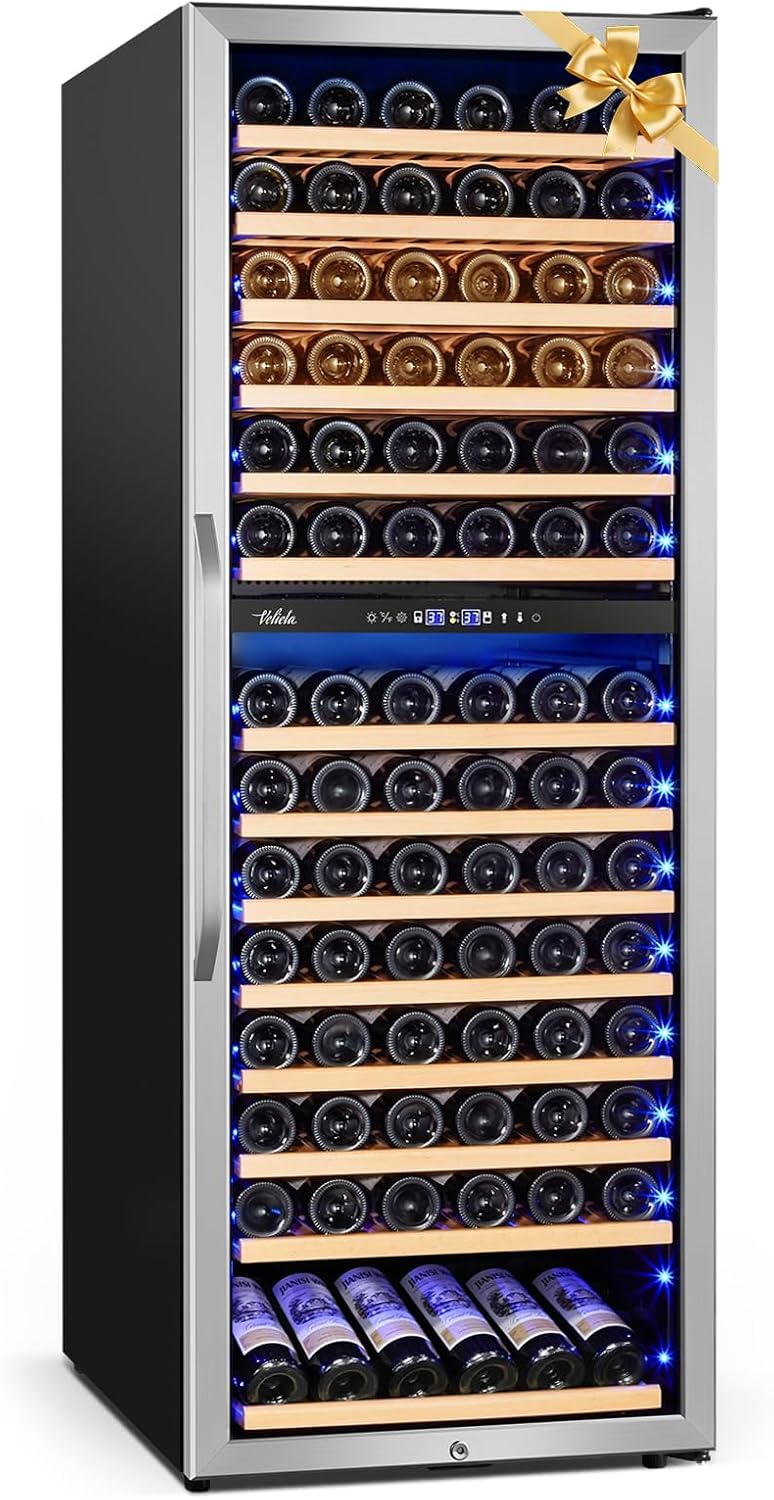
| Cooling Method | Compressor |
|---|---|
| Number Of Shelves | 14 |
| Number of Sections | 2 |
| Defrost System Type | Automatic |
| Capacity | 13.5 cubic feet |
This Velieta 24-inch dual-zone wine cooler is built for serious storage and controlled temperature management. It uses a compressor cooling system with two independently set zones so you can keep whites and reds at their ideal ranges (upper zone about 40 to 55 F, lower zone about 55 to 65 F). The cabinet offers a high bottle capacity with 14 wood and wire shelves and a lockable glass door with internal blue lighting that reduces UV exposure while making bottles easy to see. Controls are on an LED display and the unit includes automatic defrost, a temperature memory after power loss, and a sound reduction system intended to keep compressor noise low. In real-world garage use expect robust cooling performance and stable temperatures, though the compressor and size mean it is large and heavy and will need adequate ventilation and a dedicated circuit in some installations. The fridge is freestanding and matte stainless steel finished so it fits utility spaces, and removable shelves simplify reconfiguring for odd bottle shapes.
Best for: Buyers who prioritize consistent, professional-level temperature control and large capacity for long-term wine storage in a non-climate-controlled garage environment.
Less Ideal for: Not a good choice for buyers needing a compact, lightweight cooler for tight spaces or for occasional short-term chilling.
- True dual-zone compressor cooling for separate red and white storage
- Large internal capacity with 14 wood and wire shelves for many bottles
- LED digital controls with temperature memory after power loss
- Automatic defrost and sound reduction features for quieter, lower-maintenance operation
- Very large and heavy cabinet that requires sufficient floor space and ventilation
- Annual energy consumption is relatively high compared with small thermoelectric coolers
Verdict: Choose this unit if you need robust compressor cooling and large dual-zone capacity to store and protect a sizable wine collection in a garage setting.
Tylza 15" Dual Zone Wine Fridge

| Capacity | 3.6 cubic feet / 30 bottles |
|---|---|
| Temperature Range | Upper 40-55°F, Lower 55-65°F |
| Installation Type | Built-In or Freestanding |
| Cooling Method | Compressor (Rotary Scroll) |
| Shelves | 6 beech wood removable shelves |
This compact 15-inch wine fridge offers a true dual-zone layout with separate temperature ranges for red and white storage, making it useful for small collections or under-counter installation. It uses a compressor cooling system with rotary scroll compressor technology and features six beech wood shelves, low-E tempered glass door, touch controls and a key lock for security. The unit supports thermostat control, automatic defrost and a memory function that restores the last temperature after a power interruption, and two LED light-timing options help avoid long light exposure. In practice it cools quickly and runs quietly thanks to vibration-suppressing feet and an anti-shake design, though like most compact compressors it produces some background noise and benefits from the 24-hour leveling/post-delivery rest recommendation. The removable shelves let you fit larger bottles, but the 30-bottle capacity limits it to modest collections. For buyers who want a space-saving built-in look with separate zones for different wines, this is a practical, feature-rich option; those needing large cellar capacity or the absolute quietest thermoelectric operation should look elsewhere.
Best for: Buyers who want a compact under-counter wine cooler with separate temperature zones and practical features for a modest personal collection and who value verified performance and reliability.
Less Ideal for: Those who need large long-term cellar capacity or a completely silent, vibration-free wine storage solution.
- Dual-zone temperature control for storing reds and whites at separate ranges
- Compact built-in or freestanding design fits under counters
- Six removable beech wood shelves allow flexible bottle arrangements
- Touch controls, temperature memory after power loss, and key lock add convenience and security
- Compressor cooling with anti-shake feet delivers efficient cooling and relatively low noise
- 30-bottle capacity is small for serious collectors
- Compressor units produce some background noise compared with thermoelectric coolers
Verdict: A feature-packed 15-inch built-in wine cooler that gives small collectors separate temperature zones and secure, reliable cooling in a compact footprint.
Kalamera 24" Dual-Zone Wine Fridge

| Capacity | 5.3 cubic feet |
|---|---|
| Cooling Method | Compressor |
| Refrigerant | R-600A |
| Installation Type | Built-In |
| Number Of Shelves | 12 |
This Kalamera 24" dual-zone wine and beverage fridge is designed for under-counter installation or freestanding use and keeps wine and drinks at two independently controlled temperatures. The cabinet separates wine and beverage storage so you can set the left zone for wine (40 to 66°F) and the right zone for colder beverages (38 to 50°F), while a compressor-based cooling system aims to maintain stable temperatures with relatively low noise. The unit includes a mix of wooden and metal removable shelves to hold bottles and cans and a double-glass, UV-resistant door to reduce light exposure. Practical features include adjustable foot pads for leveling when built in and a power-off temperature memory that restores settings after an outage. Downsides are its fairly high annual energy consumption and substantial weight, which make installation and long-term running cost considerations for cautious buyers. The stainless steel door gives a clean built-in look but may show fingerprints in everyday use.
Best for: Buyers who want a built-in-capable cooler that keeps wine and drinks at separate, precise temperatures and prefer a conservative, durable appliance with practical features for home use.
Less Ideal for: People looking for an ultra-lightweight or extremely low-energy countertop cooler, or those who need a higher-capacity professional cellar-grade unit.
- True dual-zone controls for separate wine and beverage temperatures
- Built-in friendly design with stainless steel front and adjustable leveling feet
- Mix of wooden and metal movable shelves for flexible storage
- Double-glass UV-resistant door to protect wine from light
- Compressor cooling provides steady, low-noise operation
- Relatively high annual energy consumption compared with compact units
- Heavy unit that may require help for installation
Verdict: Choose this Kalamera if you need a built-in-style dual-zone cooler that reliably stores wine and colder beverages separately with a durable, appliance-grade design.
Choosing the Right Dual-Zone Wine Cooler for Garages: Key Factors to Consider
Temperature Range and Accuracy
A garage can experience much wider temperature swings than a conditioned room, so a cooler with a broad operable range and accurate setpoint control matters. You want units that can reliably hold typical white-serving temps in one zone and red-serving or short-term aging temps in the other. Tight accuracy reduces the risk of repeatedly exposing bottles to harmful high or low temperatures.
Look for digital controls with clear readouts and the ability to adjust in small increments. Consider how the cooler performs when garage ambient temperatures rise during the day and fall overnight; units that shift less are better for preservation.
Insulation and Door Sealing
Effective insulation reduces the workload on the cooling system and helps maintain internal temperatures when the garage heats up. A well-sealed door prevents moist, warm air from infiltrating and limits condensation risk. Thicker cabinet walls, double-pane or tinted glass doors with low-emissivity coatings, and reliable gaskets all contribute to better thermal performance.
Good sealing also guards against dust and pests common in garages. Check for tight door latches and a gasket profile that compresses evenly across the door perimeter to avoid weak points where warm air can leak in.
Vibration Dampening and Compressor Isolation
Vibration can disturb sediment in aging wines and accelerate chemical reactions that degrade flavor. Garages may have uneven floors, power tools, or nearby equipment that increases ambient vibration, so look for coolers with compressor isolation, rubber mounting, or other dampening features. Internal shelving that secures bottles and limits contact is also helpful.
Some designs use thermoelectric cooling that produces less vibration but may struggle in hot garages. Compressor-based systems with good isolation usually offer stronger cooling performance; weigh the trade-offs based on how hot your garage gets and how sensitive your collection is to vibration.
Capacity and Shelf Configuration
Think about how many bottles you need to store now and in the near future. Shelf layout affects usable storage more than the headline bottle count. Removable or sliding shelves make loading and retrieving bottles easier in a tight garage space, and adjustable rails allow mixed bottle sizes. Consider whether you need a dedicated zone for larger-format bottles or a flexible configuration that converts shelves between rows and single-bottle storage.
Also account for ventilation space behind and above the unit in the garage. Tight placement can reduce cooling efficiency and shorten service life, so confirm clearance requirements when planning installation.
Operating Range and Power Considerations
Not all coolers are rated to operate reliably at high ambient temperatures. Check the manufacturer's stated ambient operating range and choose a cooler that can handle your garage's typical summer highs and winter lows. Units rated for lower or higher ambient temperatures will use more energy when compensating, so expect different running costs and compressor cycles.
Consider power source placement and whether the cooler needs a dedicated circuit. Some garages have older wiring or shared circuits tied to workshop equipment; ensure the cooler's electrical requirements match your garage setup to avoid nuisance trips or overloads.
UV Protection and Door Type
Direct and indirect sunlight in garages can raise internal temperatures and damage wine over time. Glass doors should offer some UV rejection to prevent lightstrike on delicate wines. Tinted or low-UV glass is beneficial when the cooler will sit near a window or in a well-lit area of the garage.
Solid doors provide the best light protection but reduce visibility for quick checks. Decide whether you prefer a display door with UV protection or a solid door that emphasizes protection over presentation.
Where in the Garage to Place Your Cooler
Placement affects performance as much as the cooler itself. Choose a spot that stays as thermally stable as possible, such as along an interior wall rather than an exterior door or a bay door that opens frequently.
Leave recommended clearance around the sides and rear for airflow. Avoid corners where heat can build and steer clear of areas near heat sources like water heaters, furnaces, or direct sun through windows.
- Place on a level, vibration-minimizing surface.
- Allow clearance specified in the installation instructions for ventilation.
- Avoid high-traffic or tool areas that generate extra vibration.
Ventilation and Installation Tips
Proper ventilation is essential. Some coolers require front-venting installation for built-in or under-counter applications, while freestanding models need rear clearance for condenser airflow. In a garage, ensure vents are not blocked by storage or insulation materials.
If you plan to install a cooler into a cabinet or enclosure in the garage, follow the manufacturer's recommendations for venting and temperature limits to prevent overheating and shorten lifespan.
- Check whether the unit is front-venting if you plan to set it in a tight nook.
- Keep floor drains and moisture sources away from the cooler base.
- Use a drip tray or slight elevation if the garage floor can collect moisture.
Managing Humidity and Condensation
Wine appreciates moderate humidity, but garages can become excessively humid or dry depending on season and climate. Too low humidity can dry corks; too high can promote mold. Some coolers include humidity control features, but you can also use external humidity solutions like silica packs or small containment methods within the cooler.
Watch for condensation on glass doors during warm, humid periods. Good insulation and door seals reduce this risk, but if condensation appears, inspect the gasket and ventilation and consider relocating the unit to a less humid spot.
- Use humidity monitors if you plan to long-term store valuable bottles.
- Avoid placing the cooler directly on a concrete slab without some insulation or riser to reduce thermal transfer.
Power Outages and Short-Term Storage Strategies
Garages can be more exposed to power interruptions. During outages, a full wine cooler holds temperature longer than an empty one. Keep bottles together rather than cycling them in and out frequently when power is unreliable.
If outages are frequent, consider a cooler with better insulation and slower temperature drift during downtime. For short-term outages, cover the unit with blankets is not recommended; instead, minimize door openings and move bottles to a more temperature-stable location if available.
- Keep a thermometer inside to track temperature shifts during outages.
- Limit door openings to preserve internal temperatures when power is out.
Maintenance and Long-Term Care in a Garage Environment
Routine maintenance keeps a cooler operating longer. Check and replace door gaskets that show wear, clean condenser coils if accessible, and level the unit periodically to prevent compressor stress. Garages can be dustier than indoor spaces, so coil cleaning intervals may need to be more frequent.
Inspect shelves and bottle racks for sagging or damage. Replace worn shelving hardware to prevent bottle slippage and breakage. Regularly monitor interior temperature and humidity logs if the unit supports that functionality.
- Schedule coil cleaning every 6 to 12 months, more often in dusty garages.
- Lubricate or tighten hinges and latches to maintain door sealing.
How We Chose the Best Dual-Zone Wine Cooler for Garages
We shortlisted dual-zone wine coolers that are specifically suited to garage environments by focusing on features that matter most for long-term bottle care. Primary criteria included temperature stability across both zones, measured by the ability to hold set temperatures within a narrow range under varying ambient conditions. Insulation and door sealing were evaluated to gauge how well a unit resists external heat and humidity. Vibration mitigation and compressor isolation were considered because garage setups often expose coolers to more mechanical disturbance. Capacity and shelf versatility mattered for real-world storage, including accommodation for standard and larger-format bottles. Controls and monitoring were reviewed for clarity and reliability, emphasizing precise digital setpoints and alarms. We excluded single-zone units and designs intended only for indoor cellar use. Models with insufficient insulation, poor vibration control, or unclear temperature control readouts were filtered out. The resulting list prioritizes units that balance robust thermal performance, usable storage, and features that reduce the unique risks of garage storage.
Our full evaluation process is outlined in our review methodology.
FAQ
Can I run a dual-zone wine cooler in a garage year-round?
Often yes, but it depends on the cooler's ambient operating range. Choose a unit rated to operate at your garage's typical summer highs and winter lows. Units not rated for extreme ambient temperatures may struggle and cycle more frequently.
Should I choose a compressor or thermoelectric cooler for garage use?
Usually compressor-based systems handle high ambient temperatures more reliably, while thermoelectric units run quieter and produce less vibration but can be less effective in hot garages. Match the cooling type to your garage temperature profile and sensitivity to vibration.
How much ventilation clearance does a garage model need?
Clearance requirements vary by design. Freestanding units generally need rear and side clearance for airflow, while front-venting models can be set into tighter spaces. Always follow the manufacturer's specified clearances to prevent overheating.
Is it safe to store long-term aging wine in a garage cooler?
It can be, provided the cooler maintains stable temperatures, controls vibration, and keeps moderate humidity. Long-term aging is best in a stable, cellar-like environment, so choose a unit with strong stability and insulation if you plan to age bottles in a garage.
How do I reduce vibration in a garage where I keep a wine cooler?
Place the cooler on a solid, level platform or anti-vibration pads, avoid positioning near heavy machinery or high-traffic zones, and choose models with compressor isolation or internal dampening features to minimize transmitted vibration.
Final Verdict
For garage wine storage, prioritize coolers that combine reliable temperature stability, strong insulation, and vibration mitigation. Balance capacity and shelf flexibility with the unit's ambient operating range to match the seasonal conditions in your garage. If your garage runs hot, favor models rated for higher ambient temps and with good sealing; if vibration is a concern, look for compressor isolation or quieter cooling methods. Use the factors above to weigh tradeoffs and choose a cooler that protects your collection with consistent performance.