
Note: This article contains affiliate links. If you click on these links and make a purchase, we may earn a small commission at no extra cost to you. This helps support our research and content. Read our full affiliate disclosure here.
A properly configured dual-zone wine cooler makes it easy to store reds and whites at their ideal serving temperatures without dedicating separate appliances. Whether you want a compact unit for a small kitchen or a larger built-in option, choosing the right cooler affects how well bottles mature and how conveniently you serve them. This guide narrows the field to the top shortlisted Dual-Zone Wine Coolers and explains the practical tradeoffs you should weigh, such as temperature range, usable capacity, and vibration control. Read on for a clear look at what matters and which features tend to match common cellar and entertaining needs.
Top Picks at a Glance
| Best Overall The best all-around choice for most situations | BODEGA 24" Dual Zone Wine Cooler |  |
| Best Quality Built to a higher standard if you want something more solid | Zephyr Presrv 24" Dual-Zone Wine Fridge |  |
| Best Value The sweet spot between price and what you get | NutriChef Dual-Zone Wine Cooler PKCWCDS275 |  |
| Top Rated A top-rated pick with lots of positive feedback | Velieta 24-Inch Dual Zone Wine Cooler |  |
| Most Popular A crowd favorite that many people choose with confidence | Velieta 24 Inch Dual Zone Wine Cooler | 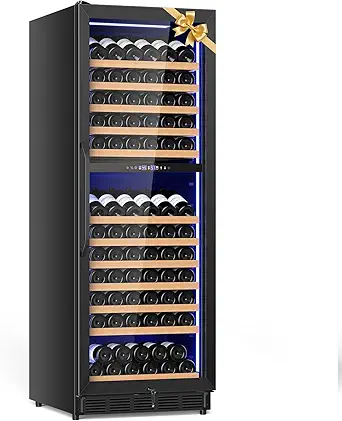 |
| Best Seller A high-volume bestseller chosen again and again | Kalamera 24 Inch Dual-Zone Wine Fridge |  |
BODEGA 24" Dual Zone Wine Cooler

| Capacity | 46 Bottles |
|---|---|
| Temperature Range | 41°F–72°F |
| Cooling Method | Compressor |
| Shelves | 5 beech wood slide-out shelves |
| Installation Type | Freestanding/Built-In/Undercounter |
This BODEGA 24" dual-zone wine cooler is a compact built-in or freestanding unit that separates whites and reds with independent temperature zones adjustable between roughly 41 and 72°F. It uses a compressor cooling system with vibration absorption and automatic defrost, so it reaches and holds serving temperatures reliably even in warmer kitchens. The unit holds 46 standard Bordeaux bottles across five slide-out beech shelves, which makes accessing bottles easy and reduces vibration compared with wire racks. A digital touch panel offers precise 1°F adjustments and a memory function that restores settings after power interruptions. The double-layer tempered glass blocks UV and the stainless steel trim gives a clean kitchen look while interior LED lighting shows the collection without adding heat. Practical considerations: it needs front ventilation for built-in installs and a small clearance for leveling feet, and while the listing claims very quiet operation, compressor systems can still be louder than thermoelectric units in some settings. Overall it suits users who want stable, cellar-like temperatures and decent capacity in a 24-inch footprint.
Best for: Buyers who want a reliable, cellar-capable dual-zone cooler in a 24-inch footprint for entertaining or growing a home collection and value precise temperature control and vibration protection.
Less Ideal for: People needing a completely silent unit for a bedroom or office, or those who require a slimmer undercounter depth than this 24-inch model.
- True dual-zone control for separate white and red serving temperatures
- Compressor cooling with vibration absorption for stable, cellar-like temperatures
- Five slide-out beech wood shelves for easier bottle access and reduced vibration
- Double-glazed UV-protected glass door to protect wine from light exposure
- Front-vent design allows built-in or freestanding installation in a 24-inch space
- Requires clearance and front-vent installation for built-in use which may limit placement options
- Compressor units can produce more noise than thermoelectric coolers in very quiet rooms
Verdict: A solid 24-inch dual-zone cooler for collectors who want precise, compressor-based temperature control and a 46-bottle capacity in a built-in or freestanding package.
Zephyr Presrv 24" Dual-Zone Wine Fridge

| Capacity | 5.2 cubic feet |
|---|---|
| Bottle Capacity | 21 bottles |
| Can Capacity | 64 12oz cans |
| Temperature Range (beverage) | 38° – 65° F |
| Temperature Range (wine) | 40° – 65° F |
The Zephyr Presrv 24" dual-zone cooler separates wine and beverage zones so you can store chilled drinks and wines at their preferred temperatures simultaneously. It uses a compressor with inverter technology, vibration dampening, and carbon air filtration to protect bottles, while dual-pane low-e argon-filled glass doors and electronic touch controls make monitoring easy. The interior offers a mix of full-extension black wood racks for bottles and slide-out glass shelves for cans, plus 3-color LED lighting and a door-open alarm. Practical benefits include flexible built-in or freestanding installation, clear temperature ranges for each zone, and thoughtful preservation features that reduce vibration and odor. Expect a premium footprint and weight that suit kitchens, wet bars, or dedicated beverage centers rather than tight spaces, and the stainless steel French-door styling is more appliance-like than compact countertop coolers. For buyers who need precise dual-temperature storage and solid preservation features, this model delivers; if you want ultra-compact portability or the lowest possible price, smaller single-zone units may be a better fit.
Best for: Buyers who prioritize accurate dual-temperature storage and bottle preservation for a home bar or kitchen and who value construction and features that protect wine quality.
Less Ideal for: People needing a tiny countertop cooler, frequent movers, or buyers whose top priority is the lowest upfront cost should consider smaller single-zone options instead.
- True dual-zone control with distinct temperature ranges for wine and beverages
- Compressor with inverter and vibration dampening to protect bottle sediment and flavor
- Mixed shelving (full-extension wood racks plus slide-out glass shelves) for flexible storage of bottles and cans
- Carbon filter and dual-pane low-e argon-filled glass for improved air quality and insulation
- Large footprint and weight make it less suitable for very small kitchens or countertop use
- Designed as a premium built-in or freestanding appliance, so it is pricier than compact single-zone coolers
Verdict: If you want reliable, precision dual-zone cooling and features that preserve wine quality for a home bar or kitchen, this Zephyr delivers a feature-rich, appliance-grade solution.
NutriChef Dual-Zone Wine Cooler PKCWCDS275

| Capacity | 27 Bottle |
|---|---|
| Temperature Range | 41°F to 64°F |
| Cooling Method | Compressor |
| Voltage | 120 |
| Installation Type | Freestanding |
The NutriChef PKCWCDS275 is a compact dual-zone wine cooler designed to store and chill up to 27 standard bottles while offering separate temperature control and quiet compressor cooling. Its digital touch panel and LED display make selecting and monitoring temperatures simple, and the internal circulation fan helps maintain consistent conditions across the two zones. Polished chrome racks and an interior LED light give a tidy presentation, and the recessed handle and glass door suit countertop or freestanding placement in kitchens or offices. Practical buyers will appreciate the narrow footprint that fits in tight spaces and the manual defrost design that keeps electronics straightforward. Expect modest energy use and a basic feature set: there is no advanced humidity control or high-efficiency rating, and the unit uses a manual defrost and a one-key lock rather than premium security features. For someone after a straightforward, space-saving dual-zone cooler that looks clean and keeps bottles at serving or storage temperatures, this model performs well within its class.
Best for: Buyers who want a practical, space-conscious dual-zone cooler to store a modest collection and reliably keep reds and whites at separate serving temperatures.
Less Ideal for: Collectors seeking long-term cellar conditions, precision humidity control, or the highest energy efficiency should consider larger or more advanced cellar units instead.
- True dual-zone control with adjustable 41°F–64°F range for different wine types
- Compact freestanding design fits in narrow spaces and on countertops
- Digital touch controls and LED display for easy temperature management
- Quiet compressor operation with internal circulation fan for even cooling
- Manual defrost system requires occasional user maintenance
- No advanced humidity control or high energy-efficiency certification listed
Verdict: A compact, no-frills dual-zone cooler that reliably stores about two dozen bottles and keeps reds and whites at separate serving temperatures.
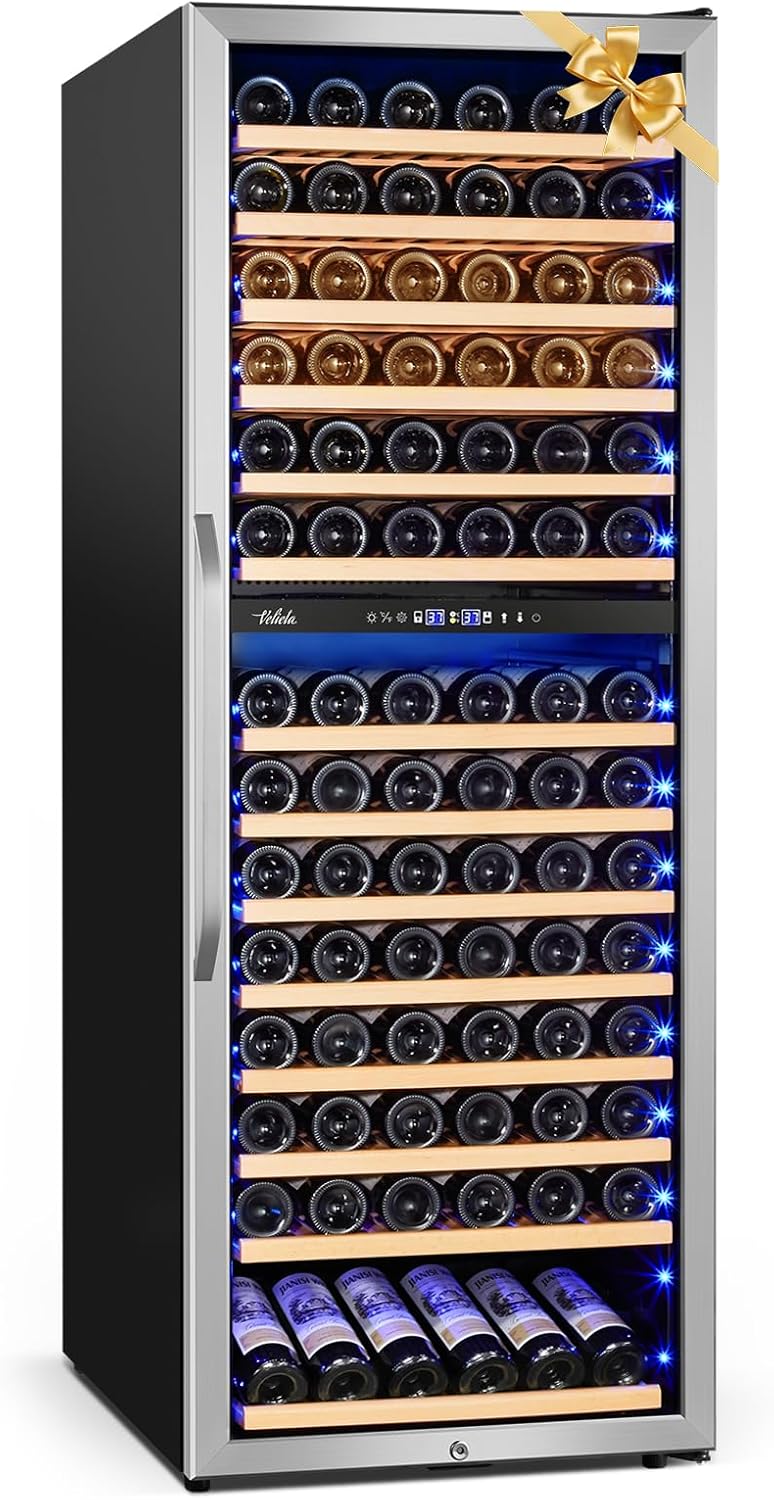
Velieta 24-Inch Dual Zone Wine Cooler
| Cooling Method | Compressor |
|---|---|
| Number Of Shelves | 14 |
| Defrost System Type | Automatic |
| Number of Sections | 2 |
| Capacity | 13.5 cubic feet |
The Velieta 24-inch dual-zone wine cooler is built to store reds and whites at separate temperatures using a compressor-driven cooling system and a digital LED control. In normal use you set the upper and lower zones independently (upper 40 F to 55 F, lower 55 F to 65 F) and load bottles onto a mix of wood and wire shelves; the unit also includes removable shelves and a keyed lock for security. Practical benefits include a very large stated capacity suitable for large collections, automatic defrost, a sound reduction system and a temperature memory function that restores settings after a power loss. The compressor design delivers stable, low-vibration cooling that helps protect cork seal integrity, and the matte stainless door with internal blue lighting helps viewing while reducing visible light exposure. Trade-offs are its large footprint and stated energy consumption, and owners should expect heavy weight and the usual installation considerations for a freestanding compressor fridge rather than a lightweight thermoelectric cooler.
Best for: Buyers who prioritize dependable, stable wine storage for a sizeable collection and want separate temperature zones for reds and whites.
Less Ideal for: People who need a small, lightweight, low-energy countertop cooler or who have very limited floor space should consider more compact options.
- True dual-zone control for separate red and white storage
- Compressor cooling with low vibration for stable temperatures
- Large internal capacity with 14 shelves and removable shelving options
- Temperature memory function restores settings after power loss
- Security lock and LED display for easy, secure operation
- Large and heavy unit that requires significant floor space and installation planning
- Higher annual energy consumption compared with small thermoelectric coolers
Verdict: Choose this Velieta dual-zone cooler if you need dependable compressor cooling and separate temperature zones to store a large wine collection safely.
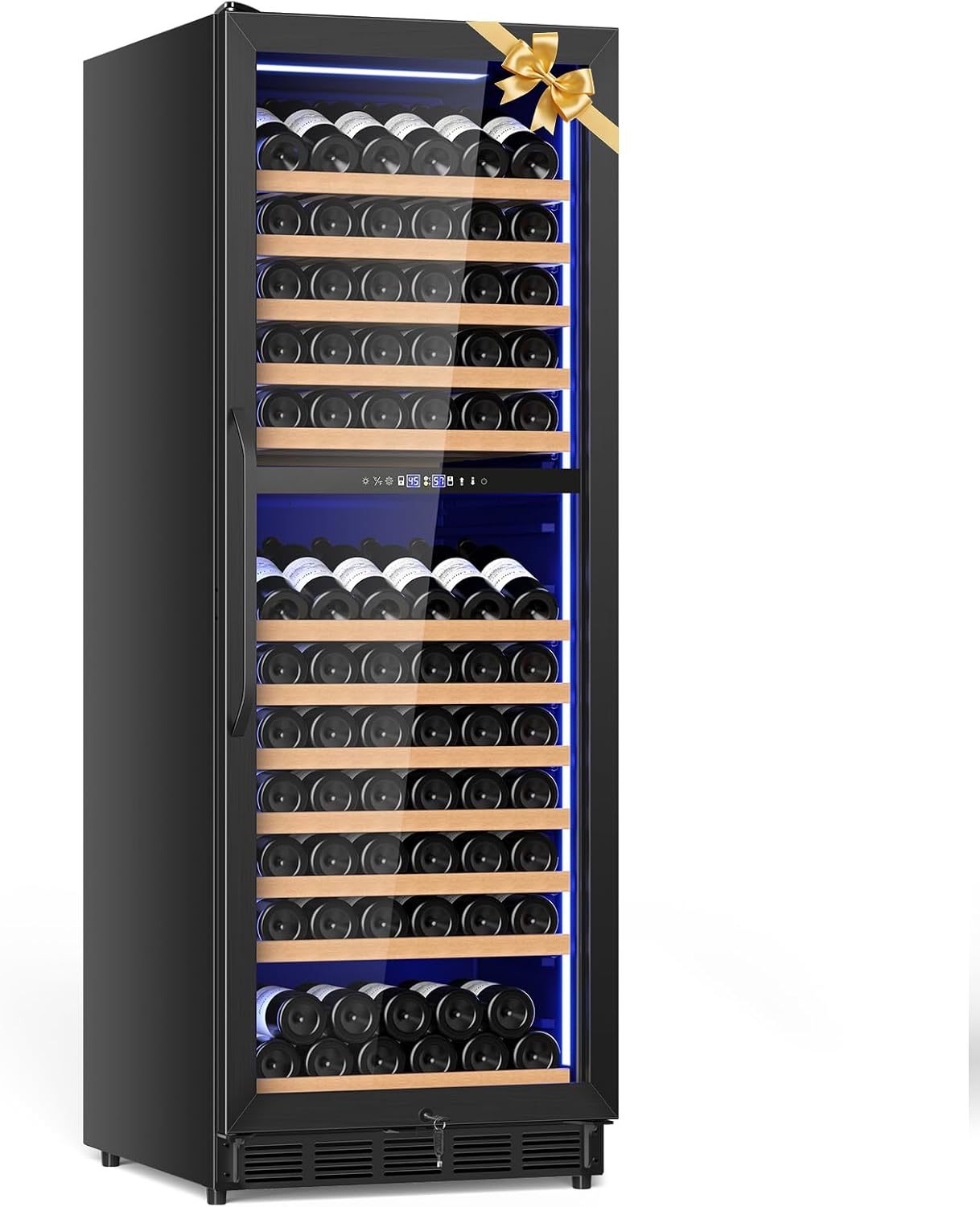
Velieta 24 Inch Dual Zone Wine Cooler
| Configuration | Freezerless |
|---|---|
| Cooling Method | Compressor |
| Number Of Shelves | 12 |
| Voltage | 115 volts |
| Power Source | Corded Electric |
This Velieta 24 Inch Dual Zone Wine Cooler is a compressor-driven fridge that splits the cabinet into two independently controlled temperature zones so you can store whites and reds at their ideal serving temperatures. It is built around a powerful, low-noise compressor and claims ±1°F accuracy, with an LED touchscreen control and blue interior lighting for display and preservation. The cabinet holds a very large collection on 12 beechwood shelves and two display shelves, and smooth slide rails make bottle access easier. Front ventilation and the option to install freestanding or built-in add installation flexibility, and the keyed lock helps prevent accidental changes. Practical drawbacks include its very large capacity and footprint, which require planning for placement and may be more than most home collectors need, and the product information does not list an energy efficiency certification. For collectors who want a spacious, quiet dual-zone cooler with display features, this is a capable option; buyers needing a smaller, more efficient undercounter solution should look elsewhere.
Best for: Buyers assembling or expanding a serious wine collection who prioritize precise dual-zone temperature control, quiet compressor performance, and a display-friendly cabinet.
Less Ideal for: Those needing a compact undercounter cooler or a small secondary fridge for occasional use should consider smaller, lower-capacity models instead.
- Independent dual temperature zones for storing whites and reds at different temperatures
- Large 13.5 cu ft capacity with 12 beechwood shelves and display shelves for extensive collections
- Quiet, compressor-based cooling with claimed ±1°F accuracy
- LED touchscreen controls, blue ambient lighting, and slide rails for easy access
- Front ventilation and freestanding or built-in installation flexibility
- Very large capacity and physical footprint may be excessive for casual collectors
- No listed energy efficiency certification in the product details
Verdict: Choose this Velieta dual-zone cooler if you need a spacious, quiet, and display-ready compressor wine refrigerator that keeps whites and reds at precise serving temperatures.
Kalamera 24 Inch Dual-Zone Wine Fridge

| Capacity | 5.3 cubic feet |
|---|---|
| Cooling Method | Compressor |
| Installation Type | Built-In |
| Refrigerant | R-600A |
| Number Of Shelves | 12 |
This Kalamera 24-inch dual-zone fridge separates wine and beverages into independent left and right temperature zones so you can store wines at 40-66°F while keeping sodas or beer colder at 38-50°F. It is built around a compressor cooling system with UV-resistant double-glass doors and a stainless steel face that lets you install it under counter or use it freestanding. Inside you get a mix of wooden and metal movable shelves to fit bottles and cans in different layouts, plus adjustable feet for leveling. The unit includes temperature memory after power loss and claims relatively quiet operation from its compressor. Practical limitations are typical for its class: it is moderately heavy and requires a dedicated 110V connection and built-in clearance if installed under cabinets, and annual energy consumption is on the higher side for smaller fridges. For cautious buyers seeking a straightforward dual-zone under-counter fridge, this model blends useful storage flexibility and an attractive stainless look.
Best for: Buyers who want a reliable, hotel-style dual-zone cooler to store both wine and chilled beverages neatly under a counter and prefer a straightforward, factory-quality appliance with easy shelf reconfiguration.
Less Ideal for: Those who need the absolute lowest energy use or a lightweight, portable beverage cooler for occasional use away from a fixed installation.
- True dual-zone control with separate temperature ranges for wine and beverages
- UV-resistant double-glass doors help protect wine from light exposure
- Mix of movable wooden and metal shelves for flexible bottle and can storage
- Built-in capable stainless steel front with adjustable feet for leveling
- Power-off temperature memory restores set temperatures after outages
- Relatively high annual energy consumption for a 5.3 cu ft unit
- Heavy and requires planning for built-in installation and electrical access
Verdict: A dependable built-in dual-zone fridge that offers separate wine and beverage temperatures with flexible shelving and a stainless under-counter look.
Choosing the Right Dual-Zone Wine Cooler: Key Factors to Consider
Temperature Range and Zone Independence
Dual-zone coolers should offer clearly separated temperature settings so you can store reds and whites without compromise. Look for models where each compartment has its own thermostat and evenly distributed airflow so setpoints hold across the whole zone.
If zones share a single compressor without effective separation, you may see bleed-over that makes one compartment warmer or cooler than intended. Consider the lowest and highest temperatures each zone supports and whether the range covers both long-term storage and serving temperatures you prefer.
Usable Capacity and Rack Layout
Capacity numbers can be misleading if shelves are fixed or poorly arranged. Check how many full-size Bordeaux bottles will actually fit and whether the racks accommodate wider bottles or magnums.
Adjustable or sliding shelves increase usable space and make it easier to mix red and white bottles. For built-in installations, measure interior depth as well as exterior dimensions to ensure bottles slide in and out without scraping the door.
Cooling Technology and Energy Use
Thermoelectric and compressor-based systems both appear in dual-zone coolers. Compressor units typically deliver stronger cooling and wider temperature range, which is important for consistent cellar conditions and larger capacities.
Thermoelectric models are quieter and use less power in small, low-capacity units but struggle in hot ambient conditions. Consider where the cooler will live and how often the door will be opened to judge which system fits your usage pattern.
Vibration Control and Light Protection
Excess vibration can disturb sediment and accelerate aging in wine, while UV light degrades delicate aromas. Seek coolers with vibration-damping features such as insulated compressors, rubber mounts, or shelving that isolates bottles from motor vibration.
Doors with UV-filtering glass and internal LED lighting with low heat output help protect wine while still letting you view your collection. Evaluate how lights are positioned and whether they switch off automatically or allow dimming.
Noise Level and Placement Considerations
Noise matters when the cooler is in living spaces. Compressor systems can be perceptible during cycles, so check decibel ratings and user reports of hum or resonance when the unit is running.
Also consider ventilation requirements for built-in installations. Some units need a ventilated front or a gap at the top and back. Noise and airflow needs will influence where the cooler can be placed comfortably in your home.
Installation Type and Clearance Needs
Decide whether you need a freestanding or built-in dual-zone cooler. Built-in models require specific clearance and front-venting capabilities, while freestanding units need room for rear ventilation and more flexible placement.
Measure door swing, undercounter height, and nearby heat sources before you buy. Incorrect clearances or blocked vents reduce cooling performance and may shorten the unit's lifespan.
Sizing Your Dual-Zone Cooler to Your Collection
Estimate how many bottles you reach for regularly versus those you keep for aging. A small unit sized for serving often holds 12 to 24 bottles, while a cellar-style cooler can store 50 or more. Prioritize usable shelf space over headline bottle counts and consider how many bottles you want at serving temperature at any one time.
Think about future growth and entertaining needs. If you frequently host tastings or rotate through many bottles, choose a unit with flexible shelving and a bit more capacity than your current collection.
- Measure bottle dimensions for wide or tall formats before finalizing capacity needs
- Plan shelf layout to separate ready-to-serve bottles from long-term storage
- Account for door swing and installation location when sizing
Built-In Vs Freestanding: Which Suits Your Kitchen?
Built-in dual-zone coolers create a seamless look when installed under counters but often require front ventilation. Verify the cabinet cutout and ventilation clearances the manufacturer specifies before planning installation.
Freestanding units are more flexible in placement and often offer deeper interiors, but they need space for rear airflow. Consider both style and practical installation constraints when choosing which type fits your layout.
- Built-in: tidy look, requires front venting and precise dimensions
- Freestanding: flexible placement, may need extra rear clearance
Maintaining Optimal Conditions Over Time
Routine maintenance helps preserve temperature stability. Clean condenser coils and vent openings periodically and replace door gaskets if they show wear. Regular maintenance reduces strain on the cooling system and prevents temperature drift.
Keep the cooler in a stable environment away from direct sunlight and heat sources. Frequent large temperature swings from room heat can force the unit to work harder and shorten its lifespan.
- Check and replace door seals as needed
- Keep vents and coils dust-free
- Limit door openings during hot weather to maintain set temperatures
Organizing Mixed Collections
Use the upper and lower zones strategically: reserve one zone for long-term storage and the other for bottles you access frequently. Alternatively, set one zone cooler for whites and the other slightly warmer for reds, matching typical serving temperatures.
Label shelves or use simple layout rules to prevent accidental cross-storage. Rotating bottles so older stock sits at the back reduces the chance of forgetting bottles in the mix.
- Reserve a zone for whites at 45 to 55°F and reds at 55 to 65°F depending on preference
- Group by style or drinking window to simplify selection
- Use sliding shelves for easy access to the back of the cooler
Troubleshooting Common Performance Issues
If one zone is noticeably warmer than its setpoint, check door seals, ventilation, and whether the unit is overfilled. Poor airflow from crowded racks can create hot spots. Ensure vents between zones are unobstructed if the design relies on internal ducts.
Excessive vibration or buzzing often stems from uneven placement or loose mounting hardware. Level the unit, tighten fasteners, and review the manufacturer guidance for vibration isolation to restore quieter operation.
- Verify correct clearances and level installation
- Avoid overloading shelves that block airflow
- Inspect seals and vents before assuming compressor failure
How We Chose the Best Dual-Zone Wine Cooler
We selected Dual-Zone Wine Coolers that meet a practical combination of performance, convenience, and reliability benchmarks important to wine storage at home. Our primary evaluation criteria focused on temperature accuracy and range, usable bottle capacity and shelf flexibility, vibration and light protection, cooling system type and efficiency, and noise and installation options. We examined spec sheets and manufacturer data for consistent temperature separation between compartments and an ability to hold typical serving and storage setpoints for both red and white wines. We favored units with adjustable shelving or mixed-depth racks that make storing different bottle sizes simple. Units with excessive fan noise, poor vibration damping, or limited temperature control were excluded. We also filtered out products lacking clear specifications for humidity control and UV protection, since those affect long-term bottle condition. The result is a list of models that balance cellar-grade features with everyday home usability.
Our full evaluation process is outlined in our review methodology.
FAQ
What temperature should each zone be set to for serving?
For serving, many people set the white zone between 45 and 55 degrees Fahrenheit and the red zone between 55 and 65 degrees Fahrenheit. Exact temperatures depend on the style and your preference, but those ranges cover most whites and reds.
Can a small dual-zone cooler age wine long term?
Small units can maintain stable temperatures for medium-term storage, but long-term aging benefits from very stable humidity and minimal vibration. For extended cellaring, consider capacity, humidity control, and whether the unit can consistently hold a single low temperature if needed.
How much ventilation clearance does a built-in unit need?
Ventilation needs vary by design, but built-in units often require front or top ventilation and minimal gaps around the cabinet faces. Check the installation guide for exact clearances, and ensure vents are never blocked to maintain cooling performance.
Are thermoelectric dual-zone coolers quieter than compressor models?
Thermoelectric models are usually quieter because they lack a compressor, but they may struggle in warm rooms or with larger loads. Compressor models are more robust for wide temperature ranges and higher capacities but tend to make more noise during cycles.
How can I minimize vibration in my cellar fridge?
Place the cooler on a level, stable surface and use rubber feet or vibration-damping pads if needed. Avoid placing it next to heavy appliances that create additional vibrations and ensure shelving isolates bottles from motor mounts.
Final Verdict
When choosing a dual-zone wine cooler, prioritize the temperature control and capacity that match how you store and serve wine. Balance cooling technology against noise and installation needs, and favor units with adjustable shelving and good vibration and light protection for real-world use. By focusing on temperature accuracy, usable storage, and proper placement, you can pick a cooler that reliably keeps both reds and whites at their best for entertaining and short- to medium-term aging.