
Note: This article contains affiliate links. If you click on these links and make a purchase, we may earn a small commission at no extra cost to you. This helps support our research and content. Read our full affiliate disclosure here.
If you squeeze lemons often, an easy-to-clean lemon juicer can save time and keep your kitchen tidy. You want an extractor that delivers consistent juice without creating a sticky cleanup chore. This guide highlights seven shortlisted options that balance efficient extraction with quick teardown and rinsing. We evaluated each model for how fast it comes apart, how thoroughly it rinses clean, and how well it extracts juice. Below are the top picks and practical guidance to help you pick the juicer that matches how you use citrus at home.
Top Picks at a Glance
| Best Overall The best all-around choice for most situations | Cuisinart Pulp Control CCJ-500P1 | 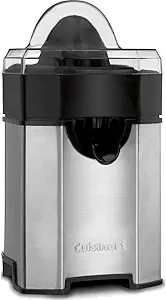 |
| Best Quality Built to a higher standard if you want something more solid | KitchenAid Citrus Squeezer |  |
| Best Value The sweet spot between price and what you get | Chef'n FreshForce Lemon Juicer |  |
| Best Budget The cheapest option that still gets the job done reliably | iStarcas Lemon Squeezer |  |
| Top Rated A top-rated pick with lots of positive feedback | Zulay Metal 2‑In‑1 Lemon Squeezer | 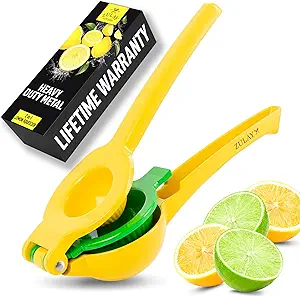 |
| Most Popular A crowd favorite that many people choose with confidence | BLACK+DECKER Citrus Juicer CJ625 |  |
| Best Seller A high-volume bestseller chosen again and again | Juilist Centrifugal Juicer AMR526 |  |
Cuisinart Pulp Control CCJ-500P1

| Power source | Corded Electric |
|---|---|
| Number of speeds | 3 |
| Wattage | 800 watts |
| Material | Stainless Steel |
| Capacity | 12 ounces |
The Cuisinart Pulp Control CCJ-500P1 is an electric citrus juicer designed to handle everything from small limes to large grapefruits with a simple push-down reamer and auto-reverse cone. It is used by placing halved fruit on the universal cone and letting the motor extract juice while you select one of three pulp-control settings to match your preference. Notable features include a final-spin function that wrings extra juice from the pulp, an extra-long snap-up spout to reduce drips, and removable parts that are dishwasher safe for fast cleanup. The 3 pulp settings and auto-reverse action make it efficient for daily breakfast use or occasional larger batches, and the stainless steel construction gives it a sturdy feel. Limitations are modest capacity — the included 12-ounce receptacle means frequent emptying for larger volumes — and the unit is a single-purpose citrus juicer rather than a full-size extractor. For buyers who want a compact, easy-to-clean machine tailored to citrus, it makes juicing quick and low-fuss.
Best for: Buyers who want a compact, reliable citrus-only juicer that is simple to use daily and emphasizes easy cleanup and adjustable pulp control.
Less Ideal for: People who want a multi-fruit extractor or who regularly juice large quantities will need a larger-capacity juicer or a full-size juicer-extractor instead.
- Adjustable 3-position pulp control lets you choose low, medium, or high pulp levels
- Auto-reversing universal cone and final-spin feature extract more juice from fruit
- Dishwasher-safe removable parts make cleanup quick and simple
- Extra-long snap-up spout reduces drips and fits taller glasses
- Stainless steel components provide a durable, easy-care surface
- Small 12-ounce juice capacity requires frequent emptying for larger batches
- Single-purpose citrus design cannot process non-citrus fruits or vegetables
Verdict: A compact, easy-to-clean citrus juicer that delivers efficient juice extraction with adjustable pulp control for everyday lemon and orange use.
KitchenAid Citrus Squeezer
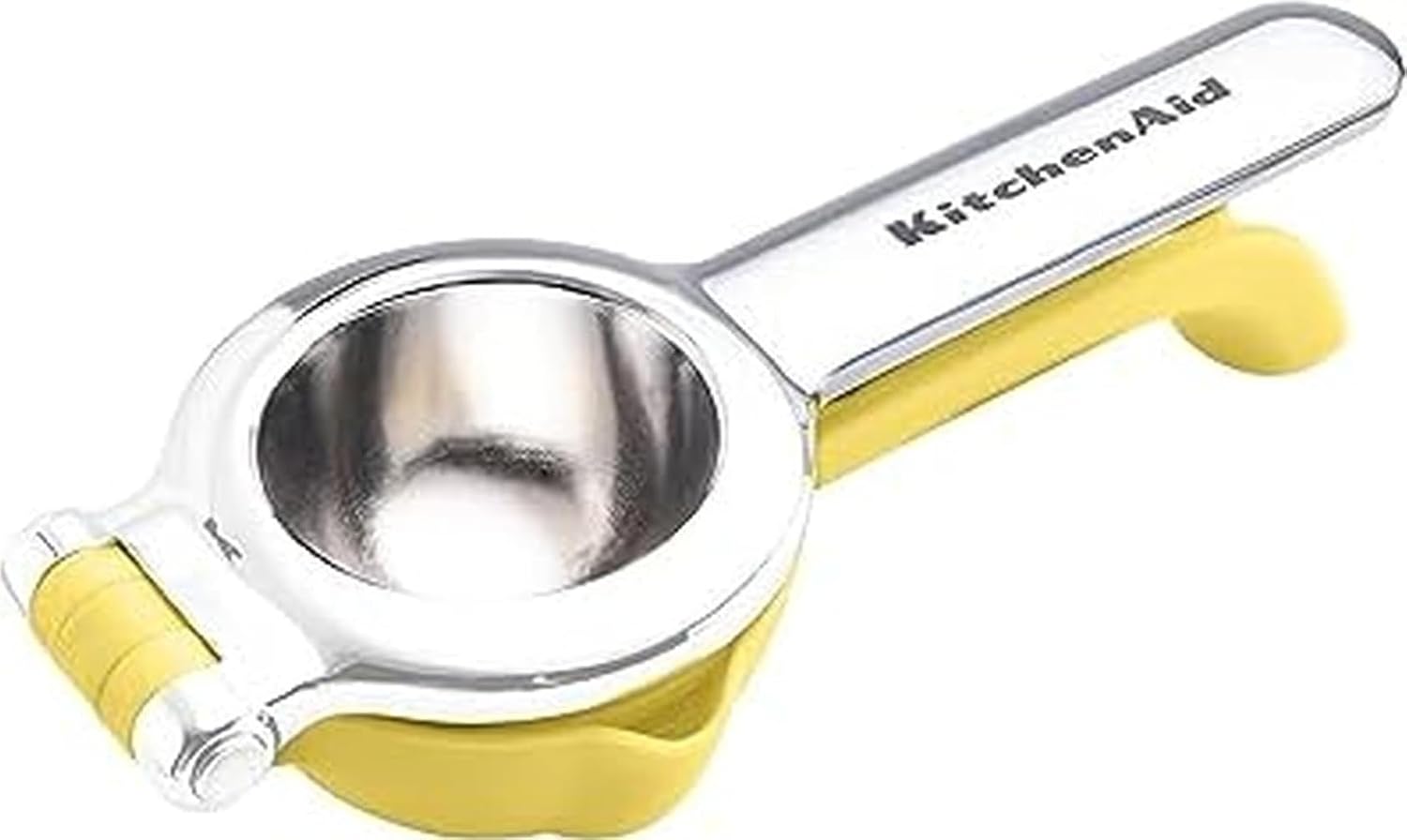
| Material | Aluminum |
|---|---|
| Power Source | Hand Powered |
| Special Features | Dishwasher Safe, Portable |
| Capacity | 0.5 liters |
The KitchenAid Citrus Squeezer is a simple handheld press designed to get maximum juice from lemons and limes while keeping counters tidy. You place a halved citrus fruit in the hopper, press the long handle down to extract juice into the built-in reservoir, then pour through the spout; the molded strainer traps seeds and most pulp so you get cleaner juice without extra filtering. Its aluminum and nylon construction feels sturdy and the flat base gives leverage for easier squeezing compared with small handheld reamers. Because the unit is dishwasher safe and the hopper contains the juice, cleanup is quick and mess-free — a clear plus for frequent use. Limitations are its single-purpose design and half-liter reservoir, which means you will need to empty it for larger batches or use multiple presses for juicing many fruits at once. It is manual, so it requires effort for large volumes but excels for routine kitchen use and occasional cocktail or recipe prep.
Best for: Buyers who want a durable, low-fuss handheld press that minimizes mess and is easy to clean after everyday lemon and lime use.
Less Ideal for: Not a good fit for users who need high-volume or fully automatic juicing for frequent large batches.
- Integrated hopper and spout contain juice for neater operation
- Built-in strainer catches seeds and most pulp for cleaner juice
- Dishwasher-safe materials make cleanup fast
- Sturdy aluminum and nylon construction provides good leverage and durability
- Manual operation requires physical effort for large juicing tasks
- Half-liter capacity means frequent emptying when juicing many fruits
Verdict: If you want a sturdy, no-mess lemon and lime press that cleans easily, this KitchenAid squeezer delivers fast, tidy results.
Chef'n FreshForce Lemon Juicer

| Power Source | hand_powered |
|---|---|
| Material | Plastic |
| Blade Material | Stainless Steel |
| Capacity | 0.8 liters |
| Special Features | Dishwasher Safe |
The Chef'n FreshForce is a compact manual lemon squeezer built around a patented dual-gear mechanism that boosts leverage and yields more juice with less hand strain. You press halved lemons into the stainless steel basket while the long, non-slip handles translate force through the gears to give a cleaner, higher-yield squeeze than basic handheld squeezers. Its nylon and stainless construction feels sturdy for everyday kitchen use and the open basket design catches pulp and pits while letting juice flow directly into a bowl or glass. Cleanup is simple since the parts are top-rack dishwasher safe and the small footprint stores easily in a drawer. The unit is optimized for lemons, limes, and similar small citrus, so it is not suited for large oranges or high-volume commercial juicing. For home cooks and bartenders who want quick, low-mess lemon juice with minimal cleanup, this keeps the process fast and comfortable.
Best for: Buyers who prioritize efficient, low-effort juicing and quick cleanup for home cooking or cocktail prep will appreciate this tool.
Less Ideal for: Users who need to juice large quantities or frequently extract juice from big citrus like navel oranges should consider a larger press or electric juicer.
- Dual-gear mechanism increases leverage for more juice with less hand effort
- Stainless steel basket and nylon frame provide durable, everyday performance
- Top-rack dishwasher safe for easy cleaning
- Ergonomic non-slip handles reduce pressure on hands during use
- Designed for lemons and small citrus only, not ideal for large oranges
- Small size limits throughput when juicing many fruits
Verdict: Choose the FreshForce if you want a compact, easy-to-clean lemon press that extracts more juice with less hand effort.
iStarcas Lemon Squeezer

| Material | Acrylonitrile Butadiene Styrene (ABS) |
|---|---|
| Power Source | hand_powered |
| Capacity | 0.6 liters |
| Special Features | Easy to Clean, Heavy Duty, Manual, Portable |
This handheld, fold-flat lemon squeezer uses a hinged, two-handed sideways pivot to press citrus halves from the sides, which reduces effort compared with traditional dome-style squeezers. It is typically used for lemons, limes and small oranges; place a half in the bowl, fold the handles together and pour the strained juice through the built-in pip catcher into a glass or bowl. The ABS construction keeps the tool lightweight and dishwasher-safe for quick cleanup, while the slim, fold-flat profile makes it simple to store in a drawer. Because it presses from the sides it extracts a high proportion of juice and traps seeds and most pulp under the strainer. Limitations are that the ABS material is less durable than metal over many years of heavy use and the 0.6 liter capacity is only relevant when collecting juice rather than juicing multiple fruits at once, so frequent emptying may be needed for larger batches.
Best for: Buyers wanting an inexpensive, easy-to-clean citrus tool for occasional to moderate home use who value low effort and compact storage.
Less Ideal for: People who juice large quantities daily or want a heavy-duty, long-lasting metal press should consider more robust or higher-capacity options.
- Fold-flat design for compact, drawer-friendly storage
- Sideways pivot action requires less hand force than traditional squeezers
- Built-in pip catcher strains seeds and directs juice
- Dishwasher-safe ABS makes cleaning quick and simple
- Plastic (ABS) construction is less robust than stainless steel for heavy daily use
- Small collection capacity means you need to empty it frequently when juicing multiple fruits
Verdict: A compact, low-effort, easy-to-clean lemon squeezer that fits tight budgets and small kitchens.
Zulay Metal 2‑In‑1 Lemon Squeezer

| Material | Aluminum |
|---|---|
| Power Source | Manual |
| Blade Material | Stainless Steel |
| Capacity | 0.5 liters |
The Zulay Metal 2‑In‑1 Lemon Squeezer is a handheld manual juicer that combines a reamer and press-style bowl to extract juice from halved lemons, limes, and small oranges. You place the cut fruit in the bowl and squeeze the ergonomic handles together so the reamer forces juice through seeded holes into the bowl below, which keeps seeds and most pulp out of your drink. Its aluminum construction and stainless steel blade parts give it a sturdy feel, and the small footprint makes it easy to store in a drawer. Cleaning is straightforward because the parts are smooth and rinse clean quickly by hand, and the product description notes dishwasher safety for quick cleanup. Because it is manual, you get consistent extraction without power, but you will need to apply hand force for larger batches. The size is best for single servings rather than high-volume juicing. For buyers prioritizing simple, reliable tools that are quick to clean, this squeezer is a practical choice; those needing heavy-duty commercial throughput should look elsewhere.
Best for: Buyers who want a dependable, low-maintenance citrus tool for daily single‑serving use and prioritize easy cleanup and long-term reliability over powered convenience.
Less Ideal for: People who need to juice large volumes regularly or want an electric juicer with less manual effort should consider larger or powered models instead.
- Solid aluminum build with stainless steel components for durability
- Ergonomic handle reduces hand strain during use
- Built-in seed filter keeps seeds and most pulp out of juice
- Compact, easy to store in a kitchen drawer
- Smooth surfaces rinse clean quickly and are dishwasher safe per product notes
- Manual operation requires effort for larger quantities
- Small bowl capacity suits single servings rather than batch juicing
Verdict: A durable, easy‑to‑clean manual citrus squeezer that reliably extracts single‑serving juice with minimal upkeep.
BLACK+DECKER Citrus Juicer CJ625

| Power Source | Corded Electric |
|---|---|
| Wattage | 150 watts |
| Voltage | 120 volts |
| Special Features | Auto-Reversing |
| Blade Material | Stainless Steel |
The BLACK+DECKER CJ625 is a simple countertop citrus juicer built for quick home use and easy cleanup. It uses auto-reversing reamer cones and two cone sizes to extract juice from limes to large oranges while its adjustable pulp basket lets you control texture. Juice collects in a clear plastic pitcher with pour spout and measurement markings so you can juice directly into recipes or a glass, and most removable parts are dishwasher safe for fast cleanup. At 150 watts and corded power it is designed for short juicing sessions rather than heavy commercial use, and the primarily plastic construction keeps the unit lightweight but also means it is less rugged than all-metal alternatives. The included strainer removes seeds and the self-reversing action improves extraction without manual effort. For routine at-home lemon and orange juicing this model delivers predictable performance and minimal fuss, though users who need industrial throughput or premium materials may want a heavier-duty machine.
Best for: Buyers who want an easy-to-clean, no-fuss citrus juicer for regular home use and who value convenience and predictable results supported by many user reviews.
Less Ideal for: People who need a professional-grade juicer for high-volume or continuous juicing sessions should consider more heavy-duty, metal-bodied models.
- Auto-reversing cones boost juice extraction without manual switching
- Adjustable pulp basket lets you control pulp level and traps solids
- Clear pitcher with measurement markings and drip-free spout for easy pouring
- Dishwasher-safe removable parts simplify cleaning
- Primarily plastic construction is less durable than metal-bodied models
- 150-watt motor suits home use but is not meant for heavy continuous operation
Verdict: A user-friendly, easy-to-clean citrus juicer that delivers reliable home juicing with adjustable pulp control and dishwasher-safe parts.
Juilist Centrifugal Juicer AMR526

| Maximum Power | 800 watts |
|---|---|
| Wattage | 400 watts |
| Number of Speeds | 3 |
| Capacity | 400 ml |
| Material | Stainless Steel |
The Juilist Centrifugal Juicer AMR526 is a countertop juicer designed for quick home juicing and straightforward cleanup. It accepts large pieces through a 3" feed chute so you can juice lemons and other citrus with minimal prep, and the three-speed control lets you match speed to soft or harder produce. The unit combines a stainless steel cutting disc and micro-mesh filter to separate juice from pulp while an automatic overheat protector and double safety lock improve safe operation. Accessories including a cleaning brush and dishwasher-safe parts make post-juicing cleanup simple, and the visible window helps you monitor extraction. Its compact footprint is convenient for small kitchens but capacity and design mean it is best for short sessions rather than continuous commercial use. The manufacturer warns against juicing frozen items, sugar cane, and very fibrous produce, and very high-volume users may prefer a larger-capacity or masticating model for maximum yield and gentler extraction.
Best for: Buyers who prioritize simple, low-effort juicing and quick cleanup for home use, especially those who want to juice lemons and other fruit without a lot of prep or maintenance.
Less Ideal for: Those seeking commercial throughput, large-batch continuous juicing, or machines tuned for extracting maximum yield from high-fiber produce should consider larger or masticating juicers instead.
- 3" wide feed chute reduces prep time for citrus and larger fruit
- Three speed settings let you tailor RPM for soft or harder produce
- Stainless steel cutting disc and micro-mesh filter for effective juice-pulp separation
- Dishwasher-safe accessories plus included cleaning brush simplify cleanup
- Not recommended for very fibrous or frozen items which can clog or strain the motor
- Smaller 400 ml capacity limits batch size for frequent heavy juicing
Verdict: If you want an easy-to-clean, countertop juicer that handles lemons and everyday fruit with minimal prep, this compact Juilist model delivers reliable, low-effort results.
Choosing the Right Easy-to-Clean Lemon Juicer: Key Factors to Consider
Teardown Simplicity
How easily the juicer breaks down into separate parts determines how convenient cleaning will be. Tool-free removal of reamers, strainers, and collection cups lets you rinse pieces under running water instead of scrubbing in place.
Fast teardown also reduces the temptation to leave sticky parts in the sink, which can lead to longer-term staining or buildup. When parts click or twist apart securely, you still get the benefit of quick cleaning without sacrificing assembly stability during use.
Material And Surface Finish
The materials used for reamers, strainers, and housings affect both durability and how they respond to juice acids. Smooth plastics, stainless steel, and glazed ceramics resist staining and do not trap pulp as readily as rough or porous surfaces.
A nonporous finish also stands up better to frequent washing and minimizes lingering lemon odor. Consider materials that are rated safe for dishwasher use if you plan to rely on machine cleaning for speed.
Strainer Design And Pulp Management
A good strainer catches seeds and large pulp while allowing juice to pass through without clogging. The shape, hole size, and placement of the strainer determine how much hand-scraping is required after juicing.
Strainers that are easy to lift out and rinse or that invert for quick dumping of pulp will reduce overall cleanup time. For recipes that call for smooth juice, choose designs that minimize residual pulp trapped in crevices.
Residual Juice Drainage
Where and how juice collects affects how much remains in the appliance after use. Spouts that drain completely and collection cups with sloped bottoms reduce pooling, which cuts down on sticky rings and the number of rinses needed.
Good drainage also prevents leftover juice from drying and cementing pulp to crevices, a problem that makes future cleaning harder if not addressed immediately.
Dishwasher And Heat Tolerance
Dishwasher-safe parts can save time, but not all materials tolerate high-heat cycles without warping or discoloring. Confirm whether parts are top-rack safe and if seals or gaskets are rated for repeated machine washing.
If you intend to use the dishwasher, pick a model with clearly labeled dishwasher-safe components and consider how many cycles per week the parts will see to judge long-term durability.
Size And Storage Footprint
A compact juicer is easier to fit into a sink or dishwasher and is simpler to store when not in use. However, very small models may lack features that help with cleanup, such as removable strainers or dedicated pulp containers.
Balance the need for small footprint against practical cleaning features. If counter space is limited, prioritize models that collapse or nest their parts neatly for storage while still allowing easy access for washing.
Manual Vs Electric: Cleaning Trade-Offs
Manual reamers tend to have fewer parts and are often the fastest to clean because they lack motors and wiring that complicate washing. They are usually just a reamer and a collection cup or bowl, so rinsing and drying are straightforward.
Electric juicers can offer higher yield and less manual effort, but they introduce housings, cords, and motors that should not be immersed. Look for models with removable motor housings and dishwasher-safe removable parts to keep cleaning simple without losing the benefits of power extraction.
- Manual: minimal parts, quick rinse, easy storage
- Electric: higher yield, needs careful motor protection, best when major parts are detachable
Quick Rinse Techniques That Work
Rinsing immediately after juicing prevents pulp from drying into crevices. Use warm water and a short stream to flush out strainers and reamers before pulp sets.
A soft-bristled brush can dislodge trapped bits without scratching surfaces. For models with fine mesh strainers, invert the strainer under running water or soak briefly to loosen sticky residues.
- Rinse within a minute of juicing to prevent drying
- Use warm water and moderate pressure to avoid pushing pulp deeper
- Keep a small brush near the sink for quick scrubbing
Maintaining Odor-Free Parts
Lemon oil and acids can leave a citrus scent that lingers if parts are not fully dried. After washing, air-dry components completely before storing to prevent trapped moisture and odor retention.
Occasional deep cleaning with a mild baking soda paste or diluted vinegar rinse can remove stubborn residues and neutralize smells without damaging most nonporous juicer materials.
- Air-dry parts fully to avoid odor buildup
- Use baking soda or diluted vinegar for periodic deep cleans
- Avoid strong abrasives that can roughen surfaces and trap more pulp
Storage And Long-Term Care
Store the juicer disassembled if space allows so parts remain dry and ready for the next use. Nesting pieces inside one another keeps everything together and reduces the chance of lost strainers or lids.
Inspect seals and gaskets periodically for wear. Replacing worn seals keeps juice from escaping into areas that are hard to clean and helps maintain easy maintenance over time.
- Store dry and partially disassembled to prevent trapped moisture
- Keep small parts together in a labeled container or bag
- Check seals annually to avoid hidden leakage
Simple Fixes For Common Cleaning Problems
If pulp gets stuck in narrow openings, a toothpick or wooden skewer can push material free without damaging mesh. For clogged spouts, run warm water from the opposite direction to dislodge buildup.
For stubborn stains or sticky residue, soak the affected part in warm, soapy water before scrubbing. Avoid boiling parts unless the manufacturer indicates it is safe.
- Use nonmetal picks for delicate mesh
- Soak before scrubbing to soften dried pulp
- Avoid prolonged exposure to extreme heat unless rated
How We Chose the Best Easy-to-Clean Lemon Juicer
We prioritized features that directly affect day-to-day cleaning and juice quality. First, we checked teardown complexity and whether parts are tool-free to disassemble. Components that separate easily usually rinse and dry faster, which matters for frequent use. Second, we considered materials and surface finishes because smooth, nonporous parts resist pulp and stain buildup and shorten cleaning time. Third, we looked at filter and strainer design to see how much pulp and seed trapping is required before rinsing. A well-designed strainer reduces the need for scrubbing. We also evaluated extraction efficiency for lemons specifically, since smaller citrus can behave differently than oranges or grapefruits. Drainage and spout design were noted because they affect how much residual juice remains and whether the juicer needs extra rinsing. Durability and dishwasher compatibility were included as practical filters. We excluded models intended only for heavy commercial use or those that require extensive tool-based disassembly, since they do not fit the easy-to-clean focus. The end result is a list of seven juicers that balance quick cleanup with reliable lemon extraction.
Our full evaluation process is outlined in our review methodology.
FAQ
Can I put all juicer parts in the dishwasher?
It depends on the model and the material. Many removable strainers, reamers, and collection cups are top-rack dishwasher safe, but motor housings and electrical components must never go in the dishwasher. Check the parts labeling for dishwasher compatibility.
How soon should I clean the juicer after use?
Clean parts as soon as possible, ideally within a minute or two, to prevent pulp from drying and adhering to crevices. Quick rinsing under warm water makes full cleaning faster and reduces the need for scrubbing later.
Will lemon acids damage plastic parts over time?
Acid can cause discoloration or weaken lower-quality plastics with heavy use. Choosing nonporous, durable plastics or stainless-steel components and following care instructions minimizes long-term damage.
What is the best way to remove stubborn pulp from a fine strainer?
Soak the strainer in warm, soapy water to loosen pulp, then use a soft brush to clear the mesh. Inverting the strainer and running water through it helps flush trapped bits.
Are there maintenance steps to keep the juicer smelling fresh?
Yes. Rinse and dry parts thoroughly after each use, and occasionally soak removable pieces in a baking soda solution or diluted vinegar to neutralize odors. Store parts dry and ventilated to avoid musty smells.
Final Verdict
Prioritize a juicer that balances easy disassembly with a strainer design that minimizes trapped pulp. If you value speed, favor models with tool-free teardown and smooth, dishwasher-safe parts. If yield matters more, choose units with effective extraction and easy-to-clean strainers. Ultimately, decide how much hands-on cleaning you are willing to do versus reliance on the dishwasher. Focus on teardown simplicity, material finish, and drainage design to get the best everyday experience from an easy-to-clean lemon juicer.