
Note: This article contains affiliate links. If you click on these links and make a purchase, we may earn a small commission at no extra cost to you. This helps support our research and content. Read our full affiliate disclosure here.
If you want fresh cold-pressed juice without dreading cleanup, the right easy-to-clean slow juicer can make daily juicing realistic. These machines are designed to minimize nooks and crevices, speed disassembly, and simplify rinsing and scrubbing so you waste less time on maintenance and more time enjoying juice. This guide shortlists seven top easy-to-clean slow juicers and explains the practical tradeoffs that matter for home use. We evaluated cleanup effort, juice yield, noise, and build details so you can pick a model that fits your kitchen routine. Scroll to see the picks and read on for what to consider before buying.
Top Picks at a Glance
| Best Overall The best all-around choice for most situations | TUUMIIST Cold Press Juicer TM-780SJ | 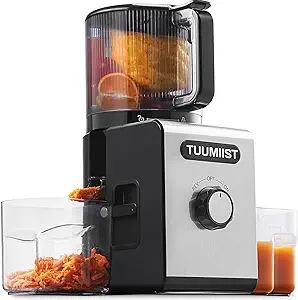 |
| Best Quality Built to a higher standard if you want something more solid | Hurom H330 Cold Press Juicer |  |
| Best Value The sweet spot between price and what you get | AMZCHEF Cold Press Juicer ZM1939 |  |
| Best Budget The cheapest option that still gets the job done reliably | OLIXIS Cold Press Juicer |  |
| Top Rated A top-rated pick with lots of positive feedback | Ninja NeverClog Cold Press Juicer JC151 |  |
| Most Popular A crowd favorite that many people choose with confidence | Jocuu Slow Masticating Juicer |  |
| Best Seller A high-volume bestseller chosen again and again | EanOruus 3-in-1 Masticating Juicer E-18 |  |
TUUMIIST Cold Press Juicer TM-780SJ

| Maximum Power | 350 watts |
|---|---|
| Wattage | 350 watts |
| Power Source | Corded Electric |
| Voltage | 120 volts |
| Number of Speeds | 60 |
The TUUMIIST TM-780SJ is a slow, single-auger cold press juicer designed for hands-off batch juicing and simple cleanup. Its 6.5-inch feed chute and large hopper let you add whole fruits and run recipes without trimming, while the 350 W motor operating at about 60 RPM focuses on low-heat extraction to maximize juice yield and preserve nutrients. The unit includes a single smart strainer that supports juice, nut milk, and sorbet functions so you do not need to swap multiple mesh screens, and quick-release parts plus a cleaning brush make disassembly and washing straightforward. Practical benefits include high juice yield, quieter operation than centrifugal models, and the ability to process tougher greens and nuts for milk. Expect slower throughput compared with high-speed juicers and a modest motor that may struggle with very dense batches if overloaded. For daily family use the TM-780SJ balances versatility and ease of cleaning, though frequent heavy use will require occasional attention to prevent clogging or motor stress.
Best for: Buyers who want an easy-to-clean, nutrient-focused slow juicer for regular household use and value hands-free batch juicing and versatile output like nut milk and sorbet.
Less Ideal for: People who need very fast juice throughput for large volumes or expect to run heavy commercial workloads should consider higher-speed or commercial-grade alternatives.
- 6.5-inch extra-large feed chute lets you juice whole fruits with little pre-cutting
- 3-in-1 smart strainer handles juice, nut milk, and sorbet without swapping multiple filters
- Slow 60 RPM extraction preserves nutrients and reduces oxidation for higher juice yield
- Quick-release parts and included brush simplify cleaning and daily maintenance
- Quiet operation compared with high-speed centrifugal juicers
- 350 W motor and slow speed mean longer extraction times than centrifugal models
- May clog or require more attention with very dense or fibrous batches
Verdict: Choose this juicer if you want a quiet, easy-to-clean slow juicer that handles whole fruits and also makes nut milk and sorbet.
Hurom H330 Cold Press Juicer

| Capacity | 2 liters |
|---|---|
| Auger Speed | 50 RPM |
| Power Source | Corded Electric |
| Blade Material | Stainless Steel |
The Hurom H330 is a performance-focused slow juicer built for batch juicing and ease of use. Its 2-liter self-feeding hopper accepts whole fruits and vegetables so you can load apples, carrots, celery, and leafy greens without chopping, then walk away while the 50 RPM auger gently presses produce to reduce heat and oxidation. The unit includes fine and coarse strainers for low-pulp or fuller-texture juice and supports nut milk and smoothie prep with the appropriate attachments. In daily use it is noticeably quiet and designed for quick disassembly, with removable BPA-free parts and a cleaning brush to speed cleanup. Practical benefits include higher juice yield and longer fridge life for juice thanks to the slow squeeze action, family-size batch capability, and safety features like an auto shut-off if the lid opens. Trade-offs are its relatively heavy build and the need to hand-wash parts rather than using a dishwasher, but for buyers prioritizing yield, nutrient retention, and straightforward cleaning, the H330 delivers consistent performance.
Best for: Buyers who prioritize juice yield, nutrient retention, and the convenience of batch juicing for families or meal prep will appreciate this model.
Less Ideal for: Those who need an ultra-light or fully dishwasher-safe juicer, or who only make very small single-serve juices, should consider other compact or dishwasher-compatible options.
- Large 2-liter self-feeding hopper lets you juice whole produce without pre-cutting
- Slow 50 RPM auger preserves nutrients and reduces oxidation for longer-lasting juice
- Includes fine and coarse strainers for customizable pulp levels
- Quick-disassembly removable parts and cleaning brush make cleanup faster
- Quiet motor suitable for early-morning use
- Hand-wash only parts rather than dishwasher-safe components
- Heavier unit that may be less convenient to move or store
Verdict: If you want high-yield, nutrient-preserving batch juicing with fast, straightforward cleanup, the Hurom H330 is a top-performing slow juicer choice.
AMZCHEF Cold Press Juicer ZM1939

| Maximum Power | 600 watts |
|---|---|
| Power Source | dc |
| Voltage | 120 volts |
| Number of Speeds | 2 |
| Special Features | 3-in-1 Function, Anti-Clogging Design, Self-Feeding Design |
The AMZCHEF Cold Press Juicer ZM1939 is a single-auger slow juicer built to handle larger pieces with a 6.5-inch reversible feed chute and an auto-cutting blade that reduces prep time. It uses low-speed cold press extraction driven by a 600W DC motor, a reverse function, and an enlarged auger to maximize yield and help prevent clogging. Two interchangeable strainers make it easy to switch between fresh juice, nut milk, and frozen sorbet without extra appliances, and removable parts plus a specialized brush are designed for quick assembly and cleaning. The unit is stainless steel and has two speeds for different ingredient textures, but it is fairly tall and requires counter space and some hand-cleaning of the juicing components despite being dishwasher-safe for removable pieces. For buyers who value easy cleanup and versatile output, it delivers efficient extraction and simpler prep, though users should expect routine disassembly and rinsing after use.
Best for: Buyers who want a practical, easy-to-clean slow juicer that minimizes prep time and delivers versatile results for daily juice, nut milk, and sorbet making.
Less Ideal for: Those with very limited counter space or users seeking a compact, single-purpose centrifugal juicer for quick one-off uses should look elsewhere.
- Large 6.5-inch reversible feed chute with built-in cutting blades reduces chopping and speeds prep
- 3-in-1 functionality with interchangeable juice and sorbet strainers expands recipes without extra appliances
- 600W motor, large auger, and reverse function designed to maximize juice yield and reduce clogging
- Removable parts are dishwasher-safe and a specialized brush is included to simplify cleaning
- Tall footprint requires dedicated counter space
- Some parts still need hand rinsing and brushing despite dishwasher-safe components
Verdict: Choose this model if you want a practical slow juicer that reduces prep with a wide chute, is easy to clean, and handles juice, nut milk, and sorbet in one unit.
OLIXIS Cold Press Juicer

| Maximum Power | 150 watts |
|---|---|
| Power Source | Corded Electric |
| Voltage | 120 volts |
| Material | ABS, PC, Silicone, Stainless Steel |
| Blade Material | Stainless Steel |
The OLIXIS Cold Press Juicer is a single-auger, slow-speed juicer built to extract juice with minimal heat and oxidation. It accepts larger pieces through a 5.91-inch feed chute so you can skip fine chopping on many fruits and vegetables, and the 150-watt motor runs quietly while the auger slowly presses produce for higher yield and smoother juice. A reverse function helps clear clogs without disassembly, and most removable components are dishwasher safe which makes cleanup straightforward for daily use. Construction mixes ABS, polycarbonate, silicone, and stainless steel parts; included brushes help with cleaning crevices. On the downside the 150W motor is modest so very hard produce may require more prep or slower feeding, and the unit is a compact countertop size that limits throughput for heavy juicing sessions. For someone who wants easy cleanup and nutrient-preserving cold press juice on a budget, this model balances performance and simplicity.
Best for: Home buyers who want an affordable, easy-to-clean cold-press juicer that preserves nutrients and minimizes prep time for everyday juicing.
Less Ideal for: Users who need industrial throughput or who will juice large volumes frequently should look at higher-power commercial models or larger-capacity machines.
- Extra-large 5.91-inch feed chute reduces prep time for many fruits and vegetables
- Slow masticating action preserves nutrients and produces smoother juice
- Reverse function clears clogs quickly without full disassembly
- Most removable parts are dishwasher safe and include cleaning brushes for easier maintenance
- Quiet 150W motor suitable for home countertop use
- Lower 150W power may struggle with very hard produce or heavy continuous juicing
- Compact design limits throughput for high-volume juicing sessions
Verdict: A budget-friendly cold-press juicer that makes daily nutrient-preserving juice with very little cleanup effort.
Ninja NeverClog Cold Press Juicer JC151

| Maximum Power | 150 watts |
|---|---|
| Number of Speeds | 2 |
| Power Source | Corded Electric |
| Capacity | 24 fluid ounces |
The Ninja NeverClog JC151 is a slow masticating juicer built to push through fibrous fruits and vegetables with a 150-watt high-torque auger and a NeverClog design that helps reduce jams. It has two one-touch programs — Start/Stop and Reverse — that simplify operation and the reverse function helps clear blockages without disassembly. You get two interchangeable pulp filters to choose between less pulp or more fiber, plus a 24 oz juice jug and a 36 oz pulp container for larger batches. The unit is compact enough for most countertops and the juice-contact parts are dishwasher safe, which makes cleanup straightforward compared with many centrifugal models. Practical limits include a relatively moderate motor power compared with heavy-duty commercial juicers and the slower throughput typical of masticating machines, so it is best for planned juice prep rather than quick single servings. For buyers who prioritize reliable, clog-resistant cold-press extraction and easy cleaning, the JC151 delivers a dependable home juicer experience.
Best for: Buyers who want a reliable, low-maintenance cold-press juicer for regular home use and value jam-reduction features and easy cleanup over speed.
Less Ideal for: Those needing rapid, high-volume commercial juicing or the fastest single-cup throughput should consider higher-power or centrifugal machines instead.
- High-torque 150W auger extracts juice from fibrous ingredients with less clogging
- NeverClog design plus reverse function reduces jams and simplifies operation
- Two interchangeable pulp filters let you control juice texture
- Dishwasher-safe juice-contact parts make cleaning faster and easier
- Includes larger 24 oz juice jug and 36 oz pulp container for batch juicing
- Slower processing speed than centrifugal or commercial juicers
- 150W motor is moderate and may strain under continuous heavy loads
Verdict: Choose the JC151 if you want a dependable, easy-to-clean slow juicer that reduces jams and makes batch cold-pressed juice with minimal fuss.
Jocuu Slow Masticating Juicer

| Wattage | 150 watts |
|---|---|
| Number of Speeds | 2 |
| Power Source | Corded Electric |
| Blade Material | Stainless Steel |
The Jocuu Slow Masticating Juicer is a single-auger cold-press machine intended for home use when you want higher-yield, lower-oxidation juices from fruits and vegetables. It offers two speed modes for soft and hard produce, an auto-reverse to clear clogs, and an intelligent motor protection that shuts the unit off after extended runs. Its slow 150-watt motor runs quietly and the small feed chute helps reduce large pieces and accidental access. Detachable components are dishwasher safe and the package includes a cleaning brush, which makes disassembly and cleaning straightforward compared with multi-part commercial juicers. The plastic housing keeps weight down but means this is a countertop appliance rather than a heavy-duty workhorse. Expect to cut produce into smaller pieces for the feeder and to run the reverse cycle occasionally if fibrous material builds up. The included 2-year motor coverage and food-grade, BPA-free parts add reassurance for buyers focused on durability and safety.
Best for: Buyers who prioritize easy cleanup and reliable, quieter cold-press juicing for everyday fruits and vegetables and who value reassuring warranty coverage and safety features.
Less Ideal for: People who need a heavy-duty or commercial-grade juicer for large batches or who prefer a wide feed chute to minimize prep time.
- Two speed settings for soft and hard produce improve extraction versatility
- Auto-reverse function prevents and clears clogs without tools
- Dishwasher-safe detachable parts and included brush simplify cleaning
- Quiet 150-watt motor suitable for home kitchens
- Motor protection that auto-shuts after long runs adds safety and longevity
- Small feeding chute requires more pre-cutting of produce
- Plastic construction is less durable than metal-bodied models
Verdict: Choose this juicer if you want a quiet, easy-to-clean cold-press machine that balances good juice yield with simple maintenance and built-in motor protection.
EanOruus 3-in-1 Masticating Juicer E-18

| Capacity | 100 fluid ounces |
|---|---|
| Maximum Power | 250 watts |
| Power Source | ac |
| Voltage | 110 volts |
The EanOruus E-18 is a single-auger masticating juicer built for high-volume home use and multi-function tasks like nut milk and sorbet in addition to cold-pressed juice. It uses a slow 250 W AC motor and auto-reverse to push tough or fibrous produce through the auger without clogging, while the two interchangeable strainers let you switch between juice and sorbet/nut milk textures. The extra-wide 6.5-inch chute and 100 oz hopper reduce prep and refill time when making several servings, and removable parts including a detachable pulp outlet make rinsing and hand-washing straightforward. The unit is designed for whole fruit processing and includes overheat protection for safer repeated use. Expect quieter operation than centrifugal models and better nutrient retention, but plan on hand-washing removable components and occasional use of the reverse function to clear stubborn batches. The plastic/polycarbonate construction keeps weight down but may not match metal parts for long-term toughness in very heavy daily commercial use.
Best for: Buyers who prioritize reliable, low-speed extraction and minimal daily fuss for family-sized batches will appreciate the simplicity and quiet operation of this unit.
Less Ideal for: Those seeking a fully dishwasher-safe juicer or a heavy-duty commercial machine should consider other models built with metal components or explicit dishwasher-safe parts.
- Large 100 oz hopper and 6.5-inch chute cut prep time for batch juicing
- 250 W AC motor with auto-reverse handles fibrous produce and reduces jams
- Interchangeable strainers support juice, nut milk and sorbet without extra machines
- Detachable pulp outlet and removable parts simplify rinsing and cleaning
- Whisper-quiet operation compared with high-speed centrifugal juicers
- Requires hand-washing of removable parts rather than dishwasher-safe cleaning
- Mainly plastic construction may be less durable under extremely heavy commercial use
Verdict: Choose the EanOruus E-18 if you want a quiet, easy-to-clean slow juicer that handles whole fruits and also makes nut milk and sorbet for family-sized batches.
Choosing the Right Easy-to-Clean Slow Juicer: Key Factors to Consider
Cleanup Time and Routine
How long you actually spend cleaning determines whether you will use the juicer regularly. Machines with fewer parts and simple rinsing steps reduce daily cleanup to a minute or two. Consider whether parts are designed for quick rinsing, have smooth pathways, and avoid tiny crevices that trap pulp. A realistic assessment should include the time to disassemble, rinse or brush, and dry or load into the dishwasher. If you plan to juice multiple times per week, prioritize units with minimal hands-on steps and clear cleaning guides to avoid skipped maintenance and lingering odors.
Number and Design of Components
The number of removable components affects both cleaning time and the chance of losing parts. Fewer detachable pieces simplify storage and cleanup, while well-labeled components speed reassembly. Look for snap-fit parts and intuitive seals rather than twist-and-lock sections that require alignment. Also consider whether small parts, such as fine screens or auger caps, are easy to access and brush, since these are the usual trouble spots for pulp buildup.
Material Quality and Resistance
Materials determine how well the juicer stands up to frequent washing. BPA-free plastics and stainless-steel elements resist staining and odor retention better than lower-grade plastics. Choose materials that tolerate warm water and mild detergents, and verify whether components are rated for dishwasher use. Even when dishwasher-safe, hand washes often preserve seals and prolong life, so durable materials reduce maintenance headaches over time.
Juice Yield and Pulp Dryness
Higher extraction reduces the volume of pulp you must clean and discard, which shortens cleanup cycles. A juicer that produces drier pulp generally indicates efficient extraction and fewer follow-up passes. Consider whether the unit handles leafy greens and fibrous roots without clogging, because frequent clogs increase cleaning steps. Balancing extraction efficiency with cleanup convenience is key for regular juicers who want both good yield and low maintenance.
Ease of Disassembly and Reassembly
A juicer that comes apart quickly and goes back together without fiddly alignments will save time every use. Look for clearly marked latches, captive screws, or simple bayonet-style fittings that reduce the chance of incorrect assembly. Good design includes a visible feed path and components that orient themselves so you do not struggle to align parts. Faster reassembly encourages frequent use and correct cleaning, which helps maintain performance.
Noise, Motor Heat, and Daily Use
Noise level and motor heat influence how often you will use the juicer and, by extension, how often you will clean it. Quieter units are more pleasant for early-morning juicing and less likely to disturb others, which supports consistent habits. Motor thermal performance matters because motors that overheat require cooldown breaks that interrupt workflow and may lead to extra handling of parts. A design that balances quiet operation with steady low-RPM torque is ideal for frequent, low-effort cleaning and maintenance.
Practical Cleaning Tips That Save Time
Rinse components immediately after juicing to stop pulp from drying onto screens and seals. Warm water loosens fibers much faster than cold, so a quick soak for a minute can prevent stubborn buildup. Use the small brush that typically comes with slow juicers to sweep fine mesh screens and auger grooves.
Use a soft toothbrush or dedicated brush rather than metal scrapers to avoid scratching parts. If a model has dishwasher-safe claims, place larger pieces on the top rack and avoid high-heat dry cycles. Store tiny parts together to avoid misplacing caps or sealing rings and keep a bowl for pulp to minimize countertop mess.
- Rinse right away to prevent dried pulp
- Soak stubborn parts in warm water briefly
- Use small brushes for screens and crevices
- Avoid abrasive scrubbers to protect finishes
- Store small components together after drying
How Extraction Style Affects Cleaning
Masticating slow juicers operate at low RPMs and crush produce, which yields nutrient-rich juice but can leave thicker pulp. Efficient models produce drier pulp that is easier to discard and reduces the amount of organic material that needs cleaning.
If you primarily juice leafy greens or wheatgrass, expect more fibrous buildup and plan for slightly longer cleaning. For fruits and softer vegetables, cleanup tends to be simpler. Understanding how your routine produce choices affect pulp will help you pick a model that minimizes cleaning friction.
- Drier pulp equals less messy disposal
- Leafy greens require more frequent brushing
- Softer produce usually simplifies screening
Dishwasher-Safe Vs Hand Wash: Pros and Cons
Dishwasher-safe parts offer convenience but check manufacturer guidance for rack placement and detergent limits. Repeated dishwasher cycles can accelerate wear on seals and printed markings, so balance convenience against longevity.
Hand washing lets you inspect seals and gaskets for trapped pulp and prolongs component life. A hybrid approach works well: rinse immediately after use and run a dishwasher cycle only for the most durable pieces when needed.
- Top-rack dishwasher use preserves plastics
- Hand washing prevents seal degradation
- Rinsing before the dishwasher avoids staining
Maintenance Habits That Improve Longevity
Regularly inspect seals, O-rings, and mesh screens for tears, stretching, or clogging. Replace worn gaskets promptly to maintain suction and prevent leaks that create hard-to-clean pools of juice. Lubricate any specified seals with food-safe lubricant if recommended in the manual.
Run plain water with a small amount of baking soda through the juicer occasionally to remove odors. Store the unit with lids off or vented to avoid trapping moisture and mildew. Consistent light maintenance avoids heavy cleaning sessions that take much longer.
- Check seals and screens monthly
- Replace worn gaskets to prevent leaks
- Flush with water and baking soda to remove odors
- Store parts dry and ventilated between uses
Small Kitchen Workflow Integration
Consider counter space and where you will dry or store parts after cleaning. Units with compact footprints and parts that nest for storage are better for small kitchens. Factor in where you will rinse and where pulp will be discarded to avoid moving wet parts across the kitchen.
Arrange a dedicated juicing station with a rinse basin, small brush, and drying mat. That small investment in layout reduces friction and makes it more likely you will keep up with cleaning, which improves the machine's long-term performance.
- Plan a rinse-and-dry area near the sink
- Choose models with stackable or nesting parts
- Keep a dedicated brush and drying mat handy
How We Chose the Best Easy-to-Clean Slow Juicer
We focused on features that directly reduce hands-on cleaning time and influence real-world juicing habits. Evaluation centered on cleanup effort, measured by the number of parts and whether components are dishwasher-safe or rinse-clean only. Juicing efficiency and extraction consistency were assessed because higher yield means less frequent pulping and shorter cleanup intervals. We accounted for build quality and materials, prioritizing BPA-free plastics and corrosion-resistant elements that tolerate repeated cleaning. Ease of disassembly and reassembly was a core filter because complex assembly increases the chance owners skip cleaning. Noise and motor thermal behavior were included since quieter motors tend to encourage everyday use, which interacts with cleaning frequency. Products with unclear cleaning instructions, permanently sealed pulp chambers that require special tools, or components made from materials prone to staining or warping were excluded. We also excluded models that sacrifice reliable extraction for faster cleanup. The final picks balance low maintenance with consistent juicing performance, durability, and reasonable noise levels.
Our full evaluation process is outlined in our review methodology.
FAQ
Are slow juicer parts usually dishwasher-safe?
Many slow juicer components are labeled dishwasher-safe, typically on the top rack. However, repeated dishwasher cycles can wear seals and printed markings, so hand washing delicate parts is often recommended for longevity.
How can I prevent pulp from clogging the screen?
Rinse the screen immediately after use and use a soft brush to dislodge trapped fibers. Soaking the screen briefly in warm water can soften dried pulp and make brushing faster and easier.
Do slow juicers handle leafy greens well without extra cleaning?
Leafy greens tend to leave more fibrous residue and usually need a bit more brushing than fruits. Expect slightly longer cleaning when juicing mostly greens, and consider a model with a simple screen design to speed the process.
Is it okay to use a dishwasher for the juicer's auger?
Some augers are listed as dishwasher-safe, but aggressive dishwasher cycles can stress seals and accelerate wear. Hand rinsing and occasional gentle dishwashing for robust parts is a safer approach for long-term durability.
How often should I replace seals or gaskets?
Replace seals when you notice leaks, stretching, or reduced suction. For regular users, checking seals every few months is prudent; replacement frequency depends on cleaning methods and frequency of use.
Final Verdict
Choose an easy-to-clean slow juicer by prioritizing usable cleanup time, the number of removable parts, and material durability. Balance extraction efficiency with maintenance: a model that yields drier pulp will save time but may cost a small increase in initial effort to set up properly. Consider how often you will juice, what produce you use most, and whether dishwasher convenience or hand-wash longevity matters more for your routine. Pick a unit with straightforward disassembly, robust materials, and clear cleaning guidance to make daily juicing sustainable. That approach will keep maintenance manageable while preserving consistent juice quality over time.