
Note: This article contains affiliate links. If you click on these links and make a purchase, we may earn a small commission at no extra cost to you. This helps support our research and content. Read our full affiliate disclosure here.
If you drink fresh citrus regularly, the right Electric Citrus Juicer makes daily juicing quick, consistent, and far less messy. A well-chosen model preserves flavor, extracts more juice from each fruit, and saves time on cleanup so you can enjoy fresh orange, grapefruit, or lime without a lot of fuss. This guide covers six shortlisted juicers that suit home kitchens, small households, and anyone who wants reliable citrus output. Below we summarize what we assessed and why each pick made the list, with attention to extraction performance, motor durability, and how easy each unit is to use and maintain. Scroll on for our picks and the decision factors that matter most when choosing an electric citrus juicer.
Top Picks at a Glance
| Best Quality Built to a higher standard if you want something more solid | Breville Citrus Press Pro 800CPXL |  |
| Best Value The sweet spot between price and what you get | Cuisinart Pulp Control CCJ-500P1 | 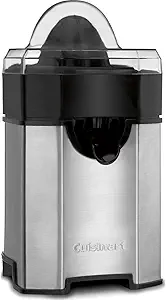 |
| Best Budget The cheapest option that still gets the job done reliably | Elite Gourmet Electric Citrus Juicer ETS623 |  |
| Top Rated A top-rated pick with lots of positive feedback | Breville Citrus Press BCP600SIL |  |
| Most Popular A crowd favorite that many people choose with confidence | BLACK+DECKER Citrus Juicer CJ625 |  |
| Best Seller A high-volume bestseller chosen again and again | Eurolux Electric Citrus Juicer |  |
Breville Citrus Press Pro 800CPXL

| Wattage | 110 watts |
|---|---|
| Power Source | Corded Electric |
| Voltage | 120 volts |
| Capacity | 800 ml |
| Number of Speeds | 1 |
The Breville Citrus Press Pro uses a power-assisted, triple-hinged arm and a quadra-fin die-cast juicing cone to squeeze maximum juice from citrus with minimal effort. You lower the lever over halved fruit and the safety interlock prevents the cone from spinning until proper pressure is applied, which makes operation straightforward and low-effort. The die-cast cone and body are acid resistant for long-term use, and removable parts including the cone, filter and fruit dome are dishwasher safe for easier cleanup. A drip-stop spout helps avoid countertop mess while pouring. At 110 watts the motor is intentionally modest because the design relies on mechanical leverage rather than high-speed motors, so extraction is efficient but not suited to non-citrus or continuous heavy industrial use. The unit is heavier than basic hand juicers, so it sits steadily on the counter but is less portable. For buyers who want high yield from citrus and a robust, durable tool, this model performs very well; if you need a multi-fruit high-volume juicing station, other styles may be a better fit.
Best for: Buyers who prioritize high juice yield and durable, performance-oriented citrus extraction for home use and want an appliance that minimizes manual effort.
Less Ideal for: People who need a lightweight, highly portable unit or an all-purpose juicer for hard fruits and vegetables should consider other juicer types.
- Power-assisted lever and triple-hinged arm reduce hand effort and improve extraction consistency
- Quadra-fin die-cast cone maximizes juice yield across citrus sizes
- Acid-resistant die-cast construction improves durability for regular citrus use
- Removable juicing parts are dishwasher safe for simpler cleanup
- Drip-stop spout helps prevent countertop spills when pouring
- 110-watt motor and lever design are optimized for citrus only, not for large-scale or non-citrus juicing
- Relatively heavy and less portable than manual reamers or compact electric models
Verdict: Choose this Breville if you want a sturdy, lever-assisted citrus press that delivers high juice yield with minimal effort.
Cuisinart Pulp Control CCJ-500P1

| Power Source | Corded Electric |
|---|---|
| Voltage | 110 |
| Number of Speeds | 3 |
| Capacity | 12 ounces |
The Cuisinart Pulp Control CCJ-500P1 is a countertop electric citrus juicer designed to handle everything from limes to grapefruits. It uses an auto-reversing universal reamer and a final-spin feature to extract more juice, while three selectable pulp-control settings let you dial in juice texture. An extra-long snap-up spout helps fill taller glasses and its removable parts are dishwasher safe, making cleanup straightforward. The unit is marketed as a manual-style citrus juicer with a modest power draw and simple button controls, so it is easy to operate for quick morning use or occasional cocktail prep. Practical limitations include a relatively small 12-ounce capacity pitcher and a compact footprint that suits personal or small-household use rather than high-volume juicing. Build quality is typical Cuisinart with stainless steel components where it matters, but users seeking a heavy-duty commercial model or integrated large-capacity extractor will want a different machine.
Best for: Buyers who want a compact, reliable home citrus juicer that maximizes extraction and is easy to clean for everyday use.
Less Ideal for: People who regularly juice large quantities or need a commercial-grade extractor should look for larger, higher-capacity models.
- Auto-reversing reamer and final-spin feature improve juice extraction efficiency
- Three pulp-control settings let you adjust texture from low to high
- Removable parts are dishwasher safe for easy cleanup
- Extra-long snap-up spout reduces drips and fits taller glasses
- Stainless steel construction in key areas for durable performance
- Small 12-ounce juice capacity requires frequent emptying during larger batches
- Not intended for high-volume or commercial juicing tasks
Verdict: A compact, easy-to-clean citrus juicer that squeezes more juice with adjustable pulp control, ideal for everyday home use.
Elite Gourmet Electric Citrus Juicer ETS623

| Wattage | 40 watts |
|---|---|
| Power Source | Corded Electric |
| Voltage | 120 |
| Capacity | 24 oz |
The Elite Gourmet ETS623 is a small, budget-friendly electric citrus juicer built for everyday home use. It uses a 40-watt motor with an auto-reversing reamer that rotates both ways to pull more juice from oranges, lemons, limes, and grapefruits while you press down. Juice collects in a 24 oz container with an integrated pulp and seed filter and an easy-pour spout so you can serve directly from the pitcher. Detachable parts make cleanup straightforward and most are top-rack dishwasher safe, though hand washing is recommended for longevity. The unit is compact enough for small counters, dorms, or RVs and is made with BPA-free materials and stainless steel components for basic durability. Expect solid extraction for typical home servings, but this is not a commercial machine and the 40-watt motor is meant for occasional household juicing rather than heavy daily batches.
Best for: Buyers who want an affordable, compact citrus juicer for occasional home use and value straightforward operation and space savings.
Less Ideal for: Those who need a heavy-duty or high-volume juicer for daily large batches or commercial use should consider a more powerful model.
- Stronger 40-watt motor than many entry models for better extraction
- Auto-reversing reamer improves juice yield with simple push-down operation
- 24 oz container with built-in pulp and seed filter and pour spout for easy serving
- Compact footprint fits small kitchens, dorms, and RVs
- BPA-free parts and stainless steel construction for basic food-safe durability
- Not intended for heavy commercial use or large continuous juicing sessions
- Some removable parts are hand-wash recommended for longest life despite being top-rack dishwasher safe
Verdict: A compact, budget-friendly citrus juicer that delivers better extraction than basic models thanks to its 40W motor and auto-reversing reamer.
Breville Citrus Press BCP600SIL

| Power | 110 Watts |
|---|---|
| Voltage | 110 to 120 Volts |
| Warranty | 1 Year Limited |
The Breville Citrus Press is a compact motorized juicer designed to make fresh citrus juice with minimal effort. You place a halved fruit on the finned, one-size-fits-all cone, lower the hinged arm and the 110-watt motor spins the cone while the dome and fins apply pressure to maximize extraction. Practical features include a drip-stop spout to prevent countertop messes, a fruit dome that contains splatter, and dishwasher-safe removable parts for easy cleanup. The dual-switch safety requires the arm to be lowered before the cone turns, which reduces accidental operation. Because the design focuses solely on citrus, it produces consistent, pulp-filtered cups quickly without the fiddliness of manual reaming. Limitations are that it is a single-purpose citrus press so it will not handle noncitrus produce or large-volume commercial workloads, and the motorized mechanism adds a bit more footprint and complexity than a simple hand press. For home cooks who want reliable, effortless citrus juice daily, it performs dependably and cleans up fast.
Best for: Buyers who prioritize a dependable, low-effort way to get fresh citrus juice regularly and want a machine that reliably extracts juice with simple operation and easy cleanup.
Less Ideal for: People who need a multi-purpose juicer for vegetables or heavy commercial use should consider a different model built for larger throughput or mixed produce.
- Motorized one-handed operation for quick, consistent extraction
- One-size-fits-all finned cone and fruit dome to maximize juice yield across citrus sizes
- Drip-stop spout reduces mess on countertops
- Dishwasher-safe removable parts for easier cleaning
- Dual-switch safety with hinged arm prevents accidental activation
- Single-purpose design limited to citrus fruits only
- Not intended for high-volume commercial juicing
Verdict: Choose this Breville if you want a reliable, motorized citrus press that delivers consistent, easy-to-clean fresh juice every day.
BLACK+DECKER Citrus Juicer CJ625

| Wattage | 150 watts |
|---|---|
| Power Source | Corded Electric |
| Voltage | 120 volts |
| Special Features | Auto-Reversing |
The BLACK+DECKER CJ625 is a straightforward countertop citrus juicer designed for everyday home use. It uses auto-reversing reamer cones and two cone sizes to extract juice from both small and large citrus, and a removable pulp basket lets you dial pulp level up or down. Juice collects in a clear pitcher with measurement markings and a drip-free pour spout so you can juice directly into a glass or recipe bowl without making a mess. The unit is plastic with stainless steel blades where needed and most removable parts are dishwasher-safe, which keeps cleanup simple after multiple fruits. At 150 watts it is not a heavy-duty commercial machine, so very large batches or hard-skinned fruit may require more time and occasional repositioning. The design favors easy operation and predictable performance rather than speed or industrial power, making it a sensible choice for regular household juicing but not for continuous high-volume use.
Best for: Buyers who want a reliable, easy-to-use home citrus juicer with clear controls and simple cleanup backed by lots of user feedback.
Less Ideal for: Not a good fit for someone who needs a commercial-speed juicer for large-volume or continuous juicing tasks.
- Auto-reversing cones boost juice extraction from each fruit
- Adjustable pulp basket for customizing juice texture
- Clear pitcher with measurement markings and drip-free spout for easy serving
- Dishwasher-safe removable parts simplify cleanup
- Modest motor wattage which can slow extraction for very large or tough fruit
Verdict: A user-friendly countertop citrus juicer that delivers reliable home juicing with adjustable pulp control and easy cleanup.
Eurolux Electric Citrus Juicer
| Wattage | 160 |
|---|---|
| Power Source | Corded Electric |
| Material | Stainless Steel |
| Capacity | 0.5 liters |
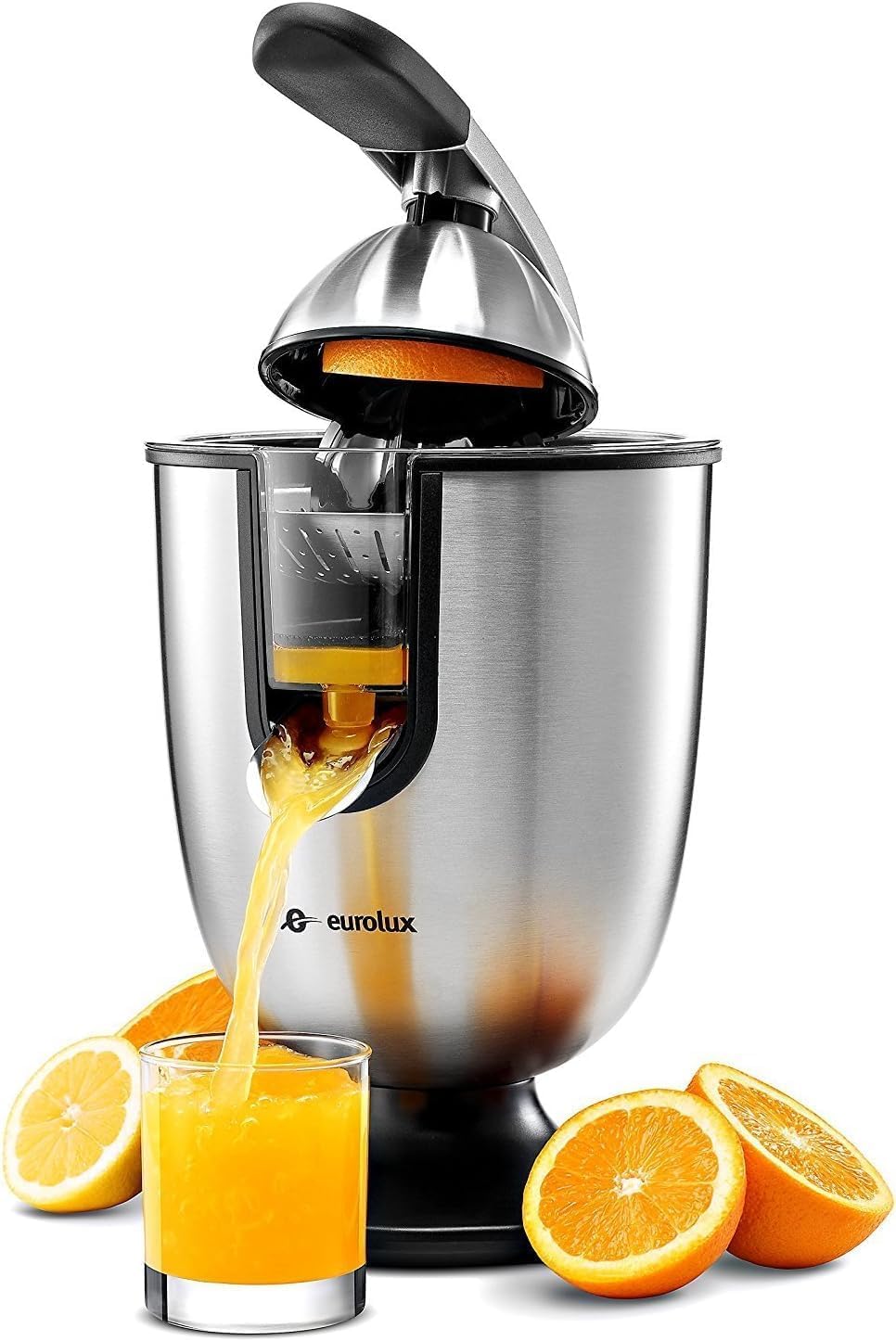
The Eurolux Electric Citrus Juicer brings commercial-style squeezing to the home with a 160W high-torque motor and stainless steel construction. It is used by halving citrus fruit and pressing them onto the integrated cone, where the motor and stainless steel filter extract juice while trapping pits and pulp. Notable features include a soft-grip handle for one-touch automatic operation, a dishwasher-safe filter and parts for easier cleanup, and a durable metal body that fits a kitchen countertop. In practice the powerful motor makes quick work of oranges, lemons, and limes and reduces the need to press hard, while the stainless filter improves juice clarity. Limitations are the single universal cone, which may be less efficient on unusually large or very small citrus compared with multi-cone systems, and the unit occupies some counter space due to its upright design. For a buyer who values easy, reliable daily juicing and straightforward cleaning, this model delivers consistent results without complicated controls.
Best for: Buyers who want a reliable, easy-to-use citrus juicer that prioritizes consistent performance and low fuss cleaning for daily home use.
Less Ideal for: People seeking a compact travel-friendly juicer, or buyers who need multiple cone sizes for frequent juicing of unusually large or small fruit.
- 160W motor provides strong, consistent extraction for most citrus
- Stainless steel construction and integrated filter for durable, cleaner juice
- One-touch soft-grip handle simplifies operation and reduces manual effort
- Dishwasher-safe parts make cleanup quick and low-effort
- Single universal cone may be less efficient for very large or very small fruit
- Upright design takes noticeable counter space
Verdict: A sturdy, no-nonsense electric citrus juicer that delivers powerful, easy daily juicing with minimal cleanup.
Choosing the Right Electric Citrus Juicer: Key Factors to Consider
Extraction Efficiency
How completely a juicer extracts juice from citrus affects both yield and value. Efficient extraction means less wasted fruit and fewer trips to the counter for extra oranges. Efficiency depends on the reamer design, whether the motor provides steady torque, and the match between reamer sizes and your typical fruit. A juicer that extracts well will leave drier pulp and deliver more juice per piece of fruit, which matters if you juice frequently or buy fruit by volume.
A machine that struggles with extraction often forces longer pressing times or repeated reaming, which increases wear and may heat the motor. For home buyers, consider models that offer multiple cone sizes or an automatic reaming motion that adapts to fruit pressure to improve yield.
Motor Power and Durability
Motor strength determines how smoothly the juicer handles large, tough citrus and how long it will last under routine use. A motor with adequate torque avoids stalling on thick-skinned fruit and maintains steady rotation for consistent extraction. Durability also includes cooling, bearings, and housing that resist overheating when juicing several fruits in a row.
For most homes, a motor rated for continuous household use is sufficient. Look for units with thermal protection or clear duty-cycle guidance. A durable motor reduces the risk of replacement or repair and supports consistent performance over time.
Ease of Cleaning and Maintenance
Daily usability is heavily influenced by how simple it is to clean the juicer. Removable parts that are dishwasher-safe or rinse-clean friendly cut the time between uses. Pay attention to hollows, crevices, and integrated spouts where pulp and sticky juice can collect; simpler assemblies make it easier to keep the unit sanitary.
Maintenance also covers how easy it is to inspect and replace wear parts like reamers or strainers. If a model has many tiny pieces or fixed filters that trap pulp, cleanup becomes a deterrent. Prioritize designs with tool-free disassembly and materials that resist staining and citrus odors.
Build Materials and Food Safety
Materials in contact with juice affect flavor, durability, and safety. BPA-free plastics, food-grade silicone seals, and corrosion-resistant metals are preferable. Thinner plastics may warp over time, while stainless-steel components often withstand acids better, reducing off-flavors and discoloration.
Consider the quality of the strainer mesh and reamer surface too. Fine mesh that resists clogging simplifies filtering pulp and seeds. Higher-quality materials also tend to resist sustaining sticky residue and are easier to sanitize.
Size, Storage, and Footprint
How much counter or cabinet space a juicer occupies matters in small kitchens. A compact unit with cord storage and a modest footprint is easier to leave on the counter for daily use. Conversely, larger units may offer stronger motors and higher-capacity juice containers but require more storage planning.
Think about how often you will use the juicer. Frequent users benefit from a unit that is quick to set up and store, while occasional users may prefer something compact enough to tuck away without hassle.
Pulp Control and Juice Texture
Different people prefer different juice textures, from nearly pulp-free to fiber-rich. Models that let you adjust pulp level or that include interchangeable strainers give you control over mouthfeel. Pulp control is also important for recipe use where consistency matters, such as cocktails or vinaigrettes.
A reliable pulp-control mechanism traps seeds and oversized bits while letting desirable citrus oils and finer pulp pass through. Consider whether the juicer offers multiple filters or easy ways to adjust pulp without interrupting the juicing flow.
Types of Electric Citrus Juicers
Electric citrus juicers generally fall into a few practical types that suit different home uses. Compact, single-cone machines are optimized for simplicity and counter friendliness. They are quick to operate and usually take up minimal space, ideal for daily orange or lemon juice for one or two people. Larger models sometimes add dual cone sizes or integrated juice containers, which is useful if you frequently process larger citrus or make multiple servings at once.
- Single-cone units: compact and simple to use
- Dual-reamer models: accommodate different fruit sizes
- Integrated pitchers: reduce transfers and spills
How Reamer Design Affects Juice Yield
Reamer shape and texture change how the fruit is pressed and how much juice is released. Coarse, ridged cones tend to bite more aggressively into thick-skinned citrus and can produce higher yield, while smoother cones can be gentler and produce less pulp. Some electric designs use motorized rotation with a couple of torque settings to mimic hand reaming more effectively than single-speed units.
- Deeper ridges: better for oranges and grapefruits
- Shallower cones: better control for small limes and lemons
- Interchangeable cones: flexibility across fruit sizes
Noise, Vibration, and User Comfort
Noise and vibration matter if you live in shared spaces or use the juicer early in the morning. Heavier bases and rubber feet reduce vibration and keep the unit stable during use. Motor design influences both loudness and smoothness; a well-balanced motor runs quieter and places less strain on housing components. If noise is a concern, look for models with isolation features and conservative torque rather than aggressive high-RPM designs.
- Rubber feet for anti-slip and vibration damping
- Lower RPMs often mean quieter operation
- Compact motors can be quieter but watch torque capability
Storage and Everyday Placement
Decide whether the juicer will live on the counter or be stored between uses. Countertop models with an attractive finish can be convenient and encourage daily use, but ensure they do not overcrowd your prep area. If storage is planned, choose a model with a small footprint and parts that nest together or a removable container for tidy cabinet placement.
- Cord storage keeps cabinets tidy
- Stackable parts reduce storage space
- Lightweight units are easier to retrieve and stow
Common Maintenance Tips
Rinse removable parts right after juicing to prevent sticky buildup and staining from citrus oils. Use mild dish soap and a soft brush for strainers to clear pulp from mesh without damaging it. Avoid abrasive pads on plastic parts to prevent scratches that trap residue and odors. For machines with permanent motors, keep the motor housing dry and wipe it with a damp cloth rather than submerging it.
- Rinse immediately to prevent dried citrus residue
- Use soft brushes on strainers to protect mesh
- Wipe motor housing with a damp cloth only
How We Chose the Best Electric Citrus Juicer
We focused on real-world usability and measurable performance when narrowing our list to six electric citrus juicers. Our selection criteria prioritized extraction efficiency, motor reliability, build and materials that contact juice, ease of cleaning and disassembly, and user controls like reamer sizes and auto-reverse features. We also considered size and footprint for typical home kitchens and whether a model offered practical features such as pulp control, a drip-free spout, or easy cord storage. Excluded from consideration were manual reamers and multi-purpose blenders that only occasionally handle citrus, as well as specialist commercial-grade machines designed for high-throughput foodservice. We tested how claimed features translate to everyday use: whether a model actually reduces hand fatigue, how effectively it separates seeds and pulp, and how straightforward it is to clean without special tools. Final inclusion required consistent performance across those criteria and construction appropriate for frequent home use.
Our full evaluation process is outlined in our review methodology.
FAQ
Can an electric citrus juicer handle all citrus sizes?
Many electric citrus juicers include multiple cone sizes or adapt to different fruit diameters. However, extremely small limes or very large grapefruits may require shifting cones or extra pressure to extract efficiently.
Are parts dishwasher-safe?
Some models have dishwasher-safe reamers and strainers, while others recommend hand washing to preserve seals and finishes. Check the care guidance for removable parts and follow manufacturer temperature recommendations if you plan to use a dishwasher.
How often should I clean the strainer or mesh?
Clean the strainer after every use to prevent buildup that reduces flow and can trap seeds. For frequent juicing, inspect the mesh weekly for signs of clogging and deep-clean it with a soft brush to maintain consistent juice flow.
Will citrus oils affect plastic parts over time?
Citrus oils can discolor or leave lingering aromas on lower-grade plastics. Choosing models with food-grade plastics or stainless-steel contact surfaces reduces staining and odor retention over time.
Is it safe to leave juice in the built-in container?
Fresh citrus juice is best consumed promptly. If you must store it, refrigerate promptly in a sealed container and use within a day or two to preserve flavor and reduce bacterial growth. Avoid leaving juice unrefrigerated for extended periods.
Final Verdict
Choosing the right Electric Citrus Juicer comes down to matching extraction performance, ease of cleaning, and footprint to how you plan to use it. Prioritize efficient extraction and durable motor design if you juice daily, and opt for simpler, tool-free assemblies if cleanup speed is a top concern. Consider material quality and pulp-control options for the texture you prefer. Balance these tradeoffs against storage and noise preferences to pick a model that fits your routine. With that approach you can select a unit that reliably delivers fresh citrus juice with minimal hassle.