
Note: This article contains affiliate links. If you click on these links and make a purchase, we may earn a small commission at no extra cost to you. This helps support our research and content. Read our full affiliate disclosure here.
If you are shopping an electric dryer on sale, picking the right machine matters for how quickly and gently your clothes come out and how much it costs to run over time. A good dryer shortens laundry cycles, protects fabrics, and reduces household energy use. This guide covers seven shortlisted electric dryers selected for common home needs, from small families to heavy-use households. We evaluate each option on drying performance, energy efficiency, cycle flexibility, and ease of upkeep to help you narrow the field quickly. Read on to see which features matter most and which models align with your priorities.
Top Picks at a Glance
| Best Overall The best all-around choice for most situations | ROVSUN Portable Clothes Dryer |  |
| Best Quality Built to a higher standard if you want something more solid | GE GFD55ESSNWW Electric Dryer |  |
| Best Value The sweet spot between price and what you get | EUHOMY 3.5 Cu. Ft. Dryer |  |
| Best Budget The cheapest option that still gets the job done reliably | MOJOCO Portable Dryer MJC-T03 |  |
| Top Rated A top-rated pick with lots of positive feedback | Panda Compact Dryer PAN760SF |  |
| Most Popular A crowd favorite that many people choose with confidence | COSTWAY Compact Portable Dryer |  |
| Best Seller A high-volume bestseller chosen again and again | BLACK+DECKER 7.0 Cu. Ft. Dryer BLD67ME |  |
ROVSUN Portable Clothes Dryer

| Capacity | 5.5 pounds |
|---|---|
| Rated Input | 850W |
| Form Factor | Front Load |
| Material Type | Stainless Steel |
The ROVSUN portable clothes dryer is a compact front-load tumble dryer intended for small spaces such as apartments, dorms, and RVs. It uses an 850W heater to reach up to about 140°F, which speeds drying for single loads up to the recommended 5.5-pound capacity. Operation is simplified with a single knob control and clearly marked modes, and the stainless steel drum and see-through door give a durable, practical feel. The unit includes a multi-stage lint filtration system and a door-safety cutoff that stops the drum if the door is opened. Its small footprint and optional wall-mount kit make placement flexible, though the modest power and small capacity mean it is best for delicates, quick refreshes, and small weekly loads rather than large family laundry. Expect normal drying times for light loads but avoid overloading to protect the motor and airflow. The straightforward controls, compact design, and stainless drum make it a convenient secondary dryer for households needing occasional, space-saving drying capability.
Best for: Buyers who need an easy, space-saving dryer for small households, apartments, or occasional loads and prioritize simplicity and durability over large capacity.
Less Ideal for: Those who regularly wash large loads or need fast turnaround for multiple family-sized loads should choose a larger, higher-powered dryer instead.
- Compact footprint fits countertops or small laundry areas
- Stainless steel drum for improved durability over plastic tubs
- Simple knob controls make operation quick and intuitive
- Reaches temperatures up to 140°F for effective drying of small loads
- Includes lint filtration and door-safety cutoff for safer use
- Small 5.5 lb recommended capacity limits it to light loads and delicates
- 850W power is lower than full-size dryers so larger loads take much longer
Verdict: A compact, easy-to-use portable dryer that delivers durable, reliable drying for small loads and tight spaces.
GE GFD55ESSNWW Electric Dryer
| Form Factor | Front Load |
|---|---|
| Capacity | 7.8 cubic feet |
| Door Orientation | Reversible |
| Specification Met | Energy Star |
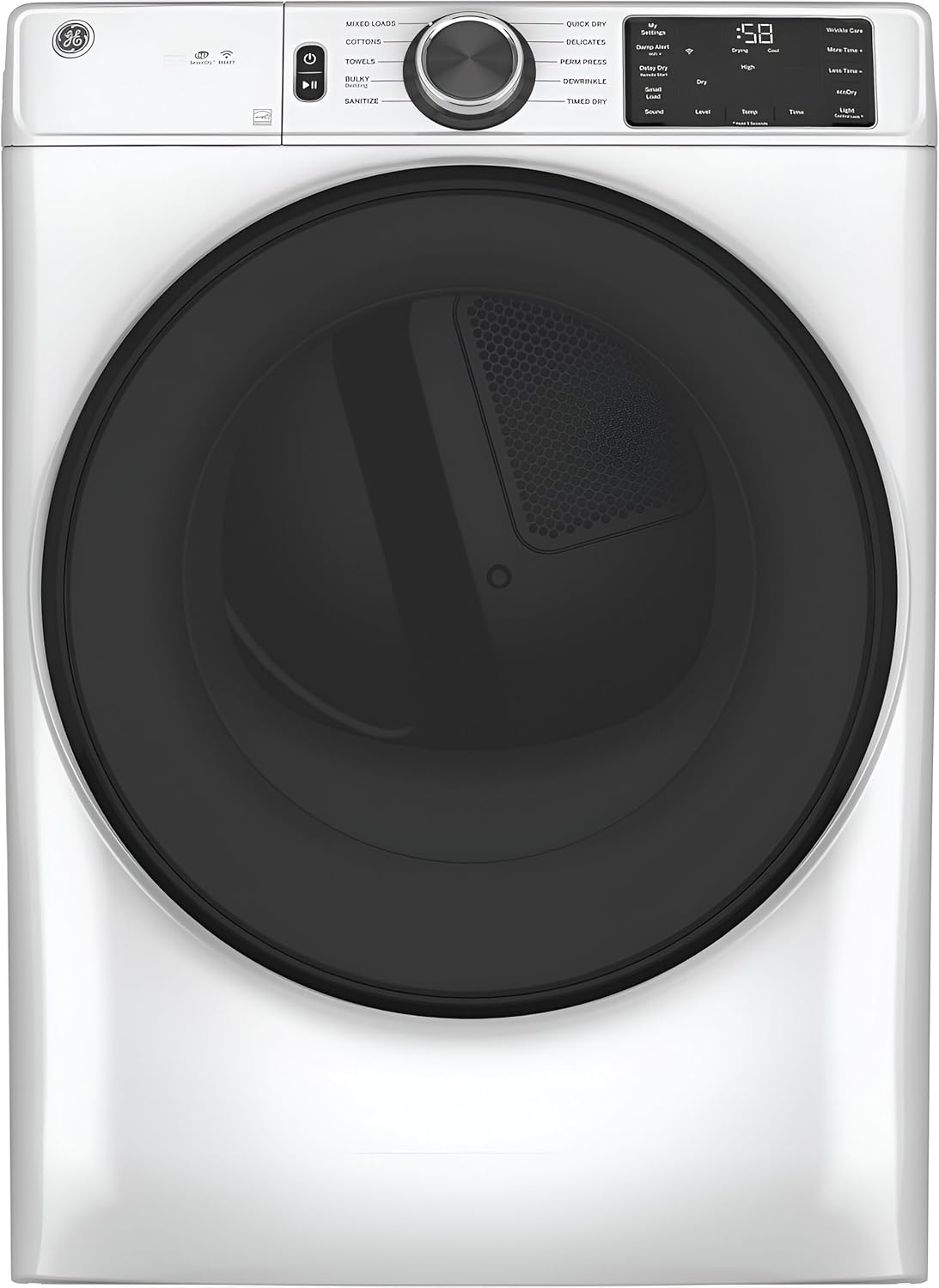
The GE GFD55ESSNWW is a roomy front-load electric dryer aimed at households that need reliable, high-capacity drying. With a 7.8 cu ft stainless steel drum it handles large loads and bulky items without frequent reloading, and features like Quick Dry, Damp Alert, Wrinkle Care, a Sanitize cycle, and a vent sensor make it versatile for different fabrics and schedules. Built-in Wi‑Fi and SmartHQ compatibility let you monitor and control cycles remotely and receive status alerts, which is handy when juggling multiple tasks. Energy Star qualification suggests it runs efficiently compared with older models, and the intuitive control panel simplifies cycle selection. Trade-offs to consider are typical for large-capacity dryers: it is a substantial appliance in footprint and weight, and advanced features add complexity compared with basic models. For buyers focused on performance and modern conveniences, this GE dryer balances capacity, useful specialty cycles, and smart controls effectively.
Best for: Buyers who prioritize high drying capacity and performance features and want smart controls to monitor loads remotely while minimizing repeat cycles.
Less Ideal for: People needing a compact, lightweight, or very basic dryer for occasional use should consider smaller or simpler models instead.
- Large 7.8 cu ft stainless steel drum handles bulky loads and family-sized laundry
- Built-in Wi‑Fi with SmartHQ lets you start, stop, and monitor cycles remotely
- Multiple specialty cycles including Quick Dry, Sanitize, Damp Alert, and Wrinkle Care
- ENERGY STAR qualified for better energy efficiency than standard models
- Large footprint and heavy weight make placement and installation more demanding
- Advanced features add complexity compared with simpler, entry-level dryers
Verdict: A performance-focused, high-capacity electric dryer with smart connectivity and specialty cycles for households that need fast, reliable drying.
EUHOMY 3.5 Cu. Ft. Dryer

| Capacity | 99.11 liters |
|---|---|
| Form Factor | Freestanding |
| Access Location | Front Load |
| Rated Input | 1500W |
The EUHOMY 3.5 cu ft dryer is a compact freestanding electric dryer designed for apartments, dorms, and homes where full-size hookups are impractical. It uses a 1500W heater and a stainless steel drum to tumble and dry loads up to roughly 13.2 lbs of dry clothes, and offers sensor-dry and an ECO program that combines cold and heated air to save energy. Controls are knob-based with a wide 0–200 minute timer and selectable cycles so you can run quick small loads or longer gentle cycles for delicates. Practical touches include a 105 degree wide-open door for easy loading, an accessible lint filter, an exhaust hose for venting, and adjustable feet for placement. Expect even drying from the rotating drum but plan for longer cycles in ECO mode and for venting the exhaust when used indoors. This dryer is a solid space-saving option if you need real drying power without a built-in laundry room, though it is larger and heavier than the smallest portable models and requires the exhaust setup to run optimally.
Best for: Buyers who want a space-conscious dryer with near–full-size drying capacity and energy-saving options for apartment or small-house use.
Less Ideal for: People who need a truly compact, lightweight travel or RV dryer or those who cannot provide an exhaust venting solution should consider smaller ventless alternatives.
- Generous 3.5 cu ft stainless steel drum provides room for family-sized small loads
- Sensor Dry and ECO modes adjust heat and runtime to reduce over-drying and save energy
- 1500W heating gives stronger drying performance than lower-power portable models
- Wide 105° door and accessible lint filter make loading, unloading, and maintenance easy
- Requires an exhaust hose and proper venting for best performance
- Larger and heavier than ultra-compact portable dryers, limiting placement options
Verdict: If you need the drying power of a near full-size machine in a portable footprint with sensor and ECO modes, this EUHOMY 3.5 cu ft dryer is a practical choice.
MOJOCO Portable Dryer MJC-T03

| Form Factor | Top Load |
|---|---|
| Capacity | 22 pounds |
| Included Components | Dryer, Dryer Bag |
The MOJOCO Portable Dryer is a small, foldable top-load dryer designed to handle light loads where a full-size machine is impractical. It uses a 600W heater with two temperature modes and a built-in timer to dry up to nine lightweight garments or a maximum stated load of 22 pounds; typical light items dry in about 1–2 hours while heavier pieces can take 3–4 hours. The unit emphasizes portability and quiet operation, and it includes a UV LED for sanitizing and automatic overheat protection for safe use. Practical benefits include low energy draw compared with conventional dryers, easy storage when not in use, and suitability for apartments, RVs, or travel because it is lightweight and foldable. Limitations are inherent to its size and power: it is best for small, lightweight items rather than full loads or heavy fabrics, and drying times are longer than those of full-size electric dryers. Users should also ensure adequate room ventilation for warm, moist air during cycles.
Best for: Buyers looking to save on energy and space who need a portable solution for small, frequent loads like shirts, underwear, or baby clothes in apartments, RVs, or while traveling.
Less Ideal for: Households that regularly need to dry large or heavy loads, or buyers who want fast, full-size dryer performance.
- Compact and foldable design for easy storage and travel
- 600W heater with two temperature modes for delicate and faster drying
- Quiet operation with timer for flexible, low-disruption cycles
- Built-in UV LED sanitizing and automatic overheat protection for added hygiene and safety
- Holds multiple light garments (up to nine) and a stated 22 lb capacity
- Not suitable for heavy fabrics or full-size laundry loads due to limited power and capacity
- Drying times are slower than standard home dryers, especially for thicker items
Verdict: A low-energy, highly portable dryer made for small, lightweight loads when space and budget are the top priorities.
Panda Compact Dryer PAN760SF

| Capacity | 3.52 cubic feet |
|---|---|
| Rated Input | 1500W |
| Voltage | 120V/60Hz |
| Form Factor | Freestanding |
| Access Location | Front Load |
The Panda Compact Dryer PAN760SF is a vented front-load dryer sized for apartments, dorms, and other small laundry spaces, and it connects to a standard 120V household outlet. It handles up to about 13.2 lb of laundry in a 3.5 cu ft stainless steel drum and offers multiple drying modes including cold, hot, air dry, ECO, and sensor dry with adjustable time ranges. Practical touches include a three-layer lint filter set, a see-through door that opens to 105 degrees, overheat protection, and an included venting hose plus wall-mounting hardware for flexible installation. The 1500W motor delivers reasonable drying power on household current, though drying large or heavily soaked loads will take longer than a higher-wattage, hardwired commercial dryer. Users who want a reliable secondary or primary dryer in tight spaces will appreciate the build materials and safety features, while those needing very fast turnaround or professional-capacity cycles should consider full-size machines instead.
Best for: Buyers who prioritize a dependable, well-built dryer that fits small living spaces and can be installed without electrical upgrades and who want straightforward, safety-minded operation.
Less Ideal for: Large households or users who need very fast, back-to-back drying cycles and professional capacity should choose a full-size, higher-wattage dryer instead.
- Runs on standard 120V outlet so no special wiring required
- 3.5 cu ft stainless steel drum suitable for apartment-sized loads
- Multiple drying modes including ECO and sensor dry to save energy
- Includes venting hose and wall-mounting kit for flexible installation
- Three-layer lint filter and overheat protection for safer operation
- 1500W power means longer dry times compared with higher-wattage full-size dryers
- Vented design increases indoor humidity unless routed outside or used with an indoor venting kit
Verdict: A reliable, space-saving vented dryer that delivers safe, energy-conscious drying on a standard household outlet for small homes and apartments.
COSTWAY Compact Portable Dryer
| Form Factor | Freestanding |
|---|---|
| Access Location | Front Load |
| Capacity | 10 pounds |
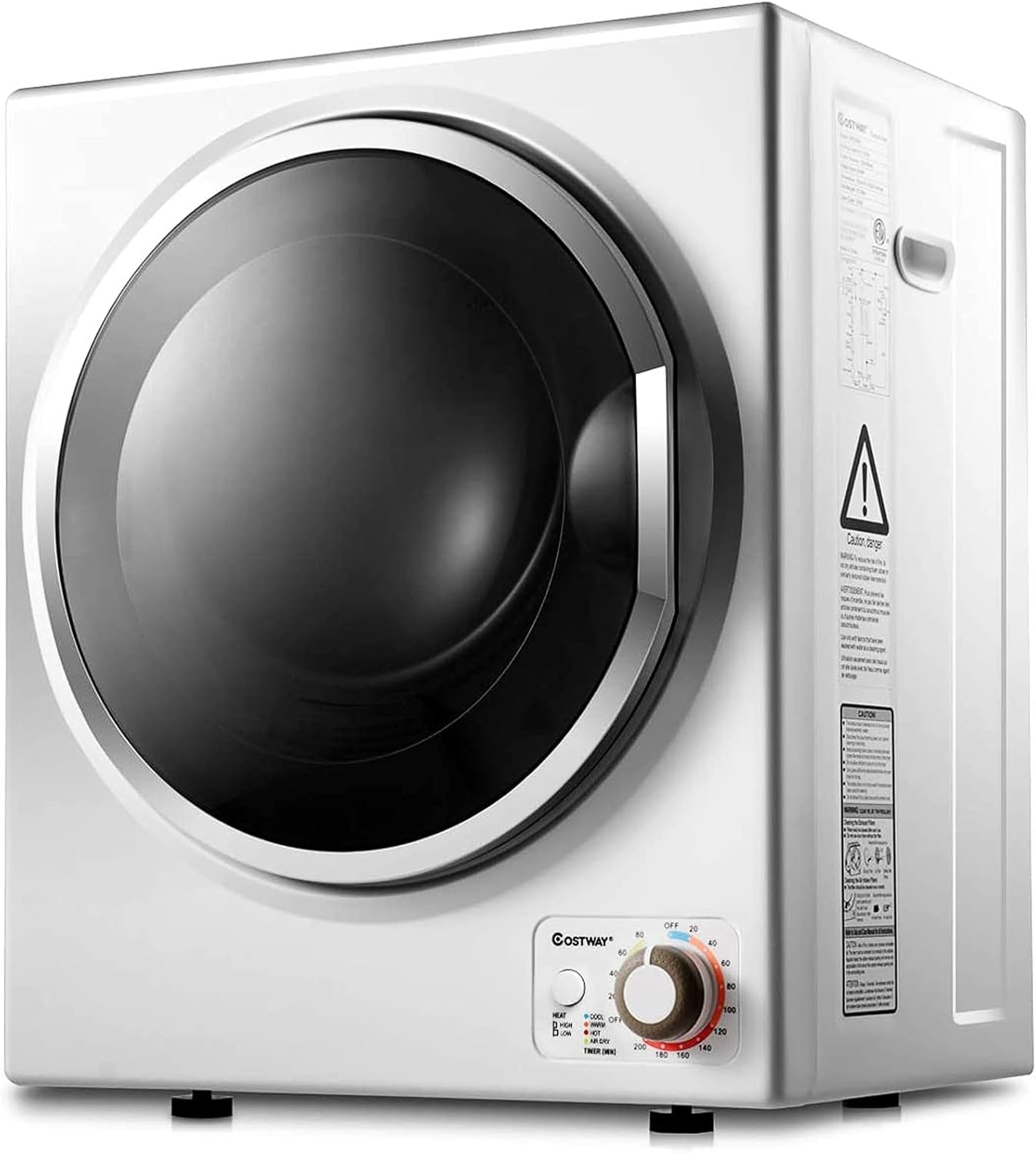
This COSTWAY portable dryer is built for small spaces and occasional laundry needs. It is a front-load freestanding unit with a stainless steel drum and an 850W motor that handles up to 10 pounds of wet clothes, though the brand recommends lighter loads for faster drying. The control panel offers multiple modes—cool, warm, hot, anti-wrinkle, and air-dry—with adjustable timers so you can match heat and runtime to fabric type. The dryer includes an exhaust connector and mounting brackets for wall or rack installation, and designers emphasized low noise for use near living areas. Practical benefits include its compact footprint and stainless drum for durability, plus the reverse tumble feature to reduce tangling and wrinkles. Important limitations are its modest power relative to full-size dryers, which means longer cycles on heavy or bulky items, and the advised smaller per-load weight for efficient drying. For buyers prioritizing a space-saving dryer for apartments, dorms, or infrequent loads, this model covers basic drying tasks without the footprint of a full-size machine.
Best for: Buyers seeking a compact, low-noise dryer for small living spaces who value space savings and straightforward timed drying over fast, large-capacity cycles.
Less Ideal for: Households that need fast drying for frequent, large loads or full-size capacity should consider a conventional dryer instead.
- Compact freestanding design fits small spaces and can be wall- or rack-mounted.
- Stainless steel drum and reverse tumble reduce tangling and improve durability.
- Multiple timed modes (cool, warm, hot, anti-wrinkle, air-dry) let you tailor drying to fabrics.
- Includes exhaust connector and mounting hardware for flexible installation.
- Designed for low noise so it is suitable for nearby living areas or dorm rooms.
- 850W power and recommended lighter loads mean longer cycles for heavy or bulky items.
- 10 lb capacity is for wet weight and is best used at about half that for efficient drying.
Verdict: A space-saving, low-noise portable dryer that delivers basic, fabric-friendly drying for apartments or occasional loads.
BLACK+DECKER 7.0 Cu. Ft. Dryer BLD67ME

| Form Factor | Front Load |
|---|---|
| Capacity | 6.7 cubic feet |
| Specification Met | Electric |
The BLACK+DECKER BLD67ME is a full-size 240V front-load electric dryer intended for standard household use. It offers a large 6.7 cubic foot drum, a digital LED display, and a combination of five sensor dry and five manual dry selections so you can tailor cycles by fabric type or desired dryness. Controls include a dial plus an LED status readout, and selectable temperature and dryness levels cover no heat through high and damp to more dry. The unit supports a reversible front door and can be vented to the rear, bottom, or left with an adapter, though it requires a UL-listed power cord kit and professional installation for safe 240V hookup. Practical benefits include roomy capacity for bulky loads, straightforward controls, and features like control lock and wrinkle care for easier everyday laundry. Trade-offs to consider are the need for professional installation and the requirement to buy a separate 240V dryer cord or adapter kit for alternative vent locations.
Best for: Buyers who prioritize a straightforward, roomy electric dryer with reliable sensor and manual cycle options and who prefer a conventional, easy-to-use control layout.
Less Ideal for: People without 240V electrical access, renters who cannot arrange professional installation, or those who need a plug-and-play 120V unit.
- Large 6.7 cu ft capacity suitable for bulky items and full loads
- Multiple sensor and manual dry selections for tailored fabric care
- Digital LED display and dial control provide clear status and simple operation
- Reversible door and flexible venting options for varied laundry layouts
- Requires 240V professional installation and a separate UL-listed power cord kit
- Adapter for bottom or side venting is sold separately
Verdict: Choose this dryer if you want a large-capacity, no-nonsense 240V electric dryer with clear controls and multiple sensor/manual drying options for everyday household loads.
Choosing the Right Electric Dryer on Sale: Key Factors to Consider
Drying Performance and Cycle Speed
Drying performance affects how long loads take to finish and how evenly garments dry. Faster cycle completion reduces time spent on laundry but should not come at the expense of overheating fabrics. Look for machines with proven sensor dry systems that measure residual moisture and adapt cycle length accordingly. Consistent drum tumbling and adequate airflow are also essential for preventing damp spots and minimizing rewashes.
Cycle speed also interacts with load size and fabric type. Heavy-duty loads and dense materials take longer to dry, so a dryer that maintains air circulation and heat distribution will deliver better real-world results across a variety of laundry types.
Energy Use and Operating Cost
Energy efficiency determines how much electricity the dryer consumes per cycle and thus affects long-term operating costs. Features such as moisture sensors, variable heat settings, and heat-pump technologies (where applicable) reduce wasted runtime. Even within standard electric vented dryers, models that stop precisely when clothes are dry save energy compared with fixed-timer cycles.
Consider the frequency of your laundry and typical load sizes. A household that runs multiple loads per week benefits more from energy-saving features than an occasional user. Estimating yearly energy use based on cycle length and kWh rating helps compare ongoing costs between options.
Fabric Care and Cycle Flexibility
Different fabrics require different treatments; having the right cycle matters for preserving garments. Gentle, timed tumble, steam refresh, wrinkle reduction, and specialty settings for delicates or bulky items allow you to tailor drying to the load. Sensor-based cycles reduce overdrying, which protects colors and fibers.
Flexibility also helps when you need quick spins or when you want to refresh items without a full wash. A dryer with a range of low-heat and air-fluff options gives you more control over garment longevity.
Lint Management and Maintenance
Effective lint management improves safety and maintains drying efficiency. A large, easy-to-clean lint filter and accessible vent routes reduce buildup and help the dryer maintain airflow. Some designs include additional screens or secondary traps that catch fine lint before it reaches the ductwork.
Routine cleaning of the lint filter and periodic vent inspection are necessary for safe operation. Buyers should consider how simple the machine makes these tasks, including whether components are tool-free to access and whether the manual provides clear maintenance intervals.
Installation, Fit, and Venting
Practical installation factors determine whether a dryer will work in your laundry space. Electric dryers typically require a designated voltage and may need a dedicated 240V circuit. Measure installation clearance, door swing, and whether you need a vented or nondirect venting option. Some spaces allow only rear or side venting and may limit placement options.
If your laundry area has limited floor space, check depth and stacking compatibility. Easy-to-follow installation requirements reduce the need for professional modifications and help ensure the dryer performs optimally from day one.
Controls, Usability, and Noise
Simple, intuitive controls reduce user frustration and speed up common tasks. Clear cycle labeling, a responsive control panel, and memory functions for favorite cycles improve everyday usability. Consider whether the display is easy to read from typical standing positions and whether buttons or knobs are durable for frequent use.
Noise level matters if the laundry area is near living spaces. Quieter operation is preferable for open-plan homes or stacked installations where vibrations and sound can transfer between floors.
Is a Sale Price the Right Time to Buy an Electric Dryer?
Buying an electric dryer during a sale can be a smart way to upgrade sooner, but timing should align with your needs. If your current dryer is failing, a sale lets you replace it without waiting. If you have time, a sale also offers a chance to step up to features you might not otherwise consider, like advanced fabric-care cycles or better energy efficiency.
Keep in mind that units sold on promotion vary by configuration and availability. Verify the exact model features and installation requirements before committing, because discounts sometimes apply to specific trim levels rather than the entire model family.
- Confirm electrical requirements and venting compatibility before purchase.
- Check return and installation policies in case the unit does not fit the space.
- Balance upfront savings against long-term energy usage for expected payback.
Venting Options and What They Mean for Your Laundry Room
Most electric dryers use a standard vent to exhaust moist air outside. Proper venting ensures efficient drying and reduces humidity buildup in the laundry area. Short, straight ducts with minimal bends improve airflow and shorten cycle times.
If outside venting is not possible, consider alternatives designed for recirculation or condenser-style drying. These systems remove moisture differently and may require more frequent filter care, but they can be ideal for apartments or interior closets where traditional venting is impractical.
- Keep ducts short and clean to maintain airflow.
- Avoid flexible foil ducts that trap lint and increase fire risk.
- When using recirculation systems, plan for more frequent lint filter maintenance.
Sizing Your Dryer to Your Household
Dryer drum capacity should align with washer size and laundry habits. Pairing a large-capacity dryer with a small washer is inefficient, while a small drum will lengthen cycles if you frequently dry bulky loads. Consider typical load composition: families with children or athletic gear need larger capacity than singles or couples.
Also account for future needs. If you anticipate changing household size or increased laundry volume, a slightly larger capacity can provide flexibility without much downside for occasional small loads.
- Match dryer capacity to the largest washer you might pair with it.
- For bulky items, look for larger drums or specialty cycles.
- Remember that larger drums may increase dry time for small loads unless sensor cycles adjust appropriately.
Energy Savings Tips for Everyday Use
Optimize dryer efficiency by running full loads that are not overloaded. Use sensor dry features rather than timed cycles to avoid overdrying. Clean the lint filter after every load and inspect vents periodically to preserve airflow. Where available, use lower heat settings for lighter fabrics and reserve high-heat cycles for heavy, dense items.
Consider pairing drying with washer spin efficiency. A washer that extracts more water leaves clothes drier at the start of the cycle, reducing dryer runtime. Small behavioral changes add up to noticeable reductions in energy use over a year.
- Use moisture-sensing cycles to prevent overdrying.
- Clean lint traps and vents regularly.
- Group similar fabrics and dryness needs together for efficient cycles.
Common Installation Pitfalls to Avoid
Failing to verify the electrical circuit or outlet type is a frequent cause of installation delays. Confirm that your laundry area has the correct voltage and a dedicated circuit if required. Measure doorways and clearances to ensure the dryer can be moved into place without disassembly.
Another common issue is improper vent routing. Long runs, multiple bends, or crushed ductwork reduce airflow and increase cycle times. Use rigid or semi-rigid ducting where possible and secure all joints to prevent lint accumulation and leaks.
- Verify electrical requirements and wiring before purchase.
- Measure installation clearances and doorways to avoid surprises.
- Plan duct routing to minimize bends and length.
How We Chose the Best Electric Dryer on Sale
We focused on practical, buyer-relevant metrics that predict real-world satisfaction when choosing an electric dryer on sale. The editorial filters prioritized drying performance and energy efficiency first, since those drive cycle times and long-term operating cost. We also considered cycle variety and fabric care options to assess how well a dryer handles mixed loads and delicate items. Build quality and reliability indicators were reviewed next, including drum design, control durability, and lint management, because they affect longevity and maintenance. Finally, we evaluated installation and fit factors such as unit dimensions, venting options, and electrical requirements to ensure the dryers work in typical household setups. We excluded units that require uncommon electrical wiring, specialty installation, or that lack basic safety and certification marks. We also filtered out models with only limited or inconsistent cycle controls. The resulting shortlist reflects machines that balance fast, consistent drying with sensible energy use, practical cycle selections, manageable maintenance, and straightforward installation.
Our full evaluation process is outlined in our review methodology.
FAQ
How do I know if an electric dryer will fit my laundry space?
Measure the available floor space, door swing, and clearance behind the unit for venting and hookups. Compare those dimensions to the dryer's installation specifications and allow extra room for airflow and maintenance access.
Are moisture sensors worth having in an electric dryer?
Often yes. Moisture sensors help stop cycles when clothes reach the target dryness, reducing energy use and minimizing overdrying that can damage fabrics. They are particularly useful for mixed loads and frequent laundry users.
Can I install an electric dryer myself?
It depends on your comfort with electrical work and the home's wiring. Basic placement and vent hookup are straightforward, but if a dedicated circuit or wiring changes are required, hiring a qualified electrician is safer and usually recommended.
How frequently should I clean the dryer vent?
Clean the lint filter after every load and inspect the external vent and duct annually. Homes with heavy laundry use or long duct runs may need vent cleaning every six months to maintain airflow and reduce fire risk.
Will a larger dryer drum dry clothes faster?
Not necessarily. Larger drums can hold bigger loads, but drying speed depends on airflow, heat, and moisture extraction. Proper sensor cycles and adequate venting are more important for reducing cycle times than drum size alone.
Final Verdict
When choosing an electric dryer on sale, prioritize drying performance, energy efficiency, and fabric-care flexibility based on how you use laundry day. Good lint management and straightforward installation will reduce maintenance hassles and safety concerns. Balance capacity with your typical load sizes and verify venting and electrical requirements before you buy. Focus on the features that matter most to your routine and choose the machine that best matches those priorities for confident long-term satisfaction.