
Note: This article contains affiliate links. If you click on these links and make a purchase, we may earn a small commission at no extra cost to you. This helps support our research and content. Read our full affiliate disclosure here.
Picking an electric dryer on a tight budget matters because a poor choice can mean longer dry times, higher energy bills, and more wear on clothes. You want a machine that gets laundry dry quickly without wasting power or requiring frequent re-runs. This guide shortlists six top-rated electric dryers under $500 and evaluates them on the practical criteria that affect daily use. We focus on drying performance, energy use, capacity, cycle variety, reliability features, and ease of maintenance so you can pick the right budget dryer for your home. Read on to see the top options and the factors that should guide your decision.
Top Picks at a Glance
| Best Overall The best all-around choice for most situations | EUHOMY 3.5 Cu. Ft. Dryer CD-14 |  |
| Best Quality Built to a higher standard if you want something more solid | Euhomy 3.5 Cu.Ft. Portable Dryer |  |
| Best Value The sweet spot between price and what you get | ROVSUN Portable Clothes Dryer 1.5 Cu Ft |  |
| Best Budget The cheapest option that still gets the job done reliably | MOJOCO Portable Dryer MJC-T03 |  |
| Top Rated A top-rated pick with lots of positive feedback | Panda Compact Dryer PAN760SF |  |
| Most Popular A crowd favorite that many people choose with confidence | BLACK+DECKER BCED37 Portable Dryer |  |
EUHOMY 3.5 Cu. Ft. Dryer CD-14

| Capacity | 99.11 liters |
|---|---|
| Rated Input | 1500W |
| Access Location | Front Load |
| Form Factor | Freestanding |
This EUHOMY CD-14 is a compact freestanding dryer that handles family-sized loads in a smaller footprint thanks to its 3.5 cubic foot drum and 1500W heating element. It offers a sensor dry function that detects moisture to cut heating early, a long timer range up to 200 minutes, and an ECO mode that cycles cold then hot air for longer low-energy drying. The stainless steel drum and wide 105 degree door make loading and unloading easy, and the included exhaust hose lets you set it up where venting is possible. In practice it dries evenly for mixed loads and helps reduce wrinkles with steady tumbling, though the maximum temperature is modest and heavier loads will take longer than a full-size vented dryer. This model is a solid choice where space or installation options are limited, but buyers should expect slower cycle times compared with larger, higher-power machines.
Best for: Buyers who want a balance of capacity and compact footprint for apartments or small homes and prioritize flexible placement and energy-saving dry modes.
Less Ideal for: Households that need very fast turnaround for large weekly loads or those who cannot provide exhaust venting should consider a full-size dryer or alternative solutions.
- Large 3.5 cu ft stainless steel drum suitable for family loads in a compact unit
- Sensor Dry and ECO modes automate heating time to save energy and prevent over-drying
- Wide 105° door and front-load access make loading and unloading simple
- Includes exhaust hose and adjustable base for flexible installation on floors or countertops
- 1500W heater provides adequate drying power for a portable dryer class
- Slower cycle times compared with full-size residential dryers, especially on heavy or bulky loads
- Requires an exhaust venting option for optimal performance
- Temperature ceiling is relatively modest, which can extend drying for very wet or thick items
Verdict: A roomy yet compact 3.5 cu ft portable dryer that balances capacity, energy-aware sensor modes, and flexible placement for budget-conscious apartment and small-home buyers.
Euhomy 3.5 Cu.Ft. Portable Dryer

| Capacity | 3.5 cubic feet |
|---|---|
| Power | 1500 W |
| Form Factor | Front Load |
| Control Method | LCD Touch Control |
| Certification | DOE, ETL |
The Euhomy 3.5 cu ft portable dryer is a compact, front-load electric dryer designed for small spaces that still need strong drying performance. It uses a 1500W heater and a stainless steel drum to tackle medium-size loads and can reach temperatures up to about 140°F; users should spin-dry laundry first for best results. Controls are handled via an LCD touch panel and four preset modes—Strong, Intelligent, ECO, and Normal—so you can speed through heavy loads or use a more energy-conscious setting for delicates. The 105° see-through door and external lint filter make loading and maintenance straightforward, and the unit includes a built-in handle for moving between countertop, floor, or bracket-mounted setups. Practical limits: the machine is optimized for apartments, dorms, and RVs rather than large households, and it requires pre-spun laundry to avoid long cycles. For buyers seeking a compact dryer that prioritizes drying power and selectable modes under a $500 budget, this model delivers a clear balance of performance and space savings.
Best for: Buyers who need a space-saving dryer that still delivers strong drying power and flexible mode control for apartment or small-home use.
Less Ideal for: Large families or users who want to dry very wet loads without pre-spinning should look at higher-capacity, full-size dryers.
- 1500W heater and stainless steel drum provide effective drying for medium loads
- Four modes including an Intelligent humidity-adjusting setting for flexible cycles
- Compact footprint and built-in handle suit apartments, dorms, and RVs
- 105° see-through door and external lint filter simplify loading and maintenance
- Best performance requires spin-dried laundry, so it is not ideal for very wet loads
- Not sized for large households or heavy weekly laundry volumes
Verdict: A compact, performance-focused dryer that brings near–full-size drying power and selectable modes to apartments and small homes under $500.
ROVSUN Portable Clothes Dryer 1.5 Cu Ft

| Capacity | 5.5 pounds |
|---|---|
| Rated Input | 850W |
| Max Temperature | 140°F |
| Form Factor | Front Load |
The ROVSUN portable clothes dryer is a compact front-load tumble dryer built for small living spaces. It uses an 850W heater that can reach up to 140°F to dry up to the recommended 5.5 lb loads, and its stainless steel drum and lint filtration help with durability and airflow. Controls are a straightforward knob dial with clearly labeled modes, so operation is simple for quick cycles or delicate items. The unit's small footprint and included wall-mount option make it easy to place in an apartment, dorm, RV, or on a countertop, and the see-through door helps monitor progress. Expect faster turnaround for same-day wear on light loads, but you will need to split larger laundry into multiple cycles because capacity and heating power are limited. Installation and maintenance are basic, though regular lint-filter cleaning and avoiding overloads are essential to keep the motor and heater running reliably. For buyers seeking a space-saving dryer that gets small loads dry without fuss, this model is a practical choice.
Best for: Buyers who need a no-frills, space-saving dryer to handle regular small loads quickly and reliably in tight living spaces.
Less Ideal for: Large households or anyone who wants to dry heavy bedding, large towels, or full washer loads in one cycle should consider a higher-capacity dryer.
- Compact footprint fits apartments, dorms, RVs, or countertops
- Stainless steel drum for improved durability over plastic tubs
- Simple knob control makes operation intuitive
- Heats to 140°F for reasonably quick drying on small loads
- See-through door and built-in lint filtration aid monitoring and maintenance
- Small 5.5 lb recommended capacity requires multiple cycles for larger households
- 850W input is modest so heavy or bulky items will dry slowly
Verdict: A compact, easy-to-use portable dryer that reliably handles small loads for apartments or RVs.
MOJOCO Portable Dryer MJC-T03

| Form Factor | Top Load |
|---|---|
| Capacity | 22 pounds |
| Power | 600W |
| Included Components | Dryer, Dryer Bag |
The MOJOCO Portable Dryer is a lightweight, foldable top-load dryer designed for small spaces, travel, and quick-turn laundry needs. It uses a 600W heating system with two temperature modes and a timer to dry lightweight garments; the brand says light items can finish in about 1–2 hours and heavier pieces in up to 3–4 hours. The unit holds up to nine lightweight items or a stated 22-pound maximum load and includes a carry bag for portability. Useful extras include a built-in UV LED for sanitizing and automatic overheat protection for safety, and the dryer is marketed as whisper-quiet during operation. Practical benefits are low energy draw compared with full-size electric dryers, easy storage when folded, and the ability to run short cycles without using a shared laundry room. Limitations are obvious: drying times are longer than a conventional dryer for heavy items, capacity is limited to small loads, and performance will vary with item weight and spin-extraction from the washer. Expect best results with shirts, underwear, baby clothes, and travel laundry rather than bulky towels or jeans.
Best for: Buyers who need an inexpensive, space-saving dryer for apartments, travel, or occasional small loads and prioritize portability and low operating cost.
Less Ideal for: Households that regularly need to dry large loads, bulky items, or achieve fast turnaround for heavy fabrics should choose a full-size dryer instead.
- Compact, foldable design that's easy to store and carry
- 600W heating with two temperature modes for tailored drying
- Built-in UV LED for added sanitizing of garments
- Quiet operation and timer control for unattended cycles
- Not suitable for heavy or bulky items due to limited capacity and slower drying times
- Performance depends on how well items are spun dry beforehand
Verdict: If you want an affordable, energy-efficient portable dryer for small loads and travel, this MOJOCO unit delivers compact convenience and sanitizing features in a lightweight package.
Panda Compact Dryer PAN760SF

| Capacity | 3.52 cubic feet |
|---|---|
| Voltage | 120V/60Hz |
| Rated Input | 1500W |
| Drum Material | Stainless Steel |
| Included Components | Plastic venting hose, mounting kits |
The Panda Compact Dryer PAN760SF is a freestanding vented electric dryer sized for apartments, dorms, and RVs where space and a standard 120V outlet limit options. It handles about a 13.2 lb load in a 3.5 cu ft stainless steel drum and offers timed and mode-based drying including Cold, Hot, Air Dry, ECO, and Sensor Dry so you can match heat and runtime to fabrics. The unit includes a three-layer lint filter, an exhaust venting hose, and a wall-mounting kit if you prefer to install it off the floor. In practice this dryer is straightforward to use: load, select a mode and time, and let the automatic shut-off and overheat protection handle safety. Expect longer cycle times than high-wattage laundry appliances because it runs at 1500W on a household circuit, but that also keeps installation simple with no special wiring. Limitations are typical for compact vented models: it vents moisture outdoors unless you use an indoor condensate kit, and capacity and speed are lower than full-size dryers. For renters or anyone needing a reliable secondary dryer, it delivers practical, no-frills drying performance.
Best for: Buyers who prioritize a dependable, easy-to-install dryer for small living spaces and want a unit that focuses on straightforward, safe operation rather than advanced smart features.
Less Ideal for: Homes that need fast, large-capacity drying or users who cannot provide an outside vent; not a replacement for a full-size, high-speed dryer in busy households.
- Fits standard 120V outlets so no special wiring required
- 3.5 cu ft stainless steel drum holds about 13.2 lb for sizable compact loads
- Multiple drying modes including ECO and Sensor Dry for energy-conscious cycles
- Includes venting hose and mounting kit for flexible installation
- Three-layer lint filter and automatic shut-off improve safety and maintenance
- Requires external venting for normal operation which can add installation work
- Slower drying than full-size, higher-wattage dryers due to 1500W rating
Verdict: A reliable, easy-to-install compact electric dryer that delivers practical drying for small homes without requiring special wiring.
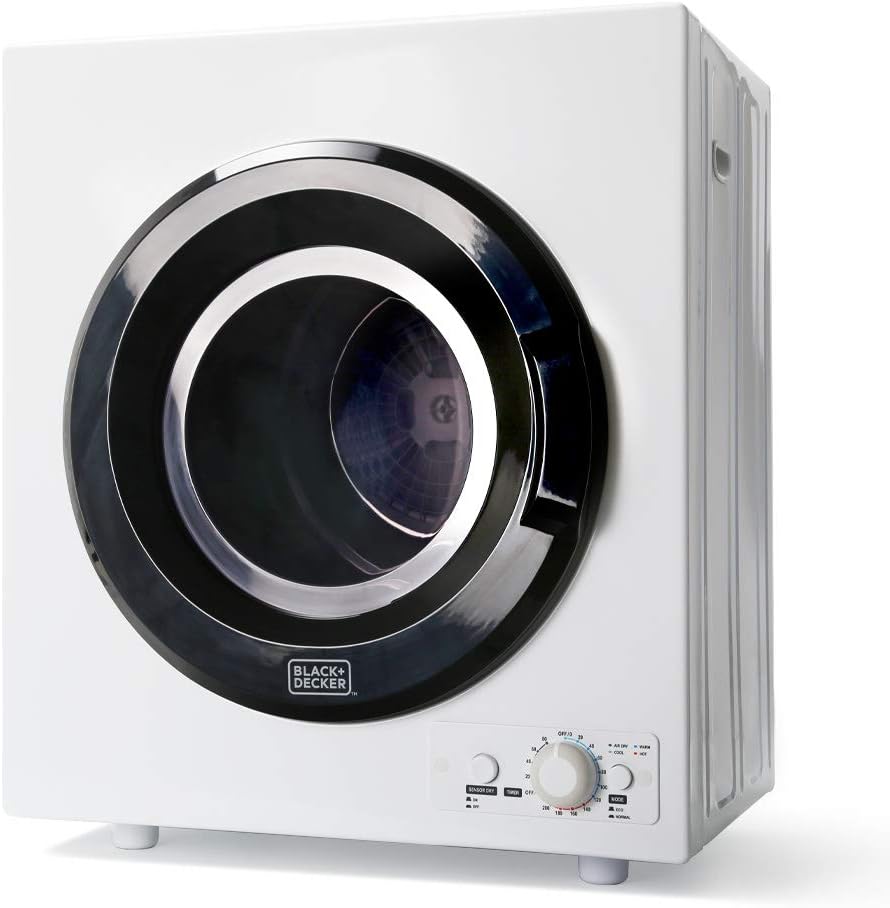
BLACK+DECKER BCED37 Portable Dryer
| Capacity | 3.5 cubic feet |
|---|---|
| Load volume | 13.2 lbs. |
| Power | 1500W, 120V |
| Drum | Stainless steel |
The BLACK+DECKER BCED37 is a compact vented dryer designed for apartments, small homes, and anywhere a standard 120V outlet is the only power source. It offers five drying modes including Air Dry, Cool, ECO, Warm and Hot plus a Sensor Dry function that measures moisture to avoid overdrying. The unit uses a 1500W motor and includes an exhaust connector for a 4" vent hose, reusable lint and exhaust filters, and adjustable leveling legs. In practice it handles smaller loads reliably and is gentler on fabrics thanks to its stainless steel drum and front-loading design, though drying times run longer than a 220V full-size dryer — expect 30 to 200 minutes depending on load and mode. Setup is straightforward and it can replace a drying rack for many users, but it is still a vented machine so you need a place to route the exhaust. The BCED37 is a practical choice when space, convenience, and compatibility with standard outlets matter more than fast cycle times.
Best for: Buyers who need a vented dryer that fits small spaces and runs on a standard household outlet, prioritizing convenience and fabric care over speed.
Less Ideal for: Households that need to dry large or frequent loads quickly or cannot accommodate a vented exhaust should look at full-size or condenser alternatives.
- Works on standard 120V outlet so no special wiring required
- Sensor Dry and multiple modes let you tailor drying for different fabrics
- Stainless steel drum and front-load design are gentler on clothing
- Includes exhaust connector and reusable lint/exhaust filters for vented installation
- Slower drying times compared with 220V full-size dryers
- Requires a vent path for exhaust which limits placement options
Verdict: A practical, vented portable dryer that delivers fabric-friendly drying on a standard 120V outlet for small homes and apartments.
Choosing the Right Electric Dryer: Key Factors to Consider
Drying Performance and Cycle Speed
How quickly a dryer removes moisture affects both convenience and energy use. Faster cycle times let you complete loads sooner and reduce the risk of mildew from damp clothes left in the drum. Look for models with proven sensor drying or adjustable heat settings that cut run time on partially dry loads.
On-budget units vary widely in how they handle heavy loads like towels and bedding. Consider whether typical loads in your household are light (shirts, delicates) or heavy (jeans, towels) because heavier loads require more heat and longer cycles, which can negate initial cost savings if the machine struggles.
Energy Efficiency and Operating Cost
Purchase price is only part of ownership cost. Electric dryers can account for a sizable portion of monthly energy use when run frequently. Machines with moisture sensors, multiple heat settings, and well-sealed drums generally use less electricity by stopping cycles when clothes are dry and avoiding excessive heat.
Estimate annual operating costs based on your laundry frequency and typical cycle lengths. A slightly more efficient unit can pay for itself over a few seasons in households that do a lot of laundry. Also consider dryer-vent routing and home insulation because long ducts or poor ventilation can increase run times and energy consumption.
Capacity and Drum Accessibility
Capacity determines how many items you can dry in one load and affects how often you need to run the dryer. Drum size is particularly important for bulky items such as comforters or bath towels. A larger drum can reduce the need for multiple cycles and helps clothes tumble freely for more even drying.
Also check drum access and door clearance. Smaller laundry spaces may require a particular door swing or stacking option, and ease of loading and unloading matters for everyday convenience. For renters or first-time buyers, a mid-size drum often offers the best balance between space and load handling.
Cycle Options, Sensors, and Fabric Care
Available cycles and sensor controls determine how well a dryer protects different fabrics. Look for timed cycles, sensor-based automatic stop, low-heat options for delicates, and wrinkle-prevent or cool-down phases. These features extend garment life and reduce shrinkage and damage.
On-budget models may simplify the control panel, so prioritize the sensor and heat-level options you will actually use. If you frequently dry mixed loads, sensor drying and adjustable temperatures are far more useful than a long list of specialty cycles you'll rarely select.
Reliability and Maintenance Requirements
Reliable components and easy maintenance reduce service headaches and unexpected expenses. Check how accessible the lint filter is, whether the vent connection is straightforward, and if the drum and seals are easy to inspect and clean. A unit with an internal-access lint trap or a clearly reachable filter minimizes fire risk and keeps performance steady.
Budget models often trade advanced durability features for lower cost, so plan on simple preventive maintenance like regular lint cleaning and occasional vent inspections. Understand what routine tasks you will need to perform and whether replacement parts are likely to be straightforward to source.
Installation, Venting, and Space Constraints
Where and how you install the dryer affects both performance and safety. Most electric dryers need a standard 240V outlet and a short, straight vent to the outside for best results. Long or convoluted vent runs reduce airflow and increase cycle time.
If you lack exterior venting, look for models that offer ventless or condenser-style options, or plan for an appropriate venting retrofit. Also consider stacking or compact models if laundry space is limited. Verify clearances for door swing and service access before committing to a purchase.
Understanding Sensor Drying Vs Timed Cycles
Sensor drying detects residual moisture and automatically stops the cycle when clothes reach the selected dryness level. This reduces over-drying, which can save energy and protect fabrics from heat stress. Timed cycles run for a set length regardless of remaining moisture and can lead to wasted electricity or damp clothes if the timer is set incorrectly.
On budget electric dryers, sensor systems vary in sensitivity and sophistication. If you frequently dry mixed loads, a reliable moisture sensor is one of the most practical features to prioritize because it improves convenience and reduces operating cost.
- Sensor drying: better for mixed loads and fabric care
- Timed cycles: useful for specific tasks but less efficient
- Choose sensor models when efficiency and garment protection matter
Venting Options and Why Duct Design Matters
Correct venting is critical for drying performance and safety. Short, straight ducts with minimal bends allow hot, moist air to escape efficiently. Long runs, multiple elbows, or crushed ducting increase back pressure, which slows drying and can cause lint buildup.
If exterior venting is not possible, consider models designed for apartment or condo installations that use condenser or heat-pump style removal. In any case, plan the vent path during installation and prioritize rigid or semi-rigid ducts over flexible foil vents for long-term reliability.
- Keep duct runs short and straight
- Use rigid or semi-rigid ducting for best airflow
- Inspect vents regularly to prevent lint buildup
Laundry Habits That Maximize Budget Dryers
How you load and sort laundry has a big impact on drying efficiency. Separate heavy items from lightweight fabrics, avoid overloading the drum, and run full but not packed loads. Partially drying loads in a washer spin cycle reduces dryer time, so use high spin speeds when fabric care allows.
Clean the lint filter every cycle and check the vent path seasonally. Small habits like shaking out bulky items before drying and using dryer balls to improve airflow can cut cycle times and produce more consistent results from a budget machine.
- Sort loads by weight and fabric type
- Use high washer spin speeds to reduce dryer time
- Clean lint filter after each use
Space-Saving Installations and Stacking Considerations
Many households constrained by space need to stack or install dryers in tight closets. Confirm door swing clearance and whether the model supports stacking with a compatible washer. Some compact electric dryers offer front-access panels and smaller footprints that fit narrow laundry alcoves.
Also check for service access panels and whether the unit requires removable kick plates for maintenance. Ease of access for lint cleaning and vent connection should factor into your purchase when space is limited.
- Verify door swing and clearance before buying
- Check stacking compatibility if needed
- Ensure maintenance access in tight installations
Common Safety and Compliance Checks
Safety basics are vital: ensure your electrical circuit matches the dryer requirements and that the vent terminates outdoors with a proper damper. Never use crushed or damaged ducting, and replace worn cords or connectors promptly. Regularly inspect the exhaust path for lint accumulation and clean as needed to reduce fire risk.
Follow the manufacturer's guidance for clearances around the appliance and use only recommended vent materials. If you are unsure about electrical or venting work, consult a qualified technician to avoid unsafe installations.
- Match dryer electrical requirements to home circuits
- Use proper vent materials and terminate outdoors
- Perform periodic vent and lint inspections
How We Chose the Best Electric Dryer
We focused on real-world performance and ownership costs to select six electric dryers that deliver dependable drying without exceeding the $500 cap. Selection began by filtering for units with full electric hookups and basic venting or ventless configurations that are commonly available in the budget segment. We excluded specialized commercial machines, compact coin-operated units, and models requiring major electrical upgrades beyond standard home circuits. Our evaluation emphasized measurable, buyer-relevant criteria: drying efficiency and cycle times, capacity and drum size for typical household loads, available cycle and sensor controls for fabric care, energy use and estimated operating cost, and durability features such as drum construction and lint-access design. We also checked ease of installation and routine maintenance needs since budget buyers often handle these tasks themselves. Final choices are balanced represents of reliable, economical dryers that meet the constraints buyers face when working with a sub-$500 budget.
Our full evaluation process is outlined in our review methodology.
FAQ
How much electricity does an electric dryer typically use?
Usage varies by cycle length, heat setting, and load size, but electric dryers can be one of the higher household appliances in energy consumption. Sensor cycles and shorter run times reduce energy use. Estimating costs requires multiplying typical cycle hours by your local electricity rate.
Can I install an electric dryer myself?
Many people can install a dryer if the proper electrical outlet and venting exist, and if local codes allow. However, if the circuit needs modification or vent runs are complex, hiring a qualified electrician or installer is advisable to ensure safety and compliance.
Are ventless electric dryers a good option under $500?
Ventless designs remove the need for exterior ducting but often trade off longer cycle times or increased humidity in the laundry space. For homes without venting options, a ventless model can be practical, but expect different performance characteristics compared with vented units.
How do I prevent my clothes from shrinking in an electric dryer?
Use lower heat settings for delicate fabrics and select sensor drying or shorter timed cycles. Removing garments while slightly damp and air-drying delicate items further reduces shrinkage risks. Read fabric care labels and adjust settings accordingly.
What maintenance keeps a budget dryer running well?
Clean the lint filter after every cycle, inspect and clean the vent path seasonally, and check door seals and drum surfaces for debris. Simple preventive maintenance prevents reduced airflow, improves efficiency, and lowers fire risk.
Final Verdict
When choosing an electric dryer under $500, prioritize features that affect daily performance: reliable sensor drying, adequate drum capacity for your loads, and straightforward venting. Energy efficiency and ease of maintenance will determine the total cost of ownership more than the sticker price. Balance drying speed against fabric-care options and installation constraints. If you dry heavy loads frequently, favor larger drums and robust airflow; for smaller households or limited spaces, focus on sensor controls and compact footprints. With those tradeoffs in mind, you can confidently select a budget electric dryer that fits both your laundry routine and your energy goals.