
Note: This article contains affiliate links. If you click on these links and make a purchase, we may earn a small commission at no extra cost to you. This helps support our research and content. Read our full affiliate disclosure here.
If you bake bread at home, the right electric hand mixer can save time and reduce arm strain when working with heavy doughs. A mixer built for bread tasks emphasizes steady torque, durable beaters, and comfortable handling so you can mix and knead without overheating the motor or overworking yourself. This guide narrows the field to seven top options suited to bread mixing and heavier batters. Each pick was shortlisted based on power delivery, dough-handling performance, and everyday usability. Read on to see which features matter most and how the finalists stack up against common bread-baking needs before the product list.
Top Picks at a Glance
| Best Overall The best all-around choice for most situations | Braun MultiMix 5 Hand Mixer |  |
| Best Quality Built to a higher standard if you want something more solid | Breville Handy Mix Scraper BHM800 |  |
| Best Value The sweet spot between price and what you get | Yomelo 9-Speed Digital Hand Mixer |  |
| Best Budget The cheapest option that still gets the job done reliably | OVENTE Hand Mixer HM151 |  |
| Top Rated A top-rated pick with lots of positive feedback | Hamilton Beach 6-Speed Hand Mixer |  |
| Most Popular A crowd favorite that many people choose with confidence | Lord Eagle Hand Mixer CX-6661 |  |
| Best Seller A high-volume bestseller chosen again and again | KitchenAid 5 Speed Ultra Power Hand Mixer |  |
Braun MultiMix 5 Hand Mixer

| Wattage | 350 |
|---|---|
| Number of Speeds | 9 |
| Voltage | 120 |
| Capacity (chopper) | 2 cups |
The Braun MultiMix 5 is a versatile hand mixer aimed at tackling everything from whipped creams to heavy doughs. Its 350-watt motor delivers noticeably more power than many compact mixers, and SmartMix technology shifts weight into the bowl so you use less wrist effort when mixing thicker batters or dough. The VarioControl dial and Turbo setting let you fine-tune speed on the fly, and the MultiWhisk swaps between whisking and beating without changing attachments. Included dough hooks handle bread and pizza dough, and the 2-cup chopper adds simple prep capability. The sealed housing and dishwasher-safe attachments make cleanup straightforward, and the soft-grip handle helps control during longer jobs. Expect this to perform like a compact, powerful hand mixer rather than a stand mixer replacement for very large or very stiff bread doughs; the motor and included hooks are well suited to small-to-medium batches and frequent home baking. For cooks who want one tool that covers whipping, mixing, light kneading, and prep, the MultiMix 5 is a practical choice.
Best for: Bakers who want a single, easy-to-control hand mixer that can handle frequent home bread baking and general mixing tasks without the bulk of a stand mixer.
Less Ideal for: People who regularly mix very large batches or very stiff doughs and need the high torque and capacity of a dedicated stand mixer.
- Powerful 350W motor for stronger mixing performance
- SmartMix vertical motor design reduces wrist effort during mixing
- Nine speeds plus Turbo for fine control across tasks
- MultiWhisk and dough hooks let you whisk, beat, and knead without swapping many tools
- Sealed housing and dishwasher-safe attachments for easier cleanup
- Not a substitute for a full-size stand mixer when handling very large or heavy bread doughs
Verdict: Choose the Braun MultiMix 5 if you want a powerful, low-effort hand mixer that handles whipping, mixing, and small-to-medium bread doughs reliably.
Breville Handy Mix Scraper BHM800
| Wattage | 240 watts |
|---|---|
| Voltage | 120 volts |
| Number of Speeds | 9 |
| Noise Level | 50 db |
| Included Components | 2 Scraper Beaters, 2 Dough Hooks, 2 Balloon Whisks |
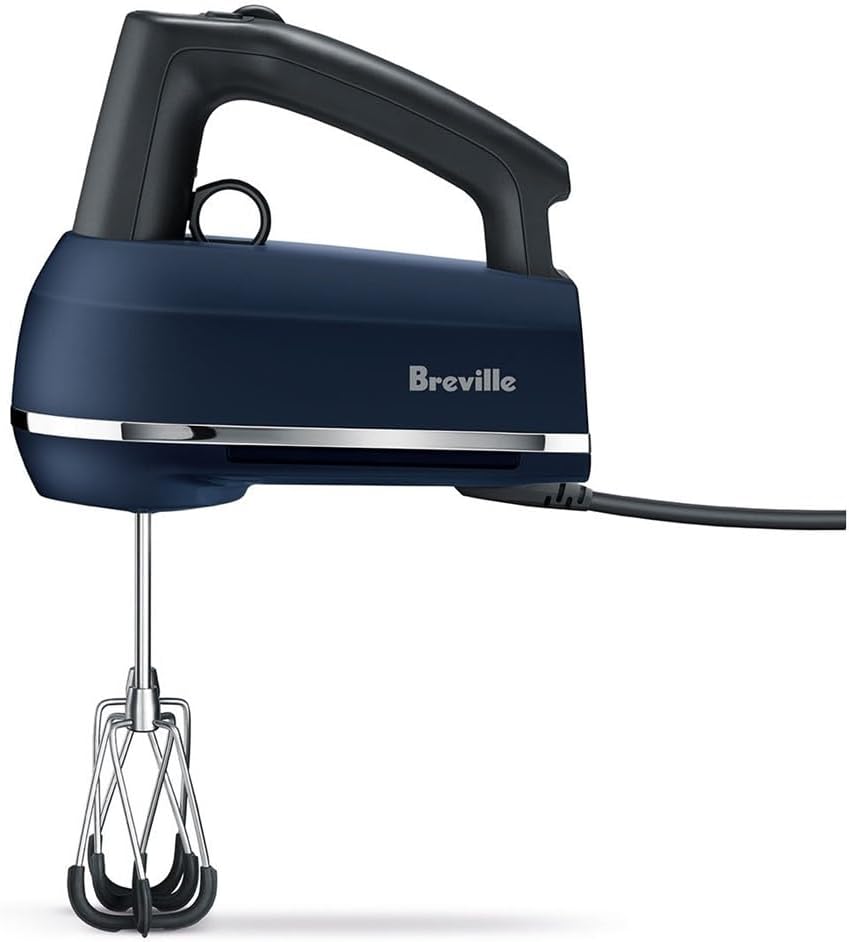
The Breville Handy Mix Scraper BHM800 is a performance-focused hand mixer that adapts to the attachment in use and offers nine speeds plus a boost for precise control from gentle folding to high-speed whipping. Its Beater IQ detects beater, whisk, or hook and automatically recalibrates speed, which helps maintain consistent mixing without constant manual adjustments. The rubber scraper beaters maximize bowl contact to incorporate ingredients more thoroughly and reduce clanging and noise, and the ergonomic handle and relatively low noise level make longer mixing sessions more comfortable. It includes two scraper beaters, two dough hooks, and two balloon whisks and stores them in a detachable compartment with a swivel cord for tidy storage. With 240 watts it has enough power for many home dough and batter tasks, though as a handheld unit it will be less capable than a stand mixer for very large or heavy bread doughs. Expect better-than-average mixing for cakes, batters, and small to medium bread doughs, with the convenience of compact storage and quieter operation compared with typical hand mixers.
Best for: Home bakers who prioritize controlled, quieter mixing and want a versatile handheld unit that handles cakes, batters, and small to medium bread doughs without needing a full stand mixer.
Less Ideal for: People who regularly make large batches of dense bread dough or need the highest torque and hands-free mixing that only a stand mixer can provide.
- Beater IQ automatically recalibrates speed by attachment for consistent results
- Rubber scraper beaters increase bowl contact and reduce noise
- Includes dough hooks, beaters, and whisks for versatile baking tasks
- Ergonomic handle and compact storage compartment keep attachments and cord organized
- Handheld format limits power and stamina for very large or heavy bread doughs
- Plastic external housing may feel less durable than full-metal bodies
Verdict: If you want a precise, quieter handheld mixer that adapts to attachments and handles most home bread and batter jobs, the Breville Handy Mix Scraper is a strong compact choice.
Yomelo 9-Speed Digital Hand Mixer

| Wattage | 400 watts |
|---|---|
| Number of Speeds | 9 |
| Noise Level | 50 db |
| Voltage | 120 volts_of_alternating_current |
The Yomelo 9-Speed Digital Hand Mixer is a compact handheld mixer aimed at everyday baking tasks and light dough work. It uses a 400W DC motor with soft-start technology and a turbo boost button, giving a range from gentle stirring up to faster whipping; the nine discrete speeds and digital display make it easy to select and monitor settings. Included are two flat beaters, two dough hooks, and a whisk, all stainless steel, plus a snap-on storage case for neat storage. The unit runs quietly at around 50 dB and has touch-button controls that are simple to wipe clean. For bread-related tasks it can handle small-batch dough and mixing thanks to the dough hooks and stronger DC motor, but as a handheld it will be best suited to light to medium doughs rather than large, heavy loaves. The mixer is lightweight and comfortable to grip, though continuous heavy-duty mixing will heat the motor more than a stand mixer. Overall it is a practical, space-saving option for bakers who need flexible speeds and decent dough-handling in a handheld format.
Best for: Bakers who want a compact, efficient handheld mixer that can handle small-batch bread and other baking tasks while saving counter space and storage.
Less Ideal for: People who regularly mix large or very stiff bread doughs or who need prolonged heavy kneading should choose a dedicated stand mixer instead.
- Powerful 400W DC motor provides stronger torque for mixing and small doughs
- Nine precise speed settings with digital display and touch controls for repeatable results
- Comes with two dough hooks, two flat beaters, and a whisk to cover common baking tasks
- Quiet operation (around 50 dB) and soft-start reduces splatter when beginning to mix
- Snap-on storage case keeps attachments organized and easy to store
- Handheld format limits capacity and sustained heavy-kneading compared with stand mixers
- Plastic housing may warm during extended high-load use
Verdict: A compact, well-equipped handheld mixer that gives practical speed control and enough motor power to mix small to medium bread doughs without taking up the space of a stand mixer.
OVENTE Hand Mixer HM151
| Wattage | 150 watts |
|---|---|
| Number of Speeds | 5 |
| Voltage | 120 |
| Included Components | 2 Whisk Beater, Snap-On Case Storage |
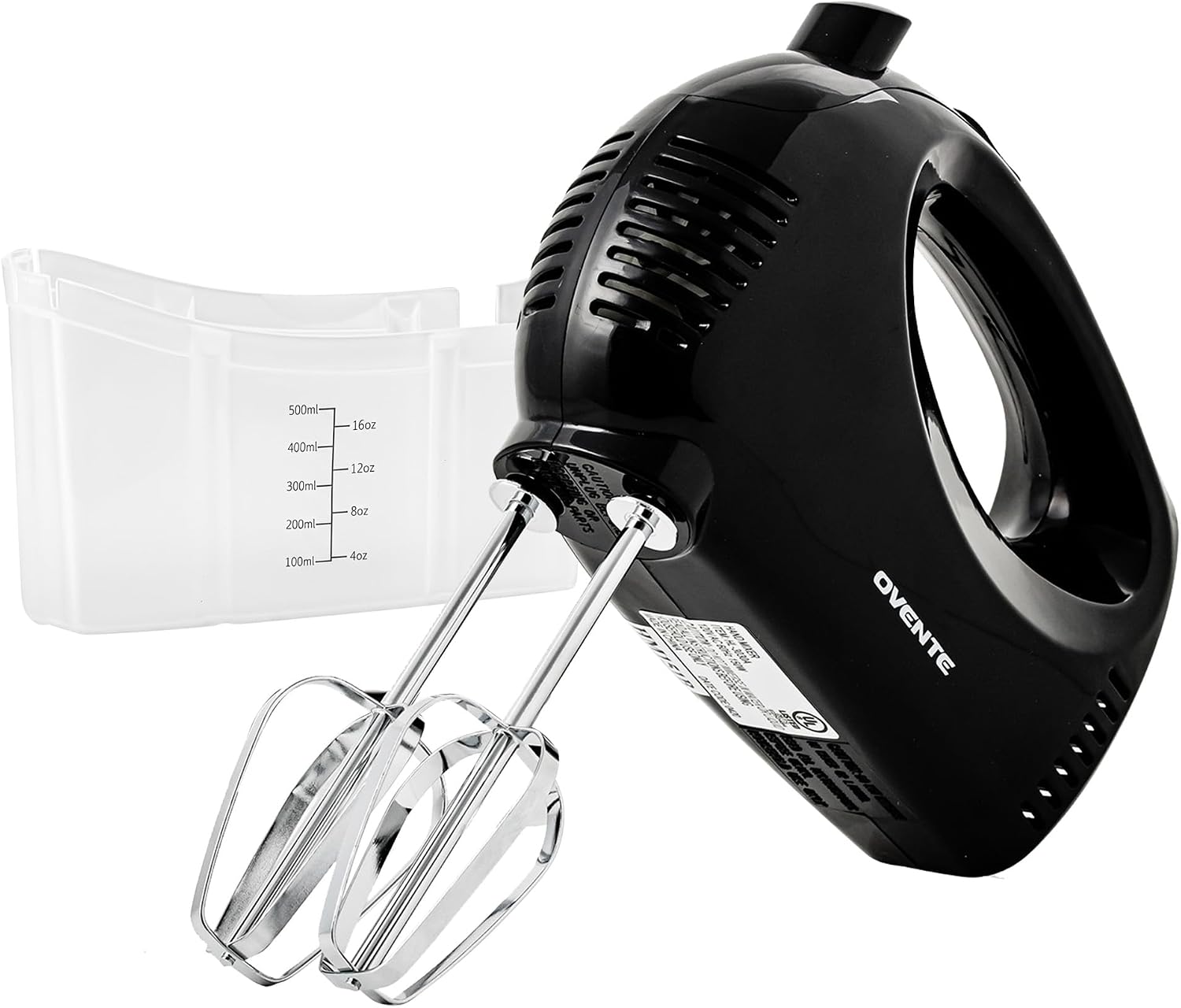
The OVENTE HM151 is a straightforward, budget-friendly hand mixer that handles everyday mixing tasks without fuss. Its 150W motor and five speeds cover common bread-related chores such as mixing dough starters, folding ingredients, and whipping small batches of batter; heavier, large-volume doughs may require a stand mixer. The included stainless steel whisk beaters are durable and dishwasher-safe, and the push-button beater eject makes swaps quick and tidy. The unit is lightweight and ergonomically shaped for short mixing sessions, and the snap-on storage case keeps the beaters and cord organized on the counter. Practical conveniences include a simple speed control slider and a one-year manufacturer warranty backed by US-based customer service. Expect limits if you frequently tackle heavy bread doughs or large loaves, since the 150W motor is designed for light to medium mixing rather than prolonged kneading.
Best for: Home bakers on a tight budget who need a simple, compact mixer for light bread tasks, dough starters, and routine mixing rather than heavy kneading.
Less Ideal for: Bakers who regularly make large loaves or dense doughs should choose a stand mixer or a more powerful handheld model built for prolonged kneading.
- Five adjustable speeds let you match mixing intensity to the recipe
- Two stainless steel whisk beaters are durable and dishwasher-safe
- Lightweight ergonomic design reduces hand fatigue during short jobs
- Snap-on storage case keeps beaters and cord organized for easy storage
- 150W motor is underpowered for heavy or large-volume bread doughs
Verdict: A cost-conscious, compact hand mixer that reliably handles light to medium bread preparation tasks without the expense of a larger mixer.
Hamilton Beach 6-Speed Hand Mixer

| Wattage | 250 watts |
|---|---|
| Number of Speeds | 6 |
| Special Features | QuickBurst, Bowl Rest, Snap-on Storage Case |
| Voltage | 120 volts |
The Hamilton Beach 6-Speed hand mixer is a straightforward, dependable tool for everyday mixing tasks. It uses a 250-watt peak-power motor with six speed settings and a QuickBurst button to tackle everything from cookie dough add-ins to whipped cream, and the bowl rest stabilizes the unit when you need to pause and add ingredients. Attachments include two traditional beaters and a whisk, all dishwasher-safe, and they store neatly in the included snap-on case so you are less likely to misplace them. In practice the motor provides steady performance for typical home baking and light bread mixing of small batches, and the detachable spindle and eject button make cleanup simple. The design prioritizes reliability and ease of use rather than heavy-duty mixing of large bread doughs, so you will notice strain with very dense or high-volume doughs compared with a stand mixer or models with higher wattage. For most home bakers who need a dependable, easy-to-store hand mixer for routine tasks, this is a sensible choice.
Best for: Home bakers who prioritize a reliable, easy-to-use hand mixer for everyday mixing and occasional small-batch bread or dough work and who value tidy storage and simple maintenance.
Less Ideal for: Bakers who regularly mix large quantities of heavy bread dough or need a machine for continuous heavy-duty kneading should choose a stand mixer or a higher-wattage model instead.
- 250-watt peak motor delivers consistent power for common mixing tasks
- Six speeds plus QuickBurst button give control for delicate to faster mixing
- Snap-on storage case keeps beaters and whisk together and reduces loss
- Bowl Rest feature stabilizes the mixer on the bowl when pausing
- Dishwasher-safe attachments and an eject button simplify cleanup
- 250-watt peak power is limited for heavy or large-volume bread doughs
- Traditional beaters may struggle with very dense dough compared with dough hooks or stand mixers
Verdict: A dependable, user-friendly hand mixer that delivers consistent everyday performance and convenient storage for reliability-focused home bakers.
Lord Eagle Hand Mixer CX-6661

| Wattage | 400 watts |
|---|---|
| Number of Speeds | 5 |
| Voltage | 120 volts |
| Noise Level | 75 db |
| Included Components | Beaters × 2, Dough Hooks × 2, Whisk × 1 |
The Lord Eagle CX-6661 is a compact handheld mixer designed for everyday home baking tasks like whipping cream, mixing cake batter, and kneading small doughs. Its 400W pure-copper motor and five speed settings with a turbo boost deliver quick acceleration for thicker mixes, and the set includes two beaters, two dough hooks, and a whisk so you can switch between whipping and light dough work without buying extras. The lightweight ergonomic body and snap-on storage box keep accessories organized, and the stainless steel attachments are dishwasher-safe for easy cleanup. Built-in fast heat dissipation and overheat protection help during extended use, though heavier or very large bread doughs may still push the motor and require short rests. Noise is moderate around the listed 75 dB, and controls are simple push buttons with an eject for safe accessory removal. For bakers who make small loaves or do frequent mixing, this mixer combines useful attachments and a sturdy motor in an affordable package, but it is not a stand mixer replacement for heavy, high-volume bread making.
Best for: Bakers who want a dependable, easy-to-use handheld mixer for regular home baking and occasional small bread doughs and who value included attachments and organized storage.
Less Ideal for: Home cooks who regularly mix large batches of heavy bread dough or need a machine for commercial or high-volume baking should choose a stand mixer instead.
- 400W pure-copper motor provides reliable mixing power for everyday batters and small doughs
- Five speed settings plus turbo boost give good control over mixing consistency
- Includes 5 stainless steel attachments (2 beaters, 2 dough hooks, 1 whisk) for versatile tasks
- Snap-on storage case keeps accessories organized and is convenient for storage
- Attachments are dishwasher-safe for easier cleanup
- Not intended as a replacement for a stand mixer when handling large or very stiff bread doughs
- Noise level is noticeable at higher speeds around 75 dB
Verdict: A practical handheld mixer with a solid 400W motor and a full set of stainless steel attachments that handles everyday baking and small bread jobs reliably.
KitchenAid 5 Speed Ultra Power Hand Mixer

| Number of Speeds | 5 |
|---|---|
| Wattage | 60 watts |
| Voltage | 120 volts |
| Included Components | (1) Hand Mixer, (2) Stainless Steel Turbo Beater Accessories |
The KitchenAid 5 Speed Ultra Power Hand Mixer is a straightforward corded mixer built for routine kitchen tasks like cookie dough, mashed potatoes and light bread dough mixing. It offers five speeds that range from a slow stir to a high whip, a soft-start behavior to reduce splatter, and a lockable swivel cord so you can approach bowls from either side. Included Stainless Steel Turbo Beater accessories are designed for heavier batters and are dishwasher-safe for easier cleanup, and a one-handed eject makes accessory changes quick. At 60 watts this model is compact and lightweight which keeps hand fatigue low during short mixing sessions, but it is not intended for heavy, frequent kneading of large bread batches where a stand mixer or a higher-wattage hand mixer would perform better. For cautious buyers who value reliable, easy-to-use controls and durable stainless beaters, this is a sensible everyday hand mixer that handles most small- to medium-batch bread prep tasks with care.
Best for: Buyers who prioritize a reliable, easy-to-use hand mixer for small to medium baking tasks and who prefer a compact, low-fatigue appliance for occasional bread-making.
Less Ideal for: Home bakers who regularly mix large or very dense bread batches or who need a heavy-duty kneading tool should consider a stand mixer or a higher-power alternative.
- Five selectable speeds cover tasks from slow stirring to high whipping
- Lockable swivel cord improves handling and keeps the cord out of the way
- Stainless Steel Turbo Beater accessories are dishwasher-safe and suited for heavier batters
- Beater eject button enables quick, one-handed accessory removal
- 60-watt motor can struggle with large or dense bread doughs and prolonged kneading
Verdict: A dependable, easy-to-use hand mixer that is a safe choice for occasional bread-making and everyday mixing tasks.
Choosing the Right Electric Hand Mixer for Bread: Key Factors to Consider
Motor Torque and Continuous Power
Bread dough is dense and demanding. A mixer with high peak power is useful, but sustained torque under load is more important for mixing and initial kneading steps.
Continuous power affects how long you can mix before the motor slows or stalls. Look for specifications and build elements that indicate the motor can run at low-to-medium speeds under load without overheating or losing rpm. Better thermal design and gearing also help maintain power through longer mixing cycles.
Beater and Dough Hook Quality
The shape, material, and mount strength of beaters and dough hooks determine how effectively a mixer moves heavy dough through the bowl. Narrow, flexible whisks are fine for batters, but breadth and reinforcement matter for dough hooks and flat beaters used with bread mixes.
Stainless steel or reinforced alloy attachments resist bending and transfer torque more reliably than thin-coated pieces. Secure locking mechanisms prevent wobble during heavy loads, and detachable metal hooks are easier to clean and more durable than plastic fittings.
Speed Range and Control Precision
Mixing bread requires varying speeds: low for folding and initial dough formation, and short bursts at higher speeds to finish. A mixer with a broad and predictable speed range makes it easier to avoid overworking gluten or splattering flour.
Stepped or continuously variable controls both work when they give consistent response and clear markings. A soft-start feature reduces ingredient splash and reduces initial motor strain, which is useful when beginning with a bowl of dry ingredients.
Ergonomics and Handling
Mixing dough can take several minutes, so the physical feel of the mixer matters. An ergonomic handle, balanced weight distribution, and comfortable trigger placement reduce wrist fatigue during longer mixing sessions.
Noise and vibration also influence comfort. Models that vibrate less feel more stable when handling heavier doughs. Consider whether the mixer is easy to hold over the duration you expect to be mixing and whether controls are reachable without shifting your grip.
Thermal Design and Duty Cycle
Repeated or prolonged mixing generates heat. A mixer's ability to dissipate heat determines how often you can use it for multiple loaves or longer kneading tasks without waiting for cooldown.
Good thermal design includes ventilation, heat-resistant internal components, and serviceable gear trains. Duty cycle specifications and consumer reports about overheating can indicate whether a mixer will reliably handle bread-focused workloads.
Cleaning, Maintenance, and Accessories
Bread mixing is messy. Easy-to-remove attachments and washable housings simplify cleanup and encourage proper maintenance, which extends service life.
Dishwasher-safe beaters and hooks, simple beater-release mechanisms, and accessible seams in the housing reduce trapped flour and dough. Also evaluate included accessories like storage cases and extra hooks, because tailored attachments can improve dough handling for different loaf styles.
Why Hand Mixers Can Work for Home Bread Baking
Hand mixers are often associated with light tasks, but certain models deliver the torque and control needed for small- to medium-batch bread mixing. For home bakers who make occasional loaves or work in limited kitchen space, a capable hand mixer can handle initial dough formation and short kneading cycles, especially when paired with robust dough hooks.
Using a hand mixer for bread is most practical when recipes are scaled to the mixer's capacity and when the baker understands how to manage mixing intervals to avoid overheating. They are not a universal replacement for stand mixers on large or very heavy doughs, but they can be a flexible, affordable option for many bakers.
- Best for small to medium dough batches
- Good for initial mixing and short kneading bursts
- Requires attention to duty cycle and thermal limits
Tech Specs That Matter for Bread Mixing
When evaluating specs, prioritize continuous wattage and the presence of reinforced gearing. Peak wattage can be misleading because it does not always reflect sustained performance under load.
Also check reported RPM ranges at specific speed settings and whether the manufacturer lists a duty cycle. Attachment fitment and shaft thickness are practical details that rarely appear in headline specs but significantly impact durability when mixing dense doughs.
- Continuous wattage over peak wattage
- Reinforced metal gears and shafts
- Clear speed ranges and soft-start features
Practical Tips for Using a Hand Mixer with Bread Dough
Start on the lowest speed to combine ingredients and prevent flour clouds. Increase to low-medium for initial development, and use short, controlled bursts rather than long continuous runs to avoid overheating the motor.
Let the mixer rest between longer cycles if you feel heat building. Alternate bowl resting with short manual kneading or hand stretches to develop gluten without overtaxing the tool. Use a sturdy mixing bowl and a bench scraper to manage sticky dough.
- Begin at low speed and use soft-starts
- Mix in short intervals to protect the motor
- Use appropriate bowl size to avoid splatter
Attachments and When to Use Them
Dough hooks designed for heavier mixes differ from whisks and flat beaters. For bread, use hooks that reach deep into the bowl and have a shape that folds and stretches the dough. Flat beaters are better for batters and lighter mixes but can assist with initial hydration phases.
Keep replacement or spare metal hooks on hand if you bake frequently. Different hook shapes can produce different crumb structures, so choose the attachment that matches the loaf style you want to make.
- Use dough hooks for kneading and development
- Flat beaters for initial ingredient mixing
- Keep spare hooks to avoid downtime
Maintenance to Extend Service Life
Regularly clean attachments and wipe down the housing to remove flour dust that can infiltrate vents. Avoid submerging the mixer's body; detach beaters and hooks for washing and ensure all parts are fully dry before storage.
If the mixer has serviceable vents or removable panels, check for trapped flour and clean gently. Replace worn attachments and watch for signs of overheating or unusual noises during mixing, which can indicate gear strain.
- Clean attachments after each use
- Avoid exposing the motor housing to water
- Monitor for unusual sounds or heat build-up
How We Chose the Best Electric Hand Mixer for Bread
We focused on features and performance factors that directly affect bread mixing and heavier dough work. Key evaluation criteria included sustained motor torque under load, beater and dough hook design and durability, speed control precision and variability, ergonomics for extended mixing, and thermal management to prevent motor overheating. We tested documentation and specifications for each model to confirm capacity claims and examined reported longevity indicators such as reinforced shafts and metal gearing. Practical handling aspects like ease of inserting and removing beaters, storage options, and accessory compatibility were also part of the assessment. We excluded mixers intended only for light whisking, handheld blowers, or single-purpose battery devices that lack the continuous torque needed for dense doughs. Units with poor ventilation, weak gear trains, or insufficient variable speed ranges were not considered. The result is a shortlist of mixers that combine the torque, build, and controls most relevant to home bread bakers.
Our full evaluation process is outlined in our review methodology.
FAQ
Can a hand mixer knead bread dough effectively?
Often it can for small to medium batches. The key is sufficient sustained torque and the correct dough hooks. For very large or very stiff doughs, a stand mixer is usually more suitable.
How long should I run a hand mixer when kneading bread?
Short bursts totaling several minutes usually work best. Use low to medium speeds and pause periodically to check dough development and to let the motor cool if it feels warm.
Are metal dough hooks necessary for bread mixing?
Metal hooks are generally more durable and transfer torque better than plastic ones. They resist bending and wear when working with heavier doughs, which improves reliability over time.
What size batch is appropriate for an electric hand mixer?
Typically small to medium batches that fit comfortably in a standard mixing bowl are ideal. Overfilling the bowl or attempting very large loaves can overload the motor and reduce effectiveness.
How do I prevent my mixer from overheating during bread mixing?
Mix in shorter intervals, use lower speeds, and allow cooling breaks between cycles. Ensure vents are clear and avoid continuous high-load operation beyond the mixer's recommended duty.
Final Verdict
For home bakers who make small to moderate quantities of bread, a well-chosen electric hand mixer can be an efficient, space-saving tool. Prioritize sustained torque, robust dough hooks, and a dependable speed control system to ensure consistent dough development. Consider ergonomics and thermal design if you plan to mix frequently or for longer sessions. Choose a model that matches your typical batch size and mixing rhythm to get the most reliable, long-term performance.