
Note: This article contains affiliate links. If you click on these links and make a purchase, we may earn a small commission at no extra cost to you. This helps support our research and content. Read our full affiliate disclosure here.
If you plan to store both reds and whites in the same cabinet without wasting power, an energy-efficient dual-zone wine cooler makes that possible. The right cooler maintains two independent temperature zones while minimizing electricity use and noise, which matters for long-term bottle health and monthly utility costs. This guide shortlists five top dual-zone wine coolers chosen for their energy performance, temperature stability, and user-friendly features. We evaluated units on measurable efficiency and how well they protect different wine styles. Read on to see which attributes matter most and which options best match your storage needs.
Top Picks at a Glance
| Best Overall The best all-around choice for most situations | Yeego 24 Inch Wine Fridge |  |
| Best Quality Built to a higher standard if you want something more solid | Wine Enthusiast 32-Bottle Dual Zone Cooler | 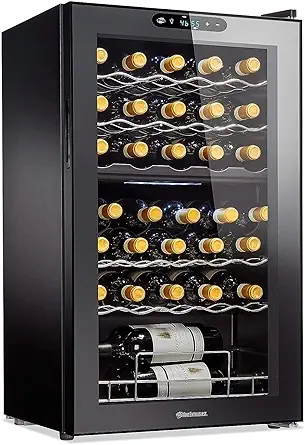 |
| Best Value The sweet spot between price and what you get | Ivation 33-Bottle Dual Zone Wine Cooler |  |
| Top Rated A top-rated pick with lots of positive feedback | Tylza 24" Dual Zone Wine Refrigerator |  |
| Most Popular A crowd favorite that many people choose with confidence | Velieta 24-Inch Dual Zone Wine Cooler |  |
Yeego 24 Inch Wine Fridge

| Capacity | 5.12 cubic feet |
|---|---|
| Bottle capacity | 47 Bottles |
| Temperature range | 40-65°F (5-18°C) |
| Cooling method | Compressor |
| Annual energy consumption | 194 kilowatt hours per year |
The Yeego 24 Inch Wine Fridge is a compressor-based wine cooler that holds up to about 52 standard Bordeaux bottles and fits undercounter or freestanding. It uses a reciprocating compressor and 360° air circulation for fast, even cooling across a 40 to 65°F range, controlled from a front LED touch panel with 1°F increments and power-failure memory. Five wooden shelves are adjustable and removable so you can rearrange for larger bottles, and the dual-pane tempered glass door with a stainless-steel frame blocks most UV light while presenting a clean look. Practical touches include automatic defrost, low-noise operation (around 41–43 dB), adjustable leveling feet and an upgraded front grille for airflow. Trade-offs are that the unit is compressor-based so it will vibrate slightly compared with high-end column coolers, and its stated annual energy use (194 kWh) is moderate rather than ultra-efficient. For someone prioritizing steady, accurate cooling and flexible placement, this cooler is a solid option; buyers who need whisper-quiet thermoelectric operation or the absolute lowest energy draw should compare other technologies.
Best for: Buyers who want reliable, accurate cooling and flexible installation for a medium-sized bottle collection and who prioritize steady temperature control over the absolute lowest energy use.
Less Ideal for: Those seeking the quietest possible thermoelectric coolers or the absolute lowest-energy, most eco-friendly option should consider other technologies.
- Compressor cooling with 360° air circulation for consistent temperature control across the cabinet
- Digital touch controls with 1°F adjustment and power-failure memory for precise setpoint management
- Adjustable wooden shelves that minimize vibration and accommodate different bottle sizes
- Dual-pane tempered glass and stainless-steel frame that reduce UV exposure and present a clean built-in look
- Quiet operation rated around 41–43 dB suitable for home use
- Moderate annual energy consumption (~194 kWh) compared with some more efficient models
- Reciprocating compressor can produce slight vibration compared with thermoelectric systems
Verdict: A dependable 24-inch compressor wine fridge that delivers precise, even cooling and flexible undercounter or freestanding installation for medium collections.
Wine Enthusiast 32-Bottle Dual Zone Cooler

| Capacity | 32 Bottles |
|---|---|
| Cooling Method | Compressor |
| Number of Sections | 2 |
| Defrost System Type | Manual Defrost |
| Specification Met | Energy Star |
This Wine Enthusiast dual-zone cooler uses a MAX compressor to deliver stable, energy-efficient cooling for long-term wine storage or short-term chilling for entertaining. It splits the interior into two independently controlled zones so you can hold reds at a warmer setting while keeping whites and rosés cooler, and the digital touchscreen makes temperature adjustments straightforward. Chrome wire shelves and a large bottom display rack keep bottles secure and easy to access, while LED interior lighting shows the collection without adding heat. The unit is designed to run quietly at around 40 dB, and compressor cooling is more efficient and durable than thermoelectric designs. Expect modest temperature variance when the compressor cycles and note the door is not reversible; shelves are removable but not adjustable. The cooler is freestanding with a matte-black glass door that fits well in a home bar, kitchen, or office and includes a key lock for security.
Best for: Buyers who prioritize consistent, energy-efficient temperature control and quiet operation for a mixed wine collection and want a sizeable freestanding cooler that performs like a small cellar.
Less Ideal for: Anyone needing a built-in or reversible-door unit or buyers who require fully adjustable shelving for oversized or unusually shaped bottles.
- Dual-zone compressor lets you store reds and whites at different temperatures
- Compressor cooling is energy-efficient and more consistent than thermoelectric units
- Digital touchscreen and LED lighting make settings and visibility easy
- Chrome wire shelves and a display rack provide secure, showroom-style storage
- Runs quietly around 40 dB suitable for living spaces
- Shelves are removable but not height-adjustable which limits customized bottle arrangements
- Door is not reversible which can constrain placement options
Verdict: Choose this cooler if you want a quiet, energy-efficient compressor dual-zone unit that keeps reds and whites at separate, stable temperatures for serious at-home storage.
Ivation 33-Bottle Dual Zone Wine Cooler

| Capacity | 3.2 cubic feet |
|---|---|
| Bottle Capacity | 33 bottles |
| Temperature Range (Upper) | 54 – 64°F |
| Temperature Range (Lower) | 41 – 57°F |
| Power | 115V, 65W |
The Ivation 33-Bottle Dual Zone Wine Cooler is a compact freestanding cellar designed to store both red and white wines at their ideal serving or short-term aging temperatures. Its compressor cooling system and inverter help maintain stable temperatures across two independently controlled zones (upper 54–64°F, lower 41–57°F), and a digital touch display makes adjustments straightforward. Wire shelves are removable to fit larger bottles and the double-paned UV-resistant glass door with airtight gasket protects wines from light and helps insulation. The unit runs quietly with low vibration to avoid disturbing sediment and includes an internal LED light and a keyed door lock for security. Practical downsides are the limited 3.2 cu ft capacity if you plan a large collection and the wired shelving rather than wooden shelves preferred by many collectors, but for the price it delivers solid temperature stability and useful features for mixed collections.
Best for: Buyers who prioritize temperature performance and stability for mixed red and white collections and want a reliable compressor unit that fits in a kitchen or apartment.
Less Ideal for: Those needing a high-capacity wine cellar or a premium display unit with wooden shelving and built-in custom racking should consider larger or higher-end models.
- Dual independent temperature zones for storing reds and whites at different temps
- Compressor cooling with inverter for stable, low-vibration operation
- UV-resistant double-paned glass door and airtight gasket to protect wine from light and maintain internal conditions
- Touch control digital display with LED interior light and a keyed door lock for convenience and security
- 3.2 cubic foot capacity may be small for larger collections
- Wire shelves instead of wooden or beech-style shelving preferred by some collectors
Verdict: If you want dependable compressor cooling and independent temperature control for a mixed red and white collection under $500, this Ivation cooler delivers strong performance in a compact freestanding package.
Tylza 24" Dual Zone Wine Refrigerator

| Capacity | 4.2 cubic feet |
|---|---|
| Temperature range left zone | 35-50°F |
| Temperature range right zone | 41-64°F |
| Annual energy consumption | 163 kilowatt hours per year |
| Installation type | Under-Counter/Freestanding/Built-In |
This Tylza 24" dual-zone fridge is a focused beverage chiller for households or small bars that need separate temperature control for wine and drinks. It provides two independently controlled cooling zones with adjustable ranges (left 35–50°F, right 41–64°F) and a touch control panel with temperature memory to restore settings after power interruptions. The unit fits under counters or works freestanding and offers a mix of metal and wood shelving that can be rearranged to fit bottles or stacks of 12‑oz cans, with the manufacturer listing capacity for about 20 Bordeaux bottles and 88 cans. A rotary scroll inverter compressor and fan circulation aim for even cooling while running quietly under 38 dB, and the double-layered glass door plus a keyed lock help protect stored bottles. Practical limits include a moderate 4.2 cu ft capacity that will not suit large collections and a 24" footprint that requires planning for built-in installation; buyers should also expect typical compressor vibration and longer pull-down times compared with commercial blast chillers. For a performance-focused mini fridge that balances low noise, dual zones, and flexible shelving, this is a sensible option.
Best for: Buyers who prioritize precise temperature control and low-noise operation for mixed wine and beverage storage in a home bar or under-counter setup.
Less Ideal for: Those needing large-capacity cellars or professional rapid-cooling performance for high-volume commercial use should look elsewhere.
- Independent dual cooling zones with specific temperature ranges for wine and beverages
- Quiet inverter compressor design operating under 38 dB for low noise environments
- Touch control with temperature memory restores settings after power outages
- Flexible metal and wood shelving that can be removed or rearranged to fit bottles and cans
- Built-in or freestanding installation options for versatile placement
- 4.2 cubic foot capacity limits the number of bottles for serious collectors
- Not a rapid commercial-style cooler so pull-down times may be slower than specialty units
Verdict: Choose this fridge when you want a quiet, dual-zone under-counter cooler that keeps wine and cans at independently controlled serving temperatures.
Velieta 24-Inch Dual Zone Wine Cooler
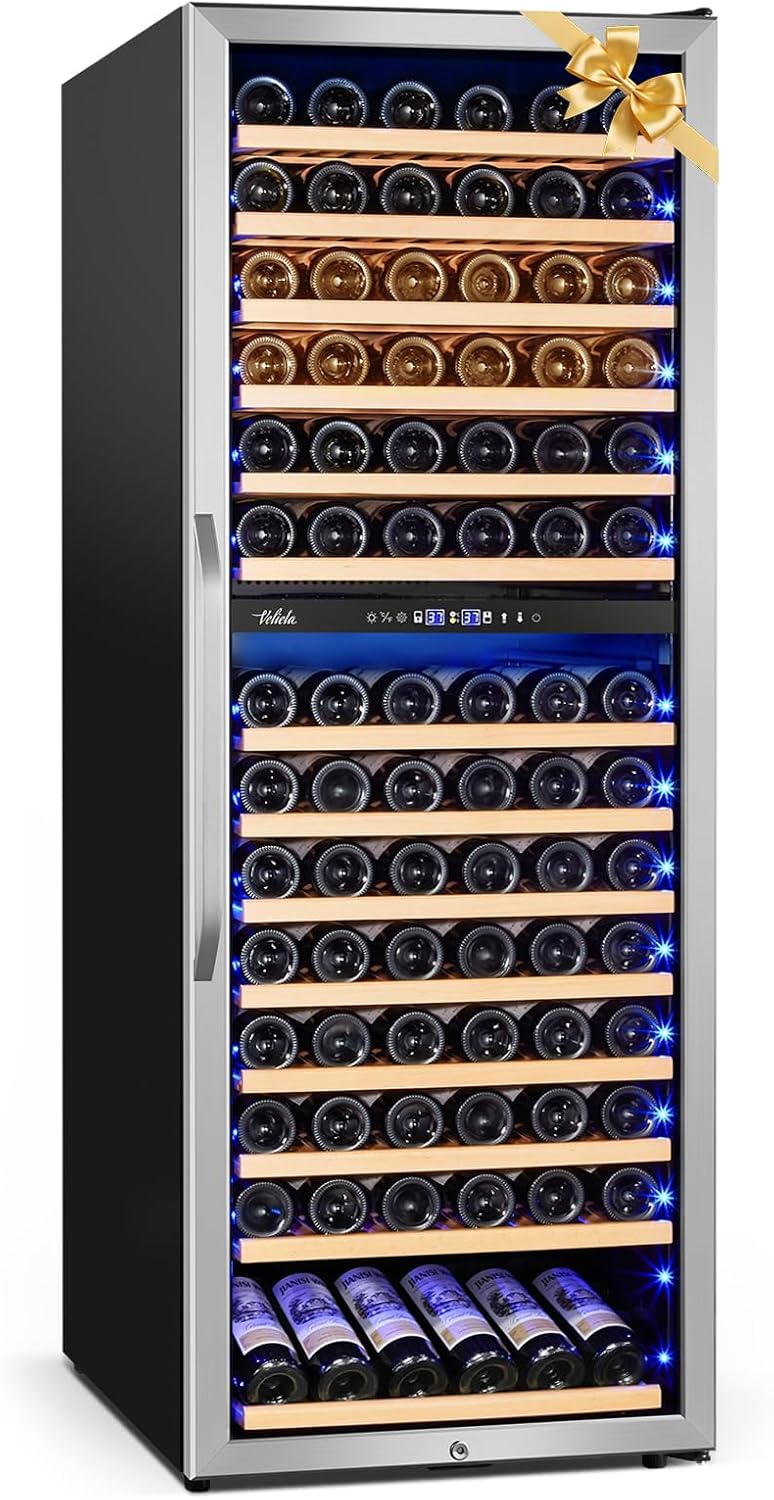
| Cooling Method | Compressor |
|---|---|
| Number Of Shelves | 14 |
| Number of Sections | 2 |
| Defrost System Type | Automatic |
| Capacity | 13.5 cubic feet |
This Velieta 24-inch dual-zone wine cooler is built for serious storage and controlled temperature management. It uses a compressor cooling system with two independently set zones so you can keep whites and reds at their ideal ranges (upper zone about 40 to 55 F, lower zone about 55 to 65 F). The cabinet offers a high bottle capacity with 14 wood and wire shelves and a lockable glass door with internal blue lighting that reduces UV exposure while making bottles easy to see. Controls are on an LED display and the unit includes automatic defrost, a temperature memory after power loss, and a sound reduction system intended to keep compressor noise low. In real-world garage use expect robust cooling performance and stable temperatures, though the compressor and size mean it is large and heavy and will need adequate ventilation and a dedicated circuit in some installations. The fridge is freestanding and matte stainless steel finished so it fits utility spaces, and removable shelves simplify reconfiguring for odd bottle shapes.
Best for: Buyers who prioritize consistent, professional-level temperature control and large capacity for long-term wine storage in a non-climate-controlled garage environment.
Less Ideal for: Not a good choice for buyers needing a compact, lightweight cooler for tight spaces or for occasional short-term chilling.
- True dual-zone compressor cooling for separate red and white storage
- Large internal capacity with 14 wood and wire shelves for many bottles
- LED digital controls with temperature memory after power loss
- Automatic defrost and sound reduction features for quieter, lower-maintenance operation
- Very large and heavy cabinet that requires sufficient floor space and ventilation
- Annual energy consumption is relatively high compared with small thermoelectric coolers
Verdict: Choose this unit if you need robust compressor cooling and large dual-zone capacity to store and protect a sizable wine collection in a garage setting.
Choosing the Right Energy-Efficient Dual-Zone Wine Cooler: Key Factors to Consider
Energy Consumption and Efficiency Ratings
Energy consumption directly affects operating cost and environmental footprint. Look for measured power draw at steady-state temperatures for each zone and information on typical daily or yearly kilowatt-hour usage.
Energy-efficient models often use higher-quality insulation, more efficient compressors, or advanced thermoelectric systems that are sized to the cabinet volume. Efficiency matters more if the cooler will run 24/7 in conditioned space or a warmer area where the compressor cycles frequently.
Independent Temperature Control
True dual-zone coolers allow separate setpoints and reliable control for each compartment. This matters because red and white wines often require different temperature ranges and long-term storage benefits from precise, stable conditions.
Check that each zone has its own thermostat and that the unit can maintain the target within a narrow band. Systems that couple zones or share a single compressor stage may be less flexible and can increase energy use when trying to hold divergent temperatures.
Insulation and Cabinet Design
Good insulation reduces heat gain and lowers compressor runtime. Thicker walls, high-R-value panels, and sealed door gaskets limit warm air infiltration when doors are opened.
Cabinet layout affects how evenly air circulates. Internal dividers, shelving that allows airflow, and properly placed vents help maintain uniform temperatures without overworking the cooling system.
Noise and Vibration
Noise level impacts where you can locate the cooler in the home. Quieter compressors or low-vibration thermoelectric units are preferable for kitchens, living areas, or finished basements. Vibration can disturb sediment in older wines, so low-vibration mounting and anti-vibration shelving are important for long-term storage.
Look for documented sound levels in decibels or user feedback about steady-state hum and startup cycles.
Shelving, Capacity, and Storage Flexibility
Capacity should match how many bottles you intend to keep accessible. Adjustable shelves and sliding racks improve organization and reduce the need to open the door repeatedly.
Shelving design also affects airflow and cooling efficiency. Shelves that allow adequate circulation help maintain uniform temperatures and minimize cold spots or warm pockets inside each zone.
Controls and Monitoring Features
Accurate digital controls and clear displays help you set and verify temperatures for each zone. Some units include external temperature readouts or alarms for out-of-range conditions, which reduce the risk of unnoticed temperature excursions.
Connectivity features can be useful for remote monitoring, but they should not add hidden energy drain. Prioritize straightforward, reliable controls and the ability to calibrate or verify temperature sensors.
Where to Place a Dual-Zone Wine Cooler
Placement influences both efficiency and wine preservation. Install the cooler in a location with stable room temperature away from direct sunlight or heat sources. Avoid areas with wide daily temperature swings because the compressor will cycle more often and consume more energy.
Ensure adequate clearance around the cabinet for ventilation. Compressors need airflow to reject heat efficiently; restricted airflow increases run time and energy use. For built-in units, follow manufacturer ventilation guidelines to avoid reduced efficiency.
- Keep out of direct sunlight and away from ovens or heating ducts
- Allow recommended clearance for ventilation on the rear and sides
- Avoid unconditioned spaces that experience wide temperature swings
Compressor Vs Thermoelectric Cooling
Compressor systems are more powerful and better for larger capacities or units that must sustain low temperatures in warm ambient conditions. They tend to be more efficient for sustained cooling of many bottles, but noise and vibration should be considered.
Thermoelectric units are quieter and have fewer moving parts, which reduces vibration. They are often suitable for smaller cabinets placed in temperature-controlled rooms but can struggle to maintain tight setpoints in hot environments.
- Compressor: stronger cooling, better for varied ambient temps
- Thermoelectric: quieter, low vibration, best for small, stable rooms
Maintenance That Preserves Efficiency
Routine maintenance keeps a cooler running efficiently. Clean condenser coils or air intake vents periodically to prevent dust buildup that reduces heat rejection. Check door seals for gaps and replace gaskets that have flattened or cracked.
Organize bottles to allow airflow and avoid overloading racks. Regularly verifying temperature setpoints and using a separate calibrated thermometer helps detect drift. Addressing small issues early prevents excessive compressor runtime and higher energy consumption.
- Clean condenser coils and vents annually or as needed
- Inspect and replace door gaskets when worn
- Use a calibrated thermometer to verify zone temperatures
Sizing Your Cooler for Efficient Operation
Choose a cooler with capacity suited to your storage goals. Oversized units for a small bottle count may cycle inefficiently, while undersized units will run continuously and struggle to hold temperatures. Aim for a fill level that leaves space for air circulation but does not underutilize the cabinet.
Consider seasonal and entertaining needs. If you rotate bottles frequently, prioritize shelving flexibility and quick recovery time after door openings. If long-term storage is the goal, prioritize stability and low idle power draw.
- Avoid a significantly oversized cabinet for a small collection
- Plan for typical rather than peak capacity to keep run times moderate
- Balance quick-recovery needs versus long-term stability when choosing size
Using Temperature Alarms and Monitoring
Temperature alarms and external monitoring help you catch excursions before they damage wine. Set alert thresholds a few degrees beyond your target so you get notice without false positives from brief door openings.
If you rely on a smart sensor or external thermometer, place sensors mid-bin where airflow reflects the actual bottle environment. Regular checks of alarm logs or history give insight into how often the cooler experiences temperature swings and why.
- Place sensors mid-shelf for representative readings
- Set alarm thresholds to account for brief door openings
- Review logs to identify patterns like frequent warm cycles
How We Chose the Best Energy-Efficient Dual-Zone Wine Cooler
We prioritized measurable energy use and temperature control when selecting wine coolers for this list. Our evaluation focused on cooling method and insulation efficiency, verified temperature accuracy across both zones, and consistent performance under typical cellar or countertop conditions. We also assessed noise levels during steady-state operation and how easily users can monitor and set temperatures for each zone. Durability and serviceability were part of the filters: we favored units with proven compressor or thermoelectric components and straightforward access for maintenance. Storage layout and shelving flexibility were considered because efficient internal organization reduces unnecessary air exchange and helps maintain stable temperatures. We excluded models lacking independent zone control or without documented energy consumption figures. In short, we filtered for low power draw, reliable dual-zone regulation, quiet operation, good insulation and shelving design, and clear user controls. Products without independent temperature control, unclear efficiency data, or poor temperature stability were not included.
Our full evaluation process is outlined in our review methodology.
FAQ
How much electricity does a dual-zone wine cooler typically use?
Usage varies by size, cooling method, and ambient conditions. Small, efficient units in stable rooms may use only a few hundred kilowatt-hours per year, while larger models in warm locations can use considerably more. Look for published kWh figures or steady-state wattage to estimate annual use.
Can I put a dual-zone wine cooler in a garage?
Usually not recommended unless the garage is temperature-controlled. Many dual-zone coolers are designed for conditioned spaces and may struggle to maintain setpoints in very hot or cold environments, which increases energy use and risks temperature excursions.
Does a quieter unit always mean lower energy use?
Not necessarily. Quiet operation often reflects better insulation or more refined compressor mounting, but it can also come from variable-speed compressors that ramp up more slowly. Check both noise ratings and energy consumption figures rather than assuming one implies the other.
How important is shelving layout for temperature consistency?
Shelving that allows airflow and keeps bottles organized helps maintain even temperatures. Solid shelves that block circulation or overcrowded racks create cold and warm spots, forcing the cooling system to run longer to correct imbalances.
Are thermoelectric dual-zone coolers energy-efficient?
Thermoelectric models can be efficient in small capacities and stable ambient temperatures because they have fewer moving parts. However, their cooling capacity is limited, and they may use more energy relative to compressors if ambient temperatures are high or the cabinet is large.
Final Verdict
When choosing an energy-efficient dual-zone wine cooler, prioritize accurate independent temperature control, good insulation, and measured energy consumption. Balance capacity and shelving flexibility against the intended use, whether daily serving or long-term storage. Consider noise and vibration if the unit will sit near living spaces. Focus on models that document steady-state power draw and deliver stable temperatures in your installation environment. That approach will minimize operating costs while protecting your bottles, letting you choose a cooler that matches both storage needs and energy priorities.