
Note: This article contains affiliate links. If you click on these links and make a purchase, we may earn a small commission at no extra cost to you. This helps support our research and content. Read our full affiliate disclosure here.
Picking the right energy-efficient electric dryer can cut utility bills, reduce wear on clothes, and simplify laundry day. For many households, a dryer that dries well while using less electricity makes a meaningful difference in monthly costs and garment longevity. This guide shortlists the top energy-efficient electric dryers currently available and explains the practical tradeoffs between cycle length, temperature control, and sensor technology. Below you will find the top picks chosen for balanced energy performance, drying results, and day-to-day convenience. The following sections outline what we tested for, factors to weigh, and common user concerns to help you pick the best match for your laundry routine.
Top Picks at a Glance
| Best Overall The best all-around choice for most situations | Electrolux 600 Series Electric Dryer |  |
| Best Quality Built to a higher standard if you want something more solid | LG DLHC1455W Heat Pump Dryer |  |
| Best Value The sweet spot between price and what you get | Avanti Front-Load Dryer FLD40V0W |  |
| Top Rated A top-rated pick with lots of positive feedback | Kenmore 8.0 cu. ft. Front Load Dryer |  |
| Most Popular A crowd favorite that many people choose with confidence | BLACK+DECKER 8.0 Cu. Ft. Electric Dryer |  |
Electrolux 600 Series Electric Dryer
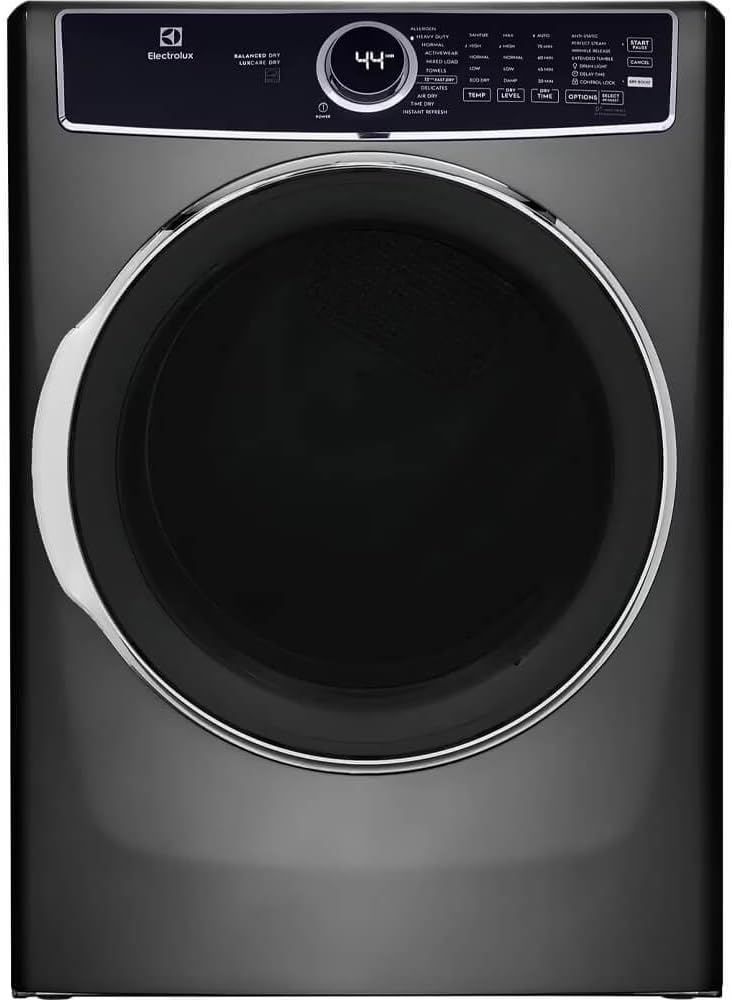
| Form Factor | Front Load |
|---|---|
| Capacity | 8 cubic feet |
The Electrolux 600 Series electric dryer is a front-load model built around an 8.0 cu. ft. stainless steel drum and fabric-care features aimed at large households. It uses advanced moisture sensors and Balanced Dry technology to spread heat and tumbling evenly, which helps prevent over-drying while improving energy efficiency. Predictive Dry automatically adjusts cycle times for accurate results, and specialty options such as Perfect Steam, Instant Refresh, and a 15-minute Fast Dry make it useful for quick touch-ups and wrinkle reduction. Practical touches include an Extended Tumble to minimize wrinkles if you cannot unload immediately and a reversible door for flexible placement. The dryer is ENERGY STAR certified, so it should save energy in routine use, but its large capacity and feature set make the unit physically sizeable and best suited to busy homes rather than minimal apartment setups. Controls are straightforward and focused on fabric care rather than smart-home bells and whistles.
Best for: Buyers who prioritize energy-efficient drying and fabric care and who need a roomy dryer for frequent or large loads in a household setting.
Less Ideal for: People with very limited laundry space or those who only need an occasional compact dryer should consider smaller, simpler units instead.
- Large 8.0 cu. ft. drum handles bulky loads and bedding
- Balanced Dry and advanced moisture sensors reduce over-drying and protect fabrics
- ENERGY STAR certified for better energy efficiency in regular use
- Perfect Steam and Instant Refresh cycles reduce wrinkles and refresh clothes quickly
- Physically large footprint that may not suit very small laundry spaces
Verdict: Choose this dryer if you want a roomy, ENERGY STAR certified model that focuses on gentle, evenly controlled drying and wrinkle-reducing cycles.
LG DLHC1455W Heat Pump Dryer

| Capacity | 4.2 cubic feet |
|---|---|
| Form Factor | Top Load |
| Door Orientation | Reversible |
The LG DLHC1455W is a compact ventless heat pump dryer designed to deliver energy-efficient drying in tight laundry spaces. It uses Dual Inverter Heat Pump technology to recycle moisture and reduce energy use compared with conventional condenser dryers, while sensor dry adjusts cycle time for consistent results. The 4.2 cu ft drum handles family-sized loads for a machine this narrow, and 14 built-in programs plus Wi‑Fi smart control let you tailor cycles and start or monitor runs remotely. The reversible door and stackable design make installation flexible for closets or stacked setups. On the downside, heat pump models generally have longer cycle times than vented dryers, and the upfront cost and service complexity can be higher than simple condenser units. For buyers who prioritize lower energy use and gentle fabric care in a small footprint, this dryer balances performance and efficiency effectively.
Best for: Buyers focused on long-term energy savings and gentle fabric care who need a compact, install-flexible dryer and are willing to accept longer cycle times for better efficiency.
Less Ideal for: People who need the fastest possible drying times or who prefer the lowest upfront purchase simplicity should consider alternatives.
- Dual Inverter Heat Pump technology reduces energy consumption compared with condenser dryers
- 4.2 cu ft capacity in a 24-inch compact footprint fits small laundry spaces
- Sensor Dry automatically adjusts drying time to protect fabrics and save energy
- Wi‑Fi smart control via LG ThinQ allows remote monitoring and cycle control
- Heat pump drying cycles are typically longer than vented dryers
- Higher initial complexity and potential service cost compared with simple condenser models
Verdict: Choose this dryer if you want a compact, energy-efficient heat pump machine that prioritizes lower energy use and fabric care in small laundry spaces.
Avanti Front-Load Dryer FLD40V0W
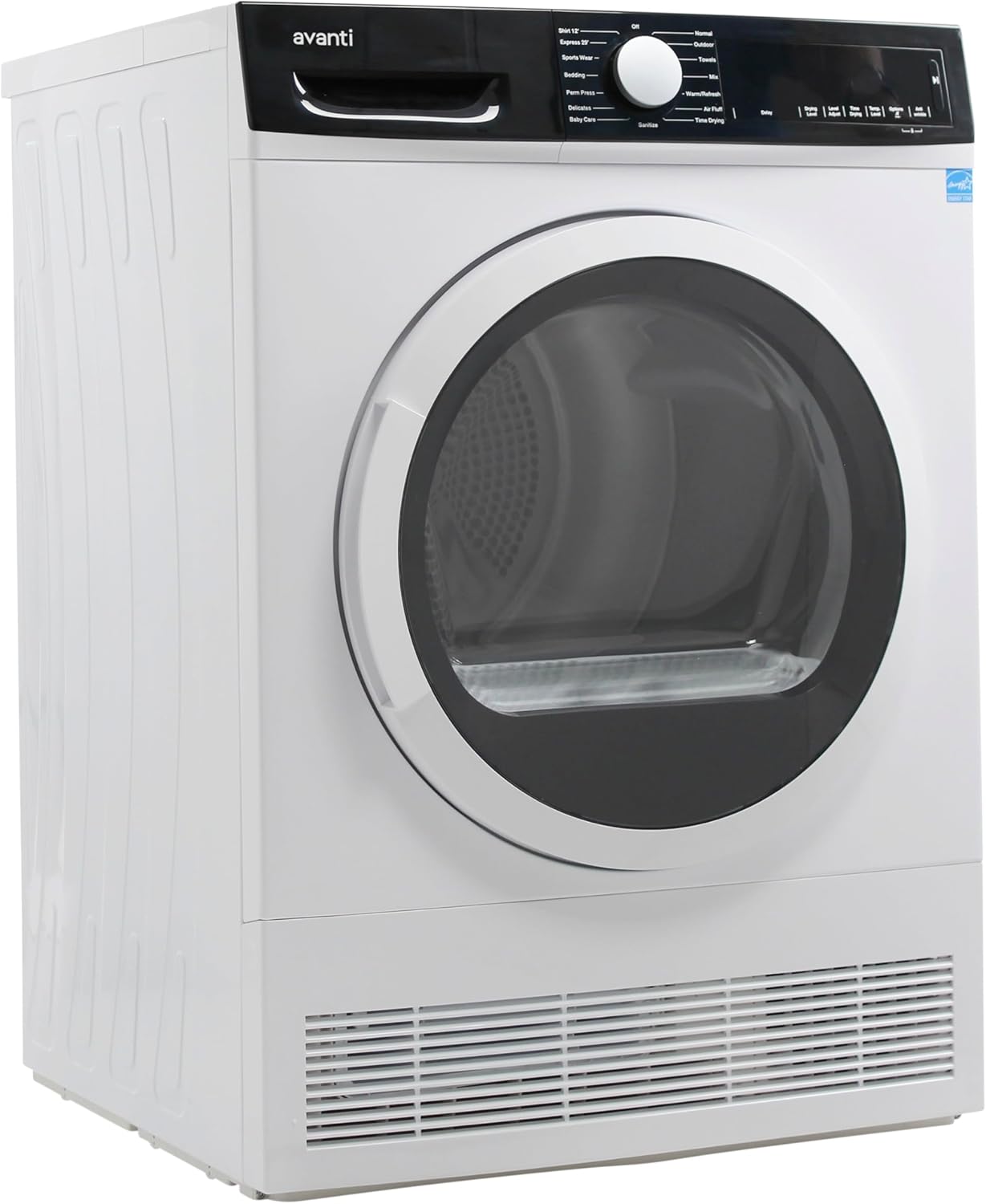
| Capacity | 4 cubic feet |
|---|---|
| Controls Type | Digital |
| Access Location | Front Load |
| Number of Drying Cycles | 15 |
| Operation Mode | automatic |
The Avanti FLD40V0W is a space-saving front-load dryer engineered for small homes, apartments, and secondary laundry areas. It handles typical daily loads in a 4.0 cu. ft. stainless-steel drum and offers 15 automatic drying cycles with three drying levels and three temperature settings, so you can tailor cycles for delicates, regular loads, and bulkier items. The electronic control panel with LED display and a see-through door make operation and monitoring straightforward, and the anti-wrinkle function helps reduce creasing when clothes sit after a cycle. ENERGY STAR certification and automatic load-size selection improve efficiency, which can lower energy use compared with non-certified compact models. Because it is compact, capacity and cycle times will be smaller and potentially longer per item versus full-size dryers, so frequent larger loads may be inconvenient. The unit can be freestanding or stacked with a compatible Avanti washer using an optional stacking kit, which is useful in tight spaces but requires buying the kit separately.
Best for: Buyers who prioritize energy efficiency and compact, space-saving laundry solutions for apartments, dorms, or secondary laundry rooms and want straightforward controls and multiple cycle options.
Less Ideal for: Large households or anyone who regularly dries large bedding or bulky loads should consider a full-size dryer with higher capacity instead.
- ENERGY STAR certified for better energy efficiency
- Compact 4.0 cu. ft. footprint fits small spaces and stacking setups
- 15 automatic cycles and multiple temperature/level options for fabric care
- Stainless-steel drum is durable and gentle on clothes
- Electronic controls with LED display and see-through door for easy use
- Smaller capacity than full-size dryers, so larger households may need more frequent loads
- Optional stacking kit sold separately if vertical installation is desired
Verdict: Choose the Avanti compact front-load dryer if you need an ENERGY STAR small-footprint dryer that saves space and cuts energy use without sacrificing essential cycle options.
Kenmore 8.0 cu. ft. Front Load Dryer

| Capacity | 8 cubic feet |
|---|---|
| Form Factor | Front Load |
| ENERGY STAR Certified | Yes |
| Cycles | 12 drying cycles |
This Kenmore front-load electric dryer is built around an extra-large 8.0 cubic foot drum and a sensor drying system that adjusts run time to prevent over-drying, which helps save energy and extend fabric life. It offers 12 drying cycles and eight options, including a Steam Refresh cycle powered by Accela Steam to reduce wrinkles, static, and odors without rewashing, plus Wrinkle Guard to maintain results after the cycle ends. Touch LED controls make cycle selection straightforward and the dryer includes specialized cycles for sanitizing, bulky items, delicates and timed dry. As an ENERGY STAR certified model it is tuned to lower energy use compared with standard machines, and the smart moisture detection means fewer wasted minutes on the timer. Trade-offs are its large physical footprint and weight, which require space and handling during installation, and steam features add some complexity compared with simpler dryers. For a household prioritizing efficient, fabric-friendly drying and fewer ironing sessions, this Kenmore delivers practical, feature-rich performance.
Best for: Buyers who prioritize energy-efficient, fabric-friendly drying with features that reduce wrinkles and the need for ironing and who want a versatile machine for family-sized loads.
Less Ideal for: People with very tight laundry spaces, minimal installation access, or those who prefer a simple no-frills dryer with fewer features.
- Large 8.0 cu ft drum handles bedding and big loads comfortably
- Sensor drying system reduces over-drying and saves energy
- Accela Steam and Steam Refresh reduce wrinkles, static, and odors without rewashing
- Wide selection of cycles and options for specific fabrics and sanitize needs
- ENERGY STAR certification for improved energy efficiency
- Physically large and heavy, requiring adequate space and careful installation
- Steam system increases complexity and may need occasional maintenance
Verdict: Choose this Kenmore dryer if you want an ENERGY STAR certified, large-capacity machine with sensor drying and built-in steam options to cut energy use and reduce wrinkles.
BLACK+DECKER 8.0 Cu. Ft. Electric Dryer

| Capacity | 8 cubic feet |
|---|---|
| Form Factor | Front Load |
| Voltage | 240V |
| Cycles | 12 cycle selections |
| Energy Rating | Energy Star |
This BLACK+DECKER electric dryer is a full-size front-load model designed for large household loads and energy-conscious use. It pairs an 8.0 cubic foot aluminized alloy steel drum with sensor dry technology and 12 cycle selections, letting you choose from eight sensor-based programs and four manual options for fabrics ranging from delicates to heavy-duty towels. The steam setting reduces wrinkles and static while the LED display and dial controls make cycle selection and status easy to read. Practical installation requires a 240V connection and a UL-rated dryer power cord kit or direct wiring, so professional installation is recommended. The unit is ENERGY STAR rated, which should help lower running costs compared with non-rated models, and features a reversible front door to suit different laundry layouts. Expect a heavy machine that needs appropriate floor support and dedicated electrical setup, and note venting may require extra adapters if you need side or bottom configurations. For buyers focused on reliable, energy-efficient drying for full-size households, this dryer balances capacity and control without complicated smart features.
Best for: Buyers who prioritize energy efficiency and want a high-capacity dryer with straightforward controls and proven drying options backed by broad user adoption.
Less Ideal for: People who need a plug-and-play 120V unit or want app-based remote control and smart home integration should consider other models.
- Large 8.0 cu. ft. drum handles bulky loads and bedding in fewer cycles
- Sensor dry technology with multiple cycle options reduces over-drying and saves energy
- ENERGY STAR qualification indicates better energy efficiency than standard models
- Steam cycle helps reduce wrinkles and static without a separate ironing step
- Reversible front door and clear LED display simplify placement and operation
- Requires 240V connection and professional installation, adding setup complexity
- No built-in smart/Wi-Fi features for remote monitoring or app control
Verdict: Choose this dryer if you want a large, ENERGY STAR-rated electric dryer that delivers reliable sensor drying and a steam option for fewer wrinkles.
Choosing the Right Energy-Efficient Electric Dryer: Key Factors to Consider
Energy Consumption and Use Patterns
How much electricity a dryer uses per load is the primary driver of long-term cost. Look beyond a single energy number and consider how you actually dry: frequent small loads use more energy per pound than full loads, and certain cycles run longer but at lower heat. A model with low standby draw and efficient heating strategies will help if you run the dryer several times a week.
Also consider household habits. If you typically dry mixed fabric loads, the dryer may run longer as sensors and algorithms work to avoid overdrying. Pay attention to cycle options that shorten run time for smaller loads or damp-dry settings that let you finish drying on a clothesline to save energy.
Moisture Sensors and Auto-Dry Controls
Accurate moisture sensing prevents unnecessary runtime and reduces energy use. Sensors that detect moisture at multiple zones in the drum yield a more uniform dryness and stop the cycle once clothes reach the target level. Models with adjustable dryness levels let you choose slightly damp settings for ironing or full dry for storage.
Be aware that load type affects sensor readings. Heavy items and tightly packed loads can trap moisture in pockets and trick sensors, so look for dryers with robust sensor placement and algorithms that compensate for mixed loads. The benefit of good sensors is shorter average cycles and less fabric damage from overexposure to heat.
Cycle Variety and Temperature Management
Energy-efficient drying is as much about intelligent cycle design as raw power. Lower-temperature cycles that run slightly longer can be gentler on fabrics while still using less energy overall than high-heat bursts. Steam or refresh cycles that avoid full heating are useful for light renewals without full drying energy costs.
Temperature control precision also matters. A dryer that maintains consistent, moderate temperatures prevents hotspots that can shrink or weaken fabrics. Look for units with multiple temperature bands and clear labeling so you can match cycles to fabric care needs and energy goals.
Capacity, Load Balance, and Airflow
Drum capacity affects efficiency: a dryer that is too small for your typical loads will require more cycles, while an overly large drum can tumble items inefficiently. Proper load balancing and sufficient airflow through the drum and exhaust path help moisture escape faster, shortening cycle times.
Ventilation quality impacts energy use and drying performance. If you have a long exhaust run or less-than-ideal venting, a dryer that maintains strong airflow or offers vented/ventless flexibility will perform better and use energy more effectively.
Maintenance and Long-Term Efficiency
Routine maintenance preserves a dryer's energy performance. Lint build-up, clogged vents, and unclean sensors all force the unit to run longer and use more energy. Choose dryers with easily accessible lint traps, straightforward sensor cleaning, and clear maintenance indicators.
Consider the availability of user-replaceable parts that affect efficiency, such as belts or exhaust fans. A design that simplifies inspection and cleaning will reduce performance degradation over years of use and keep energy consumption closer to the original specification.
Control Interface and Programmability
A clear, programmable control panel helps you run efficient cycles reliably. Timers, delay start, and memory settings let you schedule drying for off-peak hours or reuse efficient programs for common load types. Smart or connected features can suggest efficient cycles, though they should not be the only reason to pick a model.
Ease of use reduces the temptation to choose fast, high-heat cycles for convenience. Look for intuitive presets for mixed loads, sensor-based automatic programs, and the ability to fine-tune dryness levels without a confusing menu hierarchy.
How Sensor Drying Reduces Runtime
Moisture-sensing systems stop the dryer as soon as the load reaches the selected dryness, which prevents needless extra minutes of heat. Good sensor algorithms monitor changes over time, compensating for load size and fabric type to avoid false stops or long tail cycles.
To make sensor drying work for you, avoid overfilling the drum and separate very heavy items. If a sensor-equipped dryer frequently runs longer than expected, check the lint path and sensor cleanliness before assuming a mechanical fault.
- Multiple sensor locations improve accuracy for mixed loads
- Some models offer adjustable dryness targets for fabric-specific needs
- Sensor accuracy can degrade if vents or sensors are clogged
Vented Versus Condensing and Heat-Pump Options
Vented dryers expel moist air outside and can be quicker but may lose some conditioned indoor air. Condensing units collect water internally and are useful where venting is limited. Heat-pump designs recycle heat and typically use the least electricity, though they can have longer cycle times and higher initial complexity.
Your installation constraints should guide the choice. If you cannot run a conventional vent, a condensing or heat-pump style electric dryer can still offer strong energy performance with different tradeoffs in cycle length and maintenance.
- Vented: faster drying, depends on good exhaust path
- Condensing: no exterior vent, useful for apartments
- Heat-pump: best energy per load, may require more upfront consideration
Sizing Your Dryer to Household Needs
Match drum capacity to typical laundry habits. A family that washes large bedding or frequent full loads benefits from a larger capacity to reduce cycle count, while a single person or couple may prioritize compact, efficient models.
Remember that usable capacity is affected by drum shape and baffle design. Choose a size that rarely needs to be overfilled; consistent moderate loads yield better energy-per-pound results than many small partial loads.
- Measure typical load volume before choosing capacity
- Large drums with strong airflow dry thicker items more evenly
- Avoid routinely packing the drum to the brim
Installation and Venting Best Practices
Proper installation affects both safety and energy efficiency. Short, straight exhaust runs minimize back pressure and improve airflow. Use the largest allowable exhaust diameter and avoid flexible foil ducts that trap lint and restrict flow over time.
If using a condensing or heat-pump dryer, ensure adequate room ventilation so the unit can reject heat effectively. Regularly inspect and clear external vent caps and maintain a clear pathway for exhaust to prevent energy-wasting restrictions.
- Keep exhaust runs as short and straight as possible
- Use rigid or semi-rigid ducting for best airflow
- Check external vent caps seasonally for obstructions
Laundry Habits That Lower Energy Use
Simple changes to routines can have outsized effects on dryer energy. Spin more water out in the washer by increasing spin speed for heavy loads, separate heavy and lightweight items, and dry full but not overloaded loads.
Air-dry delicate or lighter garments and use dryer settings that let you finish drying on low heat. Group similar fabrics to allow sensor systems to work efficiently and avoid mixed-load cycles that extend run times.
- Use higher washer spin speeds to reduce dryer time
- Run consecutive similar loads to make full use of heat already in the drum
- Prefer tumble-dry low options for delicate items
How We Chose the Best Energy-Efficient Electric Dryer
We focused on selecting electric dryers that demonstrably reduce energy consumption without sacrificing consistent drying results. Our editorial filters prioritized models with advanced moisture-sensing systems, multiple lower-temperature cycle options, and features that shorten run time or avoid unnecessary heating. We also considered drum capacity relative to household needs, the efficiency of air flow and venting, durability of key components, and available cycle customization. Concrete evaluation criteria included measured energy use per typical cotton load, effectiveness of moisture sensors and auto-dry controls, cycle length for equivalent dryness levels, temperature management for fabric protection, and ease of maintenance for components that affect long-term efficiency. We excluded single-feature novelty products and units lacking documented energy-saving controls. Models without clear manufacturer specifications for cycle energy or sensor behavior were also filtered out. The result is a set of electric dryers that strike practical balances between energy savings, drying performance, and everyday usability.
Our full evaluation process is outlined in our review methodology.
FAQ
How much energy can I realistically save with an energy-efficient electric dryer?
Savings vary based on usage patterns and the model, but efficient dryers can reduce per-load energy use by moderating temperature and stopping cycles early via moisture sensors. Households that dry frequently tend to see the largest cumulative savings.
Are moisture sensors reliable for mixed fabric loads?
Sensors are generally reliable, but mixed loads with heavy and light items can confuse readings. Separating heavy items or running like-for-like loads yields more consistent sensor performance and shorter overall drying time.
Do heat-pump electric dryers actually save more energy than vented models?
Heat-pump designs typically use less electricity per load because they recycle heat rather than continually generating it. However, they can have longer cycle times and different installation considerations that affect real-world energy performance.
How often should I clean vents and sensors to maintain efficiency?
Inspect lint traps after every load and clean the exhaust path at least twice a year, more often if you have heavy use. Sensor surfaces should be checked and wiped periodically according to the manufacturer's maintenance guidance to prevent false readings.
Will using lower-temperature cycles always save energy?
Lower temperatures can save energy but may run longer to reach the same dryness level. The net energy use depends on cycle design and load size. Efficient sensor-controlled low-heat cycles tend to offer the best balance of fabric care and energy use.
Final Verdict
When choosing an energy-efficient electric dryer, prioritize accurate moisture sensing, appropriate drum capacity for your household, and good airflow or venting. Expect tradeoffs between cycle time and power: the most economical units often run longer at lower temperatures but reduce overall electricity use and fabric stress. Focus on models that make sensor behavior and cycle options clear, and maintain the dryer regularly to preserve efficiency. With the right combination of features and habits, you can significantly lower drying energy while keeping clothes looking and feeling better.