
Note: This article contains affiliate links. If you click on these links and make a purchase, we may earn a small commission at no extra cost to you. This helps support our research and content. Read our full affiliate disclosure here.
Choosing the right small upright freezer matters when you want to add dependable frozen storage without driving up your electricity bill. The right unit balances usable capacity, efficient insulation, and a compressor or cooling system that uses less power during daily operation. This guide focuses on energy-efficient small upright freezers and highlights top shortlisted models that deliver efficient cooling, manageable noise, and practical storage layouts. We evaluate each pick on measurable operating cost factors and practical usability to help you select a freezer that fits your space and long-term utility goals.
Top Picks at a Glance
| Best Overall The best all-around choice for most situations | Whynter CUF-301SS 3.0 cu ft Upright Freezer |  |
| Best Value The sweet spot between price and what you get | Feelfunn 3.2 Cu.Ft Mini Fridge |  |
| Best Budget The cheapest option that still gets the job done reliably | LHRIVER 1.1 Cu.ft Upright Freezer |  |
| Top Rated A top-rated pick with lots of positive feedback | TABU Upright Freezer 3.0 Cu Ft |  |
| Best Seller A high-volume bestseller chosen again and again | Frostorm 3.2 Cu Ft Mini Fridge | 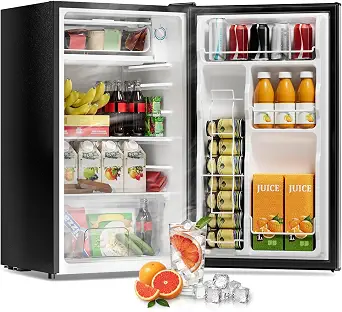 |
Whynter CUF-301SS 3.0 cu ft Upright Freezer

| Capacity | 3 cubic feet |
|---|---|
| Temperature range | -14° to 50° F |
| Wattage | 100 |
| Door orientation | Reversible |
| Number of shelves | 3 |
The Whynter CUF-301SS is a small upright freezer designed for tight spaces such as garages, offices, dorms, or kitchens and can be switched to refrigerator mode when you need chilled storage. It uses a compressor-based cooling system with a mechanical dial that sets refrigerator temperatures from 32 to 50°F or freezer temperatures from -14 to -11°F, and includes two wire shelves plus a removable slide-out basket for basic organization. The reversible-swing stainless steel door and recessed handle make placement flexible while the included cylinder lock and keys let you secure contents in shared spaces. Rated to use relatively little energy, this unit is quiet enough for nearby rooms and runs on standard 115V household power. Limitations for garage use include modest capacity—only 3 cubic feet—and basic mechanical controls rather than precise digital settings, so it is best for regular food and beverage storage rather than long-term bulk freezing or temperature-critical items.
Best for: Practical buyers who need a compact, energy-conscious cold storage unit for a garage, office, or small household space and value flexibility between fridge and freezer modes.
Less Ideal for: Users who need large capacity or precise temperature control for long-term freezing, or those who store large frozen loads regularly.
- Convertible freezer/refrigerator mode for flexible cold storage needs
- Reversible stainless steel door and recessed handle for flexible placement
- Integrated lock with two keys for secure shared-space storage
- Quiet compressor operation suitable for near-room placement
- Includes removable shelf and slide-out basket for basic organization
- Only 3.0 cu ft capacity, limiting bulk storage
- Mechanical thermostat lacks precise digital control
- Not designed for heavy-duty or large-volume freezing tasks
Verdict: A compact, energy-conscious convertible freezer that fits garages and small spaces when you need a reliable, secure solution for everyday frozen or chilled storage.
Feelfunn 3.2 Cu.Ft Mini Fridge
| Capacity | 3.2 cubic feet |
|---|---|
| Freezer Capacity | 0.3 cubic feet |
| Temperature Range | 23°F – 44°F |
| Cooling Method | Compressor |
| Annual Energy Consumption | 243 kilowatt hours per year |
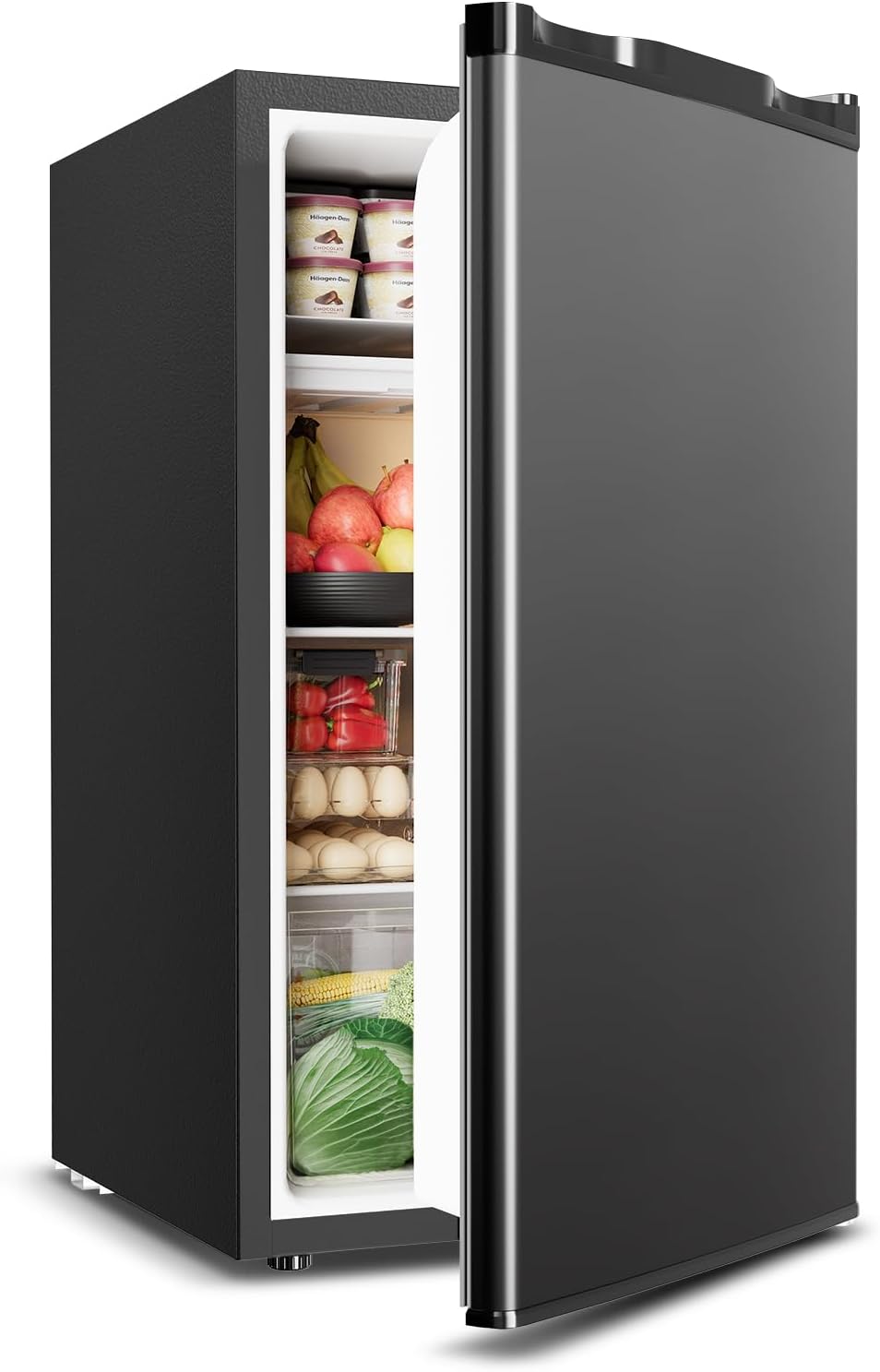
This Feelfunn 3.2 cu.ft. mini refrigerator is a space-saving compressor fridge with a 0.3 cu.ft. freezer compartment and a user-adjustable thermostat that ranges from 23°F to 44°F across seven settings. It is designed for bedrooms, dorms, offices, or small apartments where footprint and quiet operation matter, and the reversible door and adjustable feet make placement flexible. Inside you get a removable shelf and wire shelving that can be rearranged for bottles, cans, or small food containers, while the manual defrost freezer handles occasional frozen items or ice cream. The unit runs quietly (advertised ≤38 dB) and claims low daily energy use (about 0.5 kWh/day), which helps keep operating costs down. Trade-offs include limited freezer space that is not suited for long-term bulk freezing and a manual defrost system that requires occasional maintenance; the glossy plastic-and-steel finish is basic but functional rather than premium. For buyers prioritizing compact size, low noise, and modest energy use, this offers a practical, no-frills solution.
Best for: Buyers who want a compact, energy-conscious refrigerator for a dorm, bedroom, or small apartment that prioritizes quiet operation and flexible placement over large freezer capacity.
Less Ideal for: Households that need significant frozen storage, long-term meat or bulk freezing, or a premium finish should look for larger uprights or dedicated freezers instead.
- Compact footprint with reversible door and adjustable feet for flexible placement
- Wide temperature range (23°F–44°F) with seven settings for tailored cooling
- Quiet operation at or below 38 dB suitable for bedrooms and offices
- Energy efficient claim of about 0.5 kWh/day for lower running costs
- Small 0.3 cu.ft. freezer is only suitable for short-term or limited frozen storage
- Manual defrost requires periodic maintenance and more user attention
Verdict: A practical, quiet, and energy-conscious mini fridge that fits tight spaces and trims running costs while providing basic refrigerated and short-term frozen storage.
LHRIVER 1.1 Cu.ft Upright Freezer

| Capacity | 1.1 cubic feet |
|---|---|
| Voltage | 115 volts |
| Number Of Shelves | 1 |
| Door Orientation | Reversible |
This LHRIVER 1.1 cu ft upright freezer is a compact, energy-conscious option for apartments, dorms, or offices where space is limited. It uses a low-energy compressor that the brand rates at about 0.45 kWh per day and claims noise under 40 dB, so it runs quietly while keeping items frozen. The unit includes a reversible door, one removable shelf and adjustable feet, and a 7‑step temperature dial that covers roughly 6.8°F to -7.6°F so you can adapt storage for different foods. The thickened door gasket and all-metal compressor are positioned as durability and cooling improvements. Practical limitations are its small single-shelf interior and modest capacity, which means it is best for frozen essentials rather than large grocery hauls, and its feature set is basic compared with larger appliances. For buyers prioritizing low operating cost and compact footprint, this freezer delivers a straightforward, space-saving way to add dedicated frozen storage.
Best for: Buyers who need an affordable, low-energy mini freezer for occasional frozen storage in tight spaces and who prioritize low operating cost over large capacity.
Less Ideal for: Households that need to store large volumes or want advanced temperature controls, app connectivity, or multi-compartment organization.
- Compact footprint fits apartments, dorms, or countertop spaces
- Low daily energy use (about 0.45 kWh/day) for lower running costs
- Reversible door and adjustable feet for flexible placement
- 7-step adjustable thermostat lets you tune temperatures for different foods
- Very small interior and only one shelf limits organized storage
- Basic feature set without advanced presets or smart controls
Verdict: A budget-friendly, energy-efficient mini upright freezer that adds quiet, low-cost frozen storage where space is at a premium.
TABU Upright Freezer 3.0 Cu Ft

| Capacity | 3 cubic feet |
|---|---|
| Door Orientation | Reversible |
| Installation Type | Freestanding |
The TABU 3.0 cu ft upright freezer is a small freestanding unit designed for limited spaces like apartments, dorms, or garages. It provides seven adjustable temperature settings (−7.6°F to 8.6°F) so you can dial in storage for ice cream, prepared meals, or long-term meat storage, and removable shelves make organization and cleaning straightforward. The reversible door and adjustable leveling feet let you fit the unit into tight layouts, and the manufacturer positions it as energy efficient and quiet, which helps when placing it near living areas. Practical limitations are its modest 3 cu ft capacity and compact footprint, so it is best used as supplemental freezing storage rather than a primary household freezer. The simple thermostat control keeps operation easy but does not offer smart features or precise digital readouts for exact temperature logging.
Best for: Buyers who prioritize a dependable, low-noise secondary freezer for small spaces and want straightforward, energy-conscious operation without complex controls.
Less Ideal for: Those who need large-capacity primary freezing for bulk storage or want precise digital temperature monitoring and smart features.
- Seven adjustable temperature levels for flexibility across different frozen goods
- Compact footprint that fits small spaces while still offering 3.0 cu ft capacity
- Reversible door and leveling feet for flexible placement and installation
- Removable shelves that simplify organization and cleaning
- Quiet, energy-conscious design suitable for living spaces
- Limited total storage volume compared with full-size freezers
- No digital temperature display or advanced monitoring features
Verdict: A compact, reliable upright freezer that delivers flexible temperature control and quiet, energy-minded operation for supplemental home freezing.
Frostorm 3.2 Cu Ft Mini Fridge
| Capacity | 3.2 cubic feet |
|---|---|
| Freezer Capacity | 0.3 cubic feet |
| Defrost System Type | Manual |
| Cooling Method | Compressor |
| Voltage | 115 volts |
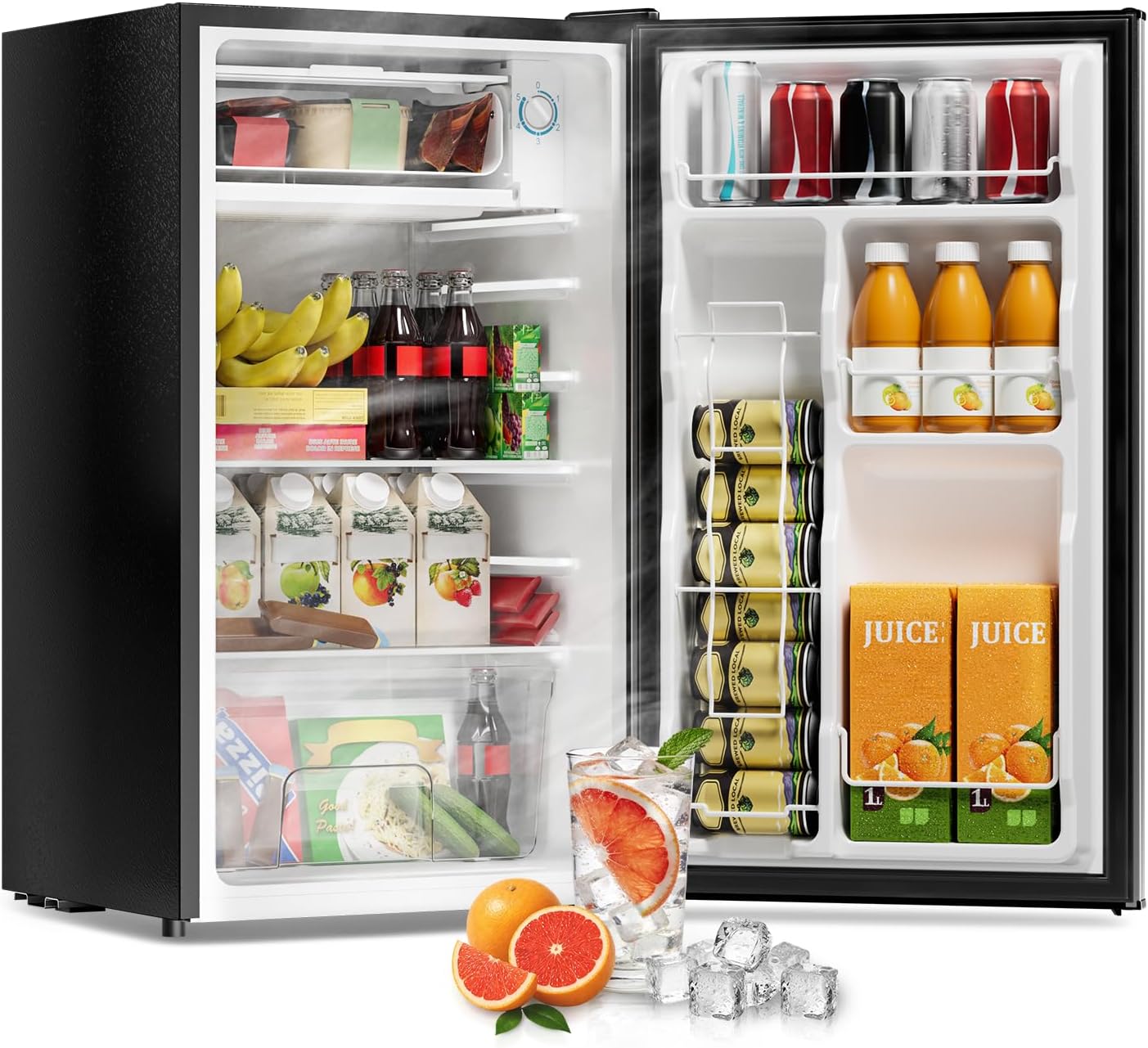
The Frostorm 3.2 Cu Ft Mini Fridge packs a full-top freezer and usable refrigerator space into a compact freestanding cabinet meant for small rooms and offices. It uses a compressor cooling system with a mechanical 1–5 thermostat so you can dial in temperature easily; the separate 0.35 cu ft upright freezer reaches typical ice-making temperatures while the main compartment stores drinks, groceries, and meal prep. Adjustable shelves, door bins, and included accessories like a beverage rack and ice mold help organize contents, and the reversible door lets you fit the unit into tight layouts. Energy use is modest at about 0.6 kWh per day and the unit is ETL certified, which should reassure buyers prioritizing safe, economical operation. Expect manual defrosting and the usual noise and temperature swings associated with compact compressors, and the freezer is best for short-term frozen storage rather than long-term preservation.
Best for: Buyers who want a reliable, energy-conscious compact fridge for a bedroom, dorm, or office and prefer a straightforward, safety-certified appliance with easy temperature control.
Less Ideal for: Those needing large frozen storage, precise long-term freezing, or an ultra-quiet, silent cooler should consider larger freezers or different cooling technologies.
- Compact 3.2 cu ft capacity with a dedicated top freezer for ice and quick-freeze items
- Compressor cooling for reliable cold performance in varying room temperatures
- Reversible door improves placement flexibility in small spaces
- Adjustable shelves, door bins, and included accessories help organize food and beverages
- Relatively low energy use (~0.6 kWh/day) and ETL safety certification
- Freezer is small and suited to short-term storage and ice only
- Manual defrost requires occasional maintenance
- Compressor models can be louder than thermoelectric mini fridges
Verdict: A compact, ETL-certified mini fridge that balances usable fridge space with low daily energy use, making it a sensible pick for safety- and cost-conscious small-space buyers.
Choosing the Right Energy-Efficient Small Upright Freezer: Key Factors to Consider
Annual Energy Consumption
Annual energy consumption is the biggest driver of lifetime operating cost. Look for units with published kWh-per-year estimates or power-draw specs so you can compare how much electricity each freezer is likely to use. A lower annual kWh rating translates directly into smaller monthly utility bills, especially if the freezer runs in conditioned spaces where electricity rates are higher.
Consider how usage patterns affect consumption. A freezer that is nearly empty or one that is opened frequently will generally use more energy because the compressor must run longer to recover target temperature. Estimating annual use with realistic duty cycles helps set expectations for real household costs.
Insulation Thickness and Door Seal Quality
Thicker cabinet insulation and high-quality door seals reduce heat gain and shorten compressor run time. Better insulation also helps the cabinet stay cold during brief power interruptions, lowering the risk of partial thawing. When evaluating freezers, inspect spec sheets or descriptions for wall thickness or R-value claims and look for robust magnetic gaskets that compress evenly around the door.
Poor seals or thin insulation can negate an efficient compressor by allowing warm air in. In tight spaces or warmer ambient conditions, insulation quality becomes even more important because external heat loads rise and force the unit to work harder.
Storage Capacity and Internal Organization
Usable capacity matters more than gross cubic feet because shelving, baskets, and compartment shapes determine how much food you can actually store. Efficient internal organization lets you pack items densely, reduces empty air space, and minimizes the number of long door openings.
Consider removable baskets for easy access, adjustable shelving for taller items, and well-defined compartments for long items like ice cream tubs. A layout that keeps frequently used items near the top reduces time with the door open and therefore reduces energy loss.
Compressor Type and Cycling Behavior
The compressor and how the thermostat controls cycling significantly influence both noise and energy efficiency. Modern variable-speed compressors or inverter-driven designs typically run longer at lower power and can be more efficient than simple on/off compressors, though actual gains depend on implementation. Pay attention to manufacturers' descriptions of compressor technology and any published noise ratings.
Frequent short cycles often indicate poor thermostat calibration or excessive heat gain, both of which increase wear and energy use. A unit that maintains steady temperature with fewer, longer cycles usually indicates better thermal management.
Noise Level and Placement Considerations
Noise matters if the freezer will sit near living areas, basements with workspaces, or rooms where people spend time. Look for published decibel ratings or user guidance on typical operating sound. Units with vibration-isolating mounts, quieter compressors, or insulated cabinets can reduce perceived noise.
Also factor in placement: freezers in enclosed cabinets or tight alcoves may sound louder due to reverberation. Choosing a quieter unit, or placing it on vibration-absorbing feet, improves comfort and flexibility for installation locations.
Estimating Real-World Electricity Cost
Understanding a freezer's published annual kWh is a starting point, but you should convert that number into expected dollars by using your local electricity rate. Multiply the kWh-per-year estimate by your per-kWh cost to see the true operating expense. This helps compare models on the same economic footing.
Also account for household factors: if the unit goes into an unconditioned garage, it will run more often in summer and raise annual consumption. Conversely, installing the freezer in a cool basement can lower operating time and extend component life.
- Calculate annual cost = published kWh/year times local rate
- Adjust expectations for hotter or colder installation locations
- Factor in typical door-opening frequency and fullness
Sizing: How Much Capacity Do You Really Need?
Small upright freezers are chosen for compact footprints, but capacity needs vary. Think in terms of meal prep and shopping frequency rather than gross cubic feet. If you regularly stock bulk meats or prepare large batches, prioritize a slightly larger usable volume and flexible shelving.
Measure the installation spot and allow clearance for airflow around the condenser. An undersized unit will be efficient but may force you to leave more empty space, which can reduce storage efficiency.
- Inventory your typical frozen goods to estimate usable volume
- Prefer units with adjustable baskets if your items vary in shape
- Leave manufacturer-recommended clearances for proper ventilation
Installation and Ventilation Tips for Efficiency
Efficient operation depends on adequate airflow around the condenser and compressor. Place the freezer with proper clearance on the sides and back as specified in the manual. Avoid tight built-in enclosures unless the model is designed for built-in use or has specific ventilation channels.
Keep the condenser and vents clean. Dust buildup increases heat transfer resistance and forces the compressor to run longer. Regularly inspect gaskets and door alignment to prevent warm air infiltration.
- Maintain recommended clearances for intake and exhaust
- Clean coils and vents periodically to maintain performance
- Check and replace door gaskets if they become hard or cracked
Temperature Settings and Food Safety
Set the freezer thermostat to the recommended temperature range for long-term storage, typically at or below 0 degrees Fahrenheit, unless the unit specifies different guidance. Lower temperatures increase power use slightly but provide a safety margin for prolonged storage and less frequent temperature recovery after door openings.
Use an internal thermometer to verify the cabinet temperature. Relying solely on the built-in control can be misleading if the probe location is near the evaporator or off to one side.
- Aim for stable temperatures at or below recommended safe storage levels
- Verify with a separate thermometer placed in the central storage area
- Avoid continually lowering setpoint to compensate for poor insulation
Maintenance Routines That Preserve Efficiency
A simple maintenance routine extends freezer life and keeps energy use low. Wipe seals, remove ice build-up if the unit is manual-defrost, and vacuum dust from coils at least twice a year. Replace worn door gaskets promptly to eliminate invisible leaks.
For manual-defrost models, schedule defrost cycles before significant frost accumulation. Excessive frost increases thermal resistance and forces longer compressor cycles.
- Clean coils and vents on a regular schedule
- Inspect door gaskets monthly and lubricate or replace as needed
- Defrost manual units before frost exceeds manufacturer recommendations
How We Chose the Best Energy-Efficient Small Upright Freezer
We narrowed our shortlist by prioritizing attributes that directly affect running costs and everyday utility. Primary filters included verified energy consumption numbers such as annual kilowatt-hour estimates and tested power-draw figures under standard conditions. Insulation performance and cabinet design were next: units with thicker walls, high-quality door seals, and minimal thermal bridging were preferred because they reduce compressor runtime. Usable storage layout and organization mattered for efficient loading and minimizing air loss during door openings. Noise level and compressor cycling behavior were included for realistic home use, since frequent cycling or loud compressors can affect where the freezer can be placed. Reliability indicators such as simple mechanical controls, accessible service points, and commonly available replacement parts were also considered. We excluded units without published energy data or with ambiguous capacity specifications. Final selections reflect a balance of measurable efficiency, practical storage, and real-world usability.
Our full evaluation process is outlined in our review methodology.
FAQ
How much can I save by choosing an energy-efficient small upright freezer?
Savings vary based on the unit's kWh-per-year rating and local electricity rates. Typically, choosing a lower-kWh model reduces monthly operating costs directly; the exact savings depend on ambient conditions and usage patterns.
Is manual defrost more efficient than frost-free for small upright freezers?
Manual-defrost models can use less energy because they avoid the periodic defrost heater cycles found in frost-free designs. However, efficiency gains rely on disciplined maintenance to prevent frost buildup, which otherwise increases energy use.
Where should I place a small upright freezer for best efficiency?
Place the freezer in a cool, well-ventilated area with manufacturer-recommended clearances. Avoid hot garages or direct sunlight. Proper ventilation and room temperature strongly influence compressor run time and overall efficiency.
How often should I clean coils and check door seals?
Inspect and clean coils and vents at least twice a year, and check door seals monthly. In dusty environments, increase the cleaning frequency to maintain efficient heat exchange and prevent excess cycling.
Will adding more food make the freezer more efficient?
A reasonably full freezer runs more efficiently than an almost empty one because the stored items reduce the air volume that must be cooled. Avoid overfilling, which blocks airflow, and use containers to consolidate small items to maintain steady temperature distribution.
Final Verdict
Prioritize measurable efficiency metrics such as published annual kWh and insulation quality when choosing a small upright freezer. Balance that with usable storage layout and acceptable noise levels for your placement. Expect tradeoffs: the quietest or most insulated unit may cost more upfront but will lower operating expenses over time. Focus on factors that reduce compressor runtime and make maintenance straightforward so you get reliable, efficient freezing without surprises.