
Note: This article contains affiliate links. If you click on these links and make a purchase, we may earn a small commission at no extra cost to you. This helps support our research and content. Read our full affiliate disclosure here.
Choosing the right espresso machine for beginners shapes how fast you learn and how often you pull great shots. A forgiving machine helps you practice basic techniques without frustration while still delivering balanced espresso and steady steam for milk drinks. This guide covers a short list of well-suited home machines that prioritize user-friendly controls, consistent extraction, and straightforward steaming so you can focus on brewing rather than troubleshooting. Below we summarize what to expect from each pick and the evaluation criteria we used to shortlist machines that are genuinely friendly to new baristas.
Top Picks at a Glance
| Best Overall The best all-around choice for most situations | Breville Bambino BES450BSS | 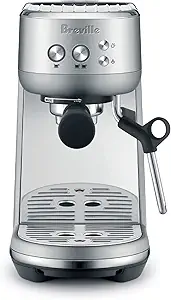 |
| Best Quality Built to a higher standard if you want something more solid | Breville Barista Express BES870XL |  |
| Best Value The sweet spot between price and what you get | Gevi 20 Bar Espresso Machine | 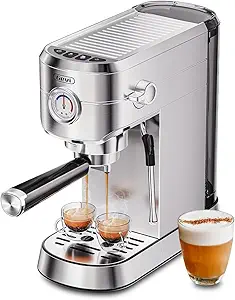 |
| Best Budget The cheapest option that still gets the job done reliably | KEENSTAR BCM2201 Espresso Machine |  |
| Top Rated A top-rated pick with lots of positive feedback | AMZCHEF EM3131 Espresso Machine |  |
| Most Popular A crowd favorite that many people choose with confidence | CASABREWS CM5418 Espresso Machine |  |
| Best Seller A high-volume bestseller chosen again and again | atatix EM3111 Espresso Machine |  |
Breville Bambino BES450BSS

| Operation Mode | Semi-Automatic |
|---|---|
| Wattage | 1560 watts |
| Voltage | 120 volts |
| Capacity | 47 fluid ounces |
| Coffee Input Type | Ground |
The Breville Bambino is a compact semi-automatic espresso machine designed to bring café-style espresso and milk drinks into a small kitchen. It uses a ThermoJet heating system with PID temperature control to reach extraction temperature in about 3 seconds, and a 54mm portafilter with single- and dual-wall filter baskets to pull concentrated, full-bodied shots. The included manual steam wand produces microfoam suitable for lattes and cappuccinos, and controls for single or double shots plus steam and hot water keep operation straightforward for beginners. The machine's small footprint and stainless steel build make it a good fit where counter space is limited, and the reusable filters and programmable temperature control help dial in consistent results. Limitations include its manual tamping and learning curve for steaming milk well, so beginners should expect some practice to get reliable latte art and perfectly textured milk. Maintenance like regular descaling and cleaning the steam wand is also required to keep performance steady.
Best for: Buyers who want a compact, capable home espresso machine that produces café-style shots and milk drinks while prioritizing consistent temperature control and fast readiness.
Less Ideal for: People who want a fully automatic, hands-off experience or an integrated grinder and those unwilling to learn basic tamping and milk-steaming skills.
- Very fast heat-up with ThermoJet so the machine is ready in seconds
- PID temperature control for more consistent extractions
- 54mm portafilter and included single/dual wall baskets allow fuller shots
- Manual steam wand produces microfoam suitable for lattes and cappuccinos
- Compact stainless steel design fits small countertops
- Manual tamping and steam wand require practice to master
- No built-in grinder so a separate grinder is needed for best results
Verdict: Choose the Bambino if you want a compact beginner-friendly espresso machine that heats up almost instantly and delivers consistent, barista-style shots with a manual steam wand for milk drinks.
Breville Barista Express BES870XL

| Wattage | 1600 watts |
|---|---|
| Voltage | 120 |
| Coffee Input Type | whole_beans |
| Filter Type | Reusable |
| Capacity | 1 cups |
The Breville Barista Express (BES870XL) combines a built-in conical burr grinder, 54mm portafilter, and thermocoil PID temperature control to take whole beans to espresso in a single machine. Typical use is hands‑on: grind and dose directly into the portafilter, tamp, and pull single or double shots while using the steam wand to texture milk for lattes and cappuccinos. Notable features include 16 grind settings, low‑pressure pre‑infusion for balanced extraction, and a powerful steam wand that produces microfoam suitable for basic latte art. Practical benefits are fresh grinding on demand, precise temperature stability for consistent shots, and a reusable filter that keeps operating costs down. Limitations are its manual workflow, which has a learning curve for dosing and steaming, and the machine size and weight that require decent counter space and occasional maintenance like descaling and burr cleaning. For buyers focused on control and shot quality, it rewards effort; those wanting fully automatic, push‑button convenience will find it less suitable.
Best for: Buyers who prioritize shot quality and hands‑on control and are willing to learn basic barista techniques to get consistent espresso and microfoam at home.
Less Ideal for: People who want a fully automatic, one‑button espresso experience or need an ultra‑compact travel/small‑space machine.
- Integrated conical burr grinder with 16 grind settings for fresh dosing
- Thermocoil PID temperature control for consistent extraction
- Powerful steam wand capable of producing microfoam for latte art
- 54mm stainless steel portafilter and single/dual wall filters for flexible shot control
- Manual operation requires practice to dial in dose, grind, and milk texturing
- Relatively large and heavy compared with compact beginner machines
Verdict: If you want café‑level control and are willing to learn manual dosing and steaming, the Barista Express delivers fresh grinding, stable temperatures, and microfoam-ready steaming in one package.
Gevi 20 Bar Espresso Machine
| Output Pressure | 20 bar |
|---|---|
| Operation Mode | Semi-Automatic |
| Wattage | 1350 watts |
| Coffee Input Type | ground_coffee |
| Capacity | 1 liters |
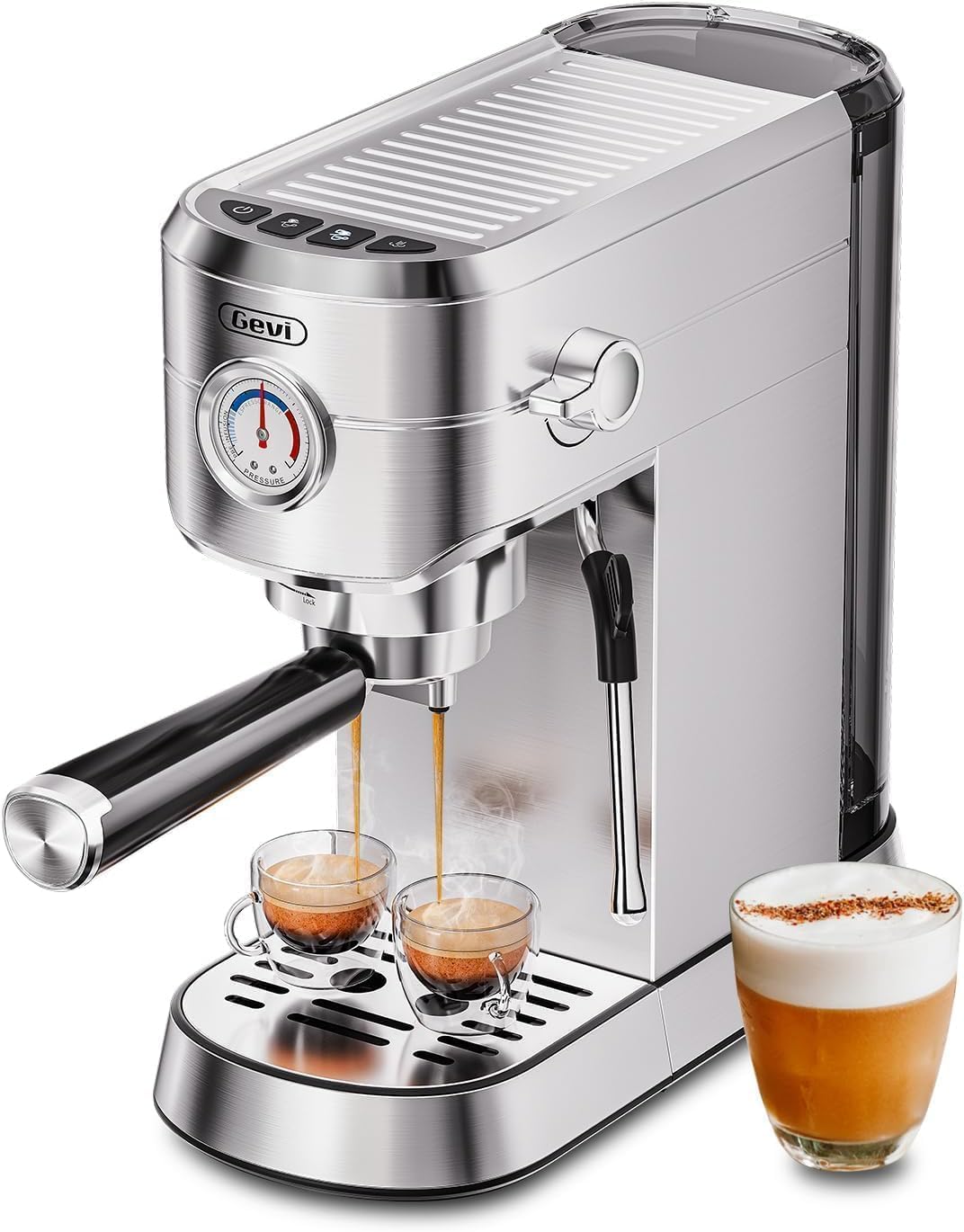
The Gevi 20 Bar Espresso Machine is a compact, semi-automatic home espresso maker aimed at everyday use. It uses a 20-bar pump, NTC temperature control, and pre-infusion to produce crema-rich shots and includes a pressure gauge and adjustable shot volume for dialing in extraction. The machine has a powerful steam wand plus an automatic frother nozzle to make cappuccinos and lattes, and a removable 34 oz water tank and drip tray that simplify refills and cleaning. Controls are button-based and straightforward for beginners, while the stainless steel housing and cup warmer add durability and utility on the counter. Expect some pump noise and light vibration during extraction, and the portafilter components are hand-clean only rather than dishwasher-safe. For a first machine it balances useful features and straightforward controls, though more advanced users may miss precise temperature profiling or a built-in grinder.
Best for: Buyers who want a practical, feature-rich first espresso machine that simplifies dialing in shots and steaming milk without a steep learning curve.
Less Ideal for: Those seeking professional-level temperature control, a built-in grinder, or a completely silent, vibration-free machine should consider higher-end alternatives.
- 20-bar pump with pre-infusion and pressure gauge for adjustable, crema-focused extractions
- Powerful steam wand plus removable froth nozzle for consistent milk microfoam
- Removable 34 oz water tank and drip tray for easy refilling and cleaning
- Durable stainless steel housing with built-in cup warmer for countertop use
- Portafilter and filter baskets are not dishwasher-safe and require manual cleaning
- Produces noticeable pump noise and slight vibration during operation
Verdict: A compact, beginner-friendly espresso machine that gives practical controls, a strong steam wand, and removable components to make reliable café-style drinks at home.
KEENSTAR BCM2201 Espresso Machine

| Output Pressure | 3.5 bar |
|---|---|
| Wattage | 800 |
| Capacity | 240 ml |
| Power Source | AC adapter |
| Filter Type | Reusable |
The KEENSTAR BCM2201 is a budget-friendly, entry-level manual espresso machine aimed at home users who want quick espresso and basic milk drinks. It uses a 3.5 bar pump and an 800W heating element to reach brewing temperature fast and can make 1–4 small cups (240 ml) in about two minutes. Operation is simple: a single control knob with an indicator light and a reusable filter holder handle that locks into place. The included steam wand produces microfoam for cappuccinos and lattes, and the machine ships with a carafe and filter. Practical benefits include small footprint for tight counters, low noise, and easy start-up for beginners. Important limitations are the modest 3.5 bar pressure (below commercial machines) and manual controls that require some learning for consistent tamping, grind size, and milk steaming; KEENSTAR recommends medium grind only and warns about potential leaks if overfilled. Overall it is a compact, no-frills option that gets espresso and basic milk drinks with minimal setup but will not replace higher-pressure or fully automatic models for espresso hobbyists.
Best for: Buyers prioritizing a low-cost, compact machine to learn basic espresso and milk-frothing techniques without complex programming or large footprint.
Less Ideal for: Experienced espresso hobbyists who want higher pressures, advanced temperature control, or automatic dosing and programmability.
- Fast warm-up with 800W heating element for quick brewing
- Compact footprint that fits small kitchens or limited counter space
- Included steam wand for frothing milk and making cappuccinos or lattes
- Reusable filter reduces ongoing consumable costs
- Simple single-knob controls make it approachable for beginners
- Lower 3.5 bar output limits extraction compared with higher-pressure machines
- Manual operation requires attention to grind, dose, and tamping for consistent results
Verdict: A compact, budget-oriented manual espresso machine that helps beginners make quick espresso and simple milk drinks with minimal fuss.
AMZCHEF EM3131 Espresso Machine
| Output Pressure | 20 bar |
|---|---|
| Wattage | 1350 watts |
| Coffee Input Type | ground |
| Filter Type | Reusable |
| Capacity | 40 fluid ounces |
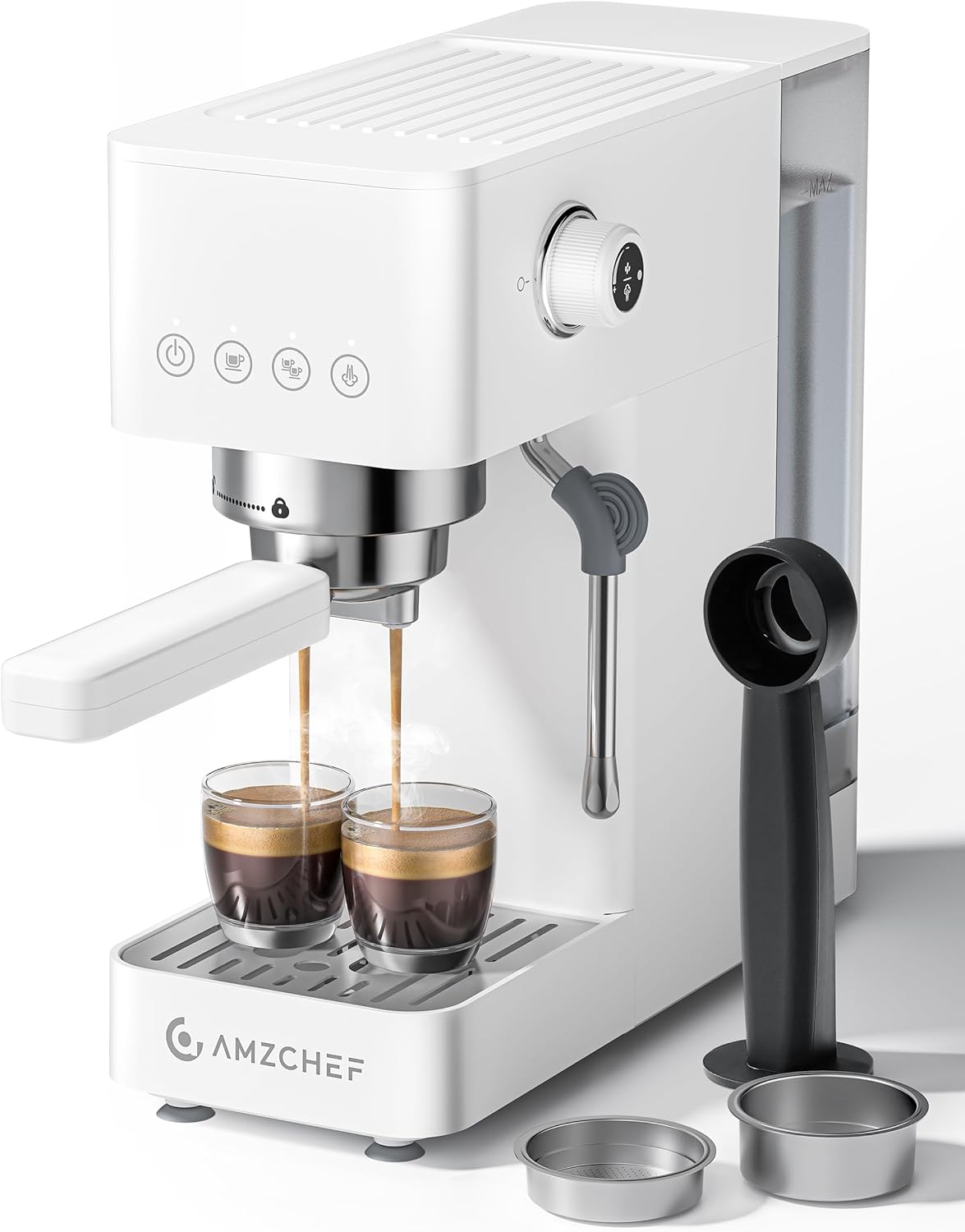
The AMZCHEF EM3131 is a beginner-friendly semi-automatic espresso machine aimed at daily home use. It uses a 20-bar Italian pump and PID temperature control to produce stable extraction and better crema than lower-pressure machines, while a 1350W heater brings the unit to temperature in about 30 seconds. Controls are button-based with single and double-shot options and adjustable extraction time for basic dial-in of strength. The stainless-steel steam wand rotates 360 degrees and generates enough steam to texture milk for lattes and cappuccinos, and the removable roughly 50 oz water tank makes refilling and cleaning straightforward. The machine accepts ground coffee and includes a reusable filter, but it does not include a built-in grinder so you must pre-grind or buy a separate grinder to get the freshest shots. Size and plastic construction keep it compact and affordable, but those looking for metal-bodied commercial durability or an integrated dosing grinder will need a different model. For new users it balances ease of use, consistent temperature control, and a capable steam wand for basic milk drinks.
Best for: Buyers who want a reliable, easy-to-use machine that consistently produces espresso and milk drinks at home without a steep learning curve.
Less Ideal for: Those who want an integrated grinder, heavy-duty commercial build, or advanced programmability should consider higher-end machines instead.
- 20-bar pump with PID temperature control for stable extraction and better crema
- 1350W fast heat-up reduces wait time to about 30 seconds
- 360° stainless-steel steam wand can produce dense froth for lattes and cappuccinos
- Removable ~50 oz water tank simplifies refilling and cleaning
- Simple button controls with single/double shot and adjustable extraction time for beginners
- No built-in grinder so fresh grinding requires a separate grinder
- Plastic exterior may feel less durable than metal-bodied machines
Verdict: A fast-heating, PID-controlled compact espresso machine that delivers consistent beginner-friendly shots and capable milk steaming for home use.
CASABREWS CM5418 Espresso Machine
| Operation Mode | Semi-Automatic |
|---|---|
| Wattage | 1350 watts |
| Output Pressure | 20 bar |
| Coffee Input Type | ground_coffee |
| Filter Type | Reusable |
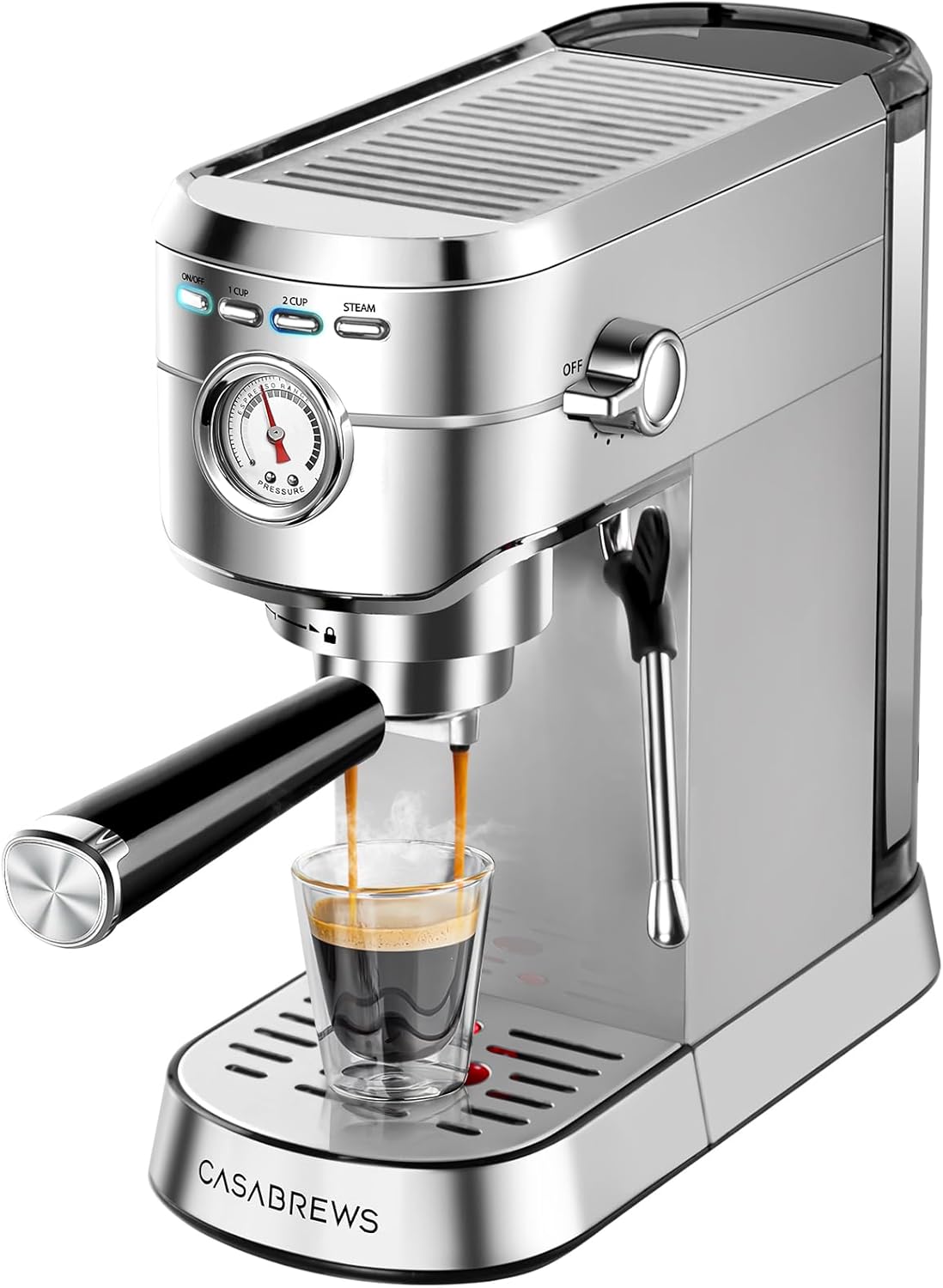
The CASABREWS CM5418 is a compact semi-automatic espresso machine aimed at home baristas who want café-style drinks without a large footprint. It uses a 20-bar Italian pump and a built-in pressure gauge to help dial in extraction, and a low-pressure pre-infusion stage that can improve balance and crema. The machine accepts ground coffee with 51mm portafilter baskets for single or double shots, and buttons let you select shot volume while the removable 34 oz tank simplifies refills. The steam wand produces microfoam good enough for cappuccinos and latte art when you follow the frothing guidance. Practical touches include a cup warmer, removable drip tray for tall cups, and reusable filter baskets. Expect a short warm-up time and occasional cooling steps after steaming to avoid over-temperature protection, and you may need to tweak grind, dose, and tamp to get consistent flow. For beginners this machine offers helpful visual pressure feedback and robust steam power, though it requires some practice and routine maintenance for best results.
Best for: Buyers who want an affordable, compact semi-automatic machine that gives visual pressure feedback and strong steam power to learn espresso fundamentals and improve shots over time.
Less Ideal for: People who need back-to-back shots with no downtime or fully automatic one-touch operation should consider a dual-boiler or automatic machine instead.
- 20-bar pump with built-in pressure gauge helps monitor and improve extraction
- Powerful steam wand that creates microfoam suitable for cappuccinos and latte art
- Compact stainless steel body with removable 34 oz water tank for easy refilling
- Includes reusable 51mm filter baskets, portafilter, and tamper so you can start brewing immediately
- Single-boiler design requires cooling time after steaming before brewing again
- Performance depends on manual grind, tamp, and dosage adjustments so there is a learning curve
Verdict: A compact, beginner-friendly semi-automatic that pairs a visual pressure gauge with strong steaming ability to help new home baristas learn and improve espresso-making.
atatix EM3111 Espresso Machine

| Operation Mode | Semi-Automatic |
|---|---|
| Wattage | 1350 watts |
| Voltage | 120 volts |
| Output Pressure | 20 bar |
| Filter Type | Reusable |
The atatix EM3111 is a compact semi-automatic espresso machine aimed at home users who want cafe-style drinks without a large footprint. It uses a 20-bar pump with a dual-wall portafilter to stabilize extraction and a PID-controlled NTC temperature sensor to keep brew temperature in the 90–96°C range, which helps produce consistent shots and crema. A powerful steam wand creates dense microfoam for lattes and cappuccinos, and the stainless steel finish and cup-warming top give it a more professional feel. The removable 45 oz water tank and detachable drip tray make cleaning and refilling straightforward, and included accessories such as one- and two-cup filters, a tamper, and scoop let you start brewing right away. Limitations include its semi-automatic workflow, which requires some learning to dial in grind and tamping, and the stated "20-bar" rating is a marketing number since actual extraction pressure is regulated lower by the dual-wall filter. For beginners who want a reliable home machine with temperature control and a true steam wand, the EM3111 is an approachable option that balances features and size.
Best for: Buyers who want a beginner-friendly home espresso machine that produces consistent espresso and real steamed milk and who value temperature control and small footprint.
Less Ideal for: People who want fully automatic one-touch espresso or a super-high-volume machine for frequent commercial use should look elsewhere.
- PID temperature control for more consistent shot extraction
- Powerful steam wand capable of producing dense microfoam for milk drinks
- Compact footprint with removable water tank and drip tray for easy cleaning
- Comes with useful accessories (one- and two-cup filters, portafilter, tamper, scoop) to start brewing immediately
- Semi-automatic operation requires practice to master grind, dose, and tamp for best results
- Marketing pressure rating higher than working extraction pressure may confuse some buyers
Verdict: A compact, beginner-friendly semi-automatic machine that delivers consistent shots and café-quality steamed milk thanks to PID temperature control and a strong steam wand.
Choosing the Right Espresso Machine for Beginners: Key Factors to Consider
Extraction Consistency
Consistent extraction determines whether shots taste balanced from pull to pull. Machines with stable boiler temperature, predictable pressure, and a well-designed portafilter make it easier to achieve repeatable results. For beginners, a forgiving extraction window reduces the need for constant grind and dose tinkering.
Look for machines with simple tamping guidance and components that resist wild temperature swings. This factor directly affects shot quality and how quickly you improve your technique.
Ease of Use and Controls
Controls that are intuitive—clear buttons, one-touch brew, or straightforward manual levers—shorten the learning curve. Beginner-friendly machines often offer preset dose options, simple on/off power, and visible indicators for readiness. Minimizing ambiguous settings helps you focus on basics like grind size and tamp pressure rather than navigating complex menus.
Ergonomics also matter. A comfortable portafilter size, accessible water reservoir, and an easy-to-read pressure or temperature gauge make daily use less frustrating and keep practice enjoyable.
Steam Wand Performance
A capable steam wand is essential if you plan to make milk-based drinks. For beginners, a wand that delivers adequate steam pressure and a controllable spray pattern helps create microfoam without prolonged practice. The design should allow for basic stretching and texturing techniques and be tolerant of small user errors.
Good steam performance shortens the time to produce latte art basics and improves drink texture. Also consider wand reach and ease of cleaning, as these affect how usable steaming is in everyday routines.
Maintenance and Cleaning
Routine upkeep determines how long a machine stays reliable. Beginner machines that make daily cleaning simple and include accessible parts to remove and rinse reduce long-term headaches. Features such as removable drip trays, easy-access groupheads, and clear descaling procedures make maintenance manageable.
Neglecting cleaning can lead to clogged lines, poor taste, and service issues. Choose a machine with straightforward maintenance steps and clear documentation so small chores do not become barriers to regular use.
Water Capacity and Thermal Recovery
Reservoir size and boiler design affect how many drinks you can make in a session and how quickly the machine recovers between shots. For someone practicing at home, adequate water capacity avoids frequent refills during a learning session. Good thermal recovery keeps shot temperatures consistent across back-to-back drinks.
If you entertain or brew multiple milk drinks in a row, aim for machines with larger reservoirs or faster boiler recovery to maintain workflow without lengthy waits.
Build Quality and Serviceability
Durable components and user-serviceable parts extend a first machine's usable life. Metal portafilters, sturdy steam wand fittings, and replaceable seals or gaskets make small repairs practical. Machines that document serviceable parts and offer accessible filter mounts reduce downtime.
While beginners do not need commercial robustness, reasonable build quality protects your investment as skills progress and usage increases.
Simple Routines That Teach Good Technique
A machine that encourages repeatable routines helps you learn the fundamentals faster. Look for straightforward workflows: a consistent warm-up sequence, clear indicators for brew readiness, and an easy method to time or preset doses. These elements let you focus on grinding, dosing, and tamping without guessing whether the machine is at the right temperature.
Use simple timers and a basic shot log to track changes when you adjust grind or dose. Repetition on a reliable platform is the fastest route to consistent espresso.
- One-touch or timed dosing to reduce guesswork
- Visible readiness lights or temperature indicators
- Accessible portafilter and stable basket size for consistent dosing
Grinding and Beans: The Biggest External Factor
No machine can compensate for an inappropriate grind. Beginners should pair a straightforward machine with a grinder that offers fine, repeatable adjustments. Even modest grinders that hold settings will speed up learning because you can reliably return to a known starting point.
Pay attention to roast level and freshness. Medium roasts are often easier to dial in during early practice sessions than very dark or very light roasts, which can mask extraction problems or require extreme grind adjustments.
- Start with a consistent medium roast
- Make small grind changes between sessions
- Record grind and dose so you can reproduce good shots
Milk Texturing Basics for Beginners
Start milk steaming by focusing on two goals: stretch the milk to introduce air and then position the wand to create a swirling motion for microfoam. Machines with a single-hole tip and sufficient steam pressure are easiest to learn on because they provide a clear feedback loop—either the milk stretches and spins or it does not.
Practice with small volumes and clean the wand immediately after each use to keep performance consistent. Many beginners make faster progress once they master wand positioning and pitcher angles on a forgiving machine.
- Use a stainless steel pitcher sized to the drink
- Purge and wipe the wand before and after steaming
- Practice with short 20 to 30 second stretches to learn rhythm
Common Beginner Mistakes and How to Avoid Them
Typical errors include inconsistent tamp pressure, forgetting machine warm-up time, incorrect grind setting, and improper water levels. Address these by establishing simple checklists: warm the machine for a set time, ensure the portafilter is dry before dosing, and use a consistent tamping force.
Another frequent issue is skipping routine cleaning, which affects taste and steam performance. Make a habit of rinsing and backflushing if the machine supports it, and keep the steam wand clean after every use.
- Warm the machine for a fixed time before pulling shots
- Tamp with a consistent, level pressure
- Keep a log of grind, dose, and extraction time for troubleshooting
Upgrading Later: What to Look For
As skills improve you may want features like PID temperature control, commercial-style steam wands, or larger boilers. When choosing a first machine, consider whether it allows simple upgrades such as different baskets or a better portafilter. Machines with common, replaceable parts ease future improvements.
If you plan to progress, prioritize a machine with solid basic ergonomics and a reputation for serviceability so upgrades and repairs are feasible down the line.
- Check for user-replaceable gaskets and spare part availability
- Consider future grinder upgrades before committing
- Look for a machine that grows with your skills rather than forcing an early replacement
How We Chose the Best Espresso Machine for Beginners
We focused on machines that lower the learning curve while delivering repeatable espresso and usable milk steaming for common home recipes. Key evaluation criteria included extraction consistency, which reflects the machine's ability to hold temperature and produce steady pressure; user controls and ergonomics, meaning clearly labeled dials, programmable dosing, or simple one-touch routines; steam wand performance, measured by steam pressure, tip control, and the ease of producing microfoam for lattes and cappuccinos; reservoir and boiler capacity, which affects session length and thermal recovery for multiple drinks; ease of maintenance, covering access to grouphead, portafilter compatibility, and descaling or cleaning routines; and build quality and serviceability, which influences longevity for a first machine. We excluded commercial-grade or highly technical prosumer machines that assume advanced tamping and shot-tuning skills. We also filtered out units that lack a true steam wand or have extremely limited temperature control, since these factors matter for learning classic espresso and milk drinks. The resulting shortlist emphasizes straightforward operation and predictable performance so beginners can build technique with minimal frustration.
Our full evaluation process is outlined in our review methodology.
FAQ
Do beginners need a steam wand right away?
It depends on your goals. If you want milk drinks, a steam wand is essential for learning texturing. If you only plan to pull straight espresso shots, you can delay a steam wand and focus on extraction first.
How long should I warm up my machine before pulling shots?
Most home machines need a predictable warm-up time, often several minutes for stable temperature. Follow the manufacturer's basic warm-up guidance and verify readiness with the machine's indicator or by flushing a short amount of water through the group.
Can I learn on a simpler machine and upgrade later?
Yes. Starting on a forgiving machine helps you master grinding, dosing, and tamping. When skills plateau, you can move to a model with tighter temperature control or a more powerful steam system.
How important is a good grinder for a beginner?
Very important. A consistent grinder often matters more than the machine for achieving repeatable shots. Even a basic grinder with reliable settings will make dialing in much easier than an inconsistent unit.
How often should I clean the steam wand?
Wipe and purge the steam wand after every use and perform a deeper cleaning periodically. Regular cleaning prevents milk buildup that can affect steam performance and flavor.
Final Verdict
Prioritize machines that keep the learning curve gentle: stable extraction, intuitive controls, and a serviceable steam wand will speed up progress while minimizing frustration. Balance reservoir and boiler needs against how many drinks you plan to make in a session, and pick a model with straightforward maintenance steps so daily upkeep does not become a barrier. With those priorities in mind, beginners can pick confidently and focus on practicing grind, dose, and steaming to improve quickly.