
Note: This article contains affiliate links. If you click on these links and make a purchase, we may earn a small commission at no extra cost to you. This helps support our research and content. Read our full affiliate disclosure here.
If you want to pull cafe-style shots and craft consistent latte art at home, the right espresso machine matters more than any single trick. A machine that produces stable steam pressure, precise temperature control, and reliable shot extraction makes it far easier to texture milk and pour predictable patterns. This guide shortlists the top espresso machines for latte art across a range of home-use setups. We evaluated machines for steam performance, temperature stability, ease of steaming, and everyday usability so you can focus on practicing pours rather than fighting equipment. Read on for the picks and the criteria we used to choose them.
Top Picks at a Glance
| Best Overall The best all-around choice for most situations | Gaggia Classic Evo Pro RI9380/46 |  |
| Best Quality Built to a higher standard if you want something more solid | Breville Barista Touch BES880BSS |  |
| Best Value The sweet spot between price and what you get | Gevi 20 Bar Espresso Machine | 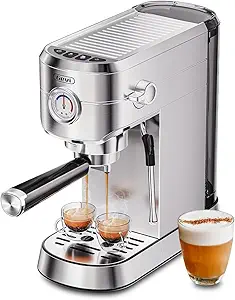 |
| Best Budget The cheapest option that still gets the job done reliably | Chefman CraftBrew Espresso Machine | 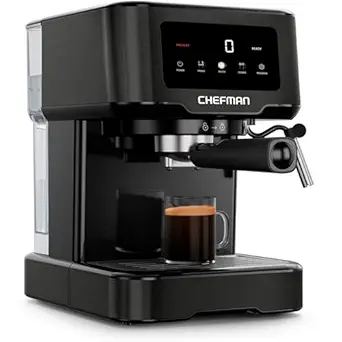 |
| Top Rated A top-rated pick with lots of positive feedback | Breville Barista Express BES870XL |  |
| Most Popular A crowd favorite that many people choose with confidence | CASABREWS CM5418 Espresso Machine |  |
| Best Seller A high-volume bestseller chosen again and again | atatix EM3111 Espresso Machine |  |
Gaggia Classic Evo Pro RI9380/46
| Operation Mode | Semi-Automatic |
|---|---|
| Output Pressure | 9 bar |
| Wattage | 1200 watts |
| Coffee Input Type | ground, pod |
| Capacity | 2.1 liters |
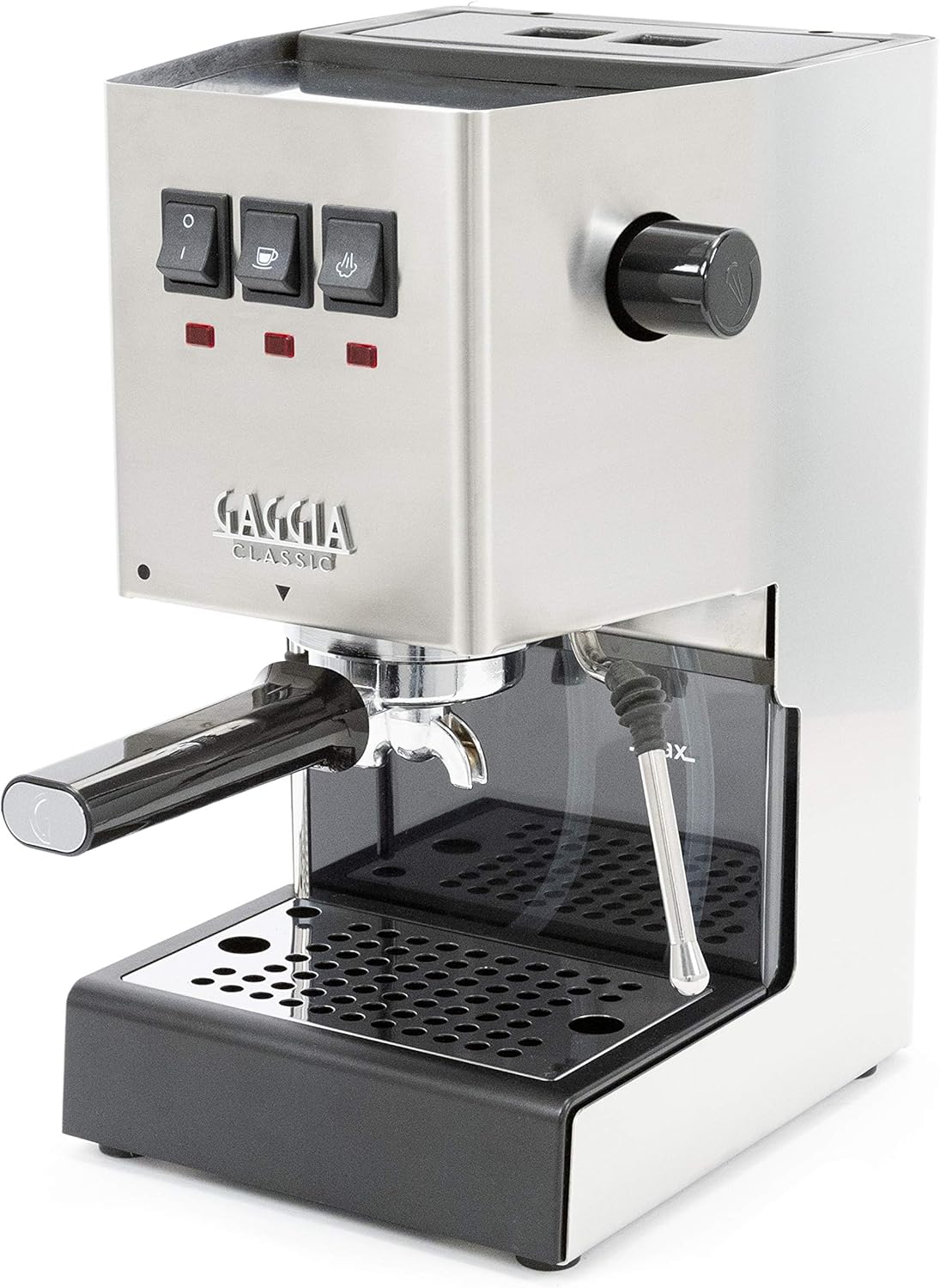
The Gaggia Classic Evo Pro is a made-in-Italy semi-automatic espresso machine that targets the home barista who wants cafe-level control. It brews espresso at 9 bar pressure through a commercial 58 mm stainless steel portafilter and includes both commercial single/double baskets plus a pressurized basket for pods or preground coffee. The commercial steam wand and robust boiler let you texture milk for microfoam suitable for latte art, and the steel housing and commercial components give the unit a durable, serviceable feel. Practical benefits include quieter pump mounting, an updated boiler to resist scale, and a 2.1 liter removable reservoir for extended use between refills. Expect a learning curve to dial in shots and milk technique, and the machine is heavier and larger than compact consumer models so it needs a dedicated counter spot. For buyers who want a machine built around manual technique and longevity, the Evo Pro delivers pro-style performance in a home package.
Best for: Buyers who prioritize hands-on control and milk-texturing ability for crafting latte art and want a durable, serviceable machine to learn on.
Less Ideal for: People who want a simple, fully automatic machine with minimal setup, or those with very limited counter space.
- Commercial 58 mm stainless steel portafilter for stable extraction and easy puck management
- Commercial steam wand that produces textured microfoam suitable for latte art
- Includes multiple filter baskets plus a pressurized basket for pods or preground coffee
- Robust steel housing and serviceable commercial components designed for longevity
- Updated pump mounting and boiler improvements reduce noise and scale issues
- Heavier, bulkier footprint that requires dedicated counter space
- Requires some skill and tuning to consistently pull cafe-quality shots
Verdict: Choose the Gaggia Classic Evo Pro if you want a durable, pro-style semi-automatic that gives the control and steam power needed to learn and practice latte art.
Breville Barista Touch BES880BSS

| Operation Mode | Fully Automatic |
|---|---|
| Wattage | 1680 watts |
| Human Interface Input | Touchscreen |
| Coffee Input Type | whole_beans |
| Filter Type | Reusable |
The Breville Barista Touch BES880BSS is a countertop espresso machine that combines an integrated conical burr grinder, touchscreen-guided controls, and an automatic milk-texturing system to help home users produce café-style espresso, lattes, and cappuccinos. You grind whole beans with 30 grind settings and automatic dosing, then the ThermoJet heating system brings the group head to extraction temperature quickly for consistent 9-bar shots. The touchscreen walks you through presets and lets you fine-tune strength, temperature, and milk texture, while the Auto Milk system steams to a silky microfoam suitable for latte art without manual frothing. Practical benefits include a reusable filter, onboard tools like the Razor dose trimmer, and a stainless steel milk jug included for steaming. Expect a learning curve if you want full manual control and the machine is relatively heavy and takes counter space, so it is best for committed home baristas rather than casual coffee drinkers. Regular cleaning of the steam wand and grinder maintenance are necessary to keep performance consistent.
Best for: Aiming to develop latte art and consistent espresso at home, this machine fits someone who values performance, repeatable control, and convenience in a single integrated unit.
Less Ideal for: If you make only occasional coffee, need a compact travel-friendly machine, or prefer full manual control without automated milk systems, look elsewhere.
- Integrated conical burr grinder with 30 grind settings and dose control for fresh grounds.
- Touchscreen presets plus manual adjustment let you dial shot strength, temperature, and milk texture.
- Auto Milk system produces fine microfoam suited for latte art without separate steam wand skill.
- Fast ThermoJet heating delivers ready-to-extract temperature quickly for consistent shots.
- Includes useful accessories like stainless steel jug and Razor dose trimming tool.
- Machine is relatively heavy and requires significant counter space.
- Not fully manual — experienced baristas may prefer a separate dedicated steam wand workflow for more control.
Verdict: For home baristas focused on performance and latte art, the Barista Touch delivers café-quality shots and silky microfoam with guided controls and an integrated grinder.
Gevi 20 Bar Espresso Machine
| Output Pressure | 20 bar |
|---|---|
| Operation Mode | Semi-Automatic |
| Wattage | 1350 watts |
| Power Source | AC adapter |
| Capacity | 1 liters |
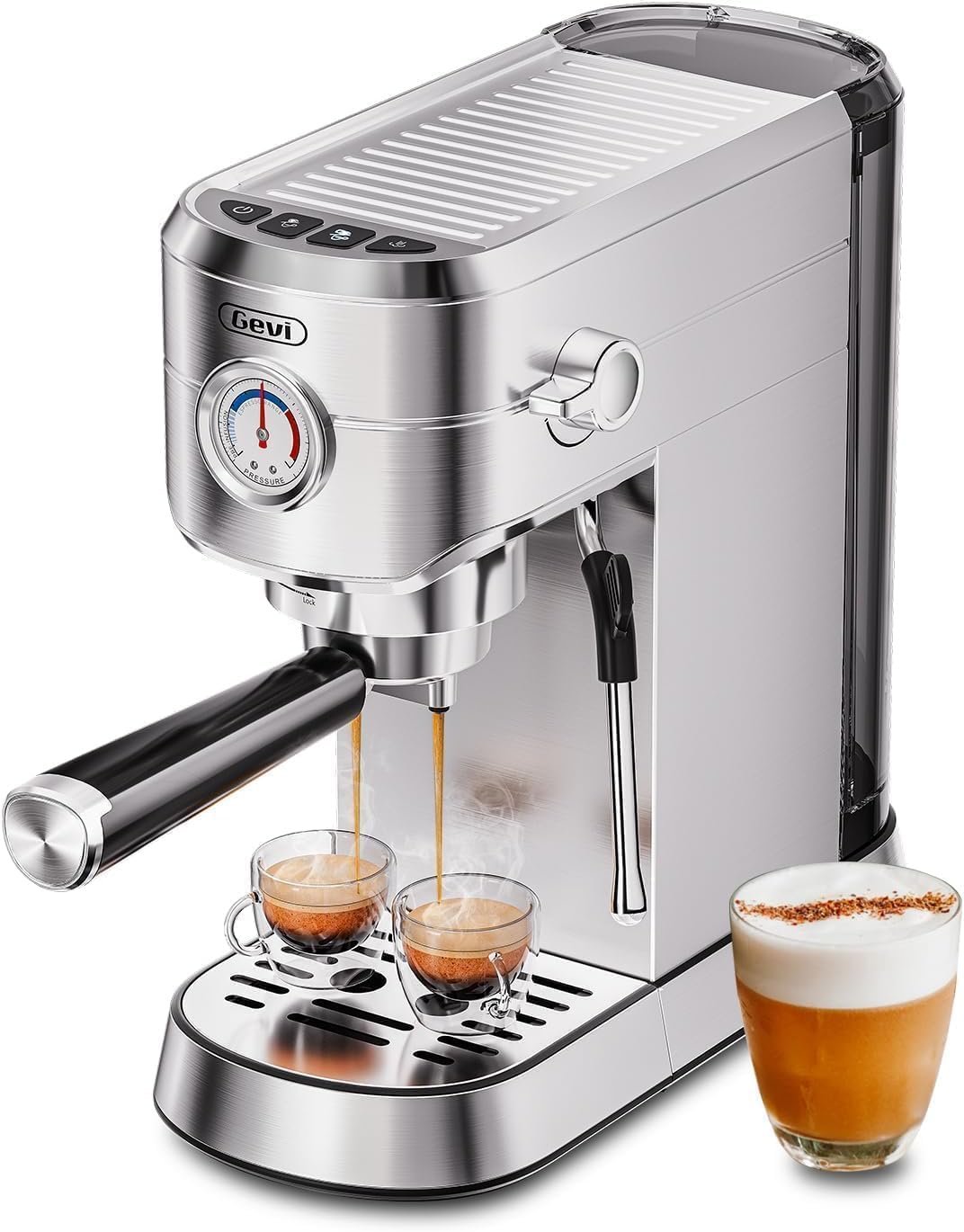
The Gevi 20 Bar Espresso Machine is a countertop semi-automatic unit aimed at delivering café-style espresso and milk drinks at home. It uses a 20-bar pump, NTC temperature control and pre-infusion to stabilize extraction, and the built-in pressure gauge and adjustable shot volume help you tune shots for better crema and consistency. The steam wand produces strong steam for texturing milk and includes a removable froth nozzle for easier cleaning, so it can handle lattes, cappuccinos and Americanos. The machine's stainless steel housing, cup warmer and removable water tank make daily use straightforward and its reusable filter and included 51 mm portafilter accessories let you start pulling shots right away. Expect some pump noise and slight vibration during extraction and plan to hand-clean metal parts since the portafilter and baskets are not dishwasher-safe. For someone practicing latte art the fast steam and temperature control are useful, but pushing professional-level microfoam will require technique and possibly a larger machine with commercial steam power.
Best for: Home users who prioritize getting consistent espresso shots and workable steam for milk drinks while keeping a compact, practical machine on the countertop and who want controls that help them dial in shots.
Less Ideal for: Baristas or home users seeking commercial-grade steam power and larger boilers for heavy multi-drink service or those wanting fully automatic, push-button latte art solutions.
- 20-bar pump with pre-infusion and pressure gauge for more consistent extraction
- Powerful steam wand with removable froth nozzle for quicker milk texturing and cleaning
- Compact stainless steel design with removable water tank and cup warmer for countertop convenience
- Includes 51 mm portafilter, single and double baskets, tamper and cleaning tools so you can start brewing immediately
- Not dishwasher-safe for portafilter and filter baskets which increases manual cleaning
- Compact consumer machine still produces noticeable pump noise and vibration during extraction
Verdict: A compact, practical semi-automatic espresso machine that gives home users pressure control and strong steam suitable for learning and practicing latte art.
Chefman CraftBrew Espresso Machine

| Output Pressure | 15 bar |
|---|---|
| Capacity | 1.5 liters |
| Operation Mode | Semi-Automatic |
| Wattage | 1350 watts |
| Coffee Input Type | Ground |
The Chefman CraftBrew is a budget-friendly semi-automatic espresso machine aimed at home users who want café-style drinks without a complicated setup. It uses a 15-bar pump and ground coffee to pull single or double shots, and includes a steam wand for steaming milk and creating microfoam for lattes and cappuccinos. The machine has a 1.5 L removable reservoir for easier filling and cleaning, a digital touch panel to adjust shot volume, and two shot baskets to switch between single and double portions. At 1350 watts it reaches brewing and steaming temperatures quickly, and the compact stainless black exterior fits small countertops. Expect solid basic performance for milk-based drinks, but the steam wand is manual so creating consistent microfoam for advanced latte art takes practice. The machine is not a prosumer unit, so temperature stability and pressure profiling are limited compared with higher-end models. For everyday latte and cappuccino making on a budget, it delivers good value and straightforward controls.
Best for: Buyers who want an affordable home espresso machine that produces café-style milk drinks and are willing to practice steaming technique to improve latte texture.
Less Ideal for: Users seeking precise temperature/pressure control or professional-level consistency for advanced latte art should consider higher-end machines instead.
- 15-bar pump suitable for extracting full-flavored espresso
- Built-in steam wand enables milk steaming for lattes and cappuccinos
- 1.5 L removable water reservoir for convenient refills and cleaning
- Touch control panel with adjustable shot volume and two shot baskets for single or double shots
- Manual steam wand requires technique to produce consistent microfoam for latte art
- Not designed for advanced temperature/pressure control expected by prosumers
Verdict: A budget-friendly semi-automatic that makes solid espresso and steamed milk for lattes if you are learning milk technique and want good value.
Breville Barista Express BES870XL

| Wattage | 1600 watts |
|---|---|
| Voltage | 120 |
| Coffee Input Type | whole_beans |
| Filter Type | Reusable |
| Capacity | 1 cups |
The Breville Barista Express BES870XL combines a built‑in conical burr grinder, a 54mm portafilter, and a powerful steam wand to take you from whole beans to espresso in under a minute. You grind directly into the portafilter with 16 grind settings and dose control, then use the thermocoil heating system with PID temperature control and low‑pressure pre‑infusion to extract balanced shots. The steam wand produces microfoam suitable for pouring latte art when you practice milk texturing. Everyday use is hands‑on: manual tamping, grind adjustment, and steam control reward learning but require some technique and cleanup. Notable practical benefits include single‑machine workflow (grind, tamp, brew, steam) and stainless steel construction that stands up to daily use. Trade‑offs are that it is not fully automatic—there is a learning curve for consistent shot timing and milk texturing—and the 1‑cup capacity and sizable footprint mean it is best suited to a dedicated counter space rather than compact kitchens.
Best for: A buyer who prioritizes a reliable, durable machine that combines an integrated grinder and a capable steam wand for practicing latte art and improving espresso technique at home.
Less Ideal for: People who want push‑button automation or need a compact, high‑capacity machine for serving many drinks in quick succession should consider other options.
- Integrated conical burr grinder with dose control for fresh grounds
- Thermocoil PID temperature control and low‑pressure pre‑infusion for balanced extraction
- Powerful steam wand capable of producing microfoam for latte art
- 54mm stainless steel portafilter and included single/double filter baskets for commercial‑style shots
- Manual operation requires practice to produce consistent shots and textured milk
- Relatively large footprint and 1‑cup capacity limit use in very small kitchens or high‑volume settings
Verdict: Buy this if you want a sturdy, integrated grinder‑to‑steam espresso setup that lets you learn and produce café‑style shots and milk for latte art at home.
CASABREWS CM5418 Espresso Machine
| Output Pressure | 20 bar |
|---|---|
| Wattage | 1350 watts |
| Operation Mode | Semi-Automatic |
| Coffee Input Type | ground_coffee |
| Filter Type | Reusable |
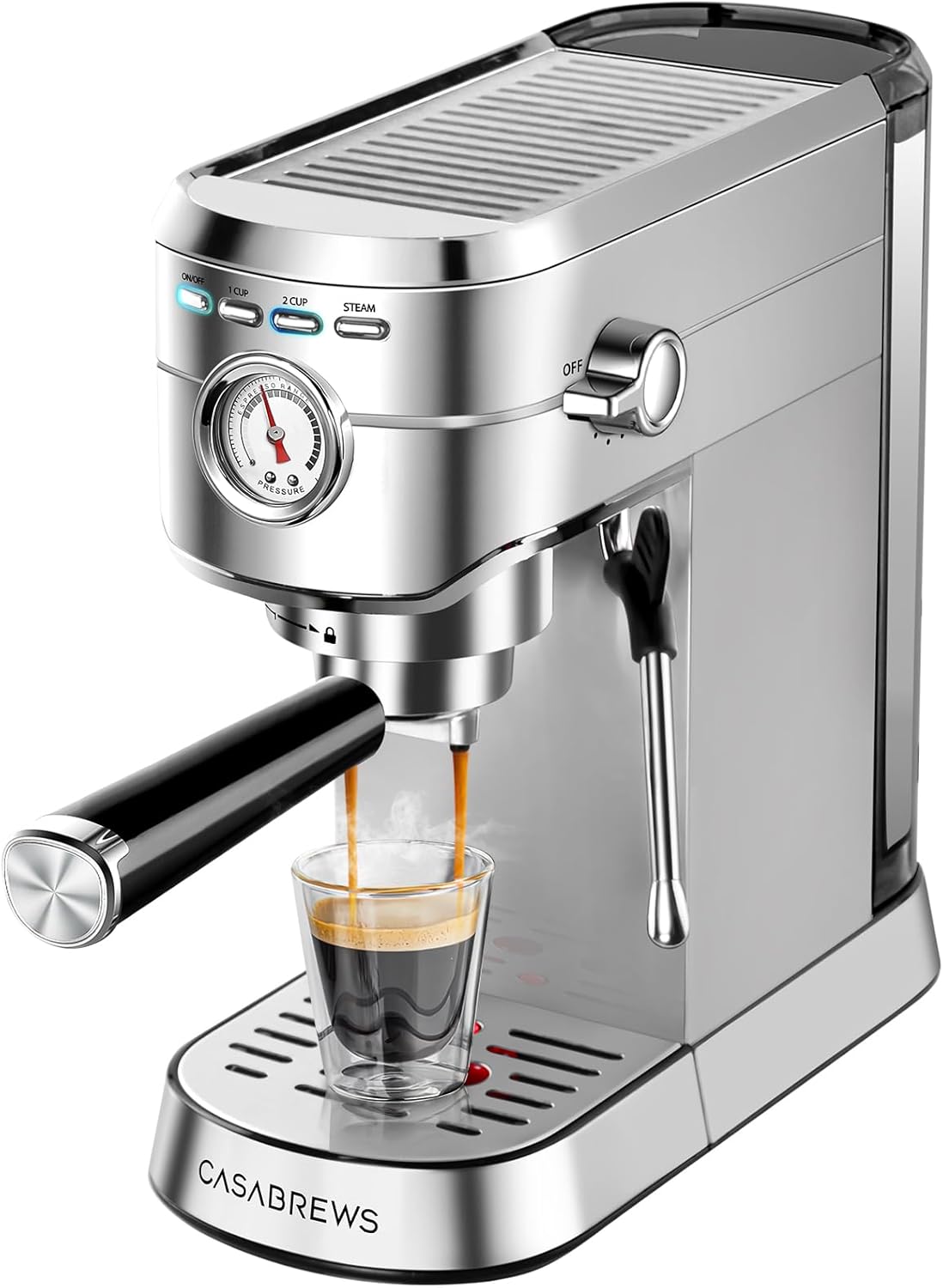
The CASABREWS CM5418 is a countertop semi-automatic espresso machine designed to deliver café-style espresso and steamed milk for lattes and cappuccinos. It uses a 20-bar Italian pump with a built-in pressure gauge and low-pressure pre-infusion to help produce a balanced extraction and good crema, while buttons let you select single or double volumes. The powerful steam wand creates microfoam suitable for latte art when used with cold whole milk and basic steaming technique, and the removable 34 oz tank lets you brew multiple cups before refilling. Practical touches include a cup-warming tray and a removable drip tray that fits taller mugs for easy cleaning. Expect a short warm-up cycle and a reusable filter with 51mm portafilter accessories included, but note this is a single-boiler machine so you should avoid brewing immediately after steaming to prevent the over-temperature protection from activating. For users willing to dial in grind size and tamping, the CM5418 offers strong value for home latte art practice, though it requires routine maintenance like descaling and filter care.
Best for: Buyers who want a capable home machine for learning latte art and improving espresso technique with visual pressure feedback and a strong steam wand, but who prefer a compact, hands-on semi-automatic workflow.
Less Ideal for: Those looking for fully automatic convenience, back-to-back high-volume service, or a dual-boiler workflow for simultaneous steaming and brewing.
- 20-bar pump with built-in pressure gauge for visual extraction feedback
- Steam wand capable of producing microfoam for latte art
- Removable 34 oz water tank for multiple cups between refills
- Compact stainless steel body with cup warmer and removable drip tray
- Includes portafilter, single and double filters, and tamper for start-to-finish brewing
- Single-boiler design requires cooling between steaming and brewing to avoid overheating protection
- Requires manual dialing of grind and tamp for best extraction, which adds a learning curve
Verdict: A compact semi-automatic espresso machine that pairs a strong steam wand with a pressure gauge, making it a solid choice for home baristas practicing latte art.
atatix EM3111 Espresso Machine

| Operation Mode | Semi-Automatic |
|---|---|
| Wattage | 1350 watts |
| Voltage | 120 volts |
| Output Pressure | 20 bar |
| Filter Type | Reusable |
The atatix EM3111 is a compact semi-automatic espresso machine aimed at home users who want café-style drinks and basic latte art capability. It uses a 20-bar pump and a 51mm portafilter with dual-wall filters to stabilize extraction, while NTC + PID temperature control holds brew temperature in the 90–96°C range for more consistent shots. The machine includes a powerful steam wand that produces dense microfoam suitable for simple latte art and a stainless steel cup-warming surface. Setup and daily use are straightforward: fill the removable 45 oz tank, tamp in the portafilter, and choose auto or manual extraction to control shot volume. Practical benefits include quick heat-up (about 30 seconds), reusable filters, and an easy-to-clean detachable drip tray. Limitations to expect are the smaller footprint and single-boiler-style workflow that require short waits between steaming and brewing for temperature recovery, and the dual-wall filters mean true bottomless portafilter dialing is limited for advanced extraction tuning. Overall it is a capable home machine for beginners progressing toward latte art.
Best for: Buyers who want a reliable, easy-to-use home machine that delivers consistent shots and milk texture for learning latte art without complex setup or pro-level maintenance.
Less Ideal for: Experienced home baristas seeking full commercial-style temperature and extraction control or those who want immediate multi-cup workflow for heavy daily use.
- 20-bar pump with dual-wall 51mm portafilter for stable extraction
- PID temperature control and NTC sensor for consistent brew temperature
- Powerful steam wand that creates dense microfoam for latte art practice
- Detachable 45 oz water tank and drip tray for easy cleaning and maintenance
- Single small boiler/thermal system means wait time between steaming and brewing
- Dual-wall filters limit advanced shot dialing compared with naked or commercial portafilters
Verdict: A compact, user-friendly machine that reliably produces consistent shots and milk microfoam, making it a strong pick for home users learning latte art.
Choosing the Right Espresso Machine for Latte Art: Key Factors to Consider
Steam Pressure Consistency
A steady, controllable steam pressure is the backbone of milk texturing. Inconsistent pressure makes it hard to create and maintain the whirlpool and microfoam you need for detailed pours. High peak pressure is less important than the machine's ability to hold a predictable steam output while you stretch and incorporate air.
Consistency affects how quickly you can heat milk, how much skill is required to avoid big bubbles, and how repeatable your results are. Look for machines with stable, single-digit variation in steam pressure during steaming cycles.
Temperature Stability and Recovery
Temperature stability determines shot consistency and how reliably the steam system performs between pours. If boiler or heat-exchange temperatures fluctuate, extraction quality changes and steam behavior can shift, which complicates both espresso flavor and milk texturing.
Recovery time matters if you steam multiple drinks in a row. Fast recovery means less waiting and more consistent steaming, which is essential for practice sessions or serving guests without long downtime.
Wand Design, Reach, and Control
Wand articulation, length, and control characteristics shape how confidently you can position a milk pitcher and introduce air. A flexible, well-articulated wand lets you aim the steam tip precisely without awkward wrist positions or pitcher collisions.
Control features such as a dedicated steam valve and tactile feedback help you microdose air and finish the whirlpool for polish. A wand with adequate reach and a threaded, replaceable tip also makes maintenance easier and improves ergonomics for different pitcher sizes.
Shot Extraction Consistency
Latte art depends on a stable base of well-extracted espresso with consistent crema. Inconsistent shot volume, temperature, or pressure during extraction will change crema color and texture, which in turn affects how milk sits and flows on the surface.
Consider machines with reliable grouphead performance, repeatable dose and tamping ergonomics, and systems that minimize shot-to-shot variation for predictable results.
Ease of Cleaning and Upkeep
Regular cleaning keeps steam tips and grouphead passages clear, directly impacting steam performance and extraction quality. A machine that is straightforward to disassemble, backflush, and descale reduces the chance of clogs that ruin microfoam or cause uneven shots.
Accessible drip trays, removable trays, and easy-to-remove steam tips shorten maintenance time and encourage consistent care. Consider the time and effort required for routine tasks when choosing a machine for daily latte art practice.
Ergonomics and Workflow
How a machine fits into your counter space and workflow will influence how smoothly you can move between dosing, tamping, steaming, and pouring. Controls positioned within easy reach, a comfortable portafilter angle, and enough clearance for a range of pitcher sizes all reduce friction in the workflow.
Good ergonomics lower the barrier to repetition and practice, which is the fastest path to better latte art. Think about where you will keep pitchers, the sink, and towel access when selecting a machine.
Why Steam Technique Matters More Than Power
Large steam boilers or higher wattage do not automatically translate to better latte art. What matters is how the machine delivers and controls steam. Technique is built on predictable steam behavior, so a machine that responds consistently to your inputs will reward practice more than one with raw power but poor control.
Focus on machines that let you introduce air delicately, then dial in the whirlpool without sudden bursts of pressure. That controllability shortens the learning curve and produces smaller, denser microbubbles needed for detailed patterns.
- Control beats brute force when texturing microfoam.
- Smooth pressure transitions help maintain a steady whirlpool.
- A responsive wand reduces the skill needed for consistent results.
Tools and Accessories That Improve Latte Art
A few well-chosen accessories make practice sessions more productive. A heat-resistant stainless milk pitcher with a sharp pour lip gives better flow control. A thermometer can help while you are learning temperature targets, but many experienced baristas rely on tactile cues such as pitcher warmth.
Other useful additions include a trimmed steam tip for finer aeration control and a rubber mat to stabilize the pitcher while texturing. Keep accessories simple and durable to avoid disrupting your focus on pour technique.
- Pitcher with a pointed pour lip for precision.
- Pitcher size variety to match drink volumes.
- Steam tip brush and a dedicated towel for quick cleanup between pours.
Common Steaming Mistakes and How to Fix Them
Large bubbles, hammered milk, and flat foam are often caused by either too much air at the wrong time or improper pitcher positioning. Begin with the tip just below the surface to introduce air, then submerge slightly to create a whirlpool. Adjust the wand angle and depth gradually to stabilize texture.
If milk becomes too hot or the foam collapses, pause steaming earlier and aim for 55 to 65 seconds of active steaming depending on machine strength. If you consistently get big bubbles, reduce initial tip exposure and increase the whirlpool phase to break down larger bubbles into microfoam.
- Introduce air briefly at the start, then focus on whirlpooling.
- Use the pitcher angle to create a stable vortex.
- Lower the steam power or shorten steaming duration if milk overheats.
Setting Up Your Workspace for Practice
Organize a compact workflow so dosing, tamping, steaming, and pouring happen in sequence with minimal reaching. Keep a towel, thermometer, two pitchers, and a small knockbox within arm's reach. A dedicated space for cleaning the wand and a practice cup for test pours speeds up iterative learning.
Consistent setup reduces variables that affect pour quality and helps you focus on technique. When every tool is in the same place, muscle memory develops faster and you can repeat pours under the same conditions.
- Designate spots for pitcher, towel, and knockbox.
- Use a practice cup to evaluate foam before pouring into the cup you will serve.
- Clear counter space for confident pitcher movement.
Milk Selection and Temperature Effects
Whole milk and higher-fat alternatives generally produce more stable microfoam due to protein and fat content, but many plant-based milks can also texturize well with the right technique. Pay attention to freshness and protein content as these materially affect foam stability and texture.
Temperature affects sweetness and foam stability. Aim to stop steaming when the pitcher is warm to the touch but not scalding. Practice with a thermometer until you can judge doneness by hand feel, then refine temperatures to match your preferred flavor profile.
- Try different milk types to see how texture and sweetness change.
- Avoid overheating; it breaks down foam structure.
- Chill milk before steaming to increase the time window for texturing.
How We Chose the Best Espresso Machine for Latte Art
We prioritized factors that directly affect milk texture and the user experience of steaming and pouring. Key evaluation criteria included steam pressure consistency, steam tip and wand versatility, boiler or heat-exchange temperature stability, and shot extraction consistency. We also looked at ergonomics such as wand reach, wand control, and portafilter ergonomics because those influence how easily you can handle milk pitchers while pouring. Durability and serviceability were considered to ensure machines hold calibration over time. Ease of use and cleaning were weighed to reflect daily routines for home baristas. We excluded machines that lack a dedicated steam wand or that cannot sustain steam pressure for back-to-back milk texturing, because those cannot reliably produce latte art. Our shortlist reflects machines that balance steaming performance with shot stability and user control. The scoring emphasized steam and temperature metrics, but also accounted for practical touches like wand articulation and boiler recovery that matter during real-world use.
Our full evaluation process is outlined in our review methodology.
FAQ
Can I make latte art with non-dairy milk?
Yes. Many non-dairy milks can produce acceptable microfoam, but results vary by base and brand. Barista-formulated alternatives with added proteins tend to steam more consistently. Expect to adjust steaming time and technique for different viscosities.
How hot should milk be for latte art?
Aim for a finished milk temperature around 140 to 155 degrees Fahrenheit for balanced sweetness and foam stability. Stop before the pitcher becomes too hot to hold comfortably and err on the cooler side when practicing to preserve foam structure.
How important is wand tip size for microfoam?
Wand tip design affects how air is introduced and how quickly a whirlpool forms. Smaller or multi-hole tips can offer finer aeration control, while larger single-hole tips may require more technique. Replaceable tips let you experiment and optimize for your pouring style.
Should I steam at full power to speed up practice?
Not usually. Full power can overheat milk and make it harder to control microfoam. Slower, controlled steaming often produces denser, silkier texture and gives you time to develop a stable whirlpool for better pours.
How often should I clean the steam wand?
Wipe the tip immediately after each use and purge a short burst of steam to clear residue. Perform a deeper clean of the tip and nozzle regularly to prevent clogging and flavor transfer. Consistent cleaning preserves steam performance and milk quality.
Final Verdict
When choosing an espresso machine for latte art, prioritize steady steam control, temperature stability, and a wand that fits your pouring ergonomics. Reliable shot extraction and straightforward maintenance support consistent crema and foam, which are necessary for repeatable pours. Balance the tradeoffs between raw steam capacity and controllability. For most home baristas, a machine that offers predictable steam behavior and easy upkeep will accelerate progress more than one with higher power but poorer control. Focus on developing technique with a machine that responds reliably, and you will see faster improvements in latte art.