
Note: This article contains affiliate links. If you click on these links and make a purchase, we may earn a small commission at no extra cost to you. This helps support our research and content. Read our full affiliate disclosure here.
If you want café-style espresso without a big investment, choosing the right machine under $200 matters more than flashy extras. A well-chosen espresso machine can deliver consistent shots, hold up to daily use, and be simple to maintain so you actually use it every morning. This guide lists seven shortlisted espresso machines that meet those goals and explains the practical tradeoffs you should expect at this price point. We evaluate extraction reliability, steam and milk capability, build quality, and serviceability to help you pick the best fit for home use. Read on for quick comparisons and clear buying guidance before the product list.
Top Picks at a Glance
| Best Overall The best all-around choice for most situations | AMZCHEF Espresso Machine CM1626 |  |
| Best Quality Built to a higher standard if you want something more solid | CASABREWS Ultra Espresso Machine |  |
| Best Value The sweet spot between price and what you get | atatix EM3111 Espresso Machine |  |
| Best Budget The cheapest option that still gets the job done reliably | XIXUBX Compact Espresso Machine CM510 |  |
| Top Rated A top-rated pick with lots of positive feedback | XIXUBX EM720 Espresso Machine |  |
| Most Popular A crowd favorite that many people choose with confidence | De'Longhi Stilosa EC260BK | 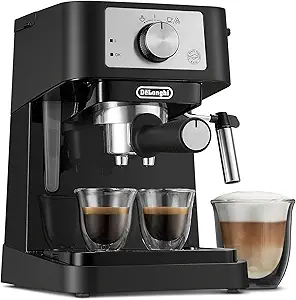 |
| Best Seller A high-volume bestseller chosen again and again | CASABREWS CM5418 Espresso Machine |  |
AMZCHEF Espresso Machine CM1626

| Operation Mode | Semi-Automatic |
|---|---|
| Wattage | 1500 watts |
| Coffee Input Type | whole bean |
| Capacity | 3.9 pounds |
The AMZCHEF CM1626 combines a 44-setting conical grinder, temperature control, and a powerful steam wand into a compact semi-automatic machine aimed at home brewers. It grinds whole beans on demand and offers 190°F–201°F adjustable brewing temperature so you can tune extraction for different roasts, while one-touch and touchscreen controls simplify brewing and grind adjustments. A dedicated cold brew mode and a 60 oz removable water tank make multiple servings convenient, and the stainless steel steam wand with 1350W heating can produce microfoam for lattes and cappuccinos. Practical touches include a descaling function and a removable tank for easier maintenance. Limitations to expect are the learning curve for dialing grind, dose, and temperature to match beans and the general space and noise footprint of an integrated grinder in a compact machine. For buyers prioritizing convenience and flexibility in a single unit, this packs a lot of capability for home use; those wanting a purely manual or very small-budget pick may prefer simpler machines or separate grinder setups.
Best for: A practical home brewer who wants a single machine that handles grinding, temperature control, and milk steaming with minimal extra gear and values flexibility over the smallest footprint.
Less Ideal for: People who want the quietest, smallest countertop appliance or who prefer buying a separate high-end grinder and espresso machine for maximum control.
- Built-in grinder with 44 grind settings for fine control over extraction
- Precision temperature control (190°F–201°F) to match different beans and roast levels
- Powerful steam wand and 1350W heating system for fast microfoam and milk-based drinks
- Removable 60 oz water tank and one-touch controls for convenient multi-cup brewing
- Descaling and easy-clean features that simplify maintenance
- Integrated grinder increases noise and requires occasional cleaning to avoid jams
- Compact all-in-one design may be bulky for very small counters
Verdict: If you want an all-in-one home espresso setup that grinds, brews with precise temperature control, and steams milk, this AMZCHEF delivers strong versatility for everyday use.
CASABREWS Ultra Espresso Machine

| Wattage | 1350 watts |
|---|---|
| Voltage | 120 volts |
| Operation Mode | Semi-Automatic |
| Filter Type | 58mm Portafilter & one/two cup filters |
| Capacity | 73 fluid ounces |
The CASABREWS Ultra is a semi-automatic espresso maker aimed at home users who want café-style shots without a commercial setup. It uses a 20-bar Italian pump with gentle pre-infusion and a PID-like temperature control that offers four brew temperature settings to help dial in extraction and crema. A 58mm portafilter, included filter baskets, and a tamper let you use ground coffee with single- and double-shot options, while the 10mm commercial-style steam wand produces dense microfoam for lattes and cappuccinos. The clear LCD and one-touch controls make brewing and switching to steam or hot water straightforward, and the removable 73 oz tank and adjustable drip tray simplify refilling and cleaning. Trade-offs are typical for this price class: it is a single-boiler machine so you cannot brew and steam simultaneously, and achieving optimal shots requires some dialing-in of grind, dose, and tamp pressure. For buyers focused on strong espresso performance and milk texturing without stepping up to a prosumer machine, the Ultra offers a lot of capability for home use.
Best for: Home baristas who prioritize shot quality and milk-texturing ability and are willing to learn basic dialing techniques to get café-style espresso at home.
Less Ideal for: People who need fully automatic, hands-off operation or who require simultaneous brew-and-steam workflow for high-volume service.
- Powerful 20-bar Italian pump with pre-infusion for richer crema and extraction consistency
- Adjustable brewing temperature with four settings for fine-tuning flavor
- Commercial-style 58mm portafilter and included filters and tamper for hands-on control
- 10mm steam wand capable of producing microfoam suitable for latte art
- Removable 73 oz water tank and adjustable drip tray for easy refills and different cup heights
- Single-boiler design prevents simultaneous brewing and steaming
- Requires manual dialing of grind, dose, and tamp to reach best results
Verdict: If you want café-quality espresso and powerful milk steaming on a home machine, the CASABREWS Ultra delivers pro-style features and temperature control in a compact package.
atatix EM3111 Espresso Machine

| Output Pressure | 20 bar |
|---|---|
| Wattage | 1350 watts |
| Operation Mode | Semi-Automatic |
| Power Source | AC/DC |
| Filter Type | Reusable |
The atatix EM3111 is a countertop semi-automatic espresso maker aimed at home use, offering a 20-bar pump, PID/NTC temperature control, and a powerful steam wand for milk texturing. It works with ground coffee using the supplied portafilter and dual-wall filters and includes a removable 45 oz water tank and drip tray for easier cleaning. The PID-driven temperature control and quick 30-second heat-up help produce consistent shots across bean types, while the steam wand generates dense microfoam suitable for lattes and cappuccinos. Controls are basic buttons and a dial, so you get straightforward manual and timed extraction modes rather than automated programming. At 1350 watts the unit recovers steam pressure quickly, but being a compact, mostly plastic and stainless-steel construction it is best for daily household use rather than heavy commercial duty. Expect a modest learning curve to dial in grind and tamp for best extraction, and note the machine is focused on single-unit home brewing rather than high-throughput service.
Best for: A practical buyer who wants a capable home espresso setup under $200 and values consistent temperature control and a good steam wand without paying for commercial features.
Less Ideal for: People who need high-volume commercial performance or fully automatic one-touch programming should look at prosumer or commercial machines instead.
- 20-bar pump with PID and NTC temperature control for more consistent extractions
- Powerful steam wand that produces dense microfoam for lattes and cappuccinos
- Removable 45 oz water tank and detachable drip tray for easier filling and cleaning
- Includes useful accessories such as single/two-cup filters, portafilter, and tamper
- Semi-automatic controls require manual dosing and tamping which needs practice to master
- Construction mixes ABS plastic with stainless steel so long-term durability may be lower than prosumer machines
Verdict: This machine gives home users temperature-stable shots and a strong steam wand at a budget-friendly price, making it the best fit for cost-conscious coffee lovers who want cafe-style milk drinks.
XIXUBX Compact Espresso Machine CM510

| Output Pressure | 3.5 bar |
|---|---|
| Wattage | 800 watts |
| Operation Mode | Semi-Automatic |
| Coffee Input Type | Ground |
| Capacity | 240 ml |
The XIXUBX CM510 is a small, budget-oriented semi-automatic espresso maker designed for quick home shots and basic milk drinks. It uses a gentle 3.5 bar extraction and an 800W heater to reach brew temperature quickly, while a one-knob control switches between brew, steam, and off for simple operation. The machine includes a stainless-steel steam wand for frothing milk, a BPA-free Tritan cup, portafilter, tamper, and basic accessories so you can make espresso, cappuccino, and lattes without extra purchases. Practical benefits include its compact footprint for tight counters, an easy-to-follow workflow suited to beginners, and a safety lock to reduce accidental portafilter removal. Expect milder, less intense espresso compared with higher-pressure machines, and limit expectations for precise temperature and pressure profiling. Maintenance is straightforward but some users may find the lower pressure and plastic construction less durable than pricier metal-bodied models. For a sub-$200 home machine, it delivers usable espresso and frothing capability with minimal fuss.
Best for: Buyers seeking an affordable, easy-to-use espresso machine that fits small counters and makes basic espresso and milk drinks without a steep learning curve.
Less Ideal for: If you want intense, barista-level extraction, advanced temperature control, or a heavy-duty metal build for daily heavy use, this is not the best choice.
- Compact, space-saving footprint for small kitchens or dorms
- Fast 800W heating that shortens brew wait time
- Includes steam wand and accessories (tamper, portafilter, Tritan cup) for milk drinks out of the box
- Simple one-knob control and safety lock make it beginner-friendly
- Low 3.5 bar output yields milder espresso compared with higher-pressure machines
- Primarily plastic construction may feel less robust over long-term heavy use
Verdict: A compact, no-frills espresso machine that delivers quick, beginner-friendly espresso and frothing on a tight budget.
XIXUBX EM720 Espresso Machine
| Output Pressure | 20 bar |
|---|---|
| Operation Mode | Semi-Automatic |
| Capacity | 42 fluid ounces |
| Wattage | 1350 watts |
| Power Source | ac |
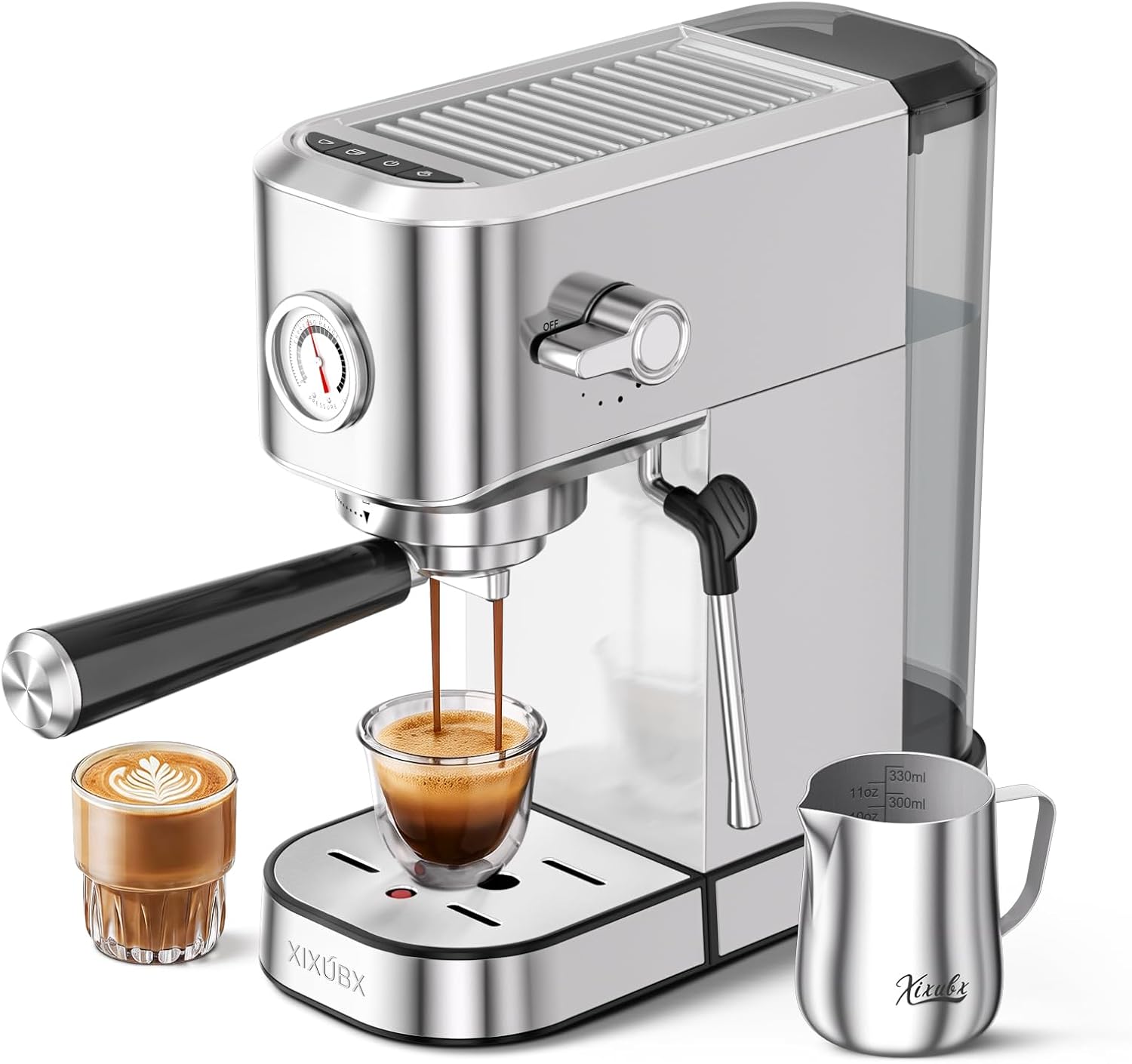
The XIXUBX EM720 is a countertop semi-automatic espresso maker aimed at home and small-office use. It uses a 20-bar pump with a visible pressure gauge and an instant-heating system so you can brew and froth back-to-back without long cooldowns. The machine accepts ground coffee, offers single and double baskets, and includes a 360° swivel steam wand plus a stainless steel frothing pitcher for microfoam and basic latte art. A large 42 oz removable water tank reduces refill frequency, and an auto shut-off after 30 minutes helps save energy and adds safety. Practical limitations are its portafilter construction (die-cast aluminum and plastic) which is not dishwasher safe, and as with many compact countertop units you may need to run a few blank cycles to fully preheat for the hottest shots. For buyers who prioritize reliable, repeatable home espresso and want milk-based drinks without a steep learning curve, the EM720 delivers solid real-world performance at a budget-friendly level.
Best for: Buyers who want a dependable, easy-to-use home espresso machine that produces café-style espresso and steamed milk reliably day-to-day without needing advanced barista skills.
Less Ideal for: Those seeking a commercial-grade machine or a fully automatic bean-to-cup solution with integrated grinder should consider other options.
- High extraction pressure with visible gauge for monitoring shots
- Instant heating lets you brew and steam consecutively without long waits
- Large removable 42 oz water tank reduces refills for multiple cups
- 360° swivel steam wand and included stainless steel pitcher for good milk texture
- Portafilter is die-cast aluminum and plastic and must be hand-washed
- Compact machines may require preheating cycles to reach peak brew temperature
Verdict: A reliable, budget-friendly semi-automatic that makes café-style espresso and milk drinks at home with stable pressure and convenient back-to-back brewing.
De'Longhi Stilosa EC260BK
| Output Pressure | 15 bar |
|---|---|
| Wattage | 1100 watts |
| Power Source | AC adapter |
| Coffee Input Type | ground_coffee |
| Filter Type | Reusable |
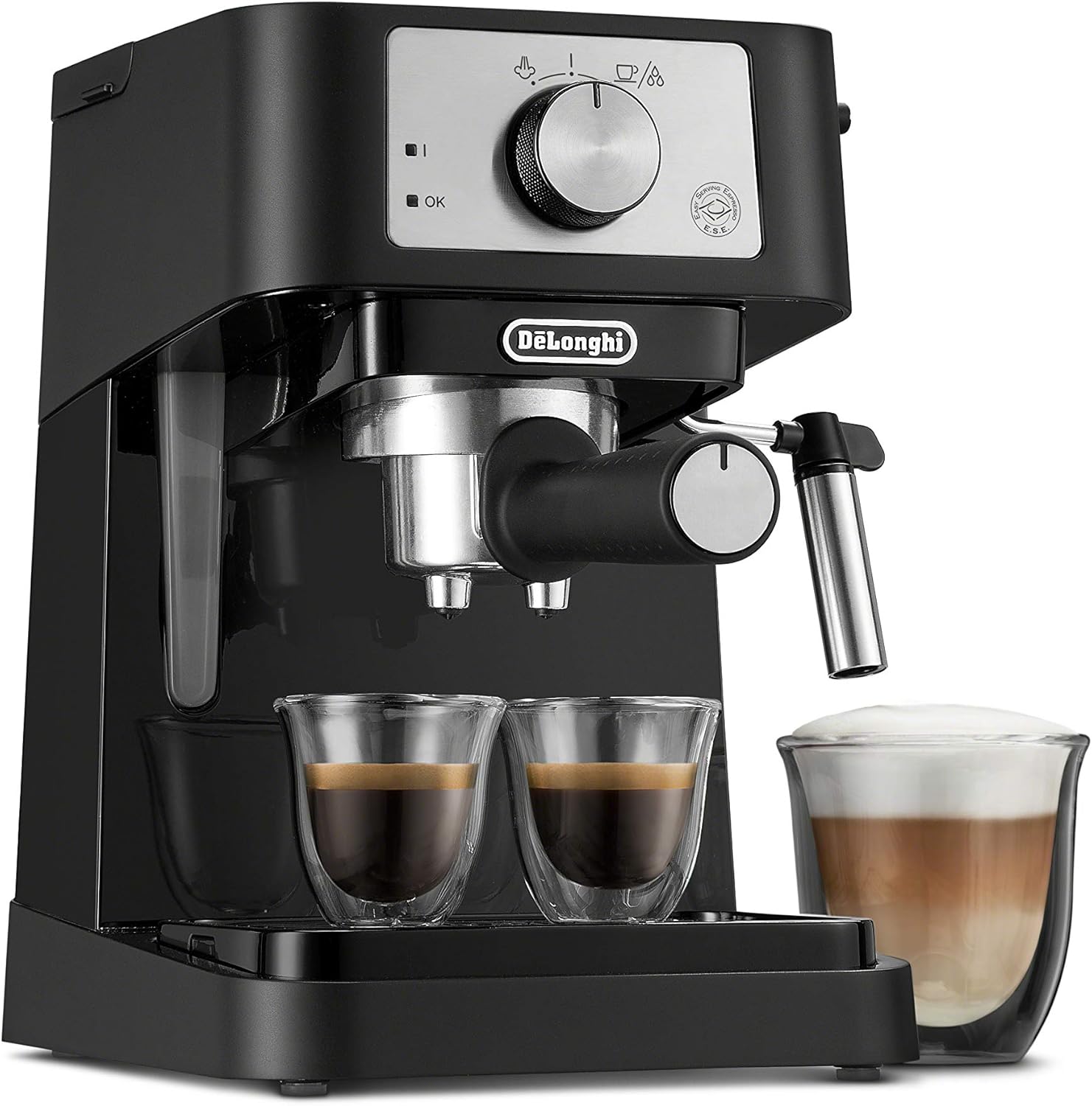
The De'Longhi Stilosa EC260BK is a compact manual espresso machine aimed at beginners who want cafe-style drinks at home without a large footprint. It uses a 15 bar pump and a stainless steel boiler to extract single or double shots from ground coffee, and the ergonomically designed portafilter accepts single and double filters. A manual steam wand lets you texture milk for lattes and cappuccinos, and a two-level cup holder accommodates taller cups. Setup and daily use are straightforward: fill the 33.8 fl.oz water tank, tamp coffee with the included tamper, pull a shot, then steam milk by hand. Practical benefits include durable boiler construction, reusable filters, and included accessories that reduce initial extras buying. Trade-offs are its manual operation, which requires some learning to dial in shot quality and milk texture, and it lacks advanced automation or temperature profiling found on pricier machines. For an under-200 home machine it balances performance and simplicity, but expect a learning curve to get consistently great espresso and textured milk.
Best for: Home buyers who want an affordable, compact machine to learn espresso-making and make milk-based drinks by hand while valuing reliable, factory-quality components.
Less Ideal for: People who want push-button, fully automatic brewing or precise electronic temperature and shot control without manual technique.
- 15 bar pump with stainless steel boiler for consistent extraction and durability
- Manual steam wand produces textured milk for lattes and cappuccinos
- Compact countertop footprint with two-level cup holder for different cup sizes
- Includes portafilter, tamper, and single/double filters so you can start brewing right away
- Fully manual operation requires practice to achieve consistent shot quality and milk foam
- No programmable temperature control or automation features for repeatable dialing in
Verdict: A compact, factory-built manual espresso machine that delivers durable extraction and real milk steaming for budget-conscious home brewers willing to learn the craft.
CASABREWS CM5418 Espresso Machine
| Operation Mode | Semi-Automatic |
|---|---|
| Wattage | 1350 watts |
| Output Pressure | 20 bar |
| Coffee Input Type | ground_coffee |
| Filter Type | Reusable |
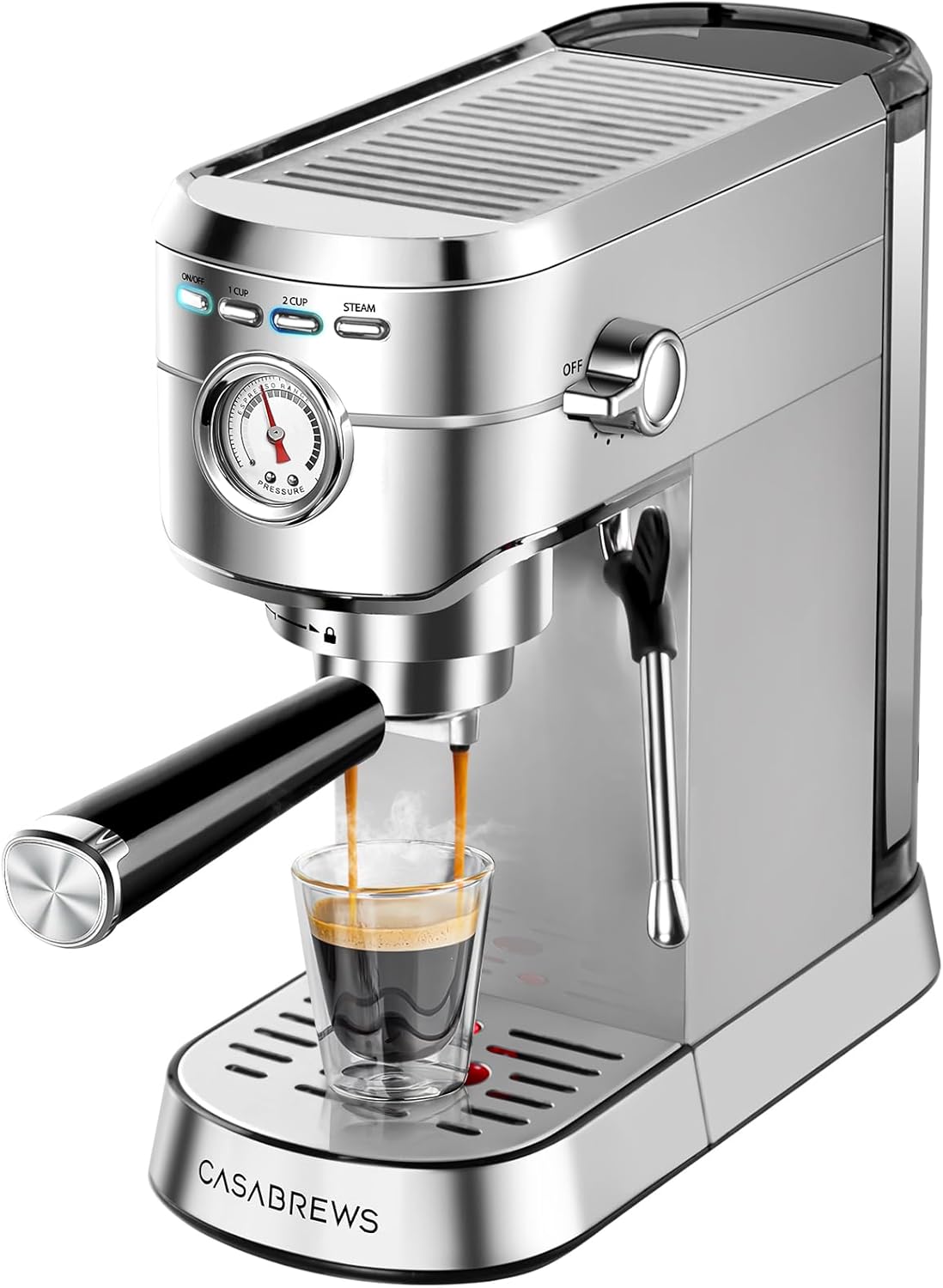
The CASABREWS CM5418 is a compact semi-automatic espresso maker aimed at home users who want café-style drinks without a large footprint. It uses a stable 20-bar pump with built-in pressure gauge and a low-pressure pre-infusion to help produce a good crema and more balanced extraction, while buttons let you select single or double-shot volumes. The powerful steam wand textures milk into microfoam suitable for lattes and cappuccinos, and the top cup warmer plus removable 34 oz tank make routine use convenient. Practical benefits include a 51 mm portafilter, reusable filter baskets, and straightforward controls that suit beginners and cautious buyers who prefer predictable, repeatable shots. Limitations to consider are the single-boiler design, which requires cooling between steaming and brewing, and occasional need to adjust grind/tamp to fix slow extraction or low pressure. The stainless steel body is attractive but cleaning and periodic descaling are necessary to maintain performance. For the price point it delivers core espresso and milk-steaming capability in a small, user-friendly package.
Best for: Buyers who want a straightforward, compact machine that reliably produces espresso and steamed milk at home and who prioritize ease of use and predictable performance.
Less Ideal for: Users who need simultaneous steaming and brewing for back-to-back drinks or who want a fully automatic, hands-off capsule-style experience.
- 20-bar Italian pump with built-in pressure gauge for visual extraction feedback
- Powerful steam wand capable of producing microfoam for lattes and cappuccinos
- Compact stainless steel body with removable 34 oz water tank for easy refills
- Includes portafilter, single and double-shot baskets, and a tamper for getting started
- Single-boiler design requires waiting or cooling between steaming and brewing
- May need grind, dose, or tamp adjustments to resolve slow extraction issues
Verdict: A compact, user-friendly semi-automatic that delivers café-style espresso and milk steaming for home users seeking reliable, easy-to-learn performance under $200.
Choosing the Right Espresso Machine for Home Under 200: Key Factors to Consider
Extraction Consistency
Consistent extraction determines whether you get balanced espresso shot after shot. Look for machines with a stable pressure source and a reliable heating system so shot times and flavor do not drift between pulls.
In practice, extraction consistency affects how you dose, tamp, and grind. A machine that delivers uniform pressure and temperature lets you optimize grind size and dose once and expect similar results, which is especially important when you do not have advanced controls.
Heating System and Temperature Control
Heating design influences how quickly the machine recovers between shots and how stable brewing temperature remains. Thermoblocks heat quickly and keep costs down, while small boilers can provide steadier temperatures for back-to-back shots.
For home machines under $200, expect compromises in temperature regulation. Still, units that minimize temperature swing will produce better crema and consistent extraction, especially if you plan to pull multiple shots consecutively.
Steam Wand and Milk-Frothing Ability
If you drink milk-based drinks, check the wand or frother capability. A full steam wand with adjustable steam pressure and a metal tip gives more control, while simple milk frothers can still produce acceptable microfoam for lattes but require more technique.
Frothing performance affects texture and drink variety. Machines with stronger steam delivery shorten frothing time and allow better control over milk temperature and microfoam quality, which matters for latte drinkers.
Ease of Cleaning and Routine Maintenance
Daily wiping of the group head and regular descaling are essential for consistent performance and longevity. Machines with removable drip trays, easily accessible water reservoirs, and simple portafilter access reduce the friction of upkeep.
Good cleaning design also helps avoid buildup that can degrade taste and clog steam paths. At this price point, choose units where routine maintenance can be done with basic household supplies and without special tools.
Portafilter Size and Accessories
Portafilter diameter and included accessories influence how you prepare espresso and whether you can use standard tampers or aftermarket tools. A larger, commercial-style portafilter is often more forgiving and compatible with more accessories.
Included items such as a tamper, single- and double-shot baskets, and a measuring scoop add value because they let you start dialing in shots without immediate extra purchases.
Build Quality and Materials
Solid chassis materials, metal components for the group head and portafilter, and quality switches contribute to longevity. Lightweight plastic units can be fine for infrequent use, but metal parts resist wear better over time.
Consider how the machine will be used daily. If it will see heavy morning use, prioritize sturdier construction and replaceable parts to avoid premature failure.
Counterspace and Size Considerations
Measure the countertop footprint and height clearance before choosing a machine. Many home espresso machines under $200 save space by using compact footprints or vertical designs, but a small machine may still require clearance for the portafilter or milk pitcher.
Also factor in where you will store accessories and where you will perform routine cleaning. A device with a removable water tank that can be filled at the sink reduces the need to move the whole unit.
- Check water reservoir capacity relative to your daily use to avoid frequent refills.
- Account for drip tray removal and its emptying path to prevent awkward placements.
Grounds Vs. Pods: Flexibility and Cost
Many entry-level machines accept both ground coffee and single-serve pods or capsules. Ground-only machines give more control over grind and dose, while pod-compatible units offer convenience and consistent results for casual users.
If you prefer experimenting with different beans and roasts, choose a machine that supports ground coffee and standard portafilter baskets to maximize flexibility.
- Ground coffee allows better taste control and is usually less expensive over time.
- Pods provide convenience and consistent extraction but limit blend variety.
Temperature and Warm-Up Expectations
Entry-level machines have different warm-up times. Some models reach brewing temperature in under a minute, while others with small boilers need several minutes to stabilize. Know how much waiting time you can tolerate in your morning routine.
If you plan to steam milk and pull shots back-to-back, look for units that recover temperature quickly or have separate circuits for steaming and brewing to reduce waiting between tasks.
- Short warm-up times suit quick morning use.
- Faster recovery helps when making multiple milk-based drinks.
Noise, Pump Type, and Vibration
Pump design affects noise level and extraction reliability. Vibratory pumps are common in budget machines and can be a bit louder than more expensive rotary pumps, but many vibratory units still produce consistent pressure for single-serve home use.
If you are sensitive to noise in open-plan spaces or early-morning use, check product specs for pump type and read for user-reported noise levels when available.
- Vibratory pumps are typical and effective for home shots.
- Expect some vibration and noise in compact units; stability features reduce movement during brewing.
Basic Troubleshooting and When to Call a Technician
Learn a few basic troubleshooting steps that fix the majority of low-cost espresso machine issues such as poor flow, weak steam, or leaks. Descaling, checking for clogs in the portafilter, and ensuring the water reservoir is seated correctly often resolve common problems.
Reserve professional service for persistent leaks, electrical faults, or pump failures. Choosing a machine with accessible parts and clear user-serviceable points reduces repair complexity and cost.
- Regular descaling prevents mineral buildup that reduces flow and steam power.
- Keep common replacement parts in mind, such as gaskets and filters, that are likely to wear over time.
How We Chose the Best Espresso Machine for Home Under 200
We prioritized machines that deliver dependable espresso extraction, straightforward steaming or frothing capability, and durable construction appropriate for regular home use. Our selection filters focused on measurable specs that affect daily performance: boiler or thermoblock heating design and temperature stability, pump consistency and pressure delivery, steam wand or frother effectiveness, and the ease of routine cleaning and maintenance. We also evaluated build materials and chassis design to judge long-term durability and user ergonomics, including access to common serviceable parts. Usability factors such as control layout, portafilter size, and included accessories were considered because they determine how quickly you'll get consistent shots. Units that required complex aftermarket fixes, lacked basic cleaning access, or used proprietary consumables that limit user serviceability were excluded. Overall, we favored machines that balance extraction consistency and practical upkeep for home barista routines.
Our full evaluation process is outlined in our review methodology.
FAQ
Can a machine under $200 make true espresso?
Often yes. Machines in this price range can produce high-pressure shots that resemble traditional espresso, though they may have less temperature stability and crema than higher-end models. Proper grind, dose, and tamping are essential to get the best results.
Will I be able to steam milk well on a budget machine?
It depends. Some entry-level machines include a full steam wand that produces adequate steam for basic microfoam, while others use simple frothers that produce thicker foam. Stronger steam delivery and practice improve milk texture.
How often should I descale a home espresso machine?
Typically every 2 to 3 months for regular use, but frequency depends on local water hardness and how often you run the machine. Descaling intervals may be shorter in hard-water areas to prevent mineral buildup.
Are replacement parts easy to find for budget machines?
Many common parts like gaskets, filters, and steam tips are widely available for popular home models. Choosing machines with standard portafilter sizes and simple removable components makes sourcing parts easier.
Do compact machines compromise shot quality?
Not necessarily. Compact units can produce good shots, but their smaller boilers or thermoblocks may show greater temperature swing under heavy use. For occasional home brewing, compact machines often strike a practical balance.
Final Verdict
When choosing an espresso machine for home under 200, prioritize consistent extraction, reasonable steam capability, and straightforward maintenance. Expect compromises in temperature control and build materials, but you can still get reliable daily shots if you focus on machines with stable pressure delivery and accessible cleaning features. Balance what matters most to your routine—fast warm-up, milk texturing, or compact size—and pick the option that minimizes everyday friction. With sensible expectations and proper care, a well-chosen budget espresso machine will deliver satisfying espresso and last through regular home use.