
Note: This article contains affiliate links. If you click on these links and make a purchase, we may earn a small commission at no extra cost to you. This helps support our research and content. Read our full affiliate disclosure here.
If counter space is limited but you still want reliable espresso, choosing the right compact machine matters. A small-footprint espresso machine can transform tight kitchen nooks, dorm rooms, and office corners into places that pull consistent shots without dominating surfaces or storage. This guide highlights seven shortlisted espresso machines built for small spaces. We focus on machines that balance footprint, brewing performance, and ease of upkeep, and we evaluate them across extraction consistency, noise, and daily usability. Read on to find the compact option that matches how you make coffee and how much room you have.
Top Picks at a Glance
| Best Overall The best all-around choice for most situations | Gevi 20 Bar Espresso Machine | 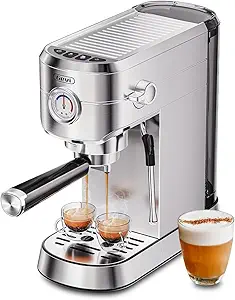 |
| Best Quality Built to a higher standard if you want something more solid | De'Longhi Dedica EC680M |  |
| Best Value The sweet spot between price and what you get | AMZCHEF Espresso Machine EM3131 |  |
| Best Budget The cheapest option that still gets the job done reliably | SHARDOR Espresso Machine 5006 |  |
| Top Rated A top-rated pick with lots of positive feedback | Breville Nespresso Essenza Mini |  |
| Most Popular A crowd favorite that many people choose with confidence | IMUSA 4-Cup Espresso Maker |  |
| Best Seller A high-volume bestseller chosen again and again | CASABREWS CM5418 Espresso Machine |  |
Gevi 20 Bar Espresso Machine
| Output Pressure | 20 bar |
|---|---|
| Wattage | 1350 watts |
| Operation Mode | Semi-Automatic |
| Capacity | 1 liters |
| Filter Type | Reusable |
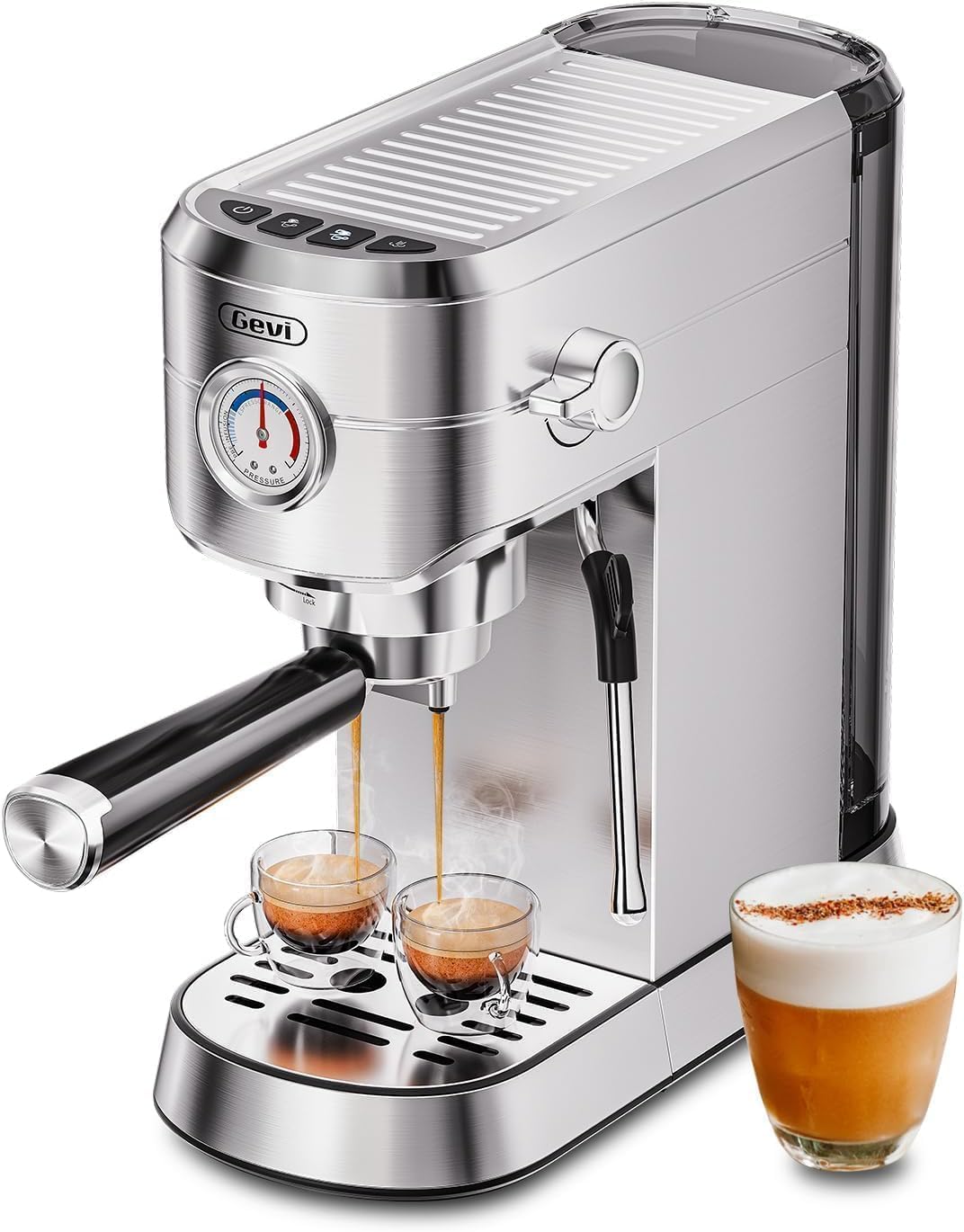
The Gevi 20 Bar Espresso Machine is a compact semi-automatic machine aimed at countertop use where space is limited. It uses a 20-bar pump, NTC temperature control, pre-infusion and a pressure gauge to produce espresso and Americano-style drinks, and includes a steam wand and removable froth nozzle for milk-based beverages. Typical use involves tamping ground coffee into the 51mm portafilter, adjusting shot volume, and steaming milk with the wand; the removable water tank and drip tray simplify filling and cleaning. Notable features include the built-in cup warmer, adjustable shot volume, and an easy-to-read pressure gauge that helps dial in extraction. Practical benefits are solid: it offers more control than pod or capsule machines, makes consistent crema with proper dosing, and fits small kitchens thanks to its compact footprint. Important limitations are that it is a manual workflow so beginners face a learning curve, occasional pump noise and vibration are expected, and there is no built-in grinder or programmable temperature settings on this model.
Best for: Buyers who want a small, durable semi-automatic machine that gives hands-on control over shots and milk steaming while fitting tight kitchen spaces.
Less Ideal for: People who want fully automatic or one-touch espresso from pods or who need an integrated grinder and advanced temperature programming.
- Compact stainless steel body designed for small countertops
- 20-bar pump with pressure gauge and pre-infusion for better extraction control
- Removable water tank and drip tray for easier filling and cleaning
- Powerful steam wand with removable froth nozzle for latte and cappuccino microfoam
- Requires manual dosing and steaming so there is a learning curve for beginners
- No built-in grinder or programmable temperature control
- High-pressure pump can cause noticeable vibration and noise during extraction
Verdict: A compact, hands-on semi-automatic espresso maker that delivers café-style shots and steamed milk while taking up minimal counter space.
De'Longhi Dedica EC680M
| Output Pressure | 15 bar |
|---|---|
| Wattage | 1450 watts |
| Coffee Input Type | ground, pod |
| Capacity | 1 liters |
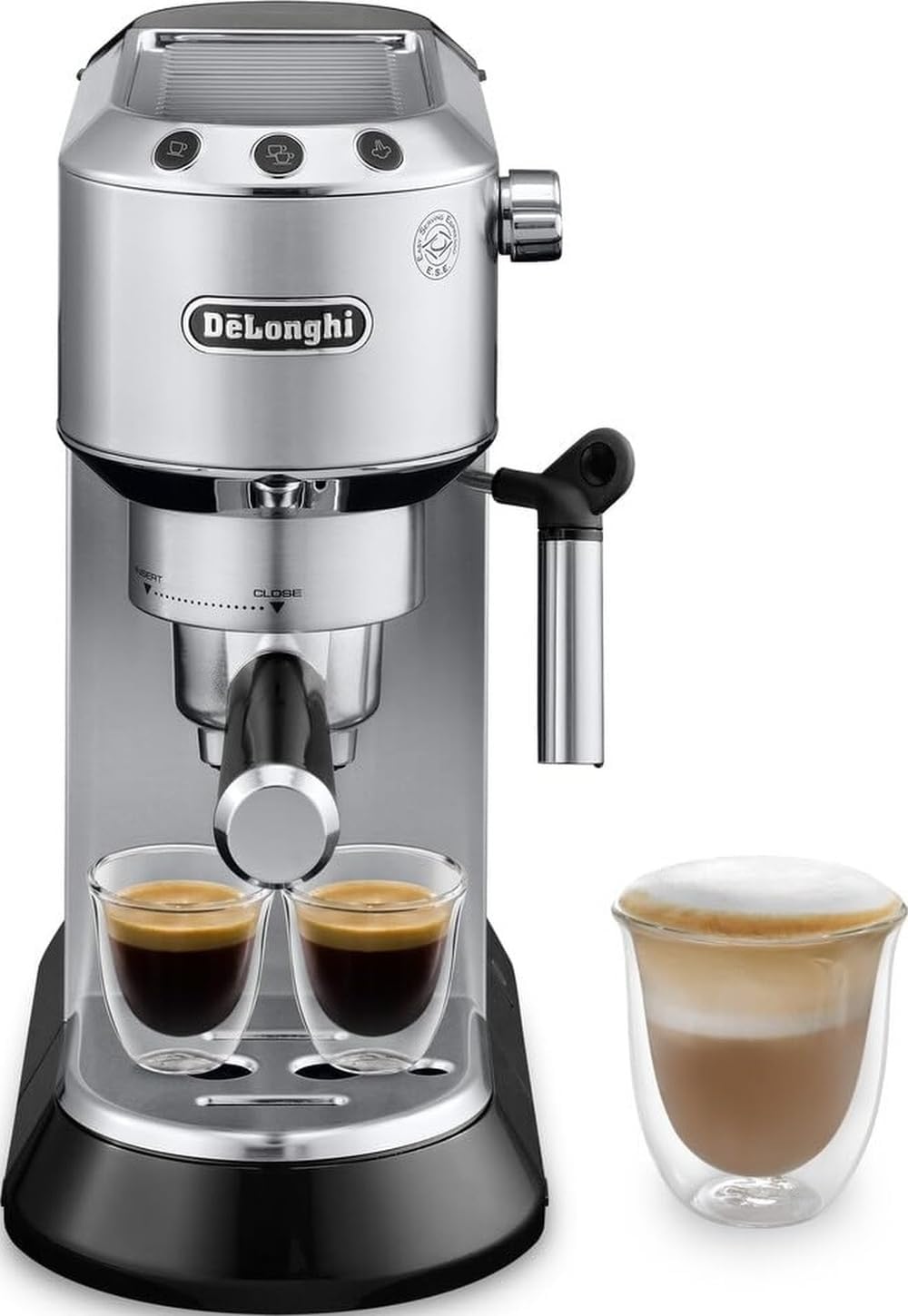
The De'Longhi Dedica EC680M packs a performance-focused espresso workflow into an unusually narrow 6" footprint, making it easy to fit on cramped countertops. It uses a 15-bar pump and thermoblock heater to reach brewing temperature in about 40 seconds and offers a 3-in-1 filter holder that accepts single or double shots and ESE pods so you can use either ground coffee or pods. The manual steam wand creates rich milk foam for cappuccinos and lattes when you want microfoam control, and the adjustable drip tray accommodates taller mugs up to 5". Practical touches include illuminated controls, a removable water tank and drip tray for cleaning, and dishwasher-safe parts. Limitations are the manual operation and learning curve for consistent dosing and steaming, and the small water capacity means more frequent refills during heavy use. For buyers prioritizing true espresso performance in a tiny footprint, the Dedica balances speed and barista-style control, though it requires hands-on technique to get the best results.
Best for: Buyers who want near–barista extraction and milk-texturing control in a machine that fits extremely small kitchens and value hands-on operation over automation.
Less Ideal for: People who prefer fully automatic, hands-off espresso machines or who need high-capacity brewing for many consecutive drinks.
- 15-bar pump and thermoblock deliver fast heat-up and strong extraction
- Slim 6-inch footprint designed for very small countertops
- 3-in-1 filter holder accepts single/double shots and ESE pods
- Manual steam wand produces rich milk foam for cappuccinos and lattes
- Manual operation and steaming require practice to achieve consistent results
- Small water reservoir means frequent refilling during multiple servings
Verdict: If you need real espresso performance and milk-texturing in the tightest countertop spaces, the Dedica delivers pro-style control in a very compact package.
AMZCHEF Espresso Machine EM3131
| Output Pressure | 20 bar |
|---|---|
| Wattage | 1350 watts |
| Coffee Input Type | ground |
| Filter Type | Reusable |
| Capacity | 40 fluid ounces |
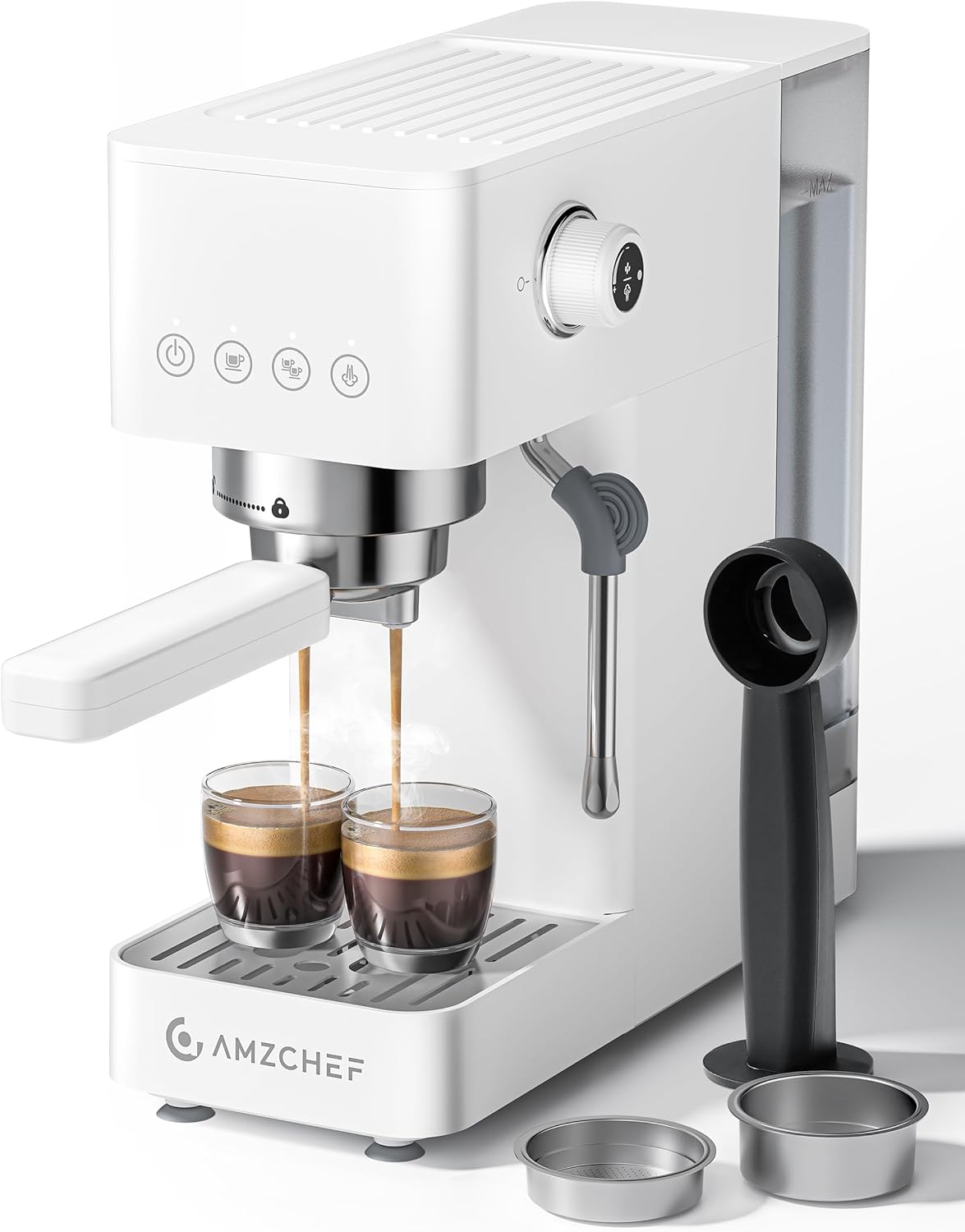
This AMZCHEF EM3131 is a space-conscious semi-automatic espresso machine aimed at everyday home use. It uses a 20 bar Italian pump and PID temperature control to produce richer crema and steadier extraction, and its 1350W heater brings the group up to temperature in about 30 seconds. Controls are button-based with single or double-shot options and adjustable extraction time, while the stainless steel steam wand rotates 360 degrees for practical milk frothing for lattes and cappuccinos. The removable 50oz (about 1.5L) water tank reduces refill frequency and makes maintenance easier in tight kitchens. The unit accepts ground coffee and includes a reusable filter, but it does not have a built-in grinder so you will need pre-ground espresso or a separate grinder for fresh beans. The machine is mostly plastic-bodied which keeps it lightweight and compact for small counters but may feel less durable than metal-bodied models. For apartment kitchens or office coffee corners that need a small, quick-heating machine with decent steam capability, this is a capable choice.
Best for: Buyers who need a compact, quick-heating espresso machine that delivers café-style espresso and reliable steaming in small kitchens or offices and who prefer a practical, easy-to-use unit over integrated grinders.
Less Ideal for: Users who want an all-in-one machine with an integrated grinder or who prioritize a metal-heavy, commercial-grade build for heavy daily use should look elsewhere.
- Fast heat-up (about 30 seconds) with PID temperature control for consistent extraction
- 20 bar pump designed to produce rich crema and café-style espresso
- Removable 50oz water tank reduces refill frequency and simplifies cleaning
- 360° rotating stainless steel steam wand delivers dense milk froth for lattes and cappuccinos
- No built-in grinder, so a separate grinder or pre-ground espresso is required
- Plastic body may feel less robust than metal alternatives
Verdict: A compact, fast-heating semi-automatic espresso machine that fits small counters and reliably produces espresso and steamed milk without taking up much space.
SHARDOR Espresso Machine 5006

| Output Pressure | 3.5 bar |
|---|---|
| Wattage | 800 watts |
| Operation Mode | Semi-Automatic |
| Coffee Input Type | Ground |
| Capacity | 4 cups |
The SHARDOR 5006 is a small, budget-minded semi-automatic espresso machine designed for tight counters and everyday home drinks. It uses an 800W heater and die-cast aluminum boiler to reach brewing temperature quickly, and the 3.5-bar pump produces a lighter espresso-style shot with modest crema suited to easy-drinking Americanos, lattes, and cappuccinos. Controls are simple—a single knob switches between brew and steam—and the adjustable steam wand lets you texture milk from light foam to creamier microfoam. The machine includes a reusable filter and a small carafe, and its BPA-free plastic body keeps weight and cost down. Expect compact convenience and ease of use, but not cafe-level pressure or temperature stability for advanced espresso techniques; the lower 3.5-bar output and modest boiler make it better for everyday milk drinks than extracting very intense shots. For small kitchens or dorms it delivers fast, straightforward drinks with minimal footprint and learning curve.
Best for: Buyers who need an inexpensive, space-saving espresso machine for daily milk-based drinks and value quick startup and simple controls over high-end extraction performance.
Less Ideal for: Serious espresso hobbyists seeking high pressure, precision temperature control, or metal-bodied commercial durability should look at higher-end machines.
- Compact footprint designed for small counters
- Fast 800W heating system for quick warm-up
- Adjustable steam wand for milk-based drinks
- Reusable filter reduces ongoing consumable costs
- 3.5-bar output is lower than commercial espresso pressure, limiting extraction intensity
- Mostly plastic construction may feel less durable than metal-bodied machines
Verdict: If you want an affordable, compact machine that makes quick milk-based espresso drinks in small spaces, the SHARDOR 5006 is a practical choice.
Breville Nespresso Essenza Mini
| Compatible Coffee Pods | Nespresso Original |
|---|---|
| Operation Mode | Fully Automatic |
| Wattage | 1255 watts |
| Power Source | AC adapter |
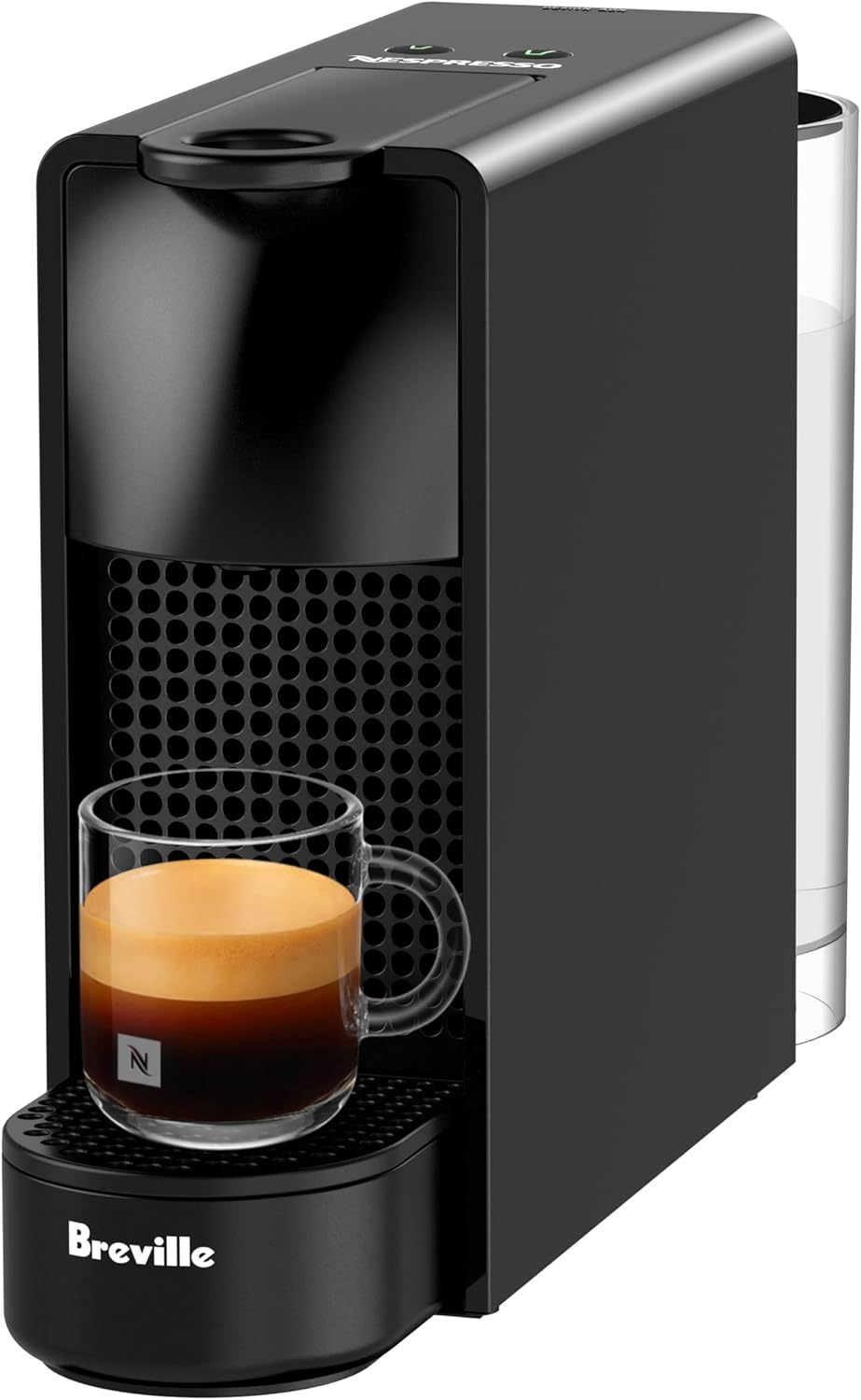
The Breville Nespresso Essenza Mini is a tiny, single-serve espresso machine built around Nespresso Original capsules and a high-pressure pump for consistent extraction. It heats up in about 25 seconds and offers two one-touch, programmable cup sizes—espresso and lungo—so brewing is simple: insert a capsule, choose a size, and the machine does the rest. The removable water tank and small footprint make it easy to place on tight counters or pack for travel, and eco-mode plus automatic shutoff reduce energy use when idle. Because it uses capsules there is minimal cleanup and no grinding or tamping, though capsule cost and waste are inherent to that format. The machine lacks a built-in milk frother, so milk-based drinks require a separate frother. For buyers prioritizing straightforward, reliable espresso in a very small package, the Essenza Mini delivers consistent shots and fast startup, but it is not designed for barista-style steam milk routines or large-volume use.
Best for: Buyers who need a dependable, no-fuss espresso maker that fits very small kitchens or travel, and who value quick, repeatable single-serve shots over milk steaming capability.
Less Ideal for: People who want to steam milk with the machine, make multiple drinks in succession for guests, or avoid proprietary coffee capsules entirely should look elsewhere.
- Very compact footprint suitable for small counters and travel
- Fast 25 second heat-up for quick single-serve brewing
- Two programmable one-touch cup sizes for consistent shots
- Eco-mode and automatic shutoff reduce standby energy use
- Uses Nespresso Original capsules for low-mess, repeatable results
- No built-in milk frother so cappuccinos/ lattes need a separate device
- Uses proprietary capsules which adds ongoing cost and packaging waste
Verdict: Buy this if you want a reliable, ultra-compact capsule espresso machine that delivers fast, consistent espresso in the smallest kitchens.
IMUSA 4-Cup Espresso Maker

| Capacity | 4 cups |
|---|---|
| Operation Mode | Semi-Automatic |
| Wattage | 800 watts |
| Other Special Features of the Product | Milk Frother, Permanent Filter |
The IMUSA 4-Cup Espresso Maker is a small, semi-automatic machine aimed at home users who want basic espresso and milk-based drinks without a lot of fuss. It brews up to four servings into a glass carafe using a permanent filter and 5-bar pressure, and the attached steam nozzle froths milk for cappuccinos and lattes. The three-position selector knob simplifies operation for quick extraction and steaming, while the removable drip tray and cool-touch carafe handle make cleanup and pouring safer and easier. At 800 watts and a compact footprint, it fits neatly on small counters and is suited to everyday use or light entertaining. Limitations include modest pressure compared with prosumer machines and a plastic exterior that trades premium materials for lower cost and lighter weight, so it will not satisfy buyers seeking cafe-level crema or advanced temperature control. For buyers wanting a simple, space-saving home unit that produces decent espresso and frothy milk, this is a practical pick.
Best for: Buyers who need a simple, compact espresso maker for daily home use in small kitchens and prioritize ease of use and space savings backed by solid user feedback.
Less Ideal for: Those seeking professional-grade extraction, advanced temperature or pressure controls, or a heavy-duty metal build for frequent commercial-style use should look elsewhere.
- Compact footprint fits small kitchens and countertops
- Built-in steam nozzle produces milk froth for cappuccinos and lattes
- Permanent filter and removable drip tray simplify daily use and cleaning
- Glass carafe with cool-touch handle for safer pouring
- 5-bar pressure and basic controls limit extraction consistency compared with higher-end espresso machines
- Plastic exterior is less durable and less premium-feeling than metal-bodied models
Verdict: If you want a budget-friendly, space-saving espresso machine that makes basic espressos and frothy milk drinks for small households, this model delivers practical performance without taking up much counter space.
CASABREWS CM5418 Espresso Machine
| Output Pressure | 20 bar |
|---|---|
| Wattage | 1350 watts |
| Operation Mode | Semi-Automatic |
| Coffee Input Type | ground_coffee |
| Filter Type | Reusable |
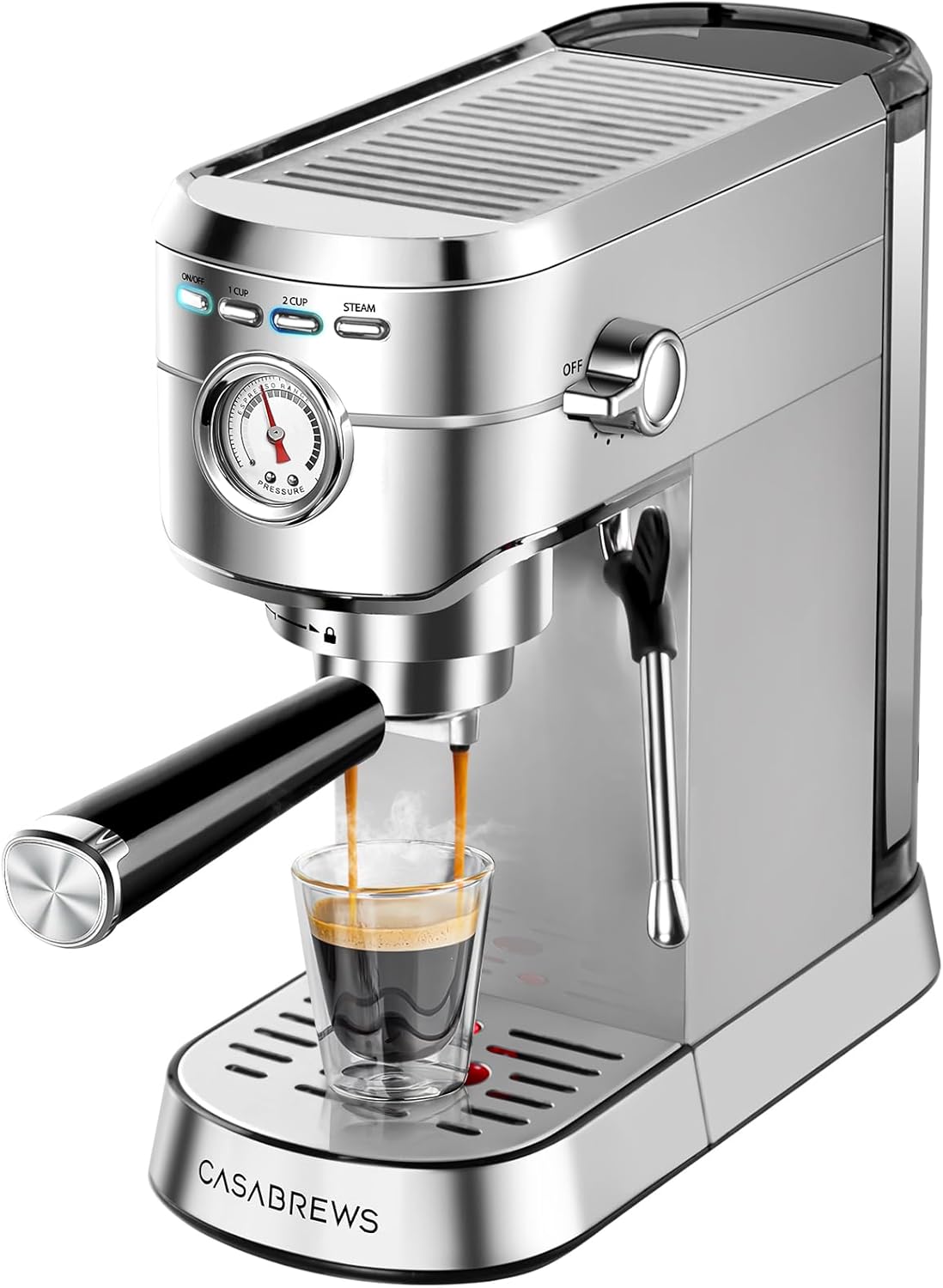
The CASABREWS CM5418 is a small-footprint semi-automatic espresso machine aimed at home baristas who want café-style drinks without a large appliance. It uses a 20-bar Italian pump and a built-in pressure gauge to help dial in extraction, and a low-pressure pre-infusion step to improve balance. The steam wand produces microfoam suitable for lattes and cappuccinos, and the top cup warmer plus removable stainless steel drip tray are handy for everyday use. A 34 oz detachable tank holds several cups before refilling, and the 51mm portafilter with included single and double filters covers basic shot sizes. Expect a short warm-up and clear troubleshooting guidance in the manual and videos, though you will need to learn grind size, dose, and tamp to get consistent results. The machine uses a single boiler, so brewing immediately after steaming requires a cooldown step to avoid overheating. For buyers who prefer a simple, durable stainless-steel unit that fits tight counters, this model delivers strong basic performance with a learning curve typical of semi-automatic machines.
Best for: Buyers who need a reliable, space-saving espresso machine that produces café-style drinks at home and value straightforward mechanical controls and visible pressure feedback.
Less Ideal for: Those who want fully automatic one-touch drinks, frequent back-to-back steaming and brewing without pause, or a completely maintenance-free pod-style experience should look elsewhere.
- Powerful 20-bar pump with built-in pressure gauge for visible extraction feedback
- Steam wand capable of producing microfoam for lattes and cappuccinos
- Compact stainless-steel body with top cup warmer and removable drip tray
- Detachable 34 oz water tank allows multiple brews before refilling
- Includes portafilter, single and double filters, and tamper for ready-to-use setup
- Single-boiler design requires cooling between steaming and brewing sessions
- Semi-automatic operation means users must master grind, dose, and tamp for best results
Verdict: A compact, stainless-steel semi-automatic that brings visible pressure control and real steam wand microfoam to small counters for buyers who want café-quality drinks at home.
Choosing the Right Espresso Machine for Small Spaces: Key Factors to Consider
Machine Footprint and Placement
Measure the machine's width, depth, and height against the intended counter or shelf before buying. Small differences in depth matter when cabinets sit close to the wall, and a taller machine can conflict with overhead cupboards.
Also consider how the machine will be positioned for daily use. Allow clearance for opening water reservoirs, accessing the portafilter, and steaming milk. If you plan to store accessories nearby, look for models with built-in storage or slim profiles that leave usable counter space.
Extraction Quality in a Compact Package
Compact machines can still deliver strong extraction, but they often use smaller boilers or compact heating systems. Check whether the machine maintains stable pressure and temperature during a shot, because unstable conditions lead to sour or underextracted flavors.
For home users, consistent preinfusion, a reliable pump, and a portafilter that accepts standard baskets are indicators of better extraction potential even in small units.
Water Capacity and Refill Frequency
A larger internal water tank reduces how often you need to refill, but it increases overall size. For small spaces, balance tank size with how often you are willing to top up between uses.
Consider whether the reservoir is removable for easy filling at the sink, or if the machine supports direct water hookup. Removable tanks are usually preferable in tight kitchens where lifting the whole machine to refill is impractical.
Steam Wand Vs. Integrated Milk Systems
Traditional steam wands require some clearance for jug placement and user technique, but they offer milk texture control without adding much to the machine's footprint. Integrated, automatic milk systems reduce user skill needs but can add bulk or extra parts that need cleaning.
Decide which trade-off you prefer: manual steaming for a smaller, simpler unit or an automatic system that may require additional cleaning and slightly more space.
Ease of Cleaning and Maintenance
Compact machines must still be serviceable. Look for removable drip trays, easily accessible group heads or portafilters, and clear descaling procedures. Machines that force awkward angles to reach service points create long-term maintenance hassles.
Consider how often filters and seals need replacement and whether the machine uses standard parts. Simpler designs typically mean fewer steps for daily cleaning and less likelihood of grease or scale buildup in hidden areas.
Noise, Power Use, and Heat
Smaller machines often run pumps and boilers in short bursts, which can be noisy in close quarters. Check reported noise levels and think about where the machine will sit relative to living or sleeping areas.
Also evaluate the machine's heat emissions. A compact device that vents heat toward surrounding cabinetry can be uncomfortable in tight spaces, so ensure there is adequate ventilation and that nearby surfaces tolerate moderate heat.
Optimizing Counter Layout for a Compact Espresso Machine
Plan the surrounding workspace to make a small espresso machine feel integrated rather than cramped. Keep a dedicated towel or microfibre cloth, a tamper station, and a small container for used grounds within arm's reach. A narrow shelf above the machine can store cups without taking counter space.
Place the machine so that the water reservoir is easy to remove and the portafilter can swing out without hitting walls or appliances. If you have limited vertical clearance, consider using shorter cups or removing cup-warming racks to reduce height.
- Leave at least 2 inches of clearance at the back for cords and ventilation
- Store tampers and brushes in a nearby drawer or wall-mounted rack
- Use saucers or small trays to keep drips contained and protect countertops
Tuning Grind and Dose for Small Machines
Smaller espresso machines are often less tolerant of extreme grind or dose changes. Using a consistent grind size and a measured dose helps the machine produce repeatable shots. Start with the recommended dose for the portafilter basket and make small adjustments to grind before changing the dose.
If you have a cheap or compact grinder, adjust grind distribution and tamping to minimize channeling. A basket with even puck preparation and a steady tamp will improve extraction without requiring changes to the machine itself.
- Weigh doses with a small scale for consistency
- Adjust grind in small steps to fine-tune shot time and flow
- Maintain grinder burrs to keep grind distribution stable
Managing Steam and Milk in Tight Spaces
If the machine includes a steam wand, position the milk pitcher and steam nozzle with enough room to avoid scalding counters or splashing. Use a smaller pitcher that fits under the wand and makes it easier to control frothing.
Automatic milk systems reduce the need for manual texture work but require regular cleaning cycles that can be awkward in constrained areas. Plan a small cleaning station or tray to capture drips when rinsing milk lines.
- Keep a heat-resistant mat under the steam area to protect surfaces
- Purge the wand immediately after use to limit buildup
- Use short, frequent purge cycles if the machine sits near living spaces to reduce lingering smells
Storage and Travel: Making a Compact Machine Work for Different Spaces
Compact espresso machines are easier to move when storage or layout changes, but frequent relocation increases wear on hoses and seals. If you plan to move the machine seasonally or between rooms, check that controls and sockets are robust and that any removable parts are retained safely.
For renters or shared spaces, a small machine that fits under a cabinet or in a closet when not in use can be an advantage. Protect it during storage with a simple cover and ensure the internal reservoir is dry to avoid mold or odors.
- Label removable parts and store them together to avoid loss
- Keep the machine upright during transport to protect boilers
- Dry all components thoroughly before storing
Routine Maintenance Tips for Longevity
Regular descaling, backflushing if supported, and cleaning of group seals extend the life of any espresso machine. Compact models may have smaller boilers that scale faster if you use hard water, so follow a consistent schedule based on your water hardness.
Replace gaskets, screens, and filters as the manual suggests and keep a simple maintenance log. Preventative upkeep is especially important in tight spaces because neglected leaks or buildup can damage nearby cabinetry and surfaces.
- Use filtered water to reduce scale buildup
- Wipe down the machine daily and deep-clean weekly
- Schedule descaling based on usage and water hardness
How We Chose the Best Espresso Machine for Small Spaces
We prioritized machines designed specifically for limited counter or cabinet space and evaluated candidates against practical, measurable criteria that matter to everyday users. Primary evaluation dimensions included physical footprint and storage options, extraction consistency across single and double shots, water capacity and refill convenience, heat-up and recovery times, and ease of cleaning and maintenance. We excluded full-size prosumer and commercial units that require dedicated counter area, plumbing, or professional installation. Machines that rely solely on proprietary capsules without a manual or pressurized group were deprioritized unless they offered clear space-saving advantages. We favored units with straightforward user interfaces, accessible service points, and clear documentation for routine upkeep. Editorial judgment also considered noise level during pump and steam operation, the availability of compact attachments or integrated milk systems, and build quality for sustained daily use. The selections represent a balance between compact design and the real-world performance people expect from an espresso machine for small spaces.
Our full evaluation process is outlined in our review methodology.
FAQ
Can a compact espresso machine produce café-quality shots?
Often, yes. Many small machines are engineered to deliver consistent pressure and adequate temperature stability for good extraction. The final cup depends on grind, dose, and technique as much as the machine itself.
How often will I need to refill the water tank?
It depends on tank size and how many shots you pull daily. Smaller reservoirs may require a refill after a few servings, while removable tanks simplify refilling in tight kitchens.
Is a steam wand practical in a small space?
Usually. Steam wands take minimal horizontal room but need clearance for a milk pitcher. If vertical space is limited, consider lower pitchers or using pre-steamed milk alternatives.
Will noise be an issue with a small machine?
Noise levels vary. Compact pumps and boilers can be relatively loud for short bursts. If the machine will sit near living or sleeping areas, look for models noted for quieter operation or place it where noise is less disruptive.
How do I prevent scale buildup in a compact unit?
Use filtered water where possible, follow the manufacturer's descaling schedule, and dry removable components between uses. Smaller boilers can scale quicker, so stick to a regular maintenance routine.
Final Verdict
Choosing an espresso machine for small spaces is about balancing footprint with the performance features you value most. Prioritize a machine with a compact footprint that still offers stable extraction, a convenient water solution, and serviceable components for cleaning and maintenance. Accepting some trade-offs, like a smaller water tank or a simplified milk system, can deliver a much better fit for limited counters. Focus on measurable criteria such as footprint, extraction consistency, and ease of upkeep to pick a compact machine you will actually use every day.