
Note: This article contains affiliate links. If you click on these links and make a purchase, we may earn a small commission at no extra cost to you. This helps support our research and content. Read our full affiliate disclosure here.
If you want café-style espresso without a large investment, choosing the right compact machine matters. A good entry-level espresso machine can deliver consistent extraction, quick warm-up, and milk-steaming power that suits everyday use. This guide shortlists the top affordable options under $250 and focuses on real-world performance factors like shot consistency, steam capability, and ease of cleaning. Below we cover the machines that made the cut, how we evaluated them, and the practical tradeoffs to expect so you can pick the one that fits your morning routine and space constraints.
Top Picks at a Glance
| Best Overall The best all-around choice for most situations | De'Longhi Dedica EC680M |  |
| Best Quality Built to a higher standard if you want something more solid | De'Longhi Linea Classic EM450M |  |
| Best Value The sweet spot between price and what you get | CASABREWS 5418 PRO |  |
| Best Budget The cheapest option that still gets the job done reliably | KEENSTAR BCM2201 Espresso Machine |  |
| Top Rated A top-rated pick with lots of positive feedback | Breville Nespresso Essenza Mini |  |
| Most Popular A crowd favorite that many people choose with confidence | IMUSA 4-Cup Espresso Maker |  |
| Best Seller A high-volume bestseller chosen again and again | CASABREWS CM5418 Espresso Machine |  |
De'Longhi Dedica EC680M
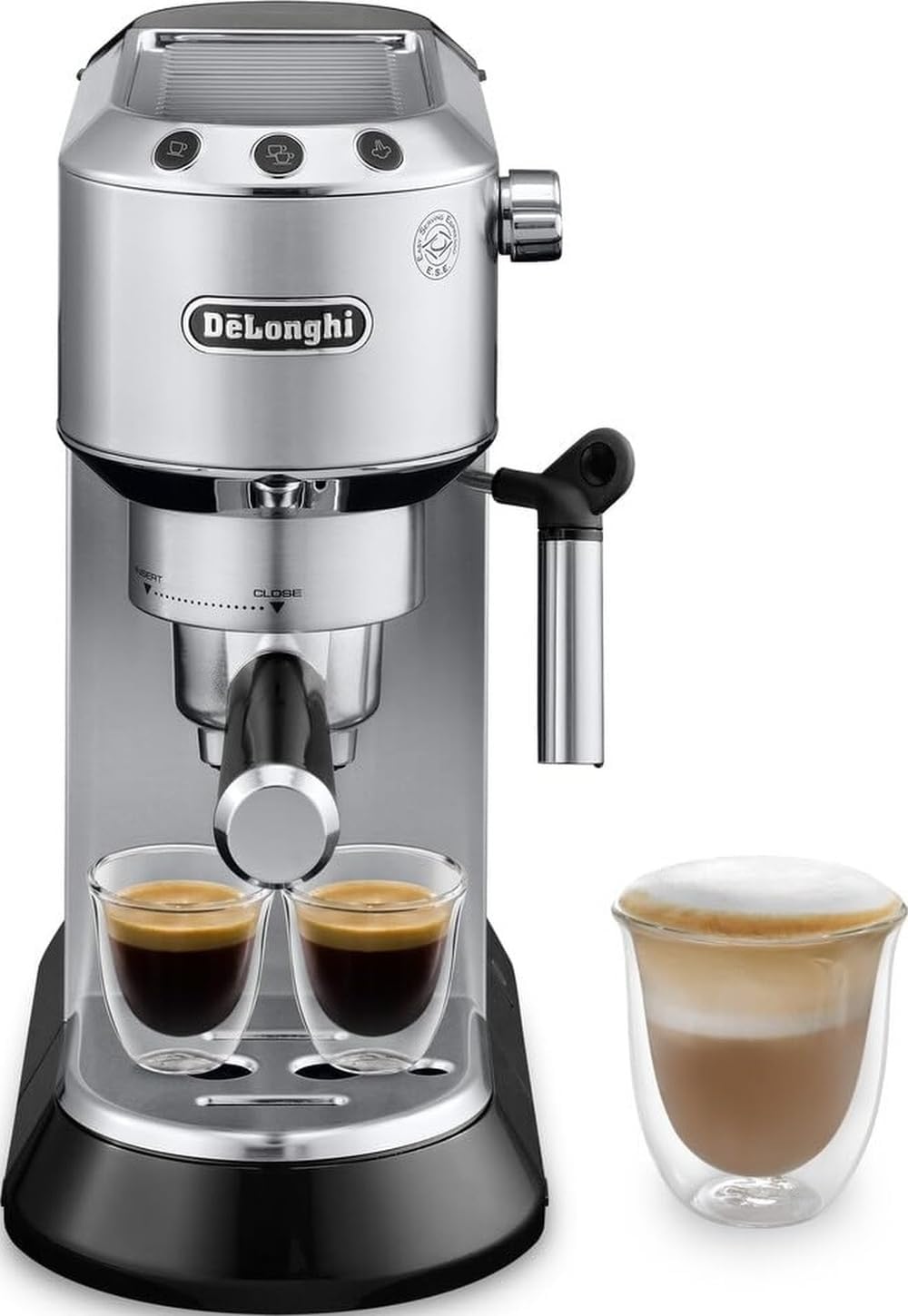
| Output Pressure | 15 bar |
|---|---|
| Wattage | 1450 watts |
| Coffee Input Type | ground, pod |
| Filter Type | Reusable |
| Capacity | 1 liters |
The De'Longhi Dedica EC680M is a compact manual espresso machine designed to bring café-style shots and milk drinks to small kitchens. It uses a 15-bar pump and rapid thermoblock heating to reach brewing temperature in about 40 seconds and offers a 3-in-1 filter holder that accepts single/double shots and ESE pods, giving flexibility between ground coffee and pods. The manual steam wand produces rich milk foam for cappuccinos and lattes, and an adjustable drip tray lets you fit taller cups or mugs. Removable water tank and drip tray parts simplify cleaning and are dishwasher safe. Practical benefits include fast heat-up, a small footprint that saves counter space, and the ability to control shot volume with the flow-stop feature. Limitations are that it is manual so it requires some technique for consistent shots and milk texture, and the single-liter water tank means more frequent refills in heavier use. For buyers seeking a space-saving machine that balances performance and control, the Dedica is a strong option under $250.
Best for: Buyers who want a small, capable machine that offers hands-on control for espresso and milk drinks without taking much counter space and who are willing to learn basic tamping and steaming technique.
Less Ideal for: People who want fully automatic, hands-off brewing or high-volume commercial use should consider a pump machine with automatic dosing and a larger water reservoir instead.
- Fast thermoblock heat-up for near-instant brewing
- 15-bar pump delivers consistent pressure for espresso extraction
- Compact 6" wide footprint saves counter space
- 3-in-1 filter holder accepts single/double shots and ESE pods
- Manual operation requires practice to pull consistent shots and steam milk well
- 1 liter water tank can require frequent refilling for multiple drinks
Verdict: If you want a compact, hands-on espresso machine that heats quickly and makes both ground and pod shots, the Dedica EC680M is a strong value under $250.
De'Longhi Linea Classic EM450M

| Output Pressure | 15 bar |
|---|---|
| Wattage | 1350 watts |
| Operation Mode | Semi-Automatic |
| Coffee Input Type | Ground |
| Filter Type | Reusable |
The De'Longhi Linea Classic EM450M is a compact semi-automatic espresso machine built for consistent, café-style extraction on a home countertop. It uses a 15-bar Italian pump and a Thermoblock heating system to reach brewing temperature quickly and maintain stable heat, while a visual pressure gauge helps monitor extraction. The machine offers one-touch preset recipes for single and double espresso, a two-setting adjustable steam wand for steaming milk or creating microfoam, and an adjustable drip tray to fit taller cups. Daily use is straightforward: fill the removable rear water tank, dose ground coffee into the supplied filter baskets, then brew with the preset buttons and finish drinks with steam texture adjustments. Practical benefits include fast heat-up, reusable filter baskets, and the ability to produce consistent shots with visual feedback. Limitations are that it is a semi-automatic machine so dialing in grind and tamping still requires some user skill, and it lacks built-in grinders or advanced programmability beyond two preset doses.
Best for: A buyer who wants café-quality espresso performance in a compact machine and is willing to learn basic tamping and dosing to get consistent results.
Less Ideal for: People who want an all-in-one, hands-off system with a built-in grinder or fully automatic programming should consider different models.
- 15-bar Italian pump for strong, consistent extraction
- Thermoblock heating for fast, stable temperature control
- Adjustable two-setting steam wand for decent milk texture and basic latte art
- One-touch single and double preset brewing for repeatable doses
- Removable rear water tank for easier refills and longer run time between fills
- No built-in grinder so a separate grinder is required for best results
- Semi-automatic operation means shot quality depends on user tamping and grind consistency
- Limited programmability beyond the two preset espresso doses
Verdict: Buy this if you want fast heat-up and reliable, pressure-monitored espresso extraction in a compact semi-automatic machine under $250.
CASABREWS 5418 PRO

| Operation Mode | Semi-Automatic |
|---|---|
| Wattage | 1550 watts |
| Voltage | 120 volts |
| Output Pressure | 20 bar |
| Filter Type | Reusable |
The CASABREWS 5418 PRO is a space-saving semi-automatic espresso machine aimed at home drinkers who want quick, café-style shots and reliable steaming without a long warm-up. It uses a Flashheat stainless steel heating system that reaches brew temperature in about 5 seconds and can switch to steam in roughly 3 seconds, letting you pull espresso and froth milk back-to-back with minimal waiting. A 20-bar pump with pre-infusion and a built-in pressure gauge helps produce fuller extraction and visible crema, while the PID control and stainless-steel thermal parts improve temperature stability. The machine includes a 51mm portafilter, single and double shot baskets, a tamper, and a professional steam wand for microfoam. Practical touches like a removable 34 oz tank, detachable drip tray for taller cups, and reusable filter reduce running costs and simplify cleaning. Trade-offs are that it accepts only ground coffee (no pods), is a single-boiler design so simultaneous brewing and steaming are not possible, and it lacks a built-in cup warmer, so attention to workflow and preheating matters for the hottest shots.
Best for: Buyers who want a practical, fast home espresso setup that delivers café-style shots and reliable steaming without taking much counter space or requiring a lot of fiddling.
Less Ideal for: People who need pod compatibility, a dual-boiler workflow for simultaneous brew and steam, or a machine intended for high-volume commercial use should look elsewhere.
- Very fast warm-up with Flashheat system for near-instant brewing and steaming
- 20-bar pump with pre-infusion and pressure gauge for better extraction control
- Professional steam wand and PID temperature control for quality milk microfoam
- Includes 51mm portafilter, single/double filters, tamper, and cleaning tools
- Removable water tank and detachable drip tray simplify refilling and cleaning
- Single-boiler design prevents true simultaneous brewing and steaming
- Works only with ground coffee, not compatible with pods
- No built-in cup warmer included
Verdict: Choose the 5418 PRO if you want a compact, fast-heating home espresso machine that produces strong extraction and professional milk steaming for everyday café-style drinks.
KEENSTAR BCM2201 Espresso Machine

| Wattage | 800 |
|---|---|
| Voltage | 120 |
| Output Pressure | 3.5 bar |
| Capacity | 240 ml |
| Coffee Input Type | ground_coffee |
The KEENSTAR BCM2201 is a compact, budget-friendly semi-automatic espresso machine that brews espresso from ground coffee and includes a steam wand for cappuccinos and lattes. It heats quickly with an 800W element and claims 3.5 bar output pressure, letting you pull single to four small cups (240 ml total) in about two minutes. Operation is simple: a single control knob, a reusable filter, and a pause function let you stop extraction when needed, which helps prevent messes during tamping or serving. The steam wand produces microfoam fast, and the unit ships with a carafe and filter so you can start brewing right away. Trade-offs are the modest pressure rating compared with higher-end machines, limited water capacity that requires frequent refills for multiple drinks, and suggested use of medium grind only which reduces flexibility with very fine espresso grounds. The machine is compact and relatively lightweight, making it easy to fit in small kitchens but not built for heavy daily cafe-level use.
Best for: Buyers seeking an inexpensive, space-saving machine to make basic espresso and milk drinks at home who prioritize simplicity and quick heat-up over advanced features.
Less Ideal for: Users wanting commercial-strength pressure, large-capacity brewing for groups, or precise temperature and pressure control for advanced espresso techniques.
- Fast heat-up with 800W element for quick shot readiness
- Includes steam wand capable of producing microfoam for cappuccinos and lattes
- Compact footprint that fits small kitchens and dorm rooms
- Comes with reusable filter and carafe so no extra accessories are required
- 3.5 bar output is lower than typical commercial or higher-end home machines
- Small 240 ml capacity means frequent refills when making multiple drinks
Verdict: A budget-friendly, compact espresso machine that delivers quick, simple espresso and milk drinks for home use.
Breville Nespresso Essenza Mini
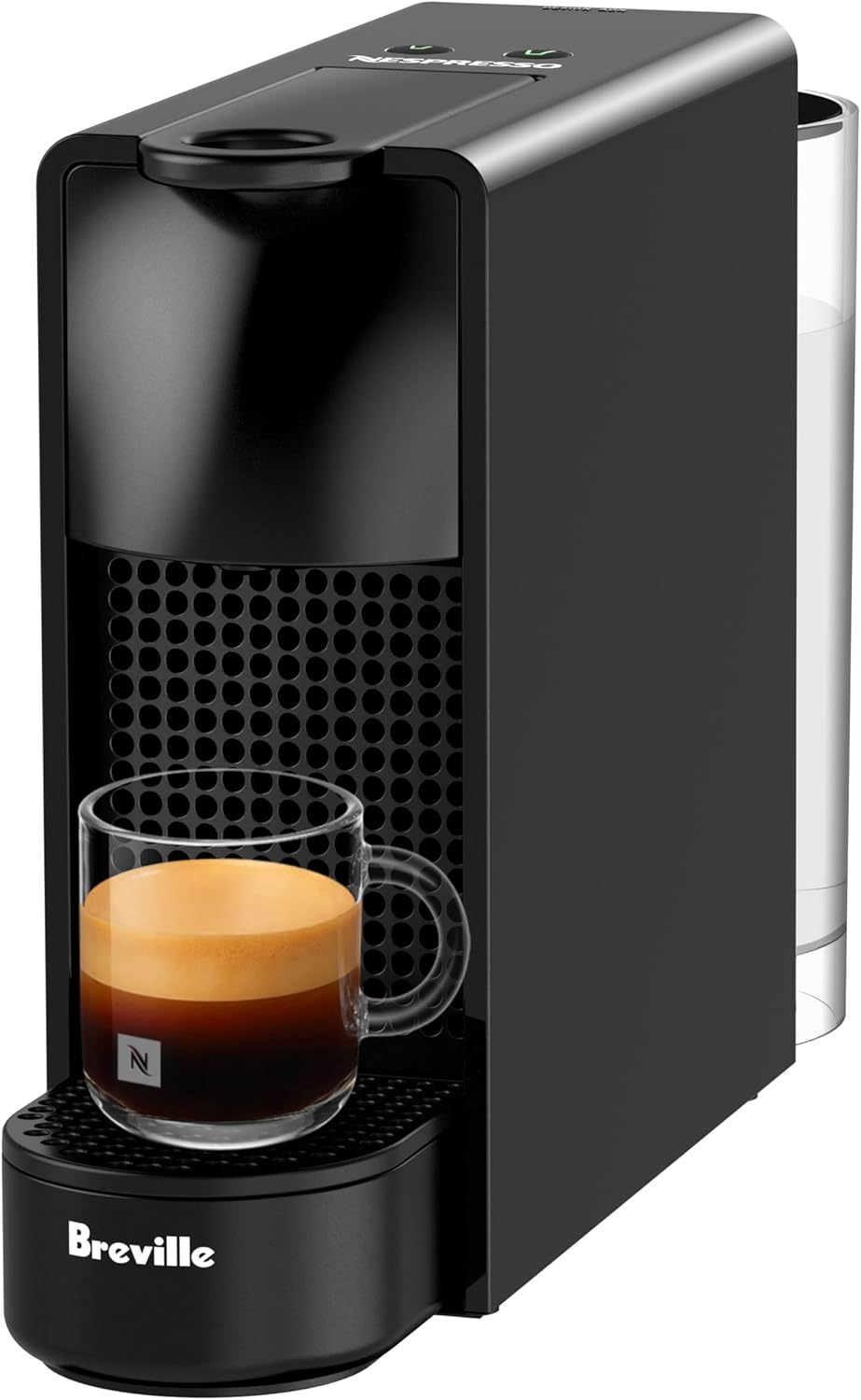
| Power | 1255 watts |
|---|---|
| Coffee Input Type | capsules |
| Compatible Coffee Pods | Nespresso Original |
| Operation Mode | Fully Automatic |
The Breville Nespresso Essenza Mini is a compact single-serve espresso machine that uses Nespresso Original capsules to produce espresso and lungo with a 19 bar high-pressure pump and a fast 25-second heat-up. Use is simple: insert a capsule, press one of the two programmable cup-size buttons, and the machine extracts a consistent shot while the removable water tank and drip tray make cleaning and placement easy. Notable features include an eco mode and automatic shutoff to reduce energy use, a reusable filter option, and a straightforward button interface that keeps operation intuitive for daily use. Because it is capsule-based, you get fast, low-fuss brewing without grinding or tamping, but you are limited to Nespresso Original capsules and the flavor profile they provide. The machine's small footprint makes it a strong fit for kitchens with limited counter space or for people who want near-instant espresso without a complex setup, though those seeking full manual control, milk steaming, or broader pod compatibility will want a different style of espresso maker.
Best for: Buyers who prioritize a compact, low-maintenance machine that reliably delivers consistent espresso shots with minimal setup and fuss.
Less Ideal for: People who want full manual control, built-in milk steaming, or flexibility to use ground coffee and alternative pod formats.
- Very compact footprint suitable for small kitchens or travel use
- Fast 25-second heat-up for quick, repeatable single-serve brewing
- Two programmable cup sizes for one-touch espresso or lungo
- Energy-saving eco mode and automatic shutoff reduce standby consumption
- Simple button controls and removable water tank simplify daily use and cleaning
- Limited to Nespresso Original capsules, so you cannot use ground coffee or other pod formats
- No built-in milk steamer or frother for hot milk-based drinks
Verdict: A tiny, dependable capsule espresso machine that delivers fast, consistent espresso and saves counter space for buyers who value reliability and simplicity.
IMUSA 4-Cup Espresso Maker

| Capacity | 4 cups |
|---|---|
| Wattage | 800 watts |
| Operation Mode | Semi-Automatic |
| Filter Type | Permanent |
The IMUSA 4-Cup Espresso Maker is a compact countertop machine that brews up to four servings of espresso and includes a steam nozzle for frothing milk into cappuccinos and lattes. It uses a three-position selector and generates about 5 bar pressure to extract concentrated coffee into the included glass carafe, while the removable drip tray and permanent filter simplify cleanup. The 800-watt heater gets the unit up to temperature quickly for everyday use, and the cool-touch carafe handle helps with safe pouring. Practical benefits include small footprint for limited counter space and a built-in frother for making milk-based drinks at home without separate equipment. Limitations to expect are modest pressure compared with prosumer machines, plastic construction rather than metal, and a four-cup capacity that suits singles or small households but not large gatherings. For buyers prioritizing an affordable, easy-to-use machine for basic espresso and steamed-milk drinks, this model offers good value; those wanting barista-level pressure or heavier-duty build should consider higher-end units.
Best for: Value-minded home coffee drinkers who want an affordable, compact machine that makes espresso-style shots and froths milk for cappuccinos or lattes without needing advanced barista skills.
Less Ideal for: People who plan to brew many drinks at once, need metal heavy-duty construction, or expect professional-level pressure and extraction should choose a more robust machine.
- Built-in steam nozzle for frothing milk produces creamy foam for cappuccinos and lattes
- Compact footprint fits small countertops and brews multiple servings at once
- Permanent filter and removable drip tray make daily cleanup simple
- 800-watt heater reaches brewing temperature quickly for regular use
- Operates at around 5 bar pressure which is lower than commercial or prosumer espresso machines
- Plastic exterior and primarily plastic construction reduce perceived durability
Verdict: A compact, budget-friendly home espresso maker that delivers simple espresso shots and milk frothing for everyday use under $250.
CASABREWS CM5418 Espresso Machine
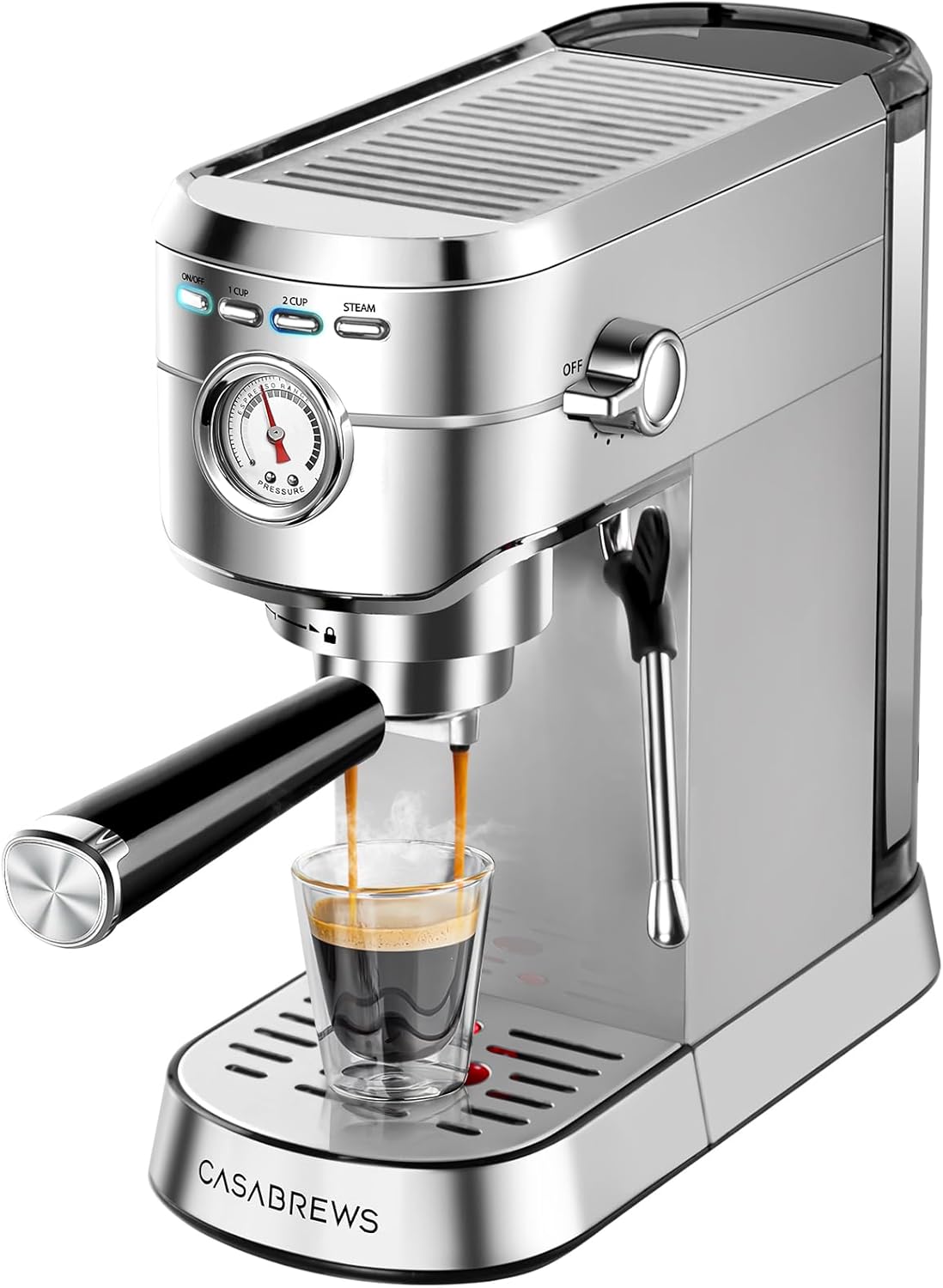
| Output Pressure | 20 bar |
|---|---|
| Wattage | 1350 watts |
| Operation Mode | Semi-Automatic |
| Coffee Input Type | ground_coffee |
| Filter Type | Reusable |
The CASABREWS CM5418 is a compact semi-automatic espresso machine aimed at home users who want café-style drinks without a large footprint. It uses a 20-bar Italian pump and a built-in pressure gauge to help dial in extraction, while a low-pressure pre-infusion step is designed to improve flavor balance. The machine heats quickly and offers adjustable single- or double-shot volume, plus a powerful steam wand that creates microfoam suitable for lattes and cappuccinos. Practical touches include a removable 34 oz water tank, a cup-warming tray, and reusable filter baskets with a 51mm portafilter and tamper included. Expect straightforward daily use: fill the tank, preheat, tamp ground coffee, and steam milk, with occasional descaling and cleaning of the filter cups. Limitations include the single boiler design, which requires cooling between steaming and brewing to avoid overheating protections, and that achieving consistent results needs correct grind and tamp technique. For buyers who prefer a reliable, budget-friendly machine with milk steaming capability, the CM5418 delivers strong value.
Best for: Buyers who want a compact, budget-conscious machine that can produce espresso and steamed milk for everyday café-style drinks and who prefer a straightforward, semi-automatic interface with visual pressure feedback.
Less Ideal for: Those seeking simultaneous brew-and-steam performance, fully automatic dosing, or a plug-and-play machine that requires no grinding or tamping skill should consider other options.
- 20-bar pump with built-in pressure gauge for more consistent extraction feedback
- Powerful steam wand capable of producing microfoam for lattes and cappuccinos
- Removable 34 oz water tank for easy refilling and up to multiple cups between fills
- Compact stainless steel body with cup warmer and removable drip tray for easy cleaning
- Includes portafilter, one- and two-cup filters, and a tamper so it is ready to use out of the box
- Single boiler design requires waiting or running hot water between steaming and brewing to avoid overheating protection
- Takes some tuning of grind size and tamp pressure to get optimal shots consistently
Verdict: A compact, feature-packed semi-automatic that gives risk-averse buyers café-capable espresso and milk steaming on a budget.
Choosing the Right Espresso Machine: Key Factors to Consider
Extraction Consistency and Pressure Delivery
Consistent extraction is what separates a decent shot from a great one. In budget machines, look for reliable pump performance and a stable brew temperature because variations lead to sour or bitter shots. You should also consider portafilter size and whether the machine uses a pressurized or non-pressurized basket; pressurized baskets are more forgiving for novice users but can limit the ability to dial in grind and yield less nuanced crema.
For buyers who care about repeatability, a machine that maintains steady pressure and temperature across multiple shots will deliver more predictable flavor, which matters if you prefer dialing grind and dose rather than relying on prepackaged pods or capsules.
Steam Wand Capability
If you want milk drinks, the steam wand is crucial. Entry-level machines vary from low-pressure steam that only produces warm milk to wands capable of introducing enough air for microfoam. Check whether the wand offers manual control or only a single on/off setting. More control lets you angle the jug and create froth for lattes and cappuccinos; limited control increases the learning curve and may restrict the range of drinks you can make.
Also consider steam recovery time. A machine that recovers steam pressure quickly between drinks is more practical for serving multiple milk beverages in a row. Long recovery times can force you to wait and reduce workflow efficiency during busy mornings.
Heat-Up Time and Temperature Stability
Quick heat-up is convenient but not at the expense of temperature stability during extraction. Many machines in this price bracket use thermoblocks that heat fast but can vary more with repeated shots, while small boilers hold temperature steadier but take longer to reach operating conditions. Think about how you use the machine: short, frequent shots benefit from faster start-up, whereas consistent multi-shot performance benefits from stable temperature control.
Temperature stability also affects crema and extraction balance, so a machine that manages consistent water temperature will provide better-tasting espresso, especially when you adjust grind and dose for taste.
Ease of Cleaning and Maintenance
Regular cleaning preserves performance and flavor. Practical features include removable drip trays and water reservoirs, accessible group heads or portafilters that detach easily, and simple backflush or descaling procedures. Machines that require complex disassembly or have hidden crevices will accumulate oils and mineral deposits faster, leading to inconsistent shots and potential malfunctions.
Consider how often parts need replacement and whether common wear items are user-serviceable. A design that makes routine upkeep straightforward will save time and extend the machine's useful life without professional servicing.
Build Quality and Serviceability
Solid construction helps a budget machine last longer. Metal components at key stress points, sturdy portafilters, and rubber or silicone seals that resist hardening are signs of thoughtful engineering. Plastic exteriors are acceptable for weight reduction, but critical internals that rely on fragile plastics can shorten longevity.
Serviceability matters because some faults are common with frequent use. Machines with easy-access panels, standard screws, and commonly available replacement parts are easier and cheaper to repair. If you plan to keep the machine for several years, this affects total ownership satisfaction.
Size, Footprint, and Water Capacity
Kitchen counter space and how often you want to refill the machine are practical considerations. Smaller machines with compact footprints are easier to tuck under cabinets but often compromise water reservoir size and steam boiler capacity. Larger tanks reduce refill frequency but increase the device footprint and may not fit in limited spaces.
Think about where you will place the machine and how many drinks you prepare daily. If you host or make several milk drinks in succession, a larger tank and quicker steam recovery will reduce interruptions in service.
Manual Vs. Beginner-Friendly Brew Systems
Budget espresso machines typically use one of two approaches: forgiving, pressurized-basket systems that simplify tamp and grind requirements, or non-pressurized semi-automatic setups that reward better technique with richer flavor. Choose the former if you want reliable results with pre-ground coffee or inconsistent tamping. Choose the latter if you plan to learn barista basics and use freshly ground beans.
Understanding which system a machine uses helps set expectations for crema, body, and how much you must tweak grind and dose to get good shots.
- Pressurized baskets reduce channeling but limit control over shot character.
- Non-pressurized baskets need finer grind and consistent tamp for best results.
- If you plan to upgrade grinders later, start with a non-pressurized machine to take advantage of better espresso potential.
Practical Milk Texturing Tips for Small Machines
Even modest steam wands can produce good milk with the right technique. Start by purging steam for a second, then introduce the wand tip just below the milk surface to create a swirl while keeping the pitcher tilted. Small machines often let in less air and require more wrist control to build microfoam.
Use chilled milk and a tight pitcher for faster texturing. Clean the wand immediately after use to prevent milk residue from burning onto the tip, which harms steam performance over time.
- Purge before and after steaming to clear condensation.
- Aim for rolling motion to break large bubbles and create microfoam.
- Practice with small volumes to learn timing on machines with limited steam power.
Workflow and Daily Use Considerations
Think about how the machine will fit into your morning routine. Machines with one-touch features can speed up repetitive use, but they may also be more difficult to maintain. Removable water reservoirs and easy-access drip trays make daily tasks quicker and reduce the friction of upkeep.
If you prepare multiple drinks, check steam recovery time and reservoir capacity. For single-shot users, fast heat-up and compact size may be a higher priority than large tanks or dual boilers.
- Quick start-up saves time on busy mornings.
- Larger water tanks reduce refill interruptions.
- Simple controls are easier for shared kitchens.
Common Maintenance Tasks and Schedules
Routine maintenance keeps machines operating well. Descale according to your water hardness and usage frequency, typically every 2 to 3 months for regular use in harder water areas. Backflush or clean the group head and portafilter after heavy use, and wipe the steam wand after each session to prevent baked-on milk.
Replace gaskets and shower screens if you notice leaking or uneven extraction. Keeping a short maintenance schedule reduces the likelihood of sudden performance drops and helps preserve flavor quality.
- Wipe steam wand immediately after steaming.
- Descale on a regular schedule based on local water conditions.
- Clean portafilter baskets and group head weekly for best extraction.
Accessories That Improve Results
Small, inexpensive accessories can significantly improve espresso quality. A basic tamper that fits the portafilter, a small scale for consistent dosing, and a handheld thermometer for milk temperature will help you achieve repeatable results. A decent grinder upgrade is the single most impactful purchase after the machine itself, but even within this price range, tampers and pitchers enhance consistency.
Consider a tamping mat to protect counters and a narrow spouted milk pitcher for better microfoam control. These additions do not change the machine but often lead to visibly better beverages.
- Use a scale for consistent dose and yield measurements.
- A good pitcher helps with wrist control and foam shaping.
- A dedicated cleaning brush simplifies portafilter and group head maintenance.
How We Chose the Best Espresso Machine
We evaluated machines that are readily available at or below the stated price ceiling and aimed to represent the main designs buyers encounter in this segment: pump-driven semi-automatic units, compact thermoblock machines, and combination machines with built-in steam wands. Key evaluation criteria included extraction consistency, steam and milk-texturing power, heat-up time and temperature stability, build quality and serviceability, and daily use convenience features such as removable water reservoirs and easy-clean portafilters. We prioritized hands-on user-focused attributes that affect long-term satisfaction rather than marketing claims. Units with very small boilers or no steaming capability were excluded, as most buyers in this category expect basic milk texturing. We also excluded machines that require uncommon or proprietary consumables that increase ownership complexity. The final list reflects machines that balance shot quality, steaming performance, and low-friction upkeep within the under $250 constraint.
Our full evaluation process is outlined in our review methodology.
FAQ
Can machines under $250 produce real espresso crema?
Yes, many machines in this price range can produce crema, especially when using fresh, properly ground beans and a suitable basket. Crema quality varies with extraction consistency and whether the machine uses a pressurized or non-pressurized basket.
Do budget machines require a separate grinder?
A separate grinder yields better results, but you can start with a fine pre-ground espresso blend. Over time, a good grinder will improve flavor and consistency more than upgrading other accessories.
How important is water hardness for these machines?
Water hardness is important because mineral buildup affects steam and extraction over time. Use filtered or softened water to reduce scaling, and follow a regular descaling schedule based on your local water profile.
Are pressurized portafilters better for beginners?
Pressurized portafilters are more forgiving and produce acceptable results with inconsistent grind or tamp. They limit control for advanced users but can be a practical choice while you develop technique.
How often should I clean the steam wand?
Wipe the wand immediately after each use and purge it briefly to clear milk residue. Deeper cleaning should be performed weekly or whenever milk buildup is visible to prevent clogs and maintain steam performance.
Will small machines handle back-to-back milk drinks?
Some can, but many budget models have limited steam recovery and smaller reservoirs, which can slow successive milk drink preparation. Check steam recovery specifications and reservoir size if you plan to make multiple milk drinks quickly.
Final Verdict
When choosing an espresso machine under $250, prioritize the attributes that match your routine. If you want fuss-free shots, favor machines with pressurized baskets and quick heat-up. If you plan to improve technique and use a grinder, choose a machine with a non-pressurized portafilter and stable steaming performance. Balance extraction consistency, steam capability, and ease of maintenance against your kitchen space and how many milk drinks you typically make. Focusing on those tradeoffs will help you pick a machine that delivers the best everyday espresso experience for your needs.