
Note: This article contains affiliate links. If you click on these links and make a purchase, we may earn a small commission at no extra cost to you. This helps support our research and content. Read our full affiliate disclosure here.
If you want true espresso-style shots without a big upfront cost, choosing the right machine matters for flavor consistency, steam capability, and ease of maintenance. Under $150 options vary widely in boiler type, pump strength, frothing ability, and how easy they are to keep clean. This guide highlights seven shortlisted Espresso Machines that balance brew quality and everyday convenience in the budget segment. We focused on machines that deliver repeatable pressure, manageable cleanup, and useful accessories for everyday home use. Read on to see the evaluation criteria and concise reasons each style earned a spot in the list.
Top Picks at a Glance
| Best Overall The best all-around choice for most situations | De'Longhi Dedica EC680M |  |
| Best Quality Built to a higher standard if you want something more solid | De'Longhi Stilosa EC260BK | 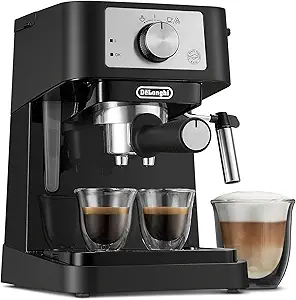 |
| Best Value The sweet spot between price and what you get | CASABREWS 3700 Essential |  |
| Best Budget The cheapest option that still gets the job done reliably | KEENSTAR BCM2201 Espresso Machine |  |
| Top Rated A top-rated pick with lots of positive feedback | RIOSKY EM625 Espresso Machine |  |
| Most Popular A crowd favorite that many people choose with confidence | CASABREWS CM5418 Espresso Machine |  |
| Best Seller A high-volume bestseller chosen again and again | Gevi 20 Bar Espresso Machine ECMG0 | 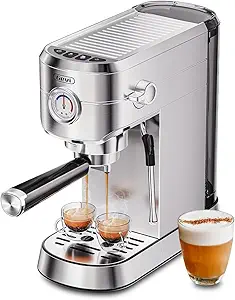 |
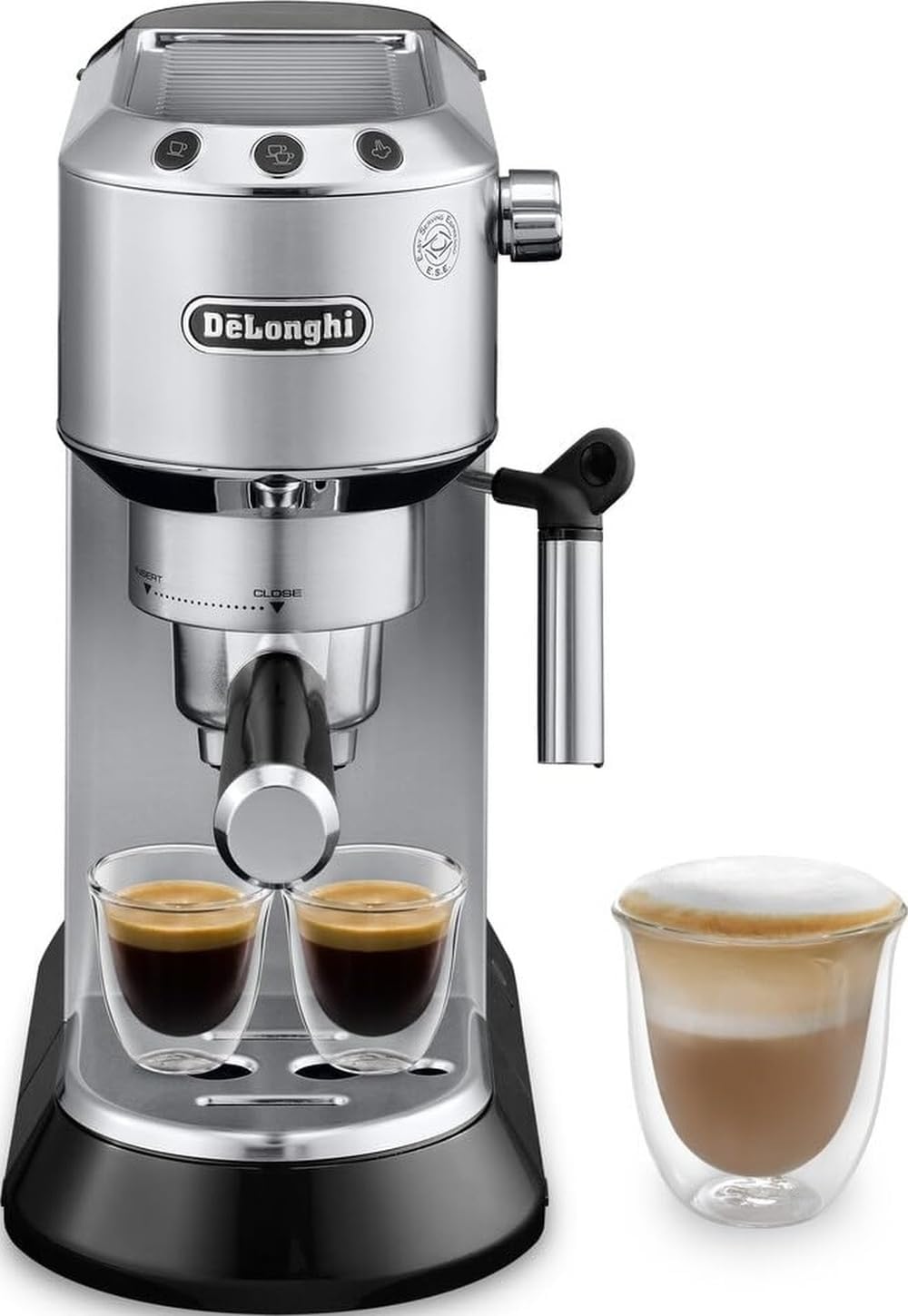
De'Longhi Dedica EC680M
| Output Pressure | 15 bar |
|---|---|
| Power | 1450 watts |
| Coffee Input Type | ground, pod |
| Capacity | 1 liters |
The De'Longhi Dedica EC680M is a slim manual espresso machine built to deliver café-style espresso and milk drinks on a small footprint. It uses a 15-bar pump and thermoblock heating to reach brewing temperature quickly, and a 3-in-1 filter holder accepts single or double shots and ESE pods. The machine includes a manual steam wand for frothing milk, an adjustable drip tray that fits taller cups, and removable parts for easier cleaning. In daily use it performs like a compact semi-manual: you grind and tamp or use pods, select single or double shots with the flow-stop, then steam milk by hand for lattes or cappuccinos. Practical benefits include fast heat-up, versatile coffee inputs, and a small counter presence that suits limited kitchens. Important limitations are the manual frother, which requires practice for consistent microfoam, and the lack of automatic dosing or volumetric controls, so it suits users comfortable with hands-on preparation.
Best for: Buyers who want a small, hands-on espresso machine that delivers authentic shots and allows control over brewing and milk texture while fitting into limited counter space.
Less Ideal for: Those seeking a fully automatic or one-touch machine for hands-off brewing and automatic milk frothing should consider different models.
- Very compact 6-inch wide design saves counter space
- Fast thermoblock heat-up for quick brewing
- Accepts ground coffee and ESE pods with 3-in-1 filter holder
- 15-bar pump for consistent extraction pressure
- Removable water tank and drip tray simplify cleaning
- Manual steam wand requires technique to produce consistent milk microfoam
- No automatic dosing or programmable shot volumes
Verdict: Choose the Dedica EC680M if you want a compact, fast-heating manual machine that delivers real espresso and frothing capability in a tiny footprint.
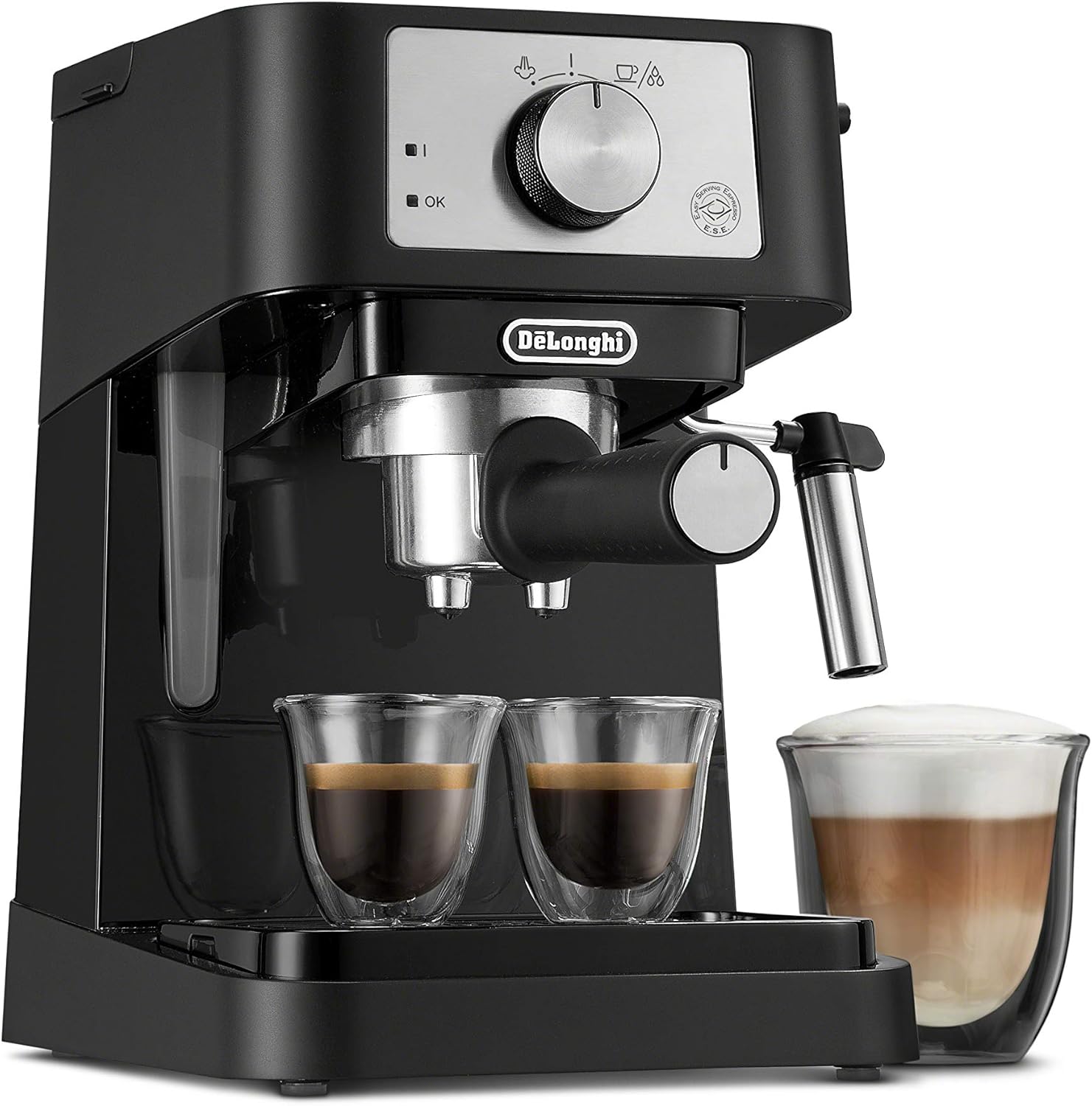
De'Longhi Stilosa EC260BK
| Output Pressure | 15 bar |
|---|---|
| Wattage | 1100 watts |
| Power Source | AC adapter |
| Coffee Input Type | ground_coffee |
| Filter Type | Reusable |
The De'Longhi Stilosa EC260BK brings core espresso functionality into a small, countertop-friendly package aimed at at-home brewing. It uses a 15-bar pump and a stainless steel boiler to extract single or double shots through an included portafilter with single and double filters, while a separate tamper helps produce a more even puck. The manual steam wand lets you texture milk for lattes and cappuccinos, so you can practice barista techniques rather than rely on automatic frothing. Setup and daily use are straightforward: fill the removable 33.8 fl.oz water tank, load ground coffee, and use the two-level cup rest for different cup heights. Practical benefits include durable boiler construction and a compact footprint that is easy to clean and maintain. Limitations are that it is a manual machine with no programmable settings or PID temperature control, so consistent results depend on grind, dose, and user technique, and the 1,100-watt heater means a short warm-up and steam time that may require small waits between drinks.
Best for: Buyers focused on performance for the price who want a compact, hands-on machine to learn and practice espresso technique while still producing cafe-style drinks at home.
Less Ideal for: People who want fully automatic operation, push-button programmability, or a machine that guarantees consistent extraction without manual skill should look at automatic or prosumer models instead.
- 15-bar pump and stainless steel boiler for consistent extraction and durability
- Includes portafilter with single and double filters plus a tamper for basic dosing control
- Manual steam wand for milk texturing and making lattes or cappuccinos
- Compact, easy-to-clean design with a removable water tank
- No temperature PID or advanced electronic controls so shots rely on user technique
- Manual operation has a learning curve for consistent results
Verdict: A compact, performance-focused manual espresso machine that delivers durable extraction and real milk-texturing control for buyers who want to learn and craft cafe-style drinks at home.
CASABREWS 3700 Essential

| Output Pressure | 20 bar |
|---|---|
| Wattage | 1350 watts |
| Operation Mode | Semi-Automatic |
| Coffee Input Type | Ground |
| Capacity | 43.9 fluid ounces |
The CASABREWS 3700 Essential is a budget-friendly semi-automatic espresso maker that brings several pro-style features into a small countertop package. It uses a 20-bar pump and a PID system to stabilize brew temperature, which helps produce a richer crema and more consistent shots than many entry-level machines. The unit includes a 51mm portafilter with single- and double-shot filters, a powerful steam wand for milk microfoam, and a removable 43.9 oz water tank that makes multiple cups between refills and simplifies cleaning. Practical touches like a removable drip tray and a cup warmer on top make daily use easier, and the stainless-steel housing feels durable for the price. Limits are typical for single-boiler machines: you need short waits between brewing and steaming to avoid overheating, and learning to dial in grind and tamp will be necessary to get best results. For shoppers focused on workhorse performance in a compact, user-serviceable design, this model delivers strong value under $150.
Best for: Buyers who want a compact, capable home espresso machine that prioritizes consistent shots and usable milk steaming without spending much, and who are willing to learn basic tamping and grind adjustments.
Less Ideal for: Users who need fully simultaneous brew-and-steam capability, integrated grinders, or a plug-and-play espresso experience with minimal manual setup.
- 20-bar pump and PID temperature control for more consistent extraction
- Powerful steam wand capable of producing microfoam for lattes and cappuccinos
- Removable 43.9 oz water tank for easier refills and multiple cups between fills
- Includes 51mm portafilter with single- and double-shot filters and tamper
- Stainless-steel housing and removable drip tray for durability and easy cleaning
- Single-boiler design requires waiting between brewing and steaming
- No built-in pressure gauge to monitor extraction pressure
Verdict: A compact, feature-rich semi-automatic that delivers café-style extraction and capable milk steaming at an accessible price for buyers optimizing performance per dollar.
KEENSTAR BCM2201 Espresso Machine

| Output Pressure | 3.5 bar |
|---|---|
| Wattage | 800 |
| Capacity | 240 ml |
| Coffee Input Type | ground_coffee |
| Filter Type | Reusable |
The KEENSTAR BCM2201 is an entry-level semi-automatic espresso machine that brews up to four small cups (240 ml) using ground coffee and a reusable filter. It heats quickly with an 800W element and advertises 3.5 bar output to extract espresso-like shots in about two minutes, while a manual steam wand produces microfoam for cappuccinos and lattes. Controls are simple—a single rotary switch with an indicator light and a pause feature that helps with brief interruptions—so it is approachable for beginners. The compact stainless steel body and included glass carafe and milk frother save counter space and add basic utility. Limitations include the modest 3.5 bar pressure (below commercial 9 bar pumps), basic temperature/pressure control, and the need for careful maintenance of the steam wand to avoid clogging. The machine also recommends medium grind only and warns about overfilling the 240 ml reservoir, so dialing in dose and technique takes some trial and error. For budget buyers who want a straightforward home espresso and milk drinks, it delivers reasonable performance for the price.
Best for: Buyers on a tight budget who want an easy-to-use machine that makes basic espresso and milk-based drinks at home without a steep learning curve.
Less Ideal for: Users seeking true café-grade extraction, programmable temperature/pressure control, or large-volume home entertaining should consider higher-end machines instead.
- Fast warm-up from an 800W heating element for quick shots
- Includes manual steam wand for cappuccinos and lattes
- Compact footprint with included carafe and reusable filter
- Simple single-knob control and pause function for easy operation
- Output pressure is 3.5 bar which limits crema quality compared with higher-pressure machines
- Small 240 ml water capacity requires frequent refilling for multiple drinks
Verdict: A compact, budget-friendly semi-automatic that delivers simple espresso and milk drinks for beginners who want an affordable countertop machine.
RIOSKY EM625 Espresso Machine

| Output Pressure | 20 bar |
|---|---|
| Wattage | 1400 watts |
| Human Interface Input | Touchscreen |
| Coffee Input Type | Ground |
| Capacity | 57.5 fluid ounces |
The RIOSKY EM625 is a compact, semi-automatic home espresso machine designed to deliver café-style shots without taking much counter space. It uses a 20-bar Italian pump calibrated to 9-bar with pre-infusion and PID temperature control to stabilize extraction, and a 1400W boiler that reaches operating temperature in roughly 45 seconds. The touchscreen and programmable custom memory make it easy to one-touch extract single or double shots and save your preferred volume. A 360° manual steam wand produces microfoam for lattes and the wand doubles as a hot water dispenser for Americanos and tea. Practical touches include a 57.5 oz removable tank, top cup warmer, detachable drip tray, and self-cleaning/descale functions that simplify upkeep. Trade-offs are the learning curve of a manual steam wand for perfect milk texture and that the machine uses ground coffee only rather than an integrated grinder. For buyers who prioritize dependable daily performance in a small footprint, the EM625 balances speed, temperature control, and serviceability within a budget-friendly package.
Best for: Buyers who want a reliable, compact machine that delivers consistent espresso shots and easy daily maintenance without a large countertop footprint.
Less Ideal for: People seeking an all-in-one solution with an integrated grinder or fully automatic one-touch milk steaming should consider other models.
- PID temperature control for consistent extraction
- Fast heat-up time and 1400W boiler for quick morning use
- 57.5 oz removable water tank reduces refill frequency and is easy to clean
- Programmable touchscreen and custom memory for repeatable shots
- 360° steam wand capable of producing microfoam for lattes
- No built-in grinder so separate grinder needed for freshest shots
- Manual steam wand requires practice to achieve consistent milk texture
Verdict: A dependable, compact semi-automatic espresso machine that delivers consistent, café-style shots and easy upkeep for budget-conscious home users.
CASABREWS CM5418 Espresso Machine
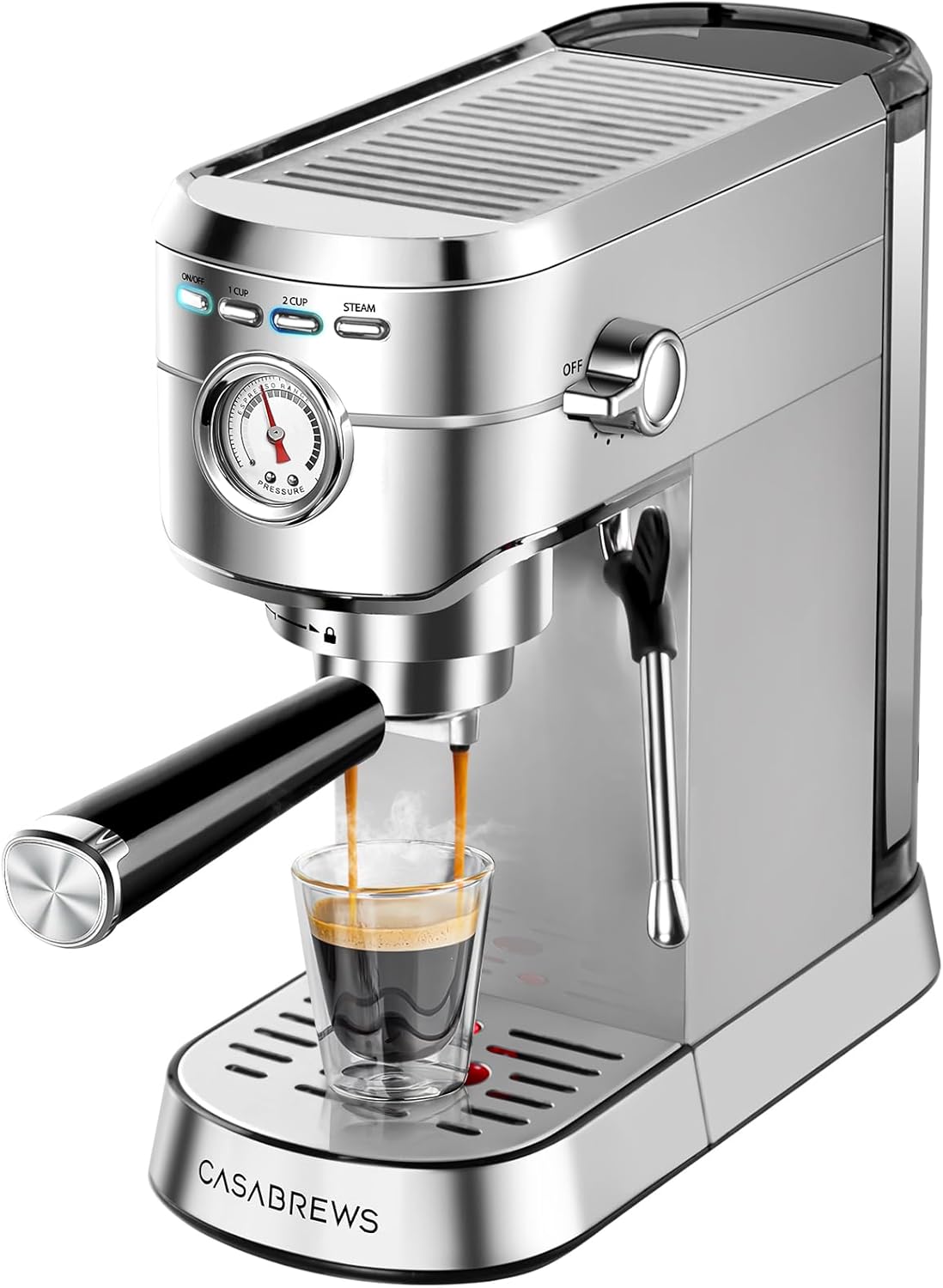
| Operation Mode | Semi-Automatic |
|---|---|
| Wattage | 1350 watts |
| Output Pressure | 20 bar |
| Coffee Input Type | ground_coffee |
| Filter Type | Reusable |
The CASABREWS CM5418 is a compact semi-automatic espresso machine aimed at home baristas who want café-style drinks without a large countertop footprint. It uses a stable 20‑bar Italian pump and a built-in pressure gauge to guide extraction, plus a low-pressure pre-infusion feature to help balance flavor. The powerful steam wand textures milk into microfoam suitable for lattes and cappuccinos, and a cup warmer and removable 34 oz tank add practical convenience for everyday use. Controls are button-based and the machine includes single- and double-shot filter baskets, a tamper, and a reusable filter. Key limitations are the single boiler design and the need to let the unit cool between steaming and brewing to avoid overheating protection, which can slow back-to-back drink preparation. The learning curve for grinding, dosing, and tamping is typical of semi-automatic machines, so newcomers should expect some trial and error. For the price and size it delivers solid extraction control and milk performance for hobbyist use at home.
Best for: Buyers who want a small, feature-rich machine that gives control over extraction and milk texturing while valuing visible pressure feedback and a compact footprint.
Less Ideal for: People who need fast, hands-off throughput for many drinks in a row or who prefer fully automatic pod or capsule systems.
- 20‑bar Italian pump with built-in pressure gauge for visible extraction feedback
- Low-pressure pre-infusion to help produce more balanced shots
- Powerful steam wand capable of creating smooth microfoam for milk drinks
- Compact stainless steel design with removable 34 oz water tank for easy refills
- Includes portafilter, single and double baskets, and a tamper for complete out-of-the-box use
- Single boiler requires cooldown between steaming and brewing which limits consecutive drink speed
- Semi-automatic controls require manual grinding, dosing, and tamping skills to get consistent results
Verdict: A compact, budget-friendly semi-automatic that gives home baristas visible pressure control and strong milk-steaming performance for café-style drinks.
Gevi 20 Bar Espresso Machine ECMG0
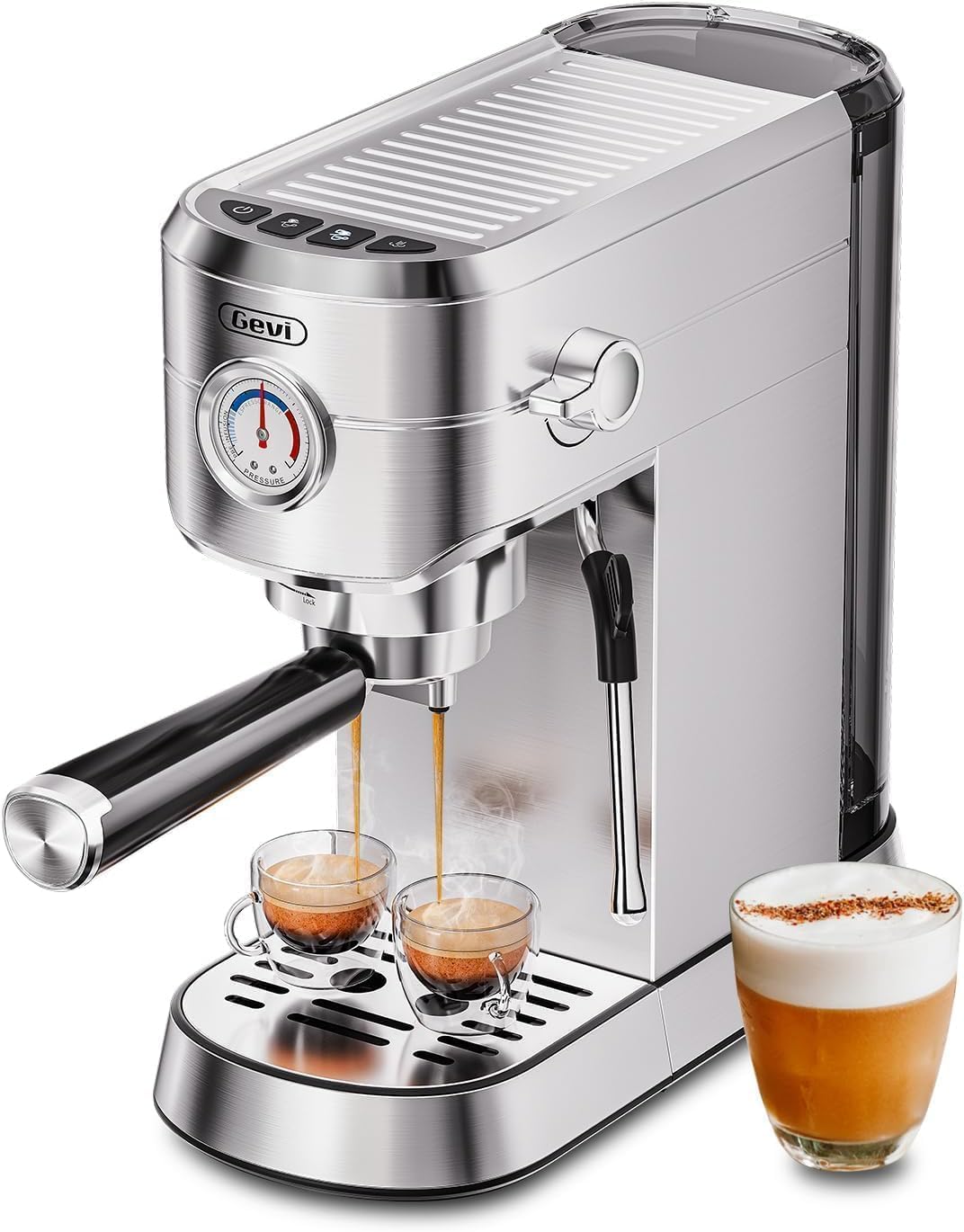
| Output Pressure | 20 bar |
|---|---|
| Wattage | 1350 watts |
| Operation Mode | Semi-Automatic |
| Coffee Input Type | ground_coffee |
| Capacity | 1 liters |
The Gevi 20 Bar Espresso Machine is a compact semi-automatic unit that brings several café-style controls into a small countertop package. It uses a 20-bar pump with NTC temperature control, a pre-infusion option and a built-in pressure gauge so you can monitor extraction and adjust shot volume with the buttons. A steam wand and removable froth nozzle let you steam and texture milk for lattes and cappuccinos, and the hot water function serves for Americanos or cup warming. Stainless steel housing, a removable 34 oz water tank and a cup warmer make it practical for everyday use, while the reusable filter and included 51 mm portafilter accessories keep running costs down. Expect some pump noise and slight vibration during extraction because of the high-pressure pump, and the manual frothing and cleaning require a little practice to get consistent microfoam. For buyers focused on simple controls and features that mimic more expensive machines, this model delivers solid capability for the price point.
Best for: Buyers who want close-to-café controls and a durable stainless steel machine under $150 and prefer a straightforward, semi-automatic workflow over fully automated convenience.
Less Ideal for: Those who need a fully automatic or one-touch milk system, or who prioritize near-silent operation and minimal learning curve.
- 20-bar pump with built-in pressure gauge and pre-infusion for more consistent extractions
- Powerful steam wand with removable froth nozzle for steaming and texturing milk
- Compact stainless steel build with removable water tank and cup warmer for countertop use
- Includes 51 mm portafilter, double/single filters, tamper and cleaning tools so you can start brewing immediately
- Manual milk frothing and cleaning need practice to master for consistent results
- High-pressure pump causes noticeable vibration and noise during operation
Verdict: If you want a budget-friendly, compact espresso machine that offers real extraction control and a steam wand for milk drinks, this Gevi model is a strong choice under $150.
Choosing the Right Espresso Machine: Key Factors to Consider
Pump Pressure and Shot Consistency
Pump pressure is the technical backbone of espresso-making. Machines under $150 often use vibration pumps that can reach the necessary bar levels for espresso-style extraction, but stability matters as much as peak pressure. Consistent pressure helps extract the soluble flavors at a steady rate, producing better crema and a more balanced shot.
When evaluating a budget machine, look for models that report or demonstrate stable pressure and include a portafilter that seals well. Inconsistent pressure produces thin or overextracted shots even if other features look promising.
Steam Wand Performance
A machine's steam wand determines how well you can texture milk for lattes and cappuccinos. Lower-cost machines frequently have weaker steam boilers and smaller nozzles, which increases foaming time and limits microfoam quality. If you plan to make milk-based drinks, steam power affects both convenience and the final drink texture.
Consider whether the steam wand offers a single or multi-hole tip, how hot the steam gets, and whether the wand articulates for easier frothing. Faster steaming saves time and reduces temperature stress on the machine's boiler.
Ease of Cleaning and Maintenance
Budget espresso machines require regular cleaning and occasional descaling to maintain performance. Models with removable drip trays, easily detached portafilters, and simple water reservoirs make daily upkeep quick and predictable. Hidden or hard-to-reach brewing paths can trap coffee oils and scale, degrading taste and increasing service needs.
Check for straightforward access to brew components and clear manufacturer guidance on descaling intervals. Machines that minimize disassembly for cleaning reduce the chance of user error and keep extracts tasting fresh longer.
Build Quality and Serviceability
Materials and assembly quality influence how long a budget machine remains reliable. Stainless steel components where they matter, a solid portafilter, and well-mounted controls resist the wear that cheap plastic parts are prone to. Serviceability matters too; units designed with replaceable seals and easy access to common wear parts are more practical for long-term ownership.
Inspect how parts are joined and whether the manufacturer provides guidance on routine part replacement. Better-constructed machines typically hold pressure and temperature more consistently over time.
Controls, Thermals, and Recovery Time
Control simplicity and thermal stability determine how predictable your shots are across multiple pulls. Machines that offer clear on/off or brew buttons and an indicator for ready temperature help reduce wasted shots. Thermal recovery, or how quickly the boiler regains temperature between extractions and steaming, affects throughput when making multiple drinks.
If you often prepare more than one drink in a short span, prioritize units with reasonable heat recovery or built-in temperature management to avoid long waits between shots and frothing.
Included Accessories and Ergonomics
Accessories such as a usable portafilter, tamper, measuring scoop, and clear instructions can meaningfully improve the out-of-box experience. Ergonomic details like comfortable knobs, a stable cup platform, and a clear water level window reduce frustration during daily use.
Consider whether the included tamper fits the basket well and if the drip tray can handle taller cups. Practical accessories lower the barrier to better results without additional purchases.
Single Boiler Vs Thermoblock Designs
Budget espresso machines commonly use either a simple single boiler or a thermoblock heating element. Single boilers provide predictable heat for short extraction cycles but may require a pause between brewing and steaming. Thermoblocks heat water on demand and can offer quicker recovery but sometimes sacrifice thermostat precision.
Understanding which heating approach a machine uses helps set expectations for shot timing and steam readiness. If you plan to alternate frequently between espresso and milk steaming, a faster-recovering system will feel less restrictive in practice.
- Single boilers: stable temperature for a single task, may need wait time before steaming
- Thermoblocks: faster recovery, variable temperature control depending on design
- Consider your typical drink workflow when weighing the tradeoffs
Ground Coffee Vs Pod Compatibility
Many budget machines accept both ground coffee and single-serve pods. Ground coffee offers the most control over grind size and dose, which is important for flavor tuning. Pod compatibility can be convenient but may limit extraction customization and sometimes reduces crema quality.
If you prefer simplicity and speed, look for a machine that supports the pod format you plan to use. If flavor and control matter more, prioritize a model with a proper portafilter and basket designed for ground espresso.
- Ground coffee enables dose and grind adjustments for better results
- Pods are convenient but can limit extraction control
- Check for included baskets and whether conversion accessories are practical
Tips for Getting Better Shots From Budget Machines
Even lower-cost machines respond well to careful technique. Use a consistent dose and a firm, level tamp to reduce channeling. Fresh coffee and a proper grind for espresso are essential; coarse grinds underextract and fine grinds can clog small-bore filters in budget portafilters.
Preheat your cup and run a short flush to stabilize temperature before pulling a shot. After steaming, purge the wand briefly to clear condensate. Regular cleaning and timely descaling will preserve taste and pressure performance over time.
- Dose consistently and tamp evenly
- Use freshly roasted beans and an espresso-appropriate grind
- Preheat the group and cups for more stable temperatures
What to Expect From Warranty and Support
Warranty length and the availability of replacement parts vary widely in the budget segment. Many manufacturers offer limited warranties that cover defects for a defined period, but labor and shipping details differ. Confirm how warranty service is handled and whether common wear parts like gaskets and filters are available separately.
Good support documentation and access to consumable parts extend the useful life of a low-cost machine. Prioritize models with clear maintenance guides and user-replaceable parts if long-term reliability is important.
- Verify what the warranty covers and any required registration steps
- Check availability of common replacement parts
- Look for downloadable manuals and maintenance instructions
How We Chose the Best Espresso Machine
We focused on practical performance and long-term usability when shortlisting budget espresso machines under $150. Primary evaluation criteria included pump pressure and shot consistency, since stable extraction directly affects flavor and crema; steam and frothing power for making milk drinks; ease of cleaning and maintenance because frequent descaling or fiddly parts quickly sour ownership; build quality and component durability to avoid early failures; and included accessories and safety features that improve everyday use. We prioritized machines with clear user controls and straightforward water paths to reduce the chance of mis-brews. Exclusions included machines that require extensive aftermarket parts to function, devices with no meaningful steam capability if they claim to make milk drinks, and products lacking basic serviceability. The final shortlist represents units that meet minimum pressure and frothing expectations for espresso-style drinks while remaining simple to maintain and operate.
Our full evaluation process is outlined in our review methodology.
FAQ
Can an espresso machine under $150 make real espresso?
Often yes. Many budget machines reach adequate pressure for espresso-style extraction, though they may not match the temperature stability and steam power of higher-end machines. With proper technique and fresh coffee, you can achieve satisfying shots.
How important is pump pressure for a home espresso machine?
Pump pressure is critical because it influences extraction rate and crema. Machines that can sustain near-ideal pressures produce more consistent flavor. However, pressure is just one factor; temperature control and portafilter fit also matter.
Do I need a separate grinder with a budget machine?
A grinder significantly improves results because consistent grind size is essential for espresso. If you plan to use ground doses, choose a machine that accepts a standard portafilter and consider a compact burr grinder for better control.
How often should I descale a machine in this price range?
Descale frequency depends on water hardness and usage, but a common interval is every 2 to 3 months for regular use with hard water. Using filtered water and following the manufacturer's instructions reduces scale buildup and maintains performance.
Can I froth milk well with an under $150 machine?
Some budget machines offer serviceable steam wands that produce acceptable microfoam for lattes and cappuccinos, but expect slower steaming and smaller steam holes. Technique and patience compensate for lower raw power in many cases.
Final Verdict
When shopping for an espresso machine under $150, prioritize extraction consistency, practical steam performance, and ease of cleaning. Expect tradeoffs: you may need to compromise on thermal stability or steam power compared with higher-priced models, but good technique and proper maintenance yield strong results from budget units. Focus on models that offer stable pump performance, accessible serviceable parts, and straightforward controls to get the most reliable daily experience.