
Note: This article contains affiliate links. If you click on these links and make a purchase, we may earn a small commission at no extra cost to you. This helps support our research and content. Read our full affiliate disclosure here.
If you want café-quality shots at home without spending a fortune, the right espresso machine matters. The best machines under $600 bridge performance and everyday usability, delivering consistent extraction, good temperature stability, and a steam wand or milk system that fits how you prepare drinks. This guide shortlists the top options in this price band and explains the practical tradeoffs: setup and learning curve, maintenance needs, and beverage versatility. Use the evaluation cues below to match a machine to how you brew, whether you prioritize single-serves, milk drinks, or compact countertop fit. Read on for the picks and the criteria we applied.
Top Picks at a Glance
| Best Overall The best all-around choice for most situations | Breville Barista Express BES870XL |  |
| Best Quality Built to a higher standard if you want something more solid | Breville Infuser BES840BSXL | 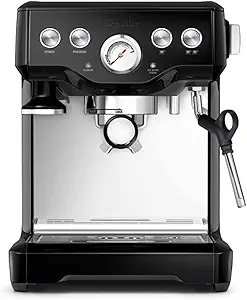 |
| Best Value The sweet spot between price and what you get | De'Longhi Dedica EC680M |  |
| Best Budget The cheapest option that still gets the job done reliably | IMUSA Espresso Maker GAU-18202AMZ |  |
| Top Rated A top-rated pick with lots of positive feedback | De'Longhi Stilosa EC260BK | 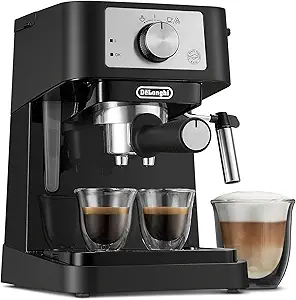 |
| Most Popular A crowd favorite that many people choose with confidence | Mr. Coffee Cafe Barista |  |
| Best Seller A high-volume bestseller chosen again and again | CASABREWS CM5418 Espresso Machine |  |
Breville Barista Express BES870XL

| Wattage | 1600 watts |
|---|---|
| Power Source | AC adapter |
| Coffee Input Type | whole bean |
| Filter Type | Reusable |
| Capacity | 4.2 pounds |
The Breville Barista Express pairs a built-in conical burr grinder with a 54mm portafilter and thermocoil heating to take whole beans to espresso in a single workflow. Typical use is grind-on-demand into the removable portafilter, tamp with the included tamper, pull single or double shots using the dual- and single-wall baskets, and texture milk with the steam wand for lattes and cappuccinos. Notable features include 16 grind settings, dose-control trimming, a 2L removable water tank, and PID temperature control for consistent extractions. The integrated grinder and hands‑free grinding cradle shorten prep time and reduce mess compared with separate grinders, while the steam wand gives enough pressure for silky microfoam once you learn basic technique. As a certified remanufactured unit this model can offer strong value, but it does require manual tamping and technique to get the best shots and will take some practice to dial in grind and dose. The machine is solidly built in stainless steel but is relatively heavy and takes counter space consistent with a prosumer espresso machine.
Best for: Buyers who want a single machine that grinds and extracts to learn and practice home barista skills while getting café-quality espresso without buying separate equipment.
Less Ideal for: Buyers seeking a fully automatic or push-button beverage maker for hands-off operation or those needing a compact, lightweight travel-friendly unit.
- Integrated conical burr grinder with 16 grind settings for fresh, on-demand dosing
- PID thermocoil temperature control for consistent espresso extraction
- Powerful steam wand that produces microfoam suitable for latte art
- Includes comprehensive accessories such as 54mm portafilter, tamper, and cleaning tools
- Manual tamping and technique required to achieve optimal shots
- Certified remanufactured condition may show limited wear compared with new units
Verdict: Choose the Barista Express if you want a single, grinder-equipped machine that delivers café-style espresso and milk texturing for home baristas learning to dial in shots.
Breville Infuser BES840BSXL

| Wattage | 1650 watts |
|---|---|
| Operation Mode | Manual |
| Coffee Input Type | ground |
| Filter Type | Reusable |
The Breville Infuser is a performance-focused semi-automatic espresso machine built to deliver consistent, cafe-style shots at home. It uses low-pressure pre-infusion and digital PID temperature control to stabilize extraction and a built-in pressure gauge to help dial in shot quality, while volumetric buttons let you choose one or two shots or manually control shot volume. A 1650W heating element and high-pressure steam wand produce fast heat-up and dense microfoam for lattes and cappuccinos, and the auto-purge after steaming helps keep extraction temperature consistent between milk and espresso. The machine ships with both single- and double-wall filter baskets, a stainless steel milk jug, cleaning tools, and a water filter, making it ready for regular use. Limitations include its manual operation that requires some technique for best results and a relatively compact water tank that needs refilling more often during heavy use. For buyers who prioritize shot control and milk texturing, the Infuser brings near-pro results in a countertop package.
Best for: Buyers who want precise control over extraction and high-quality milk texturing at home and are willing to learn basic pulling and steaming technique to get consistent cafe-style results.
Less Ideal for: Those who want fully automatic one-touch brewing or who need a very large water reservoir for high-volume, unattended use should consider other machine types.
- Digital PID temperature control for consistent extraction
- Low-pressure pre-infusion and pressure gauge to improve shot flavor and repeatability
- Powerful 1650W element and high-pressure steam wand for quick heating and quality microfoam
- Volumetric and manual shot control for flexibility
- Includes useful accessories such as dual filter baskets, milk jug, and cleaning tools
- Manual operation requires practice to consistently hit best results
- Smaller water tank means more frequent refills during heavy use
Verdict: A compact, performance-oriented semi-automatic that gives precise temperature and pressure control plus strong steaming power for home baristas seeking cafe-quality shots under $600.
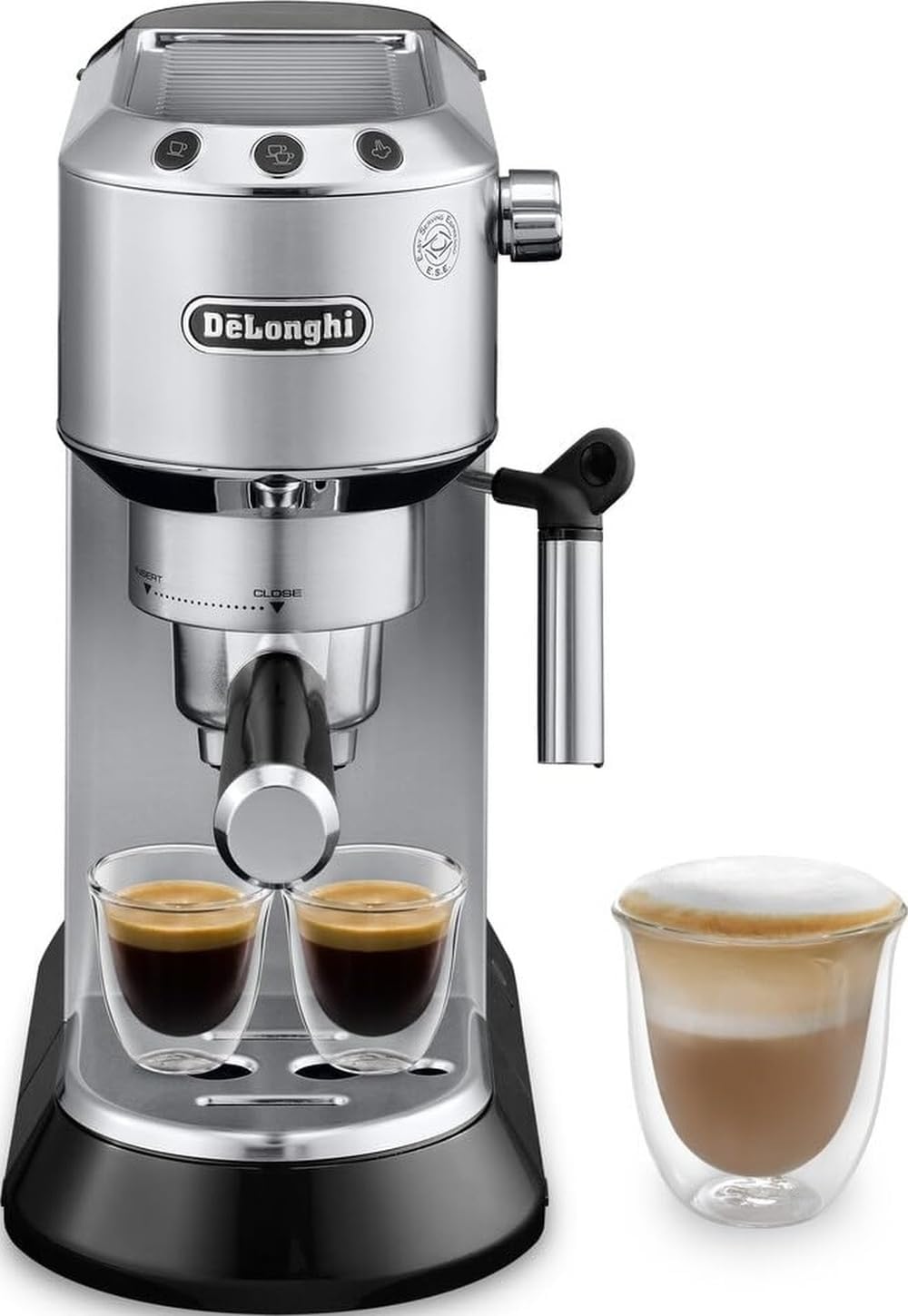
De'Longhi Dedica EC680M
| Output Pressure | 15 bar |
|---|---|
| Wattage | 1450 watts |
| Power Source | electric |
| Coffee Input Type | ground, pod |
| Capacity | 1 liters |
The De'Longhi Dedica EC680M is a compact manual espresso machine built to deliver café-style espresso and milk drinks on a small countertop footprint. It uses a 15-bar pump and thermoblock heating to reach brewing temperature in about 40 seconds, and its 3-in-1 filter holder accepts single and double shots as well as ESE pods for flexible use. The manual frother produces dense foam for cappuccinos and lattes, and the adjustable drip tray lets you fit taller cups up to roughly 5 inches. Practical touches include illuminated control buttons, a removable water tank and drip tray for easier cleaning, and dishwasher-safe parts. Because it is manual, you control tamping, shot length, and steam, which is great for someone who wants to learn barista technique but means there is a learning curve for consistent results. The slim stainless steel body looks good in tight kitchens, but the 1 liter water tank and manual operation mean this is better suited to daily home use for one to two people rather than heavy entertaining.
Best for: Buyers who want a compact, hands-on espresso machine that balances good extraction and milk steaming with a small footprint and who prefer to control brewing variables themselves.
Less Ideal for: People seeking a fully automatic or large-capacity machine for serving many guests or those who want push-button one-touch brewing and milk programs.
- Fast thermoblock heating reaches brewing temperature in about 40 seconds
- 15-bar pump delivers consistent pressure for espresso extraction
- 3-in-1 filter holder supports single/double shots and ESE pods
- Manual frother produces rich milk foam for cappuccinos and lattes
- Slim 6-inch footprint fits small counters and accommodates taller cups with adjustable tray
- Manual operation requires practice to pull consistent shots and steam milk
- 1 liter water tank is modest for frequent use or entertaining
Verdict: Choose the Dedica EC680M if you want a space-saving, hands-on espresso machine that delivers strong, cafe-style shots and steamable milk in a small package.
IMUSA Espresso Maker GAU-18202AMZ

| Coffee Maker Type | Espresso Machine |
|---|---|
| Operation Mode | Semi-Automatic |
| Wattage | 800 watts |
| Capacity | 4 cups |
| Filter Type | Permanent |
The IMUSA 4-cup espresso and cappuccino maker is a compact countertop machine aimed at everyday home brewing. It uses a semi-automatic 3-position selector and a 5-bar pump to brew espresso directly into a glass carafe, and a steam nozzle that froths milk for cappuccinos and lattes. Practical touches include a permanent filter basket, removable drip tray for easier cleaning, and a cool-touch carafe handle for safer pouring. With 800 watts of power the unit heats quickly and the matte plastic exterior keeps the machine lightweight and easy to move. The machine is best for small households or anyone who wants to make multiple short espressos and basic milk drinks without learning a complex espresso workflow. Limitations are the modest 5-bar pressure, which will not match commercial machines for extraction intensity, and the plastic construction that may feel less durable than metal-bodied models.
Best for: Buyers looking for an affordable, no-frills home espresso maker that produces basic espresso and frothed milk for daily use and small gatherings.
Less Ideal for: Those who want cafe-level extraction, precise pressure control, or a heavy-duty, metal-bodied machine for frequent commercial-style use should consider higher-end alternatives.
- Compact 4-cup capacity suitable for small kitchens
- Built-in steam nozzle produces milk froth for cappuccinos and lattes
- Permanent filter and removable drip tray simplify daily cleaning
- 800W power provides reasonably quick heat-up for home use
- 5-bar pressure is lower than prosumer machines, limiting extraction strength
- Plastic exterior may feel less robust than metal-bodied units
Verdict: A budget-friendly countertop espresso machine that delivers simple espresso and frothed milk for home drinkers who want café-style drinks without a steep price.
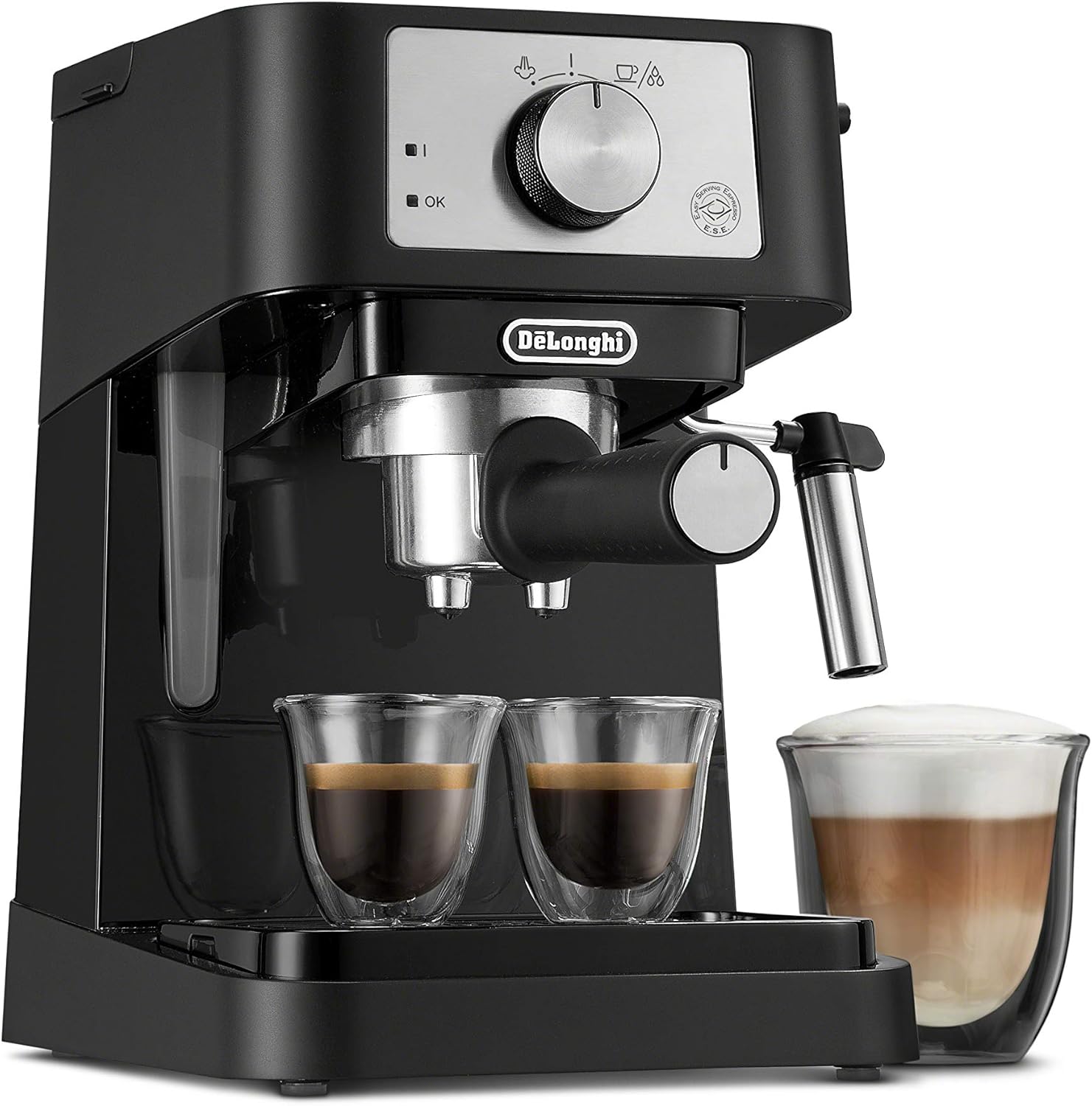
De'Longhi Stilosa EC260BK
| Output Pressure | 15 bar |
|---|---|
| Wattage | 1100 watts |
| Power Source | AC adapter |
| Coffee Input Type | ground_coffee |
| Filter Type | Reusable |
The De'Longhi Stilosa EC260BK is a compact, entry-level manual espresso machine aimed at home users who want control without complexity. It uses a 15-bar pump and a stainless steel boiler to pull single or double shots through a two-filter portafilter, and a separate tamper is included for more consistent extraction. The manual steam wand lets you texture milk for lattes and cappuccinos, and the two-level cup tray accommodates taller cups. Typical use is straightforward: fill the 33.8 fl.oz water tank, grind or load coffee, tamp, and brew with button controls; finishing drinks requires manual frothing. The stainless steel boiler and simple mechanical controls suggest durable daily performance and easier maintenance than some compact machines. Limitations are its manual operation, which requires some learning to dial in shots and steam milk evenly, and the modest water capacity that means more frequent refills in busier households. For buyers under a midrange budget this machine balances build quality and essential features in a small footprint.
Best for: Buyers who prioritize dependable, factory-quality components and a straightforward manual workflow for daily at-home espresso and milk drinks.
Less Ideal for: People who want fully automatic, one-touch drinks or large-capacity machines for frequent heavy use should consider other types of machines.
- 15-bar pump with portafilter and single/double filters for standard espresso extraction
- Stainless steel boiler for more consistent performance and durability
- Manual steam wand for textured milk to make lattes and cappuccinos
- Compact countertop footprint and two-level cup holder for taller cups
- Includes tamper and measuring spoon so you can get started right away
- Manual controls require practice to consistently dial in espresso and milk froth
- Relatively small 33.8 fl.oz water tank needs frequent refilling for multiple drinks
- No automatic dosing or programmable settings for one-touch convenience
Verdict: A compact, reliably built manual espresso machine that delivers consistent extractions and real steam frothing for buyers seeking durable performance under a midrange budget.
Mr. Coffee Cafe Barista

| Output Pressure | 15 bar |
|---|---|
| Operation Mode | Semi-Automatic |
| Power Source | electric |
| Human Interface Input | Buttons |
| Filter Type | Reusable |
The Mr. Coffee Cafe Barista is a compact semi-automatic espresso maker aimed at home users who want coffeehouse-style drinks without complicated steps. It uses a 15-bar electric pump and single- or double-shot filters to extract espresso, while a removable milk reservoir and automatic frother produce cappuccino and latte foam with an adjustable knob. One-touch controls simplify brewing choices, and the reusable filter plus removable water tank make daily use and cleaning straightforward. In practice it performs well when you use a consistent grind and proper tamping, delivering bold flavor for the price point and saving time compared with manual steaming. Limitations include basic button controls rather than advanced programmability and a predominantly plastic internal construction despite a stainless steel exterior, so it will not match the durability or fine temperature control of higher-end prosumer machines. For buyers weighing features and social proof, its long track record and broad user base make it a dependable choice under $600, but expect compromises in refinement compared with pricier models.
Best for: Buyers wanting an affordable, well-known machine that reliably makes espresso-based drinks at home with minimal learning curve and solid community feedback.
Less Ideal for: Experienced baristas or users seeking precise temperature profiling, commercial-grade build quality, or advanced programmability should look at higher-end machines.
- 15-bar pump for stronger espresso extraction
- Automatic milk frother with removable milk reservoir for easy cappuccinos and lattes
- One-touch controls for single or double shots that simplify operation
- Removable water reservoir and reusable filter for easier daily maintenance
- Not as precise in temperature and pressure control as prosumer or commercial machines
- Mostly basic controls and limited programmability options
Verdict: A dependable, easy-to-use home espresso machine that delivers café-style drinks and strong social proof for buyers on a sub-$600 budget.
CASABREWS CM5418 Espresso Machine
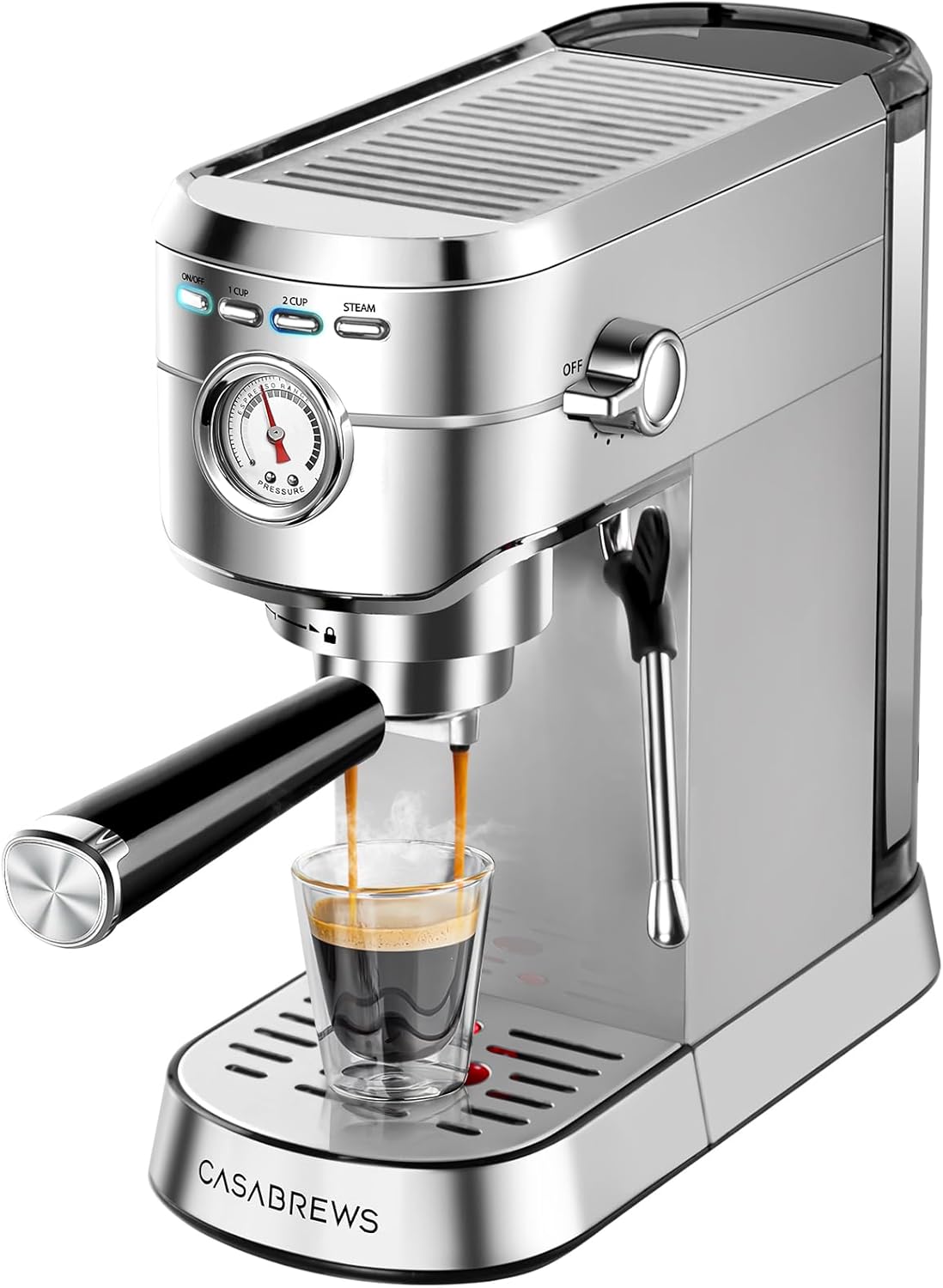
| Output Pressure | 20 bar |
|---|---|
| Wattage | 1350 watts |
| Operation Mode | Semi-Automatic |
| Coffee Input Type | ground_coffee |
| Filter Type | Reusable |
The CASABREWS CM5418 is a compact semi-automatic espresso machine aimed at home users who want café-style drinks without a large footprint. It uses a 20-bar Italian-style pump with a built-in pressure gauge and pre-infusion to help produce crema and more consistent shots, while buttons let you select single or double volumes. A powerful steam wand textures milk for lattes and cappuccinos and the top cup warmer plus removable 34 oz water tank make everyday use convenient. The machine includes 51mm portafilter accessories, a tamper, and reusable filter baskets so you can dial in grind and tamp for better extraction. Expect a short warm-up time and noticeable improvement over pod machines, but plan for a learning curve to get grind, dose, and tamp right and occasional cooling steps after steaming to avoid over-temperature protection. The stainless steel exterior cleans up well but internal maintenance like regular descaling and filter soaking is required to keep performance steady. For cautious buyers wanting a capable, compact espresso maker under $600, this balances useful barista features with straightforward controls.
Best for: Buyers who want a reliable, café-style home espresso machine with manual controls and visible pressure feedback and prefer a compact, easy-to-place unit backed by basic accessories and support.
Less Ideal for: People who want fully automatic, push-button specialty drinks with zero setup or those who need high-volume commercial throughput.
- 20-bar pump with built-in pressure gauge for visible extraction feedback
- Powerful steam wand that produces microfoam suitable for latte art
- Compact stainless steel design with removable 34 oz water tank for easy refills
- Includes 51mm portafilter, single and double filters, and tamper for manual control
- Single-boiler system requires cooling between steaming and brewing and can trigger over-temperature protection if used back-to-back
- Requires manual dialing of grind, dose, and tamp to achieve best results which may frustrate beginners
Verdict: A compact, feature-rich semi-automatic espresso machine that gives risk-conscious buyers visible pressure control and a real steam wand for café-style drinks at home.
Choosing the Right Espresso Machine: Key Factors to Consider
Extraction Consistency
Consistent extraction determines shot taste and crema quality. Machines that hold steady pressure and heat yield repeatable shot times and balanced flavors across sessions.
Pay attention to how a machine manages pressure profiles and whether it uses a dedicated pump with a stable brass or stainless-steel boiler. Variability in extraction can come from insufficient temperature stability, thin portafilters, or inconsistent water delivery, all of which affect crema and bitterness.
Temperature and Pressure Control
Accurate temperature and pressure are essential for extracting oils and sugars without over- or under-extracting. Homes machines may use thermoblocks, single boilers, or heat-exchange systems; each design has tradeoffs in stability and recovery time.
Consider how quickly the machine reaches brew temperature, how repeatable that temperature is between shots, and whether it has pressure-limiting or profiling features. Better control reduces guesswork and makes dialing in dose and grind easier.
Steam Wand and Milk Texturing
If you make milk drinks, the steam system matters as much as the group head. A powerful, responsive wand lets you produce microfoam efficiently and consistently.
Look at steam pressure, the wand's range of motion, and whether the machine provides enough steam recovery for multiple drinks. Ease of purging and cleaning the wand also affects hygiene and long-term performance.
Ease of Maintenance and Cleaning
Routine cleaning keeps shots tasting good and parts functioning. Machines that make common tasks simple—backflushing access, removable drip trays, easy-to-empty water tanks, and straightforward descaling—save time and avoid performance degradation.
Also consider how easy it is to replace wear items like gaskets and filters. A machine that requires minimal disassembly for cleaning will be friendlier for daily use and extend overall lifespan.
Size, Capacity, and Counter Fit
Countertop space and how many drinks you make influence the practical choice. A larger water reservoir and higher boiler capacity reduce refill frequency, while a compact footprint helps in smaller kitchens.
Think about cup clearance under the spout, whether the drip tray is removable, and how the machine's weight and footprint match your intended location.
Materials and Build Quality
Durable materials and solid construction lead to fewer repairs and more consistent performance. Look for metal portafilters, sturdy switches or knobs, and well-sealed plumbing inside the chassis.
While cosmetic finishes matter to some buyers, prioritize components exposed to heat and pressure. Machines that allow access to internal parts for servicing tend to have longer useful lives.
Manual Vs. Semi-Automatic Vs. Pod Options
Different control styles change how involved you are in pulling shots. Manual and semi-automatic machines give more control over extraction variables, while pod or capsule-based systems trade flexibility for convenience. Within a $600 budget you can find competent semi-automatic machines that balance control and ease of use.
If you enjoy dialing in grind size, dose, and tamping, a machine with a traditional portafilter and consistent pressure will reward that effort. If ease and speed are more important, look for machines with programmable shot volumes or simple single-button operation.
- Manual: maximum control, requires practice.
- Semi-automatic: good balance of control and convenience.
- Pod-based: fastest and easiest, fewer customization options.
Grind and Dose: How They Interact with Your Machine
The machine is only part of the equation. Grind size, uniformity, and dose have an outsized effect on shot quality. A subpar grinder will limit what any espresso machine can produce, so plan the budget accordingly.
Consistent dosing and a quality burr grinder make it much easier to achieve steady extraction on machines that have reasonable temperature and pressure stability. Small adjustments to grind or dose often fix taste issues before you start changing machine settings.
- Finer grind increases extraction but can clog poorly designed groupheads.
- Coarser grind reduces pressure and can produce sour shots.
- Use a scale and timer to replicate successful pulls.
Maintenance Routine That Keeps Performance Stable
Establish a simple routine: flush the group head daily, purge and wipe the steam wand after each use, empty drip trays and rinse the water tank weekly, and schedule periodic deep cleaning and descaling. Small daily habits prevent buildup that affects taste and mechanical parts.
Keep replacement parts like gaskets and shower screens accessible. Knowing what to expect for routine maintenance helps you avoid surprises and keeps the machine performing like new for longer.
- Daily: purge group head and steam wand, remove spent puck.
- Weekly: backflush with detergent if the machine supports it.
- Monthly: descale and inspect seals and filters as needed.
Space and Installation Considerations
Think about where the machine will live. Machines with larger water reservoirs or external water lines need more space and sometimes a different placement than smaller units. Consider proximity to a power outlet and how easy it is to lift and remove the water tank for refills.
Also plan for ventilation and heat from the machine. A well-ventilated corner keeps cabinets and nearby items safe from heat exposure, and avoiding cramped placements simplifies daily operation.
- Measure counter clearance for cup height and door swings.
- Ensure an outlet within reach and avoid using extension cords.
- Leave a small gap around the machine for airflow and maintenance access.
Accessories That Improve Everyday Use
Small accessories can make a big difference. A dedicated tamper that fits the portafilter, a milk pitcher with measurement marks, a knock box for spent pucks, and a compact brush for the group head all streamline daily workflow. These items improve consistency and reduce mess.
Consider water filtration if your tap water is hard. A simple inline filter or a small pitcher filter reduces scale buildup and preserves flavor, which in turn reduces the frequency of descaling.
- Tamper and scale for consistent dosing.
- Milk thermometer or frothing pitcher for better milk texture.
- Group head brush and soft cloth for daily cleaning.
How We Chose the Best Espresso Machine
We focused on attributes that directly affect shot quality and household usability. Primary evaluation criteria included extraction consistency, temperature and pressure control, steam performance for milk texturing, build and component durability, and everyday maintenance demands. Extraction consistency covered boiler or thermoblock stability and how repeatable the shot times and crema were under normal home conditions. Steam performance considered wand pressure, steam heat-up time, and ease of producing microfoam for lattes and cappuccinos. We also weighed convenience factors such as water tank capacity, portafilter size compatibility, and how intuitive controls are for new users. Durability assessment emphasized replaceable parts and sturdier materials rather than cosmetic finishes. Machines that required extensive aftermarket upgrades, complex professional servicing, or that lacked basic cleaning accessibility were excluded. The result is a shortlist of reliable, user-friendly machines that balance performance and upkeep for home baristas on a moderate budget.
Our full evaluation process is outlined in our review methodology.
FAQ
How often should I descale an espresso machine under $600?
Descale frequency depends on water hardness and usage. Typically, every 2 to 6 months is common for household use. If you have a built-in filter or use softened water, you can lengthen the interval; if you notice slower steaming or odd tastes, descale promptly.
Can I make milk drinks if a machine has a smaller boiler?
Yes, but a smaller boiler or less powerful steam system may require longer recovery between steaming sessions. For occasional cappuccinos and lattes it is fine, but if you make multiple milk drinks back-to-back you will notice slower heat recovery and less forceful steam.
Do I need a high-end grinder with these machines?
A consistent burr grinder significantly improves results. You do not need the most expensive grinder, but a reliable conical or flat-burr unit with fine adjustment will make dialing in shots far easier than using pre-ground coffee or a blade grinder.
Is a machine under $600 suitable for daily home use?
Yes. Many machines in this price range are built for daily household use and offer a good balance of performance and durability. The key is to follow maintenance routines and match the machine's capabilities to your drink preferences.
What water should I use for the best flavor and longevity?
Use filtered or softened water with moderate mineral content. Very soft water can corrode parts over time, while very hard water increases scale buildup. Aim for a balanced profile or use a simple inline or pitcher filter to reduce scale without stripping flavor.
Final Verdict
When choosing an espresso machine under $600, prioritize extraction consistency and reliable temperature control first, then match steam performance to how often you make milk drinks. Factor in maintenance needs and build quality to ensure long-term reliability. Balance countertop fit and everyday convenience with the level of control you want. If you plan to practice dialing in shots, choose a machine that offers stable pressure and a proper portafilter. If speed and simplicity matter more, favor ergonomic controls and easy cleaning features. Either way, focus on the few criteria that will most affect your daily routine to pick confidently.