
Note: This article contains affiliate links. If you click on these links and make a purchase, we may earn a small commission at no extra cost to you. This helps support our research and content. Read our full affiliate disclosure here.
If you want café-style milk drinks at home, an espresso machine with a steamer makes a big difference in texture and temperature control. The right unit should deliver steady steam pressure for microfoam while also pulling consistent espresso shots so drinks taste balanced. This guide highlights seven top machines with steamers that made our shortlist. We evaluated each entry for steaming capability, extraction consistency, build and control options, and practical upkeep to help you find a machine that suits your daily routine and beverage preferences. Read on for the evaluation criteria and what matters when choosing a steamer-equipped espresso machine.
Top Picks at a Glance
| Best Overall The best all-around choice for most situations | Ninja Luxe Café ES601 |  |
| Best Quality Built to a higher standard if you want something more solid | Breville Bambino BES450BSS | 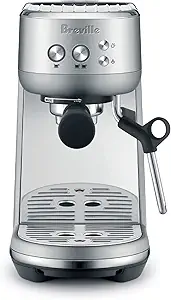 |
| Best Value The sweet spot between price and what you get | CASABREWS 3700 Essential |  |
| Best Budget The cheapest option that still gets the job done reliably | Mr. Coffee 4-Shot Steam Espresso |  |
| Top Rated A top-rated pick with lots of positive feedback | Breville Barista Express BES870XL |  |
| Most Popular A crowd favorite that many people choose with confidence | CASABREWS CM5418 Espresso Machine |  |
| Best Seller A high-volume bestseller chosen again and again | Gevi 20-Bar Espresso Machine ECMG0 | 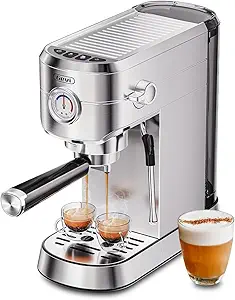 |
Ninja Luxe Café ES601

| Operation Mode | Fully Automatic |
|---|---|
| Wattage | 1650 watts |
| Coffee Input Type | Ground, Whole Bean |
| Filter Type | Reusable |
The Ninja Luxe Café ES601 combines a conical burr grinder, automatic espresso system, drip brewer, and rapid cold brew maker into one guided home café machine. It is typically used by people who want café-style drinks without manual technique — the machine grinds beans with 25 settings, dose-controls by weight, and uses an assisted tamper to prepare shots, while a dual froth system (magnetic whisk plus steamer) produces hands-free microfoam for lattes and cappuccinos. Practical benefits include the 70 oz removable water reservoir for fewer refills, a self-cleaning steam wand that purges after use, built-in accessory storage, and a long list of included tools for maintenance and setup. The Barista Assist technology walks users through grinding, tamping, and temperature/pressure adjustments, which is useful for beginners or anyone who wants consistent results quickly. Trade-offs are that its footprint and complexity are larger than single-purpose machines, and heavier users who want full manual control may find the assisted features limiting. The ES601 is best when you want versatility and automated steaming without learning professional tamping and steaming techniques.
Best for: Buyers who want a single versatile machine that reliably produces espresso-based drinks and steamed milk with minimal learning curve and consistent results across drink types.
Less Ideal for: People who prefer a compact single-purpose brewer or those who want full manual control over every extraction and tamping step should look elsewhere.
- True 3-in-1 functionality: espresso, drip coffee, and rapid cold brew in one unit.
- Built-in conical burr grinder with 25 settings and weight-based dosing for consistent extraction.
- Hands-free dual froth system and self-cleaning steam wand for easy milk drinks.
- Large removable 70 oz water reservoir and integrated accessory storage for convenience.
- Includes many accessories (portafilter, tamper, cleaning tools) so you can start brewing right away.
- Larger footprint and heavier than single-function machines, requiring more counter space.
- Automated assisted features reduce hands-on control for experienced baristas.
Verdict: Choose the Ninja Luxe Café ES601 if you want an all-in-one, automated home machine that grinds, doses, and steams reliably for café-style milk drinks with minimal effort.
Breville Bambino BES450BSS

| Operation Mode | Semi-Automatic |
|---|---|
| Wattage | 1560 watts |
| Voltage | 120 volts |
| Coffee Input Type | Ground |
| Filter Type | Reusable |
The Breville Bambino is a compact semi-automatic espresso machine built for fast, consistent shots and reliable milk texturing. It uses a ThermoJet heating system with PID temperature control to reach extraction temperature in about 3 seconds, and a 54mm portafilter with single and double filter baskets for concentrated, full-bodied espresso. The manual steam wand creates fine microfoam quickly, letting you texture milk for lattes and cappuccinos with good control. Its small footprint makes it a good fit for kitchen counters where space is limited, and the reusable filters and included tamper and milk jug mean you can dial in dose and technique without buying extras. On the downside it is a manual workflow that requires some practice to get consistent tamping and shot timing, and it lacks an integrated grinder so you will need a separate grinder to get the best results. The Bambino is a practical choice for someone who prioritizes fast heat-up, precise temperature control, and quality steamed milk in a compact package.
Best for: Buyers who want café-quality espresso and fast steam performance in a compact machine and who are willing to learn manual dosing and milk texturing to get the best results.
Less Ideal for: People seeking a fully automatic, push-button experience with an integrated grinder or those who prefer a completely hands-off machine.
- ThermoJet heating system reaches extraction temperature in about 3 seconds
- PID temperature control for consistent shot temperature
- Powerful steam wand that produces smooth microfoam for latte art
- Compact footprint fits small countertops
- Includes portafilter, tamper, milk jug, and single/double filter baskets
- No built-in grinder so a separate grinder is required for best results
- Manual dosing and tamping require skill to achieve consistent shots
Verdict: Choose the Bambino if you want fast heat-up, precise temperature control, and strong steam performance for cafe-style espresso and microfoam in a compact machine.
CASABREWS 3700 Essential

| Output Pressure | 20 bar |
|---|---|
| Wattage | 1350 watts |
| Coffee Input Type | Ground |
| Operation Mode | Semi-Automatic |
| Capacity | 43.9 fluid ounces |
The CASABREWS 3700 Essential is a compact semi-automatic espresso machine aimed at home users who want cafe-style drinks without a large footprint. It brews with a 20-bar Italian pump and PID temperature control to help produce consistent extraction and crema, while the 51mm portafilter and single/double cup filters let you choose shot volume. The powerful steam wand creates microfoam for lattes and cappuccinos, and practical touches like a removable 43.9 oz water tank and removable drip tray make refilling and cleaning straightforward. The brushed stainless-steel housing feels durable and the top cup warmer helps keep shots hot. Expect a short heat-up time and button controls that let you program shot volume for repeatability. Limitations include a single-boiler design, so brewing immediately after steaming requires cooldown steps, and it lacks a pressure gauge for visual tuning. For buyers focused on efficient, reliable home espresso and milk drinks, this machine covers the essentials well.
Best for: Buyers who want a compact, no-nonsense home espresso machine that reliably produces espresso and milk drinks and prioritizes consistent temperature and easy maintenance.
Less Ideal for: Those seeking a prosumer machine with dual boilers, fast back-to-back steaming and brewing, or advanced pressure readouts should consider higher-end models.
- 20-bar pump with PID temperature control for consistent extraction
- Powerful steam wand that produces microfoam suitable for lattes and cappuccinos
- Removable 43.9 oz water tank and removable drip tray for easy refills and cleaning
- Stainless-steel housing and 51mm portafilter deliver a durable, cafe-style feel
- Single-boiler system means you must wait or follow cooldown steps when switching between brewing and steaming
- No built-in pressure gauge for real-time pressure feedback
Verdict: A compact, temperature-stable home espresso machine that delivers reliable espresso and cafe-style milk drinks with easy maintenance.
Mr. Coffee 4-Shot Steam Espresso

| Operation Mode | Semi-Automatic |
|---|---|
| Wattage | 1200 watts |
| Power Source | AC adapter |
| Coffee Input Type | ground |
| Filter Type | Reusable |
The Mr. Coffee 4-Shot Steam Espresso Maker is an entry-level steam espresso machine aimed at home users who want café-style drinks without a complex learning curve. It uses a powerful steam-brewing process and an extra-large portafilter to brew up to four shots at once, and the integrated frothing wand plus stainless steel pitcher simplify steaming milk for lattes and cappuccinos. The machine is semi-automatic with button controls and includes a removable frothing wand cover and a water pitcher with measurement markings to help repeatable results. Practical benefits include straightforward setup, reusable filter, and accessories such as a measuring scoop so you can start brewing right away. Limitations are the steam-based extraction, which will not match the pressure and flavor precision of pump-driven machines, and the machine's basic controls mean less fine tuning for experienced espresso users. Noise and steam venting are typical for this class, so expect a bit of steam and sound during operation.
Best for: Buyers seeking an affordable, no-frills way to make espresso-based drinks and froth milk at home without investing in a pump machine or learning advanced techniques.
Less Ideal for: If you want cafe-grade extraction, precise pressure control, or advanced programmability, a higher-end pump espresso machine is a better choice.
- Brews up to four shots at once with extra-large portafilter
- Integrated frothing wand and stainless steel pitcher for easy milk steaming
- Includes useful accessories: water pitcher with measurements and measuring scoop
- Reusable permanent filter reduces ongoing filter costs
- Steam-brewing extraction is less consistent and less flavorful than pump espresso machines
- Limited control and tuning options for advanced users
Verdict: A budget-friendly steam espresso maker that delivers easy-to-froth lattes and up to four-shot brewing for home users who prioritize simplicity and value.
Breville Barista Express BES870XL

| Wattage | 1600 watts |
|---|---|
| Voltage | 120 |
| Coffee Input Type | whole_beans |
| Filter Type | Reusable |
| Capacity | 1 cups |
The Breville Barista Express BES870XL combines an integrated conical burr grinder, 54mm portafilter, thermocoil heating and a manual steam wand to let a home user go from whole beans to espresso and textured milk in a single countertop unit. Typical use is grinding directly into the portafilter, dialing in grind and dose with the 16 grind settings, extracting with low-pressure pre-infusion and finishing with steam-based microfoam for lattes or cappuccinos. Notable features include dose-control grinding, digital temperature control (PID) for consistent extraction, and a powerful steam wand for manual microfoam suitable for pouring latte art. Practical benefits are consistent shot temperature, fresher flavor from on-demand grinding, and the ability to learn barista techniques on one machine. Important limitations are its manual workflow—tamping, milk texturing and shot timing require practice—and the single-cup capacity design that is less convenient for serving multiple drinks quickly. Maintenance like regular cleaning of the grinder and backflushing adds ongoing care requirements.
Best for: Home buyers who prioritize a reliable, consistent machine that delivers café-quality espresso and lets them learn hands-on barista skills with a durable, well-engineered unit.
Less Ideal for: People who want fully automatic one-touch specialty drinks or need to prepare many milk-based drinks back-to-back in a short time.
- Integrated conical burr grinder with adjustable grind settings for fresher espresso
- PID temperature control for stable, repeatable extraction
- 54mm stainless steel portafilter and metal filter baskets for commercial-style shots
- Powerful steam wand capable of producing microfoam for latte art
- Includes useful accessories like integrated tamper and dose trimming tool
- Manual operation requires practice to get consistent results
- Single boiler/thermocoil design limits simultaneous steaming and extraction speed
Verdict: Buy this if you want a dependable, grinder-equipped semi‑automatic machine that produces consistent shots and café‑quality steamed milk for home use.
CASABREWS CM5418 Espresso Machine
| Operation Mode | Semi-Automatic |
|---|---|
| Wattage | 1350 watts |
| Output Pressure | 20 bar |
| Coffee Input Type | ground_coffee |
| Filter Type | Reusable |
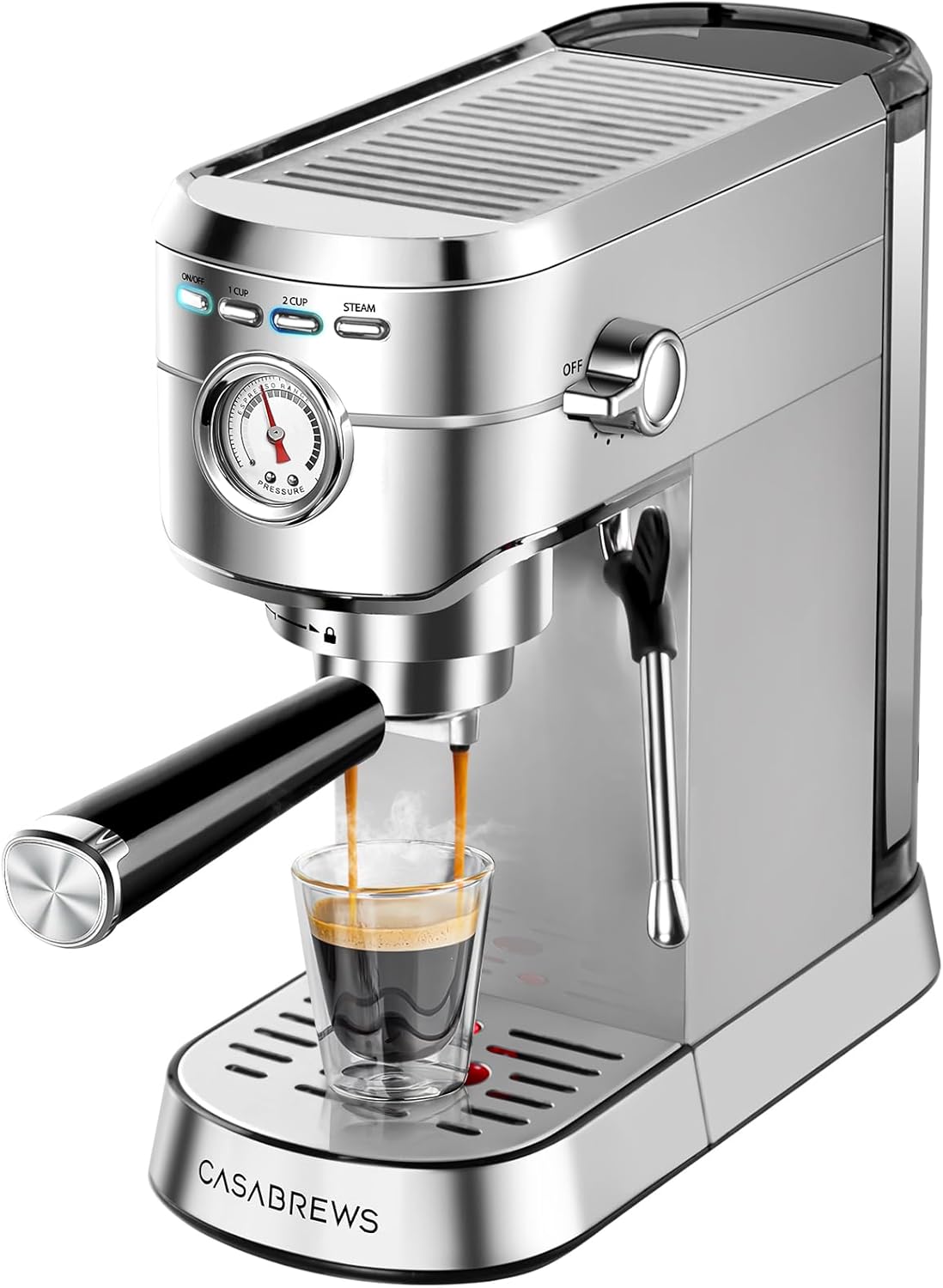
The CASABREWS CM5418 is a small countertop semi-automatic espresso machine aimed at home baristas who want café-style drinks without a large footprint. It uses a 20-bar Italian pump and a built-in pressure gauge to help dial in extraction, and a single-boiler 1350 W heating system with a steam wand that produces microfoam for lattes and cappuccinos. The removable 34 oz water tank and 51 mm portafilter make routine use straightforward, and the top cup warmer and removable drip tray are practical touches for everyday brewing. Expect a brief preheat cycle and occasional cooldown steps after steaming milk to avoid over-temperature protection, and the machine works with ground coffee using the included single- and double-shot filter baskets. This model gives clear visual feedback for pressure and supports pre-infusion, which helps improve flavor when you take a moment to adjust grind and tamp. For buyers who value compact design and a capable steam wand, the CM5418 delivers strong performance, though it requires some hands-on tempering, dosing, and cleaning like most semi-automatic machines.
Best for: Buyers who want a compact, influencer-recommended home espresso machine that gives visible pressure feedback and an effective steam wand and who are comfortable doing some manual dialing and basic maintenance.
Less Ideal for: People seeking a hands-off, push-button single-touch espresso maker or those who need commercial throughput and back-to-back steaming without pauses.
- 20-bar pump with built-in pressure gauge for visible extraction control
- Powerful steam wand that produces microfoam suitable for latte art
- Compact stainless steel body with removable 34 oz water tank for easy refills
- Includes 51 mm portafilter, single- and double-shot filter baskets, and tamper
- Single boiler design requires cooldown between steaming and brewing to avoid overheating
- Requires manual dialing of grind, dose, and tamp—less convenient than fully automatic models
Verdict: Choose the CM5418 if you want a compact, pressure-visible home espresso machine with a strong steam wand that rewards hands-on tuning for better café-style drinks.
Gevi 20-Bar Espresso Machine ECMG0
| Output Pressure | 20 bar |
|---|---|
| Operation Mode | Semi-Automatic |
| Wattage | 1350 watts |
| Power Source | AC adapter |
| Filter Type | Reusable |
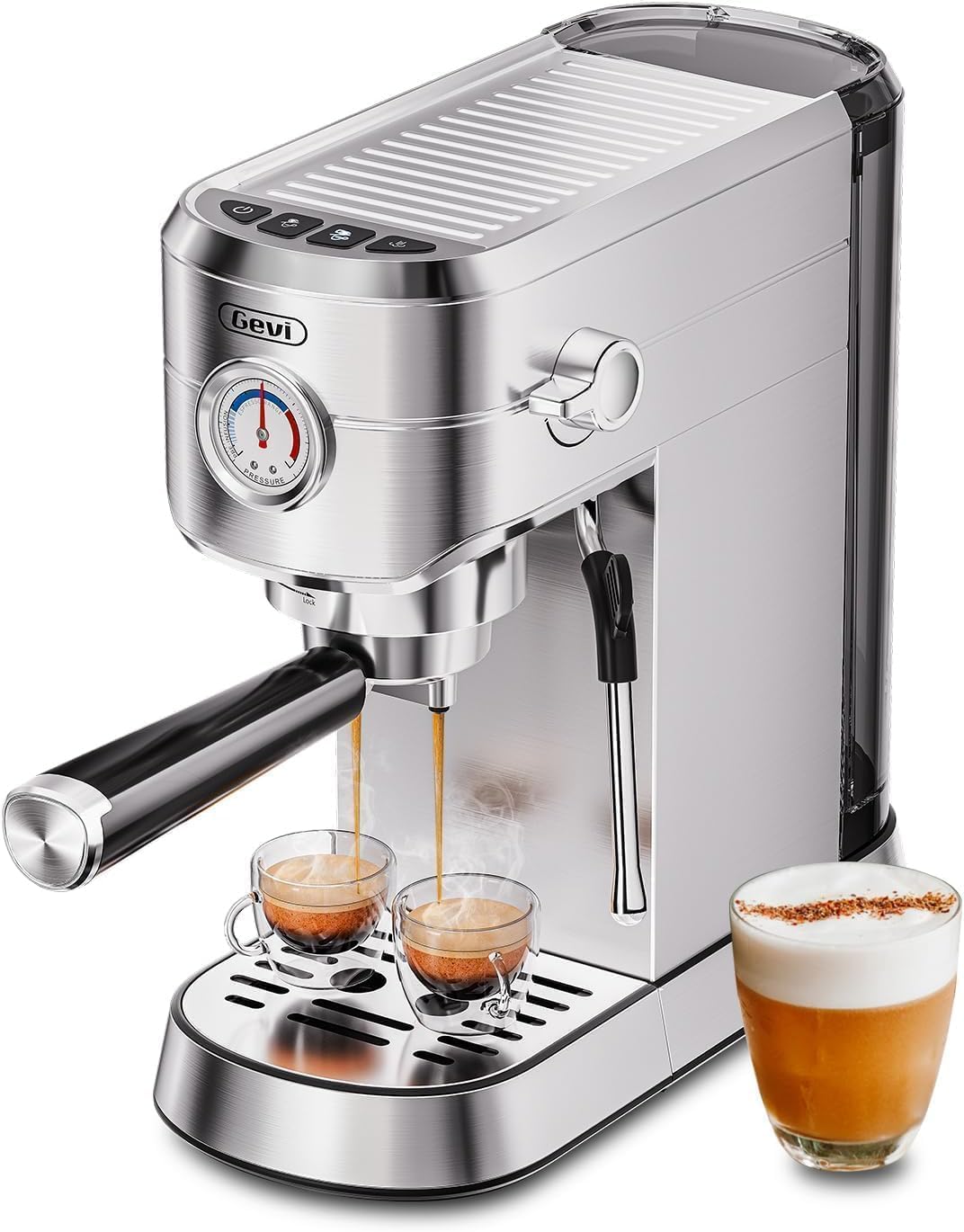
The Gevi 20-Bar Espresso Machine is a countertop semi-automatic unit aimed at making espresso-based drinks and Americanos at home or in a small office. It uses a 20-bar pump, NTC temperature control and pre-infusion to help extract a fuller flavor, and a built-in pressure gauge and shot-volume adjustment let you tune extractions. The machine includes a steam wand and automatic milk frother features that produce microfoam for lattes and cappuccinos, and the removable drip tray and 34 oz water tank simplify filling and cleaning. Controls are button-based and the stainless steel housing feels sturdy for regular use, though the high-pressure pump can produce some vibration and noise. It comes with 51 mm filter baskets, a tamper, and a cleaning pin so you can start pulling shots right away. Expect a short learning curve to get temperatures and tamp consistent and to keep the steam wand flushed after every use to avoid clogging.
Best for: Someone looking for a reliable, factory-quality espresso machine with a steamer that delivers café-style milk drinks without needing commercial-sized equipment and who prefers an easy-to-maintain, durable unit.
Less Ideal for: Buyers who want a fully integrated grind-and-brew workflow or a completely silent machine should consider alternatives that include a grinder or prioritize noise reduction.
- 20-bar pump with pre-infusion and pressure gauge for more controlled extractions
- Powerful steam wand and milk frother capable of producing smooth microfoam
- Removable 34 oz water tank and drip tray for convenient filling and cleaning
- Stainless steel construction with included portafilter, filters, tamper, and cleaning tools
- Can be noisy and cause slight vibration during operation
- No built-in grinder so ground coffee or separate grinder is required
Verdict: Choose this Gevi if you want a compact, stainless-steel espresso machine with a strong steam wand and pressure controls for consistent café-style milk drinks.
Choosing the Right Espresso Machine with Steamer: Key Factors to Consider
Steam Power and Wand Articulation
A steamer's raw power determines whether you can create dense microfoam for lattes and silky texture for cappuccinos. Look for machines that offer consistent steam pressure rather than short bursts of high pressure followed by long recovery times. Wand articulation and tip design also matter because they affect how easily you can position the wand to create a vortex and incorporate air evenly.
If you plan to make multiple milk drinks in a row, pay attention to steam recovery time. Some home machines deliver strong steam but need long intervals to reheat, which interrupts workflow and leads to uneven milk texture across drinks.
Extraction Consistency and Temperature Stability
Even with a great steamer, shot quality makes or breaks the drink. Boilers, heat exchangers, or dual-boiler designs influence how stable brew temperature is during single and back-to-back extractions. Consistent temperature and pressure help extract the right balance of oils and acids from the coffee grounds so milk sweetness and crema develop predictably.
Consider whether the machine offers any pre-infusion, pressure profiling, or programmable shot volumes. Those features help you tune extraction to your preferred roast and dose, leading to better results when steaming and mixing milk.
Control Layout and Programmability
Controls affect how easily you get repeatable results. Manual dials and levers give tactile control for experienced users, while programmable shot volumes and temperature settings benefit those who prefer set-and-forget operation. A clear gauge or digital readout for boiler pressure and temperature makes it easier to troubleshoot inconsistent shots or steaming performance.
Accessibility of controls also impacts daily use. Consider how intuitive the control scheme is, how many steps it takes to start steaming, and whether any presets save time for frequently prepared drinks.
Cleaning, Descaling, and Maintenance
Steamer wands and group heads require regular cleaning to prevent milk residue and scale buildup. Machines with removable drip trays, accessible steam wands, and straightforward descaling routines reduce the time and fuss of upkeep. Some designs include self-clean cycles or detachable wand tips that make daily purging and weekly deep cleaning easier.
Maintenance considerations also include how easy it is to access serviceable components. For a home machine expected to see daily use, manageable maintenance preserves performance and extends lifespan.
Size, Capacity, and Counter Fit
Espresso machines with steamers vary widely in footprint and water capacity. Measure your counter space and consider how much room you need for a milk pitcher and airflow around the unit. Larger reservoirs reduce the frequency of refilling but increase the machine's overall size. If you plan frequent multi-drink sessions, a unit with a larger water capacity or an easily refillable arrangement will suit you better.
Also think about cup clearance and ergonomics. A machine that fits your kitchen and workflow encourages regular use and makes steaming and extraction less awkward.
Steamer Types and What They Mean for Home Use
Home espresso machines typically use single boilers, heat exchangers, or dual boilers. Single-boiler models are compact and energy efficient but often require a wait between brewing and steaming. Heat-exchanger designs let you brew and steam in closer succession by using separate water paths, while dual-boiler machines provide the most stable simultaneous steam and brew performance.
For most home users who value milk drinks, a heat exchanger or dual-boiler design reduces interruptions between drinks. However, these systems usually come with added complexity and size, so balance steaming performance with how much space and maintenance effort you are comfortable with.
- Single boiler: simpler and smaller but may need cooldown or wait time between functions
- Heat exchanger: better for back-to-back drinks without long waits
- Dual boiler: best separation of brew and steam duties for consistent temperature control
Practical Steaming Techniques for Better Microfoam
Technique matters as much as equipment. Start with chilled milk and a clean pitcher. Position the wand tip near the surface to introduce air, then lower it slightly to create a whirlpool effect that polishes the milk into microfoam. Watch for small, consistent bubbling rather than loud splattering.
Purge the wand before and after steaming and wipe it immediately to prevent milk residue. Practice steaming in short bursts while checking milk temperature with a thermometer until you learn how long it takes your machine to reach the desired temperature.
- Chill milk and use the right pitcher size for volume
- Create a surface air intake then submerge for a whirlpool
- Purge and wipe the wand to keep tips clean and hygienic
How Water Quality and Milk Choice Affect Results
Mineral content and hardness in water influence scale buildup and extraction flavor. Use filtered water when possible to protect internal components and maintain consistent taste. Regular descaling prevents reduced steam output and uneven heating caused by scale formation.
Milk type affects foamability. Whole milk generally produces creamier microfoam, while lower-fat and alternative milks can behave differently under steam. Experiment with temperature and steaming technique to find the best texture for each milk type.
- Use filtered water to reduce scale and flavor variability
- Descale per manufacturer guidance to maintain steam performance
- Try different milk types and adjust technique for best texture
Accessories That Improve Steaming and Routine
Small accessories can make steaming and upkeep easier. A good-quality milk pitcher with measurement marks helps you control milk volume and technique. A thermometer lets you hit target temperatures reliably while you learn. A dedicated brush for group head and wand cleaning speeds daily maintenance.
Other accessories to consider include a tamper that fits your basket precisely, a knock box for spent pucks, and a scale for dosing. These items streamline workflow and help you achieve repeatable shots and consistent milk textures.
- Milk pitcher with spout and volume markings
- Thermometer for consistent milk temperature
- Brushes and cleaning tools for quick maintenance
Troubleshooting Common Steamer Problems
If steam output is weak, check for scale buildup, low water level, or a clogged wand tip. Regular purging and wiping help prevent clogging. If the machine takes too long to recover steam, look at the boiler type and whether the model is designed for back-to-back steaming.
Temperature swings during extraction or steaming can be due to inconsistent heat source or insufficient warm-up time. Allow the machine to reach operating temperature before pulling shots, and consult the manual for warm-up recommendations.
- Weak steam: check water level, descale, and clean wand tip
- Long recovery: verify boiler design and warm-up procedure
- Temperature swings: allow full warm-up and check settings
How We Chose the Best Espresso Machine with Steamer
We focused on features and performance that directly affect the quality of steamed milk and espresso extraction. Primary evaluation criteria included steam power and temperature control, extraction consistency and shot quality, boiler or heating system design, user controls and programmability, and ease of cleaning and maintenance. Each machine had to produce repeatable steam pressure sufficient for microfoam and demonstrate stable brew temperature across multiple shots. We excluded machines without an integrated steam wand or units clearly targeted only at pod systems without manual steaming capability. We also filtered out models with documented reliability concerns or with maintenance needs that push them beyond typical home use. Our picks emphasize real-world usability: how straightforward the steaming workflow is, how quickly the machine recovers steam between drinks, and which control layouts let you dial in shot length and milk temperature. Finally, we considered build quality and serviceability since consistent performance over time matters for daily espresso and milk-based drinks.
Our full evaluation process is outlined in our review methodology.
FAQ
How hot should steamed milk be for lattes and cappuccinos?
Target a milk temperature of about 140 to 155°F for lattes and slightly lower for delicate foam. Use a thermometer until you learn how your machine and pitcher correlate to temperature by feel.
Do all espresso machines with steamers make good microfoam?
Not always. Steam power, wand design, and boiler recovery determine microfoam quality. Higher steam pressure and good wand articulation generally make it easier to produce consistent microfoam.
How often should I descale a machine with a steamer?
Descale frequency depends on water hardness and usage. Typically descaling every 3 to 6 months is common for home use, but use filtered water and follow the manufacturer's guidance to avoid excessive mineral buildup.
Can I steam non-dairy milk the same way as dairy milk?
Many non-dairy milks steam well, but behavior varies by formulation. Barista blends are formulated to foam more like dairy. Expect to adjust technique and steaming time to achieve similar texture.
Will a bigger water reservoir improve steaming performance?
A larger reservoir reduces the need to refill during multiple drinks but does not directly increase steam power. It does help when making several drinks in succession by maintaining a stable water supply.
Final Verdict
Prioritize steaming performance and extraction stability when choosing an espresso machine with a steamer. Decide whether you need quick recovery for back-to-back drinks, or if a simpler, space-saving setup is acceptable for occasional milk drinks. Balance power and controls with ease of cleaning and counter fit to match your daily routine. Focus on how reliably a machine produces consistent shots and steady steam. That combination determines whether you can routinely pull café-style lattes and cappuccinos at home, so choose the unit that fits your workflow and maintenance preferences.