
Note: This article contains affiliate links. If you click on these links and make a purchase, we may earn a small commission at no extra cost to you. This helps support our research and content. Read our full affiliate disclosure here.
If you live near the ocean, a standard fan can corrode quickly and lose performance. A fan for salt air is built to resist rust, shed salt deposits, and keep delivering consistent airflow in a salty, humid environment. Choosing the right option matters because salt exposure shortens lifespan, increases maintenance, and can create safety issues with degraded electrical parts. This guide shortlists the best fans for salt air, focusing on models that balance corrosion protection, airflow, and low maintenance. We evaluate each pick against the practical needs of coastal homes, patios, and marine-adjacent spaces so you can pick the right fan for the location and duty cycle.
Top Picks at a Glance
| Best Overall The best all-around choice for most situations | DREO TurboCool Misting Fan DR-HEC005S |  |
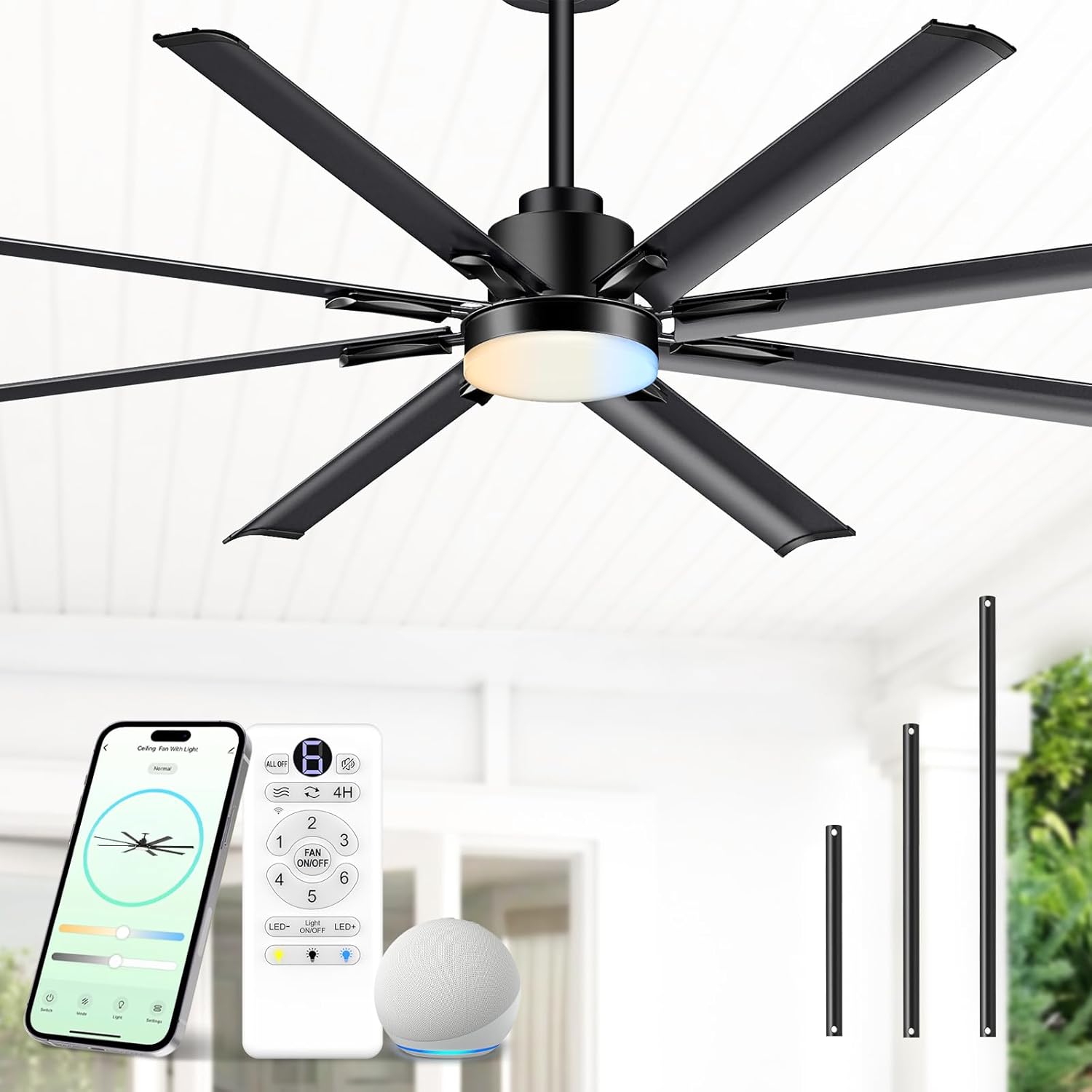
| Best Quality Built to a higher standard if you want something more solid | PIGOABZ 72-Inch Industrial Ceiling Fan |  |
| Best Value The sweet spot between price and what you get | Lasko Wind Machine 3300 |  |
| Best Budget The cheapest option that still gets the job done reliably | SUPWERFAN S20 Handheld Fan |  |
| Top Rated A top-rated pick with lots of positive feedback | Lasko Pivoting Pro U12104 |  |
| Most Popular A crowd favorite that many people choose with confidence | DREO Tower Fan 307 |  |
| Best Seller A high-volume bestseller chosen again and again | Comfort Zone 9" Twin Window Fan |  |
DREO TurboCool Misting Fan DR-HEC005S

| Wattage | 90 watts |
|---|---|
| Air Flow Capacity | 1771.8 cfm |
| Noise Level | 20 db |
| Tank Capacity | 6L |
| Motor Type | Brushless DC Motor |
The DREO TurboCool Misting Fan is a tower evaporative cooler that doubles as a fan and humidifier, using ultrasonic misting to produce very fine droplets and a brushless DC motor to push strong airflow. It is typically used in living rooms or bedrooms for quick cooling relief; the 6L tank supports up to seven hours on high or much longer on low, and the pump-free modular tank is easy to remove and rinse. Controls include app, voice, touch and a supplied remote, plus a humidity and temperature sensor and RGB status lighting, so you can monitor and adjust settings from across the room. Practical benefits include 12 speed levels, three operational modes, a long mist runtime, and a relatively quiet 20 dB low setting for night use. Important limitations are that it is an evaporative cooler so performance depends on ambient humidity and it is intended for indoor use only; it will not replace a refrigerant air conditioner in very humid climates. The plastic construction and electronic controls work well indoors but should be kept away from direct salt spray or severe coastal exposure to avoid accelerated corrosion over time.
Best for: Buyers who want a quiet, feature-rich indoor cooler that combines misting and strong tower fan airflow for balanced daily comfort in living spaces near the coast.
Less Ideal for: People who need heavy-duty outdoor cooling in direct salt spray zones or those who require reliable cooling in very humid climates should choose a different solution.
- Finer ultrasonic misting for rapid perceived temperature drop.
- Large 6L removable tank for extended runtime and easy cleaning.
- Brushless DC motor offers strong airflow with low noise down to 20 dB.
- Multiple control methods including app, voice, remote and touch for convenience.
- Built-in temp and humidity sensor for real-time feedback and automatic adjustments.
- Evaporative cooling effectiveness drops in high-humidity environments.
- Plastic exterior and exposed controls are not rated for outdoor salt air exposure.
Verdict: A quiet, easy-to-clean indoor misting tower that delivers fast perceived cooling and flexible controls for everyday coastal home use.
PIGOABZ 72-Inch Industrial Ceiling Fan
| Power Source | Hardwire |
|---|---|
| Number of Speeds | 6 |
| Air Flow Capacity | 9744.8 cfm |
| Motor Type | High-Performance 100% Copper BLDC Motor |
| Indoor Outdoor Usage | Indoor, Outdoor |
This PIGOABZ 72-inch fan is built for high airflow and coastal durability. It pairs an efficient 100% copper BLDC motor with eight marine-grade anodized aluminum blades to deliver up to 9,744.8 CFM while running quietly at about 30 dB, making it suitable for large covered patios, garages, and workshops. The motor is reversible for seasonal use, permanently lubricated for low maintenance, and the blades are treated to resist corrosion and salt-air damage, which is valuable near the coast. Controls include Alexa, app, and a battery-backed remote that can also be wall-mounted, and the integrated 3-CCT dimmable LED remembers your last setting. Installation is flexible with three included downrods and hardware tested for stability. Expect strong, steady circulation and low operating cost thanks to high CFM-per-watt efficiency, but note this is a hardwired ceiling mount requiring proper installation and sized for large spaces rather than small rooms. The industrial look is prominent, so it fits function-first settings better than subtle decor schemes.
Best for: Buyers who prioritize high-performance airflow and corrosion resistance for covered outdoor or coastal spaces and need a durable, low-maintenance fan for large areas.
Less Ideal for: People seeking a discreet or small-room ceiling fan, a plug-and-play portable solution, or a design-first fixture for formal interiors should look elsewhere.
- High maximum airflow (up to 9,744.8 CFM) for effectively moving air in large spaces
- Marine-grade anodized aluminum blades resist corrosion and salt-air damage
- Energy-efficient BLDC motor with high CFM-per-watt and low noise (~30 dB)
- Multiple smart control options including Alexa, app, and wall-mountable remote with memory
- Includes three downrods and heavy-duty mounting hardware for varied ceiling heights
- Hardwired installation suitable for permanent mounting and larger electrical projects
- Industrial aesthetic and 72-inch size may overpower small or formal rooms
Verdict: If you need a high-CFM, salt-air resistant ceiling fan for large covered outdoor or coastal spaces, this 72-inch PIGOABZ delivers powerful, efficient, and low-noise performance.
Lasko Wind Machine 3300

| Power Source | Corded Electric |
|---|---|
| Number of Speeds | 3 |
| Air Flow Capacity | 1985 cfm |
| Motor Type | brushless |
| Noise Level | 35 db |
The Lasko Wind Machine 3300 is a rugged 20-inch floor air circulator built to move a lot of air in large or exposed spaces. It offers three speeds up to 1,985 CFM from a 5-blade plastic impeller and a pivoting head so you can aim powerful airflow where you need it most, which is useful for cooling, ventilating, or drying surfaces. The unit is portable thanks to a large carry handle and ships fully assembled, and its brushless-style motor and rotary manual controls keep operation simple. Safety features include an ETL listing and Lasko's fused two-prong plug. Because the fan uses mostly plastic parts and a high-velocity motor, it generates noticeable white noise at higher speeds and is optimized for raw airflow rather than quiet, decorative operation. For salt-air environments the mostly plastic construction resists surface corrosion better than exposed metal, but prolonged outdoor exposure is not advised because the fan is rated for indoor use.
Best for: Buyers who prioritize practical, high-volume airflow for ventilating, drying, or cooling larger indoor spaces and want a portable, no-frills fan that resists surface corrosion.
Less Ideal for: People seeking a quiet, decorative, or weatherproof outdoor fan should look elsewhere.
- High airflow up to 1,985 CFM for quick cooling and drying
- Pivoting head provides directional control to target specific areas
- Durable plastic construction and carry handle improve portability
- ETL listed with fused safety plug for added electrical protection
- Only three speed settings limit fine-grain control
- Not rated for outdoor use so prolonged exposure to salt spray is discouraged
Verdict: Choose the Lasko Wind Machine 3300 when you need a portable, high-volume indoor fan that delivers powerful, targeted airflow and resists surface corrosion common in salt-air environments.
SUPWERFAN S20 Handheld Fan

| Power Source | Battery Powered |
|---|---|
| Number of Speeds | 5 |
| Wattage | 5 watts |
| Indoor Outdoor Usage | Indoor, Outdoor |
The SUPWERFAN S20 is a pocketable rechargeable hand fan designed for on-the-go cooling. It uses a 3600mAh battery and USB-C charging to deliver between about 3.3 and 12 hours of runtime depending on speed, and the stepless scroll wheel plus a digital LED readout lets you dial in precise airflow from a whisper to a high-speed 6100 RPM setting. The fan is lightweight and built from ABS/PC plastics, so it slips into a bag or clips to a lanyard for hands-free carry during travel, commuting, or outdoor waits. Practical benefits include long battery life for day trips, fast Type-C recharge, and a clear display that removes guesswork about power level. Limitations are its small physical size and consumer plastics construction, which mean it is better for personal cooling than for ventilating larger areas and may be vulnerable to heavy salt corrosion if repeatedly exposed to salty air without rinsing and drying. Noise at the highest speeds can be noticeable compared with larger fans, and wind is focused rather than diffused for a room.
Best for: Buyers wanting an inexpensive, portable personal fan for travel and outdoor activities who prioritize runtime and precise speed control over whole-room cooling.
Less Ideal for: People seeking a corrosion-resistant or heavy-duty outdoor fan for regular seaside use or those who need to cool multiple people or larger spaces.
- Stepless scroll-wheel control with digital display for precise airflow selection
- 3600mAh battery with USB-C fast charging for multi-hour runtime
- Very lightweight, pocketable design that includes a lanyard for hands-free carry
- Small airflow suited to personal use rather than cooling a room
- Plastic construction can be susceptible to salt corrosion if exposed to salt air and not rinsed
Verdict: A compact, budget-friendly rechargeable personal fan that gives precise, long-lasting airflow for one person when you need portable cooling.
Lasko Pivoting Pro U12104

| Power Source | Corded Electric |
|---|---|
| Number of Speeds | 3 |
| Air Flow Capacity | 289 cfm |
| Wattage | 100 watts |
| Motor Type | Brushless |
The Lasko Pivoting Pro U12104 is a small but powerful utility blower that pushes up to 289 CFM through a 12-inch plastic blade and a pivoting head for targeted airflow. It is typically used in garages, basements, workshops, and job sites to cool people, speed-dry floors or paint, or ventilate confined spaces. Controls are simple: a rotary dial gives three speeds and the fan tilts through about 270 degrees so you can aim air where it is needed. Practical extras include a 10-foot power cord, two built-in grounded outlets to power nearby tools, and an ETL listing with a circuit breaker and reset button for added electrical protection. The fan is lightweight and has a carry handle, making it easy to move between rooms. Limitations are its plastic construction and exposed grille design, which mean it is best kept away from direct salt spray or very humid marine exposures where corrosion-resistant materials would be preferable, and the three-speed control lacks finer speed tuning.
Best for: Buyers seeking a reliable, no-nonsense air mover for indoor spaces like garages, basements, and workshops who prioritize durable operation and simple, serviceable features.
Less Ideal for: People needing a corrosion-resistant or marine-rated fan for direct salt-air exposure or continuous outdoor use should consider purpose-built, weatherproof models instead.
- High-velocity airflow up to 289 CFM for fast cooling and drying
- 270-degree pivoting head lets you aim airflow precisely
- Two built-in grounded outlets provide local power for tools
- ETL listed with circuit breaker and reset button for electrical protection
- Lightweight with carry handle and long 10-foot cord for easy portability
- Plastic construction and standard finishes are not optimized for salty marine environments
- Only three speed settings, so airflow control is coarse
- No weatherproofing for outdoor or direct salt-spray use
Verdict: A portable, high-velocity indoor blower that reliably moves lots of air and is easy to position, making it a solid pick for drying and ventilating indoor spaces away from direct salt exposure.
DREO Tower Fan 307

| Number of Speeds | 8 |
|---|---|
| Modes | Normal, Natural, Sleep, Auto |
| Oscillation | 90° |
| Wattage | 36 watts |
| Motor Type | brushless DC motor |
The DREO Tower Fan 307 is a compact 36-inch oscillating floor fan built around an upgraded brushless DC motor that pushes strong airflow while keeping noise low. It offers eight speed settings and four modes including Normal, Natural, Sleep, and Auto, so you can dial in anything from a gentle bedroom breeze to a higher-velocity boost; the unit supports remote and touchpad control for easy adjustments. With 90 degree oscillation and a claimed airflow capacity for broad room coverage, it pairs well with an air conditioner to circulate cool air more effectively. Practical touches include a timer, removable rear grille and impeller for easier cleaning, and ETL safety certification. On the downside the fan runs on standard corded power and lists voltage at 240 volts which may matter for some regions, and the plastic construction means it is lightweight but less premium-feeling than metal alternatives. For buyers focused on quiet, adjustable oscillating cooling in bedrooms or living rooms, this model balances airflow and low noise in a small footprint.
Best for: Buyers who want a quiet, adjustable tower fan that delivers wide oscillating coverage and easy remote control for bedrooms and living spaces backed by strong customer feedback.
Less Ideal for: People seeking a heavy-duty, industrial-strength fan or a premium metal build should consider sturdier floor or bladeless alternatives.
- Brushless DC motor for efficient, high-velocity airflow with lower noise
- Eight speed levels and four modes for flexible comfort settings
- 90° oscillation spreads air across a wide area for better room coverage
- Includes remote and touch controls plus a timer for convenient operation
- Removable rear grille and impeller simplify cleaning and maintenance
- Plastic construction feels less durable compared with metal fans
- Corded operation and listed voltage may limit regional compatibility
Verdict: A feature-rich, quiet oscillating tower fan that gives flexible speeds and modes for effective bedroom and living-room cooling.
Comfort Zone 9" Twin Window Fan

| Power Source | Corded Electric |
|---|---|
| Number of Speeds | 3 |
| Air Flow Capacity | 272 cfm |
| Noise Level | 53.3 db |
| Installation Type | Window Mount |
The Comfort Zone 9" Twin Window Fan is a straightforward window-mounted airflow solution designed to pull fresh outside air in or push stale air out by manually reversing the unit. It uses two 9-inch blades driven by a 45.9-watt motor and a simple dial to choose among three speeds, including a lower quiet setting for bedrooms or offices. Accordion expanders lock to fit most double-hung windows from about 22.25" to 33" and a removable bug screen helps keep out insects and debris while in intake mode. The fan also converts to a freestanding unit using the included tabletop feet and has a built-in handle for moving between rooms. Practical benefits include easy installation, ETL certification for safety, and a slim profile that preserves window sightlines. Limitations are its plastic construction and exposed outdoor-facing parts when installed in corrosive environments, so it is not a sealed or marine-rated unit and will need regular cleaning if used where salt air or heavy humidity is present.
Best for: Buyers who prioritize a simple, reliable window fan to improve natural ventilation and prefer proven safety standards and fuss-free installation.
Less Ideal for: Homeowners seeking a corrosion-resistant or marine-rated fan for continuous exposure to salt spray should look for purpose-built outdoor or sealed units instead.
- Reversible intake/exhaust operation to bring fresh air in or push stale air out
- Auto-locking accordion expanders fit a wide range of double-hung windows securely
- Three speed dial with a quiet lower setting for night use
- Includes removable bug screen and tabletop feet for freestanding use
- Lightweight with a carry handle for easy room-to-room portability
- Plastic build and open window installation make it vulnerable to salt corrosion without routine maintenance
- Not weatherproof or sealed for continuous outdoor exposure
Verdict: A safe, easy-to-install reversible window fan that provides reliable fresh-air circulation for rooms when used with regular cleaning in salt-air environments.
Choosing the Right Fan for Salt Air: Key Factors to Consider
Corrosion Resistance and Materials
Coastal salt spray accelerates rust and pitting on metal parts and can degrade painted finishes. Choosing a fan with stainless steel fasteners, aluminum or composite blades, and a marine-grade or powder-coated finish reduces the chance of surface corrosion. Look for sealed bearings and motor housings rated for humid or saline environments.
Materials matter because small exposed screws or brackets are common failure points. Even if the main housing is protected, untreated internal fasteners can corrode and lead to wobble or motor stress.
Sealed Motor and Electrical Protection
Salt-laden air can migrate into motor housings and cause shorting or insulation breakdown over time. Fans designed for salt-air use typically have sealed or drip-proof motor enclosures, conformal-coated windings, or IP-rated protection against moisture and particulate ingress.
Electrical protection improves safety and longevity, especially in humid coastal rooms or covered outdoor areas where condensation forms. Verify whether switches, connectors, and wiring are rated for higher humidity and consider models with replaceable sealed components.
Airflow Performance and Coverage
A fan that resists corrosion must still deliver adequate airflow for the intended location. Airflow is influenced by blade diameter, pitch, motor torque, and RPM range. For patios and larger rooms, prioritize models with higher cubic feet per minute (CFM) capability and wider blade spans.
Also consider whether the fan is intended for spot cooling or whole-room circulation. A fan with adjustable speeds and oscillation can cover more area without running at high, noisy speeds.
Mounting Type and Placement
Where you plan to install the fan affects both performance and exposure. Ceiling-mounted fans need secure, rustproof hangers and balanced blades to avoid wobble under corrosive conditions. Wall- or pole-mounted fans for outdoor spaces should have corrosion-resistant brackets and hardware.
Mounting type also determines maintenance access. Ceiling fans may require ladder work for cleaning, whereas wall or pedestal units can be easier to reach. Choose a mounting style that matches the intended exposure and your willingness to perform routine upkeep.
Maintenance Requirements
Salt deposits build up over time and reduce efficiency if left unaddressed. Regular wiping of blades and a rinse for durable finishes will prolong life. Some fans offer removable blade assemblies or tool-free access to the motor compartment, which simplifies routine cleaning.
Consider how often you are willing to clean and whether replacement parts like sealed bearings or stainless hardware are readily available. Ease of maintenance can be as important as initial corrosion protection.
Noise and Local Comfort
Coastal homes often value quiet operation for bedrooms and living areas. Fans with brushless motors or precision-balanced blades tend to run quieter and maintain that quietness longer as components resist corrosion. Noise can also indicate mechanical stress from corroded fasteners or imbalanced blades, so initial quietness combined with corrosion-resistant design is ideal.
If you plan to use a fan on a covered patio where conversations occur, prioritize lower sone ratings or multi-speed controls to match the activity level.
Best Places to Use a Fan for Salt Air
Fans engineered for salt-air exposure are best used in covered outdoor spaces, screened porches, garages near the coast, and indoor rooms with frequent sea-spray inhalation. Covered patios benefit because the fan moves humid air without being directly hit by rain or full spray, which extends service life.
Indoor rooms that get heavy humidity from open windows toward the ocean also gain from a salt-air-rated fan because those units resist the gradual corrosion that can otherwise shorten lifespan. Keep fans in fully outdoor, exposed positions only if they are explicitly specified for direct marine exposure.
- Screened porches and lanais
- Covered patios and verandas
- Coastal garages and workshops
- Indoor rooms with direct ocean breezes
Installation Tips for Coastal Environments
Use stainless steel or galvanized mounting hardware and check that anchor points are rated for exterior use. Apply a light coat of corrosion-inhibiting compound to exposed fasteners where possible to add another layer of protection. For ceiling installations, ensure the electrical box and mounting bracket are secured with rust-resistant materials.
Locate the fan so it is protected from direct spray and extreme wind-driven salt. If the fan is installed under an overhang or inside a screened enclosure, it will face less abrasive salt exposure and require less frequent maintenance.
- Use corrosion-resistant screws and anchors
- Position under covers or inside screens when possible
- Seal electrical box openings to limit salt ingress
- Balance blades during installation to prevent wobble
Maintenance Routine to Prolong Service Life
Establish a simple schedule of monthly visual checks and quarterly cleanings during heavy-salt seasons. Wipe blades and housings with fresh water or a mild detergent to remove salt residue, then dry thoroughly. Avoid abrasive cleaners that strip protective finishes.
Inspect fasteners and mounting hardware for early signs of corrosion and replace them with stainless steel parts when needed. If the fan has a sealed motor, follow manufacturer guidance for lubrication or bearing checks to keep operation smooth.
- Monthly visual inspections
- Quarterly blade and housing cleanings
- Replace corroded fasteners with stainless hardware
- Follow motor care recommendations for sealed units
Energy Efficiency and Runtime Considerations
Fans with efficient motors use less energy for the same airflow, which matters if you run them for extended periods in coastal climates. Brushless DC motors often offer better efficiency, longer life, and smoother speed control than older AC motors. If you plan continuous operation, prioritize energy-efficient motor designs and multiple speed settings to balance comfort and power draw.
Also consider integrating timers or thermostatic controls so the fan runs only when needed. This reduces cumulative exposure to salt-laden air and lowers wear.
- Look for brushless or high-efficiency motors
- Use timers or thermostats to limit unnecessary runtime
- Multiple speeds help manage comfort and energy use
When to Call a Technician
If you notice electrical smell, persistent wobble that cleaning does not fix, or visible pitting in motor components, stop using the fan and consult a qualified technician. Salt-related damage can accelerate electrical faults and mechanical failures, and early professional intervention can prevent safety hazards.
Technicians can replace sealed bearings, recoat exposed surfaces, or recommend a different mounting approach to mitigate ongoing exposure. Regular professional inspections are worth considering for high-use coastal installations.
- Electrical odors or sparking
- Unfixable wobble after cleaning
- Visible pitting or motor housing damage
- Annual professional check for high-use installations
How We Chose the Best Fan for Salt Air
We prioritized features that directly affect durability and performance in salt-air environments. First, corrosion resistance was a leading filter: we looked for materials and coatings specified to withstand saline exposure, including stainless components, marine-grade finishes, and sealed motor housings. Next, airflow capability and blade design were evaluated to ensure effective cooling across typical indoor and covered outdoor settings. Energy efficiency and motor reliability were included to measure long-term operating cost and uptime in humid coastal climates. Noise levels and mounting versatility were considered because coastal living often demands quiet, adaptable installations on porches, garages, or rooms. Finally, ease of maintenance and serviceability mattered since regular salt buildup needs periodic cleaning and replacement parts should be accessible. We excluded standard indoor-only fans and products lacking any corrosion-mitigation features. Units intended solely for open, direct-spray marine applications were also filtered out unless they offered explicit salt-resistant design suitable for residential coastal use. The final selection reflects these concrete, buyer-focused criteria rather than general popularity or broad-stroke ratings.
Our full evaluation process is outlined in our review methodology.
FAQ
How often should I clean a fan used near the ocean?
Often perform a quick wipe monthly and a more thorough cleaning every three months during active salt seasons. Frequency depends on proximity to the water and local wind patterns; closer or windier sites need more frequent attention.
Are stainless-steel parts necessary for coastal fans?
Stainless steel fasteners and brackets significantly reduce corrosion risk and are recommended for coastal installations. They are not the only solution, but untreated steel will corrode faster and lead to performance issues.
Can I use a regular indoor fan in a screened porch by the sea?
A regular indoor fan may work for a while but will likely corrode faster and require more maintenance. Choose a fan with salt-air protections if you want lower upkeep and longer service life.
Is a sealed motor enough to protect a fan from salt damage?
A sealed motor helps a great deal because it limits salt ingress to internal components, but overall durability also depends on external materials, fasteners, and electrical connectors. Combine a sealed motor with corrosion-resistant hardware for the best results.
What mounting option is best for coastal wind and salt exposure?
Mount under a cover or inside a screened enclosure when possible. Ceiling mounts with rustproof brackets are suitable for indoor and covered outdoor use, while wall or pole mounts should use corrosion-resistant hardware and be positioned to avoid direct spray.
Final Verdict
Prioritize corrosion resistance and a sealed motor when choosing a fan for salt air, then match airflow capacity and mounting style to the space you need to cool. Expect tradeoffs between the lowest maintenance and highest airflow; pick a model with accessible parts and stainless hardware if you want to minimize upkeep. With attention to materials, installation, and a regular maintenance routine, you can choose a coastal-ready fan that provides years of reliable service and quiet, efficient cooling.