
Note: This article contains affiliate links. If you click on these links and make a purchase, we may earn a small commission at no extra cost to you. This helps support our research and content. Read our full affiliate disclosure here.
If you keep a mixed collection of reds, whites, and sparkling wines at home, a freestanding dual-zone wine cooler helps store each type at the right temperature without sacrificing kitchen or bar flexibility. You want steady temperatures, quiet operation, and enough capacity for how you buy and drink, whether that means everyday bottles or a small cellar rotation. This guide shortlists the top freestanding dual-zone wine coolers for home use and explains the practical features that matter for daily storage and short- to medium-term aging. Below we evaluate units on capacity, temperature control, noise, and ease of integration so you can pick a cooler that fits your space and drinking habits. Read on for the criteria we used and the buying considerations to match a model to your needs.
Top Picks at a Glance
| Best Overall The best all-around choice for most situations | Wine Enthusiast 32-Bottle Dual Zone | 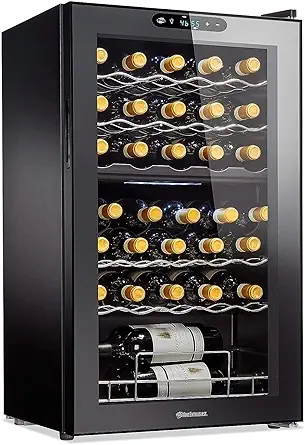 |
| Best Quality Built to a higher standard if you want something more solid | Allavino Reserva 67-Bottle Dual Zone |  |
| Best Value The sweet spot between price and what you get | Ivation 33-Bottle Dual Zone Wine Cooler |  |
| Top Rated A top-rated pick with lots of positive feedback | Yeego 24 Inch Wine Fridge YG-WD24-A |  |
| Most Popular A crowd favorite that many people choose with confidence | Velieta 24-Inch Dual Zone Wine Cooler |  |
| Best Seller A high-volume bestseller chosen again and again | Kalamera 24" Dual Zone Wine Cooler |  |
Wine Enthusiast 32-Bottle Dual Zone

| Capacity | 32 Bottles |
|---|---|
| Cooling Method | Compressor |
| Number of Sections | 2 |
| Number Of Shelves | 5 |
| Defrost System Type | Manual Defrost |
This Wine Enthusiast 32-bottle dual-zone cooler is a compact freestanding unit that uses a compressor to maintain two independent temperature zones, so you can store reds and whites at different service temperatures. It is typically used in kitchens, home bars, or offices where space is limited but a sizeable collection is desired. The MAX compressor cooling promises more consistent temperatures and greater energy efficiency than thermoelectric models, and the digital touchscreen with LED lighting makes setting and monitoring each zone straightforward. Chrome wire racks and a display shelf keep bottles secure and attractive while the unit operates quietly at about 40 dB with occasional auto-defrost sounds. Limitations include a right-hinged non-reversible door and temperature variance of around plus or minus 5 degrees during compressor cycles, so it is better for everyday storage and serving than precise long-term cellar aging. The cooler lacks adjustable shelving and must be manually defrosted, but for buyers wanting dual-zone convenience, visible display, and compressor performance in a compact footprint, it is a practical choice.
Best for: Home users who want a mid-size, freestanding cooler that holds a sizeable collection and offers separate zones for serving reds and whites without needing professional cellar precision.
Less Ideal for: Collectors seeking exact long-term cellar temperatures or those who need a reversible-door layout or adjustable shelving for nonstandard bottle sizes.
- Dual-zone compressor cooling lets you store reds and whites at different temperatures
- Digital touchscreen and LED lighting for easy control and clear visibility
- Compressor system offers more consistent cooling and better energy efficiency than thermoelectric units
- Chrome wire racks and a display shelf secure bottles while showcasing the collection
- Runs quietly at around 40 dB suitable for living spaces
- Door is not reversible which limits placement options
- Shelves are removable but not adjustable, reducing flexibility for oversized bottles
- Temperature can vary about plus or minus 5 degrees during compressor cycles
Verdict: A practical freestanding dual-zone compressor cooler for home users who want reliable, visible storage for a 32-bottle collection without professional cellar complexity.
Allavino Reserva 67-Bottle Dual Zone

| Capacity | 67 bottles |
|---|---|
| Temperature range upper zone | 41-60 °F |
| Temperature range lower zone | 45-64 °F |
| Installation | Freestanding and built-in capable |
The Allavino Reserva VSW6771D is a tall, freestanding dual-zone wine refrigerator built to manage mixed wine collections. It provides two independently controlled temperature zones so you can set different ranges for reds and whites, and the digital control panel makes precise adjustments straightforward. The FlexCount shelving with wood slats holds bottles securely while the shallow depth design helps fit the unit into tighter spots without sacrificing capacity. Tinted LowE glass and customizable LED lighting protect wine from UV exposure and let you display your collection without adding heat. Allavino's Tru-Vino cooling claims low vibration and quiet operation, which helps long-term storage stability. Practical limitations are its large footprint and weight, which require planning for placement and movement, and the dual-zone ranges top out at 64 F and 60 F respectively, so it is tuned for ready-to-serve storage rather than long-term cellaring at lower cellar temperatures. For buyers who prioritize precise, display-ready temperature control in a home freestanding cooler, this unit delivers a performance-minded package.
Best for: Home collectors who want a high-capacity, performance-focused freestanding cooler to store and display both red and white wines with accurate, quiet temperature control.
Less Ideal for: Those needing a compact countertop solution or a unit specifically for long-term cellar temperatures significantly below standard serving ranges should look elsewhere.
- Two independently controlled temperature zones for storing reds and whites at different set points
- Digital control panel for precise temperature adjustment
- FlexCount wood-slat shelving maximizes flexible bottle storage
- Tinted LowE glass and LED lighting protect against UV and display bottles without heat
- Tru-Vino cooling designed for low vibration and quiet operation
- Large, heavy cabinet requires planning for placement and transport
- Top temperature limits are aimed at serving ranges rather than very low long-term cellaring temperatures
Verdict: This cooler is the go-to choice for home collectors seeking a high-capacity, dual-zone freestanding unit that prioritizes precise temperature control and quiet, low-vibration operation.
Ivation 33-Bottle Dual Zone Wine Cooler

| Capacity | 3.2 cubic feet |
|---|---|
| Bottle Capacity | 33 bottles |
| Temperature Range (Upper) | 54 – 64°F |
| Temperature Range (Lower) | 41 – 57°F |
| Power | 115V, 65W |
The Ivation 33-Bottle Dual Zone Wine Cooler is a compact freestanding cellar designed to store both red and white wines at their ideal serving or short-term aging temperatures. Its compressor cooling system and inverter help maintain stable temperatures across two independently controlled zones (upper 54–64°F, lower 41–57°F), and a digital touch display makes adjustments straightforward. Wire shelves are removable to fit larger bottles and the double-paned UV-resistant glass door with airtight gasket protects wines from light and helps insulation. The unit runs quietly with low vibration to avoid disturbing sediment and includes an internal LED light and a keyed door lock for security. Practical downsides are the limited 3.2 cu ft capacity if you plan a large collection and the wired shelving rather than wooden shelves preferred by many collectors, but for the price it delivers solid temperature stability and useful features for mixed collections.
Best for: Buyers who prioritize temperature performance and stability for mixed red and white collections and want a reliable compressor unit that fits in a kitchen or apartment.
Less Ideal for: Those needing a high-capacity wine cellar or a premium display unit with wooden shelving and built-in custom racking should consider larger or higher-end models.
- Dual independent temperature zones for storing reds and whites at different temps
- Compressor cooling with inverter for stable, low-vibration operation
- UV-resistant double-paned glass door and airtight gasket to protect wine from light and maintain internal conditions
- Touch control digital display with LED interior light and a keyed door lock for convenience and security
- 3.2 cubic foot capacity may be small for larger collections
- Wire shelves instead of wooden or beech-style shelving preferred by some collectors
Verdict: If you want dependable compressor cooling and independent temperature control for a mixed red and white collection under $500, this Ivation cooler delivers strong performance in a compact freestanding package.
Yeego 24 Inch Wine Fridge YG-WD24-A

| Capacity | 5.12 cubic feet |
|---|---|
| Size | 52 Bottles |
| Temperature range | 40-65°F (5-18°C) |
| Cooling Method | Compressor |
| Annual Energy Consumption | 194 kilowatt hours per year |
The Yeego 24-inch wine fridge is a compressor-cooled cabinet designed to hold roughly 52 standard bottles and work either built-in or freestanding. It uses a reciprocating compressor and 360-degree airflow to deliver steady cooling across the cabinet, with digital temperature control covering the listed 40 to 65°F range and a memory feature that restores settings after power loss. Five adjustable wooden shelves reduce vibration and make it easy to rearrange bottle layouts, while dual-layer tempered glass with a stainless steel frame helps block UV exposure. The front ventilation and leveling feet let you install it under a counter, and soft blue interior lighting improves visibility without harsh heat. Practical downsides are typical of compressor units of this size: the fridge requires space for ventilation and should sit upright for at least a day before first use, and its listed energy consumption is noticeable compared with thermoelectric alternatives. The controls and touch panel are straightforward, and user support from the brand is available if setup issues arise.
Best for: Buyers who prioritize consistent, cellar-style cooling and want a near-50-bottle capacity for a home bar or kitchen, while valuing adjustable shelving and a finished stainless glass look.
Less Ideal for: If you need a very low-energy or ultra-quiet countertop cooler for occasional use, or have strict space limits that prevent proper ventilation, choose a smaller thermoelectric or purpose-built compact unit instead.
- Compressor cooling with 360° airflow for consistent, fast temperature control
- Adjustable wooden shelves that minimize vibration and accommodate different bottle sizes
- Built-in capable front ventilation and leveling feet for stable under-counter installation
- Dual-pane tempered glass and stainless steel frame that reduce UV exposure and look finished
- Digital touch controls with power-failure memory for precise temperature management
- Higher annual energy consumption compared with small thermoelectric models
- Requires clearance and an upright rest period before first use for optimal compressor performance
Verdict: Choose this 24-inch compressor wine fridge when you need reliable, cellar-style cooling and flexible shelving for a roughly 50-bottle home collection.
Velieta 24-Inch Dual Zone Wine Cooler
| Cooling Method | Compressor |
|---|---|
| Number Of Shelves | 14 |
| Number of Sections | 2 |
| Defrost System Type | Automatic |
| Capacity | 13.5 cubic feet |
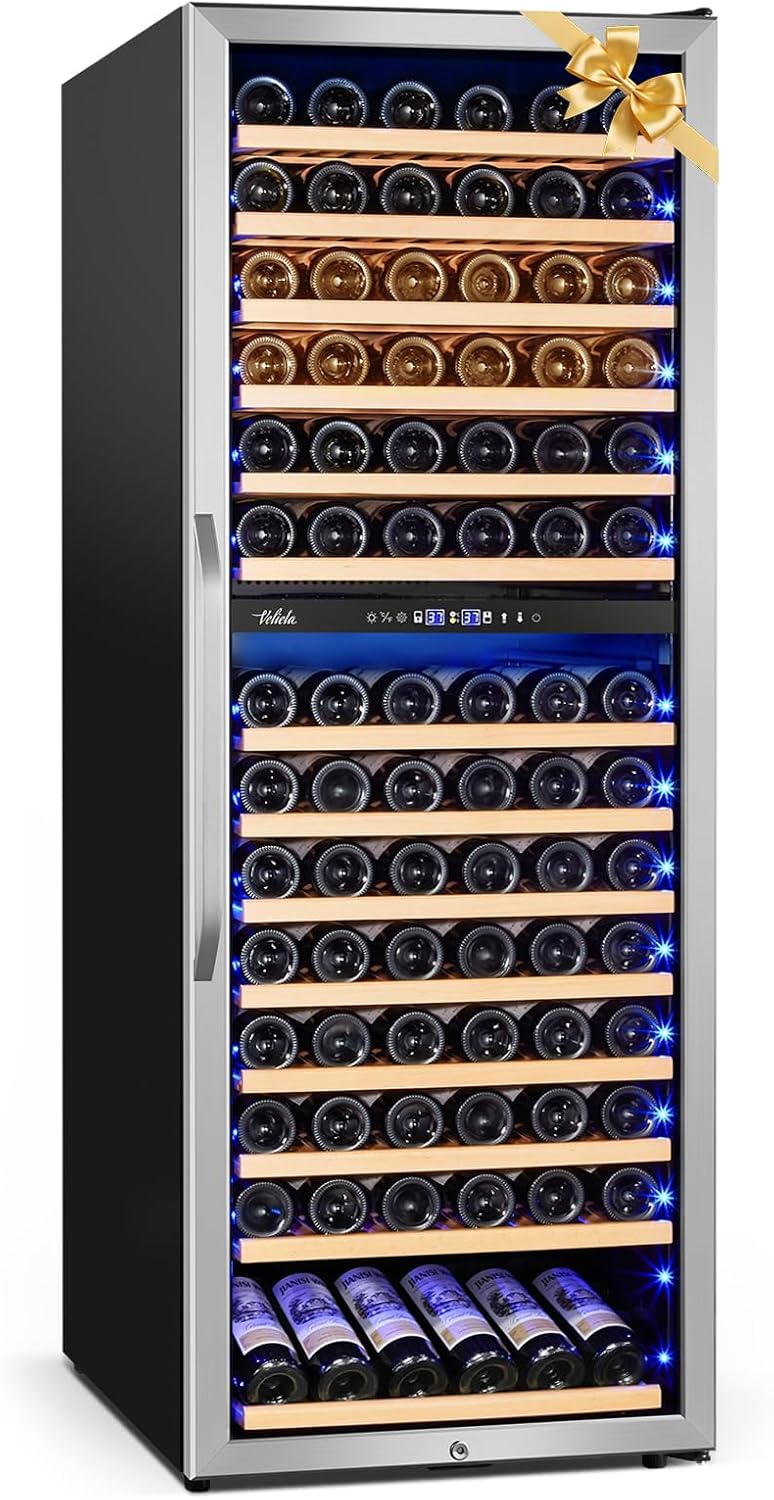
This Velieta 24-inch dual-zone wine cooler is built for serious storage and controlled temperature management. It uses a compressor cooling system with two independently set zones so you can keep whites and reds at their ideal ranges (upper zone about 40 to 55 F, lower zone about 55 to 65 F). The cabinet offers a high bottle capacity with 14 wood and wire shelves and a lockable glass door with internal blue lighting that reduces UV exposure while making bottles easy to see. Controls are on an LED display and the unit includes automatic defrost, a temperature memory after power loss, and a sound reduction system intended to keep compressor noise low. In real-world garage use expect robust cooling performance and stable temperatures, though the compressor and size mean it is large and heavy and will need adequate ventilation and a dedicated circuit in some installations. The fridge is freestanding and matte stainless steel finished so it fits utility spaces, and removable shelves simplify reconfiguring for odd bottle shapes.
Best for: Buyers who prioritize consistent, professional-level temperature control and large capacity for long-term wine storage in a non-climate-controlled garage environment.
Less Ideal for: Not a good choice for buyers needing a compact, lightweight cooler for tight spaces or for occasional short-term chilling.
- True dual-zone compressor cooling for separate red and white storage
- Large internal capacity with 14 wood and wire shelves for many bottles
- LED digital controls with temperature memory after power loss
- Automatic defrost and sound reduction features for quieter, lower-maintenance operation
- Very large and heavy cabinet that requires sufficient floor space and ventilation
- Annual energy consumption is relatively high compared with small thermoelectric coolers
Verdict: Choose this unit if you need robust compressor cooling and large dual-zone capacity to store and protect a sizable wine collection in a garage setting.
Kalamera 24" Dual Zone Wine Cooler

| Capacity | 5.65 cubic feet |
|---|---|
| Bottle capacity | 46 bottles (approx.) |
| Temperature range (upper) | 40-50°F |
| Temperature range (lower) | 50-66°F |
| Installation type | Built-In, Freestanding |
The Kalamera 24-inch dual-zone wine cooler splits storage into two temperature zones so you can chill whites and reds at different set points, and it is designed for either built-in or freestanding installation. It uses a compressor cooling system and an electronic LED control to set upper and lower zone temperatures (upper 40-50°F, lower 50-66°F). The unit ships with five removable wooden shelves with stoppers and a stainless steel framed reversible glass door with a keyed lock, while soft blue LED interior lighting aids bottle selection. Practical benefits include a relatively large 5.65 cu ft capacity for a 24-inch cabinet, temperature memory after power loss to protect the collection, and the option to install undercounter. Trade-offs are typical for compressor coolers at this size: it requires adequate ventilation when built in and consumes noticeable energy compared with smaller thermoelectric models, and very large-format bottles like some Champagnes may reduce total bottle count. Installation flexibility and the dual-zone control make it a solid all-round choice for home kitchens or bars that need separate temperature storage.
Best for: Buyers who want a flexible undercounter-capable cooler that stores both reds and whites at separate temperatures and value wooden shelving and a lockable stainless-steel door.
Less Ideal for: If you need the quietest, lowest-energy option for a small space or primarily store oversized bottles, consider a smaller thermoelectric unit or a model sized specifically for large-format bottles.
- Dual-zone thermostat for separate red and white storage
- Removable wooden shelves with stoppers to protect bottles when pulled out
- Built-in or freestanding installation option for undercounter use
- Temperature memory after power loss to preserve set temperatures
- Stainless steel framed reversible glass door with keyed lock and interior LED lighting
- Annual energy consumption is relatively high for continuous compressor operation
- Large-format bottles may reduce the advertised 46-bottle capacity
Verdict: A versatile 24-inch built-in-ready dual-zone cooler that balances sizable capacity, wooden shelving, and separate temperature control for buyers who want one undercounter unit to store both reds and whites.
Choosing the Right Freestanding Dual-Zone Wine Cooler for Home Use: Key Factors to Consider
Temperature Zoning and Range
A true dual-zone cooler provides two independently controlled temperature zones so you can store reds and whites at optimal setpoints simultaneously. Look for models with a wide enough range to cover typical serving and short-term aging temperatures, and check whether the controls allow precise adjustments in single-degree increments.
Consistent setpoints and minimal fluctuation matter more than the nominal minimum or maximum. If the cooler cycles widely or has poor thermostat accuracy, one zone can push the other out of its target range, which defeats the purpose of having separate compartments.
Usable Capacity and Shelf Design
Capacity numbers are useful, but usable capacity depends on shelf shape, spacing, and whether shelves accommodate different bottle sizes, including magnums and sparkling bottles. Sliding or removable shelves increase flexibility for mixed collections and make it easier to access bottles without disturbing others.
Consider how many bottles you typically store versus how you buy them. A tighter layout with many narrow shelves suits casual drinkers, while adjustable racks and deeper shelves help when you rotate stock or receive larger-format bottles.
Noise Level and Vibration Control
Freestanding coolers sit in living areas or kitchens, so low noise and minimal vibration are important for comfort and for protecting wine sediment. Look for compressors or thermoelectric systems specified with decibel ratings and features that reduce vibration, such as vibration-damping mounts or balanced compressors.
Even moderately quiet units can be noticeable in small apartments, so factor in where the cooler will be placed relative to living and sleeping spaces. Vibration can disturb aging wines, so models with proven isolation systems are better if you plan to cellar bottles for longer periods.
Cooling System Type and Reliability
Cooling architectures differ in how they manage temperature uniformity and humidity. Compressor-based coolers typically cool faster and handle warmer room temperatures better, while thermoelectric units run quieter but may struggle in hot environments. Evaluate the expected ambient range and pick a cooling type that maintains setpoints reliably in your home.
Also consider long-term reliability and serviceability. Access to common replacement parts, sturdy compressor mounts, and straightforward rear access panels simplify maintenance and extend a unit's useful life.
Controls, Display, and Lighting
User-friendly controls make daily use much less frustrating. Digital displays with clear zone readouts and separate controls for each compartment are easier to set precisely than single-dial systems. Interior lighting that you can switch off prevents light exposure when storing sensitive bottles.
Touch panels and external displays add convenience but check whether they are prone to accidental changes. Locking functions or child locks can be helpful in multi-use spaces. Consider how easy it is to read and change settings at a glance.
Placement, Venting, and Installation
Freestanding coolers need enough clearance for ventilation and safe operation. Verify the recommended clearances in the product documentation and plan for airflow behind and above the unit. Proper placement reduces compressor strain and prolongs unit life.
Also think about floor protection if condensation or occasional water drips are possible, and whether you need leveling feet for stability on uneven surfaces. Placement near heat sources can reduce cooling efficiency, so avoid siting the cooler next to ovens or in direct sunlight.
Sizing Your Cooler to How You Drink
Estimate your peak bottle count rather than average consumption. Many buyers underestimate how quickly bottles accumulate after a social event or a good sale. Choose a cooler that leaves some room for short-term overflow so you are not constantly juggling bottles.
Think about bottle types you own. If you buy sparklings or magnums occasionally, plan for a mix of shelf depths or one adjustable shelf to accommodate larger formats without wasting horizontal space.
- Match capacity to shopping cadence: weekly, monthly, or occasional bulk buys
- Use adjustable shelves to handle a mix of bottle shapes
- Keep a small buffer above your usual count for guests or deliveries
Noise Management and Where to Put the Unit
Measure or estimate the ambient noise level where you plan to place the cooler. A unit that is fine in a noisy garage may be distracting in an open-plan living room. Consider placing the cooler on a firm, level surface and use manufacturer-recommended clearances for venting.
If noise is a critical concern, prioritize models with lower decibel ratings and effective vibration isolation. Thermoelectric coolers can be quieter but may not perform as well in warm rooms.
- Avoid placing adjacent to beds or quiet workspaces
- Provide clearance for airflow to prevent noisy overworking
- Use vibration-absorbing pads if the floor amplifies humming
Humidity and Light Considerations
Wine benefits from moderate humidity and low light. While most freestanding coolers cannot actively control humidity like a dedicated cellar, look for interiors that reduce evaporation and have low-heat lighting options. UV-blocking glass doors help protect labels and wine from light damage.
Interior LED lights produce less heat and are usually safe to leave off when long-term storage is the goal. If you frequently access your cooler, a light helps find bottles quickly without long door-open times.
- Choose UV-resistant glass for front visibility
- Prefer LED interior lighting with on/off controls
- Minimize door-open duration to maintain humidity and temperature
Maintenance and Cleaning Tips
Regular maintenance keeps a freestanding cooler running well. Clean removable shelves and wipe down interiors periodically to prevent mold or spills from affecting seals. Check door gaskets for tight seals and replace them if they show wear to maintain stable temperatures.
Keep vents free of dust and ensure the unit sits level. If the cooler has a condensate drain or tray, empty and clean it per the manual to avoid odors and moisture buildup.
- Wipe spills promptly and deep-clean interior annually
- Inspect and clean condenser coils if accessible
- Replace worn door seals to prevent temperature loss
Integrating a Freestanding Cooler Into Kitchen or Bar Layouts
Freestanding units are flexible because they do not require built-in cabinetry, but you should still plan for a pleasing and functional placement. Consider pairing the cooler with a small prep area or shelving for glassware and openers. Ensure the cooler door can swing fully without obstruction.
If the cooler will sit next to cabinetry, allow for airflow gaps and make sure nearby surfaces can tolerate occasional heat from the compressor area. A dedicated mat or protective pad under the unit can prevent scratches or moisture damage to flooring.
- Confirm door swing and clearance before final placement
- Provide an adjacent surface for glassware and serving
- Use protective pads to prevent floor marks and moisture damage
How We Chose the Best Freestanding Dual-Zone Wine Cooler for Home Use
We prioritized features and performance that matter for home wine storage. First, temperature control precision and independent-zone range were key filters because dual-zone coolers must hold distinct setpoints for reds and whites. Second, usable capacity and shelving layout were evaluated to ensure bottles fit common shapes and that storage matches typical home collections. Third, cooling system and noise output were considered since a freestanding unit often sits near living spaces and should not disrupt daily life. Fourth, interior lighting, humidity management, and vibration reduction were assessed because these factors affect wine stability and bottle care. Finally, build quality and serviceability were reviewed to gauge longevity and practical upkeep. We excluded units that lack independent temperature zones, have very low usable capacity for the category, or provide only vague temperature controls. Our selection favors products that offer clear, user-accessible controls and measurable cooling performance. The list balances compact models for apartments and larger freestanding coolers for homes with more extensive collections, reflecting the range of real-world needs.
Our full evaluation process is outlined in our review methodology.
FAQ
Can a dual-zone cooler store both reds and whites properly?
Yes. A freestanding dual-zone cooler is designed to hold different temperatures in separate compartments, allowing you to store reds and whites at their preferred ranges simultaneously. Accuracy and stability depend on the model's controls and insulation.
How long can I age wine in a freestanding cooler?
You can age wine for several years in a freestanding cooler if temperature and vibration are well controlled. For long-term aging, prioritize models with tight temperature stability and minimal vibration, and monitor conditions regularly.
Do I need a built-in unit instead of freestanding for better performance?
Not necessarily. Freestanding units can offer excellent temperature control and flexibility. Built-in units are chosen mainly for flush installation. Choose based on installation needs and ventilation requirements rather than an assumption of inherently better performance.
How much ventilation clearance does a freestanding cooler need?
Clearance requirements vary by model, but most freestanding coolers need a few inches of space behind and above the unit for airflow. Check the manufacturer's installation recommendations to prevent overheating and maintain efficiency.
Are thermoelectric coolers a good choice for home use?
Thermoelectric coolers are quieter and have fewer moving parts, which can be advantageous in quiet living spaces. However, they perform best in moderate ambient temperatures and may struggle to hold setpoints in hotter rooms compared with compressor-based systems.
Final Verdict
When choosing a freestanding dual-zone wine cooler for home use, prioritize temperature stability, usable capacity, and noise performance. Match the cooler size and shelving to how you buy and drink, and consider cooling type based on the ambient environment where the unit will operate. Keep in mind tradeoffs between quieter thermoelectric systems and more powerful compressor units. Focus on units with clear, independent zone controls, good vibration isolation, and flexible shelving to handle mixed bottle formats. With these priorities in mind, you can confidently pick a cooler that preserves bottles and fits your living space.