
Note: This article contains affiliate links. If you click on these links and make a purchase, we may earn a small commission at no extra cost to you. This helps support our research and content. Read our full affiliate disclosure here.
If you want café-style espresso drinks without daily barista chores, a fully automatic espresso machine takes most of the work out of brewing. With built-in grinders and automated dosing, these machines handle grind, tamp, extraction, and often milk texturing so you can get consistent shots and milk drinks at home. This guide shortlists five top fully automatic espresso machines for buyers focused on value and long-term reliability under $1,000. We evaluated machines for grind-to-cup consistency, ease of cleaning, milk performance, and durability. Read on for what matters when choosing one and how each shortlisted option meets common home use needs.
Top Picks at a Glance
| Best Quality Built to a higher standard if you want something more solid | KitchenAid KF3 Fully Automatic Espresso |  |
| Best Value The sweet spot between price and what you get | Gaggia Brera Fully Automatic Espresso Machine |  |
| Top Rated A top-rated pick with lots of positive feedback | Philips 3200 Series EP3241/54 |  |
| Most Popular A crowd favorite that many people choose with confidence | PHILIPS 2200 Series EP2220/10 |  |
| Best Seller A high-volume bestseller chosen again and again | Ninja Luxe Café Premier ES601 |  |
KitchenAid KF3 Fully Automatic Espresso

| Output Pressure | 15 bar |
|---|---|
| Capacity | 1.8 liters |
| Included Components | Filter, Milk Frother |
| Customer Reviews | 4.3 out of 5 stars |
The KitchenAid KF3 is a compact fully automatic espresso machine designed to deliver a café-style menu at the touch of a button. It uses a built-in burr grinder with IntelliGrind dosing and a Quiet Grinding System to grind and dose beans automatically, while the AutoMilk System adjusts milk texture and volume for drinks like lattes and cappuccinos. The machine offers 15+ hot and over-ice recipes and a lower-temperature over-ice brew setting to preserve flavor in iced drinks. Practical conveniences include an automatic rinse on startup, a 1.8 L water tank, and included cleaning accessories and milk hose. For someone focused on performance, the KF3 provides consistent extraction with 15 bar output pressure and adaptive grinding that reduces manual fiddling. Trade-offs are the relatively compact tank and footprint which mean more frequent refills for heavy daily use, and the model does not include a dedicated milk container in the box, requiring a separate purchase for integrated milk storage if you prefer that setup.
Best for: Buyers who prioritize consistent, café-style extraction and automatic milk performance without wanting to tweak grind settings manually and who value a compact machine for countertop use.
Less Ideal for: Those who need large water capacity or want an all-in-one integrated milk reservoir included out of the box should consider other models.
- Built-in burr grinder with IntelliGrind auto-dosing for consistent extraction
- AutoMilk System that adapts milk texture and volume for multiple drink styles
- Quiet Grinding System reduces noise during bean grinding
- 15+ preset hot and over-ice recipes including lower-temperature ice brew to protect flavor
- 1.8 L water tank may require frequent refills for heavy daily use
- No factory-included milk container for integrated milk storage
Verdict: If you want consistent, hands-off espresso and reliable automatic milk texturing in a compact package, the KF3 delivers performance-focused results without requiring manual grind adjustments.
Gaggia Brera Fully Automatic Espresso Machine

| Operation Mode | Fully Automatic |
|---|---|
| Wattage | 1400 watts |
| Coffee Input Type | ground_coffee |
| Capacity | 40 fluid ounces |
The Gaggia Brera is a compact fully automatic espresso machine aimed at making café-style drinks from fresh ground coffee with minimal fuss. It has a built-in grinder, programmable one-touch brewing, and Gaggia's pannarello steam wand for frothing milk into cappuccinos and lattes. Typical use is daily home espresso and milk-based drinks where space is limited; the removable water tank and simple button interface make it easy to keep running and adjust basic settings. The stainless steel exterior and polycarbonate components give it a durable feel, and the reusable filter reduces ongoing consumable costs. Performance is practical rather than high-end: the integrated grinder is convenient but not as adjustable as dedicated burr grinders, and the pannarello wand gives good froth for beginners but lacks the precision of a commercial steam wand. It draws 1400 watts and is intended for countertop use in home coffee bars and small kitchens. For someone prioritizing ease, programmability, and a small footprint, the Brera delivers a sensible balance of features at an accessible level.
Best for: Buyers who want a practical, space-saving super-automatic that makes everyday espresso and milk drinks easily with simple controls and low maintenance.
Less Ideal for: Users seeking barista-level control over grinding and steaming or those who want a heavy-duty commercial steam wand should consider higher-end semi-automatic machines instead.
- Integrated grinder for one-step brewing from fresh beans
- Programmable one-touch operation simplifies routine use
- Pannarello wand allows frothing for cappuccinos and lattes without advanced technique
- Removable water tank and reusable filter make maintenance straightforward
- Compact footprint fits small kitchens or apartment counters
- Grinder offers limited adjustment compared with standalone grinders
- Pannarello wand provides less steam control than a commercial-grade steam wand
Verdict: A compact, easy-to-use super-automatic that delivers everyday espresso and milk drinks with minimal fuss, ideal for practical home users under $1,000.
Philips 3200 Series EP3241/54

| Operation Mode | Fully Automatic |
|---|---|
| Coffee Input Type | whole_beans |
| Wattage | 1500 watts |
| Filter Type | Reusable |
| Included Components | LatteGo storage lid |
The Philips 3200 Series EP3241/54 is a user-friendly fully automatic espresso machine that grinds fresh beans, brews five coffee varieties, and produces milk-based drinks using the two-piece LatteGo system. Typical daily use involves loading whole beans, selecting a drink on the touch display, and letting the machine grind, brew, and froth automatically for espresso, americano, cappuccino, or latte macchiato. Notable features include a 100% ceramic grinder for consistent extraction, the quick-to-clean removable brew group, and the AquaClean filter that reduces the need for frequent descaling. The LatteGo milk system has no tubes, which makes rinsing or dishwasher cleaning straightforward and fast. Practical benefits are consistent cup quality from fresh beans and lower maintenance thanks to the removable components and water filter. Limitations include a plastic exterior that may feel less premium than metal-bodied machines and a reliance on preset drink options if you want deep manual control over extraction parameters.
Best for: Buyers who prioritize a reliable, low-maintenance machine that produces consistent cafe-style drinks from fresh beans with minimal fuss.
Less Ideal for: Users seeking a heavy-duty metal-bodied commercial machine or those who want extensive manual control over grind and extraction parameters.
- Integrated 100% ceramic grinder for consistent, durable grinding
- LatteGo two-part milk system with no tubes for very easy cleaning
- Removable brew group that can be rinsed to simplify maintenance
- AquaClean filter minimizes descaling for up to 5,000 cups when changed as prompted
- Intuitive touch display that makes selecting common coffee drinks quick
- Plastic exterior may feel less robust than metal alternatives
- Limited manual control for advanced users who want to tweak extraction settings
Verdict: Pick the Philips 3200 Series if you want a dependable, easy-to-clean fully automatic that delivers consistent bean-to-cup drinks with minimal maintenance.
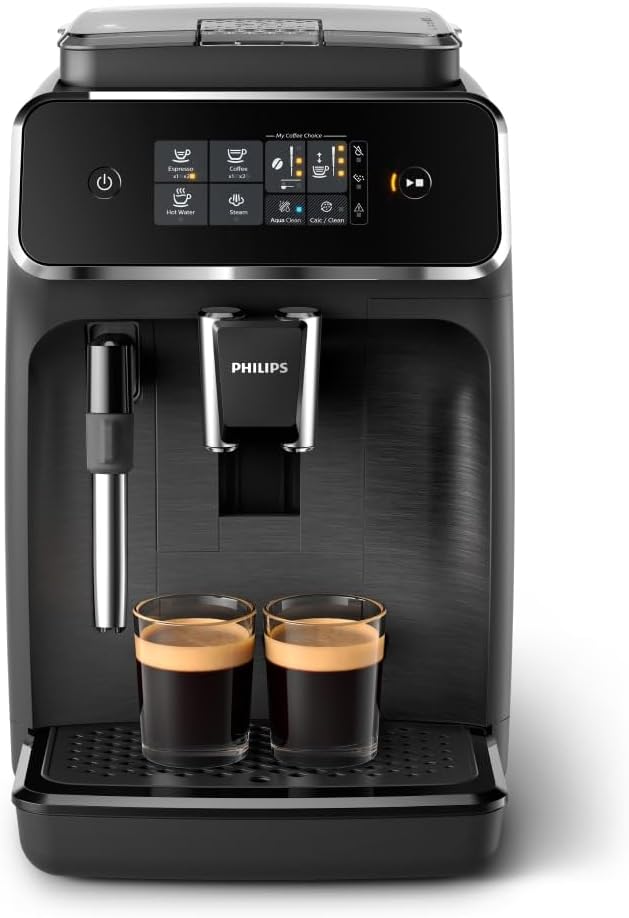
PHILIPS 2200 Series EP2220/10
| Operation Mode | Fully Automatic |
|---|---|
| Coffee Input Type | ground_coffee, whole_beans |
| Wattage | 1500 watts |
| Capacity | 1.8 liters |
| Filter Type | Reusable |
The Philips 2200 Series EP2220/10 is a bean-to-cup fully automatic espresso machine designed for daily home use. It grinds beans with a 100% ceramic grinder that offers 12 settings for consistent extraction, then brews espresso, regular coffee, or dispenses hot water via an intuitive touchscreen. The Classic Milk Frother produces steamed milk for cappuccinos and lattes, and the removable brew group plus dishwasher-safe parts make routine cleaning straightforward. Practical features include the AquaClean filter, which the manufacturer says can reduce descaling frequency for many cups, and a 1.8 liter water tank that suits households. The machine runs on 1500 watts and uses either whole beans or ground coffee, so you can switch quickly between fresh grinding and pre-ground options. Limits to consider are the relatively simple milk frother compared with automatic milk systems and the plastic exterior, which keeps cost and weight down but feels less premium than metal-bodied rivals. For buyers who want reliable daily espresso and easy maintenance without advanced barista-level features, this is a sensible midrange choice.
Best for: Buyers who want a reliable, easy-to-use bean-to-cup machine that delivers everyday espresso and basic milk drinks with low maintenance and clear user feedback.
Less Ideal for: Those seeking a commercial-grade build, fully automatic milk systems, or advanced customization beyond basic strength and length controls should consider higher-end options.
- Built-in 100% ceramic grinder with 12 settings for consistent flavor extraction
- Intuitive touchscreen with one-touch options for espresso, coffee, and hot water
- Classic Milk Frother lets you steam and froth milk for cappuccinos and lattes
- Removable brew group and dishwasher-safe parts simplify cleaning
- AquaClean filter reduces the need for frequent descaling
- Milk frother is manual-style rather than a fully automated milk system
- Plastic exterior feels less premium compared with metal-bodied machines
Verdict: A practical, low-maintenance bean-to-cup machine that delivers consistent espresso and basic milk drinks for home users looking for dependable daily performance under $1,000.
Ninja Luxe Café Premier ES601

| Operation Mode | Fully Automatic |
|---|---|
| Wattage | 1650 watts |
| Coffee Input Type | Ground, Whole Bean |
| Filter Type | Reusable |
The Ninja Luxe Café Premier ES601 is a fully automatic 3-in-1 machine that aims to deliver café-style drinks at home with minimal fuss. It handles espresso shots, single-cup to multi-cup drip coffee, and a rapid cold brew or cold-pressed espresso, guided by Barista Assist technology that walks you through grinding, dosing, tamping, and frothing. The built-in conical burr grinder has 25 settings and weight-based automatic dosing, while the spring-loaded assisted tamper and dual froth system (magnetic whisk plus automated steamer) make consistent cappuccinos and lattes easy. Practical touches include a removable water reservoir, reusable filter, self-cleaning steam wand, and onboard accessory storage; the package also includes cleaning supplies and multiple baskets. At 1650 watts it heats quickly, and the range of preset drink sizes and styles reduces guesswork for novices. Trade-offs are its substantial footprint and weight compared with compact single-purpose machines, and the many features add complexity that may take a few sessions to master. For risk-averse buyers wanting a reliable, guided path to good espresso and milk drinks without separate grinders or tamping gear, it covers most bases well.
Best for: Buyers who want a guided, low-risk route to café-style espresso, milk drinks, and cold brew at home without buying separate grinders or accessories.
Less Ideal for: Minimalists who need a very compact, lightweight single-purpose espresso maker or users who prefer a manual barista workflow.
- Three-in-one design covers espresso, drip coffee, and rapid cold brew in one machine
- Built-in conical burr grinder with 25 settings and weight-based automatic dosing
- Assisted tamper and Barista Assist technology guide beginners through brewing
- Hands-free dual froth system with automatic steam wand produces consistent microfoam
- Includes cleaning tools, descaling supplies, and reusable filter for upkeep
- Relatively large and heavy for a countertop espresso machine
- Feature-rich interface can be overwhelming for users who want a simple one-button brewer
Verdict: If you want a reassuring, guided all-in-one espresso and coffee system that eliminates separate grinder and frothing gear, the Ninja Luxe Café Premier delivers consistent café-style drinks with minimal guesswork.
Choosing the Right Fully Automatic Espresso Machine: Key Factors to Consider
Integrated Grinder Quality
A fully automatic espresso machine depends on its built-in grinder to deliver consistent particle size and dose. Burr type, grind settings range, and grind retention affect how well the grinder can produce repeatable shots. A higher-quality grinder reduces channeling and uneven extraction, which translates to better flavor in the cup.
For home users, consider how adjustable the grind settings are and whether the grinder is easy to access for cleaning. Some integrated grinders are designed for quick maintenance, while others trap grounds that require more effort to remove. Good grinder performance minimizes wasted beans and reduces the need for frequent manual adjustments.
Brewing Temperature And Pressure Control
Consistent extraction requires stable brewing temperature and the right pressure profile. Machines with reliable temperature control and a robust pump deliver more repeatable shot timing and flavor clarity. Look for machines that specify brew temperature consistency or offer preset extraction parameters.
Temperature and pressure behavior also affects how forgiving a machine is with slight variations in dose or tamp. Home users who prefer to dial in shots will benefit from machines that maintain steady brew conditions rather than those that vary widely between cycles.
Milk Frothing And Steaming Capability
If you plan to make cappuccinos, lattes, or flat whites, the quality of the milk system is crucial. Fully automatic machines either offer an integrated steam wand or an automatic milk frother. The design determines microfoam quality, ease of cleaning, and how much control you have over texture.
Consider whether you want one-touch milk drinks or prefer manual texturing. Integrated frothers that are removable and dishwasher-safe simplify upkeep, whereas internal milk circuits may require regular cleaning cycles to prevent clogs and maintain hygiene.
Ease Of Cleaning And Routine Maintenance
Every fully automatic machine needs periodic cleaning: rinses, descaling, and group head or brew unit care. Machines that provide accessible removable brew units, clear water and waste indicators, and automated cleaning cycles reduce long-term effort and errors.
Pay attention to how simple it is to access internal parts and whether common maintenance tasks can be completed without tools. Easy-to-follow maintenance procedures help maintain flavor quality and extend the machine's usable life, especially in a home setting where users may not perform professional servicing.
Capacity And Footprint
Consider how much counter space you can dedicate and how many drinks you typically prepare. Water tank capacity, bean hopper size, and drip tray volume determine how often you refill or empty components, which affects convenience for daily use or entertaining guests.
A compact footprint suits small kitchens but may come with smaller tanks that need frequent refills. Conversely, larger machines increase convenience but require more counter real estate. Balance size with expected daily usage to avoid constant refilling or storage headaches.
Serviceability And Warranty Support
Even the best machines require occasional servicing. Check whether the design allows for accessible replacement parts and simple repairs, and whether the manufacturer provides clear warranty coverage and service options. Machines built with common, replaceable components are often easier and less costly to maintain over time.
Warranty length and what it covers for wear items can be decisive for buyers planning long-term ownership. Knowing the availability of consumables and service centers in your area reduces downtime if a component requires replacement.
Daily Use Routines To Maximize Flavor
Adopting a simple daily routine preserves flavor consistency and reduces maintenance. Start with an automatic rinse cycle if available, then purge the steam wand or milk circuit after each milk drink. Empty the drip tray and grounds container regularly to prevent stale residues from affecting taste.
Schedule a weekly check of the grinder and hopper to remove trapped fines and confirm grind settings. For machines with removable brew units, a weekly brief rinse keeps oils from building up. These small actions maintain shot quality and make occasional deep cleaning less time-consuming.
- Run a quick brew-head rinse before the first shot.
- Purge milk components after every use.
- Empty grounds and drip tray daily for frequent users.
- Wipe exterior and control surfaces to prevent sticky buildup.
Descaling And Water Considerations
Water hardness directly impacts how often you need to descale. Use filtered or softened water when possible to reduce mineral buildup inside boilers and piping. Many machines include hardness tests and programmable descaling reminders; follow those prompts to keep flow rates and temperatures stable.
When descaling, use the manufacturer-recommended solution or an approved alternative and follow the prescribed cycle. Skipping scheduled descaling can lead to reduced heating efficiency, slow flow, and inconsistent shots, all of which degrade drink quality and increase repair risk.
- Test water hardness before first use and after major plumbing changes.
- Set descaling reminders based on household water hardness and usage.
- Use a water filter cartridge if supported to extend service intervals.
Adjusting Drink Strength Without Complex Tuning
Fully automatic machines often provide user-accessible drink strength and cup size settings. For many home users, small incremental changes to grind fineness, dose, or brew time deliver noticeable flavor shifts without complex pressure profiling. Start with a medium-strength preset and make one change at a time to evaluate results.
If a machine offers preprogrammed drink profiles, use them as baselines. Adjusting the grind one notch finer or coarser is typically the most effective first step. If milk drinks taste flat or overly sweet, check extraction time and temperature before changing milk parameters.
- Adjust grind size in single steps and test a shot after each change.
- Use extraction time as a guide; target ranges vary but consistency matters more than absolute numbers.
- Modify cup size settings rather than changing grinder dramatically when making larger drinks.
When To Consider Manual Versus One-Touch Milk Systems
One-touch milk systems are convenient for consistent drink production and are ideal if you want repeatable lattes and cappuccinos with minimal hands-on time. However, they can be less flexible for advanced milk-texturing techniques that require manual wands.
If you value latte-art or microfoam control, look for machines that offer a steam wand alongside automatic milk functions or that allow manual intervention. For most users who prioritize convenience, automatic systems produce acceptable microfoam and simplify cleanup when they include removable milk containers.
- Choose one-touch systems for repeatable convenience.
- Select machines with a manual wand if you want fine milk control.
- Prefer removable milk containers for easier cleaning.
Space And Kitchen Integration Tips
Measure counter depth and overhead cabinetry clearance before selecting a machine. Many fully automatic models sit taller than basic drip machines because of hopper and bean capacity. Allow space behind the machine for water tank removal and airflow.
Think about where you will dispose of grounds and empty the drip tray. Position the machine near a sink if you plan frequent milk-based drinks that require rinsing. Also consider the visual presence of the machine and whether you want it to be a countertop focal point or stored away when not in use.
- Check height with the bean hopper in place to ensure cabinet clearance.
- Place near a power outlet and sink if you make many milk drinks.
- Allow a few inches of clearance at the back for water tank access.
How We Chose the Best Fully Automatic Espresso Machine
We evaluated fully automatic espresso machines using criteria that reflect typical home-use priorities for buyers seeking options under $1,000. Key evaluation dimensions included grind-to-cup consistency, because an integrated grinder and dosing system determine shot repeatability; extraction control and temperature stability, since precise brewing variables affect flavor; milk steaming and froth quality for cappuccinos and lattes; and ease of cleaning and maintenance because regular descaling and group head care drive ownership satisfaction. We also considered build quality and serviceability to assess long-term durability. Excluded from consideration were machines designed exclusively for commercial use or those without an integrated grinder, since they fall outside the automated home-use scope. We prioritized units that balance automation with user-adjustable controls so owners can tune drinks without complex servicing. Technical specifications, user documentation, and common maintenance requirements factored into selections to ensure these picks suit regular home brewing routines.
Our full evaluation process is outlined in our review methodology.
FAQ
How often should I descale a fully automatic espresso machine?
Descale frequency depends on water hardness and usage. With hard water you may need to descale every 1 to 3 months; softer water can extend that to 6 months. Follow the machine's hardness settings and descaling prompts for best results.
Can I use pre-ground coffee with a fully automatic machine?
You can use pre-ground coffee in a pinch, but integrated grinders provide the freshest results. Pre-ground coffee may cause inconsistent dosing and extraction if the machine is designed around a built-in grinder.
Will automatic milk systems produce good microfoam for latte art?
Automatic milk systems typically produce consistent foam suitable for lattes and cappuccinos but may be limited for advanced latte art. Machines with manual steam wands offer more control if you want very fine microfoam and texture for detailed designs.
What maintenance tasks are most important for longevity?
Regularly emptying the grounds container and drip tray, cleaning milk components after each use, and following scheduled descaling are the most important tasks. Periodic grinder and brew-unit cleaning also helps maintain performance over time.
How much counter space do fully automatic machines usually need?
Space varies, but expect a taller footprint than drip coffee makers because of the bean hopper and milk container. Measure height with the hopper installed and allow room for water tank removal and drip-tray access when planning placement.
Final Verdict
A fully automatic espresso machine under $1,000 can deliver café-quality drinks and reduce daily effort if you prioritize grinder quality, stable brewing temperature, and straightforward maintenance. Weigh the tradeoffs between one-touch convenience and manual control for milk if you value latte-art versus simplicity. Choose a machine with an accessible brew unit and clear maintenance guidance to keep performance consistent over time. Focus on the scoring criteria above to match a model to your day-to-day routine, and you will get reliable, flavorful drinks without unnecessary complexity.