
Note: This article contains affiliate links. If you click on these links and make a purchase, we may earn a small commission at no extra cost to you. This helps support our research and content. Read our full affiliate disclosure here.
If you are just starting with home espresso, a semi-automatic espresso machine for beginners gives the best balance of hands-on learning and reliable results. These machines let you control key steps like grind dose and tamping while automating boiler pressure and pump timing, so you can develop technique without unpredictable outcomes. This guide shortlists six beginner-friendly semi-automatic espresso machines that prioritize straightforward controls, consistent extraction, and useful steaming performance. We evaluate each pick by practical criteria that matter for new home baristas, then explain the factors to weigh before you buy.
Top Picks at a Glance
| Best Overall The best all-around choice for most situations | Gaggia Classic Evo Pro |  |
| Best Quality Built to a higher standard if you want something more solid | Breville Barista Express Impress |  |
| Best Budget The cheapest option that still gets the job done reliably | KEENSTAR BCM2201 Espresso Machine |  |
| Top Rated A top-rated pick with lots of positive feedback | Breville Barista Express BES870XL |  |
| Most Popular A crowd favorite that many people choose with confidence | CASABREWS CM5418 Espresso Machine |  |
| Best Seller A high-volume bestseller chosen again and again | CASABREWS 3700 Essential |  |
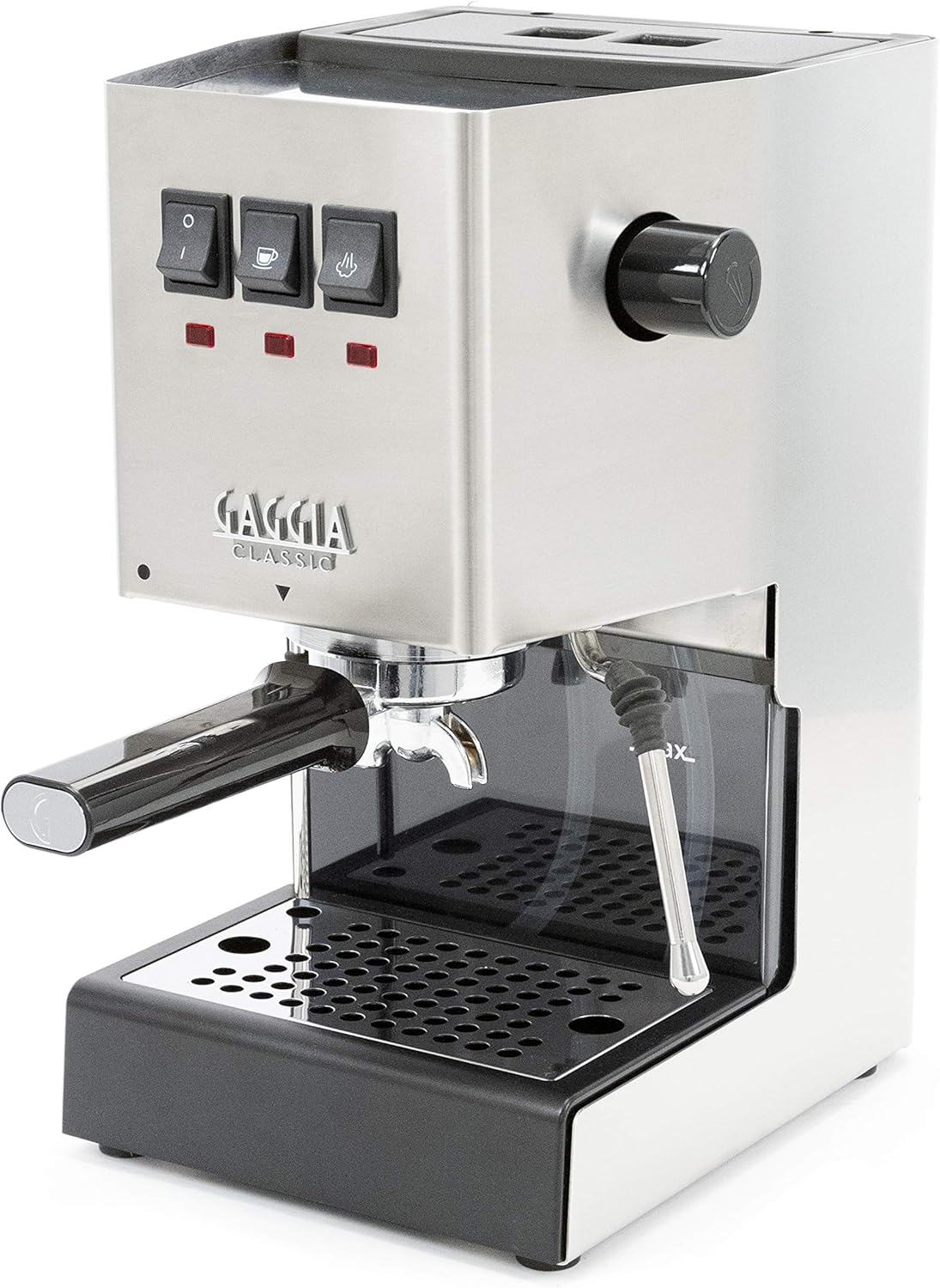
Gaggia Classic Evo Pro
| Output Pressure | 9 bar |
|---|---|
| Operation Mode | Semi-Automatic |
| Wattage | 1200 watts |
| Coffee Input Type | ground, pod |
| Capacity | 2.1 liters |
The Gaggia Classic Evo Pro is a compact, semi-automatic home espresso machine aimed at the everyday barista who wants café-style shots without a commercial footprint. It brews at 9 bar pressure through a 58 mm stainless steel commercial portafilter and includes both commercial and pressurized baskets for use with fresh grounds or pods, which makes it usable right away and adaptable as your skills improve. The commercial steam wand produces hot, textured microfoam suitable for lattes and latte art, and the updated pump mounting and boiler improvements help reduce noise and resist scale. Practical details include a reusable filter, a 2.1 L water reservoir, and metal construction that feels durable. Expect a learning curve for dialing in grind, dose, and tamp when using the commercial baskets, and the machine is fairly heavy and occupies countertop space accordingly. For beginners it is attractive because it supports progression from easy pressurized-puck shots to true portafilter shots as skills develop.
Best for: Buyers who want a durable, café-capable semi-automatic machine they can start with using pressurized baskets and then progress to true portafilter shots as their skills improve.
Less Ideal for: People who need a fully automatic or touch-button single-step machine for hands-off daily coffee or those who want the smallest, lightest travel-friendly unit.
- Commercial 58 mm stainless steel portafilter for real espresso technique
- Includes both pressurized and commercial filter baskets for easy start and growth
- Commercial steam wand for proper milk texturing and latte art
- Durable stainless steel housing and commercial components built for long-term use
- Relatively heavy and takes noticeable counter space
- Learning curve to master non-pressurized baskets and dialing in shots
Verdict: A sturdy, made-in-Italy semi-automatic built to help beginners start with pressurized dosing and graduate to true commercial-style shots and milk steaming.
Breville Barista Express Impress

| Wattage | 1600 watts |
|---|---|
| Voltage | 120 volts |
| Coffee Input Type | ground, whole bean |
| Filter Type | Reusable |
| Capacity | 2 liters |
The Breville Barista Express Impress is a countertop semi-automatic espresso machine that combines an integrated conical burr grinder with assisted tamping and a Thermocoil heating system to deliver café-style espresso and milk drinks at home. You grind directly into the portafilter using one of 25 grind settings while the intelligent dosing system and the Impress Puck System help produce consistent doses and a cleaner tamp. The machine uses low-pressure pre-infusion followed by 9-bar extraction and offers adjustable brew temperature and volumetric shot control for fine-tuning flavor. A strong steam wand produces hand-textured microfoam suitable for lattes, cappuccinos, and latte art. For a beginner it reduces many common variables—grind, dose, and tamp—so you can learn shot timing and milk texturing without starting from zero. Expect a sizeable footprint and a learning curve to master manual steaming and settings, and regular cleaning and descaling are required to keep the grinder and group performing at their best.
Best for: Home brewers who prioritize flavor and control and want a machine that simplifies dosing and tamping so they can learn extraction and milk texturing with predictable results.
Less Ideal for: People who want a fully automatic push-button milk system or a very compact appliance for tight countertops should consider simpler or more compact alternatives.
- Integrated conical burr grinder with 25 grind settings for on-demand fresh grounds
- Assisted tamping and Impress Puck System reduce mess and help produce consistent puck density
- Thermocoil heating with adjustable temperature and volumetric shot control for stable extractions
- Powerful steam wand capable of producing silky microfoam for latte art
- Includes full set of accessories including 54mm portafilter and milk jug for immediate use
- Relatively large and heavy for small kitchens
- Manual steaming still requires practice to get consistently good microfoam
Verdict: Buy this if you want a performance-focused, grinder-equipped home espresso machine that reduces common beginner errors while letting you dial in flavor and milk texture.
KEENSTAR BCM2201 Espresso Machine

| Output Pressure | 3.5 bar |
|---|---|
| Wattage | 800 |
| Power Source | AC adapter |
| Filter Type | Reusable |
| Capacity | 240 ml |
The KEENSTAR BCM2201 is a small, manual semi-automatic espresso maker aimed at simple home use. It uses 3.5 bar output pressure and an 800W heater to pull a single-shot style espresso and can brew up to 240 ml (1–4 cups) quickly; a reusable filter and pause function make operation straightforward for beginners. The attached steam wand generates steam fast for milk-based drinks and includes a silicone pad to reduce burn risk, though it requires regular cleaning to avoid clogs. The machine is compact and relatively light, so it fits small kitchens and is easy to move or store, but its pressure rating is lower than commercial machines so extra attention to grind size and tamping is needed to get richer crema. Controls are basic—a single knob and indicator light—so learning curve is short, but experienced users wanting precise temperature or pressure control will find the options limited. Included carafe and milk frother add value for someone starting to make cappuccinos or lattes at home.
Best for: A beginner on a budget who wants a straightforward machine to make espresso-based drinks and learn basic steaming and extraction without a steep learning curve.
Less Ideal for: Coffee enthusiasts who want adjustable temperature/pressure control, prosumer performance, or PID-level consistency should consider higher-end models instead.
- Compact footprint suits small kitchens
- Fast heat-up from 800W element for quick brewing
- Reusable filter reduces ongoing cost and waste
- Built-in steam wand for cappuccinos and lattes
- Simple single-knob operation with pause function for beginners
- 3.5 bar output is modest compared with higher-pressure machines so extraction can be less consistent
- Limited controls mean no precise temperature or pressure adjustments
Verdict: A compact, easy-to-use entry-level semi-automatic that lets budget-minded beginners make espresso and steamed milk at home without a complicated setup.
Breville Barista Express BES870XL

| Wattage | 1600 watts |
|---|---|
| Voltage | 120 |
| Coffee Input Type | whole_beans |
| Filter Type | Reusable |
| Capacity | 1 cups |
The Breville Barista Express BES870XL combines an integrated conical burr grinder, 54mm portafilter, and thermocoil temperature control to take beans-to-espresso in under a minute. Typical use is straightforward for a beginner willing to learn basic tamping and dosing: grind directly into the portafilter, use low-pressure pre-infusion and PID temperature control to pull balanced shots, then texture milk with the steam wand for lattes or cappuccinos. Notable features include 16 grind settings, single and double wall filter baskets, and a powerful steam wand that produces microfoam suitable for latte art. Practical benefits are fresh-grind flavor, good temperature stability for consistent extractions, and a durable stainless steel build with included tools like a dosing razor and tamper. Limitations to consider are the manual learning curve for dialing in grind and tamp, a one-cup capacity orientation rather than high-volume brewing, and the machine's size and weight which require a permanent counter spot.
Best for: Home coffee lovers who prioritize consistent, café-quality shots and want a reliable, durable machine they can learn to use and maintain over time.
Less Ideal for: People who need a plug-and-play, fully automatic solution or those seeking a compact, travel-friendly espresso maker.
- Built-in conical burr grinder with adjustable grind settings for fresher shots
- Thermocoil PID temperature control for stable, balanced extraction
- 54mm stainless steel portafilter and dual/single-wall baskets for manageable dosing
- Steam wand capable of producing microfoam for lattes and cappuccinos
- Includes useful accessories like a dosing razor, tamper, and cleaning tools
- Requires practice to master grind, dose, and milk texturing for consistent results
- Relatively large and heavy, not ideal for small or portable setups
- Designed for single-cup focus rather than continuous high-volume use
Verdict: If you want a dependable, learnable semi-automatic that grinds, brews, and textures milk to deliver café-style drinks at home, the Barista Express is a top beginner-friendly choice.
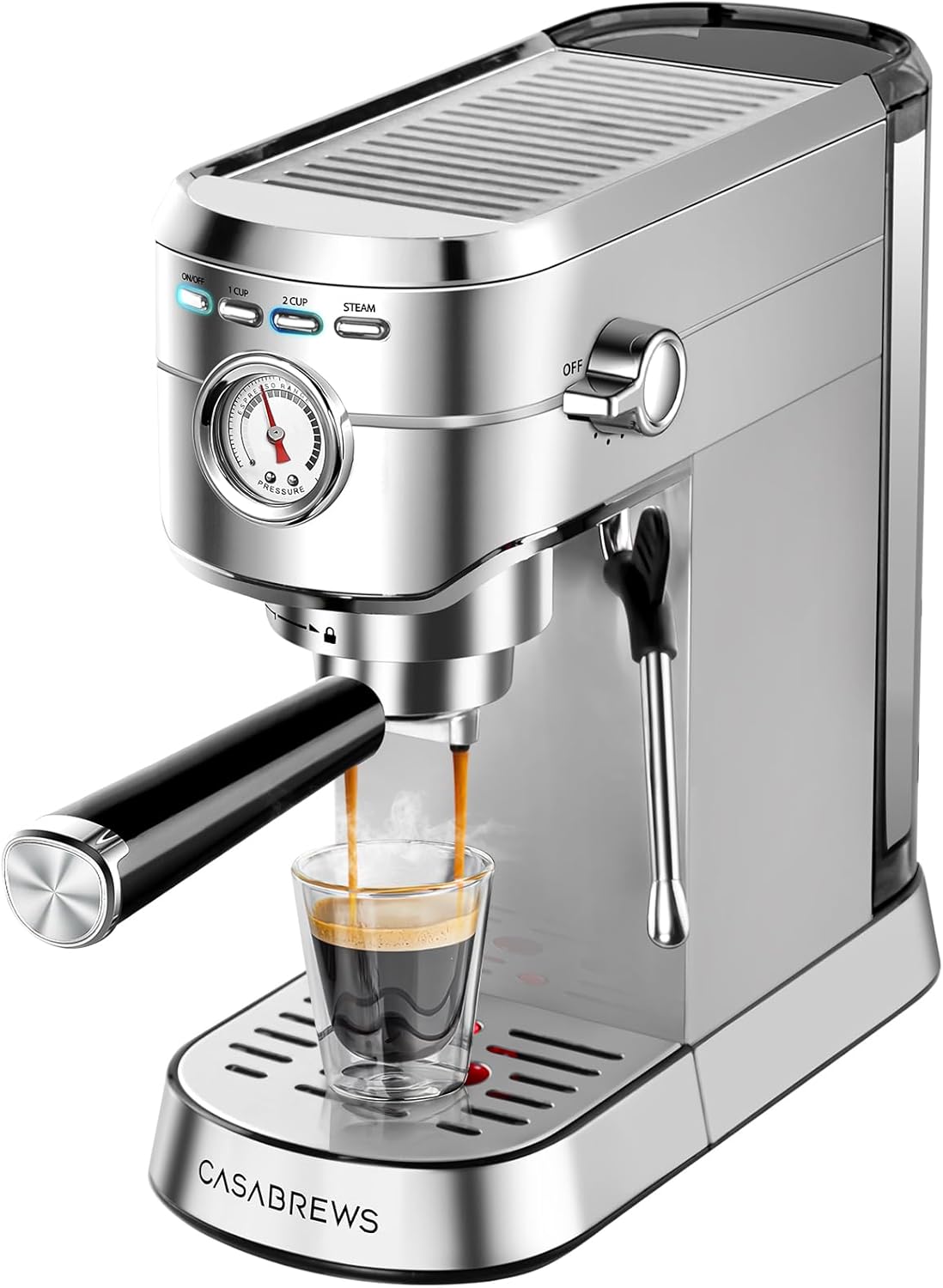
CASABREWS CM5418 Espresso Machine
| Output Pressure | 20 bar |
|---|---|
| Wattage | 1350 watts |
| Operation Mode | Semi-Automatic |
| Coffee Input Type | ground_coffee |
| Filter Type | Reusable |
The CASABREWS CM5418 is a compact home espresso machine designed to deliver cafe-style shots and textured milk without taking much counter space. It uses a 20-bar Italian pump with a built-in pressure gauge and low-pressure pre-infusion to help produce crema and allow manual tuning of grind and tamp for better extraction. The machine is semi-automatic with one- and two-cup buttons, a 51mm portafilter, and a milk steam wand capable of creating microfoam for lattes and cappuccinos. Practical touches include a removable 34 oz water tank, cup warmer on top, and a removable drip tray that accepts taller cups. The unit runs at 1350W and requires some basic barista technique and maintenance such as regular descaling and filter soaking to avoid slow brews. Users should expect an initial learning curve to dial in grind size and tamping for consistent shots, and to allow the machine to cool between steaming and brewing to avoid over-temperature lockouts. For beginners who want hands-on control and steamed milk, this machine balances features, performance, and compact size reasonably well.
Best for: Buyers who want an affordable, hands-on machine to learn espresso fundamentals and practice basic barista skills while still getting good milk-texturing capability for lattes and cappuccinos.
Less Ideal for: People who want fully automatic, push-button drink programs or rapid back-to-back steaming and brewing in a commercial setting should look for higher-end or dual-boiler machines.
- 20-bar pump with built-in pressure gauge for visible feedback when dialing in shots
- Powerful steam wand that produces microfoam for lattes and cappuccinos
- Removable 34 oz water tank and cup warmer improve convenience for daily use
- Compact stainless steel body with removable drip tray that fits tall cups
- Includes portafilter, single and double baskets, and a tamper for out-of-the-box setup
- Single boiler design requires cool-down between steaming and brewing which can interrupt workflow
- Semi-automatic controls mean you must learn grind, dose, and tamp to get consistent results
Verdict: A compact, feature-rich semi-automatic that gives beginners the pressure feedback and steam power needed to learn espresso and milk texturing without occupying much counter space.
CASABREWS 3700 Essential

| Output Pressure | 20 bar |
|---|---|
| Wattage | 1350 watts |
| Operation Mode | Semi-Automatic |
| Coffee Input Type | Ground |
| Capacity | 43.9 fluid ounces |
The CASABREWS 3700 Essential is a user-friendly semi-automatic espresso machine aimed at home baristas who want café-style shots and milk drinks without a steep learning curve. It brews with a 20-bar Italian pump and uses a PID system to keep brew temperature steady, which helps deliver consistent flavor and crema. The included steam wand produces microfoam for lattes and cappuccinos, and the 43.9 oz removable water tank makes multiple servings convenient before a refill. Controls are button-based with programmable single- and double-shot volume, and the machine has a stainless-steel body with a removable drip tray and cup warmer on top. For beginners this model balances performance and simplicity, though it is a single-boiler design so brewing right after steaming may require a short wait for temperatures to recover. The machine includes one- and two-cup stainless steel filters, a 51mm portafilter, and basic accessories to get started, making it a practical entry-level option for daily espresso and milk drinks.
Best for: Buyers who want a straightforward, durable machine that produces café-style espresso and milk drinks at home with consistent temperature control and simple programmable shot settings.
Less Ideal for: Experienced home baristas who need dual-boiler performance, rapid back-to-back steaming and brewing, or advanced pressure monitoring features.
- 20-bar pump with PID temperature control for consistent extraction and better crema
- Built-in steam wand capable of producing microfoam for lattes and cappuccinos
- Removable 43.9 oz water tank for multiple servings and easy refilling
- Programmable single- and double-shot buttons for repeatable shot volumes
- Stainless-steel housing and removable drip tray simplify cleaning and durability
- Single-boiler system requires cooling time between steaming and brewing for optimal temperature
- No integrated pressure gauge for on-the-fly pressure monitoring
Verdict: A beginner-friendly, stainless-steel semi-automatic that delivers consistent espresso and good milk steaming with straightforward controls.
Choosing the Right Semi-Automatic Espresso Machine for Beginners: Key Factors to Consider
Boiler Type and Temperature Stability
Boiler design determines how quickly the machine reaches brew temperature and how well it maintains that temperature between shots. Single-boiler machines can be perfectly fine for beginners if they have good thermal management, but they may require short waits between steaming and brewing. Heat-exchange or dual-boiler systems provide better simultaneous steam and brew performance, which helps if you plan to make milk drinks right after pulling a shot.
Consistent temperature means more predictable extraction and fewer burned or sour-tasting shots while you are learning dose and grind adjustments. For home use, prioritize machines with proven temperature control or PID systems that reduce swing, because they shorten the feedback loop during practice and make it easier to learn what grind and dose changes actually do.
Steam Wand Power and Control
A responsive steam wand is essential for producing textured milk for lattes and cappuccinos. Wattage and boiler pressure affect how quickly you can heat milk and how easy it is to create microfoam. Beginners benefit from a wand that gives visible, gradual control so they can learn proper positioning and stretching without instantly overheating milk.
Also consider the wand geometry and tip design. A swiveling, stainless-steel wand with multiple steam holes is more versatile during technique practice. Look for machines with sufficient steam pressure to heat a typical home milk pitcher within a reasonable time, because long steaming times make it harder to learn optimal milk temperature and texture.
User Controls and Feedback
Controls should be clear and predictable. Mechanical rocker switches, simple programmable shot buttons, or a basic PID with a visible readout all help beginners understand what the machine is doing. Built-in shot timers, pressure gauges, or PID displays give immediate feedback so you can correlate tamping, dose, and grind to shot time and pressure.
Avoid machines with cryptic menus or many multi-function buttons that increase the learning curve. The more straightforward the interface, the faster you can practice and improve. Practical touches like an accessible water reservoir, removable drip tray, and clear indicator lights also reduce friction during routine use.
Portafilter Type and Basket Options
The portafilter and filter basket affect how forgiving the machine is during extraction. A 58 mm-style portafilter with multiple basket sizes gives more room for experimentation and generally produces more stable extractions, while smaller proprietary portafilters can limit dose options and make dialing in a grind harder.
Also check whether the machine supports pressurized baskets for very new users who want fast success, with the option to switch to non-pressurized baskets as skill improves. Ease of removing and cleaning the portafilter and basket matters because frequent practice requires frequent cleaning.
Maintenance and Serviceability
Routine maintenance like descaling, backflushing, and gasket replacement should be straightforward. Machines with easily accessible groupheads, user-replaceable gaskets, and common part sizes are simpler to keep running. For beginners, a clear service schedule and accessible manufacturer documentation reduce downtime and frustration.
Consider warranty coverage and availability of replacement parts in your region. A machine that is easy to disassemble for common tasks and uses widely available seals and valves will be much less intimidating for a new owner when routine upkeep is required.
Size, Footprint, and Water Capacity
Home kitchens vary in counter space and power access, so choose a machine whose footprint fits your layout. A compact machine with a smaller water reservoir may be fine for single users, but if you plan to make multiple drinks in a row, larger reservoirs or direct-water options reduce refill interruptions.
Also consider height under cupboards for pitcher clearance, and the machine's weight if you expect to move it occasionally. A stable, heavier machine can be preferable for tamping and consistent operation, but it may be less convenient to reposition or store.
Getting Started: Basic Technique for Semi-Automatic Machines
Learning a repeatable routine is the fastest way to improve with a semi-automatic espresso machine. Focus first on consistent dosing, level tamping, and a steady extraction time. Set a baseline grind size, note the shot time for your dose, then change one variable at a time to understand its effect.
Use simple tools while learning: a small scale for dose accuracy, a timer, and a consistent distribution method. Once you can pull shots that fall within a reasonable time window, practice steaming milk to match temperature and texture to the drink you want to make. Keep a short log of grind setting, dose, and shot time so you can track progress.
- Weigh dose to the gram for repeatable results.
- Aim for consistent tamp pressure and level tamping.
- Record shot time and taste notes for each adjustment.
Grinder Pairing and Why It Matters
A semi-automatic espresso machine depends heavily on the grinder. Even the best machine cannot compensate for an inconsistent or coarse grinder. For beginners, a stepped or stepless grinder with fine adjustment and a burr set suited to espresso will make dialing in far easier.
If you are starting out, choose a grinder that allows you to change settings in small increments. Avoid blade grinders or inexpensive, inconsistent burrs because they will add variability to extraction and slow your learning.
- Match grinder quality to your brewing ambition: better grinders yield more consistent shots.
- Keep beans fresh and adjust grind daily as beans change.
Routine Maintenance New Users Should Do
Daily and weekly maintenance keeps extraction predictable. Backflush with a non-foaming detergent as recommended, wipe the grouphead and purge the steam wand after each use, and clean the portafilter and baskets regularly. These small habits prevent buildup that can alter flavor.
On a monthly basis check the grouphead gasket and clean the shower screen. Descale according to water hardness and machine guidance. Doing small, regular tasks extends component life and preserves shot quality without requiring major service visits.
- Purge and wipe the wand after every use to prevent milk buildup.
- Backflush weekly if your machine supports it; replace gaskets as needed.
Upgrading Your Setup Over Time
As you gain confidence, upgrade selectively. Swap to non-pressurized baskets to learn full extraction control, upgrade the grinder for finer adjustments, or add an espresso-specific scale with knock-out trays for faster workflow. Each upgrade should target a single improvement so you can measure its impact.
Consider accessories that improve consistency such as a calibrated tamper, dosing funnel to reduce mess, or a dedicated milk pitcher with measurement lines. These small investments can accelerate skill gains more than replacing the entire machine.
- Move from pressurized to standard baskets when you want more control.
- Prioritize a grinder upgrade before replacing the machine for better shots.
Common Beginner Mistakes and How to Avoid Them
Beginners often change multiple variables at once, which makes it impossible to learn cause and effect. Change one thing at a time and keep notes. Another frequent issue is inconsistent dosing; using a simple scale eliminates this problem immediately.
Overheating milk or burying the steam tip too deep can ruin texture. Practice steaming with short bursts and feel the pitcher temperature. Finally, neglecting cleaning will cause stale or off flavors; regular quick cleaning after each use prevents this common trap.
- Adjust only one variable per session to learn effectively.
- Use a timer and scale to remove guesswork from extraction.
How We Chose the Best Semi-Automatic Espresso Machine for Beginners
We prioritized features and real-world usability that matter most to new home baristas. Key evaluation criteria included boiler and temperature stability, which directly affect shot consistency; steam wand power and control, because milk texture is central to many beginner recipes; and ease-of-use features such as clear controls, pressure or shot timers, and forgiving portafilters. We also weighed build quality and serviceability so machines will endure routine domestic use and be repairable without specialized tools. Another important filter was ergonomics: accessible grouphead height, portafilter handling, and intuitive drip tray and water access reduce frustration during early practice. We excluded commercial-grade machines that require professional maintenance or learning curves beyond typical home use. Models that rely on obscure proprietary parts or have known reliability issues were not considered. The final list focuses on machines that let beginners learn core espresso skills while delivering repeatable, cafe-style results at home.
Our full evaluation process is outlined in our review methodology.
FAQ
Do I need an expensive grinder to get good espresso at home?
A better grinder makes a bigger difference than an expensive machine. You do not need top-tier commercial equipment to start, but choose a burr grinder with fine adjustment and consistent particle size. Upgrading the grinder first usually yields the biggest improvement in shot consistency.
Can I use pressurized baskets as a beginner?
Yes. Pressurized baskets can help produce acceptable crema with inconsistent technique and are useful while you learn. They are also easy to switch out for standard baskets later when you want full control over extraction.
How often should I descale or service my machine?
Descaling frequency depends on water hardness and usage, but many home users descale every 3 to 6 months. Regular daily cleaning, weekly backflushing if supported, and periodic gasket checks will keep the machine working reliably and reduce the need for major service.
Is a steam wand hard to learn for beginners?
Steaming takes practice but is straightforward when you focus on basic technique. Start by positioning the tip near the surface to introduce air, then lower it to create whirlpool motion. Short, focused practice sessions with a thermometer or by feel will speed learning.
What grind setting should I start with for espresso?
Start with a fine setting recommended by your grinder manufacturer for espresso and adjust in small steps. Look for shot times and taste: if extraction is too fast and sour, go finer; if it is too slow and bitter, go coarser.
Final Verdict
Choose a semi-automatic espresso machine for beginners that matches your space, workflow, and desire to learn core barista skills. Prioritize temperature stability, usable steam performance, and an approachable control layout so you can practice consistently without unnecessary frustration. Expect to invest in a decent grinder and a few simple accessories, and focus on habit formation: consistent dosing, timing, and cleaning will yield the biggest improvements. Given the tradeoffs between convenience and control, pick the machine whose ergonomics and serviceability fit your routine. That approach will let you progress steadily from basic shots to textured milk drinks with confidence.