
Note: This article contains affiliate links. If you click on these links and make a purchase, we may earn a small commission at no extra cost to you. This helps support our research and content. Read our full affiliate disclosure here.
If you make fresh juice at home, the right hand fruit juicer can save time and reduce waste while delivering better flavor and nutrition. You want a tool that extracts the most liquid with minimal effort and is easy to disassemble and clean. This guide covers seven shortlisted hand fruit juicers that fit a variety of kitchen needs and skill levels. We evaluated ease of use, extraction efficiency, and cleanup to help you pick a model that suits how often and how much juice you plan to make. Read on for practical buying guidance and the top features to prioritize.
Top Picks at a Glance
| Best Overall The best all-around choice for most situations | AUAM Stainless Steel Lemon Squeezer |  |
| Best Quality Built to a higher standard if you want something more solid | Eurolux Cast Iron Juicer ELJ-5001B |  |
| Best Value The sweet spot between price and what you get | KENSINGTON LONDON Lemon Squeezer |  |
| Best Budget The cheapest option that still gets the job done reliably | Y-me Manual Citrus Juicer |  |
| Top Rated A top-rated pick with lots of positive feedback | OXO Good Grips 2-in-1 Citrus Juicer |  |
| Most Popular A crowd favorite that many people choose with confidence | Zulay Kitchen Cast Iron Juicer |  |
| Best Seller A high-volume bestseller chosen again and again | Zulay Metal 2-in-1 Lemon Squeezer | 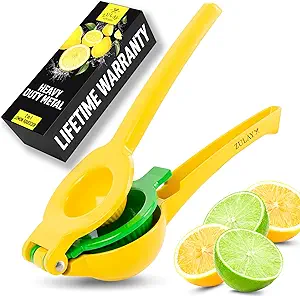 |
AUAM Stainless Steel Lemon Squeezer

| Material | Stainless Steel |
|---|---|
| Capacity | 6.7 ounces |
| Power Source | Manual |
| Unit Count | 50 Count |
This AUAM hand press lemon squeezer is a simple, heavy-duty tool for quickly squeezing citrus without electricity. Built from stainless steel with a mirror-satin finish, it uses a two-handle press mechanism to halve a lemon or lime and force juice through a perforated bowl while catching seeds and pulp. Its compact capacity makes it convenient for single servings, cocktail prep, or small-batch cooking and the all-metal construction promises durability and easy rinsing. The included disposable filter bags (50 count unit pack) are useful if you want no-mess pulp capture, though they are optional. Because it is manual, squeezing larger fruits like grapefruits requires more effort and the device yields a limited volume per press compared with a reamer or electric juicer, so it is best for occasional use or for anyone who prefers a low-fuss countertop tool. Overall it delivers efficient juice extraction and straightforward cleanup for everyday citrus tasks.
Best for: Buyers who want a durable, no-electricity citrus press for single servings, cocktails, and light kitchen use and who value a simple, long-lasting tool over automated convenience.
Less Ideal for: People who need to juice large quantities regularly or who prefer hands-off, electric juicing solutions should consider a larger reamer or electric juicer instead.
- Durable stainless steel construction resists bending and rust
- Press-style design extracts juice efficiently while trapping seeds
- Compact and easy to rinse and dry for quick cleanup
- Comes with disposable filter bags for simple pulp and seed control
- Small bowl capacity limits juice volume per press, so not ideal for large batches
- Manual operation requires physical effort for larger or tougher citrus
Verdict: A sturdy, all-metal manual squeezer that reliably extracts citrus juice for single-portion and occasional kitchen use.
Eurolux Cast Iron Juicer ELJ-5001B

| Material | Stainless Steel Cast Iron |
|---|---|
| Capacity | 15 ounces |
| Power Source | Manual |
| Special Features | Easy to Clean, Portable, Rust Resistant |
This Eurolux cast iron hand press is a commercial-style manual juicer that uses a long lever and heavy construction to extract juice with minimal effort. You use it by placing a halved fruit face-down in the removable stainless cup and pulling the lever to press the fruit against the cone, which concentrates juice into the cup below. Its cast iron frame and stainless steel parts give it real durability for frequent use, and suction feet keep it steady on countertops during operation. The removable parts that contact fruit are dishwasher-safe for easier cleanup, and the included stainless cup collects up to the stated capacity so you can measure or pour directly. Expect consistent high yield on citrus and pomegranate, but the unit is large and heavy and better suited to a dedicated prep area rather than occasional countertop storage. If you want fast, high-volume manual juicing with a robust build, this model delivers the force and reliability to match that need.
Best for: Buyers who prioritize high extraction performance and frequent juicing sessions, such as small cafes, juice bars, or home cooks who make juice in volume and want a durable manual press.
Less Ideal for: People looking for a lightweight, compact juicer for occasional home use or those who need an electric model for hands-off continuous juicing.
- Commercial-grade cast iron frame for long-term durability
- Long lever provides strong mechanical advantage for higher juice yield
- Removable stainless steel cup and parts are dishwasher-safe for easier cleaning
- Suction feet stabilize the press during heavy use
- Heavy and bulky, making it impractical to move or store frequently
- 15-ounce capacity may require multiple presses for large batches
Verdict: Choose this Eurolux hand press if you need a heavy-duty manual juicer that delivers high extraction performance and durable, commercial-style construction.
KENSINGTON LONDON Lemon Squeezer

| Material | Stainless Steel |
|---|---|
| Power Source | Manual |
| Capacity | 0.6 liters |
| Product Care Instructions | Dishwasher Safe |
| Special Features | Maximum juice, fewer seeds |
This stainless steel handheld squeezer uses long ergonomic handles and a hinged cup to press halved citrus and deliver seed-free juice with minimal effort. It is built from 304 stainless steel for durability and reinforced joints that stand up to frequent use, and silicone grips on the handles improve control during squeezing. The cup holds the fruit half and the press concentrates force so you get more juice out of each citrus than with basic reamers. Cleanup is simple because the unit is dishwasher safe and has a polished finish that rinses clean. Limitations include a single fixed cup size that best fits lemons and limes while very large oranges may need trimming, and being manual it requires hand force for multiple fruits in a batch. For everyday kitchen use the design is straightforward, reliable, and easy to store.
Best for: Buyers who want a simple, durable tool to maximize juice from lemons and limes and prefer a low-fuss, long-lasting manual solution for daily kitchen tasks.
Less Ideal for: People who regularly need to juice large quantities or very large oranges and prefer electric juicers or interchangeable cup sizes.
- Durable 304 stainless steel construction for long-lasting use
- Ergonomic long handles with silicone grips reduce hand strain
- Design yields more juice and filters out seeds
- Dishwasher safe for quick, low-effort cleanup
- Fixed cup size may not accommodate very large citrus without trimming
- Manual operation can be tiring for large batches
Verdict: A sturdy, no-frills stainless steel citrus press that maximizes juice from lemons and limes for buyers who want durable, low-maintenance manual performance.
Y-me Manual Citrus Juicer

| Recommended Uses For Product | Lemon, Lime |
|---|---|
| Power Source | Manual |
| Material | Aluminum |
| Capacity | 0.3 liters |
This handheld Y-me citrus juicer uses a deep bowl and strong aluminum construction to extract juice from lemons and limes with minimal mess. You place a halved fruit in the bowl and squeeze the ergonomic handles together; the bowl shape helps separate seeds and excess pulp while the reinforced joints give a solid squeeze without bending. It is lightweight and dishwasher safe, so cleanup and storage are straightforward for everyday use in cooking, cocktails, dressings, or marinades. Because it is manual, you get quick single-serve juice without needing power or a bulky appliance, but it is not suited for high-volume juicing or large citrus like grapefruits. The bright finish and nonstick surface make the tool easy to wipe down, and the compact size fits in a drawer when not in use. For buyers wanting a simple, durable hand press for lemons and limes, this delivers practical performance at a small footprint.
Best for: Buyers who want an inexpensive, no-frills handheld press for occasional fresh lemon and lime juice in cooking and cocktails, prioritizing simplicity and durability.
Less Ideal for: Anyone who needs to juice large volumes or larger citrus fruits regularly should choose an electric or countertop juicer instead.
- Deep bowl captures more juice and keeps seeds out
- Durable food-grade aluminum construction with reinforced joints
- Ergonomic handles provide good leverage and easy squeezing
- Dishwasher safe and compact for easy cleanup and storage
- Manual operation is slow for large or frequent batches
- Not intended for large citrus like grapefruit
Verdict: A simple, rugged manual press that reliably delivers fresh lemon and lime juice for budget-conscious buyers who want a compact, easy-to-clean tool.
OXO Good Grips 2-in-1 Citrus Juicer

| Power Source | Manual |
|---|---|
| Capacity | 350 ml |
| Material | Plastic |
| Product Care Instructions | Dishwasher Safe |
The OXO Good Grips 2-in-1 Citrus Juicer is a straightforward manual juicer that covers the full range of household citrus needs by swapping between a small and large reamer. It is used by snapping the appropriate reamer into the contoured body, pressing and twisting citrus halves, and collecting juice in the marked reservoir up to 350 ml. The reamers nest for compact storage and remove easily for dishwasher cleaning, while the pour spout is designed to be drip-free for neat transfer into glasses or bowls. Because it is manual and plastic, it is quiet, portable, and requires no power, but it does rely on user pressure for extraction so it will be slower than electric models and may leave some juice in very large grapefruit. Practical strengths are the two-cutter sizes for lemons through grapefruits, clear measurement markings for recipes, and a comfortable non-slip grip that makes repeated use easier. For basic home juicing and recipe prep it is a reliable, low-maintenance tool with few moving parts to fail.
Best for: Buyers who prioritize a dependable, low-maintenance juicer for everyday citrus use and value simple, long-lasting design over power or speed.
Less Ideal for: People who need high-volume or fast extraction for frequent large-batch juicing should consider an electric model instead.
- Two interchangeable reamers handle both small and large citrus efficiently
- Clear measurement markings up to 350 ml for accurate recipe use
- Drip-free pour spout reduces mess when transferring juice
- Removable parts are dishwasher safe for easy cleaning
- Manual operation requires physical effort and is slower than electric juicers
- Plastic construction may wear faster than metal alternatives under heavy use
Verdict: A simple, reliable manual citrus juicer that handles lemons to grapefruits with dishwasher-safe parts and a drip-free pour.
Zulay Kitchen Cast Iron Juicer

| Material | Cast Iron & Stainless Steel |
|---|---|
| Capacity | 0.6 liters |
| Power Source | Manual |
| Product Care Instructions | Hand Wash Only |
This cast iron juicer is a lever-style manual press built for frequent use in home or light commercial settings. You place halved fruit in the 5-inch bowl, lower the detachable stainless-steel strainer, and pull the long cast-iron arm to compress the fruit, which keeps seeds out and channels juice into a glass or container. The long lever gives strong mechanical advantage so even thick-skinned citrus yields quickly with minimal wrist strain, and rubber feet help keep the press stable on counters. The cast iron body and stainless-steel strainer are durable and intended for long service, though the unit is heavy and requires hand-washing. Capacity is modest at about 0.6 liters so it is best for batch juicing rather than single large-volume runs, and the non-electric, purely mechanical design means no motors to maintain but no automated pulp control either. For buyers who value extraction, durability, and a professional lever press, this delivers dependable performance; those needing a compact, dishwasher-safe, or high-capacity electric solution should consider other types.
Best for: Buyers who want a proven, durable manual press that maximizes juice extraction and stands up to regular home or small commercial use and who weigh long-term reliability over convenience features.
Less Ideal for: People who need a lightweight, dishwasher-safe, or fully electric juicer for very large daily volumes should look at compact manual or electric models instead.
- Heavy cast iron construction built for frequent use
- Long lever provides strong mechanical advantage for high juice yield with minimal effort
- Detachable stainless-steel strainer keeps seeds out and simplifies cleaning
- Rubberized feet improve countertop stability during pressing
- Hand wash only and quite heavy to move or store
- Capacity is limited compared with electric or commercial-scale juicers
Verdict: Choose this cast-iron lever press when you want a rugged, high-yield manual juicer built for regular use and maximum extraction.
Zulay Metal 2-in-1 Lemon Squeezer

| Material | Aluminum |
|---|---|
| Power Source | Manual |
| Capacity | 0.5 liters |
| Blade Material | Stainless Steel |
The Zulay Metal 2-in-1 Lemon Squeezer is a simple hand press that pairs a bowl-style juicer with a reamer to squeeze halves or smaller citrus whole; its aluminum construction and ergonomic handles give it a heavy-duty feel and good leverage for extracting most of the juice without straining your hands. You place a halved lemon or lime in the bowl and press the top against it to force juice through seed-filtering holes, or use the separate reaming side for smaller citrus; the stainless steel blades and coated finish make it straightforward for drink prep, cocktails, or adding fresh juice to recipes. It is manual so there is no power, batteries, or cords to deal with and cleanup is quick by rinsing or hand-washing. Important limitations are its small capacity and manual operation, which make it ill-suited for high-volume juicing of large oranges, and the recommended hand-wash care despite some marketing claiming dishwasher cleaning. For everyday household use and occasional cocktail or cooking needs it offers reliable, low-fuss performance.
Best for: Buyers who want a durable, no-frills hand juicer for occasional kitchen use or cocktail-making and prioritize a reliable, easy-to-use tool over electric convenience.
Less Ideal for: People who need to juice large quantities, large oranges, or want an electric juicer for frequent heavy use should look elsewhere.
- Sturdy aluminum construction gives a solid, heavy-duty feel.
- Ergonomic handle design provides good leverage for easy pressing.
- Seed-filtering holes keep seeds and most pulp out of the juice.
- Two-in-one design supports both bowl pressing and reaming for small fruit.
- Simple manual operation with no power or batteries required.
- Small capacity and design are not efficient for large or high-volume juicing.
- Manufacturer care instructions list hand wash only despite some product copy saying dishwasher.
Verdict: A compact, heavy-duty manual citrus press that reliably extracts juice for occasional home and cocktail use.
Choosing the Right Hand Fruit Juicer: Key Factors to Consider
Extraction Efficiency
How much juice a hand fruit juicer extracts from a given amount of fruit matters for yield and waste. Better extraction means you get more liquid per piece of fruit, which lowers the amount of produce you need and delivers stronger flavor and nutrients. Efficiency depends on pressure mechanics, reamer or cone design, and how well the device compresses fruit without leaving excessive pulp.
For buyers, consider whether you will primarily juice citrus, soft berries, or firmer fruits. Some hand juicers are optimized for citrus and will underperform on other fruits. High extraction efficiency also reduces the number of pressing cycles required, so it directly impacts the time and effort you spend making juice.
Effort and Mechanical Advantage
Manual juicers vary in how much physical effort they demand. Lever-action presses and gear-assisted mechanisms reduce wrist and hand strain compared with simple reamers or handheld squeezers. If you plan to prepare multiple servings or have limited hand strength, prioritize models that provide mechanical advantage and smooth, consistent pressure distribution.
Also think about the size of the press and the range of fruit sizes it accommodates. A design that requires fewer adjustments and less force for each fruit will make daily use more pleasant and sustainable over time.
Ease of Cleaning and Maintenance
Hand fruit juicers come into contact with sticky juice and fibrous pulp, so cleanup is a frequent task. Removable parts that are dishwasher safe or rinse clean easily save time and reduce hygiene concerns. Designs with fewer crevices, simple meshes, and accessible seals are less likely to trap pulp and mold.
Maintenance also includes occasional tightening of fasteners and inspecting seals or gaskets. Choose units whose replacement parts are straightforward to service and that have minimal hard-to-reach areas where residue accumulates.
Build Materials and Longevity
Materials affect durability, food safety, and how a juicer ages with repeated exposure to acidic fruit. Stainless steel components resist corrosion and handle pressure better than thin stamped metal or brittle plastics. Food-grade plastics can be acceptable when reinforced and BPA-free, but they may show wear faster under heavy use.
Evaluate how parts are joined and whether moving elements use bushings or bearings. Solid construction and replaceable wear parts extend useful life, which matters if you expect frequent juicing.
Juice Quality and Filtering
The way a juicer handles pulp and seeds determines the clarity and mouthfeel of the juice. Some users prefer a smoother, pulp-free beverage, while others want more body and fiber. Effective filters and strainers catch seeds and large fragments without stripping desirable nutrients.
Consider whether the device allows you to control pulp level and whether the filtering components are easy to remove and clean. A balance between yield and clarity is often the best choice for home kitchens.
Size, Storage, and Counter Footprint
Hand fruit juicers range from compact reamers to large lever presses that occupy significant counter or cabinet space. If storage is limited or you favor a clutter-free kitchen, size and disassembly matter. A collapsible or modular design that stores flat will be more practical for occasional use.
Also consider weight and stability. Heavier bases resist tipping during pressing but may be harder to move or stow. Choose a model whose storage characteristics match your frequency of use and kitchen layout.
Types of Hand Fruit Juicers and When to Use Them
Hand fruit juicers fall into several functional types: simple cone reamers, handheld squeezers, lever presses, and gear-assisted models. Cone reamers are compact and quick for single citrus fruits, while lever presses and gear-assisted units are designed for higher yield and less manual strain.
Match the type to how often you juice and the kinds of fruit you process. For occasional single servings, a compact reamer may be sufficient. For regular juicing or larger quantities, a press-style unit saves time and effort.
- Cone reamers: best for small kitchens and quick single servings
- Handheld squeezers: portable and simple, but can require more force
- Lever presses: higher yield with less effort, suited for frequent use
- Gear-assisted models: smooth action and consistent pressure
Preparing Fruit for Best Results
Prepping fruit correctly improves yield and reduces mess. For citrus, roll the fruit on the counter with light pressure before cutting to loosen the membranes and increase juice flow. Cut fruit into sizes that match the juicer's feed or cone dimensions so the press engages consistently.
Remove thick rinds or tough cores that your hand juicer is not designed to handle. For mixed-fruit recipes, combine fruits with similar textures to avoid clogging filters and to get a consistent extraction experience.
- Room-temperature fruit typically yields more juice than chilled fruit
- Trim damaged or overly fibrous parts to avoid clogging
- Cut fruit to fit the juicer's pressing area for even pressure
Cleaning Tips to Keep Your Juicer Hygienic
Rinse parts immediately after use to prevent sticky residue from hardening. If parts are dishwasher-safe, place them on the top rack; otherwise, hand-wash with warm soapy water and a soft brush to remove trapped pulp. Pay special attention to meshes and crevices where fibers collect.
Periodically inspect seals and joints for buildup. Deep-clean removable strainers and gaskets by soaking in a mild warm-water solution to loosen residue, then scrub gently. Dry parts completely before storage to prevent mold or corrosion.
- Rinse right away to avoid dried pulp
- Use a soft brush for meshes and strainers
- Soak stubborn residue before scrubbing
Storing and Caring for a Manual Juicer
Store juicers disassembled if possible to protect delicate parts and allow air circulation. Keep small components like strainers and lids together in a labeled container so you avoid losing pieces. Avoid stacking heavy items on top of plastic parts that could deform over time.
For models with metal parts, wipe down surfaces and apply a light food-safe oil to exposed metal threads if you notice dryness or minor rust. Regular care prolongs life and keeps the device performing at peak extraction efficiency.
- Disassemble for storage to reduce stress on moving parts
- Keep small parts together to prevent loss
- Perform light maintenance on metal threads or joints
Best Practices for Juice Consistency and Flavor
To achieve consistent flavor and texture, use fruit with uniform ripeness and process similar quantities at a time. Over-pressing can introduce bitter notes from pith or seeds, so stop once the flow diminishes. Strain juice if you want a clearer beverage or leave pulp in for a heartier texture.
If blending multiple fruits, add higher-acidity items sparingly to avoid overpowering delicate flavors. Taste and adjust proportions gradually to dial in a preferred balance between sweetness, acidity, and body.
- Use similarly ripe fruit for predictable flavor
- Avoid pressing pith and seeds to prevent bitterness
- Adjust fruit ratios incrementally for blended recipes
How We Chose the Best Hand Fruit Juicer
We selected products that excel in extraction efficiency, mechanical reliability, and user-focused convenience. For hand fruit juicers, the most important filters were how thoroughly a unit extracts juice from citrus and soft fruits, how much manual effort is required, and how straightforward the parts are to clean and store. We also considered build materials and durability, looking for corrosion-resistant metals and food-safe plastics. Ergonomic factors such as lever action, grip comfort, and stability under pressure were included because they directly affect daily usability. Finally, we examined versatility for different fruit sizes and the quality of the filtered juice produced. We excluded motorized or electric juicers, multi-function machines, and devices not intended for direct manual pressing. Units with unclear material specs or poor user-serviceability were not considered. The resulting picks emphasize concrete, measurable differences in extraction rate, effort, cleanup time, part durability, and ergonomics.
Our full evaluation process is outlined in our review methodology.
FAQ
Are hand fruit juicers suitable for all types of fruit?
Often they work best on citrus and soft fruits. Firmer fruits or those with tough cores may require a press-style or different tool. Check whether a model is designed for the fruit types you plan to process.
How can I get more juice yield from citrus at home?
Roll fruit on the counter before cutting and use a juicer with mechanical advantage to compress membranes more thoroughly. Press steadily but avoid grinding the rind, which can add bitterness.
Is it necessary to disassemble the juicer after each use?
Usually rinsing and removing filters is sufficient for light use, but full disassembly for cleaning is recommended regularly to prevent buildup in crevices and ensure hygienic operation.
What materials should I choose for durability?
Stainless steel for structural parts and food-grade plastics for removable components balance longevity and ease of cleaning. Avoid thin stamped metals and non-food-safe plastics.
Can I use a hand juicer for baby food or smoothies?
Hand juicers concentrate liquid and may remove pulp, so they are not a direct substitute for pureeing. You can use the juice as an ingredient in blended recipes, but puree equipment is better for making full-texture baby food.
Final Verdict
Choosing the right hand fruit juicer comes down to balancing yield, effort, and cleanup. Prioritize efficient extraction and a mechanical design that reduces hand strain if you plan to juice frequently. If counter space or storage is limited, favor compact designs with easy disassembly. Remember that material quality and ease of cleaning have long-term consequences for performance and hygiene. Focus on the factors that match your typical fruit types and daily routine to pick a model that will meet your needs confidently.