
Note: This article contains affiliate links. If you click on these links and make a purchase, we may earn a small commission at no extra cost to you. This helps support our research and content. Read our full affiliate disclosure here.
If you make bread, rolls, or enriched doughs by hand, a dedicated hand mixer for dough can save time and reduce wrist strain. Choosing the right mixer matters because dough tasks need sustained torque more than brief high speed bursts. You want a tool that handles heavy, sticky batters without bogging down or overheating. This guide covers seven shortlisted hand mixers for dough that stood out for torque, durability, and user-friendly controls. We evaluated motor strength, gear reliability, ease of cleanup, and comfort to help you pick the right fit for frequent kneading and home baking. Read on for practical buying guidance and what to expect from each type of hand mixer.
Top Picks at a Glance
| Best Overall The best all-around choice for most situations | Braun MultiMix 5 HM5130BK |  |
| Best Quality Built to a higher standard if you want something more solid | SMEG HMF01 Hand Mixer |  |
| Best Value The sweet spot between price and what you get | Hamilton Beach 6-Speed Hand Mixer | 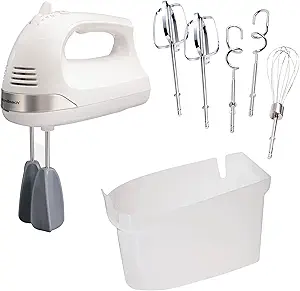 |
| Best Budget The cheapest option that still gets the job done reliably | OVENTE Hand Mixer HM151 |  |
| Top Rated A top-rated pick with lots of positive feedback | KitchenAid 9-Speed Hand Mixer KHM926 |  |
| Most Popular A crowd favorite that many people choose with confidence | Hamilton Beach 6-Speed Hand Mixer |  |
| Best Seller A high-volume bestseller chosen again and again | KitchenAid 5 Speed Hand Mixer KHM512 |  |
Braun MultiMix 5 HM5130BK

| Wattage | 350 |
|---|---|
| Number of Speeds | 9 |
| Voltage | 120 |
| Special Features | Smartmix Technology, Variocontrol Speed Dial, Multi Whisk Attachment |
The Braun MultiMix 5 HM5130BK is a purpose-built hand mixer that brings higher motor power and ergonomic design to everyday baking and dough tasks. Its 350W motor and SmartMix in-line vertical motor layout shift weight into the bowl, which reduces wrist effort when mixing heavier batters and dough. The VarioControl dial with nine speeds plus Turbo and push-button controls make it simple to fine-tune speed while working one handed. The included dough hooks are sturdy enough for small-to-medium bread and pizza doughs, while the MultiWhisk combines whisk and beater functions for lighter mixtures. A sealed housing and dishwasher-safe attachments simplify cleanup after sticky doughs. Practical extras include a chopper attachment for quick prep and a soft-grip handle for slip-resistant control. Limitations are typical of hand mixers: it is best for small to moderate dough batches rather than large or very heavy kneading jobs where a stand mixer would outperform it, and the chopper has a limited 2-cup capacity. For bakers who want more power and easier handling than basic hand mixers, this model is a compelling midweight choice.
Best for: Bakers who want more power and easier handling than basic hand mixers for regular small-to-medium doughs and everyday baking tasks.
Less Ideal for: Home cooks who frequently make large batches of heavy bread or need sustained heavy kneading should choose a stand mixer instead.
- 350W motor delivers higher power for tougher mixing and denser doughs
- SmartMix in-line motor design shifts weight into the bowl to reduce wrist effort
- Nine-speed VarioControl plus Turbo allows precise speed adjustments while mixing one handed
- MultiWhisk and sturdy dough hooks cover whisking, beating, and small-scale kneading tasks
- Sealed housing and dishwasher-safe attachments simplify cleaning
- Not a substitute for a stand mixer on large or very heavy dough batches
- Chopper attachment has a small 2-cup capacity, limiting prep volume
Verdict: Choose the Braun MultiMix 5 if you want a more powerful, ergonomic hand mixer that handles small-to-medium doughs with less wrist strain.
SMEG HMF01 Hand Mixer

| Wattage | 220 watts |
|---|---|
| Voltage | 120 volts |
| Number of Speeds | 9 |
| Special Features | Adjustable Speed Control, Digital Display, Turbo Boost |
The SMEG HMF01 is a premium hand mixer that pairs 1950s-inspired design with practical mixing performance. Its 220W motor and electronic speed control provide steady power across nine speeds and a Turbo boost, while the Smooth Start system reduces splatter during acceleration. The concealed LED display with count-up timer helps keep track of mixing time for repeatable results, and the ergonomic die-cast aluminum body and anti-slip handle make it comfortable to hold during longer tasks. The included stainless steel whisks, beaters, and dough hooks cover whipping, batter mixing, and light-to-moderate dough kneading; for heavy bread dough a stand mixer is still recommended. Cord management and non-slip feet add countertop convenience, and overload protection helps safeguard the motor. Expect a stylish, durable unit that excels at whipping creams, beating eggs, and handling cookie or pizza dough up to moderate stiffness, but not large batches of heavy, wet bread dough where a higher-torque stand mixer is preferable.
Best for: Home bakers who prioritize consistent, controlled mixing and want a stylish, durable hand mixer that can handle whipping, batters, and light to moderate dough tasks.
Less Ideal for: Bakers who frequently mix heavy or large batches of bread dough or need a high-torque appliance for commercial-level kneading should opt for a stand mixer instead.
- Powerful 220W motor with 9 speeds plus Turbo for flexible control
- Smooth Start system minimizes splatter for cleaner mixing
- LED timer display lets you monitor mixing time precisely
- Includes stainless steel whisks, beaters, and dough hooks for versatile tasks
- Solid die-cast aluminum body feels durable and balanced in hand
- Not designed for heavy or large-volume bread dough that requires a stand mixer
- Approximately 3 lb weight may feel heavy during very long mixing sessions
Verdict: Buy this if you want a high-performance, well-built hand mixer that delivers precise control and can handle whipping and light-to-moderate dough tasks while adding retro style to your kitchen.
Hamilton Beach 6-Speed Hand Mixer
| Wattage | 275 watts |
|---|---|
| Number of Speeds | 6 |
| Special Features | QuickBurst, Adjustable Speed Control, Detachable Spindle |
| Included Components | Dough Hooks, Easy Clean Beaters, Traditional Beaters, Whisk |
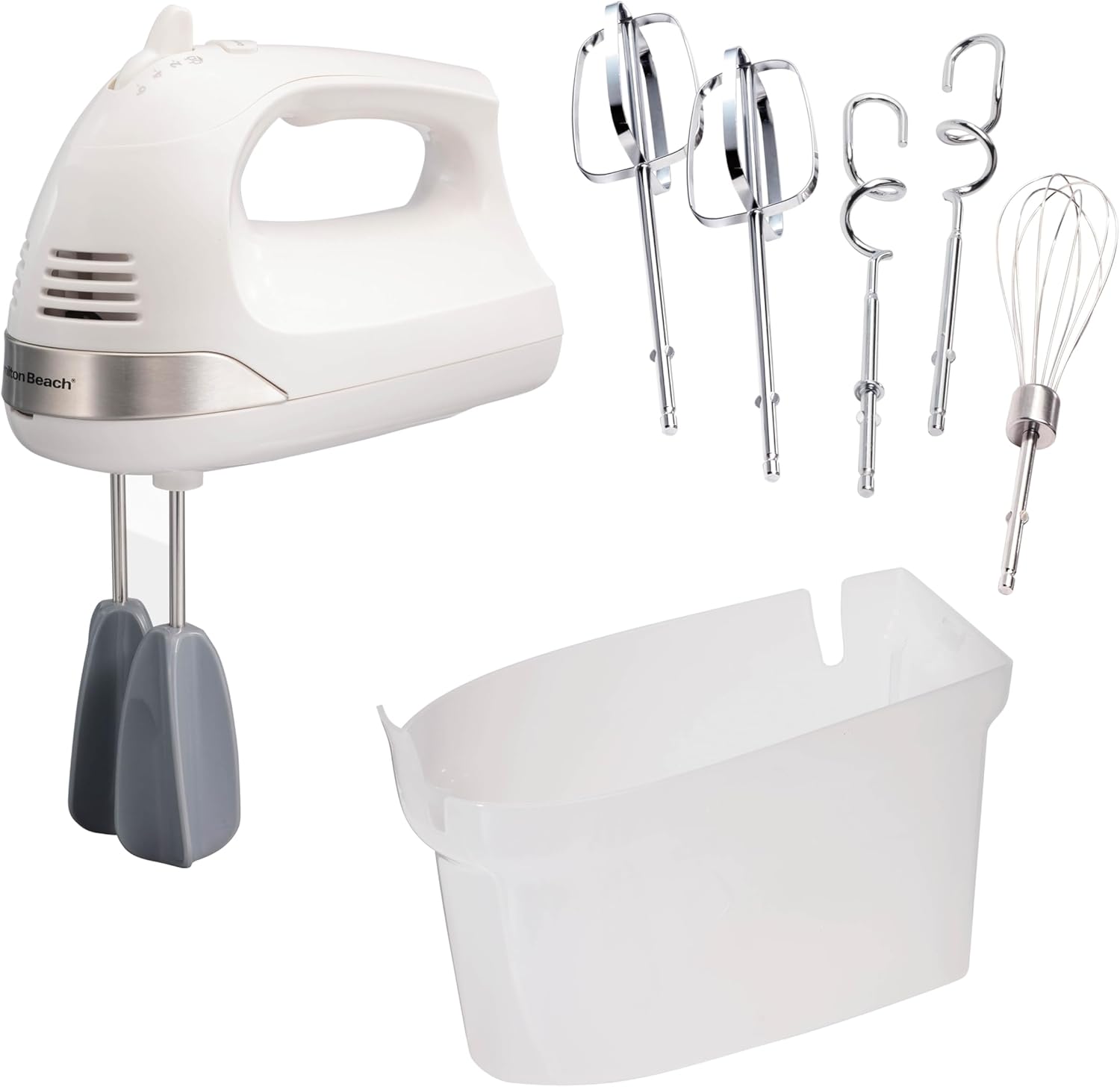
The Hamilton Beach 6-Speed Hand Mixer is a straightforward, well-rounded handheld mixer that covers everything from whipping cream to tackling denser doughs. It ships with two Easy Clean beaters, two traditional beaters, two dough hooks and a whisk, and the snap-on storage case keeps all attachments together. The 275 watt motor and QuickBurst turbo boost provide the extra power needed for heavier batters and small bread doughs, while six speeds let you step up gradually from gentle folding to high-speed whipping. Easy Clean beaters are shaped to reduce clogging and the attachments eject for dishwasher-safe cleanup, which saves time during baking sessions. Important limitations are that a hand mixer still strains on very large or very stiff bread doughs compared with a stand mixer, and the handheld format requires two-handed control when working with thicker mixes. For home bakers who need a compact, versatile tool for most dough and mixing jobs, this gives reliable performance and tidy storage without extra bulk.
Best for: Home bakers who prioritize a compact, no-fuss tool that handles most batters and small doughs and who value easy cleanup and tidy storage.
Less Ideal for: People who regularly knead large batches or very stiff bread doughs who should consider a dedicated stand mixer instead.
- Includes 7 attachments (Easy Clean beaters, traditional beaters, dough hooks, whisk) for a wide range of recipes
- 275 watt motor with QuickBurst turbo provides extra power for thicker batters and small doughs
- Easy Clean beaters resist clogging for faster mixing and simpler cleanup
- Snap-on storage case keeps attachments organized and reduces loss
- Hand mixer format can struggle with very large or very stiff bread doughs compared with a stand mixer
- Requires manual control during heavy mixing which can be tiring for extended kneading
Verdict: A compact, versatile hand mixer that gives reliable power and organized storage for most home dough and mixing tasks.
OVENTE Hand Mixer HM151

| Wattage | 150 watts |
|---|---|
| Voltage | 120 |
| Number of Speeds | 5 |
| Included Components | 2 Whisk Beater, Snap-On Case Storage |
The OVENTE HM151 is a lightweight, no-frills hand mixer aimed at everyday baking tasks. Its 150W motor and five speed settings let you whip cream, beat eggs, and mix cookie or cake batters with reasonable speed and control, and the two stainless steel whisks are sturdy for routine use. The ergonomic body and push-button controls make it easy to hold and change speeds while the beater-eject button simplifies attachment removal. A small snap-on storage case tucks the beaters and cord away for neat storage, which helps in tight kitchens. Because the motor is 150 watts, the mixer handles light to medium doughs and batters fine but will struggle with very heavy bread dough or prolonged heavy mixing. Cleanup is straightforward since the beaters are dishwasher safe and the housing wipes clean. For bakers who need a basic, low-cost mixer for typical batter and whipping tasks, this model delivers solid value; those needing sustained power for dense dough should look to heavier-duty stand or higher-watt hand mixers.
Best for: Bakers on a budget who need a lightweight, easy-to-store mixer for everyday batters, whipping cream, and occasional small dough tasks.
Less Ideal for: Anyone who regularly mixes heavy bread dough or large batch recipes should choose a higher-powered stand mixer or a more powerful hand mixer designed for heavy-duty use.
- Five adjustable speeds for flexible mixing control
- 150W motor suitable for most batters and whipping tasks
- Includes two stainless steel whisk beaters that are dishwasher safe
- Snap-on storage case keeps beaters and cord organized
- Ergonomic, lightweight design makes short jobs comfortable
- 150W motor is underpowered for heavy or continuous bread dough mixing
- Compact size limits capacity for large batches
Verdict: A compact, budget-friendly hand mixer that handles everyday batters and whipping tasks well but is not intended for heavy bread dough.
KitchenAid 9-Speed Hand Mixer KHM926
| Number of Speeds | 9 |
|---|---|
| Wattage | 100 watts |
| Voltage | 120 volts |
| Included Components | Beaters, Pro Whisk, 2 Dough Hooks, Blending Rod, Storage Bag |
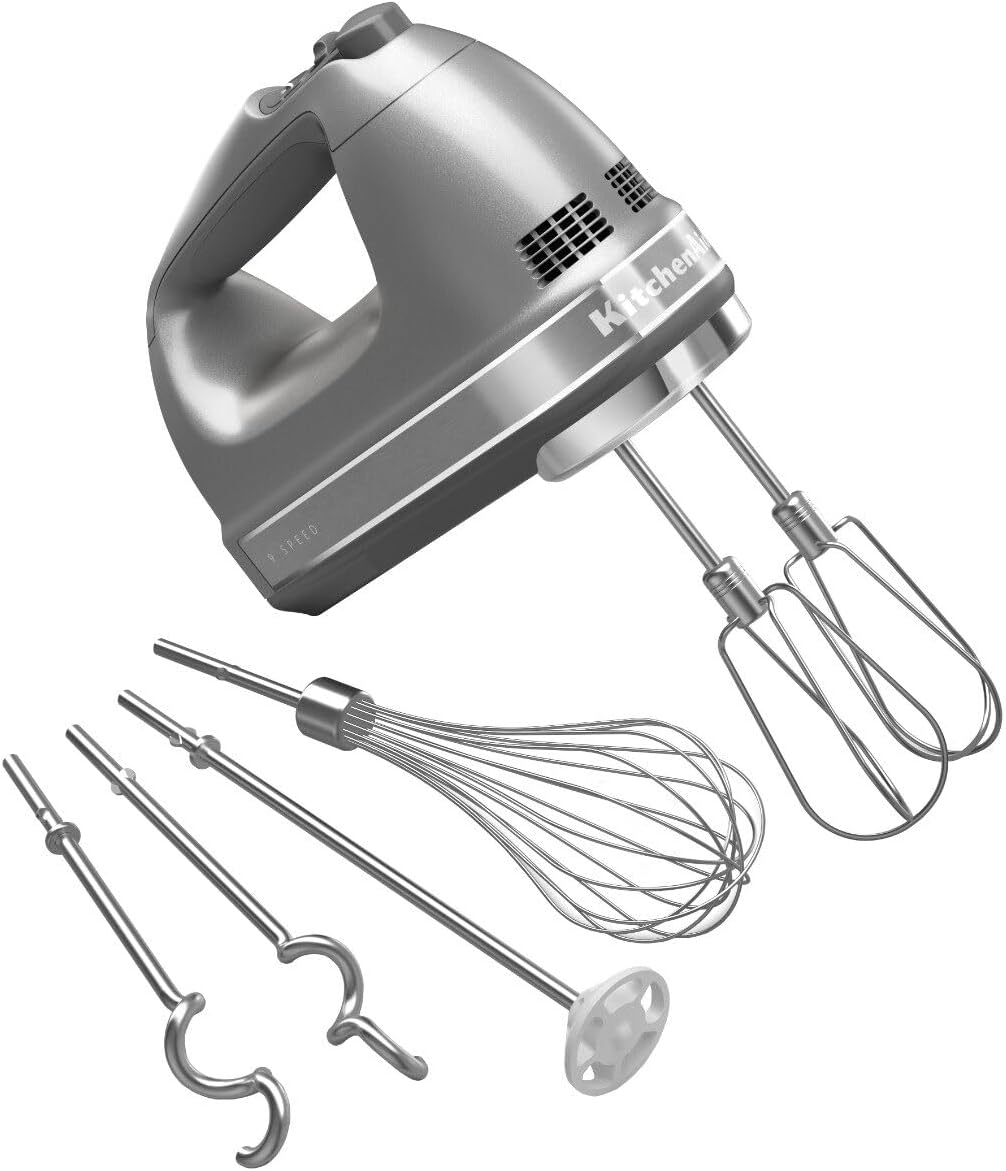
The KitchenAid 9-Speed Hand Mixer KHM926 is a compact corded mixer designed to handle a range of kitchen tasks from folding in chocolate chips to kneading light yeast dough. It includes Stainless Steel Turbo Beater II accessories, a Pro Whisk, two dough hooks, and a blending rod, so you can mix, whip and lightly knead without switching to a full stand mixer. The nine speed settings give fine control from a slow stir up to high-speed whipping, and the soft-start feature helps reduce splatter. Accessories are dishwasher-safe and the set stores in the supplied bag for neat cabinet storage. Because it is a hand mixer it works best for small to medium dough batches and lighter kneading tasks rather than heavy bread doughs that need prolonged intensive mixing. The unit is lightweight and easy to maneuver, but users who make large loaves or frequent heavy doughs may prefer a dedicated stand mixer for more power and hands-off mixing.
Best for: Buyers who prioritize a reliable, versatile hand mixer for everyday baking and occasional dough kneading and who want a set of factory-quality attachments that handle multiple tasks.
Less Ideal for: Bakers who regularly mix large or very heavy bread doughs and need prolonged high-torque performance should consider a stand mixer instead.
- Nine speed settings for precise control across mixing and whipping tasks
- Includes Turbo Beater II accessories, pro whisk, dough hooks and blending rod for multiple functions
- Dishwasher-safe attachments and included storage bag simplify cleanup and storage
- Soft-start and lockable swivel cord improve ease of use and reduce splatter
- Not designed for heavy, large-capacity bread dough that requires sustained high power
- Corded design limits reach compared with cordless models
Verdict: Choose this KitchenAid hand mixer if you want a dependable, accessory-rich tool for everyday mixing and occasional light dough work.
Hamilton Beach 6-Speed Hand Mixer

| Wattage | 250 watts |
|---|---|
| Number of Speeds | 6 |
| Special Features | QuickBurst, Bowl Rest, Snap-on Storage Case |
| Voltage | 120 volts |
The Hamilton Beach 6-Speed Hand Mixer is a straightforward, no-frills appliance for mixing, whisking, and light dough tasks. It uses a 250 watt peak-power motor with six speed settings plus a QuickBurst button to add short bursts of power for thicker batters, and it ships with two traditional beaters and a whisk. The built-in bowl rest helps keep the mixer stable when you pause to add ingredients, and the snap-on storage case keeps the beaters and whisk together for tidy storage. In typical home use it handles cookie dough, cake batters, whipped cream, and lighter mixing jobs quickly and with predictable control. Limitations are its handheld design and 250W peak rating, which mean it is less suited for heavy, long kneading of dense bread dough compared with stand mixers or higher-power models; expect to mix heavier doughs in shorter bursts to avoid strain. The attachments are dishwasher safe and eject cleanly, which makes cleanup easy after everyday baking sessions.
Best for: Bakers who want a reliable, well-reviewed hand mixer for everyday baking tasks and occasional light dough mixing, and who prioritize proven performance and tidy storage.
Less Ideal for: Those who regularly make large batches of dense bread dough or want sustained kneading should choose a stand mixer or a higher-power, dough-specific machine instead.
- Six speed settings plus QuickBurst for controlled power when mixing varied batters
- Snap-on storage case keeps beaters and whisk together and reduces lost attachments
- Built-in bowl rest stabilizes the mixer when pausing to add ingredients
- Dishwasher-safe beaters and simple eject makes cleanup easy
- 250W peak motor and handheld format limit continuous kneading of heavy bread doughs
Verdict: A dependable, highly rated hand mixer that offers controlled mixing and neat storage, best for everyday baking and light dough jobs.
KitchenAid 5 Speed Hand Mixer KHM512

| Number of Speeds | 5 |
|---|---|
| Wattage | 60 watts |
| Included Components | (1) Hand Mixer, (2) Stainless Steel Turbo Beater™ Accessories |
| Voltage | 120 |
The KitchenAid 5 Speed Hand Mixer KHM512 is a compact, lightweight mixer built for routine kitchen tasks like cookie dough, whipped cream, and mashed potatoes. It offers five clearly stepped speeds that let you start slow for chunky additions and ramp up to whip egg whites or cream. The included Stainless Steel Turbo Beaters are designed for heavier mixes and are dishwasher-safe for simple cleanup, while the beater ejector button makes accessory removal quick and easy. The lockable swivel cord helps keep the cord out of the way as you work and the soft-start feature reduces splatter when beginning to mix. Because it is a hand mixer rather than a stand mixer, it is best for small- to medium-batch doughs and batters rather than large or very stiff bread doughs, and the 60-watt motor is adequate for everyday baking but not meant for heavy commercial use. For buyers who want a reliable, easy-to-store mixer for typical home baking, it balances power, control, and convenience.
Best for: Home bakers who prioritize a reliable, easy-to-use hand mixer for everyday cakes, cookies, and small dough batches and who prefer a straightforward, low-risk appliance.
Less Ideal for: Bakers who regularly mix large volumes or very stiff bread doughs should consider a stand mixer or a more powerful handheld model instead.
- Five speed settings for controlled mixing from slow stir to high whip
- Stainless Steel Turbo Beater accessories suited for heavier batters and doughs
- Beater ejector button and dishwasher-safe accessories for easy cleanup
- Lockable swivel cord keeps the cord out of the way during use
- 60-watt motor limits performance on very stiff or large-volume doughs
Verdict: A dependable, easy-to-clean hand mixer that gives mainstream home bakers controlled mixing power for everyday doughs and batters.
Choosing the Right Hand Mixer for Dough: Key Factors to Consider
Motor Torque and Stall Resistance
Motor torque determines whether a hand mixer can handle thick, sticky dough without bogging down. Higher sustained torque helps the beaters turn through dense mixtures and reduces the chance of motor overload trips.
When evaluating torque, look for information about continuous-duty ratings or features that indicate sustained power delivery rather than short bursts of peak wattage. For heavy doughs you will usually prefer a motor and gearing that maintain speed under load rather than dropping to a crawl. Torque also affects mixing time and how much manual intervention you need to finish the dough.
Gearbox Construction and Longevity
The gearbox translates motor power into usable force at the beaters and is often the first mechanical component to fail under heavy use. Metal gears or reinforced composite gear trains last longer than basic plastic gearing when repeatedly handling dough.
Consider how accessible the service points are and whether the design minimizes dust and flour ingress. A mixer intended for regular dough use should show evidence of robust internal components or manufacturer notes about heavy-duty gearing. Longevity reduces the likelihood of grinding noises, slipping beaters, or complete failure after months of yeast-baking sessions.
Beater and Dough Hook Design
Attachment shape affects how efficiently dough is folded and kneaded. Dough hooks or stiff, spiral-style beaters are better for gluten development and minimizing overworking.
Look for attachments that are sturdy, have minimal flex, and fit securely into the hub. Smooth welds and reinforced stems reduce wobble under load. Removable beaters that lock firmly into place improve torque transfer and cut down on wobble and wear on the release mechanism.
Heat Management and Thermal Protection
Extended kneading creates heat in both the motor and gearbox. Effective heat dissipation and thermal cutoff features protect the mixer from damage during long or repeated dough sessions.
Check for features like ventilation paths that are not easily clogged by flour dust, thermal fuses or auto-shutoff systems, and user guidance on duty cycles. A mixer that runs cooler will tolerate heavier workloads and last longer without the need for cooling pauses.
Ergonomics and User Comfort
Mixing dough by hand can be a prolonged task, so the mixer should be comfortable to hold and easy to control. Weight distribution, handle shape, and button placement all impact how tiring extended mixing becomes.
Controls that allow gradual speed changes and a secure grip reduce wrist strain. A slightly heavier unit can be acceptable if balance is good; lightweight but poorly balanced mixers can feel awkward when resisting dough. Consider whether a model supports one-handed operation of speed controls for convenience.
Ease of Cleaning and Maintenance
Dough splatter and sticky residue are common, so attachments and housing should be easy to clean. Beaters and hooks that are dishwasher-safe or easily rinsed save time and help maintain hygiene.
Also consider how sealed the housing is to prevent flour ingress into vents or seams. Simple maintenance routines like occasional lubrication of accessible gear points or easy replacement of worn attachments extend working life. Clear manufacturer instructions for cleaning heavy-use mixers are a practical plus.
When to Choose a Hand Mixer Over a Stand Mixer
Hand mixers are a good choice if you need a compact, versatile tool that stays in storage and can handle occasional dough tasks. For small batches, enriched doughs, or hobby baking where counter space and budget are constraints, a heavy-duty hand mixer can be perfectly adequate.
A hand mixer excels at short kneading intervals and gives you more control over mixing action because you can adjust angle and pressure. It is not ideal for very large batches that require sustained, high torque over long periods, but many hand mixers can handle moderate dough workloads with the right motor and attachments.
- Best for small to medium dough batches
- Easier to store than a full stand mixer
- Provides more manual control of mixing action
Attachment Types and Their Best Uses
Different attachments change how a hand mixer handles dough. Spiral dough hooks replicate hand-kneading motion and are suited for yeast doughs, while flat beaters are better for batters and lighter doughs. Stiff wire beaters are generally for whipping or creaming tasks and perform poorly on heavy doughs.
Choose attachments that match the typical doughs you make. Robust hooks with thick stems reduce flex and improve the transfer of torque from the gearbox to the dough.
- Dough hooks: best for yeast dough and kneading
- Flat beaters: good for cookie dough and batter
- Wire beaters: for whipping and light aeration
Managing Duty Cycle and Avoiding Overload
Even heavy-duty hand mixers have practical duty cycles. Avoid running continuous mixing beyond manufacturer guidelines to prevent overheating. For long kneading sessions, work in short intervals and allow the motor to cool between runs.
If a recipe calls for long, continuous kneading, consider breaking the process into several shorter mixing sessions and finish by hand if needed. This approach reduces stress on the motor and gearbox and prolongs the mixer's usable life.
- Use short mixing intervals for heavy dough
- Let the motor rest between extended uses
- Monitor for unusual sounds or smells that indicate strain
Maintenance Tips to Maximize Lifespan
Regular maintenance keeps a hand mixer reliable. Clean attachments immediately after use to prevent hardened dough from lodging in crevices. Inspect beaters and hooks for bends or wear and replace them if they start to flex under normal use.
Keep vents free of flour dust and avoid submerging the housing. If accessible, follow guidance for periodic lubrication of moving parts and check that release buttons and locks engage smoothly. Proper care reduces the chance of early gearbox or motor issues.
- Rinse or dishwasher-safe attachments simplify cleanup
- Wipe housing and vents with a dry brush to remove flour
- Replace bent or worn attachments promptly
Noise and Vibration Considerations
Heavy mixing can produce noise and vibration, which might be a factor if you bake in small spaces or shared housing. Look for mixers with dampening features or solid build quality that reduce vibration transfer to the wrist.
A slightly heavier, well-balanced unit often runs quieter under load than a lightweight one that resonates. If noise matters, prioritize robust construction and solid attachment fit to limit rattling and motor strain sounds.
- Solid construction reduces vibration
- Secure attachment hubs cut down on rattle
- Consider noise if mixing in close quarters
How We Chose the Best Hand Mixer for Dough
We focused on attributes that matter when using a hand mixer specifically for dough. Primary evaluation criteria were sustained motor torque, gearbox durability, beater attachment design for dough work, heat management under load, and ergonomic controls that reduce user fatigue. We prioritized units with proven mechanical robustness and serviceable parts because dough mixing puts continuous stress on motors and gears. Our filters excluded light-duty or single-speed hobby mixers that are designed only for whipping cream or light batters. We also excluded any units without attachments suitable for heavy dough or that lack thermal protection. Data points considered included published motor specifications, documented features for heavy mixing, reported longevity signals such as reinforced gear trains, and ease-of-maintenance factors like removable beaters and accessible seams. The combination of these dimensions guided the selection of models that are likely to perform reliably for home bakers tackling yeast doughs and denser batters.
Our full evaluation process is outlined in our review methodology.
FAQ
Can a hand mixer knead bread dough effectively?
Often, yes. Many hand mixers with strong motors and sturdy dough hooks can handle small to medium bread doughs. Very large or extremely dense batches may still be better suited to a stand mixer.
How long can I run a hand mixer when kneading dough?
It depends on the model, but most hand mixers are meant for intermittent duty. Running in 30 to 60 second bursts with short cooling intervals is a common practical approach to avoid overheating.
Are dough hooks necessary for mixing dough?
Dough hooks are the most efficient attachment for yeast dough because they mimic folding and stretching actions. Flat beaters can work for stiffer cookie doughs but are less effective at developing gluten in yeast dough.
What maintenance keeps a hand mixer working longer?
Clean attachments promptly, keep vents free of flour, inspect beaters for wear, and follow any manufacturer guidance for lubrication or part replacement. Avoid forcing the mixer through very large batches to reduce gearbox stress.
Will a more powerful motor always mean better dough performance?
Not always. Power helps, but sustained torque and gearbox design matter more. A well-designed lower-wattage motor with reinforced gearing can outperform a higher-wattage unit with weak gears under heavy loads.
Final Verdict
When choosing a hand mixer for dough, prioritize sustained motor torque, sturdy gearbox construction, and dough-appropriate attachments. Balance these mechanical factors with ergonomics and heat-management features to match your typical batch sizes and mixing frequency. For most home bakers who make small to medium doughs, select a model that emphasizes torque and durable hooks over lightweight convenience. That focus will deliver reliable kneading performance and longer service life.