
Note: This article contains affiliate links. If you click on these links and make a purchase, we may earn a small commission at no extra cost to you. This helps support our research and content. Read our full affiliate disclosure here.
If you plan to preserve high-acid and low-acid foods at home, selecting a pressure cooker that is explicitly safe for canning makes a big difference in outcome and kitchen safety. A pressure cooker designed for canning provides reliable sealing, steady pressure control, and enough interior space for jars and water to circulate properly. This guide shortlists the top options judged for safe home canning and covers the features that matter most to home preservers. Read on to see the picks and the evaluation criteria we used to assess sealing, capacity, and long-term reliability.
Top Picks at a Glance
| Best Overall The best all-around choice for most situations | NESCO NPC-9 Smart Canner |  |
| Best Quality Built to a higher standard if you want something more solid | Presto 23-Quart Pressure Canner |  |
| Best Value The sweet spot between price and what you get | T-Fal 22-Quart Pressure Canner |  |
| Best Budget The cheapest option that still gets the job done reliably | Barton 8-Quart Pressure Canner |  |
| Top Rated A top-rated pick with lots of positive feedback | All American 1930 10.5qt Pressure Canner |  |
| Most Popular A crowd favorite that many people choose with confidence | Presto 23-Quart Pressure Canner 01781 |  |
| Best Seller A high-volume bestseller chosen again and again | Cosori 6-Quart Pressure Cooker |  |
NESCO NPC-9 Smart Canner
| Capacity | 9 quarts |
|---|---|
| Wattage | 1000 watts |
| Control Method | Touch |
| Operation Mode | Automatic |
| Controller Type | Digital |
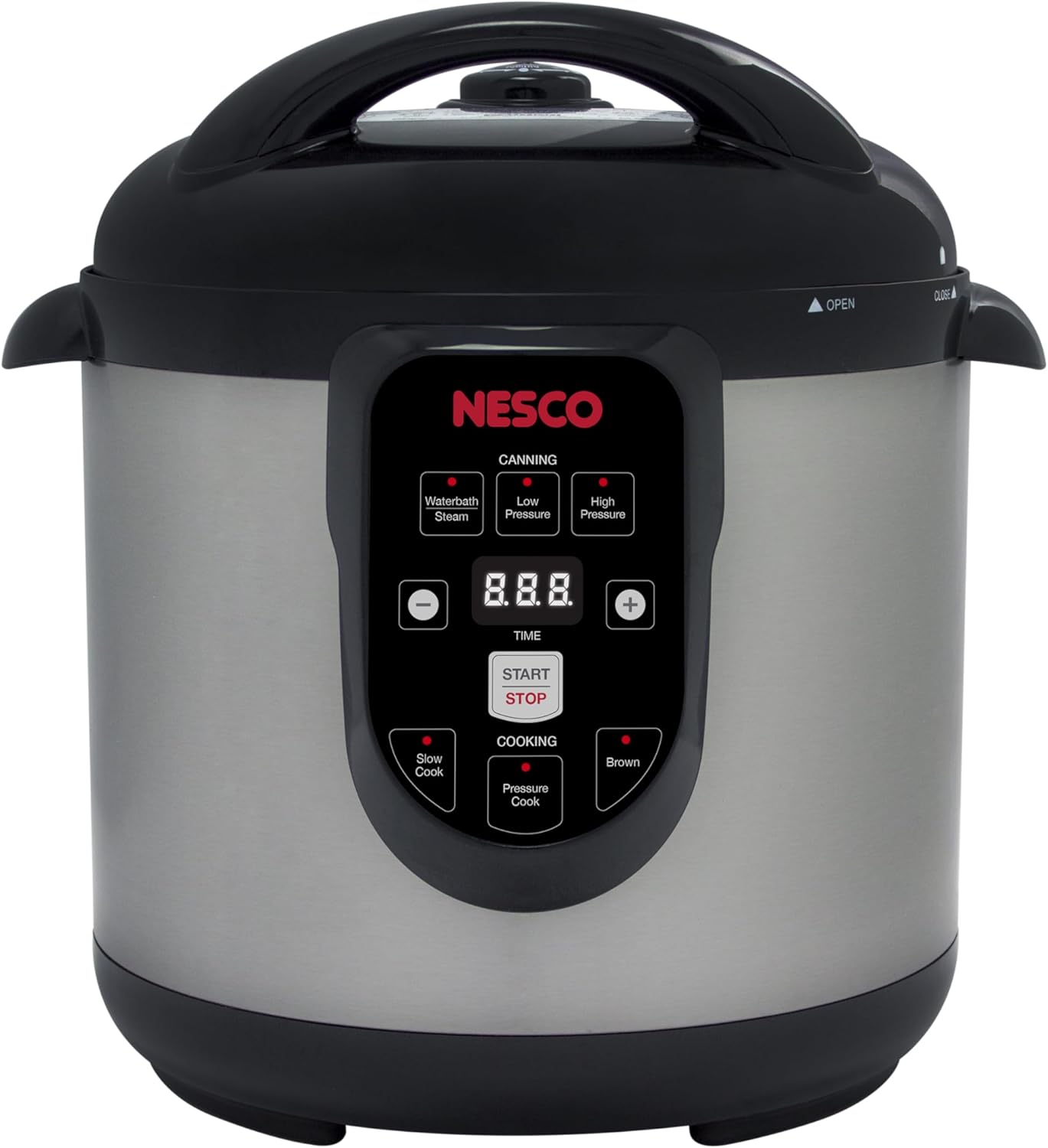
The NESCO NPC-9 is a purpose-built electric pressure canner that also doubles as a multi‑mode cooker, offering pressure cook, slow cook, steam, and water bath functions in one 9.5‑quart appliance. It automates pressure and temperature control with a digital display and preset programs, which makes processing jars or preparing large batch meals more repeatable and less hands‑on than a stovetop canner. Safety features such as a locking lid, automatic float valve, and continuous pressure regulation reduce user error and let beginners feel confident when canning meats, broths, fruits, jams, and pickles. The removable nonstick inner pot and included canning and steam racks simplify jar loading and cleanup, while the 1000W heater and touch controls keep operation straightforward. Trade offs are typical of dedicated electric canners: it takes countertop space, and the nonstick inner pot and digital electronics mean it is not the simplest, lowest‑maintenance option compared with a plain steel stovetop canner. Still, for anyone who wants consistent, safer electric canning plus occasional pressure‑cooking and steaming, the NPC‑9 makes the process much easier.
Best for: Buyers who want a safer, more automated way to preserve garden harvests or bulk buys and who value repeatable, preset canning cycles over manual stovetop control.
Less Ideal for: People who prefer minimal, low‑maintenance equipment or who need a compact solution for occasional single‑jar canning.
- Dedicated canning modes including water bath and pressure functions for safe jar processing
- Digital display with preset programs and timer for repeatable cycles
- Built‑in safety features: locking lid, automatic float valve, and pressure regulation
- Includes canning rack, steam rack, and removable condensation catcher for easier cleanup
- Takes significant countertop space compared with stovetop options
- Nonstick removable pot and electronics add more parts to maintain versus a simple steel canner
Verdict: Choose the NPC-9 if you want a focused, safer electric canner that automates pressure and timing for consistent home canning results.
Presto 23-Quart Pressure Canner

| Capacity | 23 liters |
|---|---|
| Special Features | Induction Compatible Base, Electric/Gas/Smooth‑top Compatible |
| Control Method | Touch |
| Operation Mode | Manual |
The Presto 23‑quart pressure canner is built for serious home canners who need reliable, USDA‑approved pressure processing for vegetables, meats, poultry, and seafood. Constructed from heavy‑gauge aluminum with a stainless steel‑clad, induction‑compatible base, it heats evenly on gas, electric, smooth‑top, and most induction ranges and includes a deluxe pressure gauge for precise pressure control—important when adjusting for altitude. The canner doubles as a boiling‑water canner for fruits and jams and can be used as a large pressure cooker for soups and meats, making it versatile for batch food prep. Safety features include an air vent/cover lock that prevents pressurization unless closed correctly and blocks opening until pressure is reduced, and the unit ships with a cooking/canning rack and a canning recipe/instruction book. At this size it holds many jars for large runs, but its large footprint and weight may be cumbersome for users with limited stove space or those who prefer lighter cookware.
Best for: Home cooks who prioritize reliable, USDA‑approved pressure canning performance and need a large, induction‑compatible canner for regular batch preserving and heavy meal prep.
Less Ideal for: People with very small kitchens, limited stove clearance, or those who rarely can and prefer compact, lightweight cookware instead.
- Induction‑compatible stainless steel‑clad base for even, fast heating on multiple stovetop types
- Large 23‑quart capacity fits many jars for batch canning
- Deluxe pressure gauge for accurate monitoring and altitude adjustments
- Air vent/cover lock adds a clear safety interlock and visual pressure indication
- Includes canning rack and an instruction/recipe book to help beginners
- Heavy and large footprint which can be awkward to store or maneuver when full
- Made primarily of aluminum which may require careful handling to avoid dents over time
Verdict: Choose this Presto canner when you need a large, induction‑compatible, USDA‑approved unit that delivers precise pressure control for safe, high‑volume home canning.
T-Fal 22-Quart Pressure Canner

| Capacity | 22 quarts |
|---|---|
| Wattage | 1000 watts |
| Control Method | Touch |
| Operation Mode | Manual |
| Voltage | 120 volts |
The T-Fal 22-Quart Pressure Canner is a large-capacity aluminum canner built for home food preservation, letting you process low-acid foods by pressure canning and high-acid foods by water-bath methods. It includes two canning racks and a step-by-step guide, and it is intended for use on gas and electric coil stovetops. The canner offers adjustable pressure settings with an easy-to-read gauge, a pressure-indicator pin, a steam release valve, and a locking lid to support USDA-recommended canning procedures. Its polished aluminum construction promotes even heat distribution for predictable processing times, while the roomy interior fits multiple jars so you can do full batches. Limitations to consider are stovetop compatibility restricted to gas and coil electric ranges and the heavier weight that comes with a large 22-quart unit, which can make lifting and storage less convenient. For home canners who need reliable, beginner-friendly equipment for large batches, this model delivers the core safety features and capacity required for safe pressure canning.
Best for: Buyers who want a reliable, beginner-friendly pressure canner to process full batches of home-canned low-acid and high-acid foods and who prioritize safety features and capacity.
Less Ideal for: People who need induction-compact cooktop compatibility or those with limited storage or who prefer lightweight, portable canners should consider other options.
- 22-quart capacity fits multiple jars for full-batch canning
- Adjustable pressure settings with easy-to-read gauge for USDA-approved processing
- Includes two canning racks and a step-by-step canning guide for beginners
- Polished aluminum construction promotes even heat distribution
- Compatible only with gas and electric coil stovetops, not induction
- Large and relatively heavy, making handling and storage more cumbersome
Verdict: If you need a spacious, safety-focused pressure canner for regular full-batch home canning, this 22-quart T-Fal model is a practical, beginner-friendly choice.
Barton 8-Quart Pressure Canner

| Capacity | 8 quarts |
|---|---|
| Material | Aluminum |
| Control Method | Push Button |
| Operation Mode | Manual |
The Barton 8-Quart Pressure Canner is a stovetop pressure cooker built from heavy-gauge aluminum to speed up cooking and handle small to moderate home canning batches. It uses a mechanical push-button control and a mechanical knob regulator with a visible pressure release system and a locking outer lid for a secure seal, which helps safely build and hold pressure while canning vegetables, beans, soups, and meats. The aluminum construction heats quickly and distributes heat evenly, making it efficient on gas, electric, and induction ranges. Practical features include a long heat-resistant handle for safer lid handling and multiple safety valves including a self-locking valve. Because it is aluminum, it heats faster than stainless steel but requires careful cleaning to avoid discoloration and is less scratch resistant. The 8-quart capacity suits smaller batches rather than full canner loads, so it is best for cooks who preserve modest amounts or want a multiuse fast cooker for everyday meals as well as occasional canning.
Best for: Buyers on a tight budget who need a safe, fast stovetop pressure canner for small-batch canning and everyday pressure cooking.
Less Ideal for: Anyone who regularly processes large canning batches or who prefers long-lasting stainless steel cookware should consider larger or stainless-steel replacements.
- Lightweight aluminum construction that heats quickly for fast, even cooking
- Triple-safety system with pressure regulator and multiple safety valves for secure pressure control
- Heat-resistant long handle and outer lid design for safer opening and closing
- Compatible with gas, electric, and induction cooktops for versatile stovetop use
- 8-quart capacity is small for large-batch home canning
- Aluminum finish can discolor and is less durable than stainless steel over time
Verdict: A budget-friendly, safety-focused 8-quart pressure canner that delivers quick, reliable results for small-batch home canning and everyday pressure cooking.
All American 1930 10.5qt Pressure Canner

| Capacity | 9.94 liters |
|---|---|
| Material | Aluminum |
| Sealing System | Metal-to-metal |
| Included Pressure Control | Steam gauge and regulator weight |
The All American 1930 10.5qt Pressure Canner is a heavy-duty pressure cooker built specifically for safe home canning. It uses a precision-machined metal-to-metal sealing system instead of a gasket, so the lid locks to the pot for a steam-tight seal and requires very little ongoing replacement maintenance. The cooker includes a steam gauge, a precision regulator weight for controlling pressure, an overpressure release, and sturdy phenolic handles, which together make it straightforward to monitor and run USDA-approved canning cycles for low- and high-acid foods. Because it is cast from high-grade aluminum with double-thickness edges, the unit stands up to frequent use and is simple to wipe clean. Limitations: it is not compatible with induction cooktops and at 10.5 quarts it is sized for small to medium batches rather than large-volume commercial canning. The construction and safety features make it a dependable option for homeowners who want a long-lasting, serviceable canner for food preservation.
Best for: Buyers who prioritize a long-lasting, low-maintenance canner for safe, USDA-approved home canning and consistent pressure control.
Less Ideal for: People who need induction-compatibility or who regularly process very large batches should consider other solutions.
- Metal-to-metal sealing system eliminates gasket replacements and creates a durable steam-tight seal
- Includes steam gauge and precision regulator weight for accurate pressure control
- USDA-approved design suitable for low- and high-acid canning
- Durable high-grade cast aluminum construction with reinforced edges for long service life
- Not compatible with induction cooktops
- 10.5 quart capacity is better suited to small-to-medium batches rather than large-volume canning
Verdict: Choose this canner when you want a tough, low-maintenance, factory-quality pressure canner built for reliable, safe home canning.
Presto 23-Quart Pressure Canner 01781
| Capacity | 21.8 liters |
|---|---|
| Wattage | 1000 watts |
| Control Method | Touch |
| Operation Mode | Manual |
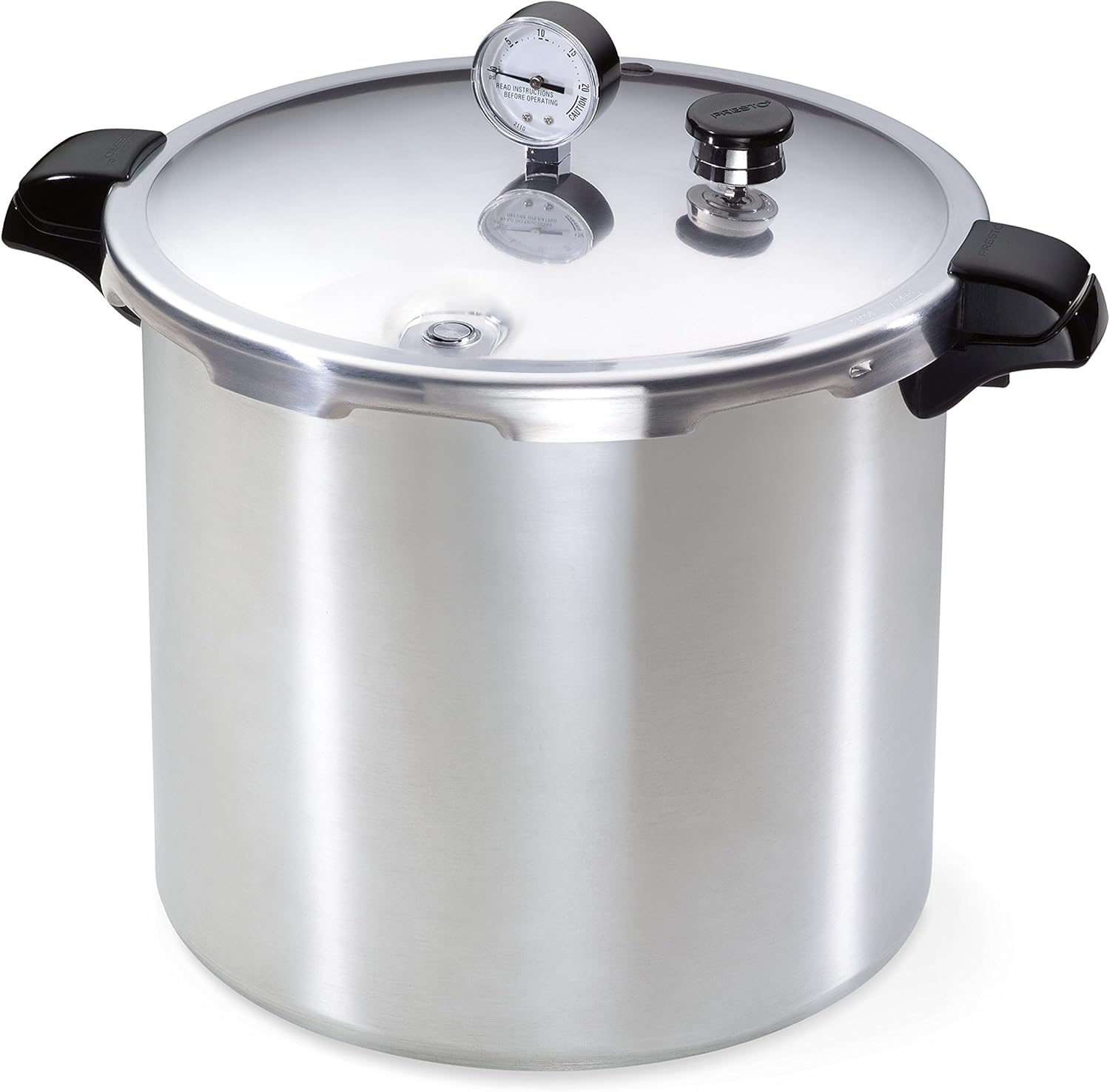
The Presto 23-Quart Pressure Canner is built specifically for home pressure canning of low-acid foods and doubles as a large pressure cooker for meals. It uses heavy-gauge, warp-resistant aluminum for even heating and works on both regular and smooth-top ranges. The canner includes a deluxe pressure dial gauge for precise pressure monitoring, an air vent/cover lock that prevents the lid from opening until pressure is safe, a pop-up pressure indicator, and an overpressure plug for safety. A removable rack keeps jars off the bottom and a 76-page booklet with recipes and detailed care instructions is included. In practice it handles big canning batches—multiple pints or quarts—efficiently, and the clear gauge makes it easier to maintain proper processing pressures at different altitudes. Buyers should note the lid is not immersible and the dial gauge is delicate, so following the care and maintenance steps in the manual is important. The unit is straightforward to use for standard canning workflows but requires attention to cleaning and gauge handling to keep it reliable long term.
Best for: Home preservers who prioritize safe, USDA-compliant pressure canning and need a reliable, large-capacity canner with clear pressure controls and safety features.
Less Ideal for: Casual users who only do occasional small-batch canning or who want a fully hands-off electric canner should consider simpler or smaller alternatives.
- Large 23-quart capacity suitable for big canning batches
- Heavy-gauge aluminum construction for fast, even heating
- Deluxe pressure dial gauge for accurate pressure monitoring
- Safety features including air vent/cover lock and overpressure plug
- Includes canning rack and a detailed instruction and recipe booklet
- Dial gauge is delicate and requires careful handling and occasional maintenance
- Lid is not immersible which adds steps to cleaning
Verdict: Choose this Presto canner if you need a proven, large-capacity, safety-focused pressure canner for serious home canning.
Cosori 6-Quart Pressure Cooker
| Capacity | 6 quarts |
|---|---|
| Wattage | 1100 watts |
| Control Method | Touch |
| Material | Stainless steel |
| Special Features | 13-in-1 presets; Ceramic nonstick inner pot |
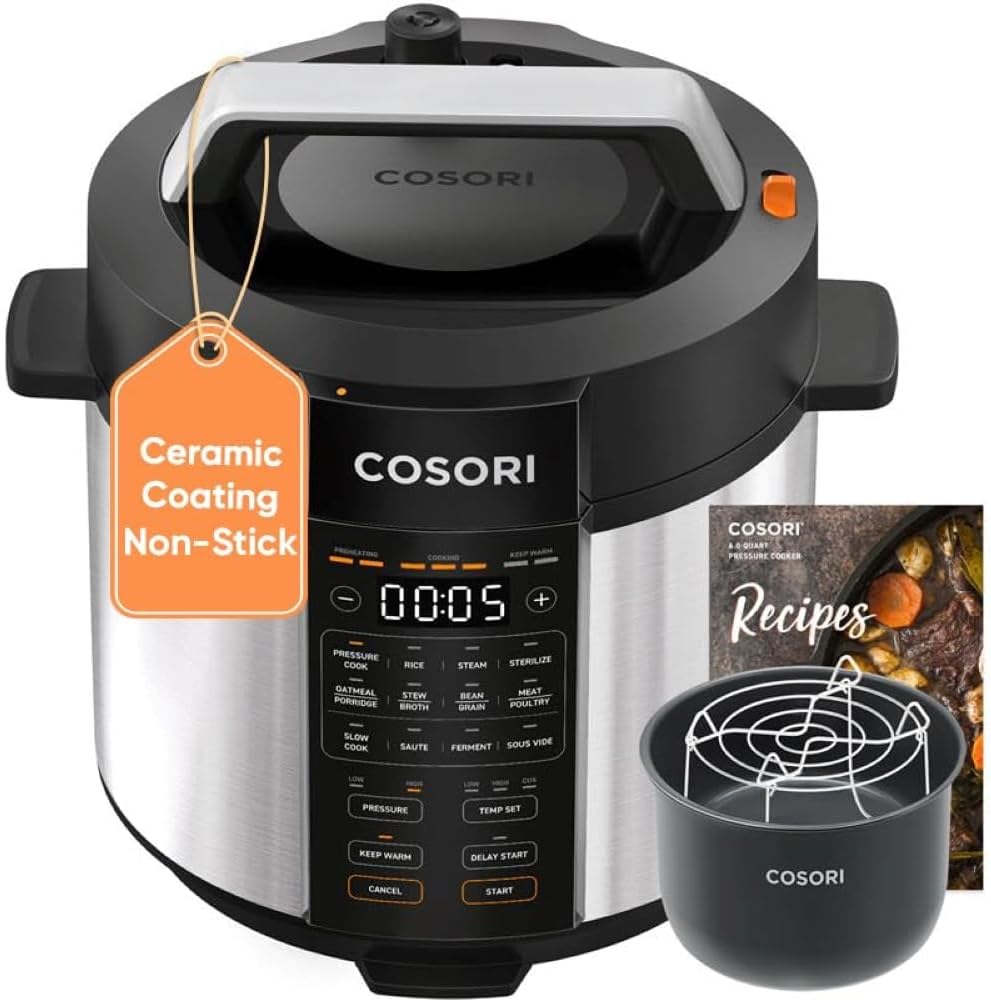
The Cosori 6‑quart pressure cooker is an electric multi-cooker that handles pressure cook, rice, steam, slow cook, sauté, sous vide and more using touch controls and 1100 watts of power. In everyday use it simplifies one-pot meals with 13 presets and a dishwasher-safe ceramic-coated inner pot that cleans easily and resists sticking. Safety is a prominent focus: the design places the seal/vent button away from the steam release and angles the steam path back 30 degrees, and the unit includes multiple built-in protections such as overheat protection and a double-layer lid to reduce scald risk. The cooker comes with a steam rack and recipe book so you can jump in without extra accessories. For someone looking to speed up stews, grains, and tougher cuts of meat it delivers consistent, tender results. Note that this is an electric countertop multi-cooker rather than a dedicated water-bath or pressure canner, so it lacks the larger capacities and specific USDA-tested canning features needed for safely processing low-acid foods at home.
Best for: Buyers who prioritize safety and easy everyday pressure-cooking for family meals and want a user-friendly, low-maintenance electric cooker with clear venting and built-in protections.
Less Ideal for: Home canners who need a USDA-tested pressure canner or larger capacity vessel for processing jars of low-acid foods should choose a purpose-built canner instead.
- Multiple cooking functions and 13 presets for one-pot versatility
- Ceramic nonstick inner pot that is dishwasher-safe and easy to clean
- Touch controls with clear presets simplify everyday use
- Built-in safety features including angled steam release and overheat protection
- Includes steam rack and recipe book for quick start
- Not designed or recommended as a home pressure canner for low-acid foods
- 6‑quart capacity may be small for large-batch canning tasks
Verdict: Choose this Cosori if you want a safe, easy-to-use electric multi-cooker for everyday pressure cooking, but not for home pressure canning low-acid foods.
Choosing the Right Safe Pressure Cooker for Canning: Key Factors to Consider
Seal Integrity and Gasket Condition
A reliable seal is the foundation of safe pressure canning. A worn, loose, or improperly seated gasket allows steam to escape, preventing the cooker from reaching and holding the required pressure for the full processing time. Inspect the gasket for cracks, deformation, or embedded food residue before every canning run and replace it on a schedule recommended by the manufacturer or sooner if signs of wear appear.
Different gasket materials respond differently to heat and detergents. Choose a cooker whose replacement gaskets are readily available and simple to install. Proper seating and regular replacement reduce the chance of incomplete processing and increase overall safety.
Accurate Pressure Control and Monitoring
Canning requires reaching and maintaining a specific pressure for a specified time. Pressure control mechanisms that allow fine adjustments and offer clear, easy-to-read indicators reduce human error. Mechanical gauges should be calibrated and clearly marked, while weighted regulators or modern digital displays should be simple to interpret under active use.
Also consider how the unit behaves when pressure changes during long cycles. A cooker that requires constant fiddling increases the chance of user error. Look for units that keep stable pressure with minimal intervention while still letting you vent or reduce pressure safely at the end of processing.
Canning Capacity and Jar Arrangement
The internal volume and usable height determine what jar sizes you can process and how many at once. Overcrowding jars can prevent even heat penetration and water circulation, increasing the risk of unsafe processing. Confirm that the cooker accepts common jar sizes with the recommended rack spacing or includes adjustable racks that make arranging jars straightforward.
Consider how many jars you typically preserve per session and select a capacity that lets you run full loads without stacking jars in ways the manufacturer does not recommend. Proper spacing also simplifies water circulation and consistent temperature exposure across jars.
Built-in Safety Valves and Redundant Protections
Multiple safety mechanisms reduce the risk of overpressure or accidental opening during a canning cycle. A primary pressure regulation device should be complemented by one or more mechanical or thermal safety valves that activate if pressure exceeds safe limits. Look for visible and accessible relief valves and designs that make it clear when a unit is still pressurized before you attempt to open it.
Redundancy is critical because canning runs can last a long time. If one mechanism fails, a secondary one can prevent dangerous pressure buildup. Verify how the cooker indicates pressure state and whether the design physically prevents lid removal while pressurized.
Materials, Corrosion Resistance, and Construction
Materials that resist corrosion and hold up to repeated high-temperature, high-moisture cycles extend the usable life of a pressure cooker used for canning. Stainless interior surfaces, robust locking mechanisms, and heat-resistant handles reduce maintenance and the risk of material failure. Avoid porous coatings that flake or degrade with repeated boiling.
Sturdy construction also affects long-term safety. Strong lid clamps and threaded closures should not loosen over time. Durable finishes make cleaning easier and reduce places where food or mineral deposits can collect and interfere with sealing surfaces.
Ease of Maintenance and Gasket Replacement
Routine maintenance is part of safe canning. Units that allow easy disassembly for gasket cleaning and replacement reduce the chance of contamination and seal failures. Clear instructions on gasket care and access to replacement parts are important for ongoing safe operation.
Also consider how straightforward it is to clean safety valves and steam channels. Clogging or mineral buildup in these parts can compromise safety and pressure control. A design that opens or provides access for cleaning will reduce long-term service issues.
Preparing Your Pressure Cooker for a Canning Session
Before you start a canning run, inspect the cooker thoroughly. Check the gasket for flexibility, verify that safety valves move freely, and make sure the rack and interior are clean and free of rust or old food residue.
Always follow recommended filling heights for jars and the water level specified in canning guidance. Proper water depth and jar spacing help ensure even heat distribution and pressure stability throughout the processing time.
- Test the pressure indicator and relief valve movement before adding jars.
- Use a clean, undamaged rack to keep jars off the bottom and allow steam circulation.
- Avoid overfilling jars or placing lids on jars before processing unless instructed by canning guidelines.
Stovetop Vs. Electric Pressure Cookers for Canning
Stovetop pressure cookers provide direct heat control through the burner and are often preferred for traditional canning routines where you can visually confirm vigorous steam production before timing. They typically use weighted regulators or vented valves that experienced preservers are familiar with.
Some electric models offer convenient digital controls and stable temperature management, but not all electric cookers are rated for canning. When using an electric cooker designed for canning, confirm its pressure control behavior during long cycles and that it allows safe depressurization at the end of processing.
- Check the manufacturer guidance to confirm whether an electric model supports canning.
- Stovetop units may require closer attention to maintain correct pressure over time.
- Electric units often have automatic timers but should still offer clear pressure indicators.
Jar Sizes, Load Planning, and Efficiency
Plan how many jars and which sizes you will process in one batch. Larger jars require more water and space and can extend heat-up time. Running full but not overcrowded loads is the most efficient and safest approach.
Keep a canning log for processing times and jar positions if you routinely do large sessions. That information helps detect any anomalies in processing and helps refine future load planning for consistent results.
- Stack jars on the included rack only as recommended by the cooker instructions.
- Avoid mixing jar sizes that create uneven height and blocking of steam flow.
- Account for extra time to reach pressure when processing larger or full loads.
Maintaining Safety Valves and Pressure Indicators
Regular cleaning of safety valves and pressure indicators keeps them from sticking. Mineral deposits from hard water or food residues can impede movement and lead to false readings or blocked vents.
Test safety mechanisms according to the manufacturer's schedule and replace parts that show sluggish action or corrosion. If a safety valve does not return to its normal position after a pressure cycle, do not use the cooker until it has been serviced.
- Clean vent paths with a soft brush and mild detergent, then rinse thoroughly.
- Inspect valve springs and seats for corrosion and ensure replacement parts are available.
- Run occasional water-only cycles to check that the unit reaches and holds the expected pressure before adding jars.
Common Canning Mistakes to Avoid
A few routine mistakes cause most canning failures. Overcrowding jars, using damaged gaskets, and failing to monitor pressure frequently are the most common issues. Addressing these prevents both safety incidents and spoiled jars.
Also avoid relying solely on timer-based controls without cross-checking pressure indicators. Pressure should be the primary metric for when processing time begins and ends.
- Do not open the lid until the pressure indicator is fully down and the unit has cooled as recommended.
- Do not improvise rack spacing; use manufacturer guidance or approved canning racks.
- Avoid substituting non-canning lids or seals for long-term storage.
How We Chose the Best Safe Pressure Cooker for Canning
We limited our selection to pressure cookers that explicitly support canning use and that include features proven to reduce sealing or overheating risk during extended processing times. Key evaluation criteria included seal integrity and valve design, which determine how reliably the cooker maintains pressure during canning cycles; usable internal capacity and jar fit, since correct jar spacing and water circulation are essential for safe heat penetration; pressure control and monitoring, covering both accuracy and ease of reading/adjusting pressure; materials and construction quality, focusing on corrosion resistance and durable fastening systems that withstand repeated high-heat use; and ease of maintenance, including gasket replacement and cleaning to avoid contamination. We excluded multi-purpose units without clear canning guidance, tools intended only for quick stovetop browning, and any product lacking basic safety relief mechanisms. The final list favors units whose documented specs and features align with accepted home canning practices and that reduce common failure modes like gasket collapse, inconsistent pressure, or inadequate steam clearance.
Our full evaluation process is outlined in our review methodology.
FAQ
Can I use any pressure cooker for home canning?
Not always. Only pressure cookers that are explicitly rated or documented for canning use should be used, because canning requires sustained pressure and robust safety features. Check the unit's guidance before using it for low-acid food canning.
How do I know if the gasket needs replacing?
Replace the gasket if it shows cracks, loss of flexibility, flattening, or embedded debris that cannot be cleaned. A poor seal will cause steam leaks and prevent the cooker from maintaining required pressure.
Is it safer to use a weighted regulator or a pressure gauge?
Both can be safe when properly used. A calibrated pressure gauge gives a direct readout of the internal pressure, while weighted regulators control pressure by releasing steam at a set level. Preference depends on how comfortable you are interpreting readings versus relying on automatic regulation.
How often should I clean safety valves and vents?
Inspect and clean valves and vents before each canning session and perform a deeper clean monthly if you use the cooker frequently. Regular maintenance prevents blockages that can interfere with pressure control.
Can I stack jars when canning in a pressure cooker?
Only if the manufacturer provides a rack designed for stacking and specifies safe stacking configurations. Improper stacking can block steam flow and lead to uneven heat penetration.
Final Verdict
When choosing a pressure cooker for canning, prioritize safety features, a reliable sealing system, and a capacity that suits the jars and batch sizes you plan to process. Balance precise pressure control and clear indicators against durable construction and easy maintenance to reduce the risk of incomplete processing. Ultimately, select a cooker that makes it straightforward to maintain required pressure, clean safety components, and replace wear items like gaskets so you can can with confidence.