
Note: This article contains affiliate links. If you click on these links and make a purchase, we may earn a small commission at no extra cost to you. This helps support our research and content. Read our full affiliate disclosure here.
If you want fresher, less-processed juice without relying on electricity, a hand press juicer for home use is a practical choice. The right press can extract more juice with less foam and preserve delicate flavors, making morning routines easier and healthier. This guide covers six shortlisted hand press juicers that excel in yield, build quality, and ease of cleaning, and explains the tradeoffs between capacity, material, and long-term maintenance. Read on to find the press that best fits your counter space, frequency of use, and desired juice style.
Top Picks at a Glance
| Best Overall The best all-around choice for most situations | CO-Z Hand Press Citrus Juicer |  |
| Best Quality Built to a higher standard if you want something more solid | Vollum Manual Fruit Juicer |  |
| Best Value The sweet spot between price and what you get | Kensington London Lemon Squeezer |  |
| Top Rated A top-rated pick with lots of positive feedback | HFYIGO Manual Cast Iron Juicer |  |
| Most Popular A crowd favorite that many people choose with confidence | Zulay Metal 2-in-1 Lemon Squeezer | 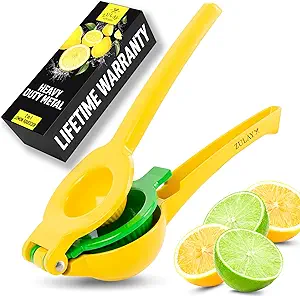 |
| Best Seller A high-volume bestseller chosen again and again | Zulay Kitchen Cast Iron Juicer |  |
CO-Z Hand Press Citrus Juicer

| Material | Cast Iron, 304 Stainless Steel |
|---|---|
| Capacity | 0.6 liters |
| Wattage | 150 watts |
| Controller Type | Manual |
This CO-Z hand press juicer is a heavy-duty manual citrus press built for regular home use. It uses a long ergonomic handle and cast iron body to apply strong, steady pressure while the food-contact parts are 304 stainless steel, so it handles oranges, lemons, limes, and other soft or pulpy fruit cleanly. A removable stainless strainer and funnel capture pulp and seeds and can be disassembled for sink or dishwasher cleaning. The base includes suction for countertop stability and a rubber grip on the handle improves comfort during repeated squeezing. Because it is manual, it needs no electricity and gives precise control over pulp and texture, but it is bulky and significantly heavier than lightweight plastic squeezers, so it suits a fixed counter setup rather than occasional travel. Capacity is modest, so plan on frequent emptying for large batches. For home cooks who want a durable, commercial-feeling tool that delivers consistent juice and easy cleanup, this press is a solid choice.
Best for: Home cooks who want a durable, high-leverage manual press for frequent fresh citrus juice and prefer a stable countertop tool over small handheld squeezers.
Less Ideal for: People who need a lightweight, portable juicer for travel or very occasional use, or who want large-volume electric juicing.
- Cast iron construction provides strong, stable pressing force
- Food-contact parts are 304 stainless steel for safety and easy cleaning
- Removable strainer and funnel are dishwasher safe for convenient cleanup
- Suction base and ergonomic rubber-grip handle improve stability and comfort
- Heavy and bulky compared with lightweight handheld juicers
- 0.6 liter capacity requires frequent emptying for larger batches
Verdict: A rugged, countertop-ready manual press that delivers commercial-strength squeezing and easy cleanup for regular home citrus juicing.
Vollum Manual Fruit Juicer

| Material | Cast Iron, Stainless Steel |
|---|---|
| Capacity | 0.3 liters |
| Special Features | Portable |
| Controller Type | Manual |
This Vollum hand-press juicer brings commercial-strength squeezing to the home kitchen with a long lever, cast iron frame, and stainless steel parts that contact fruit. You use it by placing halved citrus under the press and pulling the ergonomic handle down to crush and extract juice; the tall 15-inch design and strong mechanical advantage make it easy to press larger fruit without wrist strain. Removable stainless components and a non-skid suction cup base keep the process tidy and simplify cleanup since the juicing parts are dishwasher safe. The unit is built to withstand high pressure and is described as extracting fruit very dry, which is useful for maximizing yield if you juice often or in batches. Limitations are its weight and footprint compared with lightweight tabletop squeezers and the manual operation that is slower than electric models for very large volume needs, but for a buyer after durable, high-extraction performance this press delivers consistent, mess-reducing results.
Best for: Buyers who prioritize extraction efficiency and durable, pro-style construction for regular home juicing and want a tool that squeezes fruit very dry to maximize yield.
Less Ideal for: People who need a lightweight, space-saving juicer, or those who plan to juice very large quantities quickly and prefer an electric machine.
- Commercial-grade cast iron frame and stainless steel fruit-contact parts for durability
- Long lever and tall 15-inch design deliver high mechanical advantage for easy extraction
- Non-skid suction cup base keeps the press stable during use
- Removable juicing parts are dishwasher safe for easier cleanup
- Heavier and larger footprint than compact tabletop or handheld juicers
- Manual operation is slower than electric juicers for very large batch volumes
Verdict: Choose this press if you want a rugged, commercial-strength manual juicer that maximizes yield and handles everything from limes to grapefruits with minimal effort.
Kensington London Lemon Squeezer

| Material | Stainless Steel |
|---|---|
| Power Source | Manual |
| Product Care Instructions | Dishwasher Safe |
| Capacity | 0.6 liters |
This stainless steel hand press is a heavy-duty, manual citrus squeezer made for everyday home use. You place a halved fruit in the cup and press the long ergonomic handles together to force juice out while the perforated bowl keeps seeds and pulp contained. Its 304 stainless construction and reinforced joints give it a durable, pro-style feel and the silicone non-slip grips and extra-long handles reduce the force needed, which is helpful if you use it frequently or have weaker grip strength. It is dishwasher safe and simple to rinse clean, and the design aims to deliver more juice per half compared with small handheld reamers. The main trade-offs are that it is a single-purpose tool sized for standard citrus and requires manual effort, so it is not ideal when you need large volumes quickly or want an electric option. For a small kitchen tool that lasts and reliably removes seeds while maximizing yield, it performs well.
Best for: Buyers who want a durable, no-frills kitchen tool that squeezes more juice with less hand strain and lasts for years of regular home use.
Less Ideal for: People who need to juice large batches quickly or prefer hands-free electric juicers should consider an electric or larger commercial-style press instead.
- Durable 304 stainless steel construction with reinforced joints for long-term use
- Ergonomic long handles and silicone non-slip grips reduce hand effort
- Perforated cup captures seeds and pulp for cleaner juice
- Dishwasher safe for easy cleanup
- Manual operation can be tiring for large quantities
- Designed for standard citrus halves so very large or very small fruit may not fit optimally
Verdict: If you want a long-lasting manual citrus press that extracts more juice with less effort, this stainless steel squeezer is a practical home choice.
HFYIGO Manual Cast Iron Juicer

| Included Components | cup |
|---|---|
| Special Features | Manual |
| Product Care Instructions | Hand Wash Only |
| UPC | 740625823393 |
This HFYIGO hand press juicer is a sturdy countertop manual juicer built for frequent home use and small commercial tasks. It uses a cast iron frame and comes with two accessory kits: plastic parts with a flat base for thin-skinned fruit and 304 stainless steel funnel, strainer, and cover for thicker-skinned fruit, so you can swap components to match oranges, lemons, limes, and tougher citrus. The press is operated by a long lever for mechanical advantage, and the included 500 mL translucent measuring cup mounts under the spout to catch juice and reduce spills. A silicone coaster and suction-cup feet keep the unit stable during pressing, and the disassemblable accessories simplify hand washing. Expect a large, heavy unit that needs a dedicated spot on the counter and more storage space than small tabletop juicers, and cleanup requires hand washing rather than dishwasher convenience. For cooks who want a durable, no-electricity solution that can extract a lot of juice with little effort, this model performs well; casual users who need a compact or fully dishwasher-safe option may prefer a different style.
Best for: Home cooks who prioritize a durable, mechanical juicer that handles frequent pressing without electricity and offers interchangeable parts for different citrus types.
Less Ideal for: Buyers who need a compact, lightweight, or fully dishwasher-safe juicer for occasional use or limited kitchen space.
- Dual accessory kits (plastic and 304 stainless steel) for effective juicing of both thin- and thick-skinned fruits
- Cast iron frame and long lever provide strong pressing force for efficient juice extraction
- Included 500 mL measuring cup fits under the spout to prevent spills and measure yield
- Silicone coaster and suction-cup feet stabilize the unit during use
- Large and heavy footprint requires substantial countertop or storage space
- Accessories and body require hand washing only; not dishwasher-safe
Verdict: Choose this heavy-duty manual press if you want a reliable, long-lasting countertop juicer that squeezes both soft and tough citrus without electricity.
Zulay Metal 2-in-1 Lemon Squeezer

| Material | Aluminum |
|---|---|
| Power Source | Manual |
| Capacity | 0.5 liters |
| Blade Material | Stainless Steel |
This compact 2-in-1 hand press is built for quick citrus jobs like single lemons, limes, or small oranges. The cast metal body with an ergonomic handle concentrates pressure so you can extract most of the juice with a light squeeze, and the bowl has perforations that act as a seed filter. It is designed for countertop storage and manual use, so there is no power or assembly — just cut a halved fruit, press, and pour. The aluminum construction and stainless-steel blade area give the tool a sturdy feel and should hold up to regular kitchen use, but the product care notes recommend hand washing. Capacity is modest, so it is best for small batches rather than juicing many fruits at once. The bright finish makes it easy to spot in a drawer or on a shelf and cleaning is straightforward because the bowl and strainer avoid trapped pulp. If you want a simple, durable press that gets nearly all the juice from a halved citrus without electricity, this performs that role well.
Best for: Buyers who value proven, well-reviewed kitchen tools and want a compact, no-frills manual press for occasional citrus juicing and cocktail use.
Less Ideal for: People who need to juice large quantities frequently or want a fully dishwasher-safe, motorized juicer should look at larger electric or high-capacity options.
- Sturdy aluminum construction gives a solid, durable feel
- Ergonomic handle reduces hand strain during pressing
- Built-in perforated bowl filters seeds and pulp
- Simple manual design requires no power and stores compactly
- Modest capacity not suited for large-volume juicing
- Manufacturer recommends hand washing rather than dishwasher-safe
Verdict: A simple, heavy-duty manual citrus press that reliably extracts juice for small batches and casual home use.
Zulay Kitchen Cast Iron Juicer

| Material | Cast Iron & Stainless Steel |
|---|---|
| Capacity | 0.6 liters |
| Power Source | Manual |
| Special Features | Manual |
The Zulay Kitchen Cast Iron Juicer is a lever-style manual press built for frequent home use and light commercial work. You place halved citrus in the stainless steel bowl, pull the long cast-iron arm down and the press forces juice through a removable strainer into a cup or container below. The heavy cast-iron frame and rubber feet make the unit very stable during operation and the large 5-inch bowl handles small limes up through large grapefruits. Removable stainless steel strainers and a detachable bowl simplify rinsing by hand, though the unit is hand-wash only. Because it uses mechanical leverage there is no motor noise or electricity and it delivers high yield with minimal effort. The weight and size make it solid on the counter but also less portable than small handheld squeezers, and routine hand-cleaning is required to prevent buildup. For buyers who want a durable, no-frills press that reliably extracts juice, this is a practical choice.
Best for: Buyers who prioritize a durable, low-maintenance mechanical juicer that produces high yield without electricity and will be used regularly for fresh citrus at home.
Less Ideal for: People who need a lightweight, travel-friendly or dishwasher-safe juicer or who rarely juice and prefer a compact, low-storage option.
- Heavy cast iron construction for long-term durability
- Large 5-inch bowl fits limes to grapefruits
- Long lever arm provides strong mechanical advantage for easy extraction
- Removable stainless steel strainers and bowl for simpler cleaning
- Hand-wash only so cleaning requires more effort than dishwasher-safe alternatives
- Heavier and less portable than compact handheld juicers
Verdict: Choose this cast-iron press if you want a rock-solid, no-electricity juicer that reliably extracts maximum juice for regular home use.
Choosing the Right Hand Press Juicer for Home Use: Key Factors to Consider
Juice Yield & Extraction Efficiency
A hand press's primary purpose is to extract as much liquid as possible while preserving flavor. Higher yield reduces waste and delivers better value per piece of fruit or vegetable. Extraction efficiency is influenced by the press mechanism, the fit between the pressing cone and the produce, and the amount of downward force the lever multiplies.
For home use, efficient extraction also means less time spent processing multiple batches. If you plan to juice daily, choose a press that consistently produces dense, low-foam juice from common home produce like citrus, pomegranate arils, and soft vegetables.
Ease of Cleaning and Maintenance
Frequent cleaning is inevitable with a juicer, so parts that disassemble easily and tolerate quick rinses will get used more often. Look for removable cones, strainers with accessible mesh, and components that do not trap pulp in crevices.
Materials that resist staining and odor retention reduce the need for special cleaners. Also consider whether seals and gaskets are user-replaceable and how simple it is to reassemble the press after washing. Faster cleaning routines increase the likelihood you will use the juicer regularly rather than letting it sit unused.
Build Materials and Corrosion Resistance
Hand press juicers come in combinations of metal, cast iron, stainless steel, and food-safe plastics. For home use, corrosion resistance matters because citrus acids can quickly degrade low-grade metals.
Stainless steel and properly coated cast components last longer and are easier to sanitize. Avoid materials that flake, rust, or impart metallic taste. Durable construction also ensures moving parts and leverage points maintain alignment over time, preventing wobble and uneven pressing.
Ergonomics and Lever Advantage
The lever design determines how much force you must apply and how comfortably you can press multiple batches. A well-engineered lever reduces wrist strain and makes extracting tougher fruits feasible for users without exceptional grip strength.
Consider handle grip shape, lever length, and the smoothness of the pivot. If you will press often, choose models with comfortable handles and mechanical advantage that lets you press fully without overexertion.
Capacity, Stability, and Drip Management
Home presses vary in how much juice they route into the collection container and how well they prevent drips. A stable base that clamps or grips the countertop prevents tipping during use and improves safety. Larger-capacity collection cups reduce interruptions when making multiple servings.
Effective drip control and spout design protect counters from sticky residue. If you want to prepare juice for guests or batch-prepare for the week, capacity and spill prevention become more important.
Counter Footprint and Storage
Space is a practical constraint in many kitchens. The height and footprint of a hand press influence where you can store it and whether it fits under cabinets. Some presses have compact collapsible designs or removable handles for easier storage.
Think about how often you will use the press and whether it will live on the countertop or in a cabinet. A slightly larger, sturdier press may be worth the tradeoff if you use it daily, while occasional users often prioritize compact storage.
What Makes Cold-Press Juice Taste Better
Cold-press juice tends to retain more of the delicate aromatics and nutrients because the pressing action reduces heat and oxidation. Hand press juicers compress produce slowly and directly, which can result in clearer flavor profiles, especially with citrus and pomegranate.
For home use, that flavor advantage is noticeable in simple recipes. Minimal foam and reduced bitterness are common benefits when juice is extracted cleanly. Proper technique—cutting fruit to fit the cone and pressing steadily—can improve results regardless of the model.
- Slow, steady pressing reduces aeration and foam.
- Minimal heat generation preserves volatile flavor compounds.
- Good strainers keep pulp levels consistent for a cleaner mouthfeel.
Setting Up and Using a Hand Press Safely
Secure the press on a stable surface before starting. Some presses have suction feet or clamp attachments; use them to prevent sliding. Position your collection cup or bottle to catch juice directly under the spout.
Slice produce into sizes that sit comfortably under the press cone to avoid forcing the lever at awkward angles. Apply even pressure rather than quick, jerky motions to prevent splashing and reduce strain on the mechanism.
- Check for loose screws or bolts before each use.
- Avoid overfilling the collection cup to prevent overflow.
- Keep hands clear of the pressing area and use the handle as intended.
Simple Recipes and Use Cases for Home Pressing
Hand press juicers are ideal for single-ingredient juices and simple blends. Citrus juices, pomegranate, and softer produce like ripe tomatoes respond very well to direct pressing. You can also press cooked or softened fruits to extract compotes and purees for recipes.
For mixed juices, press each ingredient separately if they have very different textures, then combine and stir. This helps control pulp and foam and prevents clogging the strainer with fibrous material.
- Classic morning: freshly pressed orange or grapefruit with minimal foam.
- Green boost: press apple or cucumber first, then add a hand-blended leafy green mixture.
- Cocktail base: press citrus and pomegranate for mixes that benefit from bright, fresh juice.
Maintaining Your Press for Longevity
Rinse components immediately after use to prevent pulp from drying and sticking. For stubborn residue, soak removable parts briefly in warm water before brushing. Regularly inspect gaskets, pivot pins, and any protective coatings for signs of wear.
If your press has a metal finish, dry all parts thoroughly to prevent corrosion. Replace perishable seals and non-metal parts as needed to maintain hygienic operation and consistent extraction performance.
- Use a soft brush to clean mesh screens without damaging the weave.
- Avoid abrasive cleaners on coated surfaces to preserve finish.
- Lubricate pivot points only if recommended and with food-safe products.
Space and Storage Options in a Small Kitchen
If counter space is limited, evaluate whether the press will remain out or be stored. Some designs allow the handle to be removed or folded, and components stack for compact storage. Consider storing the collection cup inside a cabinet and the press on a shelf that can support its weight.
Think about how you will transport the press between storage and counter. Heavier cast designs may offer stability but can be cumbersome to move daily, whereas lighter stainless or plastic hybrids balance portability with durability.
- Measure cabinet clearances if you plan to store the press vertically.
- Keep a small bin for loose parts to avoid losing strainers or gaskets.
- Consider a protective cloth or silicone mat to prevent finish wear in storage.
How We Chose the Best Hand Press Juicer for Home Use
We focused on features that most directly affect the everyday experience of using a hand press juicer for home use. Our selection prioritized extraction efficiency and juice quality, looking for designs that squeeze produce with minimal oxidation and foam. Ease of cleaning and disassembly were essential because frequent use demands quick, hygienic maintenance. Build materials and durability were evaluated to ensure the presses can withstand repeated leverage and acidic juices without corrosion or structural failure. Ergonomics and leverage ratio were considered to reduce hand fatigue and make citrus, pomegranates, and soft produce easier to press. We also weighed capacity and drip control, since countertop convenience and mess reduction matter in a home kitchen. Products were excluded if they relied primarily on motorized extraction, lacked clear cleaning access, or used poorly specified materials that risked rapid wear. Our filters removed devices with ambiguous claims about yield or durability. The final picks balance measurable extraction performance, straightforward upkeep, and reliable construction suited to regular home use.
Our full evaluation process is outlined in our review methodology.
FAQ
Can a hand press juicer handle pomegranates and citrus equally well?
Often, yes. Many hand press designs include cones or baskets suited for both citrus and pomegranate arils. The technique differs slightly: pomegranate arils may require a firmer, steadier press and straining afterward to remove seeds and membrane fragments.
How often should I clean the press to avoid staining and odors?
You should rinse removable parts immediately after each use and perform a more thorough wash daily if juicing frequently. For acidic fruits, dry parts completely and check seals regularly to prevent odor retention or staining.
Is a cast or stainless construction better for regular home use?
Stainless steel generally offers better corrosion resistance and easier sanitation, while cast components can provide stability and heft. For daily use, corrosion resistance and food-safe finishes tend to be more important for longevity.
Will a hand press extract as much juice as an electric cold-press machine?
It depends. A well-designed hand press can approach the yield of some slow electric presses for specific fruits, especially citrus and pomegranate. However, very fibrous vegetables and leafy greens are typically less efficient in a hand press compared with specialized masticating machines.
Can I use a hand press for small batches or guests?
Yes. Hand presses excel at small to moderate batches and are convenient for making a few servings quickly. If you need to make many servings at once, consider capacity and whether you are comfortable repeating the press cycle.
Final Verdict
When choosing a hand press juicer for home use, prioritize extraction efficiency, ease of cleaning, and materials that resist corrosion. Ergonomics and drip control are practical considerations that affect daily convenience and comfort. Balance footprint and storage needs against how often you will juice. Focus on the features that reduce effort and cleanup so you will actually use the press regularly. With those priorities in mind, you can confidently select a hand press that fits your kitchen routine and delivers consistently fresh juice.