
Note: This article contains affiliate links. If you click on these links and make a purchase, we may earn a small commission at no extra cost to you. This helps support our research and content. Read our full affiliate disclosure here.
If your home uses a heating-only system, the thermostat you choose controls comfort, fuel use, and daily convenience. A good heat-only thermostat keeps temperatures steady, reduces short-cycling, and integrates with the wiring and controls already in your system. This guide shortlists the top-performing heat-only thermostats across common residential setups. We focus on accuracy, wiring compatibility, and usability so you can pick a unit that fits your installer skills or HVAC tech. Read on for concise evaluations and the criteria we used to choose these picks.
Top Picks at a Glance
| Best Overall The best all-around choice for most situations | Cadet T-Stat T521-W |  |
| Best Quality Built to a higher standard if you want something more solid | White‑Rodgers 70 Series 1E78-140 |  |
| Best Value The sweet spot between price and what you get | LUX PSD010B Heat-Only Thermostat |  |
| Best Budget The cheapest option that still gets the job done reliably | White‑Rodgers Emerson M30 |  |
| Top Rated A top-rated pick with lots of positive feedback | Honeywell PRO TH1100DH1004 |  |
| Most Popular A crowd favorite that many people choose with confidence | Suburban 161154 Wall Thermostat |  |
| Best Seller A high-volume bestseller chosen again and again | Honeywell TH1100DV1000 Thermostat |  |
Cadet T-Stat T521-W

| Connectivity Technology | Wired |
|---|---|
| Power Source | Corded Electric |
| Voltage | 240 volts |
| Wattage | 24 watts |
The Cadet T521-W T‑Stat is a basic line‑voltage thermostat designed to control electric baseboard, convector, and fan‑forced wall heaters on 120, 208, or 240V circuits. It uses a mechanical bimetal sensor and a twist dial to set temperature, so there is no programming, batteries, or app setup to manage. Installation is the straightforward two‑wire, single‑pole hookup with color‑coded leads, and the unit is rated for 22 amps (up to 5,280 watts at 240V), making it suitable for most residential line‑voltage heating circuits. In use it delivers reliable on/off cycling to hold a steady warmth without the complexity of digital controls, and the plain white face blends into typical rooms. The tradeoff is minimal feature set: no scheduling, no remote control, and no digital display, so it is aimed at users who prefer simplicity and mechanical reliability rather than energy‑saving smart features.
Best for: Buyers who want a reliable, no‑frills thermostat for electric line‑voltage heaters and prefer mechanical simplicity over smart features.
Less Ideal for: Users seeking programmable schedules, Wi‑Fi control, or compatibility with low‑voltage HVAC systems should look for a digital or smart thermostat instead.
- Simple mechanical bimetal design needs no batteries or programming
- Straightforward two‑wire, single‑pole installation with color‑coded leads
- Handles up to 22 amps and works on 120/208/240V circuits for wide compatibility
- Dial control is intuitive for quick temperature adjustments
- Non‑programmable with no digital display or remote control
- Not suitable for multi‑stage or low‑voltage HVAC systems
Verdict: Choose the Cadet T521‑W if you want a straightforward, maintenance‑free dial thermostat to reliably control electric baseboard or wall heaters without digital fuss.
White‑Rodgers 70 Series 1E78-140

| Power Source | Battery Powered |
|---|---|
| Number of Batteries | 3 AAA (included) |
| Voltage | 24 volts |
| Connectivity Protocol | BACnet MS/TP |
| Display Type | Digital |
The White-Rodgers 1E78-140 is a straightforward, non-programmable thermostat built for single-stage heat-only systems and millivolt setups. It provides precise temperature control to within about 1 degree Fahrenheit via simple up/down button controls and a large easy-to-read backlit digital display, which makes setpoint changes obvious from across the room. Installation is typical for wired 24-volt systems and the unit runs on three included AAA batteries so it keeps settings through power interruptions. Because it is non-programmable there are no scheduling features, but that simplicity reduces complexity and potential points of failure for users who care most about consistent temperature performance. The vertical curved profile and matte white finish are unobtrusive on most walls. Note that it is not compatible with electric baseboard heat and some specialty systems, so checking system compatibility before purchase is important.
Best for: Buyers prioritizing reliable, precise temperature control without programming complexity and who want a simple, easy-to-read wall thermostat for a heat-only system.
Less Ideal for: Users who want programmable schedules, remote/Wi-Fi control, or need compatibility with electric baseboard heating should look at more feature-rich or specific models.
- Accurate temperature control to about ±1°F for steady comfort
- Large backlit digital display that is easy to read from a distance
- Simple, durable non-programmable design with basic button controls
- Runs on included AAA batteries so it retains settings during power loss
- No programmable scheduling or energy-saving automation
- Not compatible with electric baseboard heat and some other systems
Verdict: Choose the 1E78-140 if you need a simple, accurate, heat-only thermostat that prioritizes reliable temperature performance over programmable features.
LUX PSD010B Heat-Only Thermostat

| Controller Type | Push Button |
|---|---|
| Connectivity Technology | Wi-Fi |
| Power Source | Battery Powered |
| Temperature Control Type | Heating |
| Number of Batteries | 2 AA batteries required (included) |
The LUX PSD010B is a straightforward, nonprogrammable wall thermostat built for heat-only systems where fan control is not required. It uses two AA batteries, mounts on the wall, and provides temperature control via push buttons and a clear backlit LCD for easy reading. The unit pairs with a companion app over Wi-Fi for remote control despite its nonprogrammable interface, which is useful for making adjustments without changing schedules. Installation is intended to be quick and DIY-friendly and the thermostat supports common heat-only uses such as boilers, gas fireplaces, and radiant floor systems. Practical benefits include simple operation, battery-powered placement without wiring for continuous power, and a readable display that helps guests or household members make quick adjustments. Limitations are the lack of scheduling or advanced energy-saving programming and its focus on heat-only applications, so it will not manage cooling or complex multi-stage HVAC setups.
Best for: Buyers who want a low-complexity, easy-to-install thermostat to replace or control a single heat-only system and who prioritize straightforward manual control with occasional remote adjustments.
Less Ideal for: People who need programmable schedules, multi-stage HVAC control, or combined heating and cooling management should look at programmable or multi-function thermostats instead.
- Designed specifically for heat-only systems like boilers and fireplaces
- Battery powered with included AA batteries enables simple installation without a common wire
- Large backlit LCD and button controls make temperature changes quick and intuitive
- Wi-Fi connectivity and app control allow remote adjustments despite the nonprogrammable interface
- No programmable scheduling or advanced energy-saving modes
- Not suitable for systems that require fan control or cooling management
Verdict: Choose the PSD010B if you need a no-frills, easy-to-install thermostat that reliably controls a single heat-only system with simple local and remote adjustment.
White‑Rodgers Emerson M30

| Power Source | Ac/dc |
|---|---|
| Voltage | 24 volts |
| Display Type | LED |
| Connectivity Technology | Wired |
The White-Rodgers Emerson M30 is a basic heat-only thermostat designed for residential heating systems that run on 24V control circuits. It uses a standard mechanical snap-action control so operation is straightforward: set the desired temperature on the dial and the thermostat closes the circuit to call for heat. The unit mounts on the wall, has a compact modern look with a white plate, and includes an LED temperature display for easy reading. Because it is wired and heat-only it is best suited to single-stage furnaces or boilers without cooling or multi-stage requirements. The mechanical design makes it durable and easy to service, and the lack of complex programming keeps installation and daily use simple. Limitations include no built-in cooling control, no advanced programmability or remote connectivity features, and no smart home integration, so buyers wanting schedule-based energy savings or Wi‑Fi control will need a different model.
Best for: Buyers who need an inexpensive, no-frills replacement thermostat for a single-stage 24V heating system and prioritize straightforward operation and reliability over advanced features.
Less Ideal for: People who want programmable schedules, cooling control, or smart/Wi‑Fi features should choose a digital or smart thermostat instead.
- Simple mechanical snap-action control that is easy to use and repair
- LED temperature display for clear, at-a-glance readings
- Designed for standard 24V residential heating systems
- Compact, modern wall-mounted appearance that fits most interiors
- Heat-only design with no cooling or multi-stage support
- No programmability or remote/smart home connectivity
Verdict: A dependable, budget-friendly heat-only thermostat for simple 24V residential heating systems when you want reliable manual control without extra features.
Honeywell PRO TH1100DH1004
| Power Source | Battery Powered |
|---|---|
| Specific Uses For Product | Heat Pump |
| Display Type | Digital |
| Connectivity Technology | Bluetooth |
| Voltage | 230 volts |
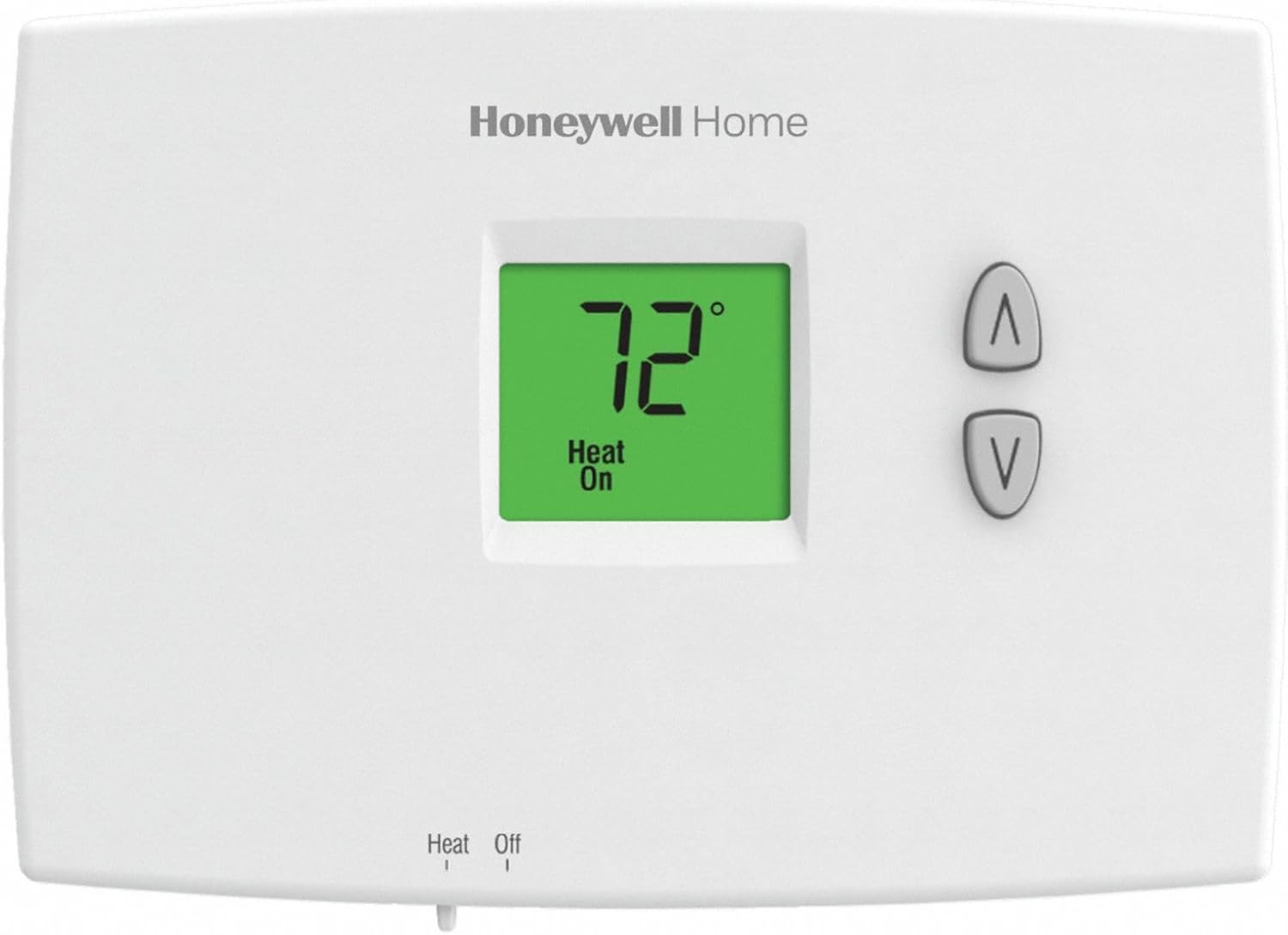
The Honeywell PRO TH1100DH1004 is a straightforward heat-only thermostat built for simple, reliable temperature control. It provides basic manual operation via slide and button controls with a clear backlit digital display for easy reading in low light. The unit supports standard and garage temperature scales and claims precise 1 F temperature control, which helps maintain stable indoor warmth without frequent adjustments. Battery power and wall mount installation keep wiring needs minimal, and the thermostat is targeted at conventional heating or heat pump systems. There is no programmable scheduling or advanced remote control features, so it is best used where set-and-forget manual control is acceptable. Bluetooth connectivity is listed but the core interface remains local buttons and touch control, so expect minimal smart functionality compared with networked models. For homeowners who prioritize straightforward operation and dependable temperature regulation, this model delivers the essentials without complexity.
Best for: Buyers who want a no-frills, dependable thermostat that provides accurate heat control and easy, manual operation without programming or network setup.
Less Ideal for: Users who want programmable schedules, extensive smart-home integration, or remote app control should choose a different model with those features.
- Backlit digital display for easy reading in low light
- Simple manual controls that are easy to operate and service
- Precise temperature control to about 1 F for steady comfort
- Battery powered design reduces wiring complexity
- Nonprogrammable so it lacks scheduling and advanced energy-saving modes
- Limited smart features despite Bluetooth being listed
Verdict: Choose this Honeywell if you need a simple, reliable heat-only thermostat that delivers accurate manual temperature control.
Suburban 161154 Wall Thermostat
| Controller Type | Mechanical knob |
|---|---|
| Power Source | Corded Electric |
| Voltage | 230 volts |
| Display Type | LCD |
| Mounting Type | Wall Mount |
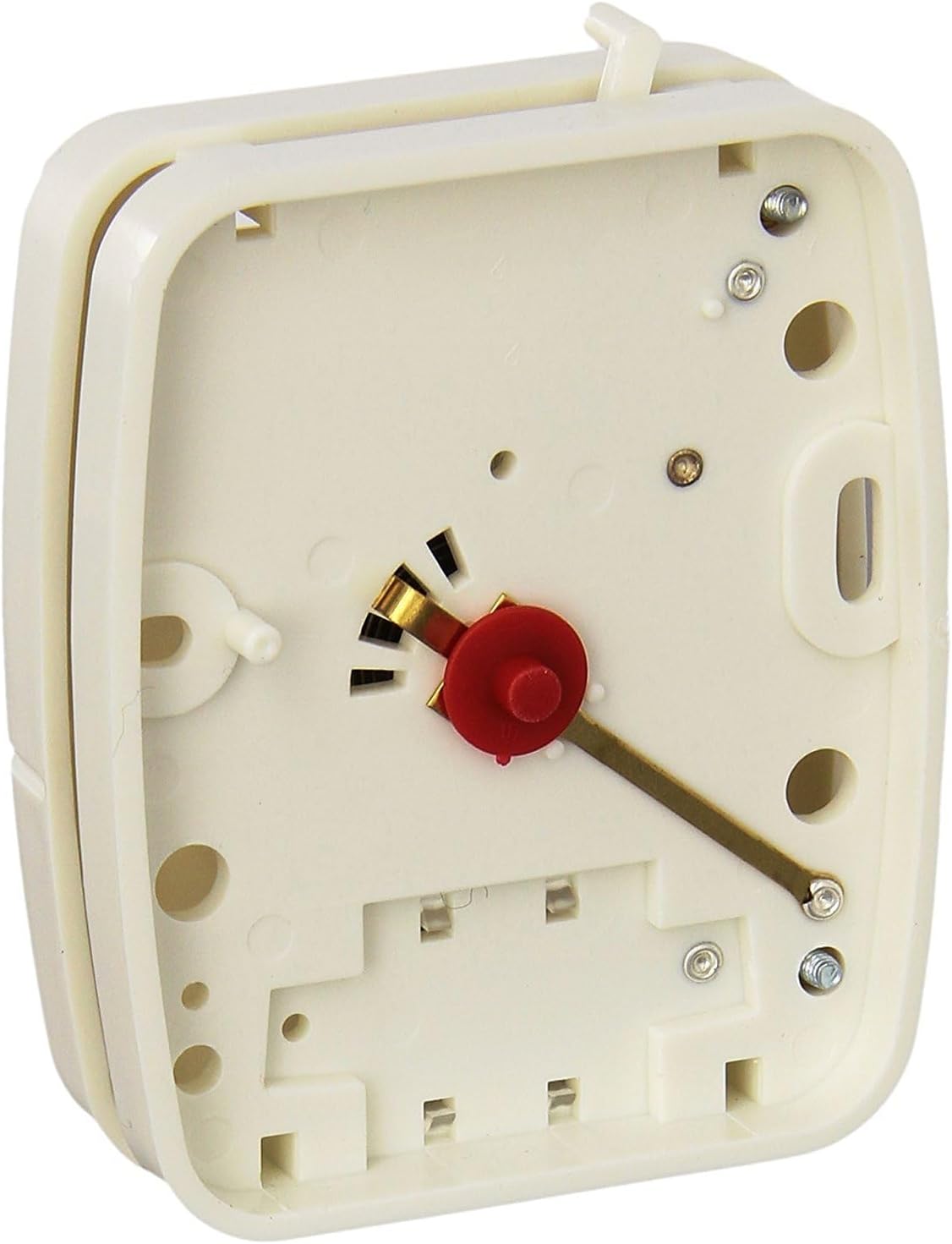
The Suburban 161154 is a straightforward heat-only wall thermostat built to switch a furnace on and off with a mechanical dial and a small LCD for readout. It mounts to the wall and connects to a 230 volt corded power source, offering tactile dial control and an Auto Changeover feature for basic mode handling. Typical use is in RVs or small spaces where simple, reliable temperature control is needed rather than programmable schedules or smart-home automation. The unit emphasizes durability and ease of use: the mechanical knob makes setpoint changes fast and intuitive, and the compact rectangular housing keeps installation unobtrusive. Limitations are obvious for buyers seeking advanced features — there is no programming interface, and the control set is focused solely on heating. This thermostat is best when you want a no-frills, function-first control that is easy to operate and service, but it will disappoint anyone wanting scheduling, advanced zoning, or modern smart integrations.
Best for: Buyers who prioritize a reliable, easy-to-use heat-only thermostat for a furnace or RV and who value straightforward controls over advanced features.
Less Ideal for: People who want programmable schedules, multi-stage HVAC control, or smart-home connectivity and automation.
- Simple mechanical dial is intuitive and quick to adjust
- Auto Changeover provides basic mode switching without setup
- Compact wall-mount design fits unobtrusively in tight spaces
- No programmable scheduling or advanced temperature controls
- Limited to heating-only control, not suitable for heat/cool systems
Verdict: Choose this thermostat when you need a dependable, no-frills heat-only controller that is simple to operate and install.
Honeywell TH1100DV1000 Thermostat

| Specific Uses For Product | Electric Baseboard Heater |
|---|---|
| Power Source | Battery Powered |
| Voltage | 230 volts |
| Connectivity Protocol | BACnet MS/TP |
| Display Type | Digital |
The Honeywell TH1100DV1000 is a straightforward digital, heat-only thermostat built for electric baseboard heaters and similar heating-only setups. It uses two AAA batteries and a backlit 1.5-inch digital display that continuously shows the ambient temperature and provides one-touch access to the setpoint, making everyday adjustments quick and visible. The unit supports BACnet MS/TP and lists Wi-Fi connectivity in its specs, which can help integrate it into building controls where that protocol is used, and it also includes built-in compressor protection even though it is aimed at heating-only systems. Installation is wall-mount style and the push-button controls keep operation simple for people who prefer basic, reliable control rather than programming schedules. The main limitations are its nonprogrammable design and minimalist feature set, so it is not suited for users who want multi-stage HVAC control, complex schedules, or smart-home automation beyond basic network integration. For someone who values clear temperature readout and dependable manual control for a heat-only circuit, this is a practical choice.
Best for: Buyers who want a dependable, no-frills heat-only thermostat that is easy to read and operate and integrates with basic building control networks.
Less Ideal for: Users seeking programmable schedules, multi-stage HVAC control, or full smart‑home automation should consider other models with those capabilities.
- Backlit digital display that continuously shows ambient temperature for easy reading
- Simple push-button controls with one-touch setpoint adjustment for straightforward use
- Battery powered with two AAA batteries for power redundancy during outages
- Supports BACnet MS/TP connectivity for integration with building control systems
- Nonprogrammable design lacks scheduling and advanced automation features
- Limited on-screen information due to small 1.5-inch display
Verdict: Choose this thermostat if you need a simple, reliable heat-only controller with clear display and basic building-network integration.
Choosing the Right Heat-Only Thermostat: Key Factors to Consider
Temperature Accuracy and Stability
Accurate sensing matters because small errors cause noticeable comfort swings and extra fuel use. Look for thermostats that report tight tolerance around the setpoint and that avoid overshooting when the heating cycle ends.
Stability also includes how the thermostat handles short cycling. Models with adjustable anticipator settings or built-in cycle rate control reduce rapid on/off cycles, extending equipment life and improving comfort.
Wiring and System Compatibility
Heat-only systems commonly use simple 2- or 3-wire configurations. Confirm the thermostat supports the wiring your system uses, including whether it needs a common wire, requires batteries, or can work with an external transformer.
Compatibility extends to control type. Ensure the thermostat is designed for single-stage heating and does not expect cooling control or multi-stage inputs. Incompatible controls can leave the system nonfunctional or cause erratic behavior.
Installation Complexity
Installation affects both cost and feasibility for DIYers. Check whether the thermostat provides clear wiring labels, a level or template for wall mounting, and screw or snap terminals that make hookups straightforward.
Also consider whether the unit requires calibration after mounting, needs a neutral or common connection, or demands a separate tool for setup. These details determine whether a typical homeowner can install the thermostat safely or should hire a technician.
Programming and User Interface
For heat-only systems, straightforward programming yields the biggest gains in comfort and savings. Look for readable displays, intuitive buttons or dials, and simple schedule options for weekday and weekend setbacks.
Physical controls are important if the thermostat sits in a hallway or low-light area; backlit displays and tactile buttons help. Avoid models that bury essential functions in deep menus, since occupants will need to make quick adjustments.
Power and Backup Options
Some thermostats run on batteries while others draw power from the system. Battery-powered units allow installation without a common wire but require periodic replacement and can lose settings if batteries fail.
Thermostats with both battery backup and external power give greater resilience. Consider how the unit preserves schedules and setpoints during power interruptions and whether it provides low-battery indicators.
Durability and Build Quality
Durable construction reduces the risk of failure and minimizes maintenance. Pay attention to quality of the mounting plate, terminal clamps, and enclosure fit to avoid wiring strain or intermittent contacts.
Materials that resist yellowing and a solid button feel indicate a thermostat that will remain reliable over years of daily use, especially in homes where occupants adjust settings frequently.
Choosing Between Manual and Programmable Units
Manual thermostats offer the simplest operation with direct control via a dial or a few buttons. They are often the easiest to install and maintain, making them suitable where occupants prefer immediate adjustments or where schedules vary frequently.
Programmable thermostats let you set temperature setbacks automatically, which reduces energy use when the house is unoccupied or during sleep hours. For heat-only systems, choose a programmable unit with clear day/night or weekday/weekend presets and simple editing so schedules are practical rather than burdensome.
- Manual: best for simple, immediate control.
- Programmable: best for automated savings and predictable routines.
- Ensure programming options match household schedules to avoid complexity.
Wiring Tips for a Smooth Installation
Before removing the old thermostat, turn off power at the breaker and label each wire. Photographing the wiring and terminal layout can prevent errors during reinstallation.
Match the new thermostat's terminal labels to your existing wires. For heat-only systems the key terminal is typically the R (power) and W (heat call). If the new unit needs a common wire and your system lacks one, pick a model that can run on batteries or consult an HVAC technician.
- Turn off power before touching wiring.
- Label wires and take a reference photo.
- Verify whether a common wire is required or optional.
Placement and Sensor Considerations
Where you mount the thermostat affects how accurately it measures living-space temperature. Avoid mounting near direct sunlight, drafts, exterior doors, or heat sources like ovens and radiators. Interior walls in a central location usually provide the best average reading.
Some thermostats let you adjust sensing offsets or include remote sensors. For most heat-only residential installations a single well-placed sensor is sufficient, but offset capability can help if the mounting location runs slightly warm or cool.
- Central interior wall is ideal for average temperature reading.
- Keep clear of windows, vents, and direct sunlight.
- Use offset settings if the thermostat location skews readings.
Maintenance and Troubleshooting Basics
Regular checks include replacing batteries if the unit uses them and verifying the display and controls operate correctly. Inspect wiring connections for looseness especially after any HVAC service work.
If the heating system cycles too rapidly or does not reach setpoint, verify the thermostat's cycle rate or anticipator settings if available. Also confirm the wiring terminals are clean and that there is no corrosion or frayed insulation at the connections.
- Replace batteries annually if used.
- Tighten loose terminal screws during routine checks.
- Adjust cycle or anticipator settings to reduce short cycling.
When to Call a Professional
Contact a qualified technician if the wiring is nonstandard, if the system uses proprietary control modules, or if you encounter signs of electrical damage or overheating at terminals. Professionals can also confirm compatibility with older or unusual heating systems.
If you are uncomfortable cutting power, handling line-voltage wiring, or confirming transformer output, a service call early in the process prevents mistakes that could damage the thermostat or heating system.
- Nonstandard wiring or unknown control modules require a pro.
- Electrical damage or hot terminals need immediate professional attention.
- Hire a technician if you prefer verified compatibility before purchase.
How We Chose the Best Heat-Only Thermostat
We narrowed the field by focusing on features that directly affect performance and ease of ownership for heat-only systems. Primary filters were temperature accuracy, wiring and system compatibility with typical single-stage heating setups, and installation complexity for DIYers and technicians. We also prioritized user interface clarity and durable build quality since these determine day-to-day reliability and long-term value. For measurable evaluation we considered temperature precision under steady-state conditions, the thermostat's response to setpoint changes, and whether it supports basic anticipator or cycle-rate adjustments when applicable. Installation and wiring assessments looked at common 2- and 3-wire configurations, mounting options, and whether battery backup is provided. Usability testing emphasized control layout, programming simplicity for setback schedules, and readability of displays in typical lighting. We excluded multitasking or smart thermostats that require external hubs, Wi-Fi connectivity, or complex zone control because those features lie outside the heat-only scope. Units that require uncommon wiring or specialized proprietary modules were also removed. The result is a list focused on straightforward heat-only thermostats that pair compatibility, accuracy, and simple installation.
Our full evaluation process is outlined in our review methodology.
FAQ
Can a heat-only thermostat control a single-stage boiler or furnace?
Yes. Heat-only thermostats are designed to send a simple call-for-heat signal to single-stage boilers and furnaces. Confirm the thermostat's wiring and voltage compatibility with your heating equipment before installation.
Do I need a common wire for a heat-only thermostat?
Not always. Many heat-only thermostats run on batteries and do not require a common wire. However, models that draw power from the system may need a common connection. Check the unit's power requirements before swapping units.
How often should I replace batteries in a battery-powered unit?
Typically once a year, though heavy usage and colder conditions can shorten battery life. Choose a thermostat that signals low battery so you can replace cells before settings are lost.
Will a programmable heat-only thermostat save energy?
Often. Using scheduled setbacks to lower the temperature when the house is unoccupied or during sleep hours reduces run time. The actual savings depend on how consistently the schedule is used and how large the temperature setbacks are.
What causes short cycling and how can a thermostat help?
Short cycling can be caused by oversized equipment, inadequate system sizing, or a thermostat that reacts too quickly. Thermostats with cycle-rate control or anticipator adjustments help by lengthening cycles and reducing frequent on/off events.
Final Verdict
For heat-only systems prioritize compatibility and accurate sensing above feature overload. A thermostat that matches your wiring, offers reliable temperature control, and is simple to install will deliver the best combination of comfort and low maintenance. Balance programmability against ease of use: choose manual controls if you need immediate adjustments and select a programmable unit if you want automatic setbacks. When in doubt about wiring or unusual control systems, consult a professional to ensure safe installation and long-term reliability.