
Note: This article contains affiliate links. If you click on these links and make a purchase, we may earn a small commission at no extra cost to you. This helps support our research and content. Read our full affiliate disclosure here.
When you plan overnight camping in cold weather, the right heater for tent can mean the difference between a comfortable night and a miserable one. You need a unit that delivers steady heat, fits your tent size and ventilation limits, and includes safety protections to reduce fire and carbon monoxide risk. This guide covers seven shortlisted heaters designed for tent use, each chosen for dependable output, runtime, and built-in safeguards. Below we summarize how we evaluated options and what matters most for tent heating, then present the top picks and buyer guidance to help you select the right heater for your setup.
Top Picks at a Glance
| Best Overall The best all-around choice for most situations | Mr. Heater Buddy FLEX MH11BFLEX |  |
| Best Quality Built to a higher standard if you want something more solid | VIVOSUN AeroFlux 700W Heater |  |
| Best Value The sweet spot between price and what you get | GasCalorix Portable Propane Heater |  |
| Best Budget The cheapest option that still gets the job done reliably | Amazon Basics Ceramic Space Heater |  |
| Top Rated A top-rated pick with lots of positive feedback | Mr. Heater Portable Buddy F232000 |  |
| Most Popular A crowd favorite that many people choose with confidence | DREO Space Heater HSH006 |  |
| Best Seller A high-volume bestseller chosen again and again | DREO Portable Space Heater DR-HSH006 |  |
Mr. Heater Buddy FLEX MH11BFLEX
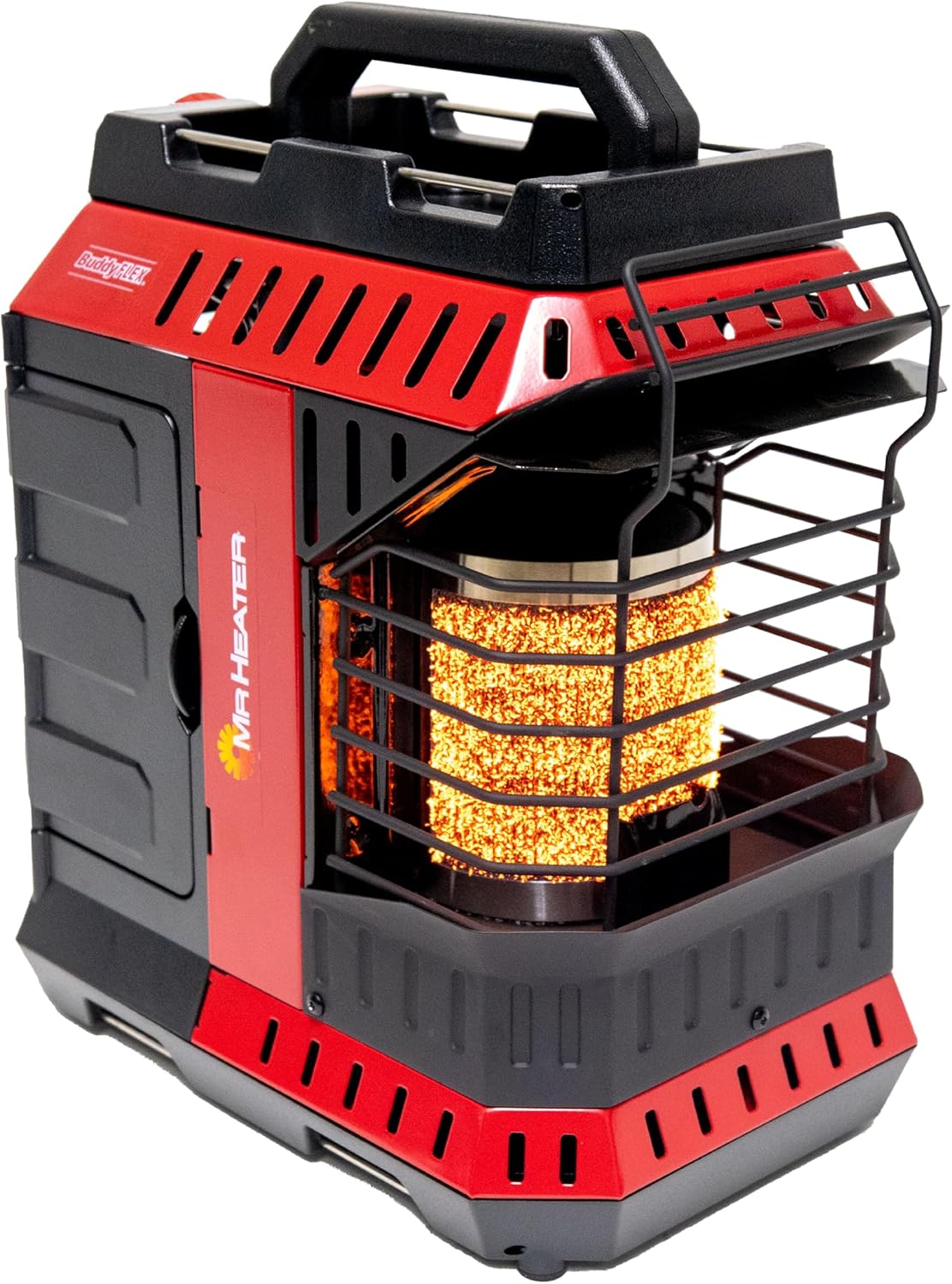
| Heat Output | 11000 british thermal units |
|---|---|
| Heating Coverage | 275 square feet |
| Fuel Type | Propane |
| Indoor Outdoor Usage | Indoor, Outdoor |
| Special Features | Low-Oxygen Safety Shutoff, Tip-Over Protection |
The Mr. Heater Buddy FLEX is a compact propane radiant heater built for both indoor and outdoor use and suited to small shelters like tents and workshops. It delivers variable output between 8,000 and 11,000 BTU with an omni-directional fiber mesh burner that spreads heat uniformly and is designed to resist wind. Start-up is electronic and straightforward, and the unit accepts a 1 lb cylinder or can be adapted to a larger 20 lb tank with an optional hose for longer run times. Safety features include a low-oxygen shutoff, tip-over protection, and self-extinguishing materials, which are helpful in enclosed tent setups when used with care and ventilation. Practical limits are run time on small cylinders (about 3.5 hours on low, 2 hours on high) and the need to follow strict fuel and ventilation safety; it is not a substitute for built-in tent heating systems. For campsite or short-term shelter use where portability and strong radiant output matter, the Buddy FLEX is a solid, dependable choice.
Best for: Buyers who want a portable, powerful propane heater for short-term tent or campsite use and prioritize reliable radiant heat and safety features.
Less Ideal for: People seeking continuous all-night heating without fuel refills or those who cannot provide safe ventilation in enclosed spaces should look for other solutions.
- High radiant output (8,000–11,000 BTU) for quick warming in small shelters
- Omni-directional fiber mesh burner provides even heat distribution and wind resistance
- Multiple safety features including low-oxygen shutoff and tip-over protection
- Portable design supports 1 lb cylinders and optional 20 lb tank hookup for flexible runtime
- Short runtime on 1 lb cylinders compared with electric or larger propane setups
- Requires careful ventilation and adherence to fuel safety rules in tents
Verdict: A portable, safety-minded propane radiant heater that delivers strong, even heat for tents and short-term outdoor shelters.
VIVOSUN AeroFlux 700W Heater
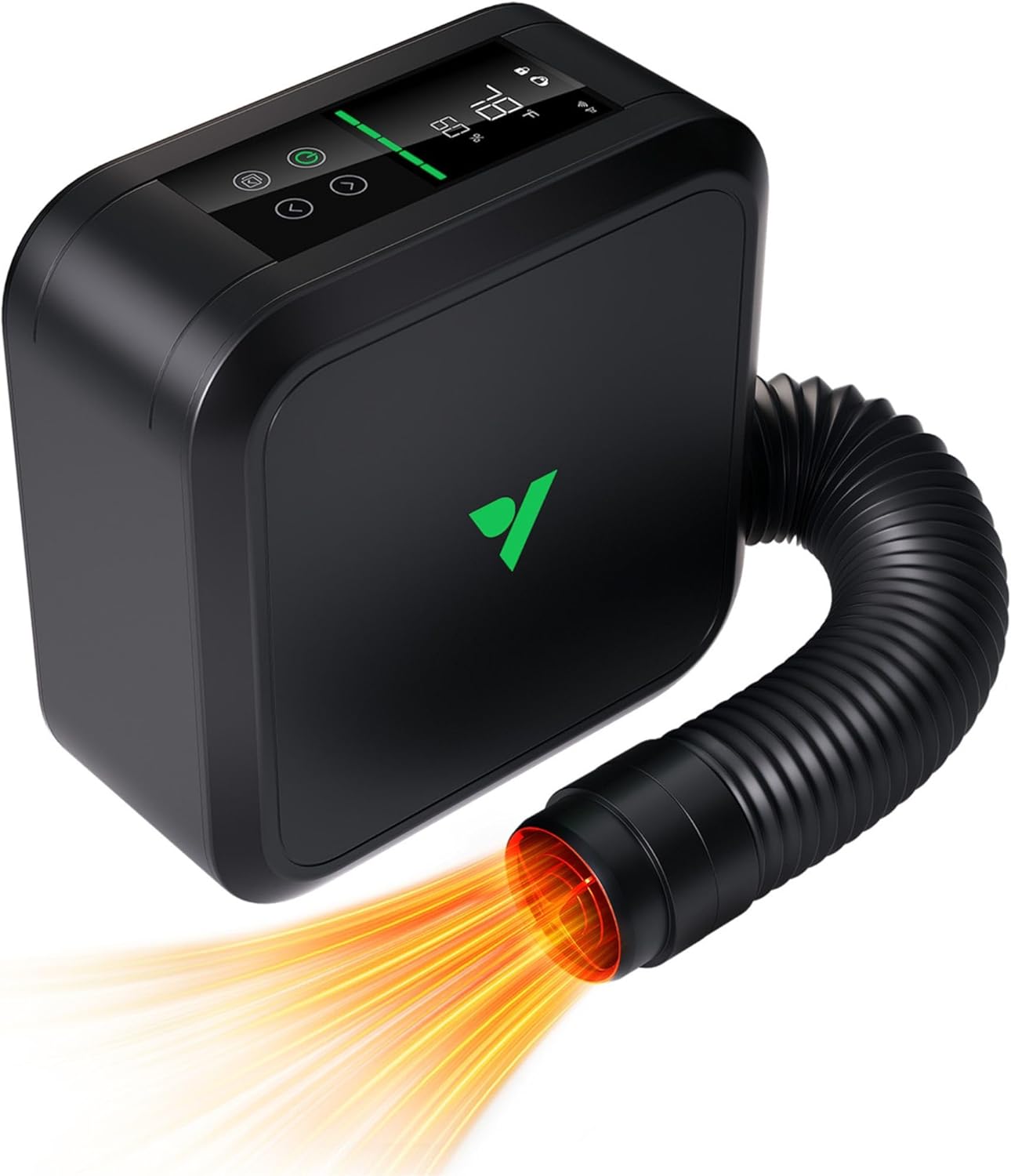
| Heat Output | 700 watts |
|---|---|
| Heating Method | PTC Heating |
| Power Source | Corded Electric |
| Number of Speeds | 5 |
| Max Temperature Setting | 30 °C |
The VIVOSUN AeroFlux is a purpose-built 700W PTC heater for grow tents that delivers rapid, even warming and fine-grained temperature control. It uses a high-precision sensor and PWM control to automatically adjust output across five heat levels, and the app lets you set target temperatures, VPD parameters, and day/night recipes for repeatable environment profiles. In practice this makes it useful for maintaining stable canopy temperatures and supporting different growth stages without constant manual tweaking. The tabletop form factor is compact and mounts easily inside small tents, and built-in safety features including tip-over detection, overheat shutoff, and flame-retardant materials reduce risks in cramped setups. Trade-offs are its fixed 700W output, which may be more than needed for very small tents and insufficient for larger rooms, and its reliance on the app for advanced VPD programming if you want more automated workflows.
Best for: Growers who prioritize precise, performance-oriented climate control and want automated temperature and VPD management for repeatable tent results.
Less Ideal for: People who need variable maximum heating capacity for large rooms or who prefer fully manual, hardware-only controls without app dependence.
- Strong 700W PTC output for faster warm-up in compact grow spaces
- Smart thermostat with app control and VPD monitoring for precise climate management
- Five adjustable heat levels and PWM control let you tune output to growth stage
- Compact tabletop design fits easily inside tents without taking much space
- Multiple safety features including tip-over protection and overheat shutoff
- Single fixed wattage limits flexibility for much larger rooms or very tiny micro-setups
- Advanced VPD and recipe programming relies on the app rather than a full onboard interface
Verdict: Buy this if you need a compact, performance-focused grow tent heater with smart thermostat and VPD control for consistent, automated climate management.
GasCalorix Portable Propane Heater

| Heating Coverage | 200 square feet |
|---|---|
| Heat Output | 6200 british thermal units |
| Fuel Type | Propane |
| Number of Speeds | 2 |
This compact propane heater delivers radiant heat for outdoor activities like tent camping, ice fishing, hunting, and patio use. It runs on standard 1 lb propane cylinders (not included) and offers two adjustable heat settings via a simple control knob, so you can switch between gentle warmth and higher output as conditions require. The unit is lightweight with a foldable base and a protective front grill, making it easy to carry, set up, and use in well ventilated outdoor spaces. Practical safety features include a brass CGA600 connector to reduce leak risk and a sturdy cylinder stand to keep the tank upright. With a listed heat output of 6,200 BTU and a claimed coverage of about 200 sq ft, it provides effective spot heating for small tents or seating areas, though it is intended for outdoor use only. Buyers should plan on using small disposable propane cylinders and expect no electric hookups or extended run-time without swapping tanks.
Best for: Buyers who want a simple, no-frills portable heater to add reliable spot warmth to small tents, campsites, or outdoor seating areas and value portability and quick setup.
Less Ideal for: People needing continuous, long-duration heat in enclosed spaces or anyone seeking an electric or multi-fuel heater for indoor tent use should look elsewhere.
- Runs on common 1 lb propane cylinders so no electricity is required
- Two heat settings let you match warmth to conditions
- Lightweight, foldable base and compact form factor for easy transport
- Protective front grill and brass CGA600 connector improve safety during outdoor use
- Designed for outdoor use only and not suitable for enclosed or poorly ventilated tents
- Uses small disposable propane cylinders which limit continuous run time
Verdict: A lightweight, battery-free propane heater that gives fast spot warmth for small outdoor tents and campsites.
Amazon Basics Ceramic Space Heater

| Heat Output | 1500 watts |
|---|---|
| Number of Speeds | 3 |
| Voltage | 120 volts |
| Max Temperature Setting | 130 °F |
This Amazon Basics ceramic space heater delivers straightforward supplemental heat for small indoor spaces. It offers three settings—1500W high, 900W low, and fan-only—so you can raise room temperature quickly or just circulate air. The ceramic heating element produces warm air fast while remaining relatively quiet, and the adjustable thermostat lets you hold a comfortable level without constant monitoring. Safety features include tip-over and overheat protection plus a power indicator light, which adds peace of mind during use. The unit is lightweight and compact, making it easy to move from desk to bedside or a small tent interior used as a temporary shelter, but it is designed for dry indoor spaces and should not be used in humid or wet locations. Controls are simple and manual, so it lacks programmable scheduling or smart connectivity seen on higher-end models. For a budget option that reliably heats small areas and emphasizes safety, this is a practical pick.
Best for: Buyers who want an inexpensive, no-frills heater to warm small, dry indoor spaces quickly and safely and who prioritize portability and simple controls.
Less Ideal for: People needing a heater for humid, outdoor, or wet environments or those who want smart controls, scheduling, or large-room heating.
- Three heat modes including 1500W high for fast warm-up
- Ceramic element provides efficient, relatively quiet heating
- Compact and lightweight for easy portability
- Built-in tip-over and overheat protection for safer operation
- Not rated for use in damp or wet environments
- No programmable thermostat, timer, or smart features
Verdict: If you need an affordable, portable heater that safely warms a small indoor or tent space fast, this model gives reliable heat with minimal fuss.
Mr. Heater Portable Buddy F232000

| Heat Output | 9000 BTU |
|---|---|
| Heating Coverage | 225 sq. ft. |
| Fuel Type | Propane |
| Number of Speeds | 2 |
| Runs On | 1 lb propane cylinder |
The Mr. Heater Portable Buddy is a compact radiant propane heater intended for quick spot heating at campsites, on porches, or in well-ventilated tents where propane use is allowed. It offers two heat settings—about 4,000 and 9,000 BTU—so you can choose lower output for longer run time or higher output for faster warmth. The unit runs on a 1 lb propane cylinder with an optional adapter for larger tanks and includes safety features such as an oxygen depletion sensor, thermal shut-off, and tip-over switch. Practical benefits include an easy-grip handle for carrying and simple piezo ignition so you do not need batteries. Limitations for tent use are the need for adequate ventilation and strict adherence to safety guidance; this is a gas-powered radiant heater, not an electric or fully enclosed tent heater, and run time on a 1 lb cylinder is only a few hours depending on setting. Its lightweight, portable design makes it simple to move but requires safe placement and monitoring during use.
Best for: Buyers who prioritize a proven, no-frills portable propane heater for short-term spot heating and want built-in safety features for use in temporary outdoor shelters or well-ventilated tents.
Less Ideal for: People who need a continuous all-night heat source, want an electric option, or cannot provide the required ventilation and safe clearance for an open-flame propane heater.
- Two heat settings (approx. 4,000 and 9,000 BTU) for adjustable warmth and runtime
- Designed for indoor and outdoor use with built-in safety systems (oxygen depletion sensor, thermal shut-off, tip-over switch)
- Runs on common 1 lb propane cylinders and can connect to a larger tank with accessories
- Lightweight with an easy-grip handle and piezo igniter for simple, portable operation
- Requires adequate ventilation and careful placement when used inside tents or enclosed spaces
- Shorter runtime on a 1 lb cylinder at high setting (around 2.4 hours)
Verdict: A reliable, safety-minded portable propane heater that delivers fast radiant warmth for short-term tent or campsite use when ventilation and monitoring are assured.
DREO Space Heater HSH006

| Heat Output | 1500 watts |
|---|---|
| Heating Element | PTC Ceramic |
| Heating Coverage | 200 sq.ft |
| Timer | 1-12 H |
| Sound Level | 34 dB |
This DREO tower heater uses a 1500W PTC ceramic element and a brushless DC fan to deliver fast forced-air warmth for small indoor spaces. Its digital thermostat covers 41 to 95 F in 1 F increments, offering precise temperature control, plus multiple heat modes, an ECO setting and a 12-hour timer for scheduled use. The unit is compact and portable with a carry handle and includes a remote for sit-down adjustments. Safety is a focus: tip-over detection, overheat protection, flame retardant materials and an ETL listing reduce worries during unattended operation. Noise is kept low—about 34 dB—so it can run in bedrooms or quiet campsites where low sound matters. Important limits: it is rated for roughly 200 sq ft and is a corded indoor heater, so it is not intended for large open spaces or wet/outdoor use in tents without proper ventilation and power. For a small, well-ventilated tent with a suitable power source and attention to safe placement, it offers controllable, quiet warmth and strong safety protections.
Best for: Buyers who prioritize proven safety features and low-noise operation for heating a small, enclosed space and who want precise thermostat control backed by strong customer feedback.
Less Ideal for: People needing heat for large rooms, fully outdoor setups, or tent use without a safe on-site electrical supply and adequate ventilation.
- 1500W PTC ceramic heating element for quick, even warm-up
- Precise adjustable thermostat from 41 to 95 F in 1 F steps
- Multiple modes, 12-hour timer and included remote for convenient control
- Built-in safety features: tip-over sensor, overheat protection and flame retardant materials
- Quiet brushless DC motor operation around 34 dB suitable for bedrooms
- Corded indoor-only design makes it unsuitable for unpowered or wet outdoor use
- Rated coverage about 200 sq ft, so it is not effective for large or very drafty spaces
Verdict: A quiet, safety-focused 1500W tower heater that delivers precise warmth for small enclosed spaces when you have a reliable indoor power source.
DREO Portable Space Heater DR-HSH006

| Heat Output | 1500 watts |
|---|---|
| Heating Element | PTC Ceramic |
| Number of Speeds | 4 |
| Min Temperature Setting | 41 °F |
| Max Temperature Setting | 95 °F |
The DREO DR-HSH006 is a small tower heater that delivers quick, forced-air warmth using a 1500W PTC ceramic element and a focused heat-funnel design. It is typically used to warm single rooms such as bedrooms or offices and includes four power speeds, multiple modes (Power, ECO, Fan Only), and a remote for hands-free control. The adjustable thermostat ranges from 41 to 95 F in 1-degree increments, letting you dial a precise temperature and rely on the heater to maintain it. Practical safety features include ETL certification, tip-over detection, overheat protection, V0 flame-retardant materials, and a child-lock, which make it sensible for cautious buyers. Its brushless DC motor and winglet fan design keep noise low at about 34 dB, making it suitable for sleeping or quiet tasks. Limitations include its reliance on standard 120V household power and a size intended for single-room use rather than heating large or well-ventilated outdoor spaces, so expect modest reach despite marketing that compares it to larger units.
Best for: Buyers prioritizing safety and predictable indoor heating who want a quiet, easy-to-control heater for a bedroom, office, or small enclosed tent-like shelter where reliable protections matter.
Less Ideal for: People needing to heat large rooms, garages, or true outdoor tents in cold conditions or those who require off-grid power options should look elsewhere.
- Fast PTC ceramic heating with 1500W output for quick warm-up
- Precise thermostat control from 41 to 95 F in 1-degree increments
- Multiple safety systems including tip-over detection, overheat protection, and flame-retardant materials
- Quiet operation (~34 dB) thanks to brushless DC motor and winglet fan
- Remote control and 12-hour timer for convenient hands-free use
- Designed for single-room indoor use and not suitable for heating large or outdoor areas
- Requires standard 120V household power so not compatible with battery or propane setups
Verdict: A compact, safety-focused indoor heater that gives quiet, precise 1500W warmth and sensible protections for risk-averse buyers.
Choosing the Right Heater for Tent: Key Factors to Consider
Heat Output Relative to Tent Volume
A heater's rated BTU or wattage only matters in relation to the tent's interior volume. Small enclosed tents need far less heat than large family tents. Overpowered heaters can raise temperature quickly but also use more fuel or electricity and create hot spots that are uncomfortable. Estimate your tent's cubic feet and match that to a heater's effective coverage range. Consider lower-output units for insulated two-person tents and higher-output models for larger or poorly insulated shelters.
Also think about how many occupants and equipment generate additional heat. Sleeping bodies and cooking stoves add warmth, so you may not need maximum output. Choosing a heater with adjustable settings helps you fine tune comfort without wasting fuel.
Safety Features and Certifications
Safety is the most important factor when running a heater inside a tent. Look for features like tip-over shutoff, cool-touch exteriors, overheat protection, and low-oxygen or CO sensors for combustion devices. Certified testing or listings from recognized safety organizations indicate the product has met standardized safeguards. Avoid any heater lacking explicit safety interlocks intended for enclosed-space use.
Think about placement options inside the tent and whether the unit can be positioned away from fabric, gear, and sleeping spaces. Models with protective grilles and anchored bases reduce the chance of accidental contact or knock‑over in cramped conditions.
Fuel Type and Runtime
Heaters for tent run on a variety of fuels and power sources, including propane, catalytic technology, battery-assisted electric, or plug-in electric if shore power is available. Fuel availability at your campsite and typical overnight duration should guide selection. Propane and catalytic heaters often provide long runtime from a single canister, while electric heaters are quieter and produce no combustion byproducts but require a reliable power source.
Evaluate stated runtime at typical settings and consider carrying spare fuel canisters if you expect multiple nights of use. Also account for cold-weather effects on fuel performance and battery capacity when applicable.
Ventilation and Indoor Air Quality
Any combustion heater produces water vapor and potentially harmful gases, so ventilation planning is essential. Even so-called low-oxygen models need some airflow to prevent buildup of moisture or gases inside the tent. Plan for partial tent vents or slightly cracked doors to maintain air exchange while retaining heat. If you prefer a no-combustion solution, choose electric heaters, but only when you can ensure safe electrical supply.
Monitor condensation and interior humidity levels during use. Excess moisture from combustion can damp gear and reduce insulation efficiency, so factor ventilation into how long you run the heater overnight.
Size, Weight, and Packability
A tent heater's portability is a real-world constraint for campers who carry gear. Consider packed weight, dimensions, and whether the heater stows in a protective case. Lightweight, compact units are easier to position and less likely to tip over when placed on uneven ground inside a tent. Larger, heavier heaters may be stable but harder to transport and set up.
Also evaluate how the unit mounts or stands inside the tent. Some heaters include attachment points for raised platforms or straps to keep them off the floor; others require a flat, stable surface. Think through transport logistics and where the heater will live when not in active use.
Tent Ventilation and Safe Placement
Proper placement and ventilation are essential to safe tent heating. Set the heater on a stable, level surface away from tent walls, sleeping areas, and flammable equipment. Maintain recommended clearances from fabric and avoid placing units on top of sleeping pads or soft baggage.
Plan a ventilation strategy before you light any combustion heater. A small vent or slightly open door provides enough air exchange to reduce carbon dioxide and moisture buildup while preserving most of the warmth. For electric heaters, ensure any cords are routed safely to prevent tripping and do not block zipper paths or emergency exits.
- Keep at least the manufacturer-recommended clearance from tent fabric
- Use a flat, stable surface or mounting bracket where possible
- Never leave a heater unattended while the tent is occupied
- Monitor condensation and air quality during operation
Choosing Between Combustion and Electric Options
Combustion heaters using propane or catalytic systems provide strong heat and long runtimes without the need for shore power, making them popular for remote camping. However, they require strict ventilation practices and safety features like low-oxygen shutoff.
Electric heaters are clean and quiet and avoid combustion byproducts, but they depend on a reliable power source such as a campsite pedestal or a sufficiently sized battery and inverter. Match the heat source to your campsite context and your tolerance for managing fuel versus power.
- Use combustion heaters only when you can ensure ventilation
- Reserve electric heaters for sites with known power access
- Consider hybrid strategies like catalytic priming with backup electric options
Managing Fuel and Power in Cold Conditions
Cold temperatures can reduce fuel canister pressure and battery capacity, so plan for shorter-than-expected runtimes. Store spare fuel and keep canisters warm when possible to maintain consistent output. For battery-powered systems, carry extra battery packs and keep them insulated from extreme cold.
If using an inverter and battery bank for electric heating, calculate realistic runtime at the heater's draw and include inefficiencies. Lightweight campers should weigh the cost of carrying extra batteries versus carrying propane canisters for combustion units.
- Keep fuel canisters insulated to preserve pressure
- Test battery and inverter runtimes before relying on them overnight
- Pack spare fuel or backup power for multiple nights
Minimizing Condensation and Moisture
Combustion heaters add moisture to the tent air, which can condense on fabric and gear when temperatures drop. Venting and periodic airing reduce moisture accumulation. Use moisture-wicking sleeping gear and avoid drying wet clothes inside the tent while the heater runs.
Position moisture-sensitive items away from the heater and consider using a small desiccant or moisture absorber for longer or humid trips. Balancing heat and ventilation will reduce clamminess and protect insulation performance.
- Avoid drying wet gear directly above the heater
- Air the tent briefly each morning to expel trapped moisture
- Use breathable storage bags for sleeping bags and clothing
Routine Maintenance and Pre-Trip Checks
Inspect seals, hoses, connectors, and ignition systems before each trip. Replace any suspect components and test the unit in a controlled outdoor area before putting it into a tent. Clean protective grilles and ensure air inlets are free of debris.
For catalytic and combustion units, check for corrosion or soot buildup and follow the manufacturer's maintenance schedule. For electric heaters, inspect cords, plugs, and battery contacts for damage to avoid electrical faults in the field.
- Perform a functional test in a safe outdoor space before use inside a tent
- Carry basic spares like ignition lighters, extra hoses, or a small toolkit
- Record last maintenance dates in your trip checklist
How We Chose the Best Heater for Tent
We focused on measurable, safety-forward criteria that matter for heating an enclosed shelter. We prioritized heating output relative to tent volume, verified safety features such as tip-over shutoff and low-oxygen sensors, and considered runtime and fuel or power efficiency for typical overnight use. Portability and footprint were evaluated to ensure a heater can fit inside common tent floorplans without crowding sleeping areas. Ease of ignition and operation in cold, damp conditions was included because many cold-weather campers need reliable starts. We excluded units intended only for outdoor open use or that lack documented safety protections for enclosed spaces. We also filtered out heaters that require permanent installation or complex venting setups unsuitable for temporary tents. Final selections balanced heat delivery, safety, and practical campsite usability rather than aesthetic features or nonessential extras.
Our full evaluation process is outlined in our review methodology.
FAQ
Is it safe to run a combustion heater inside a tent?
Combustion heaters can be used in tents if the unit is designed for enclosed spaces and includes low-oxygen and tip-over shutoff features. Always provide ventilation and follow all safety guidance. Use carbon monoxide detectors if available and never leave the heater unattended.
How do I size a heater for my tent?
Estimate your tent's interior cubic feet and check a heater's recommended coverage or BTU/watt rating to match that volume. Aim for adjustable output so you can dial back heat when the tent is smaller or well insulated.
Can I use an electric heater with a battery and inverter?
Yes, but you must calculate the heater's power draw and ensure your battery and inverter can sustain that load for the desired runtime. Expect conversion losses from the inverter and reduced battery capacity in cold weather.
What ventilation is needed when using a propane heater?
Provide at least a small passive vent or partially open door to maintain air exchange and reduce moisture and gas buildup. Even low-oxygen models need some fresh air, so do not seal the tent completely while a propane heater runs.
How do I reduce condensation when heating a tent?
Use planned ventilation, avoid drying wet clothes inside, and ventilate briefly each morning. Moisture-wicking sleep systems and breathable storage help limit condensation effects on gear and insulation.
Final Verdict
Selecting a heater for tent use requires balancing heat output, safety, and runtime for your specific camping context. Prioritize safety features and certifications first, then match heat capacity to tent size and choose a fuel source that fits your campsite logistics. Consider ventilation needs and the real-world effects of cold on fuel and batteries. Decide which tradeoffs you can accept: combustion units offer strong, portable heat but need ventilation, while electric options are cleaner but require reliable power. Use the guidance above to pick the heater that fits your tent, trip length, and safety expectations with confidence.