
Note: This article contains affiliate links. If you click on these links and make a purchase, we may earn a small commission at no extra cost to you. This helps support our research and content. Read our full affiliate disclosure here.
When you spend nights on the road, a dependable heater can make the difference between a miserable trip and comfortable van living. A heater for van life needs to deliver steady warmth, run safely in a small, often-insulated space, and do so without draining your power or fuel stores. This guide highlights seven shortlisted heaters chosen for real-world camper use, focusing on energy efficiency, safety systems, and installation practicality. Below we summarize the selection criteria and what you should consider before picking a unit, then present the top options that match different van setups and heating strategies.
Top Picks at a Glance
| Best Overall The best all-around choice for most situations | VEVOR 8KW Diesel Heater |  |
| Best Quality Built to a higher standard if you want something more solid | TRAILSON Diesel Heater MH-04D-Pro |  |
| Best Value The sweet spot between price and what you get | LF Bros N4 5kW Diesel Heater |  |
| Best Budget The cheapest option that still gets the job done reliably | Lutntc PTC-908 Ceramic Heater |  |
| Top Rated A top-rated pick with lots of positive feedback | Mr. Heater Portable Buddy F232000 |  |
| Most Popular A crowd favorite that many people choose with confidence | Amazon Basics 500W Ceramic Mini Heater |  |
| Best Seller A high-volume bestseller chosen again and again | KAT'S 1155X 200W Magnetic Heater |  |
VEVOR 8KW Diesel Heater

| Wattage | 8 KW |
|---|---|
| Applicable Range | 215-269 ft² |
| Rated Voltage | 12V |
| Fuel Tank Capacity | 10 L |
| Altitude Compensation | Up to 18,045 ft / 5,500 m |
The VEVOR 8KW Diesel Heater is an all-in-one vehicle heater intended to warm vans, trucks, RVs, boats, and similar small living spaces. It uses an 8 kW sandblasted aluminum heat exchanger and a precision low-noise fuel pump to deliver fast warm air, claiming noticeable heat in about 10 minutes and a coverage range of roughly 215–269 ft². Controls include a Bluetooth app, a 32 ft remote, and an LCD panel so you can preheat from outside the vehicle or make adjustments on the fly. The unit includes a 10 L fuel tank and reports fuel use between 0.16–0.62 L/h for extended runtimes and automatic altitude compensation to maintain performance up to about 18,045 ft. Practical benefits are quick, sustained heat, multiple control options, and built-in safety features like overheating protection and timing functions. Expect some installation work and basic plumbing and electrical hookups during fitment, and note that diesel heaters require ventilation, periodic maintenance, and fuel handling compared with electric options.
Best for: Someone living or traveling in a van or small camper who wants a robust, fuel-powered heater that delivers fast, sustained heat and convenient remote preheating.
Less Ideal for: People who prioritize zero-emission, noise-free electric heating or those unwilling to install and maintain a diesel fuel system should consider alternative solutions.
- High heat output suitable for quickly warming van interiors
- Bluetooth app plus remote and LCD give flexible preheat and control options
- Large 10 L tank and low fuel consumption enable long run times
- Automatic altitude compensation maintains performance at high elevations
- Includes silencer and safety protections for quieter, safer operation
- Requires professional-level installation and secure fuel routing for safe operation
- Diesel operation means handling fuel, exhaust routing, and periodic maintenance
Verdict: A high-output, app-controlled diesel heater built for van life that delivers fast, long-running heat and convenient remote preheating.
TRAILSON Diesel Heater MH-04D-Pro
| Power Source | Diesel |
|---|---|
| Heat Output | 5000 watts |
| Voltage | 12 volts |
| Indoor Outdoor Usage | Indoor, Outdoor |
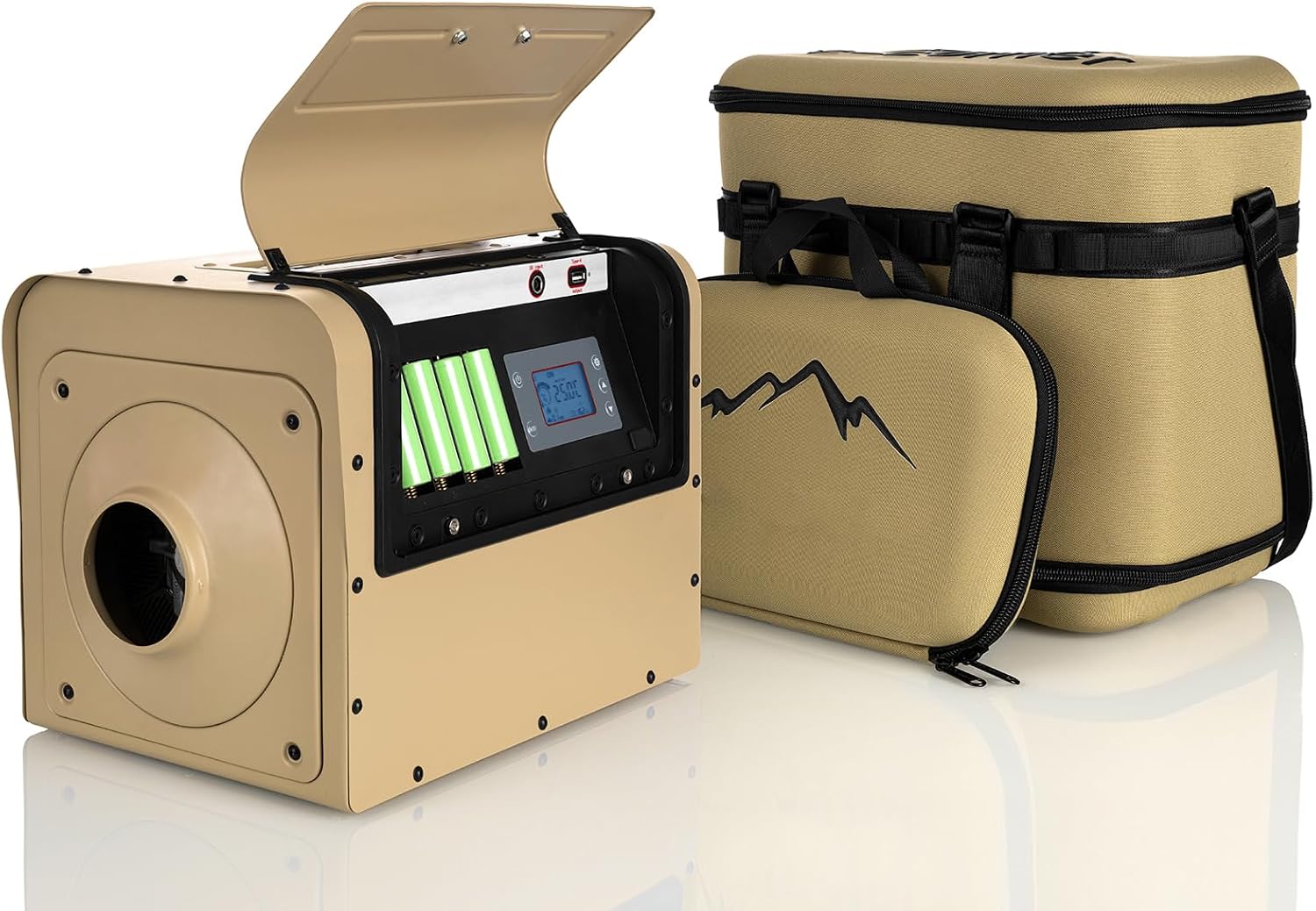
This TRAILSON diesel heater is a compact, self-powered 12V unit that produces up to 5 kW of heat for van life, camping, and small workspace use. It uses a built-in diesel tank and low fuel consumption to run between roughly 7 and 33 hours depending on settings, and the manufacturer claims operation down to very low ambient temperatures. The unit is intended for quick, tool-free setup in about two minutes and comes with a water-repellent carry bag and accessories like a metal fuel funnel and remote controller for easy transport and operation. Practical extras include a USB-A port and a 12V socket to charge small devices while heating, and overheat protection plus a quiet operation claim for use in sleeping areas. Trade-offs are the weight and need for diesel fuel and safe ventilation—this is a purpose-built heater for off-grid heating rather than a plug-and-play indoor electric option, and installation and fuel handling require attention to ventilation and placement in van or tent layouts.
Best for: Buyers who prioritize robust, off-grid heating performance for van life, overlanding, or cold-weather camping and need a heater that runs independently of shore power.
Less Ideal for: People seeking a lightweight, purely electric plug-in heater for occasional indoor use or those unwilling to manage fuel storage, ventilation, and installation.
- High heat output up to 5 kW suitable for quickly warming vans, RVs, and small cabins
- Long runtime range (about 7 to 33 hours) depending on fuel usage and settings
- Self-powered 12V operation with integrated diesel tank eliminates need for shore power
- Includes useful accessories and a water-repellent carry bag for transport and storage
- Built-in USB-A and 12V socket let you charge small electronics while heating
- Requires diesel fuel and careful ventilation, which adds complexity for indoor use
- Heavier design reduces portability compared with ultralight heaters
Verdict: A powerful, self-powered diesel heater that delivers reliable off-grid warmth for van life and overlanding where performance and runtime matter most.
LF Bros N4 5kW Diesel Heater

| Heat Output | 5 KW (4,700–17,000 BTU) |
|---|---|
| Fuel Type | diesel |
| Voltage | 12 V, 24 V & 110 V |
| Heating Coverage | 215–269 sqft |
| Max Temperature Setting | 104 °F |
The LF Bros N4 is a compact 5 kW diesel air heater designed to warm small cabins, vans, garages, and campers. It produces roughly 4,700 to 17,000 BTU and supports 12 V, 24 V and includes a 110 V transformer for easy use in workshops or plugged-in situations. The unit features an LCD display, 24-hour on/off timer with single or multi-period programming, and a remote control so you can schedule heat before you climb into a cold van. Key internal parts—stainless combustor, fast-heating glow plug, balanced fan impeller, and an intelligent motherboard—are presented to improve ignition stability and combustion control. Fuel consumption is listed between 0.18 and 0.53 L/h and the tank design uses an internal-thread cap to reduce spills during movement. Trade-offs are typical for burning-fuel heaters: it requires safe venting, regular maintenance of the fuel system and glow plug, and it will be noisier and smell slightly at start-up compared with electric heaters. For van life it provides strong, controllable heat where shore power is limited or unavailable.
Best for: Buyers who prioritize dependable, high-output heating off-grid and want programmable controls for scheduled warmth in vans, campers, or small workshops.
Less Ideal for: People who need a completely silent, no-fuel, low-maintenance heater or who cannot provide safe venting and fuel storage in their vehicle.
- High heat output suitable for heating small vans and camper cabins
- Works on 12 V and 24 V and includes a 110 V transformer for flexible power options
- 24-hour timer, LCD status display, and remote control for convenient scheduled heating
- Robust combustion components including stainless combustor and fast glow plug for reliable ignition
- Fuel tank cap designed to reduce spills during movement
- Requires proper exhaust/air installation and periodic maintenance typical of diesel heaters
- Produces startup odor and operational noise not present with electric options
Verdict: A rugged, programmable diesel heater built to deliver reliable, high-output heat for off-grid van life and small camper spaces.
Lutntc PTC-908 Ceramic Heater

| Heat Output | 1500 watts |
|---|---|
| Heating Coverage | 200sq.ft |
| Power Source | ac |
| Max Temperature Setting | 95 °F |
| Form Factor | Tower |
The Lutntc PTC-908 is a small PTC ceramic tower heater designed to deliver fast, localized warmth using a 1500W radiant element and an electronic thermostat. It heats up quickly and is best used to warm a single small area such as a van cabin corner or a small tent-like sleeping nook; the digital display and touch controls make it easy to set and monitor a target temperature. The unit includes practical safety features like tip-over auto shutoff and overheat protection and a built-in handle for moving it between spaces. Because it is compact and tabletop-friendly it fits into tight footprints where larger heaters would be impractical. The trade-offs are obvious: it is meant for short-range, spot heating (rated for about 200 sq ft) and requires a standard 120V AC supply at full power, so power availability in mobile situations needs planning. For someone needing a simple, inexpensive heater for quick warmth in confined spaces, this is a functional choice.
Best for: Someone living or traveling in a small, enclosed mobile space who wants an affordable, compact heater for quick spot warmth and easy portability.
Less Ideal for: People who need whole-van heating or who lack a reliable 120V AC power source should consider alternative heating solutions designed for continuous, larger-area use.
- Rapid PTC ceramic heating delivers quick warmth for small areas
- Digital display and touch controls for easy temperature monitoring
- Built-in handle makes it easy to move between spaces
- Safety features include overheat protection and tip-over auto shutoff
- Requires 120V AC at full 1500W, which may strain limited van power systems
- Effective only for spot heating rather than whole-vehicle warmth
Verdict: A compact, budget-friendly 1500W ceramic heater that provides fast spot warmth and simple controls for small mobile living spaces when a 120V power source is available.
Mr. Heater Portable Buddy F232000

| Heat Output | 9000 BTU |
|---|---|
| Fuel Type | Propane |
| Indoor Outdoor Usage | Indoor, Outdoor |
| Heating Coverage | 225 |
| Number of Speeds | 2 |
The Mr. Heater Portable Buddy is a compact propane radiant heater built for easy transport and quick warmups. It offers two heat settings—roughly 4,000 and 9,000 BTU—so you can dial back fuel use or crank output when you need more warmth. It attaches to a 1 lb. propane cylinder and will run about 5.4 hours on low or 2.4 hours on high from a single disposable bottle, and it can be adapted to a larger tank with accessories. Safety features include an oxygen depletion sensor, tip-over shutoff, and thermal shut-down, which make it suitable for close-quarters use when ventilated properly. The pedestal form, integrated handle, and simple piezo igniter make it convenient for van or campsite setups, while the radiant output heats people and objects directly rather than only warming the air. The main compromises are the dependence on propane refills and the need to manage ventilation in very small spaces, and its runtime on high is short if you rely solely on 1 lb. cylinders.
Best for: Buyers who prioritize a dependable, simple heat source for small mobile living spaces and need a portable unit with built-in safety systems.
Less Ideal for: People who cannot or will not manage propane fuel, need continuous electric heating, or plan to run a heater unattended in an unventilated tiny space.
- Portable pedestal design with easy-grip handle for moving and storage
- Two heat settings (about 4,000 and 9,000 BTU) for adjustable output
- Safety features including oxygen depletion sensor, tip-over switch, and thermal shut-down
- Runs on common 1 lb. propane cylinders and can be adapted to larger tanks
- Requires propane refills and fuel management for extended trips
- Limited continuous runtime on high from a 1 lb. cylinder
Verdict: A compact, safety-minded propane radiant heater that reliably delivers portable warmth for van life when you want a simple, proven fuel-based solution.
Amazon Basics 500W Ceramic Mini Heater

| Heat Output | 500 watts |
|---|---|
| Heating Element | Ceramic |
| Power Source | Corded Electric |
| Voltage | 120 volts |
This Amazon Basics 500W ceramic mini heater is a small, portable tabletop unit intended to warm a single-person area such as a desk, bedside, or the driver's seat area in a van. It uses a ceramic heating element and convection to produce heat quickly from a low 500-watt output, so it raises local temperatures without drawing large power. The unit is very light and compact, making it easy to move and tuck into tight spaces, and it includes tip-over protection that cuts power if the heater is knocked over. Practical benefits are straightforward: near-instant warmth for close quarters, low power draw for limited electrical systems, and simple plug-and-play operation with no complicated controls. Important limitations are its low heat output, which means it cannot heat an entire van or larger cabin on its own, and the small fan-level noise at typical operation levels; it is meant as a localized personal heater rather than a room heater. For someone needing a compact, low-wattage source of warmth, it is a functional and safe option.
Best for: Buyers who need a low-draw, portable heater to provide quick, localized warmth in tight spaces and who prioritize compact size and safety over whole-vehicle heating.
Less Ideal for: Anyone looking to heat an entire van, larger cabin, or shared living area should choose a higher-output or dedicated vehicle heater instead.
- Very compact and lightweight for easy placement and portability
- Low 500W power draw suitable for limited electrical systems
- Ceramic element provides quick, local heat
- Built-in tip-over protection improves safety during use
- 500W output is too low to heat an entire van or larger enclosed space
- Basic feature set with no thermostat or multiple heat settings
Verdict: Choose this small ceramic heater when you want a lightweight, low-wattage, and safe personal heater for tight van or desk spaces.
KAT'S 1155X 200W Magnetic Heater

| Heat Output | 200 watts |
|---|---|
| Power Source | Corded Electric |
| Voltage | 120 volts |
| Amperage | 1.67 A |
| Special Features | Electronic Thermostat |
This magnetic heater is a compact, corded 200-watt radiant mat that sticks to metal surfaces to warm engines, oil pans, battery holders, or other metal components. It is thermostatically controlled so it maintains heat without continuous user intervention, and the magnetic mat form factor makes it easy to attach and remove without tools. Typical uses include pre-warming small engines for easier cold starts, improving oil flow, and reducing cold-weather wear; it can also be repurposed to thaw or keep metal fittings and pipes from freezing. Practical benefits are simple installation, low power draw on a 120V circuit, and focused heating where you need it. Important limitations are its low total output compared with space heaters, so it will not heat vehicle interiors and relies on contact with metal for effective heat transfer, and it requires a suitable metal mounting surface and safe routing of the power cord.
Best for: Van lifers who prioritize reliable, low-power ways to keep engine components and metal fittings warm for dependable cold starts and reduced wear during cold weather.
Less Ideal for: People looking for a primary cabin heater or a solution that warms air or living space should choose a purpose-built space heater instead.
- Thermostatic control keeps temperature regulated without constant monitoring
- Magnetic mat design attaches quickly to metal surfaces with no tools
- Low 200-watt power draw suitable for limited electrical systems
- Radiant heating directly warms engine components for easier cold starts
- Not intended to heat cabin or living space due to low wattage
- Requires a metal surface for effective mounting and heat transfer
Verdict: A compact, low-draw magnetic heater that gives van lifers a dependable way to warm engine and metal components for easier cold-weather starts.
Choosing the Right Heater for Van Life: Key Factors to Consider
Heating Output Relative to Van Size
Heating output determines how quickly and effectively a heater can raise and maintain cabin temperature. Vans vary widely in interior volume, insulation, and typical ambient conditions, so match the unit's BTU or watt rating to your van's cubic footage rather than guessing from car or home guidelines. Oversizing wastes fuel and can cause short-cycling, while undersizing leaves you cold and forces the heater to run constantly.
Also consider how heat is distributed inside the vehicle. A heater with directional vents or a fan will spread warmth more evenly than a simple radiant unit. If you plan to use the heater while sleeping, choose a capacity that holds comfort at the lowest outside temperatures you expect while still allowing thermostat control to prevent overrun.
Power Source and Consumption
The heater's power source heavily influences installation complexity and ongoing costs. Electric heaters demand a reliable heavy-duty battery system or shore power and can draw large currents. Propane, diesel, or alcohol heaters use onboard fuel tanks and avoid high electrical loads but require safe fuel storage and ventilation. Consider how long you want the heater to run between refueling or recharging and whether your van electrical system can support continuous operation.
Check real-world consumption figures and estimate run times based on your typical overnight battery or fuel capacity. Factor in other loads like lighting and refrigeration so the heater does not compromise essential systems. For hybrid setups, consider how the heater integrates with shore power or a generator to reduce strain on batteries.
Ventilation and Indoor Air Safety
Safe indoor operation is critical in a confined van interior. Combustion heaters produce exhaust gases and may consume oxygen, so they require appropriate flueing, sealed-combustion designs, or reliable CO detectors and ventilation paths. Even purportedly 'safe' indoor burners need clear documentation on exhaust routing and minimum clearances. Poor ventilation increases risk of carbon monoxide buildup and oxygen depletion.
When evaluating units, look for clear manufacturer guidance on vented versus ventless operation, required venting components, and recommended ventilation rates. Consider how you will ensure fresh air exchange while minimizing heat loss and how to mount CO and propane detectors to provide early warnings.
Installation and Mounting Practicality
Ease of installation matters for DIY camper conversions and on-the-road adjustments. Units that offer multiple mounting options, compact footprints, or portable setups are often more useful in van life. Installation practicality includes how the heater interfaces with fuel lines, electrical systems, and existing cabinetry or vent locations. Consider whether you need professional help for safe installation or if the unit is designed for user-friendly mounting.
Also assess the availability of installation kits, flexible ducting options, and whether the unit's orientation or clearance needs conflict with storage or sleeping arrangements. If you plan to move the heater between vehicles, prioritize models with minimal permanent modifications.
Control Systems and Thermostatic Regulation
Controls determine how easy it is to maintain a stable cabin temperature and how efficiently the heater runs. Simple on/off units are cheap and straightforward but often inefficient. Heaters with digital thermostats, programmable schedules, or remote control capability maintain comfort with fewer fuel or power cycles. Accurate temperature sensing is especially important in small spaces where overshoot can rapidly make the interior too warm.
Also weigh the reliability of the control interface. Mechanical knobs are robust but less precise. Digital controls add precision and features but can fail or be harder to repair in the field. For van life, prioritize controls that balance accuracy, simplicity, and serviceability.
Maintenance Needs and Serviceability
Regular maintenance affects long-term reliability and safety. Combustion heaters may need periodic burner cleaning, fuel filter changes, or nozzle replacement, while electric units require less routine servicing but may still need fan or thermostat maintenance. Consider how easy it is to access service points in a cramped installation and whether replacement parts are commonly available.
Choose units with clear maintenance intervals and straightforward procedures you can perform with basic tools. For longer trips where parts or service are not easily available, preference should go to durable, low-maintenance designs.
Portable Versus Built-In Options
Portable heaters are attractive for renters or travelers who need flexibility. They can be moved between vans or stowed when not in use, and many models require minimal or no permanent modification. However, portability often trades off with fuel capacity, steady output, and sometimes safety features like sealed combustion.
Built-in or permanently mounted heaters require more upfront effort to install but typically integrate better with vehicle fuel systems and ducting. They tend to offer more consistent heating, larger fuel reserves, and improved distribution when connected to vents.
- Portable: low installation effort, flexible placement, usually smaller fuel or power capacity
- Built-in: stable installation, better distribution, may need professional fitting
Managing Noise and Sleep Comfort
Fan noise and burner operation can affect sleep and comfort in a small space. Even low-level mechanical noise reads as louder inside a van because of close proximity and reflective surfaces. Look at published noise levels when available and favor units with quiet blowers or the ability to run at low speeds.
Placement also matters. Position a unit or mount intake and exhaust away from sleeping areas and avoid locations that vibrate or amplify sound. Ducting can help move airflow while allowing the main unit to be installed where it makes less noise.
- Run units at the lowest effective fan speed during sleep
- Isolate mounting to reduce vibration
- Use insulated ducting to avoid noise transmission
Fuel Storage and Refueling Logistics
For fuel-burning heaters, plan where and how you will store spare fuel safely. Small tanks are convenient but require more frequent refilling. Larger tanks reduce refueling frequency but take up valuable space and add weight. Think about how fuel storage affects payload and balance, and keep it in a ventilated, secure spot away from living areas.
Consider the logistical side of refueling on the road. Diesel or propane may be widely available, while specialty fuels are less convenient. Also account for seasonal needs; colder conditions increase consumption and may require more frequent top-ups.
- Keep fuel in dedicated, approved containers
- Balance tank placement to avoid negatively affecting vehicle handling
- Plan refueling stops based on your typical route and season
Power System Integration
If your heater draws electrical power, ensure your van battery bank and inverter can handle peak and continuous loads. Electric heaters can tax systems quickly, forcing compromises with lighting and refrigeration. For intermittent use, timed operation or low-power modes extend battery life.
When integrating with the vehicle electrical system, add appropriate circuit protection and monitoring. Voltage drops and poor connections reduce efficiency and can damage components over time.
- Match heater current draw to battery and inverter capacity
- Use dedicated fused circuits and professional wiring for permanent installs
- Monitor state of charge during extended use to avoid complete battery depletion
Cold-Weather Strategies and Insulation
Heating performance is amplified by good insulation. Before upsizing a heater, improve van insulation, draft sealing, and window coverings. These steps reduce heat loss and allow a smaller heater to maintain comfort longer. Insulation also reduces cycles and fuel consumption.
Combine passive measures with active heating strategies like timed pre-warming and zoned heat distribution to maintain a comfortable interior without running the heater continuously.
- Prioritize insulation upgrades for long-term efficiency gains
- Use thermal curtains or reflective window covers to reduce night loss
- Employ preheating routines to limit run time in extreme cold
How We Chose the Best Heater for Van Life
We focused on heaters that meet the specific demands of van life: compact size for tight installations, high heating efficiency to conserve fuel or battery, and robust safety features suited to small, often-ventilated living spaces. Our evaluation prioritized measurable, practical criteria including fuel or power consumption, heat output relative to unit size, installation flexibility for camper interiors, and built-in safety systems such as automatic shutoff and carbon monoxide protections. We excluded bulky, permanently installed systems that require extensive vehicle modification or specialized professional installation beyond typical DIY camper conversions. We also filtered out units with unclear ventilation requirements or missing documentation for safe indoor use. The final shortlist emphasizes units with clear performance specifications, straightforward mounting or portable setups, and features that reduce ongoing maintenance and operating complexity for van dwellers. Across the picks we weighed noise levels, controls and thermostatic regulation, serviceability, and accessory compatibility. These dimensions map directly to the scoring criteria used in each product block and reflect the practical tradeoffs van owners face when selecting a heater.
Our full evaluation process is outlined in our review methodology.
FAQ
Can I run a combustion heater overnight inside a van?
Often yes, but only with heaters designed for indoor use and proper ventilation. Use sealed-combustion designs or follow manufacturer venting instructions, and always have working carbon monoxide and oxygen depletion detection in place.
How much battery capacity do electric heaters need?
It depends on the heater wattage and intended runtime. Electric heaters draw high current; for multi-hour overnight use you will typically need a large battery bank and an inverter sized to the heater's peak draw. Many van lifers use electric heating only when shore power or a generator is available.
Is propane safe to store and use inside a camper van?
Propane can be used safely if stored in approved cylinders and installed with proper regulators, check valves, and ventilation. Secure mounting and regular leak checks are essential. Local codes may dictate allowable storage methods and installations.
Do I need a professional to install a van heater?
Not always. Some portable or self-contained units are designed for DIY installation. More complex built-in systems that interface with fuel lines, vehicle wiring, or through-wall vents may require professional installation to meet safety standards.
How do I prevent my heater from using too much fuel in very cold weather?
Improve insulation and reduce drafts to lower heat loss, use thermostatic controls to avoid continuous high-power operation, and consider scheduled heating cycles or supplemental insulation like sleeping bags and thermal blankets to reduce required run time.
Final Verdict
Choosing the right heater for van life means balancing heat output, power or fuel logistics, and safety in a compact space. Prioritize units that match your typical overnight temperatures and integrate cleanly with your van's power and fuel systems. Consider insulation and noise impact as part of the overall solution. Ultimately, pick a heater that meets your practical needs for runtime, ventilation, and serviceability rather than chasing maximum output. A well-matched, safely installed heater plus good insulation will keep you comfortable while minimizing fuel and maintenance headaches.