
Note: This article contains affiliate links. If you click on these links and make a purchase, we may earn a small commission at no extra cost to you. This helps support our research and content. Read our full affiliate disclosure here.
If you use an uninsulated garage as a workshop, storage area, or weekend project space, the right heater makes that space usable through cold months. Garages without insulation lose heat quickly and tend to be drafty, so you need a heater with enough output to overcome heat loss while still offering reliable safety controls. This guide shortlists the top heaters suited specifically for uninsulated garages and explains the real-world tradeoffs buyers face. We evaluated models for sustained heat output, coverage in large, leaky spaces, and essential safety features like tip-over protection and overheat shutoff. Read on to see the best options and the criteria that matter when heating a bare-bones garage.
Top Picks at a Glance
| Best Overall The best all-around choice for most situations | Comfort Zone Ceiling Garage Heater CZ220 |  |
| Best Quality Built to a higher standard if you want something more solid | Mr. Heater Big Maxx 50,000 BTU |  |
| Best Value The sweet spot between price and what you get | DREO Portable Space Heater DR-HSH014 |  |
| Best Budget The cheapest option that still gets the job done reliably | AEscod NFJ-9 Pedestal Heater |  |
| Top Rated A top-rated pick with lots of positive feedback | DREO Atom One Tower Heater |  |
| Most Popular A crowd favorite that many people choose with confidence | Heat Storm Phoenix HS-1500-PHX-WIFI |  |
| Best Seller A high-volume bestseller chosen again and again | Mr. Heater Portable Buddy F232000 |  |
Comfort Zone Ceiling Garage Heater CZ220

| Heating Coverage | 1000 sq. ft. |
|---|---|
| Heat Output | 17065 british thermal units |
| Voltage | 240 |
| Number of Speeds | 3 |
| Amperage | 20.83 A |
The Comfort Zone CZ220 is a ceiling-mounted, hard-wired 240V fan-forced heater intended to warm garages, workshops, and similar uninsulated spaces without using floor space. It offers three power settings (3,000, 4,000, 5,000W) so you can scale output to conditions, and adjustable louvers plus mounting-angle flexibility let you aim warm air toward a workstation or drafty area. Controls are simple: a pair of front knobs handle thermostat and on/off functions for quick adjustments. The unit is built from heavy-gauge steel for durability in rough environments and includes an overheat sensor and power indicator for safer operation. Because it is ceiling-mounted and hard-wired, installation requires appropriate 240V wiring and likely professional hookup, and the unit provides targeted rather than whole-house heating, so expect warm spots rather than perfectly uniform temperatures across very large or poorly sealed garages. For an uninsulated garage where floor space matters, it delivers robust, focused heat with straightforward controls and durable construction.
Best for: Buyers who need a durable, space-saving heater to warm an uninsulated garage or workshop and who prioritize strong, targeted heat and simple manual controls.
Less Ideal for: People seeking whole-garage uniform heating without professional electrical installation or those who prefer portable plug-in heaters for occasional use.
- Ceiling-mounted design saves floor space and directs heat where needed
- Three heat settings (3,000/4,000/5,000W) let you adjust output for different cold levels
- Heavy-gauge steel construction suited for garage and workshop conditions
- Adjustable louvers and mounting angle enable targeted heating of work areas
- Built-in overheat protection and power indicator add safety and visibility
- Requires 240V hard-wired installation which may need an electrician
- Aimed, fan-forced output creates warm zones rather than evenly heating very large or leaky garages
Verdict: Choose this ceiling-mounted 240V heater when you want a rugged, floor-space-saving unit that delivers strong, targeted heat for an uninsulated garage.
Mr. Heater Big Maxx 50,000 BTU

| Heat Output | 50,000 BTU |
|---|---|
| Heating Coverage | 1667 sq ft |
| Power Source | Natural Gas (includes LP conversion kit) |
| Mounting Type | Ceiling Mount |
| Max Temperature Setting | 120 °F |
The Mr. Heater Big Maxx is a ceiling-mounted forced-air unit designed to turn uninsulated garages or workshops into usable heated spaces by delivering 50,000 BTU and circulating air with a high-powered fan. It is typically mounted to the ceiling using the included angle brackets and can vent vertically or horizontally, and it runs on natural gas but ships with an NG-to-LP conversion kit for propane use. Practical features include an accessible thermostat and A/C terminals, three-position louvers for directing airflow, compatibility with standard 24-volt or Wi-Fi thermostats, and built-in safety controls such as high-temperature and gas flame shutoff sensors. In real use the heater blankets spaces up to about 1,667 square feet when installed with adequate clearance and a proper venting layout, making it well suited for actively used garages where rapid warm-up and sustained output matter. Trade-offs are that it requires 120V power and proper gas hookups plus clearance and local code-compliant venting, and it is best for spaces where ducting and ceiling mounting are practical rather than small rooms or portable needs.
Best for: Buyers who prioritize strong, reliable heat output to keep an uninsulated garage or workshop usable during cold months and who can accommodate a ceiling-mounted, permanently plumbed installation.
Less Ideal for: People who need a portable or temporary heater, or who cannot provide a gas connection, venting, or the required ceiling clearance should consider different options.
- High heat output rated at 50,000 BTU for rapid warm-up of large, uninsulated garages
- Ceiling mount and included angle brackets free up floor space and provide broad airflow distribution
- Compatible with standard 24-volt and Wi-Fi thermostats for easy temperature control integration
- Includes NG-to-LP conversion kit so it can be set up for natural gas or propane
- Built-in safety features including high-temperature and gas flame shutoff sensors
- Requires hard gas hookup, 120V power, and proper venting which means professional installation is likely
- Not portable and needs sufficient ceiling clearance and mounting space
Verdict: If you need a powerful, ceiling-mounted gas heater to reliably heat an uninsulated garage or workshop, the Big Maxx 50,000 BTU delivers the output and control integration to get the job done.
DREO Portable Space Heater DR-HSH014

| Heat Output | 1500 watts |
|---|---|
| Heating Element | PTC |
| Heating Coverage | 107.6 – 215.3 sq.ft. |
| Special Features | 1-12h Timer, 41-95℉ Adjustable Digital Thermostat, ECO Mode, Oscillating |
| Number of Speeds | 3 |
This DREO tower heater uses a 1500W PTC ceramic element and forced-air delivery to warm rooms quickly, with a claimed airflow speed that helps spread heat across a wide 70° sweep. It is designed for plug-in indoor use and includes a digital thermostat adjustable from 41 to 95°F in 1°F steps, three heat speeds plus ECO and fan modes, a 1–12 hour timer, and a remote for simple control from across the room. Safety features include tip-over and overheat protection, flame-retardant materials, a safety plug, and an ETL listing, which make it a low-risk option to run when you need targeted warmth. The unit is relatively quiet thanks to a brushless DC motor and winglet fan design, so it can run overnight without being intrusive. For larger, poorly insulated spaces like an uninsulated garage the heater can provide focused spot heating, but as with any 1500W portable heater it may struggle to maintain high temperatures across a fully open, very cold garage without supplemental insulation or multiple units.
Best for: Buyers who want a reliable, controllable plug-in heater to deliver quick spot or zone warmth in a garage workspace and value safety and quiet operation.
Less Ideal for: People needing to heat an entire, very cold uninsulated garage to consistent temperatures—they should consider permanent hardwired heating or insulation upgrades.
- 1500W PTC ceramic element for fast, consistent heat
- Adjustable digital thermostat with 1°F increments for precise control
- 70° oscillation and fan modes to spread warmth across a room
- Multiple safety systems including tip-over and overheat protection and ETL listing
- Quiet operation with brushless DC motor suitable for overnight use
- 1500W output provides spot heating but is limited for fully uninsulated, very large garages
- Corded electric design requires access to a grounded outlet near the work area
Verdict: A safe, quiet 1500W portable heater that delivers precise spot and zone heating for garage work areas when you need fast, controllable warmth.
AEscod NFJ-9 Pedestal Heater

| Heat Output | 1500 watts |
|---|---|
| Number of Speeds | 3 |
| Power Source | Corded Electric |
| Voltage | 120 volts |
The AEscod NFJ-9 is a small, portable convection pedestal heater designed to deliver fast, local warmth using a 1500W ceramic-style element and three operating modes: fan, low (750W), and high (1500W). It is typically used on a tabletop or portable base to warm a single work area such as a garage workspace, home office, or small living area; the 90 degree tilt and sturdy handle make it easy to aim heat where you need it. Notable features include an automatic overheat shutoff, a low-noise fan mode for summer or mild days, and a five-foot power cord for flexible placement. The heater warms quickly and is a straightforward, no-frills option for supplemental heating, but its small form and single 1500W element mean it is best for spot heating rather than trying to raise temperature in a large, uninsulated garage. Also follow safety guidance: keep it off wet surfaces, avoid covering it, and use proper high-amperage outlets or heavy-duty extension cords.
Best for: Buyers who need an inexpensive, portable heater to warm a specific work area or vehicle bay corner in an uninsulated garage and who prioritize quick, local heat over whole-space heating.
Less Ideal for: People who want to heat an entire large or poorly insulated garage; they should consider higher-capacity or hardwired heating solutions instead.
- Powerful 1500W high setting for rapid spot heating
- Three modes including fan-only for year-round use
- 90° adjustable tilt to direct warmth where needed
- Built-in overheat protection for safer operation
- Portable design with a carrying handle and 5 ft cord for flexible placement
- Designed for spot or small-area heating and not sufficient to heat a large uninsulated garage alone
- Manufacturer guidance warns about using inadequate extension cords and requires higher-amperage outlets
Verdict: Choose this heater if you want an affordable, portable 1500W unit to provide fast spot heating in a garage workspace rather than heating the whole uninsulated space.
DREO Atom One Tower Heater
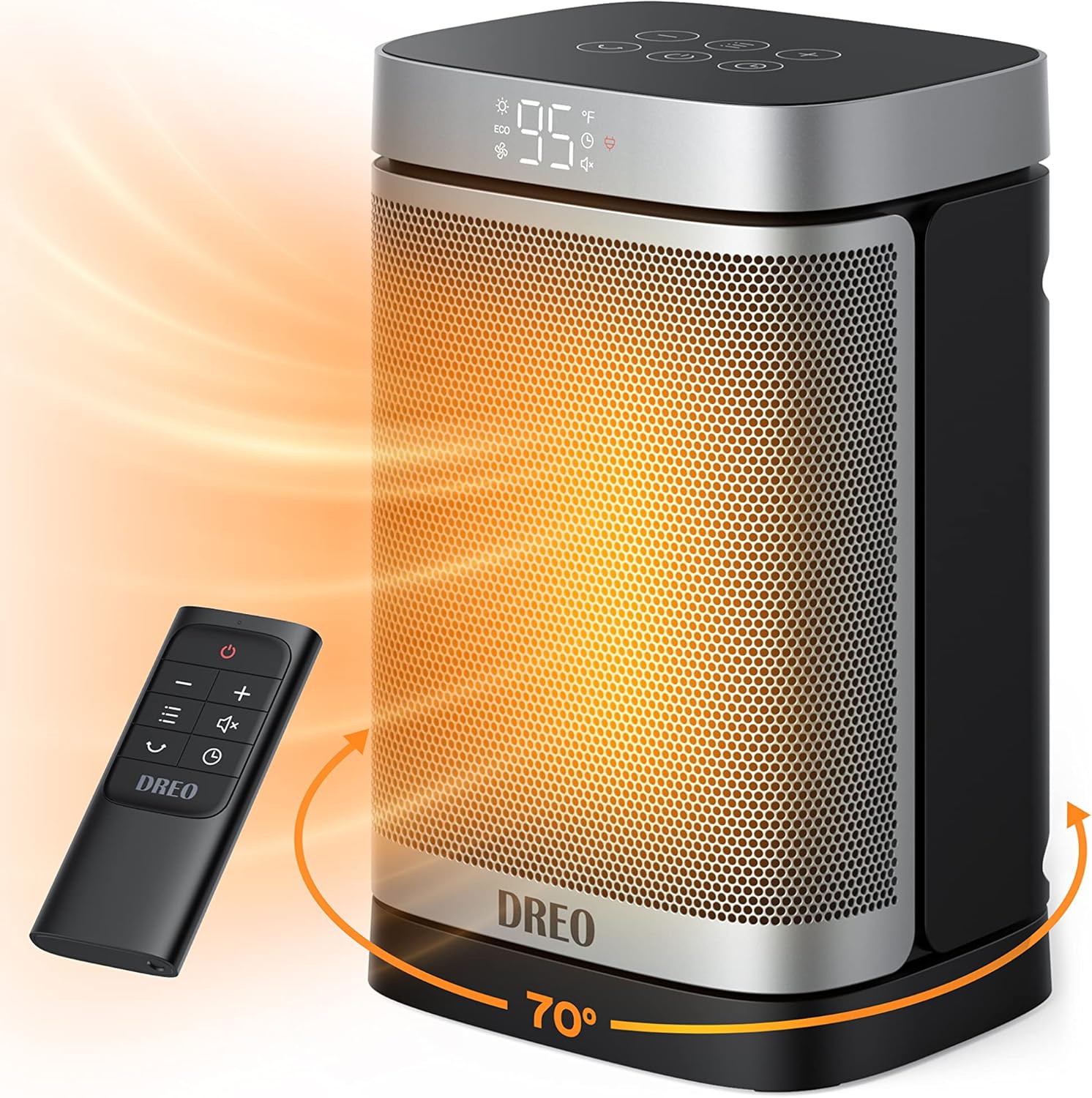
| Heating Coverage | 200 sq.ft |
|---|---|
| Heat Output | 1500 watts |
| Heating Element | PTC Ceramic |
| Number of Speeds | 5 |
| Special Features | 1-12h Timer, Programmable Thermostat, Oscillating |
The DREO Atom One is a compact tower heater designed to deliver fast, directed warmth around a work or living area. It uses a PTC ceramic element and up to 1500 watts to warm spaces and offers a programmable digital thermostat adjustable from 41 to 95°F, a 1–12 hour timer, and 70° oscillation to spread heat across a small area. Practical touches include a detachable filter, LED display, remote control, and an ECO mode that modulates output to hit a set temperature more efficiently. Safety features are comprehensive for this class, with ETL listing, tip-over and overheat protection, an enhanced safety plug, and flame-retardant materials. Noise is modest thanks to a brushless DC motor and aerodynamic blades, so the unit is usable in a garage workspace without overwhelming background noise. The main limitation is its 1500W output and 200 sq.ft coverage rating, which means it will struggle to heat large, very cold, or poorly insulated garages on its own and works best as supplemental or spot heat near occupants or equipment.
Best for: Buyers who prioritize reliable, safe supplemental heating for a garage workspace and want a heater that quickly delivers controllable, localized warmth while running quietly.
Less Ideal for: People needing to heat an entire large or severely uninsulated garage as the primary heat source should consider higher-capacity or dedicated garage heating systems instead.
- Strong 1500W PTC ceramic element for quick, directed heat
- Programmable 41–95°F digital thermostat with 1°F increments for precise temperature control
- 70° oscillation and compact tower form to spread heat across a work area
- ECO mode and timer help reduce run time and energy use during steady-state operation
- Built-in safety features including tip-over and overheat protection and ETL listing
- Rated coverage (200 sq.ft) and 1500W power are inadequate as a sole solution for large, uninsulated garages
- Portable tower design concentrates heat locally rather than raising whole-garage ambient temperature
Verdict: A dependable, safety-focused 1500W tower heater ideal for providing quiet, controllable spot heat in a garage workspace.
Heat Storm Phoenix HS-1500-PHX-WIFI
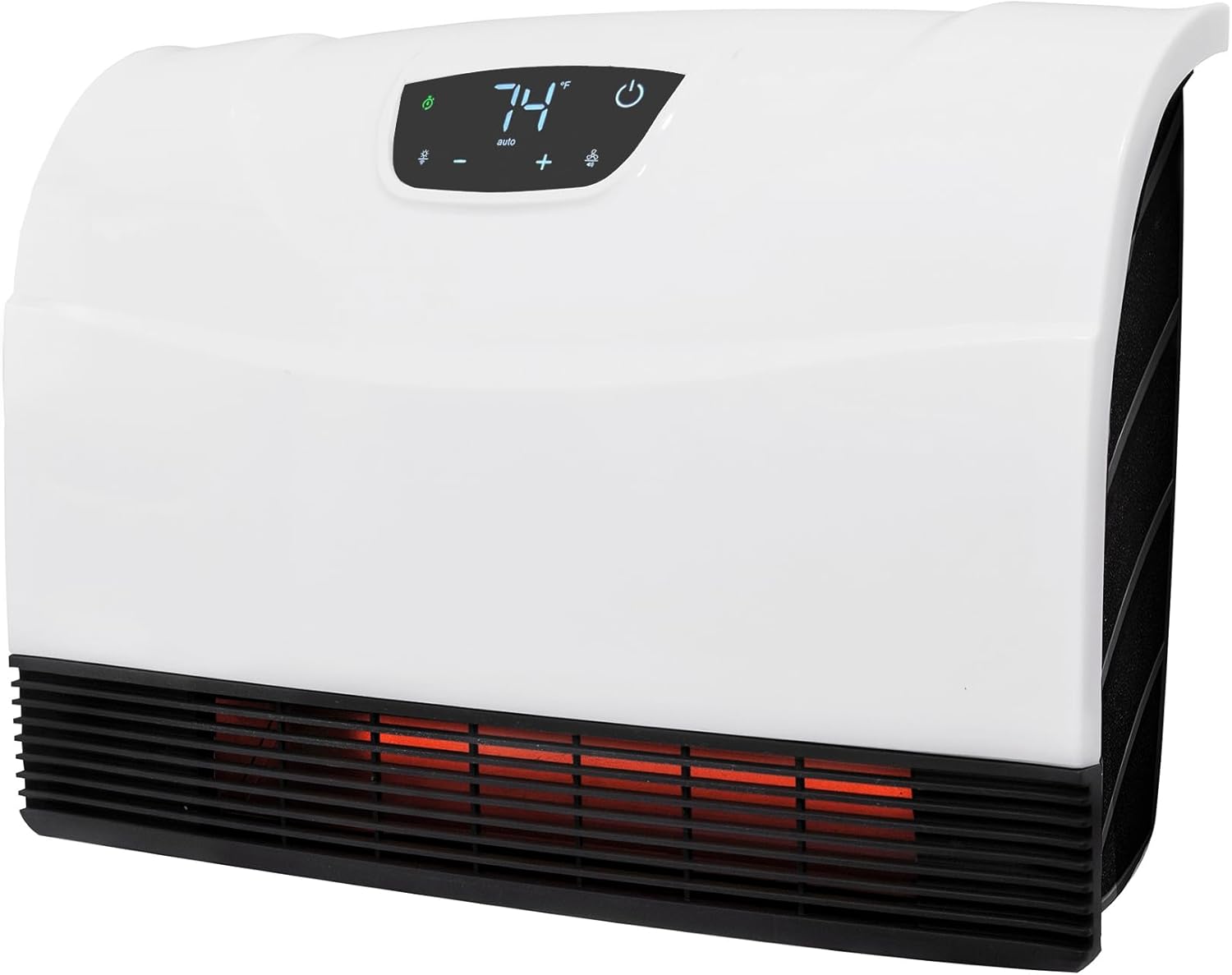
| Power | 1500 watts |
|---|---|
| Voltage | 110 volts |
| Heating Method | Infrared |
| Heating Coverage | 150 ft² primary, 750 ft² secondary |
The Heat Storm Phoenix HS-1500-PHX-WIFI is a plug-in, wall-mounted infrared heater that provides targeted zone warmth for bathrooms, bedrooms, offices, and small garages. It delivers 1500 watts of radiant heat and is intended to warm up to roughly 150 sq ft as a primary source or provide supplemental warmth for larger spaces. The unit includes Wi‑Fi for app control and scheduling, one-touch Bluetooth setup, a touch digital thermostat, and a remote for convenient temperature adjustments. Its space-saving cabinet design mounts over an outlet so the cord can be hidden and the heater stays cool to the touch. Practical benefits include easy installation, low visual footprint, and the ability to set schedules or control temperature remotely to avoid heating an unoccupied space. Important limitations are its modest coverage for true uninsulated garage use—it is best for spot or small-zone heating rather than trying to heat an entire uninsulated bay—and it relies on a standard 110V circuit so multiple high-draw appliances on the same circuit can be an issue.
Best for: Buyers who want a compact, controllable wall heater for spot-warming or keeping a single work or entry area comfortable and who value remote scheduling and simple installation.
Less Ideal for: People wanting to heat an entire uninsulated garage or large open bays should look at higher-capacity or hardwired heating solutions instead.
- Wi‑Fi and remote control allow scheduling and remote temperature adjustments
- Wall-mount design saves floor space and can hide the cord when mounted over an outlet
- 1500W infrared output provides efficient radiant heat for targeted zones
- Touchscreen digital thermostat and included remote simplify temperature control
- Coverage is limited—best for single-zone warming not whole uninsulated garages
- Requires a 110V outlet and draws up to 12.5 A which can limit placement near other high-draw devices
Verdict: A compact, Wi‑Fi enabled wall-mounted infrared heater ideal for controlled spot heating and remote scheduling in small garage zones.
Mr. Heater Portable Buddy F232000

| Heat Output | 9000 BTU |
|---|---|
| Heating Coverage | 225 |
| Fuel Type | Propane |
| Number of Speeds | 2 |
The Mr. Heater Portable Buddy is a small, carry-handle propane radiant heater meant for quick localized warmth in garages, patios, or workspaces. It offers two heat settings (4,000 and 9,000 BTU) and runs off a 1 lb cylinder with an option to connect to a larger tank using accessories, so it can heat roughly 225 sq ft on demand. Safety features built into the unit include an oxygen depletion sensor, thermal shutoff, and tip-over switch, which make it suitable for short-term indoor use when monitored. Typical usage is point heating—warming the area immediately around the unit rather than trying to raise the temperature of a large, uninsulated space. Practical benefits include fast radiant warmth, a lightweight portable design with an easy-grip handle, and simple piezo ignition. Limitations are that run time on a 1 lb cylinder is only a few hours, it is most effective for personal or spot heating rather than whole-garage heating, and propane operation requires safe fuel storage and ventilation considerations.
Best for: Buyers who want a reliable, safety-minded portable heater for short-term spot heating in a garage, workshop, or outdoor area and prefer a simple propane-powered solution they can move where needed.
Less Ideal for: People who need to heat an entire uninsulated garage for long periods or want an electric, whole-space heating solution should consider larger or different heater types.
- Provides up to 9,000 BTU radiant heat for rapid spot warming
- Designed for indoor and outdoor use with built-in oxygen depletion sensor and tip-over shutoff
- Lightweight, portable design with easy-grip handle and piezo igniter
- Can run from a 1 lb cylinder or be adapted to a larger tank with accessories
- Short run time on a 1 lb cylinder, especially on high setting
- Best for spot heating and not intended to maintain temperature across a large uninsulated garage
Verdict: A compact, safety-focused propane radiant heater ideal for risk-averse buyers who need fast, portable spot heating in a garage or workshop.
Choosing the Right Heater for Uninsulated Garage: Key Factors to Consider
Heat Output and Coverage Area
Heat output determines how quickly a heater raises and maintains temperature in a drafty, uninsulated garage. Look for the unit's rated BTU or wattage and the manufacturer's stated coverage area, but expect real-world performance to be lower in spaces with high heat loss.
Garages with exposed studs, single-pane windows, or open gaps can require substantially higher output than a similarly sized insulated room. Consider a heater that can deliver continuous output rather than short, powerful bursts, because steady heat prevents temperature swings and reduces condensation on cold surfaces.
Fuel Type and Power Reliability
The fuel or power source affects how well a heater performs in cold conditions and whether it remains usable during power interruptions. Electric heaters are easy to install and safe for indoor use but may need high-wattage circuits for large garages. Fuel-fired units provide stronger output per device but require proper ventilation and adherence to safety protocols.
Think about local availability of electricity, propane, or kerosene and whether you need portability to move the heater between spaces. In uninsulated garages, a unit that can sustain output without frequent refueling or circuit trips is generally more practical.
Safety Features and Certifications
Safety matters even more in a garage, where flammable materials, vehicle fumes, and clutter increase risk. Choose heaters with tip-over shutoff, overheat protection, cool-touch surfaces, and certifications from recognized safety organizations. For fuel-burning units, sealed combustion or proper venting reduces the risk of carbon monoxide buildup.
Never rely solely on the heater's features; include a working carbon monoxide detector and follow manufacturer guidelines for clearance and placement. Units intended for garage use should clearly state indoor suitability and list required safety distances.
Thermostat Accuracy and Controls
Accurate thermostat control helps maintain a stable temperature without running continuously, which saves energy and reduces wear. Look for models with adjustable thermostats, programmable timers, or multiple heat settings to match varying weather and occupancy patterns.
Responsive controls also matter when you need a predictable warm-up time before working in the garage. Digital displays and simple user interfaces improve usability in cold conditions when fiddly knobs are harder to operate with gloves on.
Durability and Maintenance
Garage environments can be dusty, damp at times, and rough on equipment. Durable construction, rust-resistant finishes, and accessible filters or service panels extend a heater's useful life. Consider how often filters must be cleaned and whether common maintenance tasks are straightforward.
Units with replaceable parts and clear service documentation reduce long-term ownership friction. A heater that tolerates occasional bumps or being moved will be more reliable in a busy garage setting.
Installation, Placement, and Portability
Decide whether you need a permanently mounted heater or a portable unit. Hardwired or wall-mounted heaters free up floor space and often deliver higher continuous output, but they require installation. Portable models provide flexibility to move heat where you need it and may plug into existing outlets.
Consider clearance requirements, mounting hardware, and whether the unit needs a dedicated electrical circuit. Portability is valuable if you use several areas of the property and want to repurpose the heater seasonally.
Sizing Tips for Drafty, Uninsulated Garages
Calculate a realistic heating requirement by starting with the garage's volume, then increasing the estimate to account for heat loss through uninsulated walls, open bays, and gaps. A common approach is to multiply the basic wattage or BTU estimate by 1.5 to 2.0 for uninsulated conditions.
Remember that peak output needs to cover coldest conditions, but continuous rated output and how quickly a heater recovers temperature after vents or doors are opened are often more important than short-term peak numbers.
- Measure length, width, and height to get volume.
- Factor in number of exterior walls, windows, and door openings.
- Allow extra capacity if the garage is frequently opened during use.
Placement and Safety Best Practices
Place the heater on a stable, level surface with recommended clearance from combustibles. Avoid positioning a heater directly beneath shelving with flammable materials or near vehicle fluids.
Ensure any fuel-burning heater has adequate ventilation and a clear exhaust path. Keep a carbon monoxide detector and smoke alarm in or near the garage and test them regularly.
- Keep the heater at least the manufacturer-recommended distance from walls and stored items.
- Do not obstruct airflow in front of intake or exhaust grilles.
- Never leave a heater unattended for extended periods, especially when people are away from the property.
Electric Versus Fuel-Heated Options: Tradeoffs
Electric heaters are clean, require no combustion air, and are typically safer for indoor spaces, but they may demand high-capacity circuits to heat large, uninsulated garages. They excel when you have reliable electrical service and want low-maintenance operation.
Fuel-based heaters produce more heat per unit and can be more economical for very large or poorly sealed garages, but they require careful ventilation and adherence to safety protocols. Choose fuel options only when you can follow installation and venting requirements precisely.
- Electric: easier installation, quieter, no exhaust, needs sufficient electric capacity.
- Fuel: higher output, may need venting or fresh air, requires fuel storage and handling.
Preventing Moisture and Condensation
Warming a cold garage can cause condensation on metal surfaces and tools, which leads to rust and mold over time. Aim for consistent moderate heat rather than brief, intense bursts to reduce condensation cycles.
Improving air circulation with a small fan and keeping stored items covered or elevated helps reduce moisture problems. In some cases, a dehumidifier used intermittently with heating can protect tools and stored goods.
- Avoid large temperature swings that encourage condensation.
- Promote air circulation to dry cold surfaces gradually.
- Use moisture-resistant storage and elevate sensitive items off the floor.
Routine Maintenance for Longevity
Regular maintenance keeps heaters running safely and efficiently. For electric units, clean dust from grills and inspect cords and plugs. For fuel-burning heaters, follow fuel-filter and burner maintenance schedules and check exhaust paths for blockages.
Replace worn parts promptly and store portable heaters in a dry location during the off-season. Simple upkeep minimizes fire risk and prevents performance degradation over time.
- Inspect for dust buildup and clean intake grills seasonally.
- Check electrical connections and cords for damage.
- Follow fuel system service recommendations if applicable.
How We Chose the Best Heater for Uninsulated Garage
We focused on the real demands of uninsulated garages: high continuous heat output, robustness in cold and drafty conditions, and built-in safety systems for indoor use. Selection began with heaters designed to deliver steady heat for large volumes rather than short bursts. We prioritized models with documented continuous heat capacity and those able to maintain set temperatures in poorly sealed spaces. Key evaluation criteria included rated heat output and coverage area, fuel or power type reliability in low-temperature conditions, built-in safety features such as tip-over shutoff and overheat protection, and user controls for thermostat accuracy and runtime scheduling. Durability and ease of installation were important for garage environments that may expose equipment to dust and occasional moisture. Maintenance needs and replacement-part availability informed choices for long-term ownership. We excluded compact personal warmers intended only for close-proximity use, units without essential safety certifications, and heaters designed exclusively for indoor living spaces with low heat demands. The final short list reflects units that deliver usable warmth in large, uninsulated garages while meeting safety and durability expectations.
Our full evaluation process is outlined in our review methodology.
FAQ
Can I use a portable electric heater to warm a large uninsulated garage?
You can, but it must have sufficient continuous output and be plugged into circuits rated for its load. Portable electric units work best when the garage is moderately sized or when supplemented by insulation or other heat sources.
Do I need ventilation for a heater in an uninsulated garage?
Ventilation depends on the heater type. Fuel-burning units typically require proper venting or fresh-air intake to avoid dangerous combustion byproducts. Electric heaters do not need combustion ventilation but still require clear airflow around the unit.
How much bigger should my heater be for an uninsulated space compared with an insulated one?
Expect to size up by roughly 50 to 100 percent compared with insulated spaces, depending on how leaky the garage is. Use the higher range for single-wall structures, many gaps, or frequent door openings.
Are there safety devices I should install alongside a garage heater?
Yes. Install a carbon monoxide detector for any fuel-burning units and a smoke alarm for general fire safety. Keep a fire extinguisher rated for common workshop hazards nearby and maintain required clearance around the heater.
Will using a heater dry out wood or damage stored items?
Moderate, consistent heating usually reduces moisture-related issues, but rapid or uneven heating can cause warping or increased condensation. Monitor vulnerable items and use covers or storage containers as needed.
Final Verdict
For uninsulated garages, prioritize steady, high continuous heat output and robust safety features over compact size or short-term burst performance. Factor in fuel or power availability, ventilation requirements, and how often you will run the heater when selecting a unit. Balance capacity with installation and maintenance needs. When in doubt, choose a heater with clear safety certifications, reliable thermostat control, and enough extra output to overcome drafts so you can maintain a usable, comfortable garage with confidence.