
Note: This article contains affiliate links. If you click on these links and make a purchase, we may earn a small commission at no extra cost to you. This helps support our research and content. Read our full affiliate disclosure here.
Choosing the right heating thermostat affects comfort, energy bills, and how your heating system responds to daily routines. A well-matched thermostat keeps temperatures steady, avoids hotspots, and can reduce runtime without sacrificing warmth. This guide covers seven shortlisted heating thermostats that suit a range of homes and control preferences. We evaluated sensors, compatibility with common heating systems, and control options to highlight models that give reliable temperature regulation and sensible energy savings. Read on to find a thermostat setup that fits your home and control style.
Top Picks at a Glance
| Best Overall The best all-around choice for most situations | Amazon Smart Thermostat |  |
| Best Quality Built to a higher standard if you want something more solid | Nuheat nVent AC0056 Thermostat |  |
| Best Value The sweet spot between price and what you get | Honeywell Home X2P Programmable Thermostat |  |
| Best Budget The cheapest option that still gets the job done reliably | Aowel AW701 Non-Programmable Thermostat |  |
| Top Rated A top-rated pick with lots of positive feedback | Honeywell TH1100DV1000 Thermostat |  |
| Most Popular A crowd favorite that many people choose with confidence | Google Nest Thermostat |  |
| Best Seller A high-volume bestseller chosen again and again | Riseem S3001 Nonprogrammable Thermostat |  |
Amazon Smart Thermostat
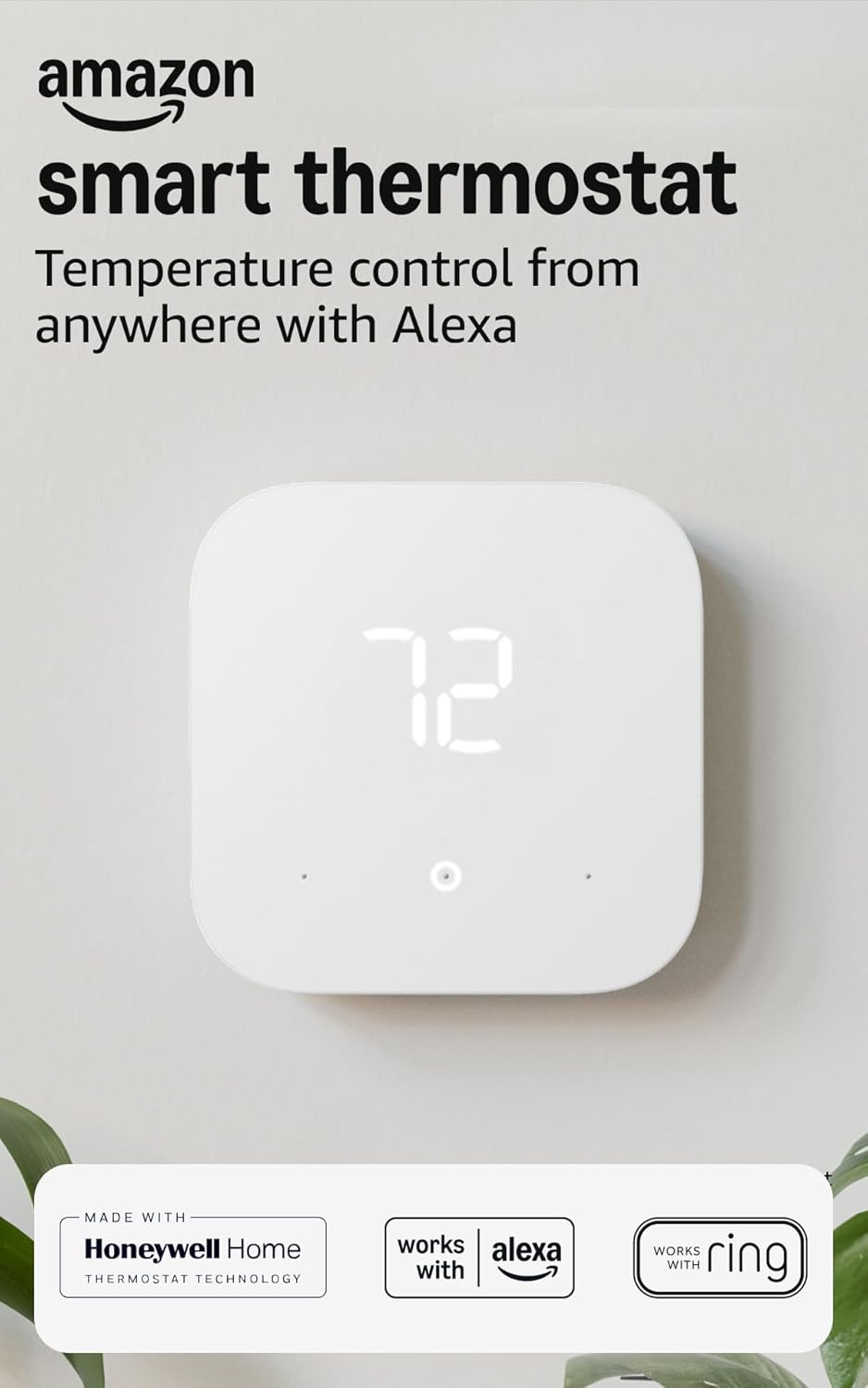
| Manufacturer | Amazon |
|---|---|
| Connectivity | Wi‑Fi |
| Requires | C‑wire |
| Works with | Alexa and Ring |
The Amazon Smart Thermostat is a simple, Alexa-centric device for controlling home heating and cooling from the Alexa app or voice. It installs on a standard C‑wire system and offers scheduled modes plus Alexa routines to switch between home, away, and sleep temperatures automatically; presence-based adjustments are possible when paired with compatible Alexa devices. The unit relies on Honeywell Home thermostat technology for core temperature sensing and basic control, and Amazon highlights potential utility rebates that can offset purchase cost. It is designed for DIY installation guided by the Alexa app and for people who want voice and app control rather than deep advanced HVAC tuning. Important limits are that it is optimized for Alexa ecosystems and lacks the richer HVAC diagnostics and wiring flexibility found in some premium professional thermostats, so installers may prefer a different model for complex systems. For typical homes that use Alexa, it provides straightforward energy-saving scheduling and remote access without a steep learning curve.
Best for: Buyers who want an easy-to-use, voice-first smart thermostat that integrates tightly with Alexa and prioritizes simple scheduling and remote control.
Less Ideal for: Homes without C‑wire power who cannot or will not add one, or owners who need advanced HVAC diagnostics and pro-level customization.
- Works with Alexa for voice control and routines
- App-based remote control and scheduling via the Alexa app
- Built on Honeywell Home thermostat technology for reliable temperature sensing
- Supports presence detection and Alexa+ features for automatic adjustments
- DIY installation guided in-app with customer support available
- Requires a C‑wire which may need an electrician for older homes
- Optimized for Alexa ecosystems and limited if you prefer other smart home platforms
- Does not expose advanced HVAC diagnostics or professional-level configuration options
Verdict: Choose this thermostat if you want a straightforward, Alexa-integrated smart thermostat that makes scheduling and remote control easy while aiming to reduce energy use.
Nuheat nVent AC0056 Thermostat

| Controller Type | Programmable Touchscreen Thermostat |
|---|---|
| Voltage | 120 volts, 240 volts |
| Display Type | touchscreen |
| Screen Size | 3.5 inches |
| Included Components | Floor Heat Sensor |
The Nuheat nVent AC0056 is a 7-day programmable touchscreen thermostat built specifically for electric radiant floor heating systems. It uses a 3.5-inch color touchscreen for direct control, includes a floor heat sensor, and supports both 120 V and 240 V systems so it fits most electric floor cable installations. Notable features include early-start scheduling that adapts power-on times based on recent temperature trends, energy use monitoring for tracking consumption, and built-in Class A GFCI protection that adds a layer of electrical safety. Setup assistance and diagnostic tests are accessible from the thermostat, which helps simplify commissioning and troubleshooting for DIYers and pros alike. Because it is battery powered with RF and Wi-Fi connectivity listed, it offers remote-capable control and simple programming without complex wiring. The main trade-offs are that its functionality is focused on floor heating rather than whole-home HVAC control and advanced smart-home integrations are not emphasized, so buyers should expect a dedicated, floor-heating-first controller rather than a full-featured HVAC hub.
Best for: Buyers who prioritize precise, floor-level heating control and safety—installers or homeowners building or upgrading electric radiant floors who want programmability and diagnostics tailored to underfloor systems.
Less Ideal for: Those looking for a central thermostat to manage forced-air HVAC systems or a broader smart-home hub with wide third-party integrations.
- Dual-voltage compatibility for 120 V and 240 V floor heating cables
- Built-in Class A GFCI protection for improved electrical safety
- 3.5-inch color touchscreen with 7-day programmability and early-start scheduling
- Includes floor heat sensor and diagnostic tests to simplify installation and verification
- Energy use monitoring to help track and reduce consumption
- Designed specifically for radiant floor heating so it does not replace whole-home HVAC thermostats
- Advanced smart-home or multi-system integration options are not clearly emphasized
Verdict: If you need a dedicated, safety-minded programmable thermostat for electric radiant floors, this Nuheat unit delivers straightforward control, diagnostics, and dual-voltage compatibility.
Honeywell Home X2P Programmable Thermostat

| Compatibility | Single-Stage 1 Heat/1 Cool |
|---|---|
| Scheduling | 5-2 day (also 7 day, 5-1-1, 1 week or non-programmable) |
| Power | 2 AA batteries |
| Display | Backlit LCD |
The Honeywell Home X2P is a straightforward programmable thermostat built for single-stage 1 heat/1 cool systems. It provides 5-2 day scheduling (with additional 7-day and other options available) and a large backlit LCD that makes daily adjustments easy to read and change. The unit runs on 2 AA batteries and supports features like change filter reminders, adjustable display settings, and an extended low-heat setpoint for winter protection. Installation is simplified with the UWP wall plate, and the control uses touchpad buttons for programming without a steep learning curve. It does not support electric baseboard heat and is optimized for conventional forced air or hot water systems, so compatibility checking is important before purchase. The thermostat offers practical energy-minded features and a clear user interface without smart-home complexity, so it fits buyers who want reliable scheduled control and simple maintenance reminders rather than remote app control or advanced integrations.
Best for: Buyers who want a dependable, no-frills programmable thermostat that simplifies scheduled temperature control and routine maintenance without needing smart-home connectivity.
Less Ideal for: Users who require remote app control, voice assistant integration, or compatibility with electric baseboard heating should consider other options.
- 5-2 day scheduling with multiple program options for tailored temperature control
- Large backlit LCD and clear font for easy daily use
- Change filter reminders and customizable display settings for simple maintenance
- Easy installation aided by the UWP wall plate
- Not compatible with electric baseboard heating systems
- Runs on 2 AA batteries and lacks Wi-Fi remote control or smart-home integrations
Verdict: Choose this thermostat when you want easy-to-use, reliable scheduled heating control and handy maintenance reminders without smart-home complexity.
Aowel AW701 Non-Programmable Thermostat

| Specific Uses For Product | Conventional Single-Stage Heating & Air Conditioning |
|---|---|
| Power Source | Battery Powered |
| Voltage | 24 volts_of_alternating_current |
| Display Type | LCD |
| Control Type | Button Control |
The Aowel AW701 is a simple wall-mounted thermostat built for single-stage gas, oil, or electric furnaces and central air conditioners. It provides basic temperature control with large blue backlit digits and an optional humidity display, making setpoint adjustments easy for anyone in the household. Installation is straightforward: it accepts standard 24V control wiring and usually runs on 2 AAA batteries without needing a common wire, and the universal sub-base fits over a junction box. Technician-adjustable features include separate heat and cool swing (cycle rate), temperature calibration, and a selectable 3-minute compressor delay to protect the system. Practical benefits are clear readout, easy button controls, and a low-battery indicator. Limitations are that it is non-programmable and not compatible with multistage, heat-pump, line-voltage baseboard, RV, or mini-split systems, so it only fits basic single-stage setups and lacks scheduling or smart home integration.
Best for: Buyers who want an inexpensive, no-frills replacement thermostat for a basic single-stage furnace or central AC and value simple installation and easy-to-read controls.
Less Ideal for: People who need programmable schedules, smart-home integration, or who have multistage or heat-pump HVAC systems should choose a different model.
- Designed for conventional 1 heat/1 cool systems so wiring and setup are simple
- Large blue backlit LCD and big buttons for easy reading and operation
- Runs on 2 AAA batteries and often does not require a C-wire for convenient installs
- Selectable compressor delay and adjustable heat/cool swing for basic system protection and tuning
- No programmable schedules or smart connectivity despite a listed connectivity protocol
- Not compatible with multistage, heat pump, line-voltage, RV, or mini-split systems
Verdict: Aowel AW701 is an affordable, easy-to-install thermostat that delivers clear, reliable manual temperature control for basic single-stage heating and cooling systems.
Honeywell TH1100DV1000 Thermostat

| Power Source | Battery Powered |
|---|---|
| Voltage | 230 volts |
| Display Type | Digital |
| Specific Uses For Product | Electric Baseboard Heater |
| Number of Batteries | 2 AAA batteries required. |
The Honeywell TH1100DV1000 is a simple, nonprogrammable digital thermostat built for electric baseboard heating. It shows ambient temperature continuously on a backlit 1.5-inch display and provides one-touch setpoint control with push-button operation, making daily adjustments fast and intuitive. It runs on two AAA batteries and mounts to the wall; the unit includes basic compressor protection and supports BACnet MS/TP connectivity for integration into building controls. Because it is heat-only and nonprogrammable, it is best used where straightforward, dependable temperature control is required rather than complex scheduling. Installation and operation are straightforward for homeowners or contractors replacing a basic thermostat, and the clear display is helpful in dimmer locations. Limitations to consider are the lack of scheduling or advanced energy-saving features and the modest 40 to 90°F set range, which keeps it focused on simple heating setups rather than zoned or multi-mode HVAC systems.
Best for: Buyers who want a reliable, easy-to-use replacement thermostat for an electric baseboard heating system and prioritize straightforward manual control over advanced features.
Less Ideal for: People who need programmable schedules, smart-home automation, or a thermostat that controls both heating and cooling functions should look elsewhere.
- Clear backlit digital display that shows ambient temperature at all times
- Simple push-button controls for quick, no-fuss temperature adjustments
- Designed specifically for electric baseboard heat-only systems
- Battery-powered operation avoids the need for a C-wire
- Supports BACnet MS/TP for building control integration
- Nonprogrammable so it cannot run schedules or automatic setbacks
- Limited to heating control only and not suitable for combined heat/cool systems
Verdict: A dependable, no-frills digital thermostat that delivers simple, accurate heat-only control for electric baseboard systems.
Google Nest Thermostat
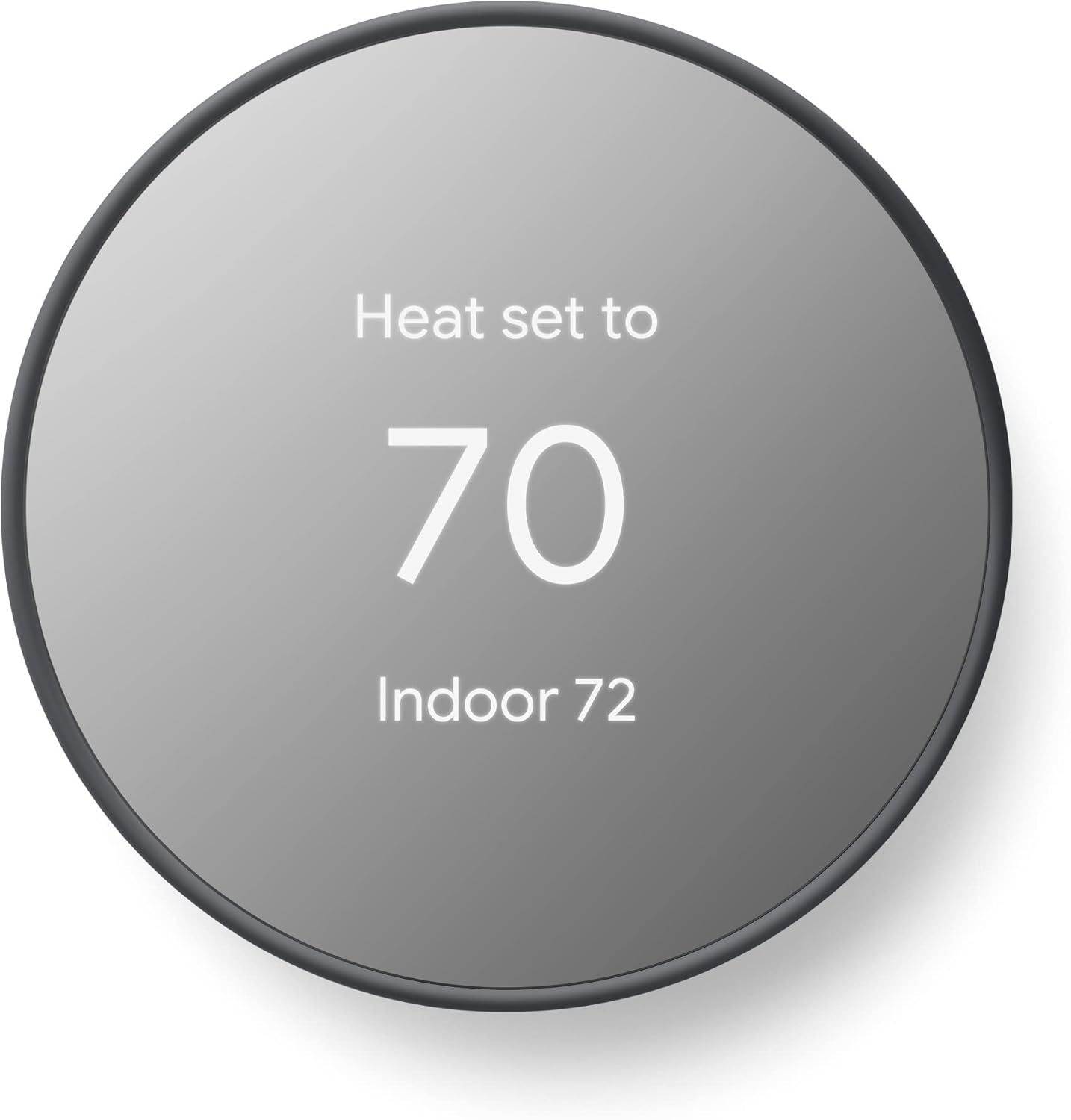
| Connectivity Technology | Bluetooth, Wi-Fi |
|---|---|
| Power Source | Battery Powered |
| Display Type | LCD |
| Screen Size | 2 inches |
| Number of Batteries | 2 A batteries required (included) |
The Google Nest Thermostat is a compact smart thermostat designed to replace a standard wall unit and give you app and voice control over home heating and cooling. It connects to 2.4 and 5 GHz Wi‑Fi and Bluetooth, lets you create schedules in the Google Home app, and can automatically set an Eco Temperature when it senses the house is empty. Setup is aimed at DIY installation and typically takes under 30 minutes using the step‑by‑step app instructions, and two A batteries are included so no additional power parts are required for many systems. Savings Finder and HVAC monitoring provide suggestions and alerts that can help you spot issues early and identify opportunities to save energy. Limitations include compatibility gaps with some high‑voltage or unusual HVAC systems and the occasional need for a C wire or power accessory for specific setups, and voice/control features require a working internet connection and compatible voice devices. The Nest works well as an affordable entry point to a connected home and pairs naturally with other Google smart devices.
Best for: Buyers who want a straightforward, app-driven smart thermostat that integrates with Google Home and provides energy-saving suggestions backed by broad user adoption and ecosystem support.
Less Ideal for: People with uncommon or high-voltage HVAC systems or those who need advanced HVAC diagnostics and controls beyond what a midrange smart thermostat provides.
- Wi‑Fi and Bluetooth connectivity for remote control and app scheduling.
- App-guided DIY installation typically completed in about 30 minutes.
- Automatic Eco Temperature and occupancy sensing to reduce energy use when away.
- HVAC monitoring and Savings Finder offer maintenance alerts and energy-saving suggestions.
- May require a C wire or power accessory for certain HVAC configurations.
- Not compatible with some high-voltage or nonstandard systems.
Verdict: A simple, app-first smart thermostat that adds remote and voice control plus energy-saving features for mainstream heating and cooling systems.
Riseem S3001 Nonprogrammable Thermostat

| Temperature control type | Conventional Single Stage Systems |
|---|---|
| Power source | 24VAC (with 2 AA battery backup) |
| Display type | LCD |
| Connectivity technology | Wired |
| Mounting type | Wall Mount |
The Riseem S3001 is a straightforward nonprogrammable wall thermostat designed for single-stage heating and cooling setups. It mounts to a universal sub-base and connects via standard 24VAC wiring or two AA batteries for backup, so it can run without a C-wire on most systems. The clear backlit LCD, push-button controls, and separate heat/cool swing setting make day-to-day temperature adjustments simple and reliable. Installation is aimed at DIYers and the large terminal blocks help speed wiring, but buyers should verify system compatibility first since multistage systems, heat pumps, mini-splits, and various high-voltage or hydronic setups are not supported. The unit reports +/-1°F accuracy and covers typical residential temperature ranges, which is adequate for stable comfort in single-zone homes. This thermostat keeps features and cost down by avoiding programming, Wi-Fi, or smart-home integration, so it is best when you want a low-complexity, dependable control rather than energy-optimizing schedules or remote access.
Best for: Buyers who want a risk-averse, no-frills thermostat that reliably controls a single heating and cooling zone without setup complexity or smart features.
Less Ideal for: Users who need programmable schedules, smart/remote control, or who have multistage or heat pump systems should choose a different thermostat.
- Simple, easy-to-read backlit LCD and intuitive push-button controls
- Dual power options (24VAC or 2 AA batteries) so a C-wire is not required in most installs
- Large terminal blocks and universal sub-base that simplify DIY installation
- Accurate temperature control to about +/-1°F for stable comfort
- Nonprogrammable so it cannot run schedules or remote control
- Not compatible with multistage systems, heat pumps, mini-splits, or high-voltage hydronic/electric baseboard systems
Verdict: Choose the Riseem S3001 when you want a simple, reliable factory-quality replacement thermostat for a single-stage home HVAC system.
Choosing the Right Heating Thermostat: Key Factors to Consider
Temperature Accuracy and Sensors
Accurate sensing determines how closely the thermostat maintains your target temperature. Small sensor errors can create noticeable swings, causing the furnace to run more often or leave rooms underheated.
Look for thermostats that advertise sensor precision and have placement options or remote sensors. If a thermostat allows offset calibration or has multiple sensing inputs, you can fine-tune performance for different rooms or tricky temperature gradients.
Compatibility With Your Heating System
Heating systems vary widely: single-stage furnaces, two-stage systems, boilers, heat-only electric systems, and systems that rely on specific relay or transformer wiring. Compatibility prevents installation headaches and ensures the thermostat can control all stages the system requires.
Verify the thermostat supports your wiring type and any required control signals. If your system uses a common wire for power, battery operation, or special relay connections, make sure the thermostat supports that configuration before you buy.
Power Options and Reliability
Thermostats may be powered by batteries, a common (C) wire, or by stealing power from the heating system. Power source affects reliability, display options, and whether features like Wi-Fi stay active.
Battery-powered units are easier to swap out but need periodic replacement. Thermostats that accept a common wire tend to be more stable for continuous connectivity. Consider how power choice impacts long-term upkeep and whether the unit stores settings during power interruptions.
Installation Complexity
Installation difficulty affects whether you can DIY or need professional help. Complexity depends on wiring differences, compatibility with legacy systems, and whether mounting requires additional adapters.
Clear wiring diagrams, removable terminal blocks, and straightforward mounting hardware make installation easier. If your system uses uncommon voltages or proprietary connectors, factor in the time and potential cost of professional installation.
Programming, Scheduling, and Automation
Good scheduling features let you match heating output to occupancy and daily routines, which reduces runtime and increases comfort. Options range from basic time-based schedules to adaptive learning that adjusts setpoints based on behavior.
Choose the level of automation that fits how you live. If you prefer set-and-forget convenience, look for adaptive or learning schedules. If you want direct control, pick thermostats with granular scheduling and easy manual overrides.
Remote Control and Integration
Remote access via a mobile app or local network can make temperature management convenient, enabling adjustments from outside the home or integration into a smart home routine.
Check whether the thermostat requires cloud services, supports local control, and what integrations are available. Consider privacy, how firmware updates are handled, and whether the unit works with other home systems or third-party automations you already use.
Types Of Heating Controls And When To Use Them
Different thermostat control methods suit different systems and lifestyles. Basic programmable thermostats use fixed schedules and are often sufficient for straightforward heating needs. Smart thermostats add remote access and adaptive scheduling for people who want lower hands-on maintenance and the convenience of app-based control. Mechanical or non-programmable models are still useful in rental units or where simple manual control is preferred.
- Programmable: Ideal for predictable routines and energy savings.
- Smart: Best for remote control, adaptive schedules, and integrations.
- Non-programmable: Simple manual control with minimal setup.
Installation Checklist For A Smooth Setup
Before you begin, turn off power to the heating system at the breaker or service switch. Photograph existing wiring at the thermostat to reference terminal labels. Confirm whether you have a common wire and note which terminals the current thermostat used. Gather basic tools: a small screwdriver, wire stripper, level, and mounting hardware. During installation, take care to match wire functions to terminals rather than color alone. Use the thermostat's wiring diagram and secure connections properly. After wiring, restore power and verify the thermostat can control heat cycles correctly before closing the wall plate.
- Cut power at the breaker before touching wires.
- Label or photograph existing wire connections.
- Verify C wire availability if the unit needs continuous power.
- Test system response after installation.
How Scheduling Impacts Comfort And Savings
Scheduling determines when the system runs and directly affects both comfort and energy consumption. Reducing temperature during predictable away periods can save energy, but large setbacks in homes with slow thermal response can lead to discomfort or longer warm-up times. Consider moderate setbacks and gradual temperature ramps to balance savings with comfort. Adaptive schedules can reduce the need for manual adjustments by learning how long your home takes to reach setpoints, reducing runtime while maintaining comfort. If you occupy the house irregularly, remote control or geofencing can provide more practical savings than fixed schedules.
- Moderate setbacks often yield the best comfort-to-savings ratio.
- Adaptive learning smooths transitions and minimizes user inputs.
- Remote overrides handle irregular occupancy effectively.
Maintenance Tips To Keep A Thermostat Performing Well
Keep the thermostat dust-free and avoid placing it near heat sources, direct sunlight, or drafts that skew readings. Replace batteries on a regular schedule if the unit relies on them and test backup memory functions after power interruptions. Periodically review your schedule and temperature setbacks to ensure they still match occupancy patterns. If you notice inconsistent temperature control, inspect wiring for loose connections and verify the heating equipment itself is functioning properly.
- Avoid installing near heat sources or direct sunlight.
- Change batteries annually if applicable.
- Check wiring and test system response if behavior changes.
How We Chose the Best Heating Thermostat
We prioritized thermostats that deliver reliable temperature control, broad system compatibility, and practical user control options. Our selection filters focused on verification of sensing accuracy, supported wiring and relay types for common heating systems, and the presence of programmable or adaptive scheduling that genuinely reduces runtime. We also assessed user interface clarity and remote-control capabilities to ensure people can manage comfort day to day. Excluded from consideration were controllers designed solely for industrial use, single-purpose baseboard-only devices without modern control features, and units lacking clear installation documentation. We favored thermostats with documented temperature accuracy, multi-stage support where relevant, and clear wiring diagrams. Ease of installation, available power options, and the quality of mobile or local controls were key decision dimensions. Finally, we checked for solid long-term reliability indicators such as durable materials and replaceable batteries or proven battery-backed memory.
Our full evaluation process is outlined in our review methodology.
FAQ
Can I install a new heating thermostat myself?
Often you can, if your existing wiring matches the new thermostat's requirements and you are comfortable turning off power and handling low-voltage wiring. Complex systems or unfamiliar wiring may require professional help.
Do smart thermostats save money on heating bills?
They can, particularly when you use scheduling, setbacks, or adaptive features that reduce runtime. Actual savings depend on your home's insulation, system efficiency, and how aggressively you set setbacks.
What if my system does not have a common wire?
Some thermostats run on batteries or use power-stealing techniques, but those options can limit connectivity or cause intermittent issues. If continuous power is needed, adding a common wire or using a compatible power adapter is a reliable solution.
How precise are thermostat temperature readings?
Precision varies by model and sensor placement. Many modern units offer accuracy within a degree Fahrenheit when mounted in a suitable location. Remote or multiple sensors improve control in homes with uneven heating.
Will a new thermostat make my heating system more efficient?
A thermostat cannot change the inherent efficiency of the heating equipment, but better control and smarter scheduling can reduce unnecessary runtime and improve perceived efficiency.
Final Verdict
Prioritize compatibility with your heating system, sensor accuracy, and the right level of scheduling or automation for your lifestyle. If you value hands-off comfort and remote access, favor thermostats with reliable connectivity and adaptive schedules. For straightforward, durable control choose simpler programmable or manual units. Balance ease of installation and power requirements against the control features you need. Focus on how a thermostat will interact with your heating system and daily routines to pick the option that delivers consistent warmth and sensible energy use.