
Note: This article contains affiliate links. If you click on these links and make a purchase, we may earn a small commission at no extra cost to you. This helps support our research and content. Read our full affiliate disclosure here.
Choosing the right energy-saving thermostat matters because it directly affects your home comfort, monthly energy consumption, and the convenience of temperature control. The best thermostats in this category help reduce wasted heating and cooling by improving scheduling, learning household patterns, or offering more precise temperature sensing. This guide shortlists the top options for homeowners focused on efficiency and usability. We evaluated thermostats across practical performance and user-facing features so you can find the model that fits your priorities. Read on for the key considerations that shaped our selections and a breakdown of the products that made the cut.
Top Picks at a Glance
| Best Overall The best all-around choice for most situations | Sensi Smart Thermostat ST55 |  |
| Best Quality Built to a higher standard if you want something more solid | ecobee Smart Thermostat Premium |  |
| Best Value The sweet spot between price and what you get | Sensi Lite ST25 | 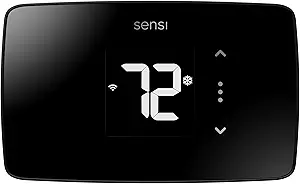 |
| Best Budget The cheapest option that still gets the job done reliably | Miuputake STN601 Nonprogrammable Thermostat |  |
| Top Rated A top-rated pick with lots of positive feedback | Hualans Non-programmable Thermostat |  |
| Most Popular A crowd favorite that many people choose with confidence | Amazon Smart Thermostat |  |
| Best Seller A high-volume bestseller chosen again and again | Google Nest Thermostat |  |
Sensi Smart Thermostat ST55

| Connectivity Technology | Wi-Fi |
|---|---|
| Controller Type | Amazon Alexa, Apple HomeKit, Google Assistant, SmartThings, Vera |
| Temperature Control Type | Programmable, Smart/Remote |
| Power Source | Corded Electric |
| Number of Batteries | 2 AA batteries required. (included) |
The Sensi Smart Thermostat ST55 is a wall‑mounted, Wi‑Fi programmable thermostat that replaces a traditional control and adds remote app control, scheduling, and energy reports aimed at reducing HVAC consumption. It pairs with Alexa, Google Assistant, Apple HomeKit and other platforms, and offers basic touch and button controls on a compact LED display. The unit is designed for easy DIY install with included mounting hardware, wire stickers, and step‑by‑step app guidance, and it can operate with or without a common wire in many homes. Notable features include energy usage reports, smart alerts, and a filter indicator that help with routine maintenance and efficiency. The interface is straightforward but not heavily featured compared with larger touchscreen competitors, so users looking for advanced on‑device controls may find it basic. For buyers focused on saving energy through scheduling, remote access, and simple usage feedback, the Sensi delivers reliable performance and clear privacy protections without a steep learning curve.
Best for: Buyers who want a straightforward, privacy‑focused smart thermostat that emphasizes energy savings and easy DIY setup rather than advanced on‑device controls.
Less Ideal for: People seeking a feature‑rich touchscreen thermostat with extensive local controls or those who prioritize an all‑in‑one luxury interface over simple, efficient operation.
- Energy Star certification and built‑in usage reports to help reduce HVAC energy use
- Works with major voice assistants and smart home platforms for remote control
- Easy DIY installation with mounting hardware, wire labels, and guided app setup
- Includes smart alerts and filter reminders to support maintenance and efficiency
- Simple LED display and button controls offer fewer on‑device features than touchscreen rivals
- Requires 2 AA batteries for backup which may need periodic replacement
Verdict: Choose the Sensi ST55 if you want an easy‑to‑install, Energy Star certified smart thermostat that delivers remote scheduling and usage reporting to cut HVAC energy use.
ecobee Smart Thermostat Premium

| Connectivity Protocol | Wi-Fi |
|---|---|
| Controller Type | Amazon Alexa, Android, Apple HomeKit, Google Assistant, iOS |
| Power Source | Battery Powered |
| Voltage | 24 volts |
| Display Type | LCD |
The ecobee Smart Thermostat Premium is a high-end smart thermostat designed to cut heating and cooling waste while giving you granular control over comfort. It installs on compatible 24VAC HVAC systems and includes a SmartSensor to detect and correct hot or cold spots, plus a Power Extender Kit for homes without a C-wire. The unit has a large LCD, metal trim, built-in air quality monitoring, radar occupancy sensing, and live view integration with ecobee doorbells, which together enable automated adjustments and useful alerts. Voice control is native via a choice of Siri or Alexa and it also works with Google Assistant and HomeKit for broader smart home setups. Practical benefits include targeted room comfort, filter-change reminders, and energy-saving schedules that ecobee says can reduce annual HVAC costs. Limitations to keep in mind are the need to confirm HVAC compatibility before buying and that some advanced features require an Apple home hub or additional ecobee accessories to unlock their full potential.
Best for: Buyers focused on maximizing seasonal energy savings and precise comfort control who want advanced sensors, voice control, and smart-home integrations to tune HVAC performance.
Less Ideal for: People with incompatible or line-voltage HVAC systems, or buyers who prefer a minimal, no-frills thermostat without networked features and sensors.
- Built-in air quality monitor provides alerts and filter reminders
- Included SmartSensor helps manage hot and cold spots for targeted comfort
- Native voice assistant support (Siri or Alexa) plus compatibility with Google Assistant and HomeKit
- Radar occupancy sensing improves automated adjustments and security-aware features
- Power Extender Kit included to simplify installation on systems without a C-wire
- Requires checking HVAC compatibility because some high-voltage and specialty systems are not supported
- Certain features need an Apple home hub or additional ecobee devices to function fully
Verdict: Choose the ecobee Smart Thermostat Premium if you want a feature-packed, sensor-driven thermostat that actively reduces HVAC energy use while giving precise, voice-enabled control.
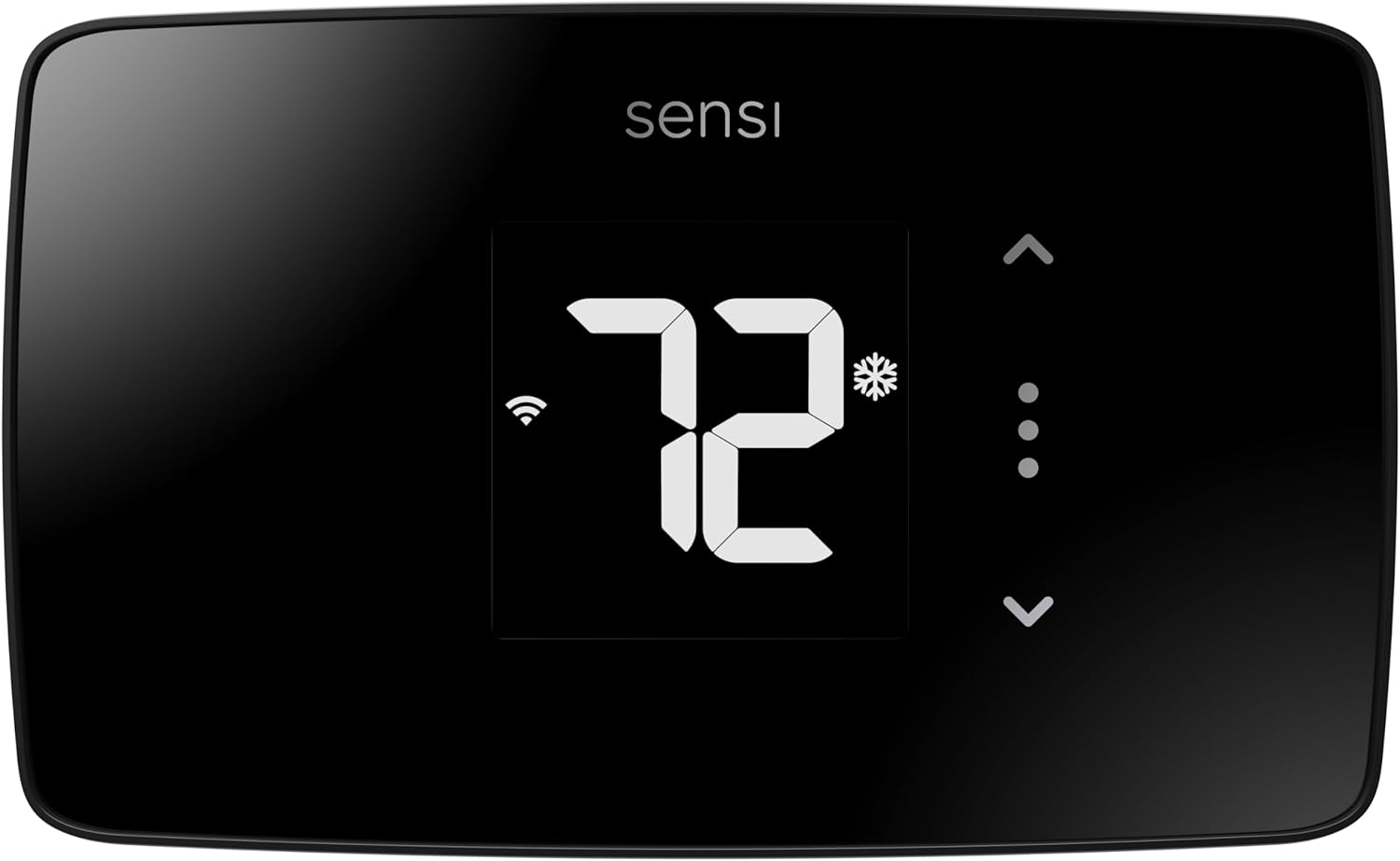
Sensi Lite ST25
| Connectivity Technology | Wi-Fi |
|---|---|
| Controller Type | Amazon Alexa, Google Assistant, Hand Control, SmartThings |
| Power Source | Battery or C-wire |
| Display Type | LCD |
| Number of Batteries | 2 AAA (included) |
The Sensi Lite ST25 is a pared-down smart thermostat that makes it simple to control home HVAC from your phone, voice assistant, or the unit itself. It installs quickly with a built-in level and step-by-step guide, and works without a common wire on most systems while still supporting C-wire setups when needed. The unit connects over 2.4 GHz Wi‑Fi, pairs with Alexa, Google Assistant and SmartThings, and uses the Sensi mobile app for schedules, geofencing and usage reports designed to cut energy use. The LCD provides basic on-unit feedback and two included AAA batteries let it run immediately out of the box. Because it focuses on core features rather than advanced learning or multi-stage system controls, it is straightforward to set up and operate but lacks some high-end automation found on pricier models. For buyers prioritizing easy installation, reliable remote control, and Energy Star certified savings, the Sensi Lite delivers an efficient, no-frills smart thermostat experience.
Best for: Buyers who want an easy-to-install, reliable smart thermostat that provides remote control and basic energy-saving features without complexity.
Less Ideal for: Users seeking an adaptive learning thermostat or advanced multi-stage climate control and customization should consider higher-end models.
- Simple DIY installation with built-in level and clear instructions
- Works with Alexa, Google Assistant and SmartThings for voice control
- Energy Star certified with scheduling, geofencing and usage reports to reduce HVAC energy use
- Operates on 2.4 GHz Wi‑Fi and includes batteries for immediate setup
- Lacks advanced learning algorithms and some multi-stage HVAC controls available on higher-end thermostats
- Limited on-screen display and fewer customization options than premium models
Verdict: A straightforward, Energy Star certified smart thermostat that saves energy through easy scheduling and remote control while remaining simple to install and use.
Miuputake STN601 Nonprogrammable Thermostat

| Controller Type | Push Button |
|---|---|
| Temperature Control Type | Manual |
| Power Source | 24VAC or 2 AAA batteries |
| Display Type | LCD |
The Miuputake STN601 is a straightforward digital thermostat designed for single-stage heating and cooling systems and basic energy-conscious use. It mounts to a standard wall and offers a clear backlit LCD, push-button controls, and a universal sub-base that simplifies DIY installation. The unit supports 24VAC power or two AAA batteries so it can work without a common wire on many systems, and it includes adjustable temperature swing and compressor delay protection to reduce short cycling and save energy. Setup is fast thanks to large terminal blocks and a front-load battery compartment, and the thermostat also lets you switch between Celsius and Fahrenheit and calibrate the displayed temperature. Limitations include its nonprogrammable nature, so it cannot automate setback schedules, and it is not compatible with heat pump systems that need auxiliary/emergency heat or with line-voltage and mini-split systems. For straightforward replacements where schedule programming is not required, it delivers a low-cost, energy-aware control option.
Best for: Buyers looking for an inexpensive, no-frills thermostat replacement who want straightforward manual control and some basic energy-saving features without scheduling.
Less Ideal for: People who need programmable schedules, smart/Wi-Fi controls, or who have heat pump systems with auxiliary/emergency heat or non-24VAC systems.
- Wide compatibility with many forced-air and heat-only systems using 24VAC or battery power
- Backlit LCD and simple push-button controls make daily use and setup easy
- Adjustable temperature differential and compressor delay protection help reduce short cycling
- Universal sub-base and large terminal blocks enable quick DIY installation
- Nonprogrammable design cannot automate temperature setbacks for additional savings
- Not compatible with systems requiring auxiliary/emergency heat, line-voltage, or mini-split setups
Verdict: A budget-friendly, easy-to-install nonprogrammable thermostat that offers simple manual control plus a few energy-saving protections for basic single-stage systems.
Hualans Non-programmable Thermostat

| Controller Type | Digital, Non-programmable |
|---|---|
| Power Source | Battery Powered |
| Number of Batteries | 2 AA batteries required. |
| Display Type | Digital Lcd |
| Wattage | 3 watts |
This Hualans non-programmable thermostat is built to do one job reliably: keep a home at a steady temperature without apps or network hassles. It supports 1 heat/1 cool conventional systems and heat pumps and offers a clear backlit LCD with ±1°F NTC sensing for accurate room-temperature control. You can power it with two AA batteries for a fully wireless install or hardwire to 24VAC and keep batteries as backup, and the installer-friendly wiring labels and included wall plate make a DIY swap straightforward. The control scheme is intentionally minimal — slide switches for heat/off/cool, a couple of buttons, and no scheduling — which reduces points of failure and makes day-to-day operation foolproof. For buyers focused on energy savings, holding a steady setpoint and avoiding complex programming can reduce HVAC cycling, but this model does not include learning, adaptive recovery, or remote setback features that smarter thermostats offer. If you want a low-maintenance, accurate thermostat that lasts without relying on cloud services, this model delivers.
Best for: Buyers who prioritize a dependable, low-maintenance thermostat that delivers accurate temperature control without apps, cloud services, or ongoing configuration.
Less Ideal for: People who want automated scheduling, remote adjustments, or smart-home integrations should choose a programmable or Wi-Fi model instead.
- Works with 1H/1C and heat pump systems using a full 9-terminal connection
- ±1°F accuracy with a clear backlit LCD for easy, precise temperature reading
- Can run on 2 AA batteries or be hardwired to 24VAC with battery backup
- Simple controls and labeled terminals make DIY installation under 30 minutes
- No programmable schedules, learning functions, or remote control capability
- Lacks Wi-Fi and smart features for automated energy optimization
Verdict: Choose this thermostat if you want an accurate, no-frills, battery-backup unit that reliably controls single-stage and heat pump systems without Wi-Fi or apps.
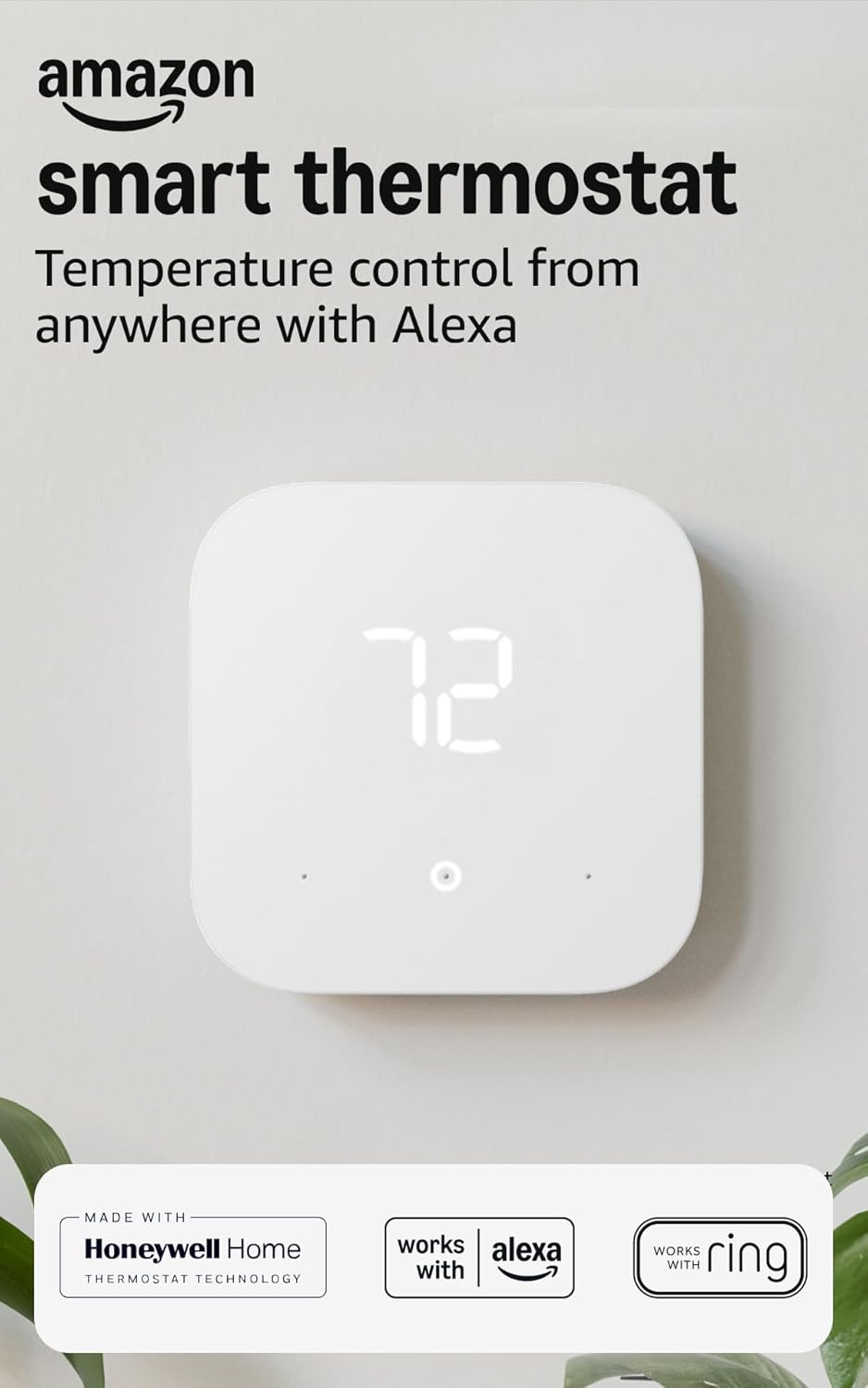
Amazon Smart Thermostat
| ASIN | B08J4C8871 |
|---|---|
| Brand | Amazon |
| Requires | C-wire |
| Tech | Honeywell Home thermostat technology |
The Amazon Smart Thermostat is a straightforward smart thermostat built to pair tightly with Alexa for automated schedules and remote temperature control. It supports Alexa routines, presence-based adjustments with compatible Alexa devices, and standard home/away/sleep scheduling through the Alexa app, making it easy to swap in for a conventional thermostat if you have a C-wire. The unit uses Honeywell Home thermostat technology, which gives it a familiar, reliable control core, and Amazon highlights potential energy savings and rebate information after purchase. Installation is aimed at DIYers and guided step-by-step in the app, though a C-wire requirement means some homes may need a wiring update or professional help. There is no indication of advanced learning algorithms beyond Alexa routines, so users looking for adaptive learning or highly granular HVAC diagnostics may find it basic. For buyers who want a low-friction, Alexa-first thermostat that helps reduce energy use with scheduling and remote control, this is a solid, no-frills choice.
Best for: Buyers who prioritize an Alexa-first, easy-to-install smart thermostat that delivers reliable scheduling and remote control and who want a straightforward path to reduce home energy use.
Less Ideal for: People who want a thermostat with advanced self-learning temperature optimization or deep HVAC diagnostics should consider models focused on adaptive learning and analytics instead.
- Tight Alexa integration for voice control, routines, and remote adjustments
- Guided DIY installation via the Alexa app
- Energy-saving focus with scheduling and eligibility information for utility rebates
- Built with Honeywell Home thermostat technology for proven control reliability
- Requires a C-wire, which may need rewiring in older homes
- Lacks built-in adaptive learning features found in some premium smart thermostats
Verdict: Choose this thermostat if you want an affordable, Alexa-centric smart thermostat that makes scheduling and remote control simple while helping lower energy use.
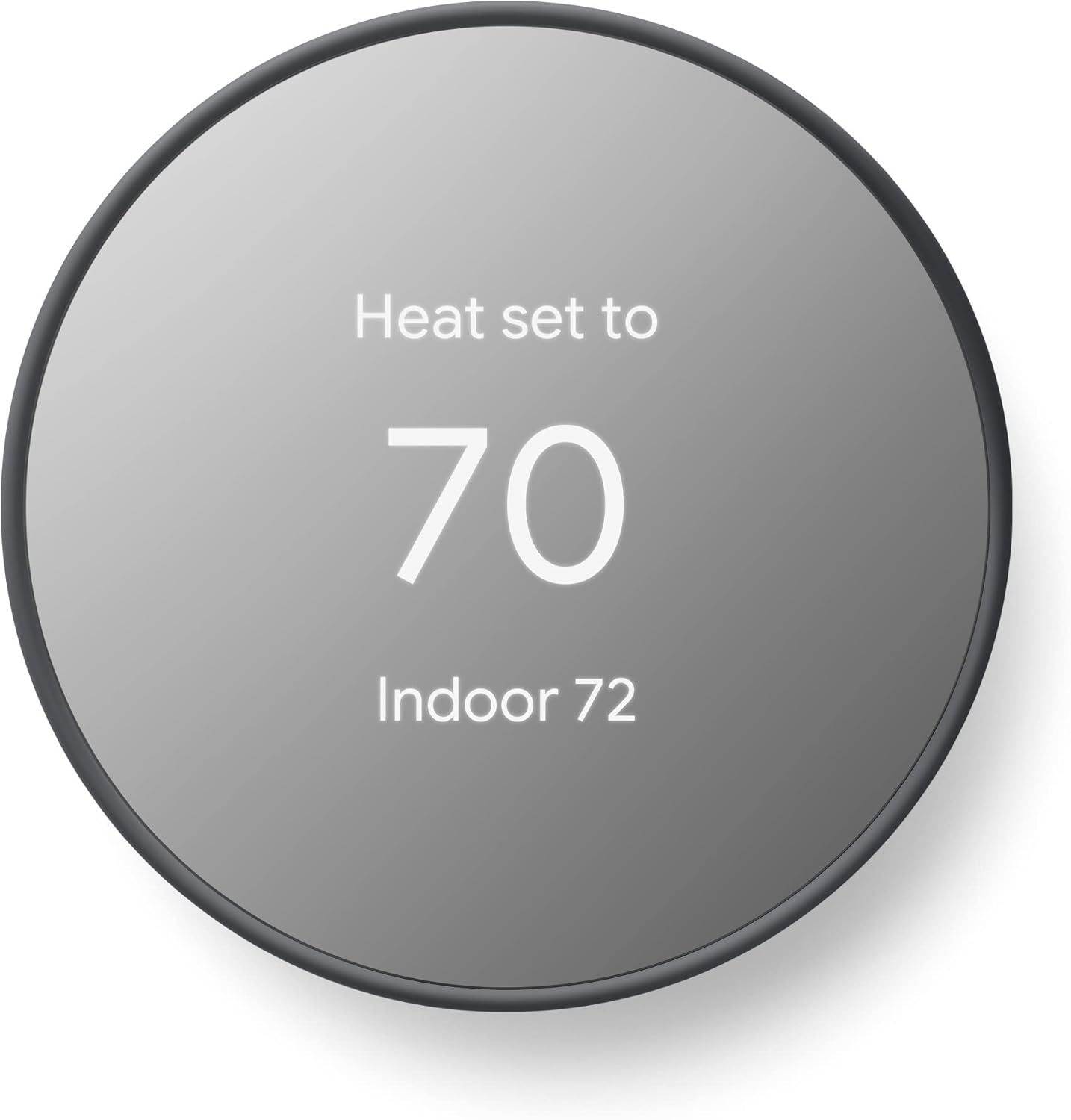
Google Nest Thermostat
| Connectivity Technology | Bluetooth, Wi-Fi |
|---|---|
| Power Source | Battery Powered |
| Display Type | LCD |
| Control Type | Remote Control, Voice Control |
| Number of Batteries | 2 A batteries required (included) |
The Google Nest Thermostat is a compact, user-friendly smart thermostat designed to replace a basic wall thermostat and reduce energy use. It pairs with the Google Home app for remote control and schedule creation, and supports voice commands via Google Assistant and other Matter-certified assistants. Installation is intended to be DIY-friendly and typically takes less than 30 minutes for compatible systems, and the unit can run without a C wire in many homes. On the usability side you get a simple 2-inch LCD and a side touch bar for local adjustments, plus app features like Savings Finder and Eco Temperatures that suggest or automatically set energy-saving changes. The Nest also monitors HVAC performance and can send alerts if it detects potential issues. Practical limits include the need for a C wire or power accessory on some system types and reliance on Wi‑Fi for remote features and voice control, and it may not provide diagnostics as a substitute for a professional HVAC inspection.
Best for: Buyers who want an easy-to-use smart thermostat that helps cut energy use with automatic savings features and phone control, and who prefer a product backed by a major smart-home ecosystem.
Less Ideal for: Homes with unsupported or high-voltage HVAC systems or buyers who need advanced professional diagnostics and warranty-backed HVAC servicing features.
- Wi‑Fi and Bluetooth connectivity for remote control through the Google Home app
- Savings Finder and Eco Temperature features to suggest or automate energy savings
- Simple DIY installation designed for most homes and compatible with many HVAC systems
- Voice control support with Google Assistant and Matter-certified assistants
- Battery powered with included A batteries for immediate setup
- Some HVAC systems require a C wire or additional power accessory to operate
- Remote features and voice control require working internet and Wi‑Fi
Verdict: Choose the Nest Thermostat if you want a straightforward smart thermostat that makes it easy to save energy with app control and automated scheduling.
Choosing the Right Energy-Saving Thermostat: Key Factors to Consider
Temperature Sensing and Accuracy
Accurate temperature sensing determines how closely your thermostat maintains the setpoint. A thermostat that reads ambient temperature precisely avoids short cycling the HVAC system and reduces overshoot, which wastes energy.
Consider whether the thermostat uses multiple sensors, external remote sensors, or a single built-in sensor. Placement also matters: sensors near drafts, direct sunlight, or appliances can report misleading readings. Better sensing leads to fewer corrective cycles and steadier indoor temperatures, which improves both comfort and energy efficiency.
Scheduling and Automation Flexibility
Scheduling features let you program temperature changes for daily and weekly routines so the HVAC system runs less when you are asleep or away. More flexible scheduling options translate directly into more hours where heating or cooling is minimized without sacrificing comfort during occupied periods.
Automation and learning modes add convenience by reducing manual input, but they should be transparent and adjustable. Look for thermostats that offer straightforward time-of-day schedules, geofencing or presence-based triggers, and overrides that are easy to apply when plans change.
HVAC Compatibility and Wiring
Thermostat compatibility with your heating and cooling system is essential. Different systems require specific control circuits and wiring terminals. A mismatch can lead to installation headaches, limited functionality, or the need for an adapter.
Check whether the thermostat supports multi-stage systems, heat pumps, or common wire (C-wire) requirements. Some energy-saving thermostats can work without a C-wire via power stealing or adapters, but that can affect reliability. Ensuring proper electrical compatibility reduces the risk of professional service calls and ensures the thermostat can fully control your system for maximum savings.
Connectivity and Remote Control
Reliable connectivity enables remote temperature adjustments, scheduling updates, and access to energy reports. Thermostats that maintain stable Wi-Fi connections and offer responsive apps make it easier to fine-tune settings that affect energy use.
Also consider whether the thermostat supports local control and what happens during internet outages. Secure, well-designed remote interfaces reduce the time you spend managing your system and increase the likelihood you will take the energy-saving actions the device enables.
Energy Reporting and Insights
Clear energy reports and usage insights help you understand when your HVAC system is consuming the most energy and whether schedules are effective. Actionable reporting highlights wasted runtime, provides trend comparisons, and suggests adjustments to save energy.
Thermostats that present simple, regular summaries or provide weekly reports make it easier to measure savings over time. Look for units that translate HVAC runtime into understandable energy metrics or estimated cost impacts so you can make informed decisions about settings and behavior.
Installation Basics and Compatibility Checklist
Before buying, inventory your existing thermostat wiring and note which terminals are present. Common terminals include R, Rc, Rh, W, Y, G, and sometimes a C-wire for continuous power. Knowing what you have upfront avoids surprises during installation and ensures the new thermostat will support all system functions.
- Identify whether your system is a single-stage furnace, heat pump, or multi-stage setup.
- Confirm presence of a common wire if the thermostat requires constant power.
- Take a photo of the current wiring and terminal labels to match during installation.
How Scheduling Modes Affect Real-World Savings
Different scheduling approaches suit different lifestyles. Fixed schedules are best when occupancy is predictable; adaptive or learning thermostats can capture savings for households with irregular patterns. Geofencing can automatically lower or raise temperature when everyone leaves or returns, but it relies on users keeping location services enabled.
- Use setback periods for predictable absences to reduce runtime.
- Enable temporary holds or vacation modes for extended absences.
- Test learning modes for a few weeks and confirm that any automatic schedules align with personal comfort preferences.
Sensor Placement and Zoning Considerations
A single thermostat controls the temperature where it is installed, which may not reflect conditions in other rooms. Remote sensors or multi-zone control can provide a more accurate picture of whole-house comfort and prevent one area from being over-conditioned while others are uncomfortable.
- Place the primary thermostat on an interior wall away from heat sources or direct sunlight.
- Consider remote sensors for bedrooms or upstairs zones that typically run warmer or cooler.
- For homes with persistent temperature imbalances, consult options that integrate with zoning systems.
Power Options: C-Wire, Batteries, and Power Stealing
Thermostats need reliable power. Some models require a C-wire for continuous power, while others run on batteries or use power stealing from the HVAC control circuits. Each approach affects stability, feature availability, and the need for occasional maintenance like battery changes.
- Choose thermostats with clear guidance about C-wire requirements to avoid intermittent connectivity.
- If relying on batteries, expect periodic replacements and reduced remote features when power is low.
- Avoid setups that use power stealing in sensitive control systems unless the manufacturer explicitly supports your HVAC type.
Data Privacy and Local Control Options
Connected thermostats collect usage data and may store settings or logs in the cloud. If privacy is a concern, look for devices that offer local control modes or clear data retention policies. Secure account protection and two-factor authentication can limit unauthorized access.
- Review the connectivity architecture to see if the thermostat can run basic schedules without cloud access.
- Choose strong passwords and enable available account security features.
- Consider vendor transparency around data retention and what usage metrics are shared.
How We Chose the Best Energy-Saving Thermostat
We evaluated candidates based on measurable, homeowner-focused criteria that matter for long-term energy savings and day-to-day usability. Primary filters included temperature sensing accuracy and scheduling flexibility because precise control and smart schedules are the most direct ways thermostats reduce runtime for HVAC systems. We also prioritized compatibility with common HVAC control systems to ensure units can be installed and will operate as expected in typical setups. Connectivity and remote control were assessed for reliability and security to reflect how often people use apps and voice assistants to adjust settings away from home. Energy reporting and learning features were considered for how transparently and effectively they help homeowners identify savings opportunities. Installation complexity and user interface were included to favor designs that most homeowners can set up and manage without professional help. We excluded units that lacked verifiable temperature accuracy data, had no proven scheduling options, or required proprietary HVAC wiring adapters that limit compatibility. The final list prefers thermostats that demonstrate consistent control, straightforward setup, and clear energy-saving features.
Our full evaluation process is outlined in our review methodology.
FAQ
Will an energy-saving thermostat work with my existing heating and cooling system?
Often it will, but compatibility depends on your specific HVAC configuration and wiring. Verify the thermostat supports your system type and terminals before purchasing; some setups require a common wire or an adapter.
How much energy can a smart thermostat realistically save?
Savings vary widely based on behavior and climate. Typical reductions come from better scheduling and setback periods rather than a single feature. Expect the most gains when automated schedules reduce HVAC runtime during predictable unoccupied times.
Do I need a professional to install an energy-saving thermostat?
Many homeowners can install a compatible thermostat using the existing wiring, photos, and manufacturer instructions. However, professional installation is recommended if your system wiring is unfamiliar, if adapters are needed, or if you have a complex multi-stage or zoned HVAC setup.
Are remote sensors necessary for accurate control?
Remote sensors are helpful when your home has temperature variation between rooms. They provide more representative readings for occupied areas and can prevent one room from being over-conditioned to satisfy the thermostat location.
What happens to schedules during internet outages?
Many thermostats retain local schedules and will continue to run the programmed temperature changes without internet access. Cloud-only features, remote control, and some energy reporting functions may be unavailable until connectivity is restored.
Final Verdict
Prioritize thermostats that offer accurate sensing, flexible scheduling, and reliable compatibility with your HVAC system to maximize energy savings without sacrificing comfort. Consider whether remote sensors or stronger reporting will benefit your household and ensure the power requirements match your wiring to avoid installation issues. Balancing ease of use with features that encourage consistent, energy-aware behavior yields the best long-term savings. Use the evaluation criteria above to choose a thermostat that fits your home and routine so you can confidently reduce consumption while keeping living spaces comfortable.