
Note: This article contains affiliate links. If you click on these links and make a purchase, we may earn a small commission at no extra cost to you. This helps support our research and content. Read our full affiliate disclosure here.
If you manage a busy office, department, or shared workspace, a heavy-duty paper shredder makes routine secure disposal faster and less disruptive. The right machine reduces downtime from jams, handles frequent long runs, and protects sensitive information without constant supervision. This guide presents five shortlisted heavy-duty paper shredders chosen for sustained performance, capacity, and safety features that suit commercial and high-volume environments. We evaluate continuous run time, sheet-per-pass capacity, bin size, and anti-jam reliability to help you pick a model that matches your workflow. Read on for the criteria we used and practical guidance for fitting a heavy-duty unit into your office setup.
Top Picks at a Glance
| Best Overall The best all-around choice for most situations | Amazon Basics Autofeed Micro-Cut Shredder |  |
| Best Quality Built to a higher standard if you want something more solid | Fellowes Powershred 225Ci |  |
| Top Rated A top-rated pick with lots of positive feedback | Aurora AU1210MA Micro-Cut Shredder |  |
| Most Popular A crowd favorite that many people choose with confidence | Bonsaii C149-C 18-Sheet Shredder |  |
| Best Seller A high-volume bestseller chosen again and again | Amazon Basics Auto Feed Cross-Cut Shredder |  |
Amazon Basics Autofeed Micro-Cut Shredder

| Cut Type | Micro Cut |
|---|---|
| Capacity | 8.5 gallons |
| Standard Sheet Capacity | 150 |
| Power Source | Corded Electric |
| Operation Mode | Automatic |
The Amazon Basics Autofeed Micro-Cut Shredder is designed for heavy-duty home or small-office shredding where security and throughput matter. It uses micro-cut blades to turn papers into very small pieces that meet P-4 security standards, and an autofeed tray can take up to 150 sheets at once for hands-off operation while a separate manual slot accepts up to 10 sheets. The unit includes anti-jam auto-reverse, LED status indicators for common faults, and an energy-saving sleep mode; casters and a pull-out 8.5-gallon bin make it easy to move and empty. Thermal protection and duty-cycle limits (60 minutes on/45 minutes off in autofeed mode) help protect the motor during sustained use. Trade-offs are its substantial physical footprint and weight compared with compact shredders, and the duty cycle means truly continuous 24/7 operation is not supported. For busy users who need secure, high-volume shredding the machine delivers strong performance; casual users may find it larger and more than required.
Best for: Buyers who need secure, high-volume shredding for a small office or busy home workspace and prioritize automatic batch feeding and security over compact size.
Less Ideal for: Those who only shred occasionally or need a lightweight, portable personal shredder should consider smaller, simpler models instead.
- Micro-cut P-4 security shreds documents into very small pieces for sensitive paperwork
- Autofeed tray handles up to 150 sheets for unattended high-volume shredding
- Long run time with 60-minute continuous operation in autofeed mode for batch jobs
- Anti-jam auto-reverse and clear LED indicators simplify operation and troubleshooting
- Pull-out 8.5-gallon bin and casters make emptying and repositioning easy
- Duty cycle requires cool-down periods, limiting uninterrupted continuous use
- Large and heavy compared with compact personal shredders
Verdict: Choose this shredder if you need high-security micro-cut destruction and large autofeed capacity for frequent, high-volume document disposal.
Fellowes Powershred 225Ci

| Cut Type | Cross Cut |
|---|---|
| Capacity | 16 gallons |
| Standard Sheet Capacity | 20 |
| Power Source | Corded Electric |
| Operation Mode | Automatic |
The Fellowes Powershred 225Ci is a heavy-duty cross-cut shredder built for busy offices that need reliable, continuous shredding. It processes up to 22 sheets per pass into small 5/32" x 1-1/2" particles (P-4 security), and will also handle staples, credit cards, paper clips, and CDs/DVDs. The continuous-duty motor and 100% Jam-Proof system with Auto Reverse minimize interruptions during large jobs, while SafeSense stops the cutter if hands touch the entry for added safety. Practical touches include a 16-gallon pull-out bin with an LED bin-full indicator, quiet operation for shared workspaces, and an energy savings system to reduce power draw when idle. The unit is heavy and intended as a stationary office machine rather than a portable personal shredder, and its size means it needs dedicated floor space and occasional maintenance like oiling and emptying the large bin. For teams that run frequent, intensive shredding sessions, the 225Ci delivers high throughput and robust durability, but smaller offices with infrequent use may find it more capacity than they need.
Best for: Buyers who prioritize high shredding performance and uptime for frequent, large-volume document disposal in shared workspaces or small offices.
Less Ideal for: Individuals or small home offices with occasional shredding needs or limited floor space should consider smaller, lighter models instead.
- High throughput shredding up to 22 sheets per pass for fast bulk processing
- Cross-cut P-4 security producing small particles suitable for confidential documents
- 100% Jam-Proof system with Auto Reverse reduces stoppages and clears jams automatically
- Continuous-duty motor supports non-stop shredding for heavy workloads
- Large 16-gallon pull-out bin with LED indicator minimizes trips to empty waste
- Heavy, floor-standing unit that requires dedicated space and is not easily moved
- Designed for sustained office use so it is overkill for light home shredding needs
Verdict: Choose the 225Ci when you need a rugged, high-throughput commercial shredder that keeps large shredding jobs moving without frequent jams.
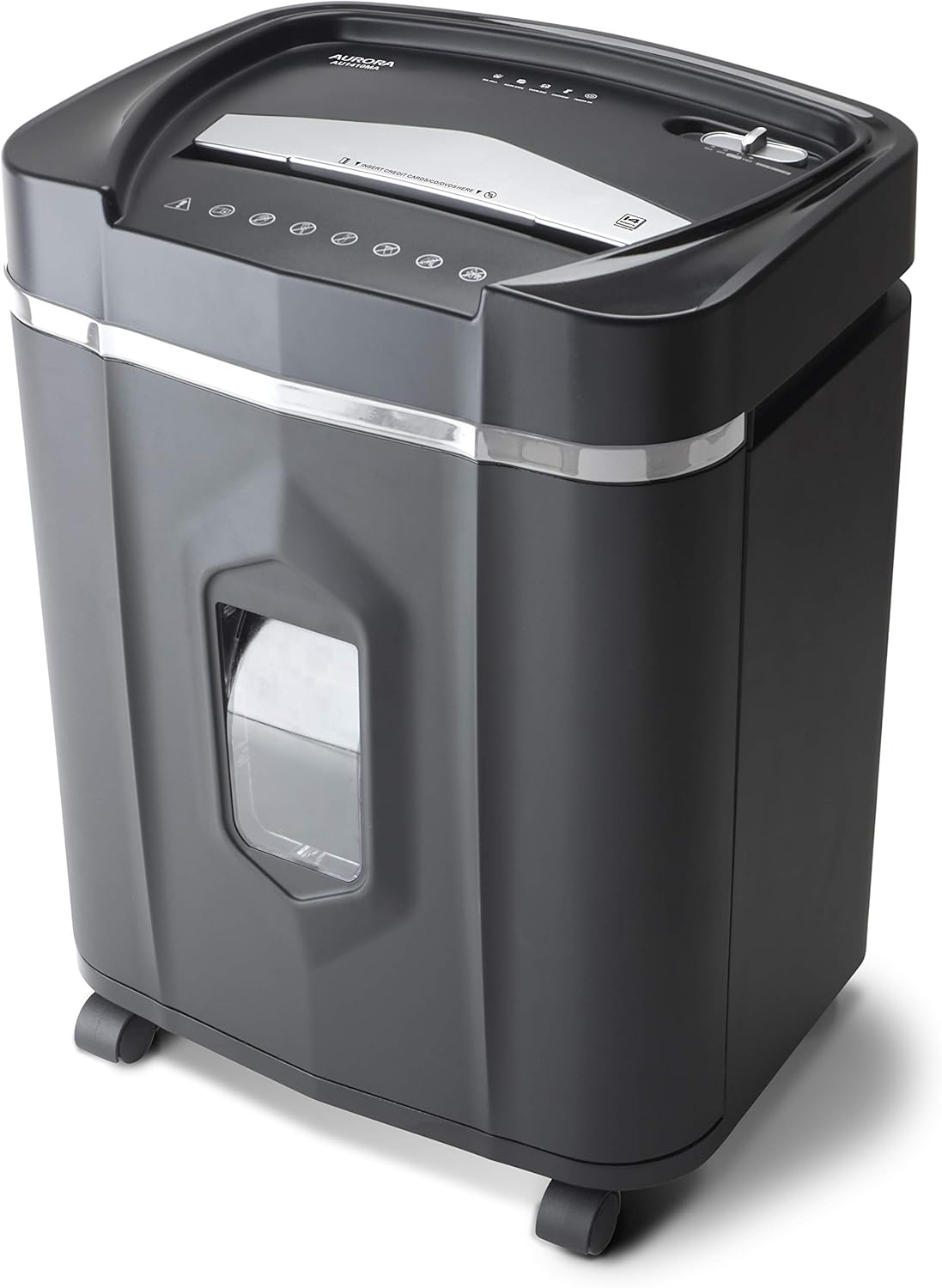
Aurora AU1210MA Micro-Cut Shredder
| Cut Type | Micro Cut |
|---|---|
| Standard Sheet Capacity | 12 |
| Capacity | 5 gallons |
| Operation Mode | Automatic |
| Power Source | AC adapter |
The Aurora AU1210MA is a compact, professional-grade micro-cut shredder designed for small offices that need secure, steady shredding. It accepts up to 12 sheets at once and cuts to P-4 micro-cut pieces, and it also handles CDs, DVDs, and credit cards for broader media disposal. The unit is built for longer sessions with a 60-minute continuous runtime and a 5.0-gallon pull-out bin with LED status indicators for bin full, standby, overheat, overload, and door open. Practical features include anti-jam auto-reverse, quiet operation, casters for mobility, and an automatic feed mode that simplifies regular use. Trade-offs are mainly its physical footprint and 5-gallon bin size, which means frequent emptying in very busy offices, and it is heavier than basic home models. For reliability-minded buyers the AU1210MA delivers consistent, secure shredding and sensible safety/status feedback that keeps the machine running without surprises.
Best for: Buyers who prioritize dependable, secure shredding for a small office or shared workspace and want a machine that can run for extended periods without overheating.
Less Ideal for: Large corporate departments or high-volume shredding centers that need a much larger bin and higher sheet capacities for continuous heavy throughput.
- P-4 micro-cut security that shreds paper, CDs, DVDs, and credit cards
- 60 minutes continuous run time suitable for regular office use
- Anti-jam auto-reverse and quiet operation reduce interruptions
- LED status indicators for bin full, overheat, overload, and door open
- 5.0-gallon pull-out bin with casters for easy mobility
- 5.0-gallon bin may require frequent emptying in high-volume environments
- Relatively heavy for a compact unit, which can make permanent repositioning awkward
Verdict: A reliable, office-ready micro-cut shredder that delivers secure P-4 shredding and long continuous runtimes for everyday business use.
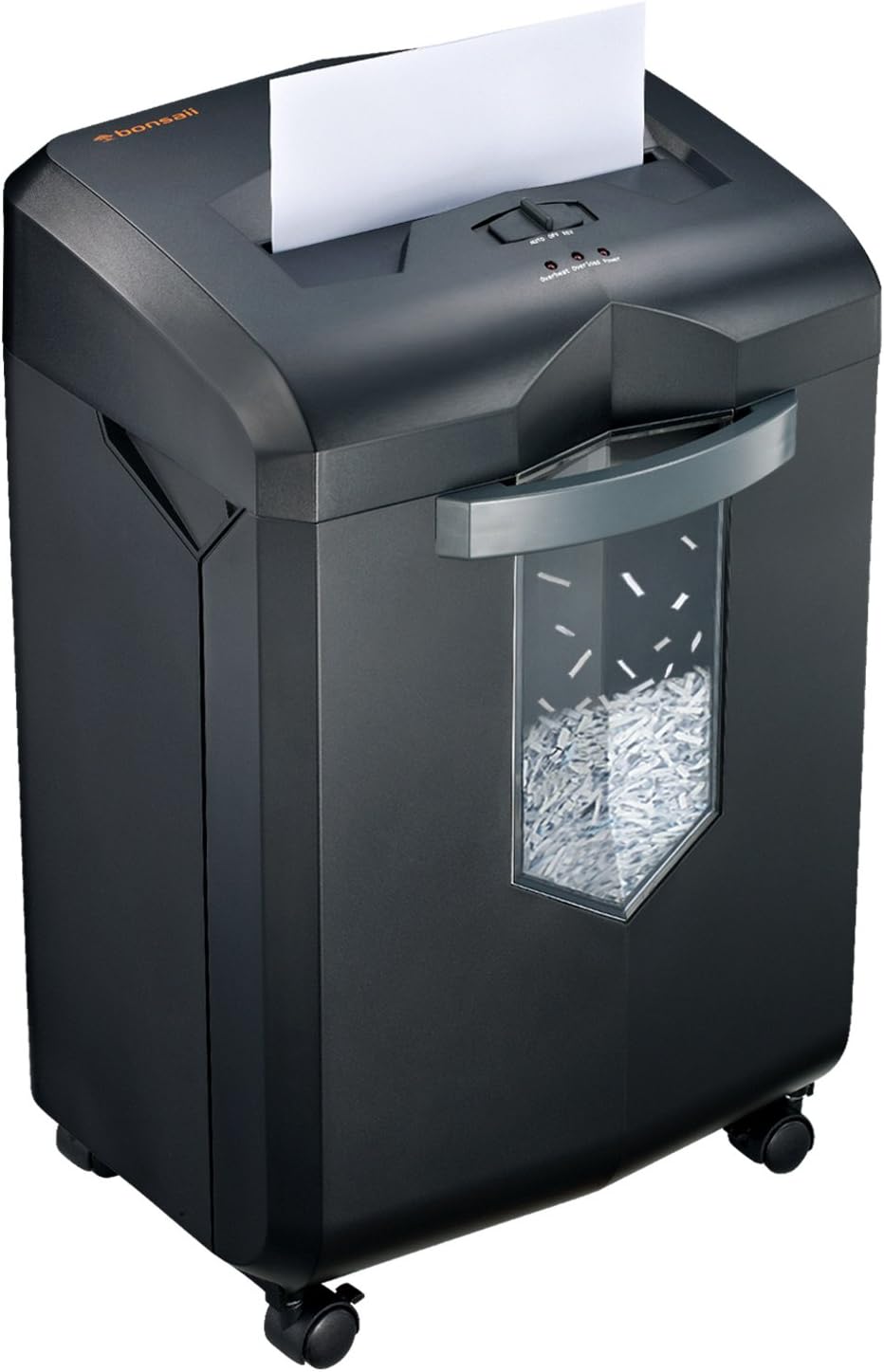
Bonsaii C149-C 18-Sheet Shredder
| Cut Type | Cross Cut |
|---|---|
| Standard Sheet Capacity | 18 |
| Continuous Run Time | 60 Minutes |
| Audible Noise | 62 db |
| Capacity | 23 liters |
The Bonsaii C149-C is a work-focused office shredder built for frequent use. It shreds up to 18 letter-size sheets in a single pass into P-4 cross-cut particles and will handle staples, credit cards and CDs, so you can clear batches of mixed media without pre-sorting. A high-efficiency motor and improved hardened blades are paired with an advanced cooling system that allows up to 60 minutes of continuous run time before a short cool-down is required, which makes it suitable for busy home offices or small workplaces. The unit includes auto start/stop and auto-reverse plus an anti-jam detection system to reduce interruptions and protect the motor from overload. A 6-gallon pull-out bin with a viewing window and casters keeps the machine easy to move and maintain. Expect typical heavy-duty trade-offs: it is a substantial cabinet-style machine and produces noise around the listed 62 dB level, and like all high-capacity shredders it needs occasional oiling and sensible loading to avoid jams and thermal cutoffs. For buyers prioritizing reliability and security, this model covers the essentials well.
Best for: Buyers who want a dependable, security-focused shredder for frequent batch shredding and who value continuous run time and built-in jam protection backed by many user reviews.
Less Ideal for: Those needing an ultra-compact or near-silent personal shredder for occasional single-sheet use should consider smaller or quieter models instead.
- P-4 cross-cut shredding handles paper, staples, credit cards and CDs for secure disposal.
- 60-minute continuous run time enabled by an enhanced cooling system for heavy workloads.
- Auto start/stop, auto-reverse and jam-detection reduce interruptions and protect the motor.
- 6-gallon pull-out bin with view window and casters simplifies emptying and mobility.
- Cabinet-style footprint and weight make it less convenient for very small workspaces.
- Noise around 62 dB may be noticeable in very quiet environments.
Verdict: A robust P-4 cross-cut shredder designed for frequent, heavy-duty office shredding with long continuous run time and reliable anti-jam features.
Amazon Basics Auto Feed Cross-Cut Shredder

| Cut Type | Cross Cut |
|---|---|
| Standard Sheet Capacity | 200 (auto), 10 (manual) |
| Capacity | 8.5 gallons |
| Operation Mode | Automatic |
| Power Source | AC adapter |
This Amazon Basics auto-feed cross-cut shredder is built for high-volume shredding tasks and combines an automatic 200-sheet feed with a 10-sheet manual slot for occasional single-sheet jobs. It cuts to P-4 high-security cross-cut particles and includes an 8.5 gallon pull-out bin with LED indicators for bin full, feed errors, and overheating, which helps avoid surprises during long sessions. Practical features for reliability include a 60-minute run time on the auto tray (10 minutes on the manual slot) with an automatic 45-minute cool-down, an anti-jam reverse function, and a simple 4-mode control switch for Auto, On, Off, Forward, and Reverse. The unit uses an AC adapter and has energy-saving sleep mode plus automatic shutoff to protect the motor. The main limitations are the required cool-down after long runs and the relatively large footprint and weight, so it is better suited to a dedicated office corner rather than a compact desk area.
Best for: Buyers who need a dependable, high-capacity shredder for regular heavy use in a home office or small workplace and prioritize security and reliable anti-jam features.
Less Ideal for: People who need a compact, lightweight shredder for occasional personal use or who require uninterrupted continuous shredding without cooldown periods.
- 200-sheet automatic feed for batch shredding reduces manual feeding
- Cross-cut P-4 security level produces small confetti-like particles
- Anti-jam auto reverse and LED alerts help prevent and diagnose jams
- Long 60-minute run time on auto feed with automatic motor protection
- Requires a 45-minute cool-down after extended runs, limiting continuous throughput
- Large and heavy footprint makes it less convenient for small workspaces
Verdict: A reliable, high-capacity auto-feed cross-cut shredder built for regular heavy-duty home or small-office shredding where security and jam prevention matter most.
Choosing the Right Heavy-Duty Paper Shredder: Key Factors to Consider
Continuous Run Time and Duty Cycle
Continuous run time dictates how long a shredder will operate before it needs a cool-down period. In a heavy-duty setting you will often run many consecutive sheets over extended intervals. A longer duty cycle reduces interruptions, which improves throughput and productivity.
Look for manufacturer duty-cycle specs and consider how those numbers translate to your busiest days. Keep in mind that advertised run time assumes ideal conditions; regular inspection and proper ventilation help the unit reach rated performance without overheating.
Sheet Capacity and Feed Width
Sheets per pass and feed throat width determine how many documents you can shred in a single operation and whether the unit can handle oversized pages or small cardboard. Higher sheet capacity speeds throughput but may increase the chance of jams if material is fed improperly.
Balance capacity with your typical job size. If you often process thick stacks or multiple stapled pages, choose a machine with robust feed specs and clear guidance on acceptable materials to avoid frequent clears and downtime.
Waste Bin Size and Disposal Frequency
Large bin capacity reduces how often staff must empty the shredder, which is key in high-traffic areas. A well-designed bin also makes disposal cleaner and faster, with easy access and secure latching.
Consider the available floor space and whether you need casters or a cabinet-style unit. For shared offices, a larger internal bin or an external collection-compatible design lowers interruption to workflows and keeps the area tidy.
Anti-Jam Features and Clearing Mechanisms
Anti-jam features like automatic reverse, torque detection, and sensible feed controls cut the time spent unjamming a machine. In heavy-duty use, jams are inevitable when mixed materials are fed; mechanisms that mitigate or prevent jams preserve productivity.
Evaluate how easy the unit makes manual clearing when needed, including whether the controls allow safe reverse operation and whether blades and feed paths are accessible for maintenance without complex disassembly.
Safety and Noise Considerations
Safety features such as auto-shutoff on access, built-in sensors, and protected blade access are important in shared environments. They reduce the risk of accidental contact and comply with workplace safety expectations.
Noise level matters in open offices. While heavy-duty motors tend to be louder, look for models with noise-dampening design or selectable run modes to balance performance with a tolerable sound level during long runs.
Maintenance Needs and Long-Term Serviceability
Regular maintenance extends a shredder's life and keeps performance consistent. Check how straightforward routine tasks are, such as oiling blades, clearing the feed, and replacing wear parts.
Also assess the availability of user-serviceable parts and the accessibility of service points. Machines that allow simple upkeep without special tools will minimize downtime and service costs over the lifetime of the unit.
Sizing a Heavy-Duty Shredder for Your Workload
Estimate daily and peak shredding volumes before choosing a machine. Multiply the average batch sizes by the number of expected sessions to understand required throughput. For regularly high volumes, prioritize continuous run time and larger sheet capacity.
Also consider physical placement and bin emptying frequency. A unit with a larger footprint and bigger bin often reduces interruptions, but make sure you have the floor space and clearance for service access.
- Calculate sheets per day and peak batch sizes
- Match run time to typical continuous use periods
- Plan for bin emptying without disrupting nearby workstations
Material Compatibility and What You Can Feed
Heavy-duty units often handle more than plain paper. Confirm whether the machine accepts staples, paper clips, credit cards, CDs, or small amounts of cardboard. Feeding disallowed materials will cause jams and damage blades.
When processing mixed media, feed slowly and follow the manufacturer's guidance. If you frequently shred small electronics or thick plastics, consider a machine rated for those materials to avoid shortened service life.
- Check manufacturer guidelines for staples and clips
- Avoid feeding bulky plastics unless rated
- Separate non-paper items to reduce jams
Placement, Ventilation, and Power Requirements
Heavy-duty shredders can produce heat during extended runs. Place the unit in a well-ventilated area with clearance around vents to help cooling. Ensure the electrical circuit can handle the motor's draw, and avoid running multiple high-draw devices on the same outlet.
Consider accessibility for frequent emptying and maintenance. Rolling bases or cabinet-style enclosures can simplify relocation and cleanup, especially in multi-room offices.
- Leave clearance around intake and exhaust vents
- Verify compatible outlet and circuit capacity
- Choose a placement that eases bin access and maintenance
Operational Best Practices to Extend Service Life
Adopt consistent procedures: designate trained operators, run smaller pre-sorted batches, and schedule maintenance tasks like blade oiling. Consistent care reduces jams and wear and maintains shred quality over time.
Keep a simple log of heavy use periods and any jam incidents to identify patterns. That history helps decide if your workflow needs a higher-capacity unit or changes in how materials are prepared for shredding.
- Train staff on safe feeding and clearing
- Oil blades on the recommended schedule
- Track usage and jam frequency for workflow adjustments
Security Levels and Document Destruction Needs
Choose the shred type based on the sensitivity of documents. Strip-cut is fast but less secure. Cross-cut and micro-cut provide smaller particle sizes and higher security. Match the shredding style to your compliance and privacy requirements.
If you handle regulated information, confirm that the destruction method meets any applicable standards for your industry. Higher-security shredding may reduce throughput and increase service needs, so weigh security against operational demands.
- Select cut style by data sensitivity
- Balance security level with throughput needs
- Document your chosen destruction method for compliance
How We Chose the Best Heavy-Duty Paper Shredder
We prioritized machines designed for sustained, high-volume shredding rather than occasional home use. Key selection filters included continuous run time and duty cycle to ensure the unit can operate for extended periods without overheating; sheet capacity and feed throat width to match typical batch sizes; bin volume and removal ease to reduce maintenance interruptions; and anti-jam systems plus serviceability for reliable day-to-day operation. We also considered noise output and safety features for shared workplaces, and whether the design supported simple maintenance like manual reverse and easy blade access. Excluded devices were entry-level personal shredders and models explicitly rated only for occasional home use. Our picks focus on commercial-capable units that deliver repetitive performance, manageable upkeep, and practical safety controls for busy office environments.
Our full evaluation process is outlined in our review methodology.
FAQ
How long can a heavy-duty paper shredder run continuously?
Continuous run time varies widely. Many heavy-duty units are rated for longer duty cycles and can run for 30 minutes to several hours before cooling. Always follow the stated duty cycle and allow proper cool-down to prevent overheating.
Can I shred staples and paper clips in a heavy-duty unit?
Often yes, but it depends on the machine. Heavy-duty models frequently accept staples and paper clips, but you should verify the feed guidelines. Removing large metal items reduces wear and the chance of jams.
What maintenance does a commercial shredder require?
Routine maintenance usually includes periodic blade oiling, emptying and cleaning the bin, and inspecting the feed for obstructions. Following the manufacturer's maintenance schedule helps preserve performance and extend service life.
How do I reduce the chance of jams during heavy use?
Feed to the recommended sheet limit, avoid mixing disallowed materials, use the auto-reverse feature when jams begin, and approach large stacks gradually. Training operators on proper feeding technique also reduces jam frequency.
Are heavy-duty shredders noisy in an open office?
They can be louder than consumer units because of larger motors and tougher cutting mechanisms. Noise levels vary by design; look for models with noise-reduction features or run heavy sessions during off-peak hours to limit disruption.
Final Verdict
For high-volume secure disposal, prioritize continuous run time, reliable anti-jam systems, and an appropriately sized bin over marginal differences in sheet capacity. Decide on the security level you need first, then match duty-cycle and feed specs to your busiest workflows. With regular maintenance and proper placement, a heavy-duty shredder will deliver consistent throughput and lower downtime, letting you focus on operations rather than clearing jams.