
Note: This article contains affiliate links. If you click on these links and make a purchase, we may earn a small commission at no extra cost to you. This helps support our research and content. Read our full affiliate disclosure here.
If you live in a large, high-traffic home or have pets that shed heavily, a heavy-duty robot vacuum can cut hours from your cleaning routine while keeping floors consistently cleaner. These machines are built with stronger suction, beefier brushes, and larger batteries to handle repeated daily use and larger debris loads. This guide shortlists the top heavy-duty robot vacuums that suit rigorous home cleaning. We evaluated each option on practical criteria such as suction and brush systems, battery runtime and recharge behavior, dust capacity and maintenance effort, and navigation and reliability. Read on to find the type of heavy-duty robot vacuum that best fits your floor plan and cleaning habits.
Top Picks at a Glance
| Best Overall The best all-around choice for most situations | roborock Q7 M5+ |  |
| Best Quality Built to a higher standard if you want something more solid | roborock Saros 20 |  |
| Best Value The sweet spot between price and what you get | dreame D20 Air Plus |  |
| Top Rated A top-rated pick with lots of positive feedback | WSUANE D15S Max Robot Vacuum |  |
| Most Popular A crowd favorite that many people choose with confidence | Shark Matrix Clean AV2511AE |  |
| Best Seller A high-volume bestseller chosen again and again | eufy C28 Robot Vacuum |  |
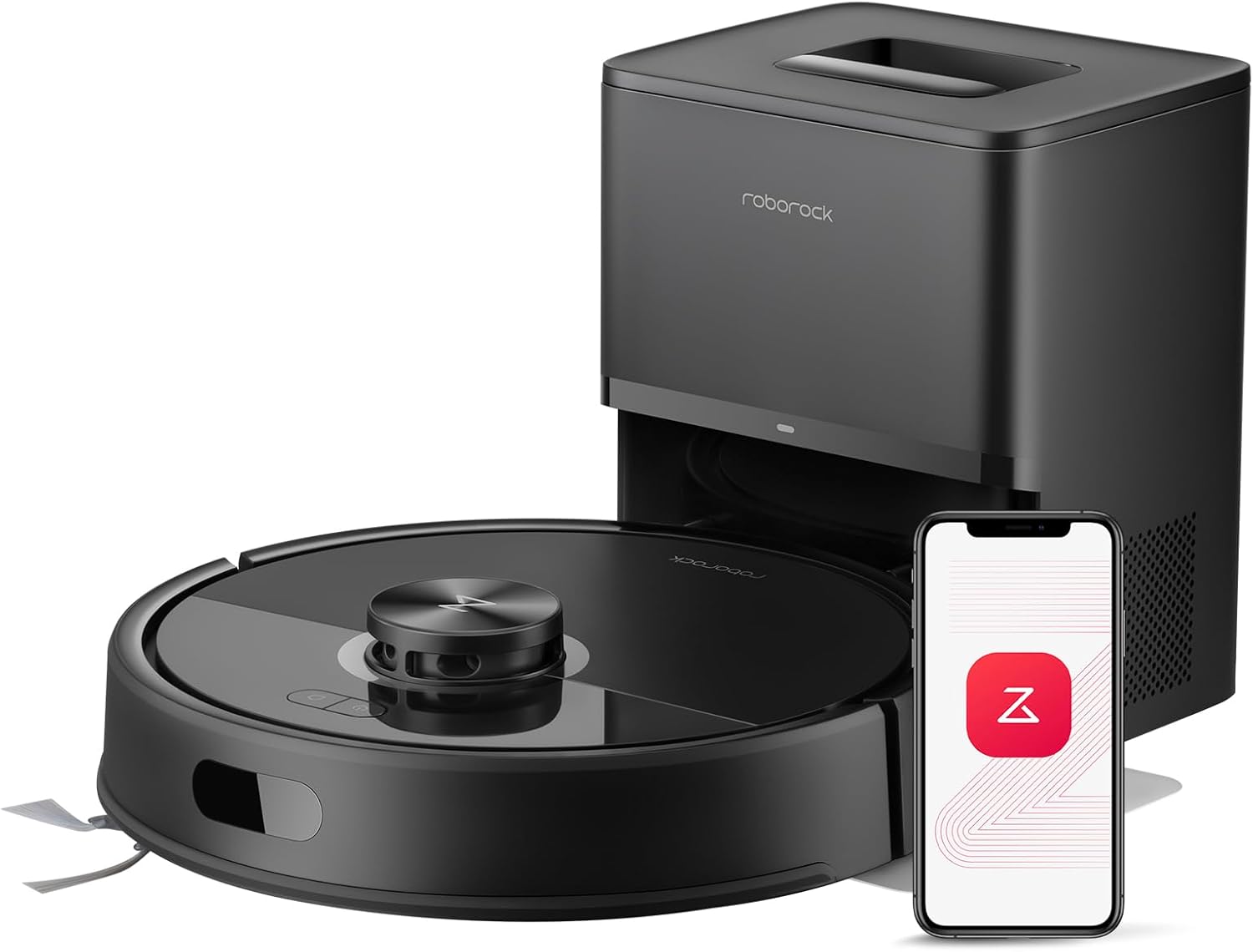
roborock Q7 M5+
| Suction | 10000Pa |
|---|---|
| Dust capacity (dock) | 2.7 liters |
| Battery life | 150 minutes |
| Navigation | PreciSense LiDAR |
| Noise level | 65 db |
The roborock Q7 M5+ combines powerful suction, LiDAR mapping, and a large auto-empty dock to handle regular household cleaning without frequent intervention. It uses PreciSense LiDAR for accurate room mapping and scheduled multi-level cleaning via the app, while the 10000Pa HyperForce motor and an anti-tangle brush pair make short work of pet hair and embedded dirt on carpets and hard floors. The RockDock Plus holds a 2.7L sealed dust bag, enabling roughly 7 to 9 weeks of hands-free emptying depending on usage, and the electronic VibraRise mop system offers adjustable water flow so you can vacuum and mop in one pass. Expect around 150 minutes of runtime per charge and app or voice control for remote scheduling and no-go zones. Trade-offs include a moderate noise level around 65 dB and a rectangular form factor that may not reach very narrow gaps; occasional maintenance of brushes and cartridges is still required despite the self-emptying dock.
Best for: Buyers who want a heavy-duty, low-maintenance robot that reliably handles pet hair and mixed floor types while minimizing hands-on emptying and management.
Less Ideal for: Those needing an ultra-quiet cleaner for night use or an extra-slim robot designed to reach very low-clearance furniture should consider different models.
- Very strong 10000Pa suction for deep cleaning on carpet and hard floors
- Large 2.7L sealed dust bag in RockDock Plus for up to 7–9 weeks of self-emptying
- Dual anti-tangle brush system reduces hair wrap and maintenance
- PreciSense LiDAR navigation with multi-level mapping and app scheduling
- Integrated vacuuming and electronic mopping with adjustable water flow
- Noise level is relatively high at about 65 dB during operation
- Rectangular form factor and height may limit access under some low furniture
Verdict: A powerful, self-emptying robot built for pet homes and heavy-duty cleaning that keeps hands-off maintenance to a minimum.
roborock Saros 20

| Suction | 36,000 Pa Digital Motor |
|---|---|
| Battery Life | 180 minutes |
| Filter Type | Washable Filter |
| Control | App, Remote, Voice |
| Noise Level | 55 db |
The roborock Saros 20 is built for heavy‑duty daily cleaning: it combines a 36,000 Pa digital motor with an ultra‑slim body and adaptive lift chassis so the robot can clean deep into carpets, cross multi‑layer thresholds, and reach under low furniture. In practice it handles pet hair and coarse debris efficiently, while StarSight 3D ToF sensors and an RGB camera map rooms in real time and avoid hundreds of common obstacles to reduce interruptions. The included RockDock automates mop washing with hot water, hot‑air drying, and long auto‑empty intervals to cut back on manual maintenance, and app control plus voice integration makes scheduling and zone management straightforward. Battery life is listed at 180 minutes for longer runs, and washable filters simplify upkeep. Important tradeoffs are the unit weight and size relative to compact models and the complexity of advanced dock systems which may need occasional attention; noise is moderate around 55 dB in normal operation. For buyers prioritizing raw suction, obstacle avoidance, and hands‑free servicing, the Saros 20 delivers a capable heavy‑duty package.
Best for: Buyers who need a performance‑first robot that can handle pet hair, deep carpet cleaning, and long unattended runs while minimizing hands‑on maintenance.
Less Ideal for: People who want the smallest, lightest robot for tight spaces or those who prefer a very simple dockless model to avoid extra system upkeep.
- Very high suction power (36,000 Pa) for deep cleaning and pet hair removal
- Advanced 3D ToF sensors and RGB camera enable accurate mapping and obstacle avoidance
- AdaptiLift chassis crosses high thresholds and lifts for carpet cleaning without losing suction
- RockDock automates mop washing, hot‑air drying, and extended auto dust emptying for hands‑free maintenance
- Long runtime (180 minutes) and app/voice control for flexible scheduling and smart mapping
- Relatively heavy and larger footprint compared with compact robot models
- Advanced dock and hot‑water cleaning features add system complexity that can require occasional maintenance
- Noise level around 55 dB may be noticeable during high‑power modes
Verdict: Choose the Saros 20 when you want one of the most powerful, obstacle‑aware robot vacuums with a truly hands‑free dock for heavy‑duty, low‑maintenance cleaning.
dreame D20 Air Plus

| Suction | 20,000Pa |
|---|---|
| Dust bag capacity | 4 liters |
| Battery life | 150 minutes |
| Navigation | LiDAR |
| Control | App, Voice, Button |
The dreame D20 Air Plus is a hybrid robot vacuum and mop built for low-maintenance, heavy-duty floor care. It uses LiDAR navigation and 3D mapping to plan routes and avoid obstacles while delivering up to 20,000Pa suction for deep carpet cleaning and pet hair pickup. The unit vacuums and mops simultaneously with an electronic water tank offering adjustable flow, and a dual anti-tangle brush system reduces hair clogs. A 4L self-emptying dust bag promises up to 120 days of hands-free debris collection in typical use, which cuts down routine chores. App, voice, and button controls let you schedule cleanings, set no-go zones, and save multiple maps. Practical limitations are that it supports only 2.4GHz Wi-Fi and the runtime tops out at 150 minutes, so very large homes may need mid-cycle recharges; the robot is relatively tall and not the slimmest for under-furniture access. For buyers who prioritize automated, frequent cleaning with strong suction and a large dust reservoir, the D20 Air Plus is a capable, low-touch option.
Best for: Buyers who want strong suction and long stretches of hands-off cleaning with reliable navigation and low upkeep, especially in homes with pets or heavy daily dirt.
Less Ideal for: People needing ultra-slim robots for very low-clearance furniture or households that require 5GHz Wi-Fi compatibility should consider other options.
- High 20,000Pa suction for deep cleaning and pet hair pickup
- 120-day self-emptying capacity with 4L dust bag reduces maintenance
- LiDAR navigation with multi-map support and customizable no-go zones
- Simultaneous vacuuming and mopping with adjustable electronic water flow
- Dual anti-tangle brush design minimizes hair wrap and brush maintenance
- Only supports 2.4GHz Wi-Fi which limits some network setups
- 150-minute max run time may require recharges in very large homes
- Relatively tall profile can limit clearance under low furniture
Verdict: Choose the D20 Air Plus if you want powerful suction and an oversized self-emptying dust bag to minimize hands-on maintenance for heavy-duty home cleaning.
WSUANE D15S Max Robot Vacuum

| Suction | 10000Pa (max) with Auto Boost |
|---|---|
| Dustbin Capacity | 3.5 liters |
| Navigation | dToF LiDAR mapping with no-go zones |
| Filter Type | Three-layer high-efficiency filtration (washable) + filter cotton |
| Runtime | Up to 160 minutes (Silent Mode) |
The WSUANE D15S Max is a lidar-guided robot vacuum and mop built for extended hands-free cleaning in larger homes and pet households. It maps rooms with dToF LiDAR for precise navigation, supports app control and Google Home, and stores maps with custom no-go zones for routine scheduling. A 3.5 liter self-emptying dustbin is designed to go many weeks between manual emptying, while a brushless motor with modes up to 10,000Pa plus Auto Boost on carpets aims to pull out embedded dirt and pet hair. The roller brush includes a blade-equipped anti-tangle design to cut hair and reduce maintenance, and three-layer filtration helps trap fine particles. Runtime ranges from about 70 to 160 minutes depending on power mode, and the unit returns to charge automatically. Expect about 70 dB at higher power and a relatively tall charging footprint for the dock. The D15S Max is a solid choice when you want a high-capacity, autonomous cleaner that minimizes daily attention, though noise and occasional navigation adjustments in cluttered rooms are realistic limits to keep in mind.
Best for: Buyers who prioritize long stretches of reliable, low-maintenance cleaning for busy households or pet owners and want a robot that can run scheduled, mapped cleanings with minimal intervention.
Less Ideal for: People with very tight budgets seeking a compact, ultra-quiet vacuum or those who need a very small footprint charging base in limited spaces.
- Large 3.5L self-emptying dustbin reduces how often you need to touch dirt
- dToF LiDAR mapping with no-go zones enables accurate navigation and scheduled multi-room cleaning
- High maximum suction (10,000Pa) with Auto Boost for better carpet pickup
- Anti-tangle roller brush design cuts hair to reduce brush maintenance
- App control and Google Home compatibility make setup and recurring cleaning convenient
- Noise can reach around 70 dB at higher power levels
- Self-emptying station and larger dustbin increase footprint compared with basic robot vacuums
Verdict: If you want long stretches of dependable, hands-off cleaning for a busy or pet-filled home, the D15S Max delivers high suction and a large self-emptying bin to minimize maintenance.
Shark Matrix Clean AV2511AE

| Battery Life | 120 minutes |
|---|---|
| Capacity | 0.27 gallons |
| Power Source | Battery Powered |
| Compatible Devices | Amazon Alexa, Google Assistant |
The Shark Matrix Clean AV2511AE is a robot vacuum and mop designed to handle large, pet-friendly homes with minimal intervention. It navigates with 360° LiDAR mapping and cleans in a precision grid pattern so it makes multiple passes over messy areas rather than relying on random coverage. The unit pairs strong suction and a self-cleaning brushroll for picking up pet hair on carpets and hard floors, and its bagless XL base stores up to 60 days of debris so you do not need to empty it frequently. App and voice control let you schedule, target rooms, and adjust cleaning modes, and the robot will return to the dock to recharge and resume where it left off. Limitations include a relatively large footprint and weight compared with compact robots, and it requires periodic maintenance of the brushroll and cartridge filter to keep peak performance. For buyers who want a hands-off heavy-duty cleaner, this model trades compact size for powerful, long-running convenience.
Best for: Buyers who prioritize hands-off, heavy-duty cleaning for pet-filled or high-traffic homes and value detailed mapping and long self-empty intervals over minimal size.
Less Ideal for: People who need an ultra-compact or lightweight robot for very low-clearance furniture or who prefer a completely maintenance-free, disposable-bag system.
- Self-emptying bagless base holds up to 60 days of debris for reduced maintenance
- 360° LiDAR home mapping with precision grid Matrix Clean for thorough coverage
- Self-cleaning brushroll and strong suction effective on pet hair and mixed surfaces
- App and voice control for scheduling, room targeting, and remote operation
- Heavier and bulkier than many compact robot vacuums which may limit access under low-clearance furniture
- Requires regular filter and brushroll upkeep to maintain suction and hair management
Verdict: Choose the Shark Matrix Clean AV2511AE when you want a powerful, mapping robot that minimizes manual emptying and excels at pet hair and whole-home heavy-duty cleaning.
eufy C28 Robot Vacuum

| Max suction | 15,000 Pa |
|---|---|
| Battery life | 140 minutes |
| Dust capacity (station) | 3 liters |
| Filter type | Washable |
| Control | App, Push Button, Voice |
The eufy C28 is a heavy-duty robot vacuum and mop designed for hands-off floor care in homes with pets and mixed flooring. It combines a HydroJet self-cleaning roller mop and a DuoSpiral anti-tangle brush with 15,000 Pa turbo suction to pick up pet hair, crumbs, and fine dust across hard floors and short carpets. Navigation relies on LiDAR for systematic mapping and obstacle avoidance without cameras, while the Omni all-in-one station auto-empties dust into a 3L bag, refills and cleans the mop, and uses warm air drying to reduce odor and mildew. Typical use is scheduled multi-room cleans where the robot returns to the station for maintenance, which the product claims can cover about 75 days of unattended operation. Practical benefits include strong suction for deeper carpet pick-up, near-zero brush tangles for long-haired pets, and significantly reduced maintenance chores thanks to the station. Important limitations are its large form factor and station footprint, and that fully realizing the hands-free promise depends on using the station and replacement consumables over time.
Best for: Buyers who prioritize reliability, low-maintenance operation, and strong suction for pet hair in multi-room homes and want a privacy-friendly navigation system.
Less Ideal for: People with very small apartments or limited storage who cannot accommodate a large docking station or those who prefer a minimal upfront cost without replacement consumables.
- Powerful 15,000 Pa suction for deeper debris and pet hair pickup
- HydroJet roller mop with self-washing and hot-air drying reduces mold and manual maintenance
- All-in-one station auto-empties dust into a 3L bag and refills/collects wastewater for long unattended intervals
- DuoSpiral anti-tangle brush handles long pet hair without wrapping
- LiDAR navigation maps rooms and avoids obstacles without using cameras
- All-in-one station and robot take substantial floor space and may not fit small homes
- Long-term cost depends on consumable bags, filters, and replacement mop parts
Verdict: If you want a heavy-duty, low-maintenance robot that handles pet hair and mopping with a privacy-friendly LiDAR system, the eufy C28 delivers hands-off cleaning supported by an automated station.
Choosing the Right Heavy-Duty Robot Vacuum: Key Factors to Consider
Suction Strength and Sustained Airflow
Strong initial suction is important, but for heavy-duty cleaning you also need sustained airflow under load. Carpets, thick rugs, and accumulated pet hair can choke lesser motors and reduce effectiveness over time. Look for designs and cooling strategies that prevent thermal throttling so suction remains high during long runs.
Sustained airflow matters more than peak numbers on the spec sheet. A motor that keeps consistent suction while moving through low-clearance furniture and across varying floor surfaces will pick up embedded dirt and dense debris more reliably in a large home.
Battery Capacity and Recharge Behavior
Long runtime is critical when covering large floor plans without constant human intervention. Larger battery capacity directly increases uninterrupted coverage, but software that supports recharge-and-resume is equally valuable for homes larger than a single charge can handle.
Consider how quickly the robot can return to its dock, recharge to a meaningful level, and resume where it left off. Runtime estimates vary by suction mode, so expect higher-power modes to reduce operating time; assess whether the machine still completes essential zones in its typical schedule.
Brush System and Hair Management
Heavy-duty environments often mean frequent hair and fibrous debris. Brush systems that resist tangles and are easy to service reduce downtime and keep performance steady. Look for robust roller designs, stiff bristles or hybrid rubber-bristle combos, and accessible bearings that make brush cleaning straightforward.
Also consider maintenance intervals. Brushes and brush bearings that require infrequent attention are preferable in a heavy-use setting, as is tool-free access for clearing tangles and replacing worn parts when needed.
Dustbin Size and Filter Efficiency
A larger dustbin reduces how often you need to empty the robot, which is especially helpful in homes with a lot of dirt or pet hair. For heavy-duty use, pairing a roomy dustbin with efficient filtration matters to avoid frequent exposure to dust when servicing the unit.
High-efficiency filters or multi-stage filtration traps fine particles and allergens better. Also evaluate how hygienic the emptying process is and whether the robot supports automatic emptying docks, which can cut hands-on time in the busiest households.
Navigation, Mapping, and Reliability
Effective navigation prevents repeated passes over the same area and reduces missed spots. For heavy-duty cleaning, mapping accuracy and obstacle-handling determine how quickly and efficiently the robot cleans a complex floor plan.
Robots that build reliable maps, let you set no-go zones and virtual rooms, and handle stair edges, thresholds, and cluttered layouts tend to finish faster with fewer interruptions. Consistent schedule execution and robust recovery behaviors from stuck states help maintain dependable performance over months of heavy use.
Serviceability and Parts Availability
Even the most durable robot requires periodic replacement parts and occasional service. For heavy-duty use, easy access to common wear items like rollers, side brushes, and filters reduces downtime. Removable components that snap out without tools speed routine upkeep.
Check that filters and brush assemblies are straightforward to replace and that the design avoids proprietary, hard-to-clean pieces. Simple diagnostics, easily accessible dust traps, and intuitive alerts for maintenance keep your robot running at peak performance longer.
How Heavy-Duty Robots Differ From Standard Models
Heavy-duty robot vacuums are engineered for sustained operation in larger or messier homes. Compared with standard consumer models, they emphasize continuous suction, larger consumable capacity, and sturdier brush systems designed to manage hair and dense debris.
They also tend to include better thermal management, stronger drive trains for navigating thresholds and thick rugs, and software that prioritizes coverage efficiency. Those design choices add up to fewer interruptions and more consistent results in heavy-use scenarios.
- Bigger batteries or optimized power profiles for long runs
- Stiffer or hybrid brush rollers that resist tangles
- Larger dustbins and improved filtration
- Advanced mapping and resume-after-recharge capabilities
Setting Up a Heavy-Duty Robot for Large Homes
Placement and dock location strongly affect coverage. Position the dock against a clear wall in an open area so the robot can reliably find it from different rooms. Keep high-traffic pathways free of small obstacles and cords to reduce interruptions and false stuck events.
Map rooms intentionally and use virtual barriers or no-go zones where appropriate. Prioritize scheduling during low-activity windows so the robot can complete full passes without frequent human foot traffic that forces re-routing.
- Clear a 1.5–2 foot radius around the docking station
- Use room segmentation to break large areas into manageable runs
- Keep loose rugs and cables secured to prevent entanglement
Maintenance Routines That Keep Performance High
Regular maintenance prevents performance degradation. Empty the dustbin before it reaches capacity, check and clean filters weekly in homes with pets or heavy dust, and inspect the main brush for hair wrap that can reduce suction efficiency.
Schedule deeper servicing monthly: remove and clean roller bearings, wipe sensors and charging contacts, and inspect wheels and suspension for hair or debris. A consistent maintenance cadence reduces the chances of unexpected failures during busy cleaning cycles.
- Empty dustbin after heavy cleaning days
- Rinse or replace filters per manufacturer guidance
- Trim hair from brush bearings and side brushes to prevent drag
Managing Pet Hair and High Debris Loads
Heavy shedding and tracked-in dirt challenge a robot vacuum more than light everyday dust. Using higher suction modes in problem areas and scheduling more frequent passes reduces buildup. Robots with tangle-resistant roller designs and stronger brush motors cope better with hair loads.
Consider complementing the robot with periodic manual deep-cleaning of rugs and upholstery. That combined approach keeps floors well maintained without overtaxing the robot with embedded grime that requires occasional human attention.
- Run quick spot cleans in entryways after outdoor activity
- Use high-suction mode for carpeted rooms with dense hair
- Keep a small hand tool or brush on hand for rapid brush maintenance
When to Expect Diminishing Returns
There is a point where a robot alone cannot replace deeper cleaning methods. For homes with extremely high traffic, heavy muddy seasons, or heavily soiled rugs, occasional manual vacuuming or professional cleaning remains necessary for deep restoration.
If you find the robot struggling repeatedly in the same zones despite maintenance, reassess furniture layout, rug height, or whether a higher-tier heavy-duty option or combination approach is needed. The right robot reduces daily work but does not eliminate the need for occasional intensive cleaning.
- Schedule periodic manual deep cleans for upholstery and rugs
- Watch for repeated stuck events as a sign of layout or threshold issues
- Use the robot as part of a layered cleaning routine, not the entire solution
How We Chose the Best Heavy-Duty Robot Vacuum
We narrowed candidates by looking for machines designed for continuous, high-volume cleaning rather than occasional touch-ups. Primary filters prioritized motor and suction architecture that maintain airflow under load, durable brush and drivetrain components built to resist hair wrap, and battery systems sized for long runtimes on large floor plans. Next, we evaluated navigation and mapping capabilities that reduce repetitive coverage and ensure efficient passes across open rooms, transitions, and cluttered zones. Dustbin capacity and filter access matter for heavy-use households, so we favored designs that minimize service frequency and simplify cleaning. We also considered recharge-to-resume behavior and how robust the software is at handling obstacles and schedule reliability. We excluded lightweight, compact units intended for occasional maintenance and any models with clearly limited run times or undersized dust capacity. Our final list focuses on durability, sustained suction, large-area runtime, and serviceability—criteria that align with what heavy-duty users value in a robot vacuum.
Our full evaluation process is outlined in our review methodology.
FAQ
How long should the battery last on a heavy-duty robot vacuum?
Typical runtimes vary, but heavy-duty robots are designed for extended operation and often run between one and three hours depending on suction mode. Higher-power settings will reduce runtime, so recharge-and-resume capability is important for very large floor plans.
Do heavy-duty robot vacuums handle thick rugs and high-pile carpet?
Many heavy-duty robots have stronger drive trains and brush designs that manage medium to thick rugs, but performance depends on rug height and fringe. Extremely high-pile carpets may still impede cleaning and could require manual or upright vacuums for full deep cleaning.
How often will I need to empty the dustbin in a heavy-use home?
In heavy-use homes or those with pets, expect to empty the dustbin more frequently—often daily or every few days—unless the robot supports an automatic emptying dock. Dustbin capacity and the amount of tracked-in debris determine the interval.
Are special maintenance steps required for hair-heavy households?
Yes, hair-heavy homes benefit from frequent brush inspections and more regular filter checks. Choose a robot with tangle-resistant rollers and design features that simplify hair removal to minimize downtime and preserve suction performance.
Will navigation systems get confused by furniture and open floor plans?
High-quality mapping systems are built to handle complex layouts and open plans by creating reusable maps and defining zones. However, very cluttered spaces or frequent furniture rearrangement can reduce mapping reliability and increase missed spots or repeated coverage.
Final Verdict
When choosing a heavy-duty robot vacuum, prioritize sustained suction and battery runtime first, then confirm the brush system and dust capacity suit your home's debris profile. Robust navigation and serviceability reduce interruptions and long-term upkeep. Balance stronger cleaning modes with realistic maintenance expectations. A well-chosen heavy-duty robot will cut routine cleaning time substantially, but plan for occasional manual deep cleans and regular part maintenance to keep performance consistent over time.