
Note: This article contains affiliate links. If you click on these links and make a purchase, we may earn a small commission at no extra cost to you. This helps support our research and content. Read our full affiliate disclosure here.
If you work with leather regularly, a standard home sewing machine quickly becomes a bottleneck. A Heavy-Duty Sewing Machine for Leather is made to handle thicker hides, multiple layers, and heavy threads without skipped stitches or strained motors. In this guide we shortlist the top options built for heavy materials and frequent use, focusing on the features that matter for leatherwork: consistent stitch formation, reliable feed systems, and the power to penetrate dense seams. Below you'll find our top picks, followed by clear decision criteria and practical advice on set up, needles, and maintenance to keep leather projects moving smoothly.
Top Picks at a Glance
| Best Overall The best all-around choice for most situations | Brother ST150HDH Strong & Tough |  |
| Best Quality Built to a higher standard if you want something more solid | Juki TL-2010Q Sewing Machine |  |
| Best Value The sweet spot between price and what you get | SINGER Heavy Duty 4452 |  |
| Best Budget The cheapest option that still gets the job done reliably | Brother FB1757X Sewing Machine |  |
| Top Rated A top-rated pick with lots of positive feedback | FEIYUE FYe392 Sewing Machine |  |
| Most Popular A crowd favorite that many people choose with confidence | SINGER Heavy Duty 4423 |  |
| Best Seller A high-volume bestseller chosen again and again | VEVOR Industrial Lockstitch JK9808 |  |
Brother ST150HDH Strong & Tough

| Stitches built-in | 50 |
|---|---|
| Buttonhole styles | 5 auto-size |
| Power source | Corded Electric |
| Input voltage | 120 volts |
The Brother ST150HDH is a Strong & Tough computerized sewing machine built around a metal interior frame and longer 7-point feed dogs to handle heavier fabrics like denim, canvas, upholstery and some leathers. It offers 50 built-in stitches, five auto-size buttonholes, an LCD for stitch selection, variable speed control, start/stop and needle up/down buttons, plus an advanced automatic needle threader and a quick-set drop-in bobbin for easier setup. The package includes nine presser feet including a walking foot and heavy-duty needles aimed at multi-layer and heavy-fabric projects, and a free arm for cuffs and sleeves. Practical benefits include smoother fabric feeding on thick seams, better control when sewing multiple layers, and a broad stitch set for utility and decorative work. Limitations: while the machine is marketed for heavy fabrics and includes heavyweight needles, truly thick or industrial leather projects may still require specialized leather needles, a dedicated industrial machine, or slower, cautious stitching to avoid motor strain or needle breakage.
Best for: Buyers who want a durable, versatile home machine that can tackle occasional heavy fabrics and multi-layer projects while still offering computerized convenience and a wide stitch selection.
Less Ideal for: Professional leatherworkers or users who routinely sew very thick hides and heavy upholstery should consider an industrial or purpose-built leather sewing machine instead.
- Metal interior frame improves stability at higher speeds and with heavy fabrics
- Walking foot and longer 7-point feed dogs help feed multiple layers and thick materials evenly
- Includes 9 presser feet and multiple needle types for a variety of tasks
- Computerized controls, LCD, and variable speed make stitch selection and speed management easy
- Advanced needle threader and quick-set bobbin simplify setup and reduce frustration
- Not a dedicated industrial leather machine so may struggle with very thick hides or frequent heavy leather work
- Item weight and size make it less convenient to move frequently
Verdict: A sturdy, feature-rich home heavy-duty machine that balances power and versatility for hobbyists who sew leather and other thick fabrics occasionally.
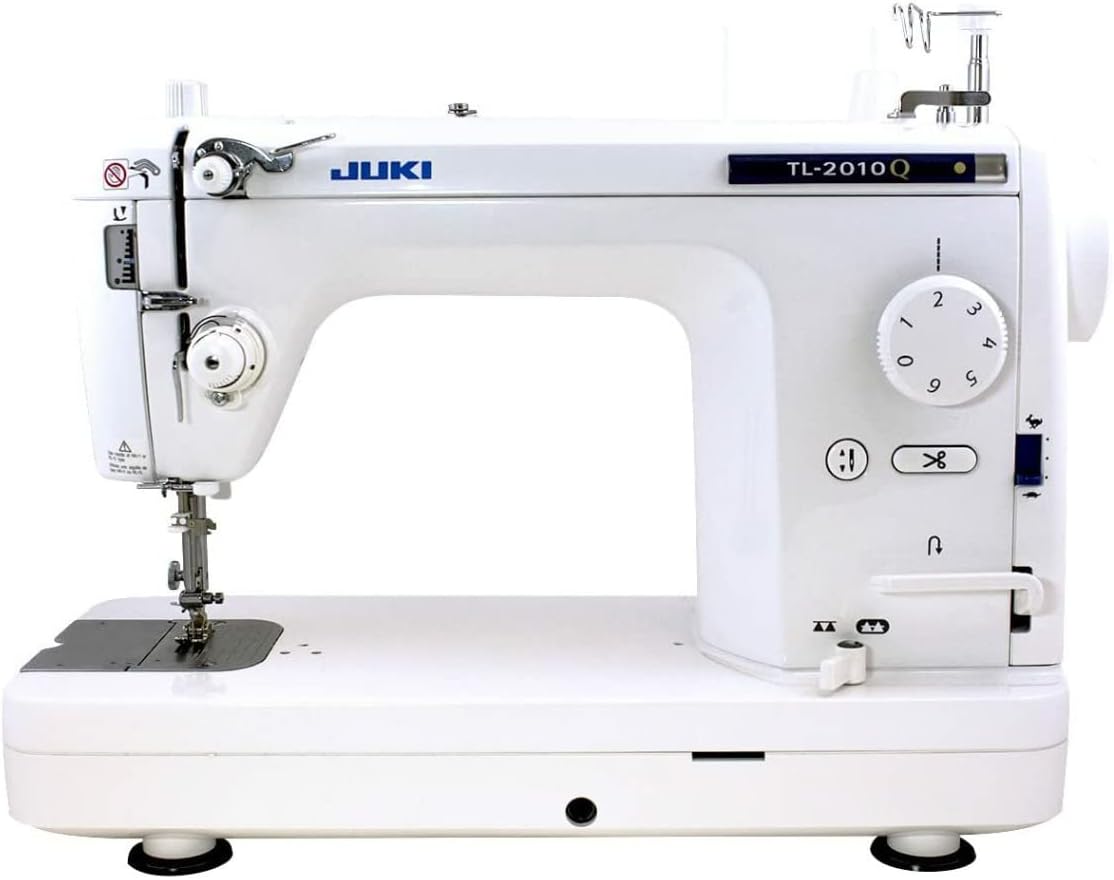
Juki TL-2010Q Sewing Machine
| Power Source | Treadle Powered |
|---|
The Juki TL-2010Q is a purpose-built, high-performance single-needle lockstitch machine designed for straight stitching, quilting and heavier sewing tasks. It is commonly used on a tabletop, mounted in a cabinet, or placed on a quilting frame and includes a removable extension table and carrying handle for portability. Notable features that matter for tough materials include a powerful motor that handles light to heavyweight fabrics, a knee lifter that raises the presser foot up to 12 mm for moving thick layers, and an automatic thread trimmer and needle threader that speed setup and finishing. The aluminum construction and durable build keep stitch quality consistent under demanding use. Limitations to note are that it is a straight-stitch only machine so decorative or zigzag stitches require a different model, and it lacks integrated walking foot or specialized leather presser feet out of the box, so you may need aftermarket feet and needles to optimize for heavy leather. For performance-focused sewers who prioritize reliable straight stitching and robust construction, the TL-2010Q is a strong, workhorse option.
Best for: Serious sewers and small-scale leatherworkers who need consistent, high-quality straight stitches and a robust machine that handles heavy fabrics without fuss.
Less Ideal for: Users who need built-in zigzag or decorative stitch capability, or hobbyists who prefer an all-in-one machine with many stitch patterns and accessories included.
- Powerful, high-performance motor suitable for light to heavyweight materials
- Automatic thread trimmer and needle threader speed setup and finishing
- Knee lifter raises presser foot up to 12 mm to handle thick layers more easily
- Durable aluminum build and portable design with carrying handle and extension table
- Straight-stitch only machine, no built-in zigzag or decorative stitches
- Does not include specialized leather presser feet or walking foot accessory
Verdict: Choose the Juki TL-2010Q when you want a rugged, performance-focused straight-stitch machine that delivers consistent results on heavy materials.
SINGER Heavy Duty 4452

| Built-in stitches | 32 |
|---|---|
| Stitch applications | 110 applications |
| Included presser feet | 6 presser feet |
| Power source | Ac/Dc |
The SINGER Heavy Duty 4452 is a straightforward mechanical sewing machine aimed at handling heavy fabrics like denim and canvas while still working on delicate materials. It uses a stronger motor and a full metal frame to deliver higher needle piercing power and fast stitching up to about 1,100 stitches per minute, and the stainless steel bed plate helps fabric feed smoothly. You get 32 built-in stitches that map to about 110 stitch applications and a one-step buttonhole for common garment and repair tasks, plus practical features such as a top drop-in bobbin with clear cover, built-in needle threader, and adjustable presser foot pressure for thin or thick materials. Singer includes six presser feet (including a non-stick foot and walking foot) and extra accessories to tackle leather, vinyl, and multiple layers; the included non-stick foot is useful for sticky surfaces but heavy leather projects may still require specialty needles and slower, controlled stitching. The machine is mechanically simple to operate and durable, making it a solid choice for hobbyists and small-scale leatherwork who want power and reliability without a steep learning curve.
Best for: Buyers who want a durable, no-frills machine that powers through denim, canvas, and light-to-moderate leather projects and prefer straightforward mechanical operation and included accessories.
Less Ideal for: Professional leatherworkers who need heavy industrial stitching, long continuous production runs, or advanced electronic stitch control should consider purpose-built industrial machines instead.
- Powerful motor and metal frame for piercing multiple layers and thicker fabrics
- High sewing speed for faster project completion
- Includes six presser feet including a non-stick foot and walking foot for tricky materials
- Top drop-in bobbin with clear cover for easier monitoring and jam resistance
- Built-in needle threader and adjustable presser foot pressure for easier setup with varied fabrics
- Not a specialized industrial leather machine so very thick hides may need slower feed or external techniques
- Mechanical controls lack advanced electronics or stitch memory found on higher-end models
Verdict: Choose the Singer 4452 when you need a robust, high-speed home machine that can handle denim, canvas, and light-to-moderate leather projects with useful included feet and simple, reliable operation.
Brother FB1757X Sewing Machine

| Total Stitches | 17 built-in stitches |
|---|---|
| Buttonhole Styles | 4 one-step auto-size |
| Bobbin Type | Jam-resistant drop-in top bobbin |
| Power Source | AC |
The Brother FB1757X is a straightforward mechanical machine aimed at home sewers who need a reliable, no-frills workhorse. It provides 17 built-in stitches and four one-step auto-size buttonhole styles accessed via simple dials, plus a free arm for cuffs and sleeves. The machine uses a jam-resistant drop-in top bobbin and an LED work light to keep projects running smoothly, and the metal frame and tension control help when sewing thicker fabrics. An included wide extension table and basic accessory feet (zigzag, zipper, buttonhole, button sewing) make it ready for larger projects straight from the box. It is not a specialized industrial model, however, so while it handles denim and light leather with care and the right needles, it lacks the high-torque motor and heavy-duty presser foot features of true leather-focused machines. For straightforward alterations, home upholstery touch-ups, and occasional heavier fabrics this machine is practical and easy to use, but frequent heavy leather work will push it beyond its intended scope.
Best for: Buyers seeking a budget-friendly, dependable mechanical machine for home sewing, occasional denim or light leather projects, and basic garment or craft work who prioritize ease of use and durability.
Less Ideal for: Those who plan to sew leather regularly, run heavy upholstery projects, or require industrial-level power and specialized leather feet should choose a purpose-built heavy-duty or industrial machine instead.
- Durable metal frame and tension control suitable for heavier household fabrics
- Jam-resistant drop-in bobbin with clear cover for easy thread monitoring
- Includes wide extension table and common sewing feet for larger projects
- LED-lit work area improves visibility for detailed stitching
- Simple dial controls and 17 built-in stitches make setup and use beginner-friendly
- Not equipped with a high-torque industrial motor needed for frequent thick leather work
- Limited stitch variety compared with computerized heavy-duty machines
Verdict: A budget-friendly, metal-framed mechanical machine that reliably handles everyday sewing and occasional heavier fabrics but is not a substitute for an industrial leather machine.
FEIYUE FYe392 Sewing Machine

| Power Source | Corded Electric |
|---|---|
| Material | Metal, Plastic |
| Included Components | Embroiderer Plate, 6 Bobbins, 3 Needles, 5 Presser Feet |
The FEIYUE FYe392 is a heavy-duty, portable sewing machine aimed at home sewists who need power and control for thicker materials like leather. It uses a high-torque motor and an integrated metal frame to deliver steady stitching through multiple fabric layers, and features adjustable presser foot pressure, needle position dial, and drop-in top bobbin for practical, everyday use. You can control sewing speed with a foot pedal or the start/stop button, and the machine includes a thread jam protection system that stops sewing and signals with a blinking light. Useful extras include an automatic needle threader, drop feed control for free-motion or darning, and three bobbins plus several presser feet to handle zippers, buttonholes, and edge work. For leather work the adjustable presser pressure and powerful motor are the biggest benefits, though it is a home machine rather than an industrial unit so very thick multilayer projects may still require specialized equipment. The built-in lights, durable construction, and included accessories make it a reliable choice for hobbyists and makers working with heavy fabrics.
Best for: Sewists who prioritize a reliable, power-focused home machine for heavy fabrics and want precise control features for leatherwork and upholstery hobby projects.
Less Ideal for: Professional leatherworkers or shops that need continuous industrial-grade sewing for very thick or high-volume leather production.
- High-torque motor and metal frame for stable stitching on thick fabrics
- Adjustable presser foot pressure and needle position for precise control on leather
- Thread jam protection with blinking light helps protect motor and project
- Drop-in top bobbin and automatic needle threader speed up setup and maintenance
- Not an industrial machine, so extremely thick multi-layer leather projects may exceed its limits
Verdict: Choose the FYe392 if you want a sturdy, reliable home sewing machine with the torque and adjustable controls to handle leather and other heavy fabrics for hobby and small projects.
SINGER Heavy Duty 4423

| Built-in stitches | 23 (97 applications) |
|---|---|
| Max speed | 1,100 stitches per minute |
| Frame | Heavy-duty metal |
| Power source | AC/DC |
The SINGER Heavy Duty 4423 is built to tackle demanding home sewing projects, especially heavy fabrics like denim, canvas, and light leather. It offers a powerful motor that runs up to 1,100 stitches per minute and is housed in a reinforced metal frame and stainless-steel bed plate for smooth fabric feed and reduced skip. You get 23 built-in stitches that expand into 97 stitch applications, a one-step buttonhole, adjustable presser foot pressure, and an extra-high presser foot lift to handle multiple layers. Practical touches include a top drop-in bobbin with a clear cover, automatic needle threader, reverse lever for secure seams, LED work light, and several presser feet and accessories in the box. The machine is best for sewists who need reliable piercing power and robust construction rather than computerized stitch customization, and it performs particularly well on thick seams and multi-layered materials. Expect some manual setup and tuning for fine work on very soft or thick leather, and note it is a mechanical machine without advanced digital stitch programming.
Best for: Buyers who prioritize strong, reliable stitching power and proven construction for heavy fabrics and leather projects and who value peer-reviewed performance over feature-packed electronics.
Less Ideal for: People who want a computerized machine with extensive touchscreen stitch design, automatic fabric sensing, or who rarely sew heavy fabrics and prefer a lighter, more portable model.
- High-power motor capable of 1,100 stitches per minute for fast sewing
- Heavy-duty interior metal frame and stainless-steel bed plate for stable, skip-free stitching
- Adjustable presser foot pressure and extra-high presser foot lift for thick or layered fabrics
- Top drop-in bobbin with transparent cover and automatic needle threader for easier operation
- Includes multiple presser feet and accessories to start common projects right away
- Mechanical controls mean no digital stitch memory or advanced programming
- May require tuning and the right needles/threads for best results on thick or stiff leathers
Verdict: Choose the SINGER 4423 when you need robust motor power and a rugged metal build to sew through heavy fabrics and leather reliably.
VEVOR Industrial Lockstitch JK9808

| Power Source | ac |
|---|---|
| Material | Aluminum |
| Item Weight | 130.1 pounds |
The VEVOR JK9808 is a commercial lockstitch machine built to handle heavy materials like denim, canvas, and leather. Driven by a 550W servo motor it claims up to 5,000 stitches per minute and supports sewing through multiple fabric layers while an automatic lubrication system and metal frame aim to keep the unit durable in continuous use. The machine includes practical shop-focused features: an LCD for speed and needle position, soft start, knee lifter and manual presser lift for hands-free handling, one-touch reverse, an LED work light, and a widened table with adjustable height and storage drawer. Noise is reported at under 80 dB which helps in a small workshop. Limitations to consider are the machine's large, heavy setup that needs a dedicated workspace and the learning curve of industrial controls for hobbyists; there is also no detailed spec for included presser feet or leather-specific needles, so buyers may need to source accessories for thick-leather work. For consistent, heavy-duty stitching this model provides factory-quality construction and shop-friendly controls.
Best for: Buyers who prioritize reliable, factory-quality stitching for leather and other heavy materials and want a durable workshop machine with precise speed and needle control.
Less Ideal for: Casual home sewers who need a compact, portable machine or users who prefer a plug-and-play hobby machine without sourcing extra industrial accessories.
- Servo motor with up to 5000 SPM for fast, continuous sewing
- Metal frame with automatic lubrication for durability in heavy use
- LCD controls and soft-start for precise speed and needle-position adjustments
- Knee lifter and widened table improve fabric handling and workflow
- Built-in LED light and storage drawer for convenient shop use
- Large, heavy table setup requires dedicated floor space and may be hard to move
- No explicit list of included leather-specific feet or needles, so additional accessories may be needed
Verdict: Choose the VEVOR JK9808 when you need a durable, high-speed industrial lockstitch machine capable of handling leather and other heavy fabrics in a workshop setting.
Choosing the Right Heavy-Duty Sewing Machine for Leather: Key Factors to Consider
Motor Torque and Power
Leather is dense and resists needle penetration more than woven fabrics. Higher motor torque translates directly to the machine's ability to drive heavy needles and thick threads through multiple stacked layers without bogging down. Look for machines with continuous-duty motors or specified torque ratings rather than only top speed claims.
A strong motor also reduces the chance of skipped stitches and helps maintain consistent stitch length under load. Keep in mind that higher torque usually means a heavier, more durable motor assembly and potentially more vibration; ensure your workspace and machine mounting dampen that appropriately.
Feed System Design
A good feed system controls how leather is advanced under the needle. Leather can be slick or have variable thickness, so a robust feed—such as walking foot action, compound feed, or high-quality feed dogs—prevents slipping and puckering. Machines that allow adjustable presser foot pressure help match the feed force to the leather thickness.
Evaluate how easily the machine handles seams, edge stitching, and transitions between thin and thick areas. A reliable feed system reduces manual pushing or repositioning that can cause uneven stitching or needle breakage.
Needle, Thread, and Bobbin Compatibility
Leatherwork requires heavier needles and thicker threads than standard sewing. Confirm the machine accepts leather-specific needles, larger needle shanks, and heavier top threads without compromising the bobbin case or tension system. Some heavy-duty machines use industrial-size needles and bobbins, which provide space for stronger thread but may require different parts.
Also check that the tension assembly can be dialed in for thick thread without losing stitch formation. Compatibility with a range of presser feet, including roller or specialized leather feet, expands the machine's usefulness for different leather techniques.
Presser Foot Pressure and Specialty Feet
Adjustable presser foot pressure is essential when moving between thin and thick leather or working with multiple layers. Being able to reduce pressure prevents marking delicate hides, while increasing pressure improves feeding on heavy stacks. Availability of specialty feet such as roller feet, Teflon-coated feet, or walking feet improves control on smooth surfaces and around curves.
Consider whether the machine accepts aftermarket feet and how easy it is to swap feet during a project. Quick-change systems save time and reduce handling that might damage finished edges.
Build Quality and Serviceability
A rigid chassis, metal internal components, and quality bearings matter when you push a machine harder and run it longer. Machines with metal gear trains and reinforced needle bars resist flex and maintain stitch consistency under load. Ease of access for routine maintenance such as oiling, cleaning lint, and replacing belts or bobbin cases extends service life.
Also factor in the availability of replacement parts and straightforward adjustment points. A machine that is easy to service will spend less time in repair and more time producing consistent leatherwork.
Speed Control and User Comfort
Variable speed control and a smooth foot pedal let you negotiate tricky stitching areas and control penetration force precisely. Leather often requires slow, deliberate stitching at seams and corners, so fine-grain speed adjustment is more valuable than raw top speed. Ergonomic controls, clear tension markings, and a comfortable working height reduce fatigue during long projects.
Noise and vibration levels are also worth considering for a workshop environment. Lower vibration improves precision and reduces wear on both machine and operator.
Setting Up a Machine for Leatherwork
Start by installing a leather-specific needle with an appropriate size and a heavy-duty thread matched to your project. Swap to a compatible presser foot such as a roller or Teflon-coated foot to reduce surface drag on smooth hides.
Adjust presser foot pressure and tension incrementally, testing on scrap leather to dial in stitch formation. Reduce speed and use slow, controlled stitching for thick seams or when passing through multiple layers. Finally, confirm the bobbin thread and top thread balance by inspecting stitches on both sides of the material.
- Use heavy-duty needles with the correct shank size.
- Select thread that fits the needle eye without excessive slack.
- Test on scraps to avoid damaging project pieces.
Needles, Threads, and Consumables That Make a Difference
Leather needles have a wedge-shaped point that parts fibers instead of cutting them. Choosing the correct needle size and type reduces tearing and improves stitch quality. Replace needles frequently when sewing leather because abrasive hides dull points faster than woven fabrics.
Heavier threads such as bonded nylon or polyester provide strength and abrasion resistance. Consider whether your machine handles thicker top threads and corresponding bobbin thread without jamming. Use appropriate lubricants where specified to reduce friction on very heavy seams.
- Rotate needles after visible wear to prevent skipped stitches.
- Match thread strength to seam stress and expected wear.
- Keep an inventory of heavy-duty bobbins compatible with your machine.
Common Leather Sewing Problems and Fixes
Skipped stitches, pulled threads, and uneven feeding are the most common issues when sewing leather. These usually stem from incorrect needle selection, inadequate motor torque, or wrongful presser foot pressure. Start troubleshooting by testing on scraps and adjusting one variable at a time.
If stitches are looping on the underside, the top tension may be too loose or the thread may be incompatible with the bobbin. For feeding problems, check feed dog engagement and increase presser foot pressure or swap to a walking foot. When needles bend or break, reduce speed and verify needle type and installation.
- Adjust one setting at a time to isolate causes.
- Keep spare needles to swap immediately when issues arise.
- Use a test piece to confirm fixes before continuing the project.
Workshop Setup and Safety Tips
Secure the machine to a stable surface to minimize vibration and maintain stitch accuracy. Use proper lighting and a clear work area to see needle placement and seam alignment. Position tools and accessories within easy reach to avoid moving heavy leather pieces unnecessarily.
Always use the correct needle and avoid forcing materials through the machine. Turn off power before changing needles, feet, or performing maintenance. Keep fingers away from the needle path and use clamps or push tools when guiding thick stacks to protect both operator and machine.
- Mount machines on a heavy, stable table for best results.
- Keep a small brush and oil handy for regular cleaning.
- Wear eye protection when trimming or working with sharp tools.
When to Consider Industrial or Commercial Equipment
If you routinely stitch very thick hides, large upholstery seams, or produce items at scale, an industrial platform with a larger motor and specialized feeding mechanisms may be appropriate. These machines offer higher duty cycles, larger bobbins, and features designed for continuous production.
For occasional heavy projects, a heavy-duty domestic machine may be sufficient. Evaluate expected workload, project sizes, and whether the machine will run for extended periods each day before deciding to move to a commercial solution.
- Estimate weekly runtime to decide between domestic heavy-duty and industrial.
- Consider future needs when selecting a machine to avoid premature upgrades.
How We Chose the Best Heavy-Duty Sewing Machine for Leather
We prioritized machines built to handle dense, abrasive materials and frequent heavy use. Key evaluation dimensions included motor torque and power to ensure penetration through leather and multiple layers; feed system design to prevent slipping, puckering, or misfeeds on smooth hides; stitch quality and adjustable presser foot pressure for reliable, even stitches; construction and duty-cycle ratings that indicate long-term durability; accessories and compatibility with heavy-duty needles and specialized feet; and ease of maintenance for workshop reliability. We also considered user-facing usability features that reduce setup friction for leatherwork, such as variable speed control, reverse feed, and clear tension adjustment. Excluded from consideration were lightweight consumer machines not rated for heavy textiles, small portable units intended for occasional household sewing, and machines lacking documented capacity for heavy threads and leather needles. The final shortlist reflects only machines meeting minimum thresholds for motor torque, feed consistency, and rugged construction suitable for leather projects.
Our full evaluation process is outlined in our review methodology.
FAQ
Can a heavy-duty domestic machine sew through multiple layers of leather?
Often yes. Many heavy-duty domestic machines can handle several layers of thin to medium leather if fitted with appropriate needles and thread and if motor torque is sufficient. Extremely thick stacks or full-grain heavy hides may still require an industrial machine.
How often should I change needles when sewing leather?
Needles dull faster on leather than on fabric, so change them more frequently. For regular leatherwork, replace needles after a few hours of heavy use or immediately when you notice skipping or tearing.
What thread type is best for leather projects?
Bonded nylon and bonded polyester threads are common choices because they offer high tensile strength and abrasion resistance. Waxed threads are traditional for handwork but can also be used for machine seams if compatible with the machine's thread path and tension.
Do I need special presser feet for leather?
Specialty feet like roller feet, Teflon-coated feet, or walking feet improve feed and reduce marking on leather surfaces. While not strictly required, these feet make sewing smoother and help preserve the leather's finish.
Will thicker thread jam the bobbin area?
It depends. Some machines are designed to accept thicker top threads and larger bobbins, while others have cramped bobbin compartments that cause jams. Verify compatibility with heavier thread sizes before committing to a particular machine.
Final Verdict
When choosing a Heavy-Duty Sewing Machine for Leather, prioritize motor torque, a reliable feed system, and compatibility with leather needles and heavier threads. Tradeoffs typically involve weight and noise versus sustained power and durability. For hobbyists with occasional heavy projects, a well-built domestic heavy-duty machine with the right accessories will often suffice. If you plan to sew thick hides or run long production sessions, prioritize machines with higher-duty motors and serviceability to avoid downtime.