
Note: This article contains affiliate links. If you click on these links and make a purchase, we may earn a small commission at no extra cost to you. This helps support our research and content. Read our full affiliate disclosure here.
If you bake regularly at home, a high-end bread maker can save time and deliver reliably consistent loaves without the guesswork. You want machines that handle variable dough weights, offer nuanced program control, and produce repeatable crust and crumb results week after week. This guide shortlists the top high-end bread makers for home use, focusing on machines that suit frequent bakers and small-scale home production. Each pick was evaluated for the features serious home bakers care about, including loaf consistency, program flexibility, ease of maintenance, and build durability. Read on to see which machines made the shortlist and why they stand out for different baking priorities.
Top Picks at a Glance
| Best Overall The best all-around choice for most situations | Zojirushi Home Bakery Supreme BB-CEC20 |  |
| Best Quality Built to a higher standard if you want something more solid | Breville Custom Loaf BBM800XL | 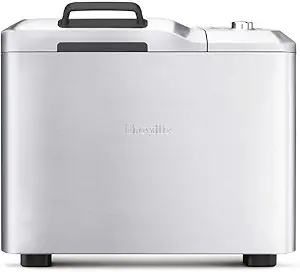 |
| Best Value The sweet spot between price and what you get | KBS Pro Bread Maker MBF-010 |  |
| Best Budget The cheapest option that still gets the job done reliably | KITCHENARM Smart Bread Machine 85203 |  |
| Top Rated A top-rated pick with lots of positive feedback | Zojirushi Home Bakery Virtuoso Plus BB-PDC20BA |  |
| Most Popular A crowd favorite that many people choose with confidence | Cuisinart Bread Maker CBK-110P1ES |  |
| Best Seller A high-volume bestseller chosen again and again | OSIPOTO 2LB Bread Maker BM8205 | 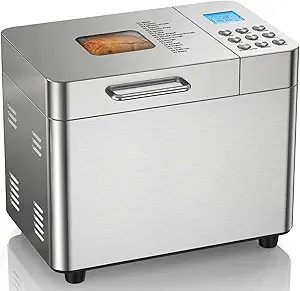 |
Zojirushi Home Bakery Supreme BB-CEC20

| Capacity | 2 pounds |
|---|---|
| Wattage | 700 watts |
| Voltage | 120 volts |
| Number of Programs | 10 |
The Zojirushi Home Bakery Supreme is a high‑quality breadmaker intended to produce consistent rectangular 2‑lb loaves and a variety of other items like cakes, jam, dough and sourdough starter. It uses 10 preset programs and fuzzy logic controls to manage kneading, rising and baking cycles, and offers a 13‑hour delay timer and a quick‑bake mode for faster results. The machine's stainless steel exterior and nonstick inner pan make it look and feel premium, and the LCD control panel is straightforward to program. In practice it delivers even crust color and well-formed loaves when you follow the recipes, and the dedicated settings for dough or jam expand what you can make beyond standard bread. The unit is relatively heavy and sizeable, so it best suits a permanent countertop spot rather than frequent storage, and hand‑wash care for the pan means a bit more cleanup attention. For a buyer who values reliable, bakery‑style loaves and flexible program options, this is a strong choice among high‑end home breadmakers.
Best for: Buyers who want a dependable, no‑nonsense machine that produces bakery‑style 2‑lb loaves and offers flexible programs for experimenting beyond basic bread.
Less Ideal for: Anyone needing a compact, lightweight model for small kitchens or those who prefer fully dishwasher‑safe components.
- Bakes 2‑lb loaves with consistent crust shade control
- Multiple preset programs including cake, jam, dough and sourdough starter
- Fuzzy logic programing for reliable knead/rise/bake cycles
- Stainless steel finish with nonstick inner pan for easier loaf removal and cleaning
- Bulky and heavy so not ideal for small or easily moved kitchens
- Inner pan requires hand washing rather than dishwasher-safe cleaning
Verdict: Choose this Zojirushi if you want a high‑end, reliable breadmaker that consistently produces well-formed 2‑lb loaves and expands into cakes, jam and dough tasks.
Breville Custom Loaf BBM800XL

| Capacity | 2.5 pounds |
|---|---|
| Wattage | 830 watts |
| Number of Programs | 13 |
| Voltage | 120 volts |
The Breville Custom Loaf BBM800XL is built for people who want control over every stage of home bread baking. It offers 13 automatic programs plus nine custom slots so you can save and repeat personalized recipes, and the smart LCD display makes monitoring progress straightforward. The collapsible kneading paddle mixes on a platform and folds away before baking to reduce the hole left by a conventional paddle, and the timed fruit and nut dispenser automates mix-ins for consistent results. Power interruption protection provides up to 60 minutes of backup so long rises are not ruined by brief outages. Practical features include three crust-color settings and dedicated programs for gluten-free and jam, though the unit is fairly heavy and requires hand washing for care. For performance-minded bakers the machine delivers repeatable, bakery-style loaves with a lot of program flexibility, but it occupies counter space and is better suited to serious hobbyists than casual users.
Best for: Bakers who prioritize performance and recipe control and want a machine that can produce consistent, bakery-style loaves with customizable settings.
Less Ideal for: Buyers looking for a compact, lightweight machine for occasional use or minimal cleanup should consider simpler, smaller models instead.
- Extensive program library including 13 automatic programs and nine custom recipe slots
- Collapsible kneading paddle reduces the hole in the finished loaf for better crumb
- Automatic fruit and nut dispenser times mix-ins accurately for consistent flavored loaves
- 60-minute power interruption backup protects long cycles from brief outages
- Relatively heavy and sizable, so it needs a dedicated counter spot
- Requires hand washing for some components which adds cleanup time
Verdict: Choose the Breville Custom Loaf BBM800XL if you want a high-end, highly customizable bread maker that delivers repeatable, bakery-quality loaves.
KBS Pro Bread Maker MBF-010

| Capacity | 2 pounds |
|---|---|
| Wattage | 710 watts |
| Number of Programs | 17 |
| Voltage | 120 volts |
The KBS Pro MBF-010 is a countertop bread maker built to produce a variety of loaves with minimal fuss. It uses a 710W motor and convection-style heating to knead and bake bread in three loaf sizes up to 2.2 pounds, and the 17 preset programs cover basics like whole wheat, gluten-free, sourdough, dough, jam and yogurt plus a custom setting for manual time and temperature adjustments. The ceramic nonstick pan and paddle avoid PTFE coatings and are easy to clean, and an automatic nut/fruit dispenser lets you add mix-ins without monitoring. A tempered glass touch panel, 15-hour delay timer, one-hour keep-warm and 15-minute power-failure recovery make timed baking convenient for morning or evening schedules. The stainless steel exterior and included accessories (extra paddle, measuring tools, recipe book) give a premium, ready-to-use feel. Expect a somewhat heavy unit and a learning curve dialing in custom recipes, but for someone who wants consistent, bakery-style crust and flexible program options this machine delivers practical, repeatable results.
Best for: Buyers who want a high-end, reliable home bread maker that produces bakery-style loaves with flexible presets and minimal day-to-day intervention.
Less Ideal for: People who need an ultra-compact or lightweight unit for small kitchens or those who prefer entirely manual ovens and hands-on bread baking techniques.
- Wide program range (17 presets plus custom) for different breads and doughs
- Convection-style heating and 710W motor for more even crust and interior texture
- Ceramic nonstick pan and paddle reduce concerns about PTFE coatings and are easier to clean
- Automatic nut/fruit dispenser for hands-off addition of mix-ins
- Tempered glass touch panel with 15-hour delay and power-fail recovery for scheduled baking
- Relatively heavy countertop footprint which may be less convenient to store
- Custom programing requires trial and error to perfect nonstandard recipes
Verdict: Choose the KBS Pro MBF-010 if you want a durable, feature-rich machine that consistently bakes bakery-style loaves with hands-off convenience.
KITCHENARM Smart Bread Machine 85203

| Voltage | 120 volts |
|---|---|
| Capacity | 2 pounds |
| Wattage | 550 watts |
| Number of Programs | 29 |
The KITCHENARM Smart Bread Machine is a full-featured home bread maker aimed at both beginners and more experienced bakers. It runs on 120V with 550 watts and offers 29 preset programs covering basic breads, whole wheat, gluten-free options, plus non-bread functions like cake and jam. You can choose three loaf sizes and three crust shades, set a 15-hour delay timer, and save up to four personalized menus with cycle-level adjustments for knead, rest, rise, and bake times. The machine includes a nonstick Teflon-coated pan, a large LCD display, and safety certification for U.S. use. In practice it simplifies one-press baking for repeated recipes and gives flexibility when you want to tweak fermentation or bake profiles for specialty loaves. Trade-offs are the machine's relatively heavy build and hand-wash parts, and its feature set competes with higher-end models that use removable paddles or advanced convection baking for crust control. For its price point it packs a lot of programmability and recipe support, but serious artisan bakers may miss deluxe materials and finer heating control.
Best for: Buyers who want a programmable, feature-rich bread machine that lets them experiment with many recipes and fine-tune cycles without spending on the top-tier artisan models.
Less Ideal for: If you prioritize the absolute best crust control, metal finishes designed for heavy daily use, or dishwasher-safe components, this model is not the best match.
- Extensive 29 preset programs including gluten-free and customizable HOME MADE cycles
- Saves up to four personalized menus with cycle-level control for custom recipes
- Three loaf sizes and three crust settings plus 15-hour delay and keep-warm
- ETL certified for US markets with a clear LCD and user-friendly one-press repeat operation
- Bread pan has a Teflon coating and requires hand washing rather than dishwasher-safe parts
- No mention of advanced heating methods like convection for artisan-style crusts
Verdict: This machine delivers exceptional programmability and recipe flexibility for home bakers who want many preset and customizable cycles without buying a premium artisan bread maker.
Zojirushi Home Bakery Virtuoso Plus BB-PDC20BA

| Capacity | 2 pounds |
|---|---|
| Wattage | 700 watts |
| Voltage | 120 volts |
| Number of Programs | 7 |
The Zojirushi Virtuoso Plus is a premium countertop breadmaker designed to produce reliably consistent loaves with minimal fuss. You load measured ingredients, choose from one of seven programs (including gluten‑free, whole wheat, rapid and vegan), set one of three crust shades, and the machine handles kneading, rising and baking. Dual heaters in the lid and base give even browning and a uniform crumb, while the double kneading blades help develop better dough structure and rise. A clear viewing window and a large LCD make operation straightforward, and the 13‑hour delay timer is handy for scheduling fresh bread for mornings or evenings. Practical extras include a removable nonstick pan, two kneading blades, and basic measuring tools; cleaning still requires hand washing. Tradeoffs are typical for a premium unit: it is heavy and takes counter space, and rapid cycles prioritize speed over the depth of flavor from longer bakes. For buyers who prize consistent, bakery‑style results with flexible program options, this model delivers dependable performance.
Best for: Home bakers who prioritize reliable, repeatable results and want a high-end machine that consistently produces well-browned, bakery-style loaves with minimal intervention.
Less Ideal for: Buyers looking for a lightweight, compact machine for small kitchens or those who prefer fully dishwasher-safe components should consider other options.
- Dual heaters and double kneading blades for even browning and improved dough development
- Seven preset programs including gluten‑free and rapid options for flexible recipes
- Large viewing window and easy LCD controls simplify monitoring and use
- 13‑hour delay timer lets you schedule fresh bread for wake-up or return home
- Removable nonstick pan and included measuring tools make cleanup and setup easier
- Heavy and relatively large, requiring substantial counter or storage space
- Requires hand washing for care rather than dishwasher-safe parts
Verdict: Choose this Zojirushi if you want a high-end, reliability-focused breadmaker that consistently bakes well-shaped, evenly browned 2‑lb loaves with flexible program options.
Cuisinart Bread Maker CBK-110P1ES

| Capacity | 2 pounds |
|---|---|
| Wattage | 550 watts |
| Number of Programs | 12 |
| Voltage | 120 volts |
The Cuisinart CBK-110P1ES is a compact, fully automatic bread machine designed to mix, knead, and bake up to 2 lb. loaves with minimal fuss. It offers 12 preprogrammed menus for standard breads, gluten-free and specialty recipes, plus options for cakes and jams, so you can experiment beyond basic loaves. Settings let you choose from three crust colors and three loaf sizes, and the LCD display with countdown and audible beeps makes selecting programs straightforward. A 13-hour delay-start and 60-minute keep-warm function are useful for scheduling fresh bread, and the removable nonstick vertical pan simplifies loaf removal. The machine is countertop-friendly and runs on 550 watts, but its compact vertical cavity means the shape is a tall loaf rather than a traditional pan loaf. Hand-wash care and mostly plastic construction mean it is not the most heavy-duty option if you plan daily commercial-style use. For home bakers who value convenience and variety, it reliably produces consistent results; for heavy bakers wanting bakery-grade crust control or metal-heavy construction, there are more robust alternatives.
Best for: Buyers who want a reliable, user-friendly home bread maker that can handle a variety of recipes and scheduled baking with minimal setup and clear controls.
Less Ideal for: People seeking a commercial-grade, heavy-duty machine or those who prefer bakery-style pan loaves and advanced crust/crumb control.
- 12 preset programs allow baking a wide range of breads and other items without recipe tinkering
- Three crust color options and three loaf sizes provide customization of appearance and quantity
- 13-hour delay-start and 60-minute keep-warm let you schedule fresh bread when needed
- Removable nonstick vertical bread pan makes loaf removal and cleaning easier
- Mostly plastic construction may feel less durable than higher-end, metal-bodied machines
- Tall vertical loaf shape may not suit users who prefer traditional pan-style loaves
Verdict: A versatile, compact bread maker that delivers consistent, scheduled loaves and a wide set of presets for home bakers seeking convenience and variety.
OSIPOTO 2LB Bread Maker BM8205

| Capacity | 2 pounds |
|---|---|
| Wattage | 600 watts |
| Number of Programs | 17 |
| Voltage | 120 |
The OSIPOTO BM8205 is a straightforward automatic bread maker aimed at home bakers who want consistent loaves with minimal fuss. You add ingredients, pick one of 17 programs (including basic, whole wheat, gluten-free, jam and yogurt), set one of three loaf sizes and crust tones, then let the machine handle kneading, rising and baking. Its 600 W motor and advertised 360 degree heat distribution produce evenly browned crusts, and the nonstick pan plus included hook, measuring cup and recipe book make it easy for beginners. A 15-hour delay timer and 1-hour keep-warm function let you schedule fresh bread for mealtimes, and built-in overheat protection helps protect the motor during long runs. Practical limits include a modest 2 lb maximum loaf and a manual that requires following recommended baking times for each loaf size to get best results. The stainless steel housing and relatively quiet operation make it a tidy countertop appliance, but advanced bakers seeking pro-level crust control or very large artisan loaves may want a dedicated oven or higher-end model.
Best for: Buyers who want a reliable, easy-to-use bread machine that delivers consistent home-baked loaves with preset programs and scheduling rather than manual, artisanal baking control.
Less Ideal for: Those who prioritize professional artisan crust control, very large loaves, or want a fully automated dishwasher-safe interior should consider different models.
- Multiple presets: 17 automatic programs cover basic bread, whole wheat, gluten-free, jam and yogurt
- Large family loaf option: supports up to a 2 lb loaf with three size settings
- Convenience features: 15-hour delay timer and 1-hour keep-warm for scheduled baking
- Easy cleanup and accessories: nonstick pan plus measuring tools and recipe book included
- Stainless steel body and quiet 600 W motor provide a durable, low-noise countertop unit
- Maximum loaf size is limited to 2 lb, not suitable for very large artisan loaves
- Hand wash recommended for care which may require extra maintenance
Verdict: Choose this model if you want a dependable, beginner-friendly bread machine that reliably produces scheduled family-size loaves with a wide range of presets.
Choosing the Right High-End Bread Maker: Key Factors to Consider
Loaf Consistency and Crumb
Consistent loaf shape, internal crumb structure, and even browning matter because they determine whether you get repeatable, bakery-style results. Machines that maintain steady oven temperatures and evenly distribute heat produce better crust color and internal texture.
Differences in heating element placement, pan shape, and cycle timing affect crumb openness and moisture retention. If you bake varied recipes—whole-grain, enriched doughs, or artisan-style loaves—choose a machine known for minimizing hot spots and delivering uniform browning across multiple cycles.
Program Flexibility and Customization
High-end bread makers should offer multiple program presets plus custom settings for loaf size, crust darkness, knead time, and rise cycles. Customization lets you adapt a single machine to many recipes, from quick white loaves to slow-fermented whole-grain breads.
Look for adjustable proofing temperatures, delayed-start timers that handle long fermentation safely, and memory functions that store favorite settings. Greater control reduces the need for manual intervention and yields more predictable results when you tweak recipes.
Kneading System and Motor Power
A strong, well-designed kneading system is important for developing gluten in different dough types. High hydration doughs and whole-grain mixes require more torque, while enriched doughs need gentler handling to retain air.
Check for durable paddles, multiple kneading speeds, and motors that specify continuous duty rather than intermittent cycles. A robust motor and effective paddle geometry translate to better dough development and fewer missed turns or overloaded cycles during heavy use.
Capacity and Loaf Size Options
Capacity affects how much bread you can produce in one cycle and the versatility of recipes you can run. High-end machines often provide several loaf-size settings so you can bake smaller daily loaves or larger family loaves without compromising shape.
Consider the typical household consumption and storage needs when choosing capacity. Larger pans are useful for batch baking but may require longer bake times and different dough hydration to maintain crumb quality.
Ease of Cleaning and Maintenance
Bread-making can be messy, and easy maintenance reduces the friction of using a machine frequently. Removable nonstick pans, accessible kneading paddles, and smooth interior surfaces simplify cleanup after each bake.
Also consider how easy it is to access and service wear parts. Machines with modular, replaceable paddles and clear instructions for cleaning the lid, vents, and heating elements will save time and avoid performance degradation over time.
Construction Quality and Longevity
Higher-end machines should use durable materials and solid construction to withstand frequent use. This includes reinforced housings, metal internal components where possible, and quality fittings that do not loosen after repeated cycles.
Longevity also depends on availability of replacement parts and clear user-service paths. A sturdily built unit typically shows fewer failures in the motor, control board, and kneading assembly under heavy home-bakery use.
Baking Programs Explained
High-end bread makers often offer a mix of factory presets and user-programmable cycles. Presets cover common needs like basic white bread, whole-grain loaves, sweet or enriched doughs, and rapid-bake options. Programmable cycles let experienced bakers set specific knead, rest, rise, and bake periods to match custom recipes.
Understanding what each program does helps you match machine behavior to your recipes. For example, longer rise and lower bake temperatures are better for dense whole-grain loaves, while shorter cycles and higher temperatures suit lighter white breads.
- Look for separate settings for kneading time, proof length, and bake duration
- Memory or custom program slots let you save successful recipes
- Delayed start is useful but ensure it supports safe fermentation times
Managing Whole-Grain and Heavy Doughs
Whole-grain and high-fiber doughs need more kneading and stronger motor torque. They also benefit from extended hydration times and longer fermentation to develop flavor and loosen crumbliness. High-end machines with adjustable knead intensity and extended rise options handle these doughs better.
When working with heavy doughs, reduce the risk of overloading by using smaller loaf sizes or dividing batches. Monitor the first few cycles to determine whether the machine needs slightly longer kneading or rising times for the best texture.
- Choose models with stronger motors and robust paddles for dense dough
- Use slower rise settings to improve flavor development
- Consider splitting very large batches into two cycles to avoid strain
Crust Control and Browning Tips
Crust darkness and texture vary with element placement and cycle length. High-end machines may let you choose from multiple crust settings or even manual finish times to achieve a crisp, thin crust or a darker, thicker crust depending on preference.
If your machine tends to over-brown, reduce the final bake time or select a lighter crust setting. For a crisper exterior, a short additional high-heat finish can help, but be mindful of moisture loss which affects crumb softness.
- Test crust settings on small trials before baking full loaves
- Adjust bake duration in small increments to dial in color and texture
- Use foil lightly if peak browning occurs too fast on the top
Maintaining Peak Performance
Regular maintenance keeps a high-end bread maker performing consistently. Clean pans, paddles, and seals after each use, and check for flour buildup in vents or around the kneading shaft. Replace worn paddles or seals promptly to avoid uneven kneading or leaking oil and crumbs into the motor area.
If the unit has firmware or control board updates, follow manufacturer instructions for safe updating. Keep the machine in a stable location away from heat sources and moisture to extend component life.
- Wipe interiors and remove dried dough before it hardens
- Inspect paddles and shafts for wear every few months
- Store the machine covered to limit dust accumulation
Recipes and Scaling for Home Use
Scaling recipes from one machine to another often requires minor adjustments in hydration, knead time, and rise schedule. High-end machines with multiple loaf-size settings simplify this process by offering predefined timing curves for different loaf volumes.
When adapting a favorite recipe, start by matching the loaf size and testing hydration. Keep notes on knead and rise adjustments so you can reproduce a preferred texture consistently across future bakes.
- Record changes to knead and proof times when you tweak recipes
- Start with smaller test loaves when adapting a new formula
- Adjust hydration by tablespoon increments to fine-tune crumb
How We Chose the Best High-End Bread Maker
We evaluated high-end bread makers using measurable, kitchen-focused criteria that matter for regular home baking. Our selection process emphasized machines with robust motor and kneading systems that handle a range of dough weights and hydration levels. We prioritized units with multiple precision baking programs and customizable settings so experienced bakers can adjust rise times, crust darkness, and loaf size. Durability and serviceability were another filter. We favored models with metal housings or reinforced parts, replaceable wear items, and clear maintenance paths. Ease of cleaning and interior access were included because sticky dough and flour residue are frequent real-world issues. Finally, we considered consistent thermal control and even bake results across loaves, since temperature swings can ruin texture. We excluded entry-level and single-function machines that lack program flexibility or robust construction. Very small-capacity hobby bread makers and appliances without adjustable settings were removed from consideration. The final list reflects machines that meet higher durability and control standards suitable for frequent or serious home bakers.
Our full evaluation process is outlined in our review methodology.
FAQ
How long does a typical bread maker cycle take?
Cycles can range from about 1 hour for rapid programs up to 4 to 5 hours for standard cycles with longer rises. Heavier doughs and larger loaf sizes often require longer knead and proof times.
Can I use wet or artisan-style doughs in a bread maker?
Some high-end machines handle higher hydration doughs better because of stronger motors and adjustable kneading programs. However, extremely wet artisan doughs may need manual finishing in an oven for best crust development.
How often should I replace the kneading paddle or pan?
Replace paddles and pans when you see wear such as warped shapes, flaking nonstick coating, or reduced kneading efficiency. For frequent bakers, inspect these parts every few months and plan replacements as needed.
Is delayed start safe with perishable dough ingredients?
Delayed start is often safe for simple doughs, but avoid long delays with dairy, eggs, or other perishable enrichments unless the machine specifically supports refrigeration-safe delayed cycles. Short delays for convenience are usually acceptable.
What maintenance keeps a machine performing well?
Regular cleaning of pans and paddles, clearing flour from vents, and checking seals and shafts for buildup all help. Periodic inspection of electrical cords and that the unit sits level also reduces strain on the motor.
Final Verdict
When choosing a high-end bread maker, prioritize loaf consistency, program flexibility, and a kneading system robust enough for the kinds of doughs you bake most. Balance capacity with how often you bake and how much storage you need, and factor in ease of cleaning to keep the machine in regular use. Higher-end machines trade upfront complexity for repeatable results and greater recipe flexibility. Focus on the criteria that match your baking habits and frequency, and you will get the best long-term performance from your purchase.