
Note: This article contains affiliate links. If you click on these links and make a purchase, we may earn a small commission at no extra cost to you. This helps support our research and content. Read our full affiliate disclosure here.
If you need a compact freezer that performs like a larger chest unit, a high-end small deep freezer delivers tighter temperature control, quieter operation, and longer-term reliability in a smaller footprint. You may be fitting the unit into a garage, apartment kitchen, or utility closet, so factors like footprint, insulation quality, and energy consumption matter as much as raw capacity. This guide highlights a shortlist of the top small deep freezers in the high-end segment and explains the practical tradeoffs buyers face. We evaluated units based on thermal performance, efficiency, and everyday usability to help you find the right compact freezer for extended frozen storage. Read on for the key decision points and our testing-aligned criteria before the product list.
Top Picks at a Glance
| Best Overall The best all-around choice for most situations | Whynter CUF-112SS Mini Freezer |  |
| Best Quality Built to a higher standard if you want something more solid | Newair 6.7 Cu. Ft. Chest Freezer |  |
| Best Value The sweet spot between price and what you get | DEMULLER 3.5 Cu Ft Chest Freezer |  |
| Best Budget The cheapest option that still gets the job done reliably | 5 SUNDAY LIVING 3.5 Cu.ft Chest Freezer |  |
| Top Rated A top-rated pick with lots of positive feedback | Koolatron KTCF99 Chest Freezer |  |
| Most Popular A crowd favorite that many people choose with confidence | Kismile Chest Freezer BD-80 |  |
| Best Seller A high-volume bestseller chosen again and again | BODACIOUS 7.0 Cu Ft Chest Freezer |  |
Whynter CUF-112SS Mini Freezer

| Capacity | 1.1 cubic feet |
|---|---|
| Wattage | 79 watts |
| Door Orientation | Reversible |
| Number Of Shelves | 1 |
| Voltage | 115 volts |
The Whynter CUF-112SS is a compact upright freezer designed to add dedicated frozen storage in tight spaces. It uses a compressor cooling system and fan-circulated airflow to maintain temperatures between about -11°F and 10.4°F, and the manual defrost design keeps the interior simple to clean. Typical uses include storing ice cream, breast milk, meal prep items, or overflow groceries in kitchens, offices, garages, or basements. The removable slide-out wire shelf and adjustable mechanical thermostat give basic flexibility for organizing items and setting a consistent freeze level, while the reversible door and recessed handle make placement easier in confined layouts. A cylinder lock with two keys is handy when you need to secure contents. Energy Star qualification and a modest 79 watt draw mean it is relatively efficient for continuous use. Limitations are its small 1.1 cu ft capacity and manual defrosting, which make it unsuitable as a primary household freezer for large families, and its feature set is intentionally basic compared with larger high-end models.
Best for: Buyers who want a reliable, energy-efficient compact freezer to add dedicated frozen storage in small rooms or secondary locations and who prioritize footprint and security over large capacity.
Less Ideal for: Families or anyone needing large-volume frozen storage or a no-maintenance frost-free system should consider a larger primary freezer instead.
- Compact upright design fits small spaces like kitchens, offices, garages, or basements
- Reversible door and recessed handle allow flexible placement and a tidy look
- Removable slide-out wire shelf and adjustable thermostat for simple organization and control
- Cylinder door lock provides secure storage with two keys
- ENERGY STAR rated with a low 79 watt power draw for efficient continuous operation
- Only 1.1 cubic feet of storage, limiting the amount and size of items that can be frozen
- Manual defrost requires periodic maintenance and can be less convenient than frost-free models
Verdict: Choose the Whynter CUF-112SS when you need an efficient, compact upright freezer with flexible placement and secure storage for small-space or secondary freezing needs.
Newair 6.7 Cu. Ft. Chest Freezer
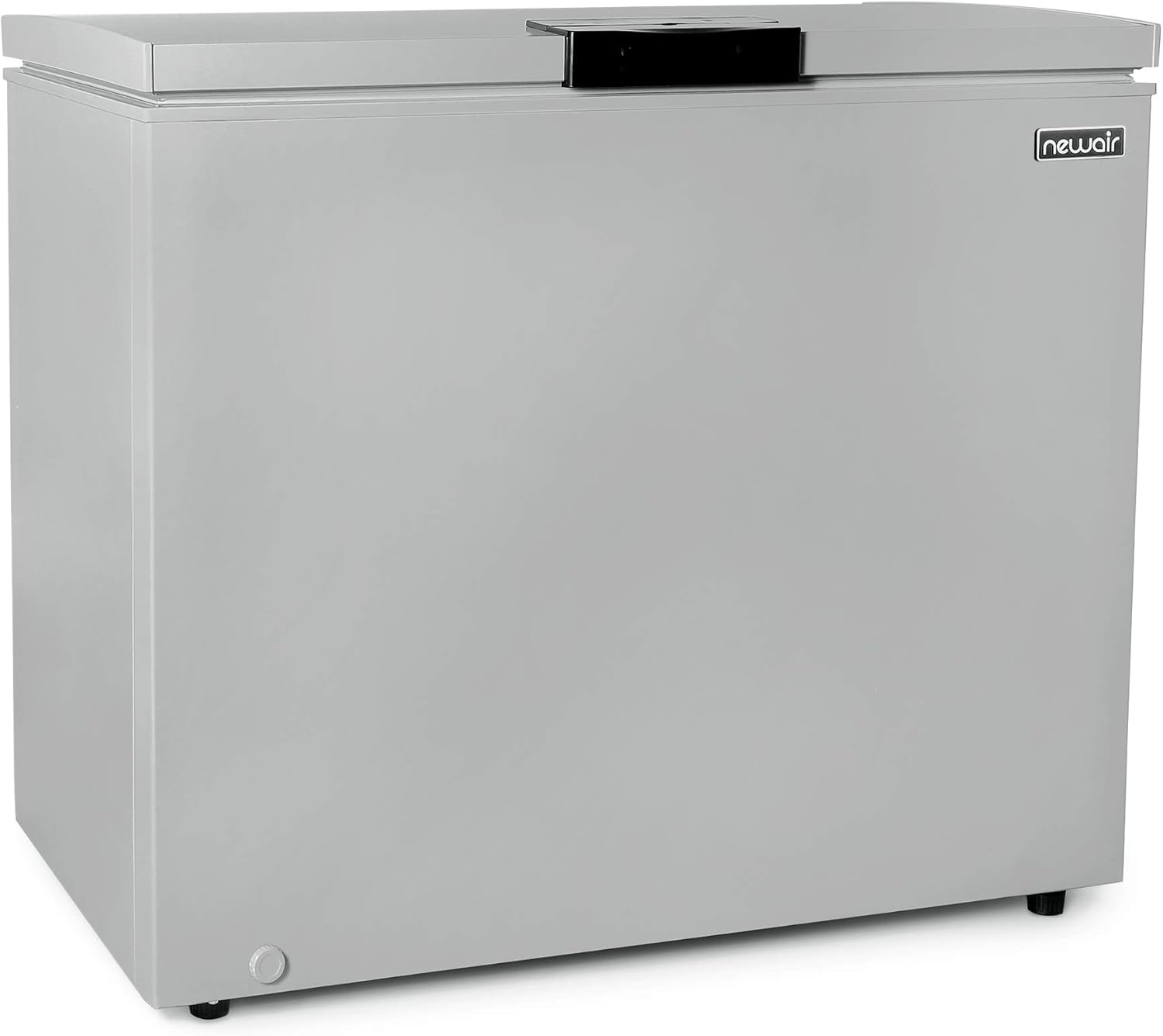
| Capacity | 6.7 cubic feet |
|---|---|
| Wattage | 249 watts |
| Voltage | 110 volts |
| Specification Met | ETL |
This Newair 6.7 cu. ft. chest freezer is a performance-focused compact deep freezer that aims to deliver low temperatures and practical controls in a small footprint. It uses a digital thermostat on the lid with a wide temperature range down to -14.8°F and a Fast Freeze mode to quickly pull down warm items and reduce freezer burn. The top-open design includes a removable wire basket for organizing small items, a door-activated LED light, and a balanced hinge that holds the lid open while you load or sort. A front defrost drain and self-diagnostic system simplify maintenance and troubleshooting, and the unit is rated ETL and intended for freestanding or garage installation. On the downside, it is a small-capacity chest so you will need to manage space carefully for larger bulk storage, and door-only access means bending to reach lower items. For buyers prioritizing reliable cold performance and rapid freezing in a compact, quiet package, this freezer offers useful features that punch above its size.
Best for: Buyers who need a compact, performance-oriented deep freezer that freezes quickly and holds steady low temperatures without taking up much floor space.
Less Ideal for: Families or households that want maximum bulk capacity or frequent upright-style access should consider larger chest freezers or upright models instead.
- Digital temperature control with wide range down to -14.8°F for precise settings
- Fast Freeze mode for quick flash-freezing to reduce ice crystals and freezer burn
- Quiet compressor suitable for garage or utility-room placement
- Removable wire basket and LED light improve organization and visibility
- Self-diagnostic system and front defrost drain simplify maintenance
- 6.7 cu. ft. capacity limits bulk storage for very large households
- Chest design requires bending to access lower items
Verdict: Choose this unit if you want a small but capable deep freezer that delivers precise digital control and rapid flash-freezing performance.
DEMULLER 3.5 Cu Ft Chest Freezer

| Capacity | 3.5 cubic feet |
|---|---|
| Wattage | 70 watts |
| Voltage | 110 volts |
| Door Orientation | Top |
| Number Of Shelves | 1 |
The DEMULLER 3.5 cu ft chest freezer is a compact freestanding unit aimed at adding extra frozen storage in apartments, dorms, garages, or RVs. It uses an electronic control and digital display that lets you set temperature to the nearest 1°F across a wide -15°F to 41°F range, so you can store everything from drinks and produce to rapidly frozen meats and ice cream. The internal layout includes stainless steel storage baskets that keep small items organized and a drain hole to simplify manual defrosting. DEMULLER highlights a D-shaped cooling tube design and a 70 W compressor that they say runs quietly below 38 dB, which makes the unit suitable for shared or noise-sensitive spaces. Practical conveniences like a built-in handle and a clear temperature readout make everyday use straightforward, though the freezer is manually defrosted and its 3.5 cu ft interior is best for moderate storage needs rather than bulk long-term stockpiling. For buyers who need a compact, quietly running freezer with precise temperature control, this model delivers sensible features in a small footprint.
Best for: Buyers looking to add reliable, precisely controlled frozen storage in small living spaces who prioritize compact size and quiet operation.
Less Ideal for: Households that need large-capacity long-term freezer storage or those who want a frost-free, low-maintenance model.
- Electronic digital temperature control with 1°F increments and wide -15°F to 41°F range
- Compact 3.5 cu ft footprint fits apartments, dorms, garages, or RVs
- Includes removable stainless steel baskets for organizing smaller items
- Designed for quiet operation (advertised under 38 dB) suitable for shared spaces
- Manual defrost design requires periodic draining and hand defrosting
- Limited internal volume not suited for large bulk storage needs
Verdict: A compact, quiet chest freezer with precise digital temperature control that fits small spaces and sensible everyday freezing needs.
5 SUNDAY LIVING 3.5 Cu.ft Chest Freezer

| Capacity | 3.5 cubic feet |
|---|---|
| Wattage | 58 watts |
| Voltage | 120 volts |
| Door Orientation | Top |
| Number Of Shelves | 1 |
This compact chest freezer is designed for small households, dorms, garages, or offices that need extra freezer space without a large footprint. It uses a compressor-based cooling system and offers seven temperature levels that range down into deep-freeze territory, so you can tailor coldness for meats, ice cream, or long-term storage. The top-opening lid and included removable basket make organization straightforward, and the unit is quiet in typical operation. Practical benefits include low power draw at 58 watts and simple freestanding installation; the stainless-look top and modest styling help it fit into many rooms. Important downsides are its limited 3.5 cu ft capacity and basic feature set — there is no digital thermostat, fast-freeze mode, or interior lighting — so it is best as a secondary freezer rather than a primary kitchen unit. Expect solid value for a budget-oriented buyer who needs reliable cold storage in a small package.
Best for: Buyers looking for an affordable, space-saving secondary freezer for occasional bulk storage, small households, or rooms without full-size appliances.
Less Ideal for: Users who need a large-capacity primary freezer, precise digital controls, or advanced features like fast-freeze or interior lighting.
- Compact 3.5 cu ft capacity fits small spaces like dorms, apartments, and garages
- Seven adjustable temperature levels for flexible freezing needs
- Includes removable basket for easier organization
- Low power consumption at 58 watts and quiet operation
- Basic controls with no digital thermostat or advanced freezing modes
- Limited interior space not suited for large-batch long-term storage
Verdict: A quiet, energy-efficient compact chest freezer that delivers straightforward, budget-friendly cold storage for small spaces.
Koolatron KTCF99 Chest Freezer

| Capacity | 99 liters |
|---|---|
| Wattage | 125 watts |
| Door Orientation | Top |
| Voltage | 120 volts |
The Koolatron KTCF99 is a compact chest freezer designed to add reliable frozen storage in tight spaces. It uses a low-vibration compressor to maintain temperatures from 0 to -24°C (32 to -11.2°F) and has an external mechanical dial for straightforward temperature control. Typical use is bulk food storage for apartments, cottages, or garages where a narrow footprint and flat-back design help it fit against walls or in corners. Notable features include a removable vinyl-coated wire basket for organizing small items, a stay-open swing-top lid for one-handed loading, and a front-mounted drain with leak-proof plug to simplify manual defrosting and cleaning. Practical benefits are quiet operation, fast initial cooling out of the box, and a magnetic seal plus foam insulation that help keep temperatures steady. The main limitations are the small 3.5 cu ft capacity and manual defrost requirement, which means occasional thawing and draining rather than automatic defrost convenience. For buyers prioritizing dependable compressor cooling and a compact footprint, this freezer is a sensible, no-frills choice.
Best for: Buyers who need a compact, dependable secondary freezer with straightforward controls and quiet operation for apartments, cottages, or small kitchens.
Less Ideal for: Those who want large capacity, automatic defrosting, or a freezer for heavy-duty commercial use should consider larger or auto-defrost models.
- Dependable compressor cooling that keeps temperatures down to -24°C for long-term storage
- Compact, flat-back design fits well in apartments, garages, or tight corners
- Removable hanging wire basket makes organizing small or frequently used items easy
- Front-mounted drain with leak-proof plug simplifies manual defrost and cleaning
- Quiet, low-vibration operation suitable for living spaces
- Manual defrost requires periodic thawing and draining rather than automatic maintenance
- Limited 3.5 cubic foot capacity may not suit larger households
Verdict: A compact, reliable chest freezer that delivers quiet compressor cooling and practical features for small-space frozen storage.
Kismile Chest Freezer BD-80

| Capacity | 3.2 cubic feet |
|---|---|
| Door Orientation | Top |
| Number Of Shelves | 1 |
| Installation Type | Freestanding |
The Kismile BD-80 is a small chest freezer geared toward users who need extra frozen storage in tight spaces. It offers a 3.2 cubic foot interior with two removable baskets for organizing smaller items and a 7-step thermostat that runs from about 6.8°F to -7.6°F so you can choose between normal and deeper freezing. The balanced hinge-style top lid stays open at several angles for easier loading, and a built-in drain speeds defrost and cleaning. Kismile claims low noise (under 40 dB) and modest daily energy use (about 0.68 kWh/day), which makes it practical for bedrooms, dorms, or offices where quiet and efficiency matter. Limitations to note are the modest capacity if you need long-term bulk storage and the temperature range, which is adequate for everyday frozen goods but not for commercial-level deep freezing. Installation is simple since the unit is freestanding, but plan for upright sit time before first use and for access to the left-side power cord when positioning the freezer.
Best for: Buyers who want a quiet, energy-efficient secondary freezer for small spaces and who value user-friendly features like removable baskets and an easy-open lid.
Less Ideal for: People who need high-capacity or ultra-low commercial freezing for long-term bulk storage should look at larger or professional-grade freezers instead.
- Compact 3.2 cu ft capacity fits small kitchens, dorms, or offices
- Adjustable 7-grade thermostat for flexible freezing needs
- Two removable baskets help keep smaller items organized
- Balanced hinge lid that holds open at multiple angles for easy access
- Built-in drain simplifies defrosting and cleaning
- Limited capacity for large or long-term bulk storage
- Temperature range tops out at about -7.6°F, not suitable for very low-temperature storage
Verdict: A quiet, energy-conscious compact chest freezer that delivers practical frozen storage and easy maintenance for small-space buyers.
BODACIOUS 7.0 Cu Ft Chest Freezer

| Capacity | 7 cubic feet |
|---|---|
| Voltage | 110 volts |
| Number Of Shelves | 2 |
| Installation Type | Countertop, Freestanding |
| Specification Met | ETL |
This small chest freezer provides usable deep-freeze capacity in a compact footprint and is aimed at homeowners who need extra frozen storage without a full-size unit. It cools via a top-opening lid with a six-setting adjustable thermostat so you can dial in temperatures for meats, prepared meals, or ice cream, and the removable basket helps keep frequently used items accessible. The unit emphasizes energy efficiency and quiet operation, and includes a manual defrost drain to simplify maintenance. Practical touches such as ETL listing, a stainless-style top, and countertop or freestanding installation add to its versatility in kitchens, garages, or apartments. Expect normal compressor noise and some exterior warmth during heavy cycling, and the manufacturer recommends letting the unit sit 24 hours before first use and avoiding prolonged MAX setting to protect the compressor. For buyers seeking straightforward, reliable extra freezer space, this model balances performance and low operating cost without complicated controls.
Best for: Buyers who want a reliable, no-frills secondary freezer with low running costs and quiet operation for home, apartment, or garage use and who prefer a straightforward, easy-to-operate appliance.
Less Ideal for: Shoppers who need automated frost-free operation, precise digital temperature controls, or very large capacity for bulk long-term storage should consider other options.
- Energy-efficient design for lower running costs
- Quiet operation suitable for indoor spaces
- Six-setting adjustable thermostat for flexible temperature control
- Removable basket and defrost drain for easier organization and cleaning
- Manual defrost requires periodic maintenance
- Continuous MAX setting is not recommended and may shorten compressor life
Verdict: A compact, energy-conscious chest freezer that delivers quiet, dependable extra frozen storage for buyers seeking a practical, low-maintenance solution.
Choosing the Right High-End Small Deep Freezer: Key Factors to Consider
Temperature Stability
Consistent internal temperature is critical for food safety and long-term storage. A high-end small deep freezer should maintain setpoint temperatures with minimal fluctuation when you open the lid, add fresh items, or during brief power variations.
Units with better compressors and precise thermostatic or electronic controls recover faster after door openings and handle higher load changes without thawing risk. Temperature stability also reduces freezer burn and preserves texture and flavor over months of storage.
Energy Efficiency
Because the freezer will often run continuously, efficiency affects both operating cost and heat output into the surrounding space. High-end models use thicker insulation, variable-speed compressors, or more efficient refrigerant circuits to reduce draw while maintaining low temperatures.
When comparing models, check standardized energy ratings, estimated annual energy use, and features like adaptive defrost. Better efficiency pays off over the appliance lifetime and is especially important in small living spaces where excess heat from the appliance increases cooling loads.
Insulation and Build Quality
Insulation thickness and cabinet construction determine how well a compact freezer retains cold during power loss or frequent use. High-end units typically have higher-density foam insulation and more robust seals that limit warm air migration.
Sturdier construction also tends to mean more reliable hinges, gaskets, and interior liners that resist cracking and water intrusion. Good build quality reduces the chance of frost accumulation and helps maintain consistent long-term performance.
Noise and Vibration
Small deep freezers are often placed in living areas, kitchens, or basements where noise matters. High-end units should minimize compressor cycling noise and mechanical vibration through better damping and quieter components.
Lower noise levels improve acceptability for indoor placement and reduce disturbance in adjacent rooms. Consider measured decibel ratings when available and where the appliance will sit relative to sleeping or living spaces.
Interior Layout and Usability
How the interior is organized affects how you use the freezer day to day. Look for flexible baskets, removable dividers, and accessible shallow storage areas for frequently used items. Lighting and clear labeling or transparent baskets make it easier to find items without prolonged lid openings.
Ease of defrosting and straightforward control interfaces save time on maintenance. A well-thought-out interior reduces wasted space and helps you pack the unit for maximum usable capacity.
Serviceability and Warranty
High-end appliances should be supported by robust warranties and service options. A longer warranty often indicates confidence in components such as compressors and sealed systems. Consider the availability of local service technicians and how easy it is to access replaceable parts like gaskets or control boards.
Good serviceability reduces lifetime ownership hassles and potential downtime. Confirm warranty terms for both parts and labor and any requirements for professional installation that might affect ongoing support.
Sizing and Capacity Planning
Small deep freezers vary in internal volume and usable capacity depending on basket design and interior layout. Think about how you plan to use the freezer—bulk long-term storage, extra overflow for special occasions, or storing prepped meals—and choose capacity accordingly.
Measure the intended installation spot before purchase. Remember to leave clearance for ventilation and to account for lid swing. A slightly larger footprint may be worth it if the interior layout turns that space into truly usable storage rather than awkward dead zones.
- Estimate the number of cubic feet you need based on weekly or monthly frozen purchases.
- Account for baskets and divider footprint when judging usable space.
- Allow recommended clearance around the cabinet for airflow and service access.
Defrost Methods and Maintenance
High-end small deep freezers often use manual defrost to achieve lower long-term temperatures, while some models include adaptive or partial auto-defrost systems to reduce user maintenance. Manual defrost can give better efficiency and colder temperatures but requires occasional thaw cycles.
Evaluate how easy it is to remove ice buildup and whether the interior design channels meltwater effectively. Consider how often you are willing to schedule maintenance and whether the unit includes helpful features like drain plugs or removable baskets that simplify the job.
- Manual defrost typically yields lower running temperatures but needs more upkeep.
- Auto-defrost reduces user effort but can raise steady-state temperatures slightly.
- Look for accessible drains and removable interior components for easier cleaning.
Installation Considerations
Placement affects performance and convenience. Avoid installing the freezer in poorly ventilated nooks or extremely hot environments, as high ambient temperatures can increase energy consumption and reduce cooling capacity. Garages and uninsulated sheds may expose the unit to temperature swings that affect compressor cycling.
Plan for power requirements and ensure the outlet is on a dedicated circuit if local codes recommend it. Check that the floor can support the unit and that the lid can open freely without hitting nearby objects.
- Maintain manufacturer-recommended clearance for ventilation.
- Keep the unit away from direct sunlight and heat sources.
- Ensure stable, level flooring to prevent vibration and stress on hinges.
Monitoring and Controls
High-end models often offer more precise digital controls, external temperature readouts, or even Wi-Fi monitoring. These features make it easier to check temperature remotely and get alerts for power loss or out-of-range conditions.
Decide whether you need advanced monitoring. For long-term storage of temperature-sensitive items, a digital thermostat with a reliable display and alarm is valuable. Simpler mechanical controls can be fine for routine frozen food but provide less visibility into real-time performance.
- Digital controls improve setpoint accuracy and allow finer adjustments.
- External probes or alarms help protect stored goods during power events.
- Remote monitoring is useful for unattended locations like garages.
Energy Use and Operating Costs
Energy consumption is a practical long-term cost to evaluate. Compare estimated annual kilowatt-hour use when available, and consider features that reduce runtime like thicker insulation and efficient compressors.
Some higher-end small freezers include eco modes or smart defrost cycles that cut power during low-demand periods. Over the appliance lifespan, energy differences can add up, so factor estimated energy into your ownership budget.
- Check standardized energy estimates where provided.
- Look for energy-saving features like variable-speed compressors.
- Consider location impact; warmer rooms may increase energy draw.
How We Chose the Best High-End Small Deep Freezer
We focused on features and performance metrics that matter most for small deep freezers intended for high-end home use. Primary evaluation criteria included temperature stability under varying load conditions, insulation and build quality that affect cold retention and frost buildup, and energy efficiency as rated by standardized testing or manufacturer specifications. We also assessed usability factors such as interior organization, defrost method, controls and monitoring options, and noise levels for apartment or indoor placement. Reliability signals included warranty length and known build materials that reduce failure risk. We excluded models aimed strictly at commercial or lab use, ultra-budget units with limited thermal control, and chest freezers with limited insulation performance. The shortlist favors compact units that balance small footprint with sustained low temperatures and efficient operation. In addition to the core metrics above, we considered maintenance needs and available service support when deciding which models earned a place on the list.
Our full evaluation process is outlined in our review methodology.
FAQ
How much clearance does a small deep freezer need for proper ventilation?
Most units require a few inches of clearance at the back and sides for airflow. Check the manufacturer's installation instructions, but plan for at least two to three inches behind the cabinet and a small gap on the sides to allow heat dissipation and service access.
Is manual defrost better than auto-defrost for long-term storage?
Manual defrost often achieves lower temperatures and can be more energy efficient, which is beneficial for long-term frozen storage. However, it requires periodic thawing. Auto-defrost reduces maintenance but may keep steady-state temperatures slightly warmer.
Can I install a small deep freezer in an unheated garage?
It depends on the expected ambient temperature range. Many high-end compact freezers can operate in cooler garages, but extreme cold or heat can affect performance and compressor operation. Consult the operating temperature range for the unit before installing in an unheated space.
What noise level should I expect from a high-end small deep freezer?
Noise varies by model, but high-end units typically use quieter compressors and better damping to minimize sound. If the unit will sit near living or sleeping areas, look for measured decibel ratings or customer reports of low vibration and humming.
How often should I defrost a manual small deep freezer?
Defrost frequency depends on usage and humidity but is commonly once or twice a year for well-designed high-end units. Thaw sooner if frost buildup reduces usable space or if door seals are letting in moisture.
Final Verdict
Choosing a high-end small deep freezer is about balancing compact size with the thermal performance and durability you need for long-term frozen storage. Prioritize temperature stability, insulation quality, and energy efficiency if you plan to store items for months, and weigh usability features like interior organization and monitoring based on how often you access the unit. If quiet operation or placement in living spaces matters, give noise and vibration ratings extra weight. Ultimately, select the unit whose design and documented performance best fit your installation constraints and maintenance tolerance to ensure dependable cold storage over time.