
Note: This article contains affiliate links. If you click on these links and make a purchase, we may earn a small commission at no extra cost to you. This helps support our research and content. Read our full affiliate disclosure here.
If you need compact long-term freezer capacity without compromising on performance or fit-and-finish, choosing a high-end small upright freezer matters. These units are designed to deliver steady temperature control, quiet operation, and efficient internal layouts that make it easier to organize frozen goods in limited spaces. This guide covers six shortlisted options that represent the top choices in the high-end compact upright category. We focus on metrics that matter in real use: temperature stability, usable capacity and layout, noise and efficiency, and build quality. Read on to understand the tradeoffs and which features will matter most for your kitchen.
Top Picks at a Glance
| Best Overall The best all-around choice for most situations | Summit VT65 Upright Freezer |  |
| Best Value The sweet spot between price and what you get | Frigidaire Upright Freezer 6.5 cu ft |  |
| Best Budget The cheapest option that still gets the job done reliably | Antarctic Star KS-35F Upright Freezer |  |
| Top Rated A top-rated pick with lots of positive feedback | BLACK+DECKER 11 Cu. Ft. Convertible Freezer Refrigerator |  |
| Most Popular A crowd favorite that many people choose with confidence | Whynter CUF-301SS 3.0 cu ft Upright Freezer |  |
| Best Seller A high-volume bestseller chosen again and again | Frostorm 3.2 Cu Ft Mini Fridge |  |
Summit VT65 Upright Freezer

| Capacity | 3.5 cubic feet |
|---|---|
| Voltage | 120 volts |
| Door Orientation | Right |
| Installation Type | Freestanding |
The Summit VT65 is a compact, counter-height upright freezer built to commercial specs for customers who need reliable low-temperature storage in a small footprint. It reaches very low temperatures (advertised to around -30 C) and uses a digital thermostat for precise control, while three interior basket drawers help organize contents and reduce exposure when the door is opened. The unit is factory-listed to NSF-7 standards and meets UL-471, which makes it suitable for commercial kitchens or medical storage where certified temperature performance matters. Its slim 24 inch width and 3.5 cu ft capacity let it sit under counters or in narrow service areas, and a factory-installed lock adds security. Expect straightforward freestanding installation and the convenience of a counter-height profile, but be aware this is a small-capacity freezer so it is not intended for large-batch storage needs. Noise, exact run-cycle characteristics, and energy use are typical trade-offs for a commercial-capable compressor in a compact cabinet.
Best for: Buyers who need a compact, commercial-grade upright freezer for professional or high-performance home use where certified low temperatures and a small footprint are priorities.
Less Ideal for: Anyone who needs large-volume frozen storage or a space for bulk household freezer needs should choose a larger-capacity chest or full-size upright model.
- Commercial NSF-7 and UL-471 listing for certified temperature performance
- Digital thermostat provides precise temperature control
- Reaches very low temperatures suitable for long-term preservation or pharmaceutical storage
- Slim, counter-height footprint fits tight spaces and under counters
- Factory-installed lock for added security
- Small 3.5 cu ft capacity limits how much can be stored
- No detailed energy usage or sound level information provided
Verdict: A compact, commercial-rated upright freezer that delivers certified low-temperature performance and a slim, counter-height fit for professional or space-constrained environments.
Frigidaire Upright Freezer 6.5 cu ft

| Capacity | 6.5 cubic feet |
|---|---|
| Wattage | 760 watts |
| Door Orientation | Reversible |
| Number Of Shelves | 6 |
| Installation Type | Freestanding |
The Frigidaire 6.5 cu. ft. upright freezer is a compact freestanding model built for extra frozen storage in tight spaces like kitchens, cabins, RVs, or dorms. It uses a straightforward manual control to set temperature and provides six wire shelves plus a removable basket to keep contents organized and accessible without digging through a chest-style unit. The flush-back design and recessed handle help fit the unit into narrow spots and the reversible door adds placement flexibility. Practical touches include a drain hole to simplify manual defrosting and adjustable leveling legs for stability on uneven floors. Expect basic, reliable performance rather than advanced features like automatic defrost or smart controls, and the vinyl-coated exterior and stainless door trim favor easy cleaning over premium finishes. For buyers prioritizing simple, usable frozen capacity and organized shelving in a small footprint, this freezer delivers sensible functionality with few surprises.
Best for: Buyers who need a compact, easy-to-install freezer with organized shelving and straightforward controls for regular household or small-space use.
Less Ideal for: People who want a low-maintenance, frost-free freezer or smart connectivity features should look at higher-end models with automatic defrost and remote controls.
- Six interior wire shelves plus a removable basket for organized storage
- Reversible door and recessed handle for flexible placement in tight spaces
- Flush-back design and adjustable legs make installation in small areas easier
- Manual defrost drain hole simplifies the defrosting process
- Manual defrost means more maintenance than auto-defrost models
- Lacks advanced features like smart controls or frost-free operation
Verdict: A practical, space-saving upright freezer that delivers organized frozen storage and placement flexibility for buyers who value simple, reliable performance.
Antarctic Star KS-35F Upright Freezer

| Capacity | 1.1 cubic feet |
|---|---|
| Voltage | 115 volts |
| Number Of Shelves | 1 |
| Specification Met | ETL |
The Antarctic Star KS-35F is a small upright freezer aimed at apartments, dorms, or offices that need extra frozen storage without a large footprint. It offers 1.1 cubic feet of internal space, a single removable shelf for basic organization, and a 7-level thermostat that covers a wide temperature range for everyday freezing needs. The unit is freestanding and ETL listed, runs on standard 115V power, and uses R600a refrigerant. Practical touches include reversible door hinge, adjustable feet, and reinforced door seals to minimize cold-air loss. Performance-wise the compressor is marketed as low-power and quiet, with the listing claiming about 0.45 kWh/day consumption and noise around 40 dB, which makes it suitable for living areas. Limitations to expect are the modest capacity and only one shelf, so bulky items or large frozen batches require creative stacking, and manual defrosting is necessary. For buyers wanting a simple, space-saving secondary freezer the KS-35F covers the basics reliably, but it is not designed to replace a full-size freezer for heavy-duty or large-family use.
Best for: Buyers looking for an inexpensive, space-saving secondary freezer for an apartment, dorm, or office who prioritize low running costs and quiet operation.
Less Ideal for: Those who need to freeze large volumes, store bulky items regularly, or want a frost-free, hands-off freezer solution should consider larger or automatic-defrost models.
- Very compact footprint for tight spaces
- 7-level adjustable thermostat for flexible freezing
- Low claimed energy use suitable for frequent runtime
- Reversible door hinge and adjustable feet for flexible placement
- Limited internal capacity and only one shelf reduce large-item storage options
- Requires manual defrosting
Verdict: A compact, budget-friendly upright freezer that delivers basic, energy-efficient frozen storage for small spaces.
BLACK+DECKER 11 Cu. Ft. Convertible Freezer Refrigerator

| Capacity | 11 cubic feet |
|---|---|
| Door Orientation | Reversible |
| Number Of Shelves | 4 |
| Voltage | 120 volts |
| Specification Met | CSA, Energy Star |
This BLACK+DECKER upright unit serves as a flexible cold-storage solution for basements and garages by converting between a full-size freezer and a refrigerator. It offers 11 cubic feet of usable space with four removable glass shelves, a bottom storage compartment with basket and two door bins to organize bulk items, frozen foods and larger containers. Frost-free operation removes the need for manual defrosting and the LED digital temperature display makes switching modes and fine-tuning temperatures straightforward, from fast-freeze to fridge settings. Additional practical touches include an interior LED light, reversible door and a pair of leveling legs plus roller wheels to ease placement on uneven basement floors. It uses R600a refrigerant and meets ENERGY STAR efficiency standards, so running costs are reasonable for continuous basement use. Limitations to consider are the unit weight and footprint that require enough clearance during installation, and while versatile it is a single-compartment convertible unit so you cannot run separate freezer and fridge zones simultaneously.
Best for: Buyers who want a single flexible cold-storage appliance for a basement that can switch between long-term freezing and everyday refrigeration depending on seasonal needs.
Less Ideal for: Families who need simultaneous freezer and refrigerator zones or very tight installation spaces where a smaller unit is required.
- Convertible freezer-to-refrigerator mode for flexible basement storage needs
- Frost-free design eliminates manual defrosting
- Digital LED temperature control with a wide temperature range
- ENERGY STAR rated for efficient continuous operation
- Removable glass shelves and door bins for organized storage
- Single compartment cannot function as a freezer and refrigerator at the same time
- Large footprint and heavy weight make placement and moving more difficult
Verdict: Choose this convertible BLACK+DECKER if you need an energy-efficient basement unit that can switch between full freezer and refrigerator modes for seasonal or overflow storage.
Whynter CUF-301SS 3.0 cu ft Upright Freezer

| Capacity | 3 cubic feet |
|---|---|
| Temperature range | -14° to 50° F |
| Wattage | 100 |
| Door orientation | Reversible |
| Number of shelves | 3 |
The Whynter CUF-301SS is a small upright freezer designed for tight spaces such as garages, offices, dorms, or kitchens and can be switched to refrigerator mode when you need chilled storage. It uses a compressor-based cooling system with a mechanical dial that sets refrigerator temperatures from 32 to 50°F or freezer temperatures from -14 to -11°F, and includes two wire shelves plus a removable slide-out basket for basic organization. The reversible-swing stainless steel door and recessed handle make placement flexible while the included cylinder lock and keys let you secure contents in shared spaces. Rated to use relatively little energy, this unit is quiet enough for nearby rooms and runs on standard 115V household power. Limitations for garage use include modest capacity—only 3 cubic feet—and basic mechanical controls rather than precise digital settings, so it is best for regular food and beverage storage rather than long-term bulk freezing or temperature-critical items.
Best for: Practical buyers who need a compact, energy-conscious cold storage unit for a garage, office, or small household space and value flexibility between fridge and freezer modes.
Less Ideal for: Users who need large capacity or precise temperature control for long-term freezing, or those who store large frozen loads regularly.
- Convertible freezer/refrigerator mode for flexible cold storage needs
- Reversible stainless steel door and recessed handle for flexible placement
- Integrated lock with two keys for secure shared-space storage
- Quiet compressor operation suitable for near-room placement
- Includes removable shelf and slide-out basket for basic organization
- Only 3.0 cu ft capacity, limiting bulk storage
- Mechanical thermostat lacks precise digital control
- Not designed for heavy-duty or large-volume freezing tasks
Verdict: A compact, energy-conscious convertible freezer that fits garages and small spaces when you need a reliable, secure solution for everyday frozen or chilled storage.
Frostorm 3.2 Cu Ft Mini Fridge
| Capacity | 3.2 cubic feet |
|---|---|
| Freezer Capacity | 0.3 cubic feet |
| Defrost System Type | Manual |
| Cooling Method | Compressor |
| Voltage | 115 volts |
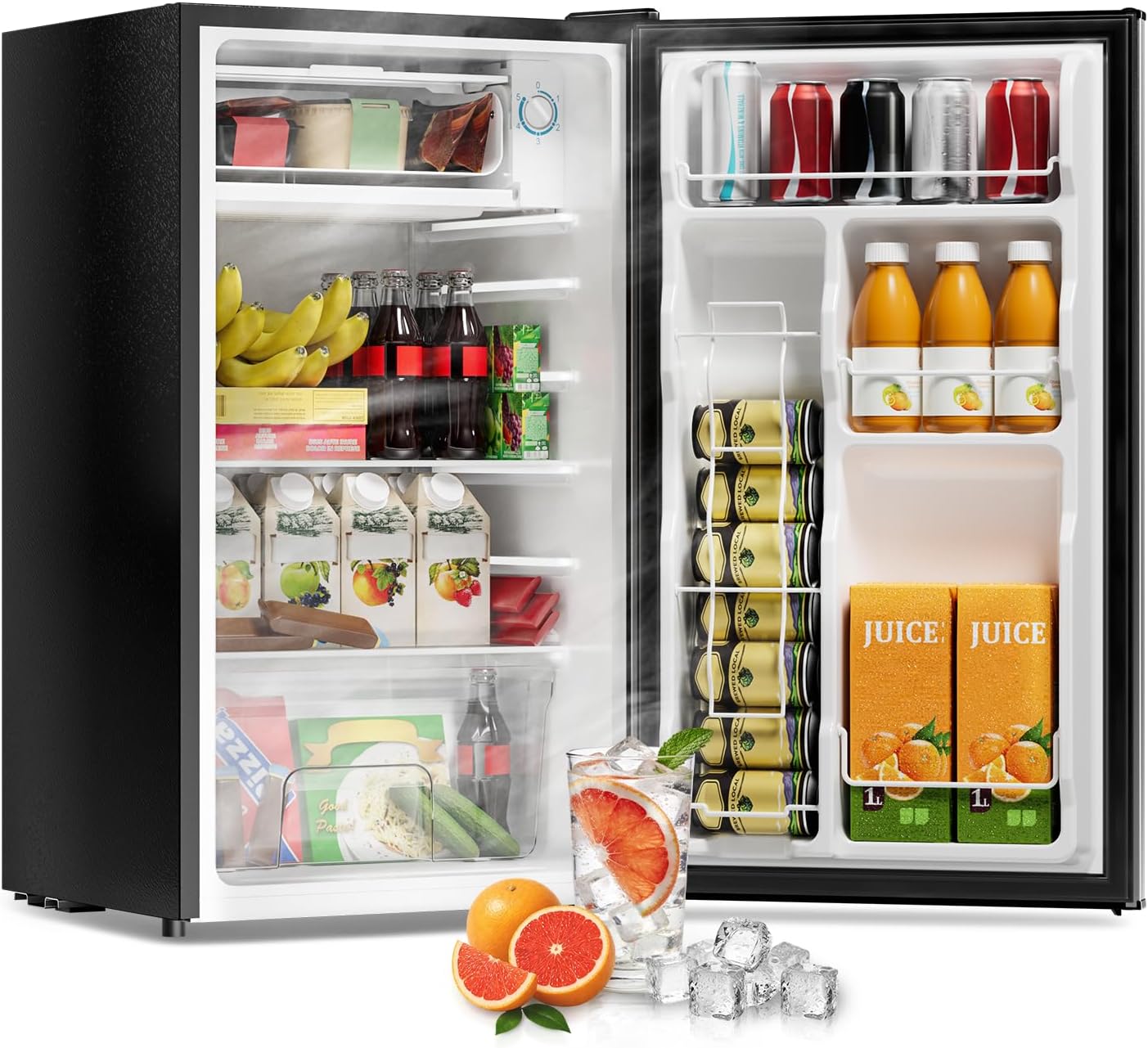
The Frostorm 3.2 Cu Ft Mini Fridge packs a full-top freezer and usable refrigerator space into a compact freestanding cabinet meant for small rooms and offices. It uses a compressor cooling system with a mechanical 1–5 thermostat so you can dial in temperature easily; the separate 0.35 cu ft upright freezer reaches typical ice-making temperatures while the main compartment stores drinks, groceries, and meal prep. Adjustable shelves, door bins, and included accessories like a beverage rack and ice mold help organize contents, and the reversible door lets you fit the unit into tight layouts. Energy use is modest at about 0.6 kWh per day and the unit is ETL certified, which should reassure buyers prioritizing safe, economical operation. Expect manual defrosting and the usual noise and temperature swings associated with compact compressors, and the freezer is best for short-term frozen storage rather than long-term preservation.
Best for: Buyers who want a reliable, energy-conscious compact fridge for a bedroom, dorm, or office and prefer a straightforward, safety-certified appliance with easy temperature control.
Less Ideal for: Those needing large frozen storage, precise long-term freezing, or an ultra-quiet, silent cooler should consider larger freezers or different cooling technologies.
- Compact 3.2 cu ft capacity with a dedicated top freezer for ice and quick-freeze items
- Compressor cooling for reliable cold performance in varying room temperatures
- Reversible door improves placement flexibility in small spaces
- Adjustable shelves, door bins, and included accessories help organize food and beverages
- Relatively low energy use (~0.6 kWh/day) and ETL safety certification
- Freezer is small and suited to short-term storage and ice only
- Manual defrost requires occasional maintenance
- Compressor models can be louder than thermoelectric mini fridges
Verdict: A compact, ETL-certified mini fridge that balances usable fridge space with low daily energy use, making it a sensible pick for safety- and cost-conscious small-space buyers.
Choosing the Right High-End Small Upright Freezer: Key Factors to Consider
Temperature Stability
A freezer that holds a steady temperature prevents thaw cycles, freezer burn, and food safety risks. Look for units with reliable thermostatic control, good compressor modulation, and sufficient evaporator sizing. Consistent temperatures matter more in compact freezers because smaller interior volumes change temperature faster when the door opens or when fresh items are added.
Temperature stability also affects how tightly you can pack food. If the freezer maintains setpoint under load, you can fill shelves confidently without risking partial thawing. For high-end models, seek tighter temperature tolerances and features like adaptive defrost or multi-point sensors that reduce temperature swings.
Usable Capacity and Internal Layout
Rated capacity is only part of the story. Usable capacity depends on shelf configuration, drawer sizing, and how much vertical clearance is lost to mechanical components. Adjustable shelving, removable bins, and door storage expand flexibility for irregular items like tall frozen treats or large meal containers.
Consider how you plan to organize storage. Vertical organizers and clear drawers make it easier to access frequently used items in a small upright. Depth and shelf spacing determine whether large casserole dishes or wide packages will fit without wasting space.
Energy Efficiency and Insulation
Insulation quality and compressor efficiency determine operating costs and cooling consistency. High-end small upright freezers often use thicker foam or improved door seals to reduce thermal gain, which is especially important in compact units that have a higher surface-area-to-volume ratio.
Efficient components also reduce run time and heat rejection into the surrounding room. For kitchen installations where the freezer will be near other appliances or in a warm zone, better insulation and efficient compressors keep both utility use and ambient heat lower.
Noise and Vibration
Noise matters in open-plan kitchens, office pantries, or living areas adjacent to the freezer. High-end models typically prioritize quieter compressors, smoother fans, and vibration-damping mounts to minimize hum, clicks, and rattle. Evaluate typical dB ratings and look for reports of vibration affecting nearby cabinetry.
Vibration can also accelerate wear on internal shelves and cause packages to shift. Better mechanical isolation and quieter operation make a unit feel more premium and less intrusive in everyday home use.
Build Quality and Finish
Materials, hinge design, and door fit determine how well a freezer holds up over time and how it integrates with premium kitchen aesthetics. Solid hinges, thick door gaskets, and corrosion-resistant interiors extend the usable life and protect stored food.
A refined finish and consistent tolerances also affect sealing performance and perceived value. For built-in or visible placements, choose a finish and handle style that matches surrounding cabinetry or design intent.
Serviceability and Warranty Support
Repairability and warranty terms reduce long-term ownership risk. High-end freezers that provide accessible components, replaceable door seals, and documented service procedures are easier to maintain. Look for clear warranty coverage on sealed systems and guidance on filter or gasket replacement.
Service networks and straightforward diagnostic features save time and expense if a unit needs attention. Prioritize models with transparent maintenance recommendations and accessible parts so small issues do not become major hassles.
Sizing for Your Space and Load
Measure both the installation footprint and required clearance for ventilation and door swing before choosing a unit. Small upright freezers can vary in depth and required airflow; some premium designs need a few inches behind the cabinet for proper heat rejection. Accurate measurements prevent awkward returns or performance issues caused by restricted airflow.
Think about how you typically store frozen goods. If you use a lot of tall containers or full baking dishes, deeper shelves and adjustable spacing are more important than maximum cubic feet. For narrow galley kitchens, a slimmer profile that prioritizes vertical storage may make more sense than a wider model.
- Allow for recommended clearance at the rear for ventilation.
- Factor in door swing and adjacent cabinetry when measuring.
- Consider built-in versus freestanding installation needs.
Noise Considerations in Open Kitchens
High-end compact freezers often advertise quieter operation, but cumulative noise from compressor cycling and fans can still be noticeable in open-plan layouts. Place the freezer away from living areas when possible or ensure sound-isolating mounting to reduce transmitted vibration.
If noise is a key concern, look for models with explicit dB ratings and customer reports that corroborate low-sound operation. Also consider anti-vibration feet and softer shelving materials that do not amplify vibration.
- Check typical idle and active dB levels when available.
- Inspect mounting systems for rubberized or damped supports.
- Plan installation to avoid direct contact with cabinets that may rattle.
Organizational Accessories That Make a Difference
Removable bins, slide-out drawers, and clear fronts improve visibility and reduce the time the door stays open. Small improvements like labeled bins and adjustable dividers can significantly increase usable space and reduce food waste.
Magnetic or snap-in dividers and dedicated space for thin items such as pizza boxes or frozen trays help keep items organized and accessible. Accessories that are dishwasher safe or easy to sanitize are preferable for regular use.
- Look for full-extension drawers to reach the back without unloading.
- Transparent bins let you see contents at a glance.
- Dishwasher-safe trays simplify cleaning and maintenance.
Installation Tips for Built-In and Freestanding Use
Confirm whether the unit is rated for built-in installation if you plan to tuck it into cabinetry. Built-in-rated compact uprights are designed to operate with less surrounding airflow and often include front-venting options. Freestanding units usually need more clearance and should not be enclosed without added ventilation.
Leveling the unit and ensuring a flat, stable surface will reduce noise and wear. Use a small gap between the freezer and nearby walls to allow for airflow and to prevent heat buildup that can reduce efficiency.
- Verify built-in versus freestanding ratings before ordering.
- Use a bubble level and adjustable feet for a stable installation.
- Provide the manufacturer-recommended ventilation clearance.
Maintaining Peak Performance Over Time
Regular maintenance helps a small upright freezer keep temperature stability and efficiency. Clean door gaskets periodically, inspect drain channels if present, and defrost according to the manufacturer schedule if the unit is manual-defrost. Accumulated frost and dirt on coils increase run time and reduce cooling performance.
Keep the freezer reasonably full for better temperature retention, but avoid overpacking that blocks air circulation. Periodic interior checks and rotating stock reduce forgotten items and minimize unwanted odors.
- Wipe and inspect door gaskets monthly for a tight seal.
- Clean external coils or vents annually to maintain efficiency.
- Defrost manual models before frost buildup exceeds recommended levels.
How We Chose the Best High-End Small Upright Freezer
We selected units that meet thresholds for build quality, temperature performance, and practical usability in compact installations. Our filters emphasized mechanical and design factors that predict long-term satisfaction rather than headline specs alone. Evaluation criteria included temperature stability under load, usable internal capacity and shelving flexibility, insulation and compressor efficiency, noise level during typical cycles, and overall construction and finish suitable for premium kitchens. We excluded entry-level or budget models that lack advanced insulation, variable-temperature control, or premium fit-and-finish. Units that relied solely on novelty features without demonstrable thermal performance were also set aside. The final shortlist prioritizes consistent cold delivery, sensible internal organization, quiet operation, and durable materials so buyers can rely on these freezers for everyday frozen storage in compact spaces.
Our full evaluation process is outlined in our review methodology.
FAQ
How much ventilation clearance does a small upright freezer need?
Required clearance varies by model, but premium compact uprights often need a few inches behind and above the unit for proper heat rejection. Check the installation recommendations and allow that space to avoid reduced efficiency or overheating.
Are high-end small upright freezers usually quieter than basic models?
Often yes, because higher-end models tend to use better compressors, fans, and vibration isolation. However, actual noise depends on installation and the surrounding cabinetry, so look for measured dB ratings and real-world reports.
Is manual defrost better than frost-free in a compact upright?
It depends on priorities. Manual defrost can be more energy efficient and hold temperature tightly, but it requires periodic maintenance. Frost-free models add convenience by auto-defrosting, though they may have slightly higher energy use and more internal airflow.
Can I install a small upright freezer under a countertop?
Some compact uprights are rated for under-counter use and provide front ventilation to operate properly when enclosed. Only install a unit under a countertop if it is explicitly rated for built-in or under-counter installation and you follow the clearance guidelines.
How should I organize a small freezer to maximize space?
Use clear bins and removable drawers to create zones for frozen vegetables, proteins, and prepared meals. Labeling and a first-in, first-out rotation system reduce waste and make it easier to find items without leaving the door open for long.
Final Verdict
When choosing a high-end small upright freezer, prioritize temperature stability, usable internal layout, and efficient insulation. Tradeoffs are common: quieter, better-insulated models may reduce usable cubic footage or cost more to service, while more flexible interiors sometimes sacrifice the tightest temperature control. Decide which factors matter most for your kitchen setup and daily usage, then choose a unit that balances steady cooling, sensible organization, and quiet operation for reliable compact frozen storage.