
Note: This article contains affiliate links. If you click on these links and make a purchase, we may earn a small commission at no extra cost to you. This helps support our research and content. Read our full affiliate disclosure here.
If you cook meat regularly, the right induction pressure cooker can save hours while improving texture and flavor. You want reliable sealing, precise heat control on induction cooktops, and construction that handles repeated high-pressure braises and stocks. This guide shortlists the top induction pressure cookers for meat, focusing on factors like heat responsiveness, gasket and valve reliability, and capacity for large roasts. Below are our top picks and the testing criteria we used to evaluate them, followed by buyer guidance that helps you match a cooker to the kinds of meat dishes you make most often.
Top Picks at a Glance
| Best Overall The best all-around choice for most situations | T-Fal Secure Trendy 8.5 Qt Pressure Cooker |  |
| Best Quality Built to a higher standard if you want something more solid | Kuhn Rikon Duromatic 5L |  |
| Best Value The sweet spot between price and what you get | KOCH SYSTEME CS Pressure Cooker 6.3 QT |  |
| Best Budget The cheapest option that still gets the job done reliably | Generic 3L Pressure Cooker |  |
| Top Rated A top-rated pick with lots of positive feedback | KOCH SYSTEME CS 10.5-Quart Pressure Cooker |  |
| Most Popular A crowd favorite that many people choose with confidence | Presto 6-Quart Pressure Cooker 01362 |  |
T-Fal Secure Trendy 8.5 Qt Pressure Cooker
| Capacity | 8.5 quarts |
|---|---|
| Material | Stainless steel |
| Compatibility | All stovetops including induction |
| Operation Mode | Manual |
| Special Features | Locking lid, Dishwasher safe (pot only) |
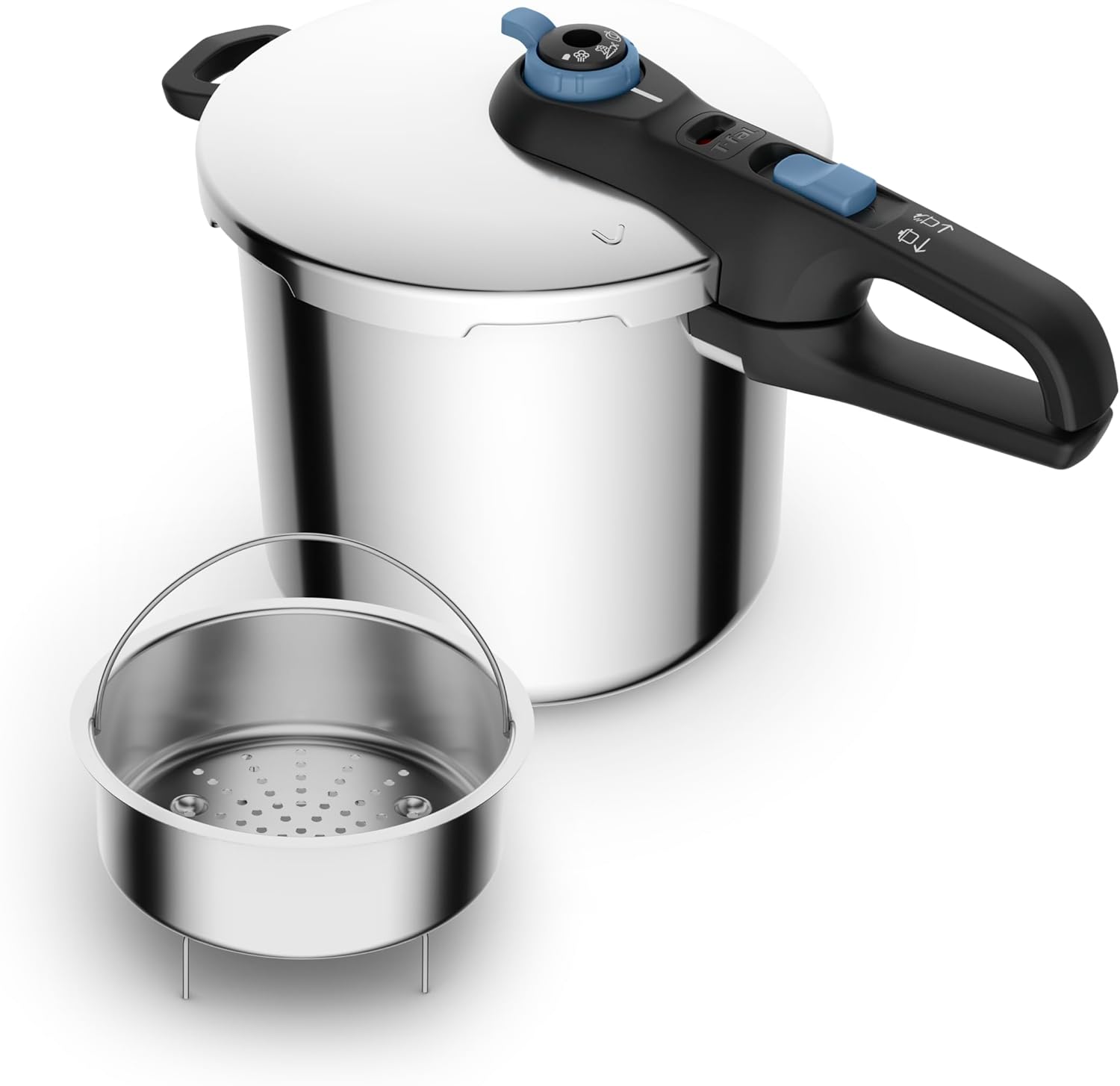
The T-Fal Secure Trendy 8.5 qt is a stovetop pressure cooker built for faster family meals and meal prep, with a stainless-steel pot, locking lid, and an induction-compatible base. It offers two dedicated pressure programs—one optimized for vegetables and one for meat—which simplify cooking by setting appropriate temperatures and pressure for those food types; the meat program helps tenderize tougher cuts while the vegetable program aims to preserve nutrients. The pot includes a steam basket and a 5-point safety system with an audible click when sealed, which makes it straightforward and reassuring to use on gas, electric, and induction cooktops. Its dishwasher-safe pot body eases cleanup, though the lid requires some hand-care attention. At 8.5 quarts it suits family-sized batches, but its larger footprint and weight mean it needs adequate stove and storage space. For cooks prioritizing reliable, induction-ready stovetop pressure cooking with clear safety features and simple meat/veg modes, this is a practical, durable choice.
Best for: Buyers who want a reliable, induction-ready stovetop pressure cooker that simplifies cooking meat and vegetables with preset programs and strong safety features for regular family meal prep.
Less Ideal for: Those with very small kitchens or who need a lightweight, ultra-compact pressure cooker for occasional single-person use should consider a smaller or lighter model.
- Large 8.5 qt capacity suitable for family meals and batch cooking
- Induction-compatible stainless-steel base for even heat and broad stovetop fit
- Two preset programs that simplify cooking vegetables and meats
- Five-point safety system with audible lock for confident pressure sealing
- Dishwasher-safe pot body and included steam basket for easier cleanup and versatility
- Lid and locking mechanism need careful cleaning and occasional hand maintenance
- Relatively heavy and large, requiring more storage and stovetop space
Verdict: If you want a sturdy, induction-compatible stovetop pressure cooker that makes meat and vegetable prep easier with clear safety features, this 8.5 qt T-Fal is a strong all-around choice.
Kuhn Rikon Duromatic 5L

| Capacity | 5 liters |
|---|---|
| Material | 18/10 stainless steel |
| Operation Mode | Manual |
| Controller Type | Mechanical knob |
| Voltage | 220 volts |
The Kuhn Rikon Duromatic 5L is a performance-focused stovetop pressure cooker built to speed up hearty meals like braises and stews while working on all cooktops including induction. Its Superthermic aluminum sandwich base delivers fast, even heat which helps sear meat and then build and hold pressure for tender results, and the integrated lid-lock and four steam-release mechanisms give a clear, confident safety envelope during high-pressure cooking. The pot includes internal capacity markings, ergonomic side handles, a trivet, and a Quick Cuisine cookbook that makes batch or multi-course cooking easier. Because it is heavy-gauge 18/10 stainless steel with a solid base, it heats uniformly and retains heat well, cutting typical stovetop braising times dramatically and conserving energy. The main trade-offs are its manual control style—there is no electric timer or automated programs—so you will rely on stove settings and timing, and the 5-liter size may be small for very large roasts or big family batches. For cooks who prioritize speed, precise heat transfer, and durable construction for meat-centric recipes, this is a reliable, high-performance tool.
Best for: Home cooks who want a high-performance, durable stovetop pressure cooker that delivers fast, even heat and reliable safety for meat-focused braises and roasts.
Less Ideal for: People seeking an electric pressure cooker with automated programs or those who regularly cook very large cuts that need more than a 5-liter pot.
- Induction-ready Superthermic base for fast, even heating ideal for searing and pressure cooking meat
- Made in Switzerland from 18/10 stainless steel for durable, corrosion-resistant construction
- Integrated lid-lock and four steam-release mechanisms provide robust safety control
- Includes internal capacity markings, trivet, and cookbook to support practical everyday use
- Manual operation without electronic timers or preset programs requires more hands-on control
- 5-liter capacity may be small for very large roasts or feeding larger groups
Verdict: Choose the Duromatic 5L when you want a factory-quality, induction-ready stovetop pressure cooker that gives fast, even heating and strong safety controls for superior meat cooking results.
KOCH SYSTEME CS Pressure Cooker 6.3 QT

| Capacity | 6.3 quarts |
|---|---|
| Material | 18/10 stainless steel |
| Pressure settings | 100 / 60 / 0 kPa |
| Included components | Steamer rack, glass lid, extra sealing ring |
This KOCH SYSTEME CS pressure cooker is a family-sized, stovetop stainless steel cooker built for faster meals and everyday versatility. It offers three adjustable pressure settings (100, 60, and 0 kPa) that let you handle tougher cuts of meat at high pressure, everyday stews and rice at medium pressure, or gentle steaming without pressure. The unit is made from 18/10 food-grade stainless steel with a triple-layer base for even heating and induction compatibility, and it includes a steaming rack and a glass lid so you can steam or simmer without switching cookware. Safety features are robust, with an 8-in-1 protection system, auto-locking valve, and audible steam alert, which makes it straightforward to use on gas, electric, ceramic, or induction ranges. Practical buyers will appreciate the durable construction and the one-pot multi-function use, though the mechanical controls and manual operation mean you still need to monitor timing and heat on the stove rather than relying on electronic presets.
Best for: Buyers who want a durable, induction-ready stovetop pressure cooker that speeds up weekday meals and gives precise pressure control for cooking meat and one-pot dishes.
Less Ideal for: People seeking an electric, set-and-forget pressure cooker with digital programs or those who need a very compact pot for minimal storage space.
- Three pressure settings for flexible cooking of meats, grains, and delicate foods
- 18/10 stainless steel construction and triple-layer base for corrosion resistance and even heating
- Induction compatible so it works on all common cooktops
- Includes steaming rack and glass lid to expand uses beyond pressure cooking
- Multiple built-in safety features including auto-locking valve and overpressure venting
- Manual, stovetop-only controls mean no electronic timers or automatic programs
- Larger footprint may be bulky for very small kitchens
Verdict: A sturdy, induction-compatible stainless steel pressure cooker with three pressure levels and strong safety features that makes faster, reliable meat cooking on the stovetop simple and practical.
Generic 3L Pressure Cooker

| Capacity | 3 liters |
|---|---|
| Material | Aluminum |
| Operation Mode | Manual |
| Controller Type | Mechanical knob |
| Working Pressure | 80 Kpa |
This 3L aluminum pressure cooker is a small, induction-ready stovetop unit aimed at fast, energy-efficient cooking and home canning. It uses a magnetic base so it works on induction cooktops and gas stoves, and its manual mechanical knob and outer lid give straightforward control over pressure cooking. In practice it suits small households or cooks preparing meat portions and stews, shortening cook times compared with conventional pots while conserving energy. Safety features include a locking lid, pressure regulation valve, and over-pressure protection that make it suitable for novice use. The compact size keeps it easy to store but limits batch size, so you will need multiple cycles for larger roasts or big canning runs. The aluminum construction heats quickly but may not provide the same long-term durability or heat retention as heavier stainless steel options. For cooks focused on quick, small-batch meat dishes on induction or gas ranges, this delivers solid performance with conservative space use.
Best for: Home cooks who want a small, induction-compatible pressure cooker for quick, energy-efficient meat dishes and occasional home canning, and who prioritize compact storage and easy stovetop use.
Less Ideal for: Families or cooks who regularly prepare large roasts, multi-pound batches for freezing, or high-volume canning should choose a larger-capacity or heavy-duty stainless steel model instead.
- Magnetic induction-compatible base works on induction cooktops and gas stoves
- Compact 3 liter capacity fits small kitchens and stores easily
- Safety features include locking lid, pressure regulation valve, and over-pressure protection
- Aluminum body heats quickly for faster cooking and energy savings
- 3L capacity limits the amount of meat you can cook in a single batch
- Aluminum construction may show wear and offers less heat retention than stainless steel
Verdict: A compact, induction-ready pressure cooker that makes fast, small-batch meat cooking practical for budget-conscious cooks with limited kitchen space.
KOCH SYSTEME CS 10.5-Quart Pressure Cooker
| Capacity | 10.5 quarts |
|---|---|
| Material | 18/10 stainless steel |
| Pressure settings | 100 / 60 / below 60 kPa |
| Special Features | Dishwasher Safe, Induction Compatible Base, Locking Lid |
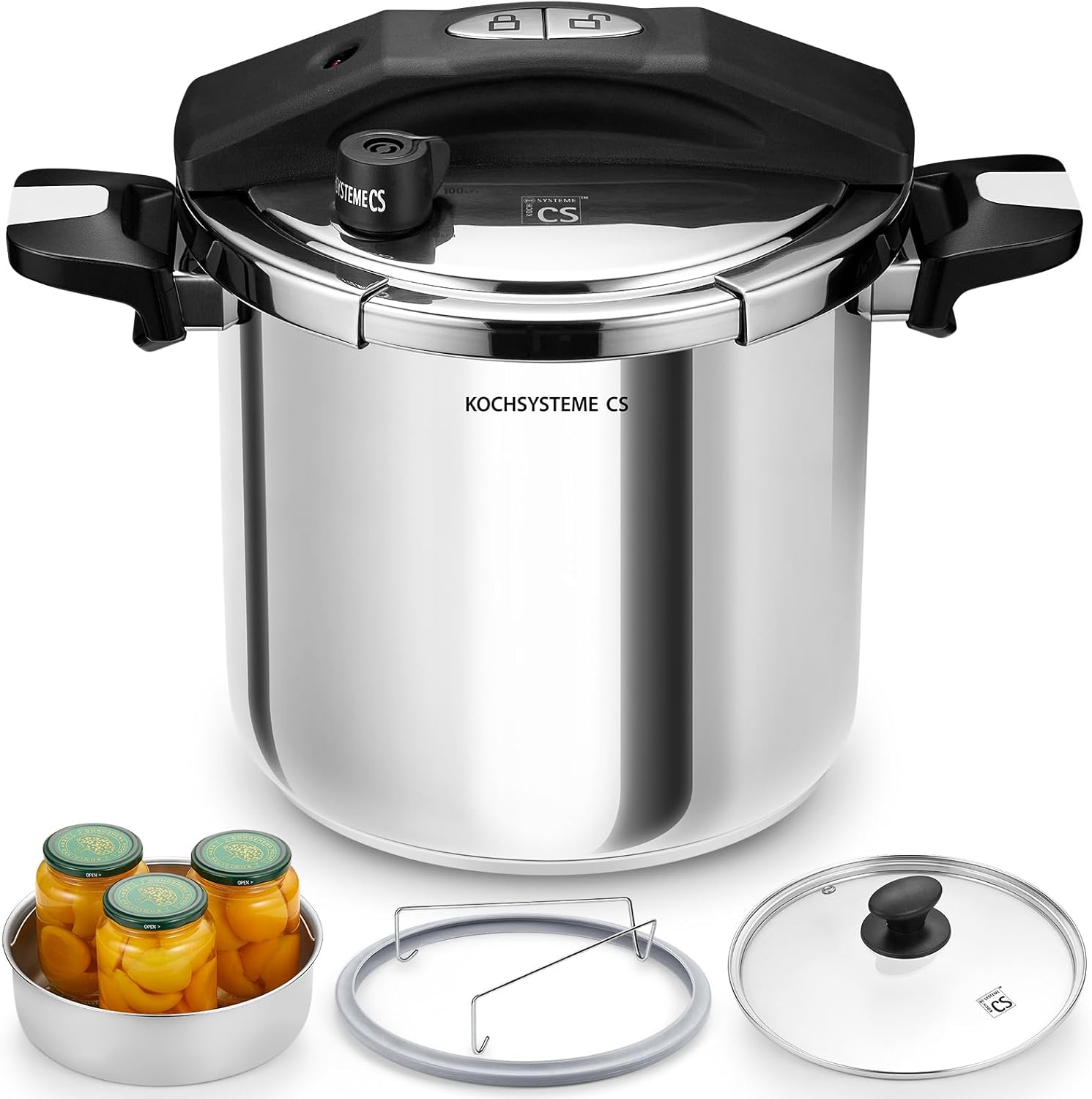
The KOCH SYSTEME CS 10.5-quart pressure cooker is a heavy-duty stainless steel stovetop pot built for everyday and serious home cooking. It functions as a pressure cooker, steamer, and simmer pot and includes a steaming rack and glass lid for quick transitions between methods. The wide triple-layer base is induction compatible and designed for even heating, which helps when braising tougher cuts of meat at higher pressure. A one-hand locking system and an 8-fold safety protection package add reassurance during use, and three pressure settings (100, 60, and low) let you tailor cooking intensity for tough meats, stews, or delicate foods. The removable silicone sealing ring and pressure valve simplify cleaning, and the pot body is dishwasher-safe (lid is not). It is sizable enough for family portions, but the larger capacity and stainless construction make it heavier to handle than small electric units. Overall, it delivers reliable, fast cooking with safeguards that suit cooks who want predictable results when preparing meat.
Best for: Home cooks who prioritize a reliable, durable stovetop pressure cooker for regularly preparing large cuts of meat and family-sized portions and who want precise pressure control and robust safety features.
Less Ideal for: People seeking a lightweight or compact electric pressure cooker for countertop convenience or those who need a fully dishwasher-safe lid and accessories.
- 18/10 stainless steel construction with triple-layer base for even heating and durability
- Three adjustable pressure settings (100 / 60 / below 60 kPa) for precise control over different foods
- One-hand locking mechanism and an 8-point safety system for secure operation
- Includes steamer rack and glass lid to use as a steamer or simmer pot in addition to pressure cooking
- Removable sealing ring and pressure valve; pot is dishwasher-safe for easier cleaning
- Large 10.5-quart size and stainless build make the unit relatively heavy and less portable
- Lid is not dishwasher-safe, adding a separate cleaning step
Verdict: A robust, induction-ready stainless steel pressure cooker built for dependable, high-pressure cooking of meats with strong safety features.
Presto 6-Quart Pressure Cooker 01362
| Capacity | 6 quarts |
|---|---|
| Material | Stainless Steel |
| Special Features | Dishwasher Safe, Induction Compatible Base, Locking Lid |
| Wattage | 1000 watts |
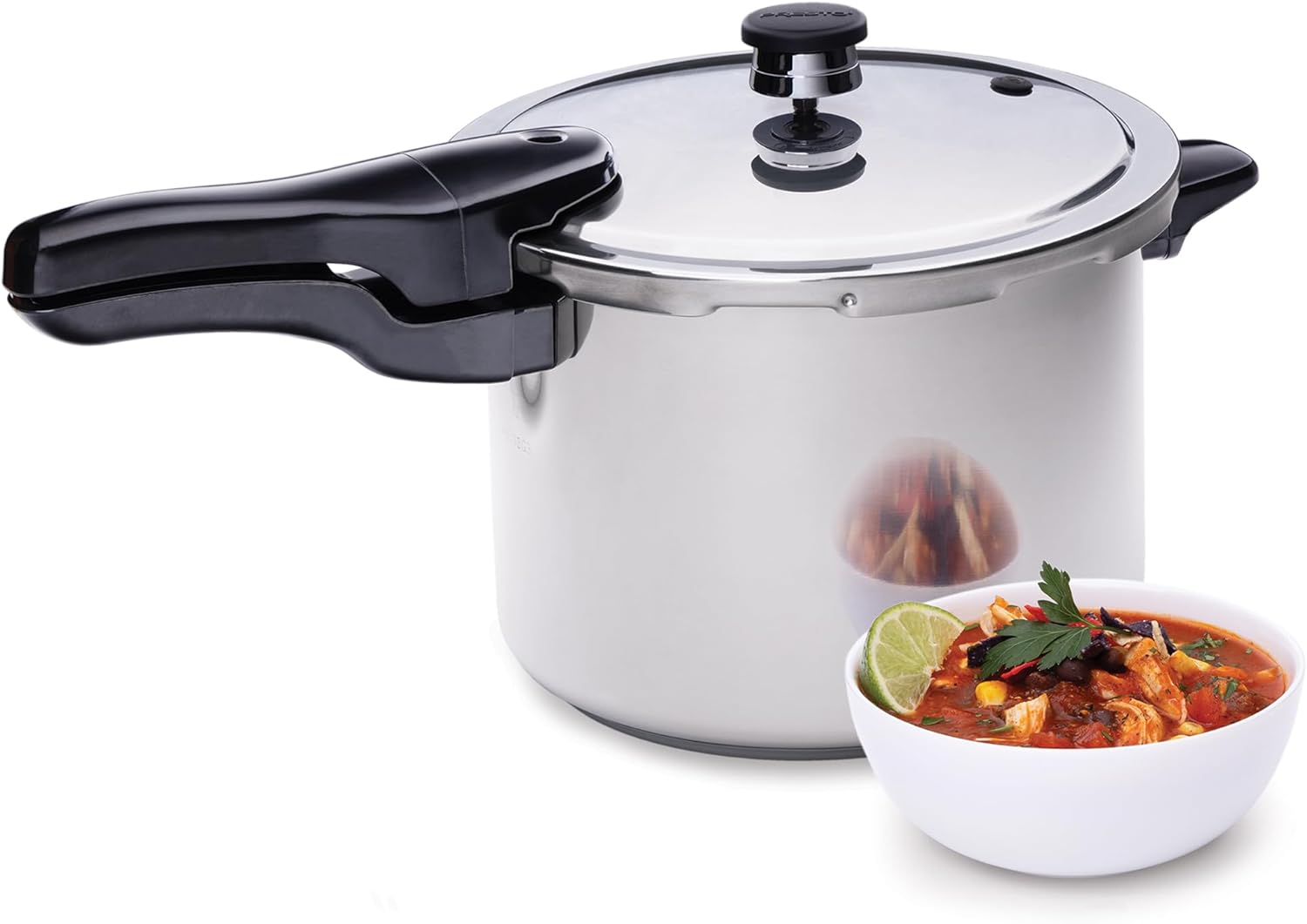
This Presto 6-quart pressure cooker is a traditional stovetop model built from stainless steel with a tri-clad base that sandwiches aluminum between steel for more even heating on induction and other ranges. It is designed for fast, moist-heat cooking that tenderizes economical cuts of meat and speeds up braises, stews, soups, and whole poultry compared with conventional simmering. Safety and convenience features include a locking lid with a pop-up pressure indicator, a pressure regulator that maintains cooking pressure automatically, and an overpressure plug for added protection. The cooker comes with a helper handle, a cooking rack, and a 64-page instruction and recipe booklet, and the pot and most removable parts are dishwasher safe after removing the sealing ring and overpressure plug. The main trade-offs are that it is a manual stovetop unit rather than electric so you must watch heat and venting, and periodic cleaning of the vent pipe and seal is required to keep it operating safely.
Best for: Buyers who want a proven, induction-compatible stovetop pressure cooker that reliably tenderizes tougher cuts of meat and prefer a traditional manual appliance with clear safety features and recipe guidance.
Less Ideal for: People who want an electric, hands-off programmable pressure cooker or those who prefer appliances requiring minimal maintenance and no manual venting.
- Tri-clad base for even heating on induction and gas or electric ranges
- Automatic pressure regulator and locking lid with pressure indicator for safer cooking
- Stainless steel construction that is dishwasher safe with removable parts
- Includes cooking rack and a 64-page instruction/recipe book useful for meat recipes
- Manual stovetop operation requires active heat management and steam release
- Sealing ring, vent pipe, and overpressure plug need regular cleaning and occasional replacement
Verdict: Choose this Presto pressure cooker if you want a reliable induction-compatible stovetop pot that quickly tenderizes meat and comes with practical safety features and recipes.
Choosing the Right Induction Pressure Cooker for Meat: Key Factors to Consider
Induction Compatibility and Heat Response
True induction-ready cookers have a magnetic, thick base that transfers energy efficiently from induction cooktops. This matters because meat cooking often requires rapid pressure buildup, then steady low pressure for braising. A cooker with poor induction transfer will take longer to reach pressure and may fluctuate during long cooks.
Heat response affects browning, too. If you start on high to sear and then drop to low for pressure simmering, the cooker and your induction cooktop must respond predictably. Look for explicit induction compatibility and a heavy, multi-layer base that resists warping under high heat.
Sealing System and Pressure Control
A reliable gasket and pressure-valve assembly keeps steam trapped and maintains consistent internal pressure, which is essential for tenderizing tough cuts of meat. Gaskets should be replaceable without specialized tools and valves should offer clear, repeatable pressure settings or markings.
Inconsistent sealing can lead to longer cook times, uneven doneness, and loss of liquid that changes the concentration of flavors. For frequent meat cooks, prioritize models with accessible replacement parts and straightforward valve servicing.
Capacity and Interior Shape
Meat cooks benefit from enough room to fit whole cuts or several pieces without crowding. Capacity affects heat distribution and the ability to brown before pressure cooking. A taller, narrower pot concentrates juices under the meat, while a wider pan gives more surface area for searing.
Choose capacity based on typical batch size. For family roasts or bone-in cuts, larger volumes reduce the risk of overcrowding and promote even cooking. Also consider whether the interior finish resists sticking for better browning and easier cleanup.
Durability of Materials and Construction
Stainless steel with a robust multi-ply base stands up to high-heat searing and repeated pressure cycles better than thin metals. Durable rivets, sturdy handles, and corrosion-resistant fittings prolong the life of the cooker when used for meat, which often involves acidic sauces and long cooks.
Durable construction also reduces the likelihood of warping or valve misalignment that can compromise safety and performance over time.
Safety Features and Pressure Release
Safety matters more with high-pressure meat cooking because liquids and fatty splatters can alter valve behavior. Look for redundant pressure-release options, clear pressure indicators, and mechanisms that prevent accidental lid opening under pressure.
Straightforward, controllable steam-release helps avoid splatter when finishing a braise and makes quick-release approaches safer for busy cooks.
Maintenance and Ease of Cleaning
Meat cooking tends to create sticky, gelatinous residues from bones and connective tissue. Smooth interior finishes, removable gaskets, and valve parts that disassemble without special tools simplify cleaning and maintenance.
Consider how easy it is to inspect and replace wear parts. Cookers that minimize nooks and crevices speed up routine cleaning and reduce the risk of lingering odors or bacterial buildup.
Why Induction Changes the Pressure-Cooking Game
Induction cooktops heat differently than gas or electric coil ranges because they induce heat directly in the cookware. For meat cooks, that means faster boil-up times and quicker response when you reduce power after searing. The net effect is more consistent pressure phases and less overall time spent getting to and maintaining target pressure.
However, not every pressure cooker transmits induction energy equally. The most effective models combine a magnetic, thick base with stable construction to avoid hot spots. Understanding this interaction helps you pick a cooker that keeps meat tender while supporting rapid, high-temperature starts for searing.
- Faster pressure build-up shortens overall cook time for tough cuts
- Rapid response makes it easier to transition from searing to simmering
- Stable bases reduce risk of hot spots during browning
Matching Cooker Capacity to the Cuts You Cook
Think about the largest pieces you plan to cook. Whole shoulders, roasts, and racks need enough clearance for even heat exposure and for liquids to circulate. If you regularly prepare large cuts, favor larger volumes so meat is not stacked or tightly crowded.
Also weigh headroom for braising liquid. A pot that is technically the right volume may still be too shallow if you need a deep pool of braising liquid for long cooks with bones and connective tissue.
- Small families: choose compact sizes that still allow a small roast to sit flat
- Larger roasts: choose higher-capacity pots with more vertical space
- Consider whether you need extra room for stocking bones and long reductions
Maintaining Gaskets and Valves for Reliable Performance
Gaskets and valves are wearable parts. Regular inspection and occasional replacement keep pressure and seal performance consistent. After heavy meat cooks, rinse gaskets and check valve ports for fat or debris that can impair sealing.
Prefer designs where gaskets can be removed and replaced without special tools and where valves can be cleaned by hand. That reduces downtime and keeps the cooker performing safely over years of frequent use.
- Clean valve ports after every fatty or starchy cook
- Store gaskets dry to avoid odor development
- Keep replacement gaskets and valve parts on hand if you cook meat frequently
Searing, Browning, and Maillard on Induction
Good meat texture often starts with high-heat searing to build flavor through the Maillard reaction. On induction, fast, even heat delivery enables a quick and effective sear before you seal the lid and switch to pressure mode. A cooker with a flat, stable base and even contact with the cooktop will brown more evenly.
If you rely on the cooker for both searing and pressure work, choose a model with a thick base and a finish that resists sticking. That reduces the need to pre-sear in a separate pan and saves time and cleanup.
- Use moderate oil and a hot surface for quick, even browning
- Avoid overcrowding the surface during searing to maintain high temperature
- A heavy base preserves heat for consistent Maillard development
Cooking Techniques for Tough Cuts
Tough, collagen-rich cuts benefit from a short high-temperature phase to build color and then sustained low-pressure simmering to break down connective tissue. With an induction pressure cooker you can more precisely control that transition, using high power for searing and then a measured reduction to reach and hold the target pressure.
Consider cutting very large roasts into fewer pieces for more even cooking, or placing bones carefuly to improve heat circulation and flavor extraction. Timing and pressure levels affect texture, so follow recipe pressure guidelines and adjust based on the size and composition of the cut.
- Brown first, then seal for long, low-pressure finishing
- Cut large roasts into manageable pieces for consistent doneness
- Use natural release when you want fall-apart results
How We Chose the Best Induction Pressure Cooker for Meat
We evaluated induction pressure cookers for meat using a set of practical, kitchen-focused filters that matter for heavy-duty meat cooking. Primary considerations included heat control responsiveness on induction cooktops and the sealing system reliability, because even heat and a tight seal are crucial for consistent braises, stews, and shredded meat. Build durability and materials was another key filter, emphasizing heavy-gauge stainless steel bases and corrosion-resistant fittings that hold up under repeated high-temperature use. Capacity and shape were reviewed to ensure a range of sizes can accommodate whole roasts and bone-in cuts without overcrowding. Safety features and pressure-release mechanisms were assessed to match real-world home kitchen handling. We also checked ease of cleaning and maintenance, since meat sauces and gelatinous stocks can be messy. Items were excluded if they lacked proven induction compatibility, used thin bases that reduce heat stability, or had limited sealing/valve serviceability. We prioritized models with clear specifications for pressure ranges, user-serviceable gaskets and valves, and construction suited to sustained cooking of large meat portions.
Our full evaluation process is outlined in our review methodology.
FAQ
Can I use an induction pressure cooker on any induction cooktop?
Most induction pressure cookers designed for induction will work on standard induction cooktops. Check that the cooker has a magnetic, flat base and manufacturer statements of induction compatibility. Proper contact and a thick base improve heat transfer and pressure control.
How do I prevent meat from drying out under pressure?
Prevent dryness by maintaining adequate liquid levels, avoiding overcooking, and using natural pressure release for cuts that need time to relax. High-fat or well-marbled cuts also retain moisture better during high-pressure cooking.
How often should I replace gaskets and valves?
Replacement intervals vary with use, but inspect gaskets and valve components after heavy meat cooks and every few months with regular use. Replace parts if you notice cracking, permanent deformation, or reduced sealing performance.
Is searing in the cooker necessary before pressure cooking meat?
Searing is not strictly necessary but it builds flavor and improves color. On induction, a suitable cooker can be used to sear and then pressure cook, saving an extra pan. If you prefer, you can sear separately and then transfer to the cooker for pressure work.
What pressure release method is best for meat dishes?
Natural release is often best for tough cuts because it allows residual heat and pressure to finish tenderizing connective tissue. Quick release can be used for recipes that require stopping the cook promptly or when the recipe specifies shorter finish times.
Final Verdict
When picking an induction pressure cooker for meat, prioritize reliable induction heat transfer, a forgiving sealing system, and construction that stands up to repeated high-temperature use. Match capacity and interior geometry to the size of cuts you cook most often, and favor models with serviceable gaskets and valves for long-term reliability. Balancing these factors will help you choose a cooker that produces tender, evenly cooked meat without unnecessary fuss. Focus on heat control and sealing first, then capacity and maintenance needs to find the best fit for your kitchen.