
Note: This article contains affiliate links. If you click on these links and make a purchase, we may earn a small commission at no extra cost to you. This helps support our research and content. Read our full affiliate disclosure here.
If you upholster furniture, automotive interiors, or heavy textile goods, the right Industrial Walking Foot Sewing Machine for Upholstery makes the difference between neat, lasting seams and rework. These machines are built to move thick layers consistently while delivering repeatable stitch quality across leather, vinyl, canvas, and multiple fabric layers. In this guide we shortlist six top options suited to upholstery work, with an emphasis on feed reliability, needle and thread capacity, and serviceability. Below you will find practical notes on the features that matter for upholstery sewing plus our evaluation approach, so you can match a machine to your workshop workflow and material mix.
Top Picks at a Glance
| Best Overall The best all-around choice for most situations | CONSEW P1206RB Walking Foot Machine |  |
| Best Quality Built to a higher standard if you want something more solid | Juki DNU-1541S Walking-Foot Sewing Machine |  |
| Best Value The sweet spot between price and what you get | Family Sew FS-388 Walking Foot |  |
| Best Budget The cheapest option that still gets the job done reliably | YEQIN YQ-516 Walking Foot Sewing Machine |  |
| Top Rated A top-rated pick with lots of positive feedback | JUKI DU-1181 Walking Foot |  |
| Most Popular A crowd favorite that many people choose with confidence | Consew 206RB-5 Walking Foot |  |
CONSEW P1206RB Walking Foot Machine

| Power Source | AC |
|---|---|
| Speed, Max. (S.P.M.) | 3000 |
| Presser Foot Lift | By Hand 5/16" (8 mm) / By Knee 5/8" (16 mm) |
| Needle Bar Stroke | 1-29/64" (37 mm) |
| Stitch Length, Max | 3.6 s.p.i. (7 mm) |
The CONSEW P1206RB is an industrial walking-foot lockstitch machine built for upholstery, leather, canvas and other heavy or coated materials. It uses a needle-feed and walking-foot mechanism to move multiple layers evenly, and includes a servo motor and oil pump system for controlled, continuous operation. Typical use cases are furniture upholstery, automotive and marine interiors, tents and heavy bags where consistent feed and robust stitch regulation are important. Notable features include adjustable oil flow, a large horizontal-axis hook with side-loaded bobbin, adjustable upper thread tension and a locking stitch regulator, plus a generous presser-foot lift operated by hand or knee. Practical benefits are reliable handling of thick materials, a durable alloy-steel build and factory-style components that suit production or serious hobby work. Limitations are that it ships unassembled in three boxes and requires a dedicated table and setup space, and its size and 185-pound shipping weight mean it is not portable or suited to casual home sewing without proper installation and power supply.
Best for: Buyers who need a durable, production-capable sewing solution for upholstery, leather or canvas projects and who plan to install the machine on a proper work table and maintain it for long-term use.
Less Ideal for: Casual home sewers who want a small, portable hobby machine or anyone unwilling to handle assembly, installation and routine industrial maintenance.
- Walking-foot and needle-feed mechanism for even feeding of thick, layered materials
- Servo motor for responsive speed control and smoother startup/shutdown
- Oil pump system with adjustable flow for continuous lubrication and longer component life
- Side-loaded large horizontal-axis hook and adjustable thread tension for reliable lockstitch formation
- High presser-foot lift (hand and knee) to accommodate bulky projects
- Delivered unassembled in multiple boxes and requires a dedicated table and setup
- Heavy and stationary unit not suitable for occasional portable use
- Documentation and tuning can require familiarity with industrial machines
Verdict: If you need a rugged, factory-style walking-foot machine for upholstery and heavy materials, the CONSEW P1206RB delivers professional feeding, lubrication and stitch control for production work.
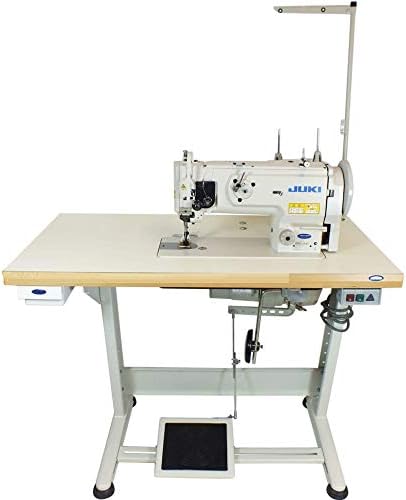
Juki DNU-1541S Walking-Foot Sewing Machine
| Power Source | Corded Electric |
|---|---|
| Input Voltage | 110 volts_of_alternating_current |
| Speed, Max (S.P.M.) | 2500 |
| Stitch Length, Max. | 9mm |
The Juki DNU-1541S is a professional walking-foot, unison-feed lockstitch machine built for upholstery and other heavy materials. It ships with a sewing table and a 3/4 HP electronic DC servo motor that provides quiet, energy-saving operation and variable speed up to the machine's rated RPM. Key specs such as a large horizontal hook with double-capacity bobbin, unison-feed mechanism, and a maximum stitch length of 9 mm make it suited to thick materials from leather and vinyl to canvas and coated fabrics. Included accessories like a bobbin winder, knee lifter, thread stand, and lamp support setup and routine tasks. Practical benefits are strong material handling, side-loading large hook for longer runs between bobbin changes, and a robust build meant for continuous shop use. Limitations to consider are its weight and size, which require a dedicated workspace and likely professional installation, and the need for occasional professional assembly or setup to ensure optimal timing and maintenance.
Best for: Buyers who need a performance-focused industrial sewing machine for upholstery, leather, or canvas work and prioritize robust material feeding and long continuous operation.
Less Ideal for: Hobbyists who need a portable or lightweight machine or users who lack a dedicated workshop and professional setup resources.
- Unison-feed walking foot handles layered and heavy materials evenly for consistent stitch quality.
- Double-capacity horizontal hook reduces bobbin changes for long sewing runs.
- Includes industrial-grade DC servo motor for quiet, controllable speed and energy savings.
- Comes with practical accessories (bobbin winder, knee lifter, thread stand, lamp) to support shop setup.
- Large, heavy unit that requires a permanent table and may need professional assembly or adjustment.
- Not a compact or portable machine and needs space and electrical setup suited to industrial use.
Verdict: Choose the DNU-1541S when you need a durable, high-capacity walking-foot machine that reliably handles upholstery and heavy materials in a production or professional shop.
Family Sew FS-388 Walking Foot

| Motor power | 150W, 1.5A |
|---|---|
| Max speed | 800 SPM |
| Stitch types | Straight stitch and 5mm zigzag |
| Needle types | Uses 135×17 upholstery needles |
The FS-388 is a portable walking-foot machine built to handle upholstery and heavy fabrics. It combines a metal flatbed frame, a high-torque 150W motor and dual belt drive to deliver up to 800 stitches per minute and a 5mm zigzag width, so it can sew denim, canvas and leather more consistently than a domestic machine. Practical features for upholstery include a high-lift walking foot with about 12 mm clearance, compatibility with standard upholstery needles, a spring-loaded reverse and a cleated positraction belt system to reduce slipping under thick layers. The compact 9-inch arm and 14.5×9-inch flatbed make larger panels easier to feed while keeping the machine portable. Trade-offs are its industrial-oriented controls and weight, which make it less friendly for casual sewists who want a lightweight, feature-rich home machine; it also lacks automated conveniences found on consumer models. For someone who needs factory-quality stitches on heavy materials in a small footprint, this machine delivers the core capabilities that matter for upholstery work.
Best for: Buyers who prioritize a compact, workhorse machine for regular upholstery, canvas or leather projects and want factory-quality straight and zigzag stitches in a portable footprint.
Less Ideal for: Sewers who need a lightweight, feature-rich home machine for general garment sewing or beginners looking for automated conveniences.
- Robust metal construction and dual belt drive built for heavy materials
- 150W high-torque motor providing up to 800 SPM for fast, consistent stitching
- High-lift walking foot and up to 12 mm foot clearance for thick upholstery layers
- Uses standard upholstery needles and a 16-class welt foot for easy part sourcing
- Industrial setup and weight reduce portability for casual home sewing
- Lacks modern consumer conveniences such as electronic stitch programming
Verdict: A compact, metal walking-foot machine that brings industrial-strength sewing and high-speed performance to upholstery work in a portable package.
YEQIN YQ-516 Walking Foot Sewing Machine

| Material | Metal |
|---|---|
| Power Source | Corded Electric |
| Model Number | YQ 516 |
The YEQIN YQ-516 is a metal-bodied walking-foot machine built for heavy fabric work such as upholstery, leather repairs, canvas projects, and thick denim. It uses a walking foot mechanism to feed multiple layers evenly, and can be run manually or with an electric motor, which makes it adaptable for hobbyists and small-shop use. The unit is noticeably robust in construction and is marketed as pre-tested, so setup and basic operation are straightforward for someone familiar with industrial-style machines. Practical benefits include its ability to handle dense seams and layers without the slippage common on domestic machines, and a portable form factor that fits a small workshop. Important limitations are that it is a single basic model without listed stitch variety or speed controls in the provided details, and the package appears minimal, so users should plan for separate accessories, appropriate needles, and a compatible motor setup if not included. For budget-minded buyers who need a workhorse for heavy materials, it delivers core capability without premium frills.
Best for: Buyers seeking an affordable, no-frills walking-foot machine for upholstery, leather, and canvas repair who prioritize strong feed and rugged construction over advanced features.
Less Ideal for: Users who need computerized stitch options, precise speed control, or a full accessory kit included out of the box should consider higher-end industrial machines or bundled packages.
- Walking foot feed designed for even handling of multiple heavy fabric layers
- Metal construction for durability in workshop use
- Can be used manually or with a corded electric motor for flexible operation
- No detailed spec list for stitch types, speed control, or included accessories
- Appears sold without a complete accessories kit or box in the listing
Verdict: A budget-friendly, rugged walking-foot machine that gives reliable heavy-material feeding for upholstery and repair work without paying for advanced features.
JUKI DU-1181 Walking Foot

| Power Source | Corded Electric |
|---|---|
| Max. sewing speed | 2,000 RPM |
| Max. stitch length | 9 MM |
| Presser foot lift | By knee 15MM |
The JUKI DU-1181 is a heavy-duty single-needle walking-foot lockstitch machine designed for industrial use on hard-to-feed and multi-layer materials. It ships as a knockdown table package with a 3/4 HP electronic DC servo motor, drawer, belt, lamp and basic tools, and requires assembly before first use. The DU-1181 uses top-and-bottom feed with a double-capacity hook and automatic lubrication to keep seams consistent and reduce maintenance intervals, and it supports a max sewing speed of 2,000 rpm and a maximum stitch length of 9 mm for long, strong stitches. Practical benefits include smooth feeding on upholstery and thick fabrics, adjustable feed cams for tuning, and the included servo motor that offers variable speed control and quieter operation than clutch motors. Important limitations are that the unit is heavy and intended for a dedicated shop setup, assembly and some mechanical adjustment are necessary, and the package does not include advanced electronics or automation features found on newer factory models.
Best for: Shops and professional upholsterers who need a dependable, mechanically robust walking-foot machine to sew heavy fabrics and multilayer assemblies with consistent feed and low-maintenance operation.
Less Ideal for: Casual home sewers or hobbyists who want a plug-and-play, lightweight machine or computerized stitch options; those needing portable or intermittent use should consider lighter domestic models.
- Top-and-bottom feed walking-foot mechanism that handles thick and layered materials reliably
- Automatic lubrication system reduces manual maintenance and extends machine life
- Comes as a complete knockdown table package with a 3/4 HP servo motor and accessories
- Double-capacity hook and 9 mm max stitch length for strong, long stitches suitable for upholstery
- Requires assembly and mechanical adjustments out of the box
- Heavy, shop-oriented unit not suited for occasional home sewing
- Lacks modern electronic automation or computer-controlled stitch features
Verdict: A workhorse industrial walking-foot machine built for reliable, low-maintenance sewing of upholstery and other heavy, multilayer materials.
Consew 206RB-5 Walking Foot

| Model Number | 206RB-5 |
|---|---|
| Power Source | Corded Electric |
| Material | Leather |
| Item Weight | 200 pounds |
The Consew 206RB-5 is a purpose-built walking-foot industrial sewing machine designed for heavy materials like upholstery, leather, canvas, and tarpaulins. It uses a compound feed mechanism to move multiple layers evenly and includes a large bobbin, high foot lift, and an adjustable walking motion height that make handling thick seams and bulky assemblies easier. The package ships with the machine head, servo motor, tabletop, stand, and necessary hardware so it arrives as a ready-to-install workstation; table assembly is required. The long maximum stitch length and robust construction suit furniture upholstery, automotive and marine covers, and heavy bag or tent work, while the servo motor gives finer speed control for precision stitching. Trade-offs are its footprint and weight, which reflect its industrial intent and mean it is not portable or suitable for casual home sewing, and setup may require shop space and basic mechanical assembly.
Best for: Buyers who need a rugged, shop-grade machine for regular upholstery, marine, or leather work and who prioritize reliable material feeding and precise speed control over portability.
Less Ideal for: Casual sewists, hobbyists, or anyone who needs a lightweight portable machine or a compact home sewing solution.
- Compound walking-foot feed for even handling of multiple thick layers
- Includes servo motor, tabletop, stand, and hardware for a complete workstation
- High foot lift and large bobbin simplify sewing bulky materials and long seams
- Adjustable walking motion and long stitch length for versatile heavy-duty stitching
- Heavy and large footprint that needs dedicated shop space
- Table assembly and installation required before use
Verdict: Choose the Consew 206RB-5 when you need a factory-quality walking-foot machine that handles upholstery and heavy materials reliably as a complete shop workstation.
Choosing the Right Industrial Walking Foot Sewing Machine for Upholstery: Key Factors to Consider
Feed Mechanism and Presser Foot Design
A true walking foot lifts and advances the top layer of material in sync with the feed dogs, preventing layers from shifting when you sew. For upholstery you will often join multiple thick layers or stitch slippery materials like vinyl and leather. A robust walking foot with adjustable presser pressure helps maintain even feed across different stack heights and material types.
Examine how the walking foot interacts with the feed dogs and whether the presser foot pressure can be increased for heavy stacks. Some machines provide auxiliary presser feet or options for higher-lift feet that are essential when working with bulky cushions or piping.
Motor Torque and Drive System
Upholstery sewing requires significant force to push heavy needles and thick thread through layered materials. Motor torque and the drive system determine whether the machine will maintain steady stitching under load without bogging down or stalling.
Look for machines rated for continuous heavy use and those that offer a direct-drive industrial motor or a heavy-duty clutch motor with sufficient torque. Higher torque reduces the chance of skipped stitches when sewing corners, dense seams, or when using larger needle sizes.
Needle Size and Thread Compatibility
Upholstery uses heavier needles and specialty threads that differ from apparel sewing. The machine must accept larger needle shanks and provide a thread path and tension system that can be adjusted for thicker upholstery thread.
Check manufacturer specifications for maximum needle size and compatible thread types. Machines with easily adjustable tension and thread guides reduce the risk of thread breakage and inconsistent stitches when switching between light and heavy materials.
Presser Foot Height and Lift
Presser foot height determines how thick a stack the machine can clamp and advance. For upholstery tasks such as sewing over cushions, welting, or multiple layers, sufficient presser lift and the option for high-lift accessories are important.
Consider whether the machine offers a manual or mechanical high-lift mechanism and if it includes accessories like extra-high feet or interchangeable presser feet designed for piping and heavy seams.
Maintenance Access and Parts Availability
Industrial machines see heavy daily use, so ease of routine maintenance and access to replacement parts affects long-term downtime and operating cost. Simple lubrication points, removable throat plates, and accessible feed dogs speed service and cleaning.
Choose machines with widely available parts, clear service manuals, and straightforward adjustments. Facilities that expect heavy throughput should prefer models that technicians can quickly repair and that have consumables readily on hand.
Frame Construction and Mounting
A rigid frame reduces vibration and keeps stitch geometry stable when sewing heavy materials. Industrial machines intended for upholstery often mount in a dedicated table and have reinforced bearings and cast components to withstand repeated high-load cycles.
Ensure the machine's mounting and frame design match your shop setup. Some units require specific table cutouts or mounting hardware for optimal stability and are best paired with a heavy-duty industrial stand.
Material-Specific Setup Tips
Different upholstery materials behave very differently under the needle. Leather and vinyl are less forgiving than fabric and require different thread and needle handling. Adjust presser pressure, needle size, and tension for each material rather than relying on a single setup.
Use a test scrap stack that mimics the exact layers and construction you will sew. Dial in stitch length, thread tension, and presser foot height on the scrap before sewing the actual piece.
- Leather: Use a needle designed for leather and a heavier bonded thread; reduce stitch length for strength.
- Vinyl: Protect the surface with a walking foot and use non-marking stabilizers if necessary.
- Canvas and heavy fabric: Increase presser foot pressure and confirm bobbin capacity for long seams.
Common Modifications and Accessories for Upholstery
Accessories extend a machine's usefulness in upholstery applications. High-lift presser feet, roller or roller compound feet, and specialized walking foot attachments can make feeding bulky stacks easier and reduce surface scuffing.
Other useful additions include heavy-duty needles, larger-capacity thread stands, and industrial thread guides that help maintain consistent tension with thicker threads.
- High-lift presser foot for thick stacks
- Roller presser foot for sticky surfaces
- External thread stand for large cones of upholstery thread
Setting Stitch Length and Tension for Durability
Stitch length influences seam flexibility and strength. Shorter stitches concentrate perforations and create stronger seams in leather, while longer stitches are common for decorative topstitching on canvas or heavy fabric. For load-bearing upholstery seams, favor stitch lengths that balance strength with material integrity.
Tension must be adjusted to avoid thread breakage or loose loops. Thicker threads usually require reduced take-up lever speed and tension adjustments. Always test on scrap before starting long seams.
- Short stitches for leather joining and high-stress seams
- Longer stitches for topstitching and decorative work
- Adjust tension incrementally and document settings for repeatability
Workshop Integration and Ergonomics
Industrial upholstery sewing often happens in a workflow that includes cutting, assembly, and trimming. Ensure the machine you choose fits your table layout, has adequate clearance for large pieces, and is positioned for comfortable operator reach.
Consider motor noise, pedal responsiveness, and the need for thread stands or bobbin winding stations. Ergonomics affect speed and reduce fatigue during long production runs.
- Confirm table cutout and mounting hardware compatibility
- Allocate space for large pattern pieces and seam handling
- Choose pedal and motor setups that match operator preference
Safety and Operator Best Practices
Working with heavy needles and thick threads raises the risk of breakage and project damage. Use protective eyewear when testing stitches under high tension and keep fingers clear of the needle path when guiding material.
Train operators on how to backstitch safely, change heavy needles, and perform routine checks for loose fasteners and worn feed components. Regularly inspect needles for burrs and replace them promptly to avoid skipped stitches and material snags.
- Wear eye protection during high-tension testing
- Inspect needles and feed dogs daily
- Use clamps or fixtures when feeding large or heavy assemblies
How We Chose the Best Industrial Walking Foot Sewing Machine for Upholstery
We prioritized machines that are purpose-built for heavy fabric and multi-layer seams common in upholstery work. Evaluation focused on mechanical durability, feed mechanism performance, stitch integrity under load, and the machine's ability to accept heavier needles and specialty threads. We also considered user-serviceability and parts availability because upholstery operators benefit from fast maintenance and long service life. Concrete filters applied: only industrial walking foot machines with specifications or design intent for heavy materials were considered. Machines lacking a genuine walking foot or designed primarily for light garment work were excluded. We examined documented maximum thread and needle sizes, presser-foot travel and pressure options, feed dog design, and motor torque or clutch ratings where available. Additional criteria included bobbin or thread delivery systems compatible with thick upholstery threads and the presence of adjustable presser systems for layered materials. Exclusions included domestic or light-duty models not rated for upholstery or heavy leather, and machines that require extensive aftermarket modification to handle thick layered seams. The listed criteria reflect the practical dimensions that matter most to upholstery professionals: feed consistency, stitch strength, material capacity, maintenance access, and overall mechanical robustness.
Our full evaluation process is outlined in our review methodology.
FAQ
Do I need a walking foot to sew upholstery?
Often yes. A walking foot greatly improves feed consistency when sewing multiple layers or slippery materials. For many upholstery tasks it prevents layer shift and produces more uniform seams than a standard presser foot.
What needle size is best for upholstery work?
It depends on material and thread thickness. Upholstery typically uses larger needle sizes than apparel work; test several needle sizes on a scrap stack to ensure penetration without excessive perforation or tearing.
How important is motor power for heavy-duty sewing?
Very important. Motor torque determines whether the machine can maintain stitch speed under load. Machines with higher torque or industrial-rated motors handle dense seams and thick layers more reliably than low-torque units.
Can I use upholstery thread on a standard industrial machine?
Usually yes if the machine accepts the thread size and the tension system can be adjusted. Confirm that the thread path, guides, and bobbin system accommodate thicker, bonded threads commonly used in upholstery.
How often should I service an industrial sewing machine used for upholstery?
Frequency depends on usage, but daily basic cleaning and lubrication with scheduled deeper servicing every few months for high-volume shops is common. Heavy use and abrasive materials accelerate wear, so monitor feed components and bearings closely.
Final Verdict
Choose an Industrial Walking Foot Sewing Machine for Upholstery by matching the machine's feed mechanism, motor torque, and needle/thread capacity to the materials and seam types you sew most often. Prioritize models with accessible maintenance points and compatible accessories like high-lift feet and external thread stands when you expect heavy or varied workloads. Balance the need for stitch strength and consistent feeding against shop ergonomics and parts availability. With those priorities in mind, you can select a machine that delivers reliable performance and minimizes downtime in upholstery production.