
Note: This article contains affiliate links. If you click on these links and make a purchase, we may earn a small commission at no extra cost to you. This helps support our research and content. Read our full affiliate disclosure here.
If you drink carrot juice regularly, the right juicer makes a big difference in yield, nutrition, and cleanup time. Carrots are dense and fibrous, so you need a machine that extracts liquid efficiently without clogging, preserves nutrients, and is easy to maintain. This guide gathers seven top juicers for carrot juice, shortlisted for their extraction performance, reliability, and user-friendly cleaning. Below you will find each pick followed by clear evaluation notes on extraction, pulp dryness, throughput, and upkeep so you can pick the best option for your routine.
Top Picks at a Glance
| Best Overall The best all-around choice for most situations | Breville Juice Fountain Cold BJE430SIL | 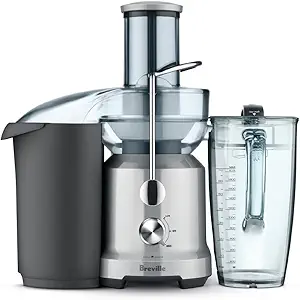 |
| Best Quality Built to a higher standard if you want something more solid | Breville Juice Fountain Plus JE98XL |  |
| Best Value The sweet spot between price and what you get | nutribullet Juicer NBJ50100 |  |
| Best Budget The cheapest option that still gets the job done reliably | QCen 500W Centrifugal Juicer | 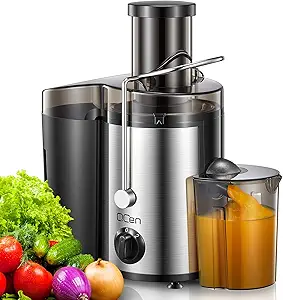 |
| Top Rated A top-rated pick with lots of positive feedback | ECOSELF Cold Press Juicer |  |
| Most Popular A crowd favorite that many people choose with confidence | Hamilton Beach Big Mouth Juicer 67601A |  |
| Best Seller A high-volume bestseller chosen again and again | Juilist Centrifugal Juicer AMR526 |  |
Breville Juice Fountain Cold BJE430SIL

| Capacity | 2 liters |
|---|---|
| Wattage | 850 watts |
| Number of Speeds | 2 |
| Feed Chute | 3 inch extra-wide |
The Breville Juice Fountain Cold is a high-speed centrifugal juicer designed for quick, large-batch juicing of fruits and vegetables. Its 850 watt motor and Cold Spin Technology work with a stainless steel precision filter to limit heat buildup and help preserve vitamins while extracting juice; a 3-inch extra-wide chute accepts whole produce so prep time is reduced. The unit ships with a 70 fl oz seal-and-store jug and a detachable nozzle for drip-free pouring, plus a large pulp container that keeps countertop work tidy during long juicing sessions. Two speed settings handle soft or hard produce, making it straightforward to get consistent carrot juice texture and yield. Cleanup is easier than many centrifugals because several parts are dishwasher-safe, though some components still require hand washing. As a centrifugal model it is fast but not as gentle as slow masticating juicers, so if maximum nutrient extraction over leafy greens is the priority, a different juicer may perform better.
Best for: Buyers who want fast, frequent carrot and mixed-vegetable juicing with minimal prep and the option to make large batches ahead of time.
Less Ideal for: People who prioritize the highest possible nutrient yield from long, slow extraction of leafy greens or those who prefer quieter, lower-speed masticating machines.
- Cold Spin Technology and precision mesh filter to reduce heat and protect nutrients
- 3-inch extra-wide chute lets you juice whole carrots and apples with minimal prep
- 70 fl oz seal-and-store jug for batch juicing and up to three days of refrigerated storage
- Two speeds accommodate both soft and hard produce for consistent carrot juice
- Many removable parts are dishwasher-safe to simplify cleanup
- As a centrifugal juicer it is faster but less gentle than slow masticating juicers, which can affect yield for some produce
- Several parts are plastic and require careful hand-washing despite some dishwasher-safe components
Verdict: Choose this Breville when you want fast, batch-friendly carrot juice with reduced prep and a large seal-and-store jug.
Breville Juice Fountain Plus JE98XL

| Maximum Power | 850 watts |
|---|---|
| Number of Speeds | 2 |
| Power Source | Corded Electric |
| Capacity | 1 liters |
The Breville Juice Fountain Plus JE98XL is a centrifugal juicer built for fast, high-volume juicing. It uses an 850W motor and a titanium-reinforced cutting disc with a stainless steel micro-mesh filter to extract juice quickly, and the 3-inch feed chute lets you juice many fruits and vegetables with minimal prep. Two speed settings mean you switch to low for softer produce and leafy greens and high for denser items like carrots. The included 35.2 fl oz jug has a built-in froth separator for cleaner pours, and the detachable pulp container and removable parts make cleanup and storage straightforward. Because it is a centrifugal design, it excels at speed and convenience but will produce slightly more foam and marginally lower yield on fibrous items compared with slower masticating models. For buyers who prioritize fast morning batches and easy cleanup, this model delivers reliable performance, though those chasing maximum yield and the smoothest carrot juice might prefer a slow-gear juicer instead.
Best for: Buyers who want fast, consistent carrot and mixed-vegetable juice with minimal prep time and easy cleanup and who value throughput over absolute maximum yield.
Less Ideal for: People focused on getting the highest possible juice yield and the creamiest, least-foamy carrot juice should consider a slow masticating juicer instead.
- Powerful 850W motor for rapid extraction
- 3-inch wide chute reduces prep by accepting whole or large pieces
- Two speeds let you tailor cutting speed for soft versus hard produce
- Integrated froth separator yields less foam when pouring
- Removable parts and dishwasher-safe components simplify cleanup
- Centrifugal design can produce more foam and slightly lower yields on very fibrous vegetables
- Louder operation compared with slow masticating juicers
Verdict: Choose this model if you want fast, no-fuss carrot juice production with a wide chute and strong motor for quick morning batches.
nutribullet Juicer NBJ50100

| Maximum Power | 800 watts |
|---|---|
| Number of Speeds | 2 |
| Capacity | 1.5 liters |
| Power Source | Corded Electric |
The NutriBullet Juicer is a centrifugal countertop juicer built for quick, everyday juicing of whole fruits and vegetables. Its 3" feed chute accepts large produce pieces so you can process apples, carrots and other firm items with minimal prep, while an 800W motor and two-speed control let you choose higher speed for hard produce like carrots and lower speed for softer fruits. The self-contained 1.5L pulp basin collects solids for easier cleaning and the included 27oz sealing pitcher with froth separator lets you pour and store juice for up to 48 hours. Stainless steel sieve and dishwasher-safe parts simplify cleanup, and a no-drip spout reduces mess on the counter. Because it is a centrifugal design, it extracts juice quickly but will yield slightly more foam and less dry pulp than a slow masticating juicer, and very fibrous greens may not extract as efficiently. For someone who wants fast, convenient carrot and mixed-fruit juice with easy cleanup, this model is a practical, space-efficient choice.
Best for: Buyers who prioritize fast, low-prep juicing and easy cleanup and want a practical machine for regular carrot and mixed-fruit juices.
Less Ideal for: Users seeking maximum yield from leafy greens or the quietest, slow-pressed extraction should consider a masticating juicer instead.
- 3-inch wide feed chute reduces prep by accepting whole or large pieces
- 800W motor with two speeds handles hard produce like carrots effectively
- Self-contained 1.5L pulp basin and no-drip spout make operation and cleanup neater
- 27oz sealing pitcher with froth separator lets you store juice up to 48 hours
- Centrifugal extraction produces more foam and slightly lower yield than slow masticating juicers
- Less efficient on very leafy or fibrous greens compared with cold-press models
Verdict: A fast, no-fuss centrifugal juicer that minimizes prep and cleanup while handling hard produce like carrots reliably.
QCen 500W Centrifugal Juicer

| Maximum Power | 500 watts |
|---|---|
| Number of Speeds | 2 |
| Power Source | Corded Electric |
| Capacity | 3 liters |
| Voltage | 120 volts |
The QCen 500W Centrifugal Juicer is a straightforward countertop juicer designed for quick extraction from common fruits and vegetables. It uses a high-speed centrifugal motor with two speeds (about 12,000 and 18,000 RPM) so you can choose a lower setting for soft produce and a higher setting for hard items like carrots and apples. The 3 inch wide feed chute reduces prep time by letting you fit larger pieces or whole small fruits, and the stainless steel construction with detachable BPA-free parts makes disassembly and hand-washing fairly simple. Safety features include a locking arm that prevents operation unless the cover is secured and an overload protection that shuts the motor off if it overheats. Because it is a centrifugal unit running at high speed, it extracts quickly but will introduce more foam and slightly more heat and oxidation than a slow masticating juicer, which can affect long-term nutrient retention and yield with very fibrous roots. For everyday carrot juice where speed and ease of cleaning matter, this model delivers reliable performance for its class.
Best for: Buyers who want a budget-friendly, fast juicer for daily carrot and mixed-vegetable juices and who prioritize speed and easy prep over maximum yield or long juice storage.
Less Ideal for: People seeking the highest possible juice yield, minimal oxidation, or long-term juice storage should consider a slow masticating juicer instead.
- Powerful 500W motor with two speed settings for soft and hard produce
- 3 inch wide feed chute reduces chopping and speeds up prep
- Stainless steel parts and detachable components make cleaning and maintenance easier
- Built-in safety lock arm and overload protection for safer operation
- Centrifugal high-speed extraction produces more foam and can reduce fresh juice shelf life compared with slow juicers
- Product care requires hand washing rather than dishwasher-safe convenience
Verdict: A fast, no-frills centrifugal juicer that delivers quick carrot juice with minimal prep for budget-conscious home users.
ECOSELF Cold Press Juicer

| Special Features | Easy to Clean; High Juice Yield; Reverse Function; Low Noise Motor; Self Feeding |
|---|---|
| Material | Acrylonitrile Butadiene Styrene (ABS) |
The ECOSELF Cold Press Juicer is a slow masticating juicer built for everyday home use and straightforward maintenance. It accepts whole fruits and vegetables through a wide feed chute and uses a single auger to gently press produce at low speed, which reduces heat and oxidation and yields smoother juice with minimal pulp—helpful when juicing carrots for a sweeter, less frothy result. The auto-feeding, hands-free hopper and one-touch rotary control make it easy to run continuous batches without constant supervision, and the reverse function helps clear jams from fibrous vegetables. ECOSELF highlights up to 99% juice yield and a low-noise motor, and the included brush plus a simple three-step assembly aim to keep cleaning quick. Limitations include the inherent slower throughput of masticating machines compared with centrifugal models and the need to disassemble parts for thorough cleaning, which is typical for this category. For someone prioritizing nutrient retention and steady, reliable carrot juice extraction, this model performs predictably well.
Best for: Buyers who want a dependable, low-speed juicer for consistent, nutrient-rich carrot juice and value hands-free feeding and easy maintenance routines.
Less Ideal for: If you need very fast throughput for large-volume juicing or want near-instant cleanup with minimal part washing, this slower masticating machine may not match those priorities.
- Wide feed chute accepts whole fruits and vegetables to reduce prep time
- Slow masticating extraction preserves enzymes and minimizes oxidation
- Auto-feeding hands-free design lets you run continuous batches
- Reverse function reduces clogging with fibrous produce like carrots
- Includes cleaning brush and claims easy assembly for faster cleanup
- Slower juicing speed than centrifugal juicers, so larger batches take more time
- Requires disassembly for full cleaning like other cold press models
Verdict: Choose this ECOSELF cold press juicer when you want reliable, hands-free masticating performance that extracts smooth, nutrient-dense carrot juice with minimal clogging.
Hamilton Beach Big Mouth Juicer 67601A

| Maximum Power | 800 watts |
|---|---|
| Power Source | Corded Electric |
| Number of Speeds | 1 |
| Material | Plastic, Stainless Steel |
| Capacity | 5 pounds |
The Hamilton Beach Big Mouth 67601A is a centrifugal juicer built for speed and convenience, using an 800W motor and a 3-inch feed chute so you can juice whole apples, carrots, or bunches of celery with minimal prep. It works by rapidly spinning produce against a stainless steel strainer to separate juice from pulp, delivering high yields from firm vegetables like carrots and apples and handling softer produce too. The large pulp bin reduces how often you need to stop and empty it, and most removable parts are dishwasher safe which simplifies cleanup. It has a single speed and a basic knob controller, so operation is straightforward but gives no variable speed control for delicate leafy greens. The unit includes a cleaning brush and has motor overload protection to prevent damage from jams. Trade-offs are typical for centrifugal models: it favors speed over the gentlest extraction and may introduce slightly more foam or oxygenation than slow cold-press juicers, which can affect shelf life of carrot juice. For buyers who value quick, high-yield juicing with easy cleanup, this model is a solid, proven option.
Best for: Buyers seeking a fast, reliable juicer that minimizes produce prep and simplifies cleanup, especially those who want strong yields from carrots and other firm vegetables and prioritize social proof and established performance.
Less Ideal for: People who need the slowest, lowest-oxidation extraction for long-lasting cold-pressed juice or who want multiple speed settings for very leafy or delicate produce.
- Large 3-inch feed chute reduces prep by fitting whole fruit and long vegetables
- 800-watt motor that handles hard produce like carrots for strong juice yield
- Dishwasher-safe removable parts and included cleaning brush simplify cleanup
- Large pulp bin lets you juice multiple batches before emptying
- Stainless steel strainer and blade provide durable extraction performance
- Single speed limits control over extraction for delicate leafy greens
- Centrifugal design can produce more foam and faster oxidation than slow juicers
Verdict: A fast, high-yield centrifugal juicer with a big 3-inch chute that makes juicing carrots quick and low-effort.
Juilist Centrifugal Juicer AMR526

| Maximum Power | 800 watts |
|---|---|
| Wattage | 400 watts |
| Number of Speeds | 3 |
| Feed Chute | 3" |
| Product Care Instructions | Dishwasher Safe |
The Juilist AMR526 is a centrifugal countertop juicer built for fast extraction and easy cleanup. It uses an 800W peak/400W running motor and a 3" wide feed chute so you can push in large apple and carrot pieces with minimal prep, and three speed settings let you match rpm to soft or hard produce. A stainless steel cutting disc and micro-mesh filter aim to increase yield and the visible window helps monitor extraction. Accessories are dishwasher-safe and the package includes a cleaning brush and juice cup, which makes daily use straightforward. Safety features include a double lock arm and overheat protection, and the unit is compact enough for small counters. As a centrifugal model it juices quickly, but it will produce more foam and slightly less dry pulp than a slow masticating juicer, and very fibrous items or frozen produce are not recommended. For buyers prioritizing speed, simplicity, and reliable safety features, this model performs well for everyday carrot and mixed-vegetable juices.
Best for: Buyers who want a fast, easy-to-use juicer for daily carrot and mixed-fruit/vegetable juices and who prefer a straightforward, low-maintenance machine with safety protections.
Less Ideal for: People who prioritize maximum dry-pulp extraction, minimal foam, or who plan to juice large quantities of leafy greens and very fibrous produce regularly.
- 3" wide feed chute reduces prep time for carrots and apples
- Three speed settings let you tailor power for soft or hard produce
- Stainless steel cutting disc and micro-mesh filter for improved juice yield
- Dishwasher-safe accessories and included cleaning brush simplify cleanup
- Built-in safety features include double lock arm and overheat protection
- Centrifugal design produces more foam and slightly lower yield than slow masticating juicers
- Not recommended for very fibrous or frozen produce
Verdict: A fast, compact centrifugal juicer with a wide chute and safety-minded features that makes daily carrot juice quick and low-effort.
Choosing the Right Juicer for Carrot Juice: Key Factors to Consider
Extraction Efficiency
How much juice a juicer yields from a given amount of carrots matters for cost and convenience. Higher extraction efficiency reduces waste and means you use fewer carrots to get the same volume of juice.
Efficient extraction is influenced by the juicer type and the internal geometry of cutting or pressing components. For carrot juice, look for machines that either use slow mastication with high torque or centrifugal systems designed with optimized cutting assemblies. Efficient units also tend to produce less oxidative heat, preserving flavor and nutrients.
Pulp Dryness and Texture
Pulp dryness is a practical indicator of how thoroughly the machine extracts liquid. Drier pulp means more of the carrot's water and soluble nutrients were removed, which increases overall yield and reduces waste.
Texture of the pulp also affects cleanup and potential reuse. Fine, compact pulp is easier to handle and store for cooking or baking, while wet, stringy pulp indicates inefficient extraction and can be messier to manage.
Ease of Cleaning
Frequent carrot juicing requires a machine that is straightforward to take apart and clean. Complex assemblies and fiddly screens increase the time between uses and make daily juicing impractical for many people.
Consider whether parts are dishwasher-safe, how many components require brushing, and how accessible the filter and feed chute are for removing stuck fibers. Machines designed with smooth surfaces and fewer crevices reduce buildup and speed up maintenance.
Motor Power and Heat Management
Carrots need sustained mechanical force to break down. Motor power and the motor's ability to dissipate heat determine how long you can run the machine without performance loss or risk of damage.
Look for robust motors rated for continuous or frequent use, and designs with adequate ventilation or thermal cutoffs. A stronger motor reduces the likelihood of jams and maintains consistent extraction when processing larger batches.
Feed Chute Size and Throughput
The size of the feed chute and the overall processing speed influence how quickly you can turn whole carrots into juice. A wider chute reduces prep time because you spend less time trimming or slicing produce to fit.
Throughput matters for batch preparation and for household routines. If you make juice daily for multiple people, prioritize machines that balance fast processing with maintained extraction efficiency.
Build Quality and Materials
The materials used for the juicer contact surfaces affect durability and food safety. Stainless steel, BPA-free plastics, and high-quality filters resist corrosion and staining from carrot pigments.
Solid construction also reduces vibration and noise, which improves user experience and typically correlates with longer useful life. Durable components are especially important if you plan to use the juicer often.
Types of Juicers Suitable for Carrots
Two juicer architectures tend to handle carrots well: slow masticating juicers and high-quality centrifugal juicers engineered for hard roots. Slow masticating models use an auger that crushes and presses produce, often delivering higher yields and drier pulp. Centrifugal juicers with powerful motors and well-designed cutting assemblies can process carrots quickly but may produce slightly wetter pulp.
Choosing between these types depends on whether you value maximum yield and nutrient retention or faster prep time. Consider how much time you have and how often you will juice when selecting a type.
- Masticating: higher yield, better nutrient retention, slower throughput
- Centrifugal: faster processing, simpler operation, sometimes wetter pulp
Preparing Carrots for Best Results
Proper preparation improves extraction and reduces strain on the machine. Trim tough tops and remove thick roots or blemishes. Cutting carrots into uniform pieces helps feed them consistently into the chute or auger.
If your machine has a narrow feed chute, consider halving or quartering long carrots. For slow juicers, the auger will typically accept longer pieces but avoid forcing oversized pieces to prevent jams.
- Trim tops and ends
- Cut to size according to chute diameter
- Rinse to remove dirt that can abrade components
Managing Pulp and Reusing Leftovers
Carrot pulp is fibrous but versatile. If the pulp is relatively dry and compact, it can be incorporated into baked goods, veggie burgers, or soups for added fiber and color. Wet, stringy pulp is harder to repurpose but can still be used in compost or as an ingredient in savory mixes.
Storing pulp requires quick action. Refrigerate in a sealed container and use within a day or two to avoid spoilage. Dry or bake excess pulp for longer-term uses like crackers or granola additions.
- Use dry pulp in baking or patties
- Compost or dehydrate wetter pulp
- Store refrigerated up to 48 hours
Maintaining Performance Over Time
Regular maintenance keeps a juicer working well. Clean filters and blades after each use to prevent residue buildup that reduces extraction and can harbor odors. Periodically inspect seals and gaskets for wear and replace them if they become brittle.
If your unit has a warranty, follow the recommended maintenance schedule to avoid issues with motor strain. Occasional deep cleaning with a soft brush and mild detergent removes trapped fibers without damaging surfaces.
- Rinse and brush filters immediately after juicing
- Check seals and replace worn parts
- Avoid using abrasive cleaners on surfaces
Noise and Countertop Footprint
Noise level and size matter for kitchen workflow. Masticating juicers are typically quieter but can be larger and heavier. Centrifugal machines are often louder but may have a smaller footprint. Decide whether you need a compact unit for limited storage or a quieter machine for early-morning juicing.
Measure available counter space and consider where the machine will be stored between uses. A stable base and non-skid feet improve safety during operation.
- Masticating: quieter, larger footprint
- Centrifugal: louder, often more compact
- Check dimensions and storage options before buying
How We Chose the Best Juicer for Carrot Juice
We focused on attributes that directly affect daily carrot-juice use. First, extraction efficiency was prioritized because carrots require strong, sustained pressure or slow mastication to release sugars and nutrients. We evaluated machines based on reported dry pulp and measured yield characteristics. Second, cleaning and maintenance were critical since carrot fibers can clog filters; units that disassemble easily and have dishwasher-safe parts scored higher. Third, motor durability and thermal management were considered to ensure the juicer can handle repetitive runs without overheating. Fourth, throughput and speed balance mattered for buyers who make juice often: we looked for machines that process carrots quickly without sacrificing yield. Fifth, build quality and materials were part of the filters to ensure food-safe surfaces and longevity. We excluded machines designed only for soft fruits or single-use citrus that lack the torque or cutting geometry needed for carrots. We also filtered out units with unverified safety certifications or consistently poor user-reported reliability. The resulting shortlist reflects devices that combine consistent carrot extraction, manageable cleanup, and durable construction.
Our full evaluation process is outlined in our review methodology.
FAQ
Can I juice whole carrots without peeling them?
Often you can juice unpeeled carrots if they are well washed and blemish-free. Peeling removes surface dirt and pesticides but also discards nutrients. For homegrown or well-scrubbed carrots, leaving skins on is usually fine.
Why does my juicer produce wet pulp when juicing carrots?
Wet pulp typically indicates incomplete extraction. This can result from a low-torque motor, a worn or clogged filter, or using a centrifugal unit not optimized for hard roots. Adjusting feed speed, pre-cutting carrots, and checking filters can improve dryness.
How often should I clean the juicer parts?
Clean removable parts after every use to prevent fiber buildup and odors. Wipe the motor base as needed and perform a deeper clean of filters and seals weekly if you juice daily.
Are slow masticating juicers better for nutrient retention?
Slow masticating juicers generally produce less heat and oxidation during extraction, which can help preserve sensitive compounds. However, extraction technique and juicer condition also influence nutrient retention.
How much carrot juice can I expect from a pound of carrots?
Yield varies by carrot size and juicer efficiency. Typically, you might expect roughly 8 to 12 ounces per pound with efficient juicers, while less efficient machines may produce noticeably less.
Final Verdict
Prioritize extraction efficiency, pulp dryness, and ease of cleaning when choosing a juicer for carrot juice. These factors determine how much usable juice you get, how often you will need to maintain the machine, and whether daily use fits your routine. Balance throughput and motor durability against counter space and noise to match your habits. With the right priorities, you can select a reliable juicer that delivers consistent, nutrient-rich carrot juice and fits your kitchen workflow.