
Note: This article contains affiliate links. If you click on these links and make a purchase, we may earn a small commission at no extra cost to you. This helps support our research and content. Read our full affiliate disclosure here.
If you run a cafe, juice bar, or busy catering operation, the right juicer for commercial use makes a measurable difference in speed, consistency, and daily uptime. Commercial environments demand equipment that can handle continuous cycles, resist wear from frequent cleaning, and deliver consistent yield and texture across varieties of produce. This guide presents our shortlist of the top commercial juicers, chosen for their capacity, serviceability, and reliability in pro kitchens. Read on to see the evaluation criteria we used and which features matter most for fast-paced operations.
Top Picks at a Glance
| Best Overall The best all-around choice for most situations | GDOR Juicer GS383 |  |
| Best Quality Built to a higher standard if you want something more solid | Nemco Easy Manual Citrus Juicer 55850 |  |
| Best Value The sweet spot between price and what you get | Zulay Kitchen Cast Iron Juicer |  |
| Best Budget The cheapest option that still gets the job done reliably | HOUSNAT Centrifugal Juicer AMR516 |  |
| Top Rated A top-rated pick with lots of positive feedback | Breville Juice Fountain Plus JE98XL |  |
| Most Popular A crowd favorite that many people choose with confidence | QCen Centrifugal Juicer KS-501 | 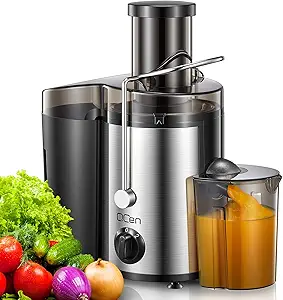 |
| Best Seller A high-volume bestseller chosen again and again | EanOruus 3-in-1 Masticating Juicer E-18 |  |
GDOR Juicer GS383

| Maximum Power | 1300 watts |
|---|---|
| Number of Speeds | 2 |
| Power Source | Corded Electric |
| Blade Material | Titanium |
| Voltage | 120 volts |
The GDOR GS383 is a high-power centrifugal juicer intended to extract juice quickly from a wide range of produce. It uses a 1300W copper motor and a titanium-enhanced cutting system to spin at two selectable speeds so you can handle soft fruits at the low setting and harder produce at the high setting. A 3.4-inch feed chute reduces prep time by allowing larger pieces or whole fruits, while the 56 oz juice jug and 106 oz pulp container let you run longer between emptying—useful for continuous sessions. The unit includes a built-in foam separator and a transparent housing for visual monitoring, and safety features such as an arm lock and overheat protection protect the motor during heavy use. Detachable parts are dishwasher-top-shelf safe and a cleaning brush is included, though users should follow the recommended cool-down intervals to avoid overheating. The design favors speed and volume over the slower, higher-yield cold-press approach, so expect more foam and slightly lower nutrient retention compared with masticating machines.
Best for: Buyers who need fast, high-volume extraction for frequent juicing sessions and value speed and large-capacity containers over the slow-press nutrient retention of masticating machines.
Less Ideal for: Operators who prioritize maximum juice yield and nutrient preservation for commercial cold-pressed products should consider slower masticating or hydraulic press systems instead.
- Powerful 1300W full-copper motor for sustained high-torque extraction.
- Large 3.4-inch feed chute reduces prep time by fitting bigger pieces or whole fruit.
- Generous 56 oz juice jug and 106 oz pulp container for extended, continuous juicing.
- Dual-speed control adapts to soft and hard produce for more efficient extraction.
- Built-in foam separator and transparent housing help reduce foaming and let you monitor operation.
- Centrifugal design yields more foam and slightly lower nutrient retention than slow masticating juicers.
- Requires cooling breaks after extended runs to protect the motor, limiting nonstop commercial throughput.
Verdict: Choose the GDOR GS383 when you need a fast, high-power centrifugal juicer that handles large volumes with minimal prep.
Nemco Easy Manual Citrus Juicer 55850

| Capacity | 0.65 liters |
|---|---|
| Material | Steel |
| Power Source | Manual |
| Included Components | Juicer, Lever / Crank Type |
The Nemco 55850 Easy Juicer is a lever-operated commercial citrus press designed for frequent use in restaurants, cafes, and juice bars. Its rack-and-pinion drive supported by two self-lubricating bronze bearings delivers smooth, consistent pressure with each pull, which helps extract more juice from whole citrus fruit. Construction combines aluminum and stainless steel with high-strength steel posts and stainless fasteners for a durable feel that stands up to heavy daily cycles, and the ergonomic handle reduces operator fatigue. The removable strainer cone simplifies cleaning and the unit is NSF listed for foodservice use, though it is hand-wash only. At about 0.65 liters capacity and a substantial weight, it is intended as a fixed countertop piece rather than a portable gadget. Buyers should expect a robust, manual workflow—no electricity, but reliable mechanical advantage for high-throughput juicing—while accepting that it requires manual effort and regular hand cleaning in busy operations.
Best for: Commercial kitchens and high-volume operators who prioritize extraction efficiency and durable, service-grade construction over electric automation.
Less Ideal for: Small households, mobile vendors, or anyone needing rapid, hands-free juicing should consider electric commercial juicers instead.
- Rack-and-pinion drive with bronze bearings for smooth, uniform pressure
- Durable aluminum and stainless steel construction with steel posts and stainless fasteners
- Ergonomic handle reduces operator strain during repeated use
- Removable strainer cone for easier cleaning and juice separation
- NSF listing suitable for commercial foodservice environments
- Hand wash only which adds labor for cleaning in busy kitchens
- Manual operation requires physical effort and is slower than electric juicers
Verdict: Choose the Nemco 55850 when you need a rugged, manual commercial citrus press that maximizes juice yield through reliable mechanical leverage.
Zulay Kitchen Cast Iron Juicer

| Material | Cast Iron & Stainless Steel |
|---|---|
| Capacity | 0.6 liters |
| Power Source | Manual |
| Recommended Uses For Product | Citrus |
This is a cast iron lever-style citrus press that uses mechanical advantage to squeeze whole halved fruit into a small collection cup, keeping seeds out and reducing pulp. In daily use you place a halved citrus in the 5-inch bowl, pull the long lever arm and the stainless steel cone and strainer force juice through into the cup or container; rubber feet help keep the unit stable during repeated presses. The cast iron construction and stainless components give it a sturdy, long-lived feel and make it suitable for moderate commercial environments like cocktail bars or small juice counters where electricity-free, rapid extraction is useful. Its 0.6-liter capacity and hand-wash requirement are practical but limit continuous unattended production and add cleaning time, and the press is heavy which makes repositioning or transport awkward. If you need an electric high-throughput juicer for large-scale operations this manual press will be slower, but for reliable, high-yield manual pressing it is effective and durable.
Best for: Buyers who prioritize reliable, high-yield manual extraction and durable, low-tech equipment for busy bars or small commercial setups where electric machines are undesirable.
Less Ideal for: Operations that need high-volume, continuous automated juicing or quick, hands-off processing should choose a powered commercial juicer instead.
- Robust cast iron build for long-term, frequent use
- Long lever provides strong mechanical advantage for high juice yield with minimal effort
- Detachable stainless steel strainer eases seed retention and cleaning of contact parts
- Rubberized feet keep the press stable during repetitive squeezing
- Simple manual operation requires no power or setup
- Hand wash only which increases cleaning time after commercial shifts
- Relatively heavy and not convenient to move frequently
Verdict: A rugged, no-power cast iron press that delivers reliable, high-yield manual citrus extraction for bars and small commercial counters.
HOUSNAT Centrifugal Juicer AMR516

| Maximum Power | 400 watts |
|---|---|
| Number of Speeds | 3 |
| Power Source | Corded Electric |
| Capacity | 450 ml |
The HOUSNAT AMR516 is a compact centrifugal juicer designed to make quick juice from whole fruits and vegetables using a 400W motor (rated max 800W), a wide 65mm feed chute, and a three-speed control with a pulse function. It is typically used for daily fresh juices where speed matters: toss in larger pieces with minimal prep, choose a lower speed for soft fruits and a higher setting for hard produce, then pour through the anti-drip spout into a cup or the included jug. Notable features include a 1.6 liter pulp collector, a 304 stainless steel precision filter and blades that aim for drier pulp and higher nutrient yield, and fully detachable BPA-free parts that are top-rack dishwasher safe for quick cleanup. For heavier or continuous commercial use this model is limited by its motor duty cycle and small capacity, but for occasional high-volume bursts or as a back-up station it offers good value and easy maintenance. The package adds a cleaning brush and recipe guide to help new users get started.
Best for: Small businesses or cafes seeking an inexpensive, easy-to-clean juicer for occasional high-volume bursts or as a secondary unit during peak periods.
Less Ideal for: High-volume commercial kitchens or juice bars that need continuous, heavy-duty operation should choose a professional-grade extraction machine with a larger capacity and industrial motor.
- Wide 65mm feed chute reduces prep time for whole fruits and many vegetables
- 304 stainless steel precision filter and blades for drier pulp and better extraction
- Detachable BPA-free parts are top-rack dishwasher safe for fast cleanup
- Three speeds plus pulse let you tailor performance to soft or hard produce
- Includes 1.6 L pulp collector and cleaning brush for convenient maintenance
- 400W motor is intended for light to moderate use and can overheat under continuous heavy loads
- 450 ml juice capacity and 1.6 L pulp bin limit uninterrupted throughput for busy commercial lines
Verdict: A budget-friendly, easy-to-clean centrifugal juicer suited as a secondary or occasional-use unit for small commercial operations.
Breville Juice Fountain Plus JE98XL

| Maximum Power | 850 watts |
|---|---|
| Number of Speeds | 2 |
| Power Source | Corded Electric |
| Capacity | 1 liters |
The Breville Juice Fountain Plus JE98XL is a straightforward centrifugal juicer built around an 850W motor, titanium-reinforced disc, and stainless steel micro-mesh filter to extract juice quickly from whole fruits and vegetables. It is used by switching between two speeds: low for soft fruits and leafy greens and high for harder produce, and the 3-inch feed chute cuts prep time by allowing many items to be juiced whole. The included 35.2 fl oz jug has an integrated froth separator so you pour clearer juice, and the detachable pulp container plus dishwasher-safe parts simplify cleanup. Practical strengths are fast throughput and a rugged-feeling build that keeps routine maintenance simple. Important limitations are that centrifugal extraction is less gentle than slow juicers for leafy greens and can yield slightly more foam and heat-sensitive nutrient loss with extended use, and the 1.1 liter jug and pulp capacity mean frequent emptying in high-volume runs. For someone prioritizing dependable, quick performance, this juicer is sensible; for continuous commercial throughput you will need larger-capacity commercial equipment.
Best for: Buyers who want a reliable, no-nonsense machine for fast, regular juicing and value simple maintenance and sturdy construction over continuous commercial throughput.
Less Ideal for: Businesses needing continuous, high-volume commercial juicing or operators who require the gentlest, highest-yield extraction from leafy greens should consider larger commercial or slow masticating machines instead.
- Powerful 850W motor for fast juice extraction
- Extra-wide 3-inch feed chute reduces prep time by accommodating whole fruits
- Titanium-reinforced disc and stainless steel micro-mesh filter for efficient extraction
- Built-in froth separator yields clearer juice and a 35.2 fl oz jug for easy pouring
- Detachable pulp container and dishwasher-safe parts simplify cleaning and storage
- Centrifugal design is less efficient on leafy greens and can generate more foam and heat than masticating juicers
- Juice and pulp capacities are modest for sustained high-volume use
Verdict: A dependable, fast centrifugal juicer that delivers reliable daily performance for moderate-volume juicing where ease of use and cleanup matter most.
QCen Centrifugal Juicer KS-501

| Maximum Power | 500 watts |
|---|---|
| Number of Speeds | 2 |
| Power Source | Corded Electric |
| Capacity | 3 liters |
The QCen KS-501 is a compact centrifugal juicer designed to turn whole or roughly chopped produce into juice quickly using a 500W motor and a 3-inch feed chute. It offers two speed settings for softer fruits at the lower speed and harder produce like carrots or apples at the higher speed, while safety features such as a locking arm and overload protection help prevent operation when the unit is not secured or overheats. Detachable, BPA-free parts and a removable filter basket make cleanup straightforward by hand, and the stainless steel construction where it matters suggests reasonable durability for frequent use. For a commercial setting this model is best suited to light-duty tasks or back-of-house prep where speed and counter footprint matter, but its motor and build are not purpose-built for continuous heavy production and require cooldown time under heavy loads. Expect efficient, fast juicing for moderate volume but plan for more robust commercial extractors if you need nonstop, high-volume output.
Best for: Small commercial kitchens, cafes, or juice bars that need a fast, space-efficient juicer for moderate daily volume and value safety features and easy maintenance.
Less Ideal for: High-volume operations that require continuous run times or industrial-grade extraction should choose a purpose-built commercial juicer instead.
- 500W motor with two speeds for handling both soft and hard produce
- 3-inch wide feed chute reduces prep time by fitting larger pieces
- Safety locking arm and overload protection improve user safety
- Detachable parts and removable filter basket simplify hand cleaning
- Stainless steel components where specified for better durability
- Designed for home or light-commercial use rather than continuous heavy-duty commercial production
- Hand wash only parts add labor for high-volume operations
Verdict: A fast, compact centrifugal juicer suited for moderate commercial use where quick output and a small footprint matter, but not for nonstop high-volume production.
EanOruus 3-in-1 Masticating Juicer E-18

| Capacity | 100 fluid ounces |
|---|---|
| Maximum Power | 250 watts |
| Power Source | ac |
| Voltage | 110 volts |
The EanOruus E-18 is a single-auger masticating juicer designed for high-capacity home or light commercial use, offering juice extraction, nut milk and sorbet with interchangeable strainers. Its 6.5-inch wide chute and 100 oz hopper reduce prep and refills, letting you process whole fruits and larger batches faster than typical narrow-chute machines. The 250 W AC brushless motor provides steady, high-torque extraction and includes overheat protection and an auto-reverse to clear jams, which helps when running tougher produce for extended periods. Detachable parts and a removable pulp outlet simplify cleaning, though the unit is hand-wash only and uses plastic blade components rather than metal. At about 12 pounds and with a polycarbonate body, it balances sturdiness with portability but is not a stainless-steel commercial shell. For buyers focused on reliable, quiet extraction and large batch throughput, the E-18 delivers strong yields and versatile output modes; those needing fully commercial-grade stainless construction or certified heavy continuous-duty operation should consider industrial models instead.
Best for: Buyers who want a reliable, high-yield masticating juicer for frequent large batches and value quiet, steady extraction with convenient features that reduce prep and jams.
Less Ideal for: Operators who need fully commercial, stainless-steel construction or continuous 24/7 duty-cycle certification should choose purpose-built commercial juicers instead.
- Extra-large 100 oz hopper for fewer refills and faster batching
- 6.5-inch wide chute accepts whole fruits to minimize prep
- High-torque 250 W AC motor with overheat protection and auto-reverse for jam clearing
- Interchangeable strainers let you make juice, nut milk and sorbet from one machine
- Detachable pulp outlet and removable parts make cleanup simpler than fixed-pulp designs
- Plastic blade components instead of metal may wear faster under heavy continuous use
- Hand-wash only parts require manual cleaning rather than dishwasher-safe convenience
Verdict: Choose the EanOruus E-18 when you need a quiet, high-yield masticating juicer that handles large batches and multiple outputs without complicated setup.
Choosing the Right Juicer for Commercial Use: Key Factors to Consider
Throughput and Juice Yield
How many pounds of produce the machine can process per hour and the percentage of extractable juice you get from typical fruits and vegetables directly affect labor and ingredient costs. Higher throughput reduces queue times and lowers per-serving labor, while better yield reduces waste and ingredient spend.
Assess typical daily volume and peak-service surges to choose a machine whose sustained run-rate matches your busiest periods. Consider whether the unit handles whole fruits or requires pre-cutting, since prep time impacts total throughput.
Build Quality and Materials
Commercial juicers face constant mechanical stress and frequent cleaning cycles, so construction materials matter for longevity. Look for heavy-gauge stainless steel or industrial-grade plastics on contact surfaces, robust motor housings, and corrosion-resistant fasteners that tolerate wet environments.
Solid components reduce the frequency of part failure and preserve sanitary surfaces over time. Machines with metal gears or sealed bearings generally last longer than lower-cost designs that use brittle plastics in high-load areas.
Ease of Cleaning and Sanitation
Food-safety rules require regular cleaning and sometimes same-day disassembly in commercial settings. Units that break down quickly into a few large parts, or that include dishwasher-safe components, save staff time and help maintain consistent sanitation.
Also consider how easy it is to reach crevices where pulp accumulates and whether seals and gaskets are simple to remove and replace. Reduced cleaning time translates directly to more productive service hours.
Serviceability and Parts Availability
Downtime in a commercial kitchen costs revenue. Choose juicers with readily available consumable parts such as screens, blades, and gaskets, and with clear service documentation. Modular designs that allow quick replacement of wear items minimize out-of-service time.
Check that routine maintenance tasks do not require specialized tools or factory service. Machines supported by accessible parts networks and simple maintenance schedules keep operations moving.
Noise, Vibration, and Staff Comfort
High noise and vibration levels contribute to employee fatigue and can make front-of-house use unpleasant. Consider decibel output and chassis isolation features when the juicer will operate near customers or staff workstations.
Reduced vibration also correlates with longer mechanical life and fewer alignment-related failures, so quieter units often bring long-term reliability benefits.
Compatibility With Menu and Ingredient Types
Different produce types place different demands on a juicer. Citrus, leafy greens, and hard root vegetables vary in fiber content and hardness, which affects blade or auger design and required motor torque. Ensure the machine you select supports the primary ingredients on your menu without excessive prep.
Also factor in whether the juicer handles continuous processing of mixed produce or needs pauses to clear pulp. Machines optimized for your signature recipes reduce waste and speed service.
Choosing Between Centrifugal, Masticating, and Hydraulic Styles
Commercial operations commonly use centrifugal, masticating (slow), or hydraulic/press systems. Centrifugal-style machines process quickly and are suited to high-volume, simple-juice menus. Masticating designs extract juice more gently and often yield clearer juice from leafy greens. Hydraulic presses produce the highest yields and clarity but need more time per batch and sometimes a press schedule.
Match the technology to your menu and service model. If speed and throughput are top priorities, favor fast-processing designs. If yield and quality for delicate produce are crucial, a slower but gentler extraction method may be worth the tradeoff.
- Centrifugal: fastest, higher pulp, best for hard fruits
- Masticating: better yield on greens, slower
- Hydraulic press: highest yield and clarity, batch processing
Installation, Footprint, and Ventilation Needs
Commercial juicers vary widely in size and ventilation requirements. Confirm available counter or floor space and allow clearance for service access. Some heavy-duty motors need ventilation or dedicated airflow to avoid overheating during long shifts.
Also consider ergonomic placement for staff to minimize repetitive strain during loading, operation, and cleaning. Taller feed chutes reduce bending but may require more vertical clearance.
- Measure service clearance, not just footprint
- Provide easy access to waste containers and wash sinks
- Plan airflow for motors that run continuously
Daily Workflow and Staff Training
Integrating a commercial juicer into kitchen workflows affects staff routines across prep, peak service, and closing. Machines that are intuitive to operate shorten training time and reduce operator errors that cause jams or damage. Standardize operating procedures for feed rate, pulp clearing, and clean-down to protect equipment and food safety.
Train multiple staff members on basic troubleshooting and part replacement to avoid single-person dependency. Clear signage for common maintenance steps helps maintain consistency during busy shifts.
- Create step-by-step SOPs for operation and cleaning
- Rotate staff through training to ensure redundancy
- Log maintenance and part changes for predictable upkeep
Sanitation Practices and Cleaning Schedules
A predictable cleaning schedule keeps juice quality high and reduces microbial risk. Implement pre-shift, mid-shift, and post-shift checks for accumulated pulp and gasket integrity. Use food-safe sanitizers and follow contact-time guidelines for effective cleaning.
Consider designing your prep area so soiled parts go directly to a wash station and minimize cross-contamination. Color-coded tools and labeled parts bins help maintain sanitation discipline.
- Schedule quick checks during service to prevent buildup
- Use removable parts that withstand commercial washing
- Document cleaning for compliance with local health codes
Energy Use and Operating Costs
Commercial juicers draw differing power levels depending on motor size and extraction method. Larger motors yield higher torque and throughput but may raise energy bills. Estimate operating hours and factor electrical consumption into your operating-cost model.
Also factor in consumable replacement frequency and downtime-related costs. A machine with slightly higher energy draw but significantly lower maintenance needs can be cheaper over its service life.
- Compare motor wattage and expected duty cycles
- Include replacement parts and expected service intervals
- Balance energy use against labor and yield benefits
How We Chose the Best Juicer for Commercial Use
We screened commercial juicers using criteria that reflect heavy-use, back-of-house demands. We prioritized build quality and materials because stainless-steel housings, heavy-duty motors, and replaceable wear parts determine long-term durability in high-volume settings. Throughput and yield were assessed to identify machines that reduce cycle time and maximize juice output per pound of produce. Ease of cleaning and sanitation was a core filter, focusing on designs that allow quick disassembly, dishwasher-safe components, or simple field-strip procedures to meet health-code routines. Serviceability and parts availability mattered for minimizing downtime; we favored units with easy access to common consumables and widely available replacement parts. Noise level and vibration were included since quieter machines improve staff comfort and reduce fatigue. We excluded consumer countertop juicers, units clearly rated for light domestic use, and models without documented commercial-grade components. The final picks balance productivity, maintainability, and longevity for professional settings.
Our full evaluation process is outlined in our review methodology.
FAQ
How much daily volume can a commercial juicer handle?
Daily capacity depends on the model and extraction style. High-throughput centrifugal machines can process several hundred pounds per day in a continuous service environment, while hydraulic presses are more batch-oriented and handle lower continuous volume but often yield more juice per pound.
What maintenance is required to keep a commercial juicer reliable?
Routine maintenance includes daily cleaning, weekly inspection of wear parts like screens and gaskets, and periodic lubrication or bearing checks per the manufacturer's schedule. Promptly replace worn consumables and keep a small stock of common parts to minimize downtime.
Can a commercial juicer handle leafy greens and wheatgrass?
Some commercial designs, especially slow masticating or cold-press styles, are better suited for leafy greens and wheatgrass extraction. Fast centrifugal units typically perform less efficiently on high-fiber greens, so match the machine type to the ingredients you serve most often.
Are commercial juicers noisy to operate in a front-of-house setting?
Noise levels vary by design and motor size. High-speed centrifugal machines tend to be louder, while slower masticating units run quieter. Consider sound levels relative to your service environment and look for chassis isolation or sound-dampening features if front-of-house use is planned.
How important is parts availability for commercial juicers?
Very important. Readily available screens, gaskets, and blades reduce repair lead times and keep the unit in service. Choose equipment with common replaceable parts and clear supplier channels for quicker turnaround.
Final Verdict
For commercial use, prioritize throughput, durable construction, and easy sanitation because these factors most directly affect service speed and operating costs. Balance extraction style with your menu demands: choose fast processors for high-volume fruit-heavy menus and gentler extractors or presses for leafy-green or clarity-focused offerings. Finally, account for serviceability and parts access to reduce downtime. Focusing on those tradeoffs will help you pick a commercial juicer that keeps operations efficient and reliable.