
Note: This article contains affiliate links. If you click on these links and make a purchase, we may earn a small commission at no extra cost to you. This helps support our research and content. Read our full affiliate disclosure here.
If you press grapes regularly or want to start making fresh grape juice at home, the right juicer matters more than you might think. Grape juice requires gentle yet thorough extraction to preserve flavor and reduce bitterness from skins and seeds. You need a machine that balances extraction efficiency, pulp separation, and straightforward maintenance. This guide covers seven top juicers for grapes shortlisted for their extraction yield, ease of cleaning, and suitability for small-batch and frequent use. Below we explain what we evaluated and how each machine fits typical grape-juicing needs, so you can pick the best option for your kitchen and routine.
Top Picks at a Glance
| Best Overall The best all-around choice for most situations | VIVOHOME Steam Juicer 11 Qt |  |
| Best Quality Built to a higher standard if you want something more solid | Hurom H400 Slow Juicer |  |
| Best Value The sweet spot between price and what you get | Hamilton Beach Big Mouth Juicer |  |
| Best Budget The cheapest option that still gets the job done reliably | Elite Gourmet Electric Citrus Juicer ETS623 |  |
| Top Rated A top-rated pick with lots of positive feedback | Cook N Home 11-Quart Steam Juicer |  |
| Most Popular A crowd favorite that many people choose with confidence | Juilist Centrifugal Juicer AMR526 |  |
| Best Seller A high-volume bestseller chosen again and again | EanOruus 3-in-1 Cold Press Juicer E-18 |  |
VIVOHOME Steam Juicer 11 Qt

| Capacity | 11 quarts |
|---|---|
| Material | Stainless Steel |
| Lid Material | Tempered Glass |
| Dishwasher Safe | Yes |
This VIVOHOME steam juicer is a 3-layer stainless steel extractor that steams fruit, collects released juices in a middle pan, and lets you drain finished juice through included hoses and clamps. Typical use is simple: fill the top colander with fruit (grapes work well), boil water in the bottom pot to generate steam, and let the juice condense into the middle pan for bottling. Notable features include food-grade stainless steel construction, a tempered glass lid, welded loop handles, a three-layer composite bottom for even heating, and dishwasher-safe components for easier cleanup. The extractor doubles as separate cookware—each layer can function as a stockpot or steamer—so it is handy beyond juicing season. Important limitations are the need to monitor heat and avoid dry heating, and that operation requires stove space and time compared with electric juicers; you also need bottles and some patience to finish and bottle juice. For someone making batch grape juice or canning, it reliably produces clear, nutrient-rich juice without squeezing and straining required by presses.
Best for: Buyers who want a practical, low-tech solution for making larger batches of grape or fruit juice and who value durable, multiuse cookware that doubles as an extractor.
Less Ideal for: Users who need quick single‑glass juicing, a compact countertop electric juicer, or those unwilling to dedicate stove time and bottle-finishing effort.
- Large 11 quart top capacity for batch juicing
- Food-grade stainless steel and tempered glass lid for durable, sanitary construction
- Three-layer base for even, efficient heating on all stove types including induction
- Includes hoses and clamps for controlled juice draining into bottles
- Dishwasher-safe parts and welded handles simplify cleaning and handling
- Requires stovetop time and monitoring; not as fast as electric centrifugal or masticating juicers
- Must avoid dry heating and high prolonged temperatures to prevent damage
Verdict: Choose this steam juicer if you want a durable, high-capacity stovetop extractor that reliably produces large batches of clear, preservable grape juice.
Hurom H400 Slow Juicer
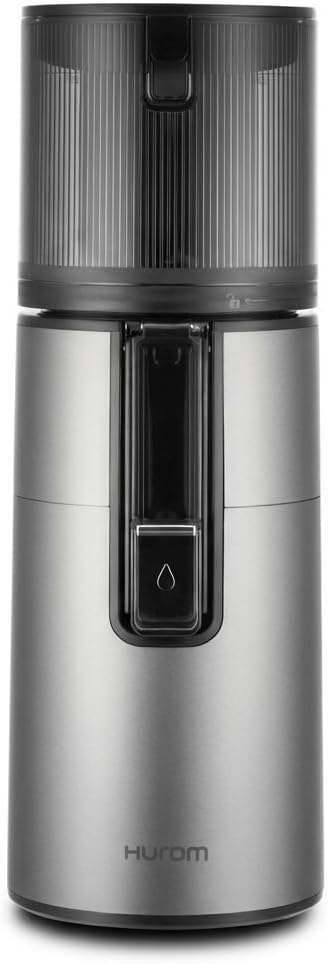
| Special Features | Masticating |
|---|---|
| Wattage | 150 watts |
| Power Source | Corded Electric |
| Voltage | 120 volts |
| Controller Type | Button |
The Hurom H400 is a cold-press masticating juicer built for steady, low-speed extraction and easy cleanup. It uses a self-feeding hopper and a slow-turning titanium auger and blade to crush produce quietly while extracting juice with minimal heat and foam, which helps preserve flavor and nutrients—especially useful for delicate fruits like grapes. Typical use is straightforward: feed whole or halved fruit into the hopper, let the auger press out juice into the container, then discard the pulp into the pulp bin. Notable features include a strainer-free easy-clean design, a measured juice gauge and a 150-watt motor tuned for low RPM operation, which keeps noise down during morning routines. The H400 yields higher juice from soft fruits and leafy greens and is energy efficient compared with high-speed juicers, but its slower operation means larger batches take more time. Also, hand-wash care is required for parts and the unit is a premium-priced, higher-end appliance aimed at frequent juicers who prioritize flavor and nutrient retention.
Best for: Buyers who prioritize maximum juice quality and nutrient retention from soft fruits and want a quiet, reliable cold-press machine for regular home juicing.
Less Ideal for: Anyone who needs very fast throughput for large volumes or wants fully dishwasher-safe cleanup should consider other options.
- Masticating low-speed extraction preserves flavor and nutrients from delicate fruits like grapes
- Self-feeding hopper accepts whole produce for convenient continuous juicing
- Quiet operation suitable for early-morning use
- Titanium auger and blade materials for durable, corrosion-resistant contact with produce
- Slower extraction means longer prep time for large batches
- Parts require hand washing rather than dishwasher cleaning
Verdict: Choose the H400 if you want a quiet, masticating juicer that squeezes high-quality juice from grapes and other soft produce with minimal heat and foam.
Hamilton Beach Big Mouth Juicer

| Maximum Power | 800 watts |
|---|---|
| Power Source | Corded Electric |
| Number of Speeds | 1 |
| Included Components | Cleaning Brush, Dishwasher Safe Parts |
The Hamilton Beach Big Mouth Juicer is a centrifugal extractor built for fast, everyday juicing. Its 3-inch feed chute accepts whole apples, celery stalks, and similar produce so you spend less time prepping and more time juicing. The 800 watt motor handles both hard and soft fruits and a stainless steel strainer basket and blade pull juice out quickly, routing pulp into a large bin while delivering largely pulp-free liquid. Removable parts are dishwasher safe and a cleaning brush is included to speed cleanup after heavy sessions. The unit has a single speed with a simple knob control and motor overload protection to prevent damage from jams. Because it is a centrifugal design, it is best for high-yield, quick juicing of items like grapes, apples, carrots and citrus but will not match slow masticating models for extracting leafy greens or preserving enzymes. It is a practical, no-frills machine that emphasizes speed and ease of use for daily fresh juice.
Best for: Buyers who want a fast, low-effort juicer that handles whole fruits and delivers high yields for everyday use, especially for fruit-heavy recipes like grape and apple juices.
Less Ideal for: Those seeking slow cold-press extraction for maximum nutrient preservation, or buyers whose primary goal is juicing mostly leafy greens and wheatgrass should consider masticating models instead.
- Extra-large 3" feed chute reduces prep time by allowing whole or large pieces of produce
- 800 watt motor provides strong extraction for hard and soft fruits
- Large pulp bin for longer juicing sessions without stopping
- Removable dishwasher-safe parts and included cleaning brush simplify cleanup
- Single speed control limits fine tuning for delicate produce
- Centrifugal extraction is less efficient on leafy greens and softer herbs
Verdict: Choose this juicer if you want a fast, easy-to-use centrifugal machine that minimizes prep with a 3" chute and delivers high juice yield for fruit-forward blends like grapes.
Elite Gourmet Electric Citrus Juicer ETS623

| Maximum Power | 40 watts |
|---|---|
| Power Source | Corded Electric |
| Voltage | 120 |
| Special Features | Quiet Motor |
The Elite Gourmet ETS623 is a small, budget-friendly electric citrus juicer meant for quick home squeezing of oranges, lemons, limes and grapefruits into its 24 oz pitcher. Its 40-watt motor and auto-reversing reamer help extract juice more efficiently than lower-power models, and the push-down activation makes it simple to use without complicated controls. A built-in pulp and seed filter plus an easy-pour spout let you serve directly from the container with minimal mess, and detachable parts are top-rack dishwasher safe for straightforward cleanup. The compact footprint and BPA-free construction suit apartments, dorms, or RV kitchens, and the quiet motor keeps noise low during operation. Note that this is a citrus-focused appliance and not designed for small, soft fruits like grapes or heavy-duty whole-fruit juicing, so expect limited versatility compared with full-size juicers. For everyday citrus needs, it delivers reliable, no-frills performance at a low cost.
Best for: Buyers looking for an inexpensive, compact machine to make fresh citrus juice quickly and easily for households or small kitchens.
Less Ideal for: People who want a multipurpose juicer for grapes, berries, or whole fruits should choose a masticating or centrifugal juicer instead.
- 40-watt motor with auto-reversing reamer extracts juice efficiently from citrus
- Compact 24 oz pitcher with easy-pour spout and ergonomic handle
- Built-in pulp and seed filter for smoother juice
- Detachable parts are top-rack dishwasher safe for easier cleanup
- Quiet motor suitable for small kitchens and apartments
- Designed specifically for citrus and not suitable for juicing grapes or harder non-citrus fruits
- Some removable parts are hand-wash recommended for longevity despite dishwasher-safe claim
Verdict: A low-cost, compact citrus juicer that delivers efficient, quiet extraction for everyday orange, lemon, lime and grapefruit juicing.
Cook N Home 11-Quart Steam Juicer

| Capacity | 11 quart |
|---|---|
| Material | Stainless steel with aluminum layered base |
| Compatibility | Induction, gas, electric, glass, halogen, ceramic stovetops |
The Cook N Home 11-Quart Steam Juicer is a stovetop juicer and steamer built from stainless steel with an aluminum-layered base to speed and even out heating. You fill the bottom pot with water, load fresh fruit into the top basket, and steam forces juice down into the middle collection pan where a hose drains it into a jar or container. It is induction compatible and works on gas, electric, glass and ceramic cooktops, and can double as a regular steamer or stockpot when you remove the center tube. Practical touches include side loop handles for carrying, a secure lid to hold heat and moisture, and an included hose with clamp for drip-free collection. The large 11-quart capacity handles big batches suitable for grape harvests, but it is sizable and best used on a full-sized range; hand washing is recommended despite dishwasher-safe notes. If you need a straightforward, heavy-duty stovetop extractor for seasonal juicing, this is a reliable, no-frills option.
Best for: Buyers who prioritize a robust, dependable stovetop extractor for seasonal or large-batch fruit juicing and want a tool that doubles as a heavy stockpot or steamer.
Less Ideal for: Users looking for a compact, countertop electric juicer or a device for daily small servings should consider smaller electric models instead.
- Stainless steel construction with aluminum-layered base for even, quick heat distribution
- 11-quart capacity suitable for large batches like grape juicing
- Induction compatible and works on all common stovetops
- Includes all necessary parts: water/cooking pan, juice pan, strainer/steamer pan, lid, and hose with clamp
- Large footprint and weight make it less convenient for small kitchens or frequent countertop storage
- Requires stovetop space and active monitoring during long steam cycles
Verdict: A sturdy, high-capacity stovetop steam juicer built for reliable large-batch fruit extraction, ideal for processing grapes and making jelly or syrup.
Juilist Centrifugal Juicer AMR526

| Maximum Power | 800 watts |
|---|---|
| Wattage | 400 watts |
| Feed Chute | 3" |
| Number of Speeds | 3 |
| Material | Stainless Steel |
The Juilist Centrifugal Juicer AMR526 is a fast, user-friendly countertop juicer aimed at everyday produce. It uses a high-speed motor (400W nominal, up to 800W peak) and a 3" wide feed chute to accept larger fruit pieces and reduce prep, while three speed settings let you match speed to soft or firm ingredients. Assembly and cleanup are straightforward: the filter and accessories are dishwasher-safe and a cleaning brush is included. Safety features include a visible juicing window, a double safety lock and automatic overheat protection, which make operation confidence-inspiring. Practical limitations: as a centrifugal model it is optimized for high-yield, quick extraction from softer fruits and many common vegetables but is not ideal for very fibrous, low-juice produce and the manufacturer advises against frozen items and very hard items like sugar cane or pomegranate. Capacity is modest, so frequent batches are needed for larger servings. For grape juicing it will process clusters quickly but expect some pulp and shorter shelf life compared with slow masticating juicers.
Best for: Buyers who prioritize fast, low-effort juice prep and want a reliable machine with clear safety features and easy cleanup backed by many user reviews.
Less Ideal for: Those focused on maximum juice clarity, longest possible shelf life, or routinely juicing very fibrous or frozen produce should consider a slow masticating model instead.
- 3" wide feed chute reduces prep by fitting larger fruit pieces
- Three speed settings let you tailor speed to soft or firm produce
- Dishwasher-safe parts and included brush simplify cleaning
- Visible juicing window and safety locks improve safe, controlled operation
- Centrifugal design yields more foam and shorter juice storage life than slow juicers
- Not recommended for very hard or frozen ingredients
Verdict: Choose this Juilist centrifugal juicer if you want quick, fuss-free grape and fruit juicing with minimal prep and easy cleanup.
EanOruus 3-in-1 Cold Press Juicer E-18

| Capacity | 100 fluid ounces |
|---|---|
| Wattage | 250 watts |
| Power Source | ac |
| Voltage | 110 volts |
The EanOruus E-18 is a single-auger cold press juicer designed for heavy home use and batch juicing. It accepts whole fruit through a 6.5-inch chute and feeds into a large 100 oz hopper so you can process multiple pounds of produce, which is handy when making large batches of grape juice. The unit uses a 250W AC motor with auto-reverse and overheat protection to keep extraction consistent and reduce jams from compact fruits like grapes. Two strainers let you switch between fine juicing and a sorbet or nut milk texture, and most removable parts are detachable for hand-washing. Practical benefits include quiet operation, high yield on soft and fibrous produce, and the option to make frozen sorbets from excess fruit. Limitations to consider are the plastic auger and components rather than metal, hand-wash-only care, and the juicer's substantial size and weight which make storage less convenient for small kitchens.
Best for: Buyers who want a reliable cold-press juicer that can handle large batches and minimize prep time, and who prioritize consistent yields and quiet, protected motor operation.
Less Ideal for: People with very small kitchens or who need a compact, lightweight appliance for occasional single-person use should consider smaller models instead.
- Extra-wide 6.5-inch chute reduces prep time by accepting whole fruit
- Large 100 oz hopper for batch juicing or family-size yields
- Auto-reverse and overheat protection help prevent jams and protect the motor
- Interchangeable strainers allow juice, sorbet and nut milk preparation
- Major components and auger are plastic rather than metal
- Requires hand washing of removable parts
- Large footprint and weight make it less convenient to store
Verdict: Choose this juicer if you want a quiet, heavy-duty cold-press machine that handles whole fruits and large batches with built-in protections for reliable everyday use.
Choosing the Right Juicer for Grapes: Key Factors to Consider
Extraction Method
The method a juicer uses—centrifugal, masticating, or triturating—directly affects grape juice clarity, flavor, and yield. Slow, low-speed methods tend to apply gentler pressure that reduces heat and oxidation, preserving delicate grape aromatics. High-speed centrifugal models can process grapes quickly but may aerate the juice, producing foam and more bitter compounds from skins and seeds.
For grapes, think about whether you want clear, fresh-tasting juice or are willing to accept some foam and sediment for faster throughput. The extraction method also impacts how much pre-processing is needed, such as destemming or halving grapes, so factor that into your choice.
Pulp and Seed Handling
Grapes contain small seeds and thin skins that contribute tannins and bitterness if crushed too aggressively. Juicers that separate pulp efficiently and trap seeds away from the juice stream produce a cleaner, less astringent result. Models with fine screens or dedicated seed traps reduce the need for manual seed removal before juicing.
If you plan to juice seeded grape varieties, prioritize machines with proven seed and pulp separation. For seedless grapes, pulp handling still matters because compacted pulp can clog machines and cut yield.
Ease of Cleaning and Maintenance
Grape juice is sugary and can stick to screens, housings, and crevices, which makes cleanup a recurring pain point. Juicers with fewer parts that are easy to disassemble and are dishwasher-safe speed up turnaround between batches. Smooth surfaces and wide feed chutes reduce trapped residue and staining.
Consider how often you will juice and whether you need a model that rinses clean quickly. Frequent users should choose units with simple cleaning steps and accessible mesh screens to prevent mold and lingering odors.
Throughput and Batch Size
Think about how much grape juice you plan to produce in one session. Some juicers excel at small, frequent batches and are designed for kitchen countertops, while others handle larger loads more efficiently. Throughput affects how long you spend processing a harvest and whether you need to pause to empty pulp containers or strainers.
If you harvest grapes seasonally and want to process many pounds at once, choose a unit with a generous pulp bin and continuous-feed capability. For occasional use, a compact unit with simple setup may be preferable.
Durability and Material Quality
Material quality and construction determine how well a juicer tolerates sticky, acidic grape juice and frequent cleaning. Stainless steel or reinforcement in critical parts resists corrosion and staining. Plastic components should be food-grade and thick enough to resist cracking under repeated stress from dense batches.
Durable units also tend to have better warranties and replaceable parts, which matter if you expect heavy seasonal use or plan to juice regularly.
Noise and Kitchen Fit
Noise matters if you juice early in the morning or in shared living spaces. Centrifugal machines are usually louder due to high-speed motors, while masticating models operate more quietly. Consider how your kitchen layout and household tolerances affect where and when you will run the machine.
Also evaluate the unit's footprint and storage needs. A high-capacity juicer with a large base may require a permanent counter spot, whereas a compact model is easier to tuck away between uses.
Preparing Grapes for Best Results
Proper prep improves yield and flavor. Rinse grapes thoroughly to remove dust and residues and sort out underripe or damaged fruit. For seeded varieties, consider removing larger stems and separating clusters to avoid adding woody stems to the feed.
When dealing with very large harvests, work in small batches to avoid clogging and to keep pulp from compacting. Halving exceptionally large grapes can help some machines extract more consistently. Chill grapes before juicing to reduce foam and to preserve freshness.
- Rinse and remove stems, leaves, and debris
- Work in manageable batches to prevent clogs
- Seed removal may help reduce bitterness for certain varieties
- Cold grapes produce less foam and a fresher flavor
Post-Extraction Handling and Storage
Fresh grape juice oxidizes and can develop off-flavors quickly. Strain the juice through a fine mesh or cheesecloth if you want clearer liquid, and chill promptly to slow enzymatic changes. If storing, use airtight containers and refrigerate; plan to consume fresh juice within a few days or freeze for longer-term storage.
For small-batch canning or fermentation, ensure containers and tools are sanitized. Leaving a small amount of pulp in the juice can accelerate fermentation if that is your goal, but it will also shorten shelf life for refrigerated fresh juice.
- Strain for clarity if desired
- Refrigerate promptly and consume quickly
- Freeze excess juice for longer storage
- Sanitize containers to prevent spoilage
Filtering and Clarifying Grape Juice
If you prefer clearer juice, a secondary filtration step helps. After primary extraction, pour the juice through progressively finer filters to remove suspended solids and micro-pulp. Allowing juice to settle and decanting the clear layer also reduces cloudiness.
Avoid over-filtering if you want to retain body and natural flavor. Some traditional grape juices benefit from light sediment for mouthfeel. Choose filtration methods that match your desired balance between clarity and character.
- Use coarse to fine filtration steps for best clarity
- Let juice settle for natural decanting
- Balance filtration with desired mouthfeel
Maintaining Your Juicer Between Seasons
Seasonal users should clean and dry all parts thoroughly before long-term storage to prevent staining and mold. Inspect seals and mesh screens for wear and replace parts as needed to maintain performance. Lubricate moving parts per the manufacturer guidance if applicable.
Store smaller components together to avoid losing filters or paddles. Running a brief cleaning cycle with warm water and a mild cleaner before the first use each season helps ensure flavor purity and reliable operation.
- Thoroughly dry and inspect parts before storage
- Replace worn screens and seals
- Run a warm-water cleaning cycle before seasonal use
Common Problems and Troubleshooting
Clogging and reduced yield are often caused by compacted pulp or overloading the feed. Pause and clear the pulp bin frequently during heavy sessions. For models with adjustable settings, slow the feed rate or reduce batch size to improve extraction.
If juice tastes bitter, check that seeds are being separated effectively and that skins are not being over-crushed. Excessive foam usually indicates warm fruit or too-rapid spinning; chilling grapes and feeding more slowly will help.
- Pause to clear pulp when processing large amounts
- Reduce feed rate to improve extraction consistency
- Chill fruit to reduce foam
- Check seals and screens if leakage or low yield appears
How We Chose the Best Juicer for Grapes
We focused on attributes that directly affect grape juice quality and the effort required to make it. First, extraction yield was a primary filter because grapes are high in water but can cling to pulp; models that squeeze more juice per pound were prioritized. Second, pulp handling and seed separation were considered to reduce bitterness and minimize pre-sorting. Third, cleaning and maintenance mattered since grape juice can stain and sticky residue makes frequent use unpleasant. Fourth, build quality and feed design were assessed to ensure machines tolerate repeated small batches without clogging. Fifth, noise and operation speed were considered for homeowners who juice indoors. We excluded machines designed only for hard produce where low-speed, gentle extraction is impossible and models lacking removable parts that allow thorough cleaning. We also excluded purpose-built commercial compressors and non-juicer appliances. The list favors devices with documented extraction performance, practical pulp separation, user-friendly disassembly, and reliable builds that suit home grape-juicing workflows.
Our full evaluation process is outlined in our review methodology.
FAQ
Can I juice grapes with seeded varieties without removing seeds?
Often you can, but seeds can contribute bitterness if they are crushed. Machines with good seed separation or pulp traps reduce this effect. For the cleanest flavor, remove seeds when practical.
Is a slow masticating juicer better for grapes than a centrifugal one?
Slow masticating units typically preserve aromatics and produce less foam, which is beneficial for grape juice. Centrifugal models work faster and may be fine for seedless grapes, but they can aerate the juice more.
How should I clean a juicer after making grape juice?
Disassemble removable parts and rinse immediately to prevent sticky residue from setting. Use a soft brush on mesh screens and allow components to air-dry completely before storing. Dishwasher-safe parts speed cleanup when available.
Will juicing damaged or overripe grapes affect the result?
Yes. Damaged or overripe grapes can introduce off-flavors and higher microbial loads that shorten juice shelf life. Sort and discard obviously spoiled fruit before juicing for the best flavor and safety.
Can I use the same juicer for wine preparation or fermentation?
Juicers are suitable for extracting juice but are not substitutes for full winemaking equipment and protocols. If you plan to ferment, additional steps such as controlled crushing, sanitation, and fermentation vessels are necessary.
Final Verdict
Choosing the right juicer for grapes comes down to balancing extraction yield, pulp and seed management, and how much time you want to spend cleaning. Prioritize extraction method and seed separation if flavor clarity is paramount, and pick a machine with easy-to-clean components if you expect frequent use. Think about batch size and where you will store the unit in your kitchen. With those tradeoffs in mind, you can confidently choose a juicer that delivers the yield and juice character you want while keeping cleanup and upkeep manageable.