
Note: This article contains affiliate links. If you click on these links and make a purchase, we may earn a small commission at no extra cost to you. This helps support our research and content. Read our full affiliate disclosure here.
If you love fresh, hydrating watermelon juice, the right juicer makes a big difference in yield, texture, and cleanup. A juicer built for handling high-water-content fruits helps you extract more liquid with less foam and fewer clogs. This guide covers seven shortlisted juicers that suit watermelon extraction needs, with practical notes on throughput, maintenance, and the type of juice each produces. We evaluate machines for juice yield, pulp management, speed, and ease of cleaning so you can pick an option that fits how often and how much you plan to juice. Read on for the criteria we used and what matters when choosing a juicer for watermelon.
Top Picks at a Glance
| Best Overall The best all-around choice for most situations | Breville Juice Fountain Plus JE98XL |  |
| Best Quality Built to a higher standard if you want something more solid | NAMA J2 Cold Press Juicer |  |
| Best Value The sweet spot between price and what you get | SMALLHOO Juicer TM-580SJ |  |
| Best Budget The cheapest option that still gets the job done reliably | HOUSNAT Centrifugal Juicer AMR516 |  |
| Top Rated A top-rated pick with lots of positive feedback | ECOSELF Cold Press Juicer |  |
| Most Popular A crowd favorite that many people choose with confidence | QCen 500W Centrifugal Juicer | 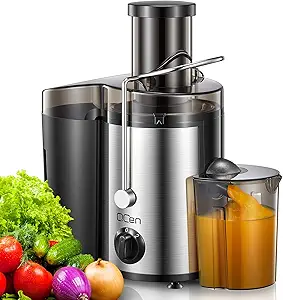 |
| Best Seller A high-volume bestseller chosen again and again | EanOruus 3-in-1 Masticating Juicer E-18 |  |
Breville Juice Fountain Plus JE98XL

| Wattage | 850 watts |
|---|---|
| Number of Speeds | 2 |
| Feed Chute | 3-inch extra wide |
| Power Source | Corded Electric |
| Capacity | 1 liters |
The Breville Juice Fountain Plus JE98XL is a straightforward centrifugal juicer built for fast, everyday juicing. It uses an 850W motor and a titanium-reinforced disc with a stainless-steel micro mesh filter to pull juice quickly from whole fruits and vegetables, and the 3-inch feed chute reduces prep by letting many items go in whole. Two speeds let you switch between softer, leafy produce and harder fruits or roots, and the included 35.2 fl oz juice jug has a built-in froth separator for cleaner pours. Cleanup is simplified by a detachable pulp container and dishwasher-safe parts, though centrifugal machines do produce thinner juice and more foam than slow masticating juicers. The unit is solidly built with heavy grade polymer housing and stainless cutters, and cord-wrap storage helps keep the counter tidy. For occasional thicker yields or maximum nutrient retention, a slow juicer would outperform this model, but for quick watermelon, apple, citrus, and carrot juices it delivers efficient, reliable results.
Best for: A practical home cook who wants fast, low-effort juicing for everyday use and values quick prep and easy cleanup over maximum yield or the smoothest, most nutrient-dense juice.
Less Ideal for: People prioritizing the highest juice yield, very smooth texture, or maximum nutrient retention should consider a slow masticating juicer instead.
- Extra-wide 3-inch feed chute reduces chopping and speeds prep
- Powerful 850W motor extracts juice quickly from hard and soft produce
- Built-in froth separator produces clearer pours with less foam
- Two speed settings let you adjust for leafy versus dense ingredients
- Dishwasher-safe parts and detachable pulp container simplify cleanup
- Centrifugal design yields thinner juice with more foam compared with slow masticating juicers
- Pulp separation is efficient but can be wetter, reducing total yield
Verdict: Choose the JE98XL if you want a fast, easy-to-use centrifugal juicer that handles whole fruit prep and delivers quick results for everyday juicing.
NAMA J2 Cold Press Juicer

| Maximum Power | 200 watts |
|---|---|
| Power Source | Corded Electric |
| Voltage | 120 |
| Capacity | 30 fluid ounces |
| Number of Speeds | 1 |
The NAMA J2 is a masticating cold-press juicer built for steady, high-yield extraction with minimal user involvement. It uses a single auger and a self-feeding wide hopper so you can load a full recipe and walk away while the 200 W motor turns at a low speed (about 50 RPM) to gently crush fruits and vegetables. That slow, hands-free process helps preserve nutrients and reduces heat and foam, which is useful when juicing watery produce like watermelon where maintaining flavor and minimizing pulp matters. The J2 ships with multiple strainers, a pulp container, and a cleaning brush, and parts are quick-release for easier rinsing and light scrubbing; materials listed include stainless steel and Tritan. Practical limits are its single speed and modest 30 fl oz capacity, so it is better suited for regular household batches rather than continuous commercial use, and it requires hand washing rather than dishwasher cleaning. For buyers prioritizing juice yield and gentle extraction of delicate, high-water fruits, the J2 delivers efficient, quiet operation with straightforward cleanup.
Best for: Buyers who want efficient, high-yield cold-pressed juice from delicate, high-water fruits and prefer a mostly hands-free, quiet machine for home use.
Less Ideal for: People needing continuous commercial throughput, variable speed control, or fully dishwasher-safe parts should consider other models.
- Self-feeding wide hopper supports hands-free loading for whole recipes
- Low-speed masticating action preserves flavor and reduces foam when juicing watery fruits
- 200 W motor provides steady, quiet extraction
- Includes multiple strainers, juice and pulp containers, and a cleaning brush for complete setup
- Single-speed operation limits control for very soft or very hard produce
- 30 fl oz capacity may require multiple batches for large servings
Verdict: If you want gentle, high-yield cold-pressed juice from watermelon and other watery fruits with minimal hands-on work, the NAMA J2 is a strong home choice.
SMALLHOO Juicer TM-580SJ
| Wattage | 150 watts |
|---|---|
| Power Source | Electric |
| Voltage | 110 volts |
| Number of Speeds | 2 |
| Capacity | 1.77 liters |
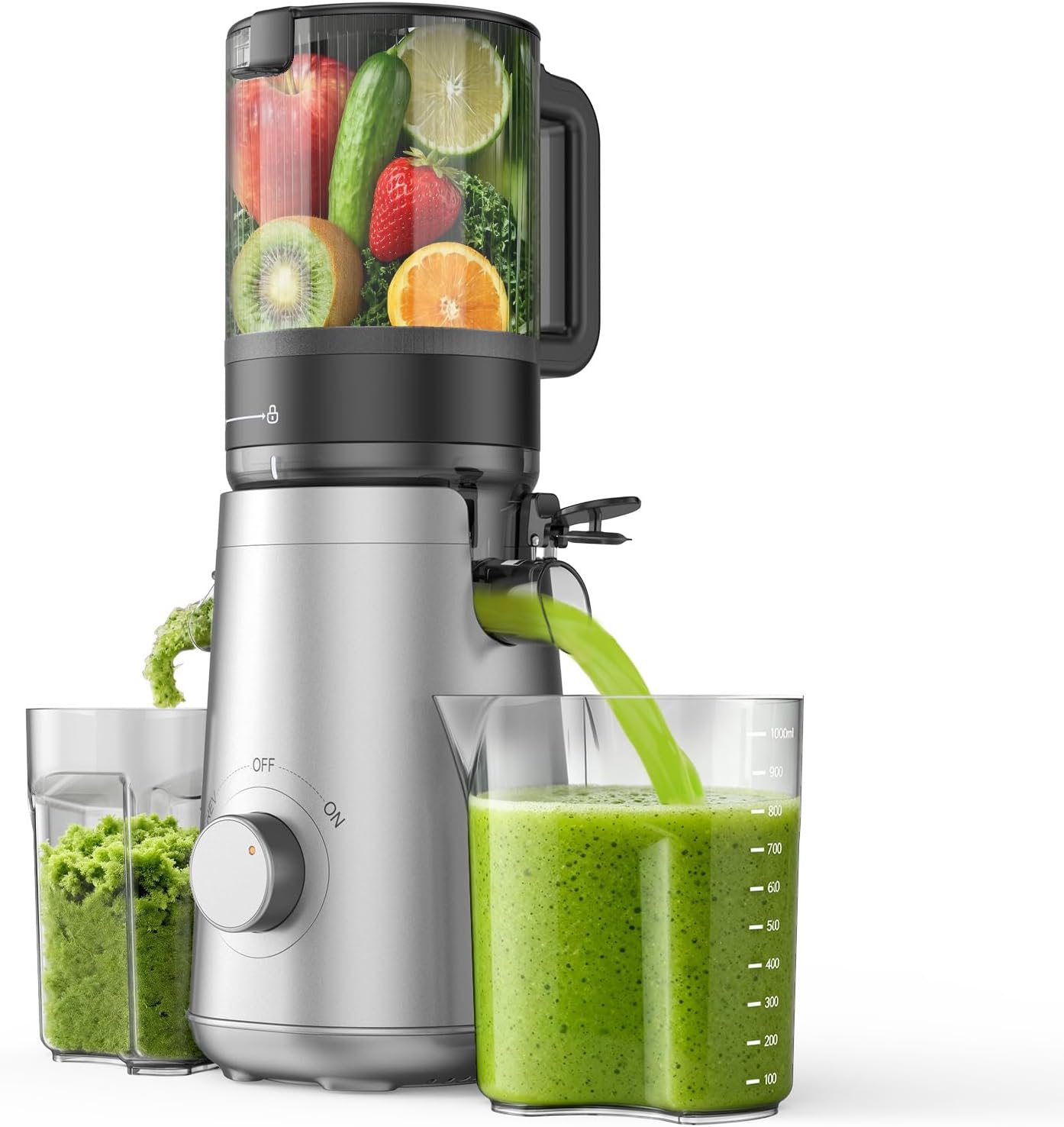
The SMALLHOO TM-580SJ is a slow‑squeeze masticating juicer that accepts large produce and runs at a low RPM to maximize yield and preserve nutrients. It is typically used for fresh fruit and vegetable juices; the extra-wide 5.3-inch feed chute and 60 oz hopper mean you can add large pieces or whole sections of watermelon with less chopping. The 55 RPM mechanism driven by a 150 W motor reduces heat and oxidation, which helps juice taste fresher and last a bit longer. Controls are simple with a two-speed rotary switch and assembly is straightforward — the design claims only a few parts and includes a cleaning brush for quicker cleanup. Practical limitations are handedness for heavy produce: it is a slow masticating unit so it takes longer to process large volumes than a centrifugal juicer, and the unit requires hand washing for parts. Capacity and sturdy plastic construction make it a useful everyday machine for homeowners who prefer higher yield and nutrient retention over speed.
Best for: Buyers who prioritize efficient extraction and nutrient preservation and want to minimize chopping when juicing large fruits like watermelon.
Less Ideal for: People who need very fast juice output for large batches or want fully dishwasher-safe components should consider other machines.
- Wide 5.3-inch feed chute lets you add large fruit pieces or whole melon wedges with less prep
- Slow 55 RPM masticating action that helps preserve nutrients and reduce oxidation
- Large 60 oz hopper for hands-free continuous juicing
- Simple controls and few parts make assembly and basic cleaning faster
- Slower processing speed than centrifugal juicers, so large batches take longer
- Parts must be hand washed rather than dishwasher-safe
Verdict: Choose this juicer if you want high-yield, nutrient-preserving cold-press juice from large fruits with minimal prep.
HOUSNAT Centrifugal Juicer AMR516

| Maximum Power | 400 watts |
|---|---|
| Number of Speeds | 3 |
| Power Source | Corded Electric |
| Capacity | 450 ml |
| Special Features | 1.6 liter pulp collector, BPA free |
The HOUSNAT AMR516 is a budget-friendly centrifugal juicer designed for quick daily use. It has a 65 mm wide chute so you can feed large pieces of fruit like watermelon with minimal prep, and a 400 W motor (800 W peak advertised) with three speeds plus a pulse setting to handle soft and hard produce. A high-density 304 stainless steel micro-mesh filter and anti-corrosion blades are intended to yield drier pulp and higher nutrient extraction, while the 1.6 L pulp collector reduces the need to empty mid-session. Detachable BPA-free components are top-rack dishwasher safe and the kit includes a cleaning brush and recipe guide to get started. For lighter home use the motor offers fast juicing, but the product is specified for light to moderate duty and the manufacturer recommends cooling after overheating, so heavy continuous commercial-style shifts are not its intended use. Build is mostly plastic with stainless elements, so expect typical budget-level durability but good everyday performance for making large-fruit juices like watermelon.
Best for: Buyers who want an affordable home juicer that handles large, soft fruits quickly and prefers minimal prep and easy cleanup for regular at-home juices.
Less Ideal for: Avoid this model if you need a heavy-duty machine for commercial use or expect continuous all-day juicing sessions.
- 65 mm wide feed chute reduces prep for large fruits like watermelon
- Three speeds plus pulse let you match power to soft or hard produce
- Stainless steel micro-mesh filter and blades improve juice yield and reduce wet pulp
- Large 1.6 L pulp collector cuts down interruptions when juicing big batches
- Detachable BPA-free parts are dishwasher safe and include a cleaning brush
- Rated for light to moderate use and may overheat under continuous heavy workloads
- Main housing is plastic which may be less durable than higher-end metal units
Verdict: A budget-friendly centrifugal juicer with a wide chute and easy cleanup that makes fast, low-prep watermelon and other large-fruit juices at home.
ECOSELF Cold Press Juicer

| Special Features | Easy to Clean; High Juice Yield; Reverse Function; Self Feeding; Wide Feed Chute |
|---|---|
| Material | Acrylonitrile Butadiene Styrene (ABS) |
The ECOSELF Cold Press Juicer is a slow masticating, single-auger juicer built to extract high yields from fruits, vegetables, and leafy greens while minimizing heat and oxidation. It accepts large whole produce through a wide feed chute and supports hands-free auto-feeding, which makes it convenient for juicing bulky items like watermelon halves or large wedges with minimal prep. The machine emphasizes high juice yield and includes a reverse function to clear clogs, a low-noise motor, and a simple one-touch rotary control for straightforward operation. Cleaning and assembly are made easier by an integrated hopper, filter, and the included brush, though daily maintenance still requires rinsing parts. Practical limits are that masticating juicers work relatively slowly compared with centrifugal models, so extracting large volumes takes time, and the ABS construction is durable but not stainless steel. For users prioritizing gentle extraction and maximum yield from soft, watery fruit like watermelon, this unit offers reliable, low-oxidation performance with features to keep the process continuous and clog-resistant.
Best for: Buyers who want a dependable, low-oxidation juicer that prioritizes consistent high yields and hands-free convenience for frequent home juicing, especially of large or soft fruits.
Less Ideal for: If you need very fast throughput for large quantities or prefer a metal-bodied, restaurant-grade machine, this consumer masticating juicer is not the best choice.
- Wide feed chute supports whole or large pieces to reduce prep time
- Slow masticating extraction preserves enzymes and reduces oxidation
- High claimed juice yield that minimizes waste
- Reverse function and one-touch control help prevent and clear clogs
- Included brush and simple assembly speed up cleaning and daily use
- Slower extraction speed compared with centrifugal juicers
- Main body uses ABS plastic rather than metal finishes
Verdict: Choose this ECOSELF masticating juicer when you want reliable, high-yield, low-heat extraction for soft, watery fruits like watermelon with minimal prep.
QCen 500W Centrifugal Juicer

| Maximum Power | 500 watts |
|---|---|
| Number of Speeds | 2 |
| Power Source | Corded Electric |
| Voltage | 120 volts |
| Capacity | 3 liters |
The QCen 500W centrifugal juicer is a countertop extractor designed for fast juice from common fruits and vegetables. It uses a high-speed 500W motor with two selectable speeds (about 12,000 and 18,000 RPM) so you can run softer produce at the low setting and harder items at the high setting. A 3-inch wide feed chute handles larger items with less prep, which speeds up making single servings or small batches. The unit includes a safety locking arm and overload protection that stops the motor if the cover is not secured or the machine overheats, and most parts are detachable for hand washing. Practical strengths are the power and chute size that let you push through firm fruits like watermelon rinds or apples quickly, and the simple button controls make operation straightforward. Limitations include centrifugal juicing that introduces more foam and shortens shelf life compared with slow masticating juicers, and hand-wash-only parts may add cleanup time after heavier juicing sessions.
Best for: Buyers who want a fast, no-fuss juicer for frequent countertop use and value visible social proof that a well-reviewed model handles common fruits like watermelon quickly.
Less Ideal for: People who prioritize maximum juice yield, minimal oxidation, and long refrigerated storage should consider slow masticating juicers instead.
- Powerful 500W motor for fast extraction
- 3-inch wide feed chute reduces chopping and speeds prep
- Two speed settings for soft and hard produce
- Safety lock arm and overload protection for safer operation
- Detachable parts for easier cleaning
- Centrifugal design produces more foam and shorter juice shelf life
- Parts require hand washing rather than dishwasher-safe
Verdict: Choose this juicer if you want a powerful, wide-chute centrifugal model that makes quick watermelon and mixed-fruit juices with minimal prep.
EanOruus 3-in-1 Masticating Juicer E-18

| Capacity | 100 fluid ounces |
|---|---|
| Wattage | 250 watts |
| Power Source | ac |
| Voltage | 110 volts |
The EanOruus E-18 is a single-auger masticating juicer built for high-capacity home use and versatile prep work. It handles whole fruits and vegetables thanks to a 6.5-inch extra-wide chute and a 100 oz hopper so you can run large batches or prep several servings without constant refilling. The 250 W AC motor is designed for steady, high-torque extraction and includes auto-reversing and overheat protection for safer, long runs. Two strainers let you switch between juice and sorbet production, and the unit can also make nut milk, expanding its use beyond standard juicing. Most removable parts disassemble for hand washing and a detachable pulp outlet helps manage waste. Trade-offs to note are the hand-wash-only parts and the plastic components; heavier-duty metal parts are not present, and the unit is relatively heavy to move. For watery fruits like watermelon the wide chute and large hopper make quick work of prep, though expect thicker pulps when using softer fruits.
Best for: Buyers who want a versatile, high-capacity juicer that can process whole fruits quickly and reliably for family batches or frequent use, and who prioritize safety features and easy feed-up during prep.
Less Ideal for: Users who need dishwasher-safe components, a lightweight travel-friendly unit, or prefer metal-bodied commercial-grade machines should look elsewhere.
- Extra-large 6.5-inch chute accepts whole fruits to reduce prep time
- 100 oz hopper for batch juicing or family-sized yields
- Auto-reversing and overheat protection for safer, continuous use
- Two strainers enable juice, sorbet and nut milk preparation
- Most parts are plastic and require hand washing
- Relatively heavy for a countertop appliance
Verdict: If you want a versatile, high-capacity home juicer that handles whole fruits and doubles as a nut milk and sorbet maker, this EanOruus model is a practical choice.
Choosing the Right Juicer for Watermelon: Key Factors to Consider
Juice Yield and Extraction Efficiency
How much liquid you can extract from a given amount of watermelon matters because watermelon is mostly water and inefficient extraction wastes fruit. Machines that crush or press more effectively will produce higher yields and firmer, drier pulp. Higher yield reduces the amount of fruit you need to buy and speeds up batch preparation.
Check for features like slow cold-press action or strong centrifugal force depending on the juicer type. A tighter extraction mechanism typically reduces leftover moisture in the pulp. Consider the balance between extraction efficiency and the texture of the juice you prefer, since some methods produce clearer juice while others leave more body.
Pulp Management and Foam Control
Watermelon juice tends to foam and can carry fine pulp that affects mouthfeel and presentation. Effective pulp separation and foam reduction leads to smoother, clearer juice and reduces the need for additional straining.
Look for removable strainers, adjustable pulp screens, or settling containers that let you control pulp content. Some juicers include foam-reducing attachments or slower extraction speeds that lower aeration. Good pulp management also makes the juice taste cleaner and improves shelf life if you plan to refrigerate it.
Throughput and Feed Size
If you plan to juice large watermelons or make multiple liters, throughput speed and the size of the feed chute will dictate how much prep work you need to do. A wide feed chute accepts larger chunks and reduces chopping time, while a higher throughput motor or auger processes more fruit per minute.
Consider whether you will frequently juice for a crowd or only make single servings. Faster machines save time but may increase froth. Balance the need for speed with the desired juice clarity and the effort you are willing to put into pre-cutting fruit.
Ease of Cleaning and Maintenance
Watermelon contains sugars and fine pulp that can cling to sieves and blades, so easy disassembly and dishwasher-safe parts save time. The more parts that are simple to rinse or place in a dishwasher, the more likely you are to use the juicer frequently.
Also check for tools or brushes included for cleaning narrow strainer holes, and whether the design minimizes hidden crevices. Regular maintenance requirements such as replacing seals or sharpening blades should be easy to perform to keep extraction consistent over time.
Juice Texture and Flavor
Different extraction methods produce different mouthfeels and flavor intensity. Cold-press or slow-masticating juicers typically yield less foam and retain more natural fruit character, while high-speed centrifugal machines often produce lighter, clearer juice with more aeration.
Think about whether you prefer a silky, pulpy, or frothy watermelon juice. The extraction method also affects how combinations with other fruits or herbs perform, so select a style that matches your usual recipes.
Durability and Long-Term Reliability
If you plan to juice regularly or process whole fruit, the motor, bearings, and feed mechanism need to withstand repeated loads. Durable materials and robust construction reduce the risk of breakdowns and preserve performance over time.
Inspect build quality, warranty coverage, and whether key wear parts are user-replaceable. A unit that is easy to service and has accessible parts will stay useful longer and provide more consistent yields across its lifespan.
Juicer Types and How They Handle Watermelon
Juicers generally fall into categories that extract liquid differently. Masticating or slow-press machines crush and squeeze fruit at low speed, often producing less foam and a fuller mouthfeel. Centrifugal juicers use high-speed spinning to separate juice quickly, which speeds throughput but can introduce more aeration and foam.
Citrus presses and manual options are less suited to whole watermelon but can work for small quantities or for finishing touches. Consider the tradeoffs between speed, clarity, and ease of use when selecting a type. Your preferred juice texture and how much prep you want to do will often determine which style fits best.
- Masticating: better for low-foam, higher-yield extraction
- Centrifugal: faster, more aeration and foam
- Manual/citrus-style: not practical for whole watermelon
Preparing Watermelon for Efficient Juicing
Cutting technique and removing rind and seeds streamlines the juicing process. Trim the thick outer rind and remove large seeds if your fruit has them, then cut the flesh into pieces sized to match the feed chute. For centrifugal units, smaller chunks speed processing and reduce strain on the motor.
Chill watermelon before juicing to reduce foaming and improve flavor. Cold fruit often yields clearer juice with less froth. Also, consider rotating very large batches with short pauses to avoid overheating the motor in high-throughput machines.
- Remove rind and large seeds before feeding
- Cut to size based on the machine feed chute
- Chill fruit to reduce foam and improve flavor
Straining, Storing, and Serving Watermelon Juice
Freshly extracted watermelon juice can be served immediately for best flavor and color. If you prefer a clearer drink, pass the juice through a fine mesh strainer or cheesecloth to remove remaining pulp and foam. Letting juice rest for a short period allows foam to dissipate naturally.
For short-term storage, refrigerate in airtight containers and consume within 24 to 48 hours. Adding a small squeeze of lemon juice can help preserve color and brightness without changing the watermelon flavor dramatically. Avoid freezing unless you plan to use the juice in smoothies.
- Strain for clarity and improved mouthfeel
- Refrigerate and consume within 1 to 2 days
- Use lemon juice sparingly to preserve color
Maintaining Performance Over Time
Routine cleaning after each use prevents sticky sugar buildup and preserves extraction efficiency. Inspect strainers and blades for wear and replace parts according to the manufacturer maintenance schedule. Keep seals and gaskets clean and dry to avoid mold or odor issues.
If you use your juicer for frequent watermelon batches, consider keeping extra removable parts on hand so you can continue juicing while others are in the dishwasher. Periodic deep cleaning with a mild vinegar solution can remove residue that plain water might not eliminate.
- Clean immediately after use to prevent sugar buildup
- Replace worn strainers or seals to maintain yield
- Deep clean occasionally to remove stubborn residue
Combining Watermelon with Other Ingredients
Watermelon pairs well with citrus, mint, cucumber, or ginger. When combining with firmer produce, alternate feeding soft watermelon chunks with firmer pieces to help push pulp through and maintain consistent extraction. Be mindful that high-fiber ingredients can increase filter clogging.
Adjust pulp settings or strain more aggressively when mixing with fibrous items. For cocktail or mocktail uses, balance acidity and sweetness after juicing rather than before to avoid overprocessing delicate flavors.
- Alternate soft and firm ingredients when juicing blends
- Monitor pulp buildup when adding fibrous produce
- Adjust acidity after juicing for best flavor balance
How We Chose the Best Juicer for Watermelon
We focused on models and features that directly affect how well a juicer handles watermelon and other high-water fruits. Key evaluation criteria included juice yield and extraction efficiency, since watermelon flesh is mostly water and efficient separation determines how much juice you get. We also measured pulp management and foam control because excessive foam or wet pulp reduces usable volume and changes texture. Ease of cleaning and maintenance was another priority because sticky fruit sugars and large pulp volumes make cleanup a frequent task. Throughput and feed size were considered to reflect how quickly you can process whole watermelon pieces or chunks. Finally, durability and motor reliability under repeated use were assessed to ensure the machine holds up when juicing large quantities. We excluded specialty devices that are not intended for fruit juicing or that rely on single-use filters. We also filtered out very small countertop units incapable of handling chunked fruit. The final list balances extraction performance, cleanup time, and user convenience, and favors units that deliver consistent yield with minimal user fiddling.
Our full evaluation process is outlined in our review methodology.
FAQ
Can I juice an entire watermelon without cutting it into small pieces?
No, whole watermelons are too large for most juicers and can damage the feed mechanism. Cut the fruit into chunks sized to fit your juicer's feed chute to ensure safe and efficient processing.
Will juicing watermelon make a lot of foam?
Some foam is common, especially with high-speed centrifugal juicers. Cold fruit and slow extraction methods reduce foam. You can also let the juice settle and skim off foam or strain it for a clearer result.
How long does fresh watermelon juice stay good in the fridge?
Fresh watermelon juice is best consumed within 24 to 48 hours when stored in an airtight container in the refrigerator. Flavor and color deteriorate quickly, so plan to drink it soon after extraction.
Should I remove seeds before juicing?
Removing large seeds is recommended because they can damage strainers and add bitter notes. Small seeds may pass through some strainers but will increase cleanup needs.
Is a slow masticating juicer better for watermelon than a centrifugal one?
It depends on your priorities. Slow masticating juicers often produce less foam and higher perceived yield, while centrifugal units are faster. Choose based on whether you value clarity and yield or speed and convenience.
Final Verdict
When choosing a juicer for watermelon, prioritize extraction efficiency, pulp and foam control, and how easy the unit is to clean. Think about how often you will juice large batches versus single servings, and whether you prefer a silky, low-foam juice or a quicker, frothier result. Balance throughput and maintenance needs against durability so the machine performs well over time. Focus on the criteria discussed here and you will be able to select a juicer that delivers the best combination of yield, texture, and convenience for your watermelon juicing routine.