
Note: This article contains affiliate links. If you click on these links and make a purchase, we may earn a small commission at no extra cost to you. This helps support our research and content. Read our full affiliate disclosure here.
If you want higher juice volume and a fuller mouthfeel, a juicer with pulp capture is a practical upgrade for everyday juicing. These machines leave more fiber in the mix or allow you to adjust pulp levels so you get thicker, nutrient-rich beverages or smoother pours depending on preference. Picking the right unit matters for countertop space, ingredient flexibility, noise level, and how often you are willing to disassemble and clean it. This guide shortlists the top options for home use and evaluates candidates on extraction efficiency, ease of cleaning, build durability, and versatility. Read on to see which models fit how you like your juice and which tradeoffs to expect in daily use.
Top Picks at a Glance
| Best Overall The best all-around choice for most situations | Ninja NeverClog Cold Press Juicer JC151 |  |
| Best Quality Built to a higher standard if you want something more solid | Omega Cold Press Juicer VSJ843QS |  |
| Best Value The sweet spot between price and what you get | NutriBullet Juicer NBJ50100 |  |
| Best Budget The cheapest option that still gets the job done reliably | Elite Gourmet Citrus Juicer ETS623 |  |
| Top Rated A top-rated pick with lots of positive feedback | Cuisinart Pulp Control CCJ-500P1 | 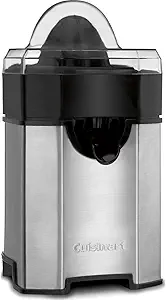 |
| Most Popular A crowd favorite that many people choose with confidence | BLACK+DECKER Citrus Juicer CJ625 |  |
| Best Seller A high-volume bestseller chosen again and again | EanOruus 3-in-1 Cold Press Juicer E-18 |  |
Ninja NeverClog Cold Press Juicer JC151

| Maximum Power | 150 watts |
|---|---|
| Number of Speeds | 2 |
| Capacity | 24 fluid ounces |
| Included Components | 24 oz juice jug; 36 oz pulp container; 2 pulp filters; auger |
The Ninja NeverClog JC151 is a masticating cold press juicer built to handle fibrous fruits and vegetables with minimal clogging. It uses a 150-watt high-torque auger that turns slowly to extract juice while reducing foam and preserving nutrients, and two one-touch programs (Start/Stop and Reverse) help clear jams and improve yield. The package includes a 24 oz. juice jug and a 36 oz. pulp container so you can make larger batches without frequent emptying, and two interchangeable pulp filters let you choose smoother juice or thicker, fiber-rich results. Assembly and cleanup are straightforward since juice-contact parts are dishwasher safe and the design emphasizes easier cleaning than many centrifugal models. Practical compromises are that it is a countertop appliance that takes some time per batch compared with fast centrifugal juicers, and the 150W motor limits throughput for heavy commercial use. For home juicing focused on control over pulp and nutrient preservation, the JC151 delivers consistent, easy-to-use performance.
Best for: Buyers who want a versatile home cold-press juicer that prioritizes smooth extraction, customizable pulp levels, and larger batch capacity for regular family or meal-prep juicing.
Less Ideal for: Those who need very fast, high-volume commercial juicing or the quickest single-serving extraction should consider a high-speed centrifugal or commercial juicer instead.
- High-torque 150W auger for efficient cold-press extraction of fibrous produce
- Two interchangeable pulp filters for customizable pulp level
- Large 24 oz juice jug and 36 oz pulp container for bigger batches
- One-touch Start/Stop and Reverse programs that reduce jams and improve yield
- Dishwasher-safe juice-contact parts for easier cleanup
- Slower processing speed than centrifugal juicers, so larger batches take more time
- 150W motor is intended for home use and not optimized for heavy commercial throughput
Verdict: Choose the Ninja JC151 if you want a user-friendly cold-press juicer that delivers steady, clog-resistant extraction with customizable pulp control for regular at-home batch juicing.
Omega Cold Press Juicer VSJ843QS

| Speed | 43 RPM |
|---|---|
| Wattage | 150 watts |
| Power Source | Corded Electric |
| Number of Speeds | 1 |
| Special Features | Pulp Control |
The Omega VSJ843QS is a slow masticating vertical juicer designed to maximize juice yield and preserve nutrients by operating at 43 RPM with a 150 W motor and three-stage auger. It excels at extracting juice from both soft and hard produce, using a dual-edge auger and tight tolerances to break down fiber and produce smoother, lower-pulp juice while the automatic pulp ejection speeds batch juicing. The no-drip tap and vertical layout make it easy to pour and keep counters cleaner during prep, and an auto-cleaning feature helps keep the screen clear for more efficient runs and faster cleanup. Because it is a single-speed, low-speed machine, it minimizes heat and oxidation to extend juice shelf life, but it is not built for fast continuous commercial throughput. Materials are dishwasher safe where specified and the unit includes a long motor warranty for durability. If you want nutrient-dense juice with less foam and consistent pulp control, this model delivers in a compact footprint, though it prioritizes extraction quality over speed.
Best for: Buyers focused on maximum nutrient retention and high extraction efficiency who want a compact home juicer that produces smooth, lower-pulp juices for daily or batch use.
Less Ideal for: People who need fast, high-volume juicing for commercial settings or who want multiple speed options for non-juicing tasks should look elsewhere.
- Very low 43 RPM speed preserves enzymes and reduces oxidation
- Dual-edge three-stage auger yields high extraction and smoother juice
- Automatic pulp ejection speeds up batch juicing and keeps workflow continuous
- No-drip tap prevents messes and lets you mix or stop mid-run
- Dishwasher-safe parts and an auto-clean feature reduce cleanup time
- Single-speed operation limits flexibility for textured tasks like nut butters or varying produce types
- Not optimized for high-volume commercial use due to slower throughput
Verdict: Choose the VSJ843QS when extraction quality and nutrient retention are your top priorities for home juicing.
NutriBullet Juicer NBJ50100

| Maximum Power | 800 watts |
|---|---|
| Number of Speeds | 2 |
| Capacity | 1.5 liters |
| Power Source | Corded Electric |
The NutriBullet Juicer is a straightforward centrifugal machine built for daily juicing with minimal prep. Its 3-inch feed chute accepts many whole fruits and vegetables, so you can drop in apples, carrots, or oranges without extensive chopping, while the 800 W motor and two-speed control let you handle both soft and harder produce. Juice collects in a 27 oz sealing pitcher with a froth separator and no-drip spout for cleaner pouring, and the large 1.5 L pulp basin lets you run multiple fruits before stopping to empty. Most removable parts including the sieve, pulp basin and pitcher are dishwasher safe, which keeps cleanup simple. Expect the typical centrifugal trade-offs: it extracts faster than slow juicers but produces more froth and slightly less yield from leafy greens and wheatgrass. For someone who wants quick, everyday juice and easy maintenance, this juicer provides a good balance of convenience and power, while users focused on maximum yield from greens may prefer a masticating unit.
Best for: Buyers who want a fast, low-prep countertop juicer for daily fruit and vegetable juices and who prioritize convenience and easy cleanup over maximum yield from greens.
Less Ideal for: Those who need the highest possible juice yield from leafy greens, herbs, or wheatgrass or who prefer a quieter, slow-extraction machine.
- 3-inch wide feed chute reduces prep by fitting many whole fruits and vegetables
- 800W motor with two speeds handles both soft and hard produce
- Large 1.5 L pulp basin allows multiple items before emptying
- Sealing 27 oz pitcher with froth separator and no-drip spout for cleaner pouring
- Most removable parts are dishwasher safe for easy cleanup
- Centrifugal design yields more froth and slightly lower extraction from leafy greens
- Can be louder than slow masticating juicers
Verdict: A fast, easy-to-use centrifugal juicer that minimizes prep with a wide feed chute and simplifies cleanup, ideal for practical daily juicing.
Elite Gourmet Citrus Juicer ETS623

| Maximum Power | 40 watts |
|---|---|
| Power Source | Corded Electric |
| Capacity | 24 oz |
| Special Features | Quiet Motor |
The Elite Gourmet ETS623 is a small, affordable citrus juicer designed for everyday use when you want fresh orange, lemon, lime or grapefruit juice with minimal fuss. Its 40-watt motor and auto-reversing reamer extract juice in both directions, which helps pull more liquid from fruit during the simple push-down operation. The 24 oz container collects about 2–3 servings and includes an integrated pulp and seed filter plus an easy-pour spout and ergonomic handle for direct serving. Detachable parts are dishwasher-safe on the top rack for quick cleanup, and the compact footprint suits small kitchens, dorms, or RVs. Expect practical, no-frills performance rather than commercial power; the unit is hand-wash recommended for longevity and is best for routine household juicing rather than heavy daily batching. For buyers who want straightforward pulp control and better extraction than weaker 25-watt models, this delivers solid value in a space-saving package.
Best for: Buyers on a tight budget who want a compact, easy-to-use citrus juicer that extracts more juice than basic models and offers simple pulp control for everyday home use.
Less Ideal for: Those needing a high-capacity or industrial-strength juicer for frequent large batches or mixed produce juicing should look at more powerful models.
- 40-watt motor with auto-reversing reamer for improved juice extraction
- Built-in pulp and seed filter for smoother juice and easy pulp control
- Compact 24 oz container with easy-pour spout suitable for small kitchens
- Detachable parts are top-rack dishwasher safe for faster cleanup
- Not intended for heavy commercial or high-volume juicing sessions
- Hand wash recommended for longest life despite dishwasher-safe claim
Verdict: A budget-friendly, compact citrus juicer that gives better extraction and pulp control than basic models, ideal for small-home daily juicing.
Cuisinart Pulp Control CCJ-500P1

| Power Source | Corded Electric |
|---|---|
| Voltage | 110 |
| Number of Speeds | 3 |
| Capacity | 12 ounces |
| Material | Stainless Steel |
The Cuisinart Pulp Control CCJ-500P1 is a compact electric citrus juicer built to make frequent juicing straightforward and consistent. It uses an auto-reversing universal juicing cone and a final-spin feature to extract extra liquid, and the adjustable reamer offers low, medium, and high pulp settings so you can dial juice texture to taste. Practical touches include an extra-long snap-up spout to fit taller glasses and dishwasher-safe removable parts for faster cleanup. With stainless steel components where it matters and a three-year limited warranty, it is positioned as a dependable countertop appliance rather than a heavy-duty commercial unit. The motor and design prioritize efficient citrus extraction, but the 12-ounce capacity carafe means it is best for small batches rather than large-party juicing sessions. It performs well for everyday orange, lemon, and lime juicing and gives predictable pulp control, though users who need continuous high-volume output may want a larger extractor.
Best for: Buyers who value reliable, consistent citrus extraction and easy cleanup for daily or weekly home juicing will appreciate this model's durable components and pulp control.
Less Ideal for: Those who need to juice large volumes continuously for gatherings or commercial use should consider a larger-capacity extractor instead.
- Adjustable 3-setting pulp control for tailored juice texture
- Auto-reversing cone and final-spin feature to maximize juice extraction
- Dishwasher-safe removable parts speed cleanup
- Stainless steel components for durability and easy care
- Extra-long snap-up spout reduces drips and fits taller glasses
- 12-ounce carafe is small for batch juicing
- Not intended for continuous commercial use due to compact capacity
Verdict: Choose this Cuisinart if you want a dependable home citrus juicer with clear pulp control and efficient juice extraction for everyday use.
BLACK+DECKER Citrus Juicer CJ625

| Wattage | 150 watts |
|---|---|
| Power Source | Corded Electric |
| Voltage | 120 volts |
| Special Features | Auto-Reversing |
| Material | Plastic |
The BLACK+DECKER CJ625 is a simple, countertop citrus juicer designed for everyday home use. It uses an auto-reversing reamer and two cone sizes to extract juice from small and large citrus, while a removable pulp basket and adjustable pulp control let you dial how much pulp ends up in the pitcher. The clear juice container has measurement markings and a drip-free spout so it doubles as a serving pitcher, and many parts are dishwasher safe for easy cleanup. At typical household volumes it delivers quick, consistent results and the self-reversing action helps extract more juice with less effort. It is a plastic-bodied unit with a stainless steel blade for durability but it is not built for heavy commercial use, and the 150-watt rating means it is optimized for citrus only rather than hard produce. For buyers who value straightforward operation, visible yield, and control over pulp level, this is a reliable, low-fuss option.
Best for: Buyers who want a straightforward home citrus juicer that makes measurable, pulp-adjustable batches easily and values proven, widely used designs.
Less Ideal for: People who need a heavy-duty or multi-fruit juicer for continuous commercial use or for juicing non-citrus hard produce should look elsewhere.
- Auto-reversing reamer improves juice extraction with minimal effort
- Adjustable pulp control and removable pulp basket let you customize pulp level
- Clear pitcher with measurement markings and drip-free spout doubles as a serving container
- Dishwasher-safe parts simplify cleanup after juicing
- Plastic body and lower wattage make it less suitable for heavy or commercial use
- Designed for citrus only and not intended for hard produce or whole fruits
Verdict: Choose this juicer if you want an easy, pulp-adjustable citrus machine that delivers reliable home juicing and simple cleanup.
EanOruus 3-in-1 Cold Press Juicer E-18

| Capacity | 100 fluid ounces |
|---|---|
| Maximum Power | 250 watts |
| Power Source | ac |
| Voltage | 110 volts |
The EanOruus E-18 is a single-auger masticating juicer designed for home users who want high yield and minimal prep. It accepts whole fruit through a 6.5-inch wide chute into a 100 oz hopper so you can batch several servings without constant refilling, and the slow cold-press action produces juice, nut milk and even sorbet using interchangeable strainers. A 250 W AC motor with auto-reverse and overheat protection promises steady, high-torque performance for fibrous produce, while detachable parts and a removable pulp outlet make cleanup and pulp management straightforward. Practical benefits include quieter operation than many centrifugal juicers, better nutrient retention, and the ability to handle whole fruit which cuts prep time. Important limitations are its larger footprint and weight compared with compact models and the need to hand-wash parts per care instructions, which adds cleaning time after heavy use. For buyers prioritizing reliability and low-stress operation, the E-18 balances heavy-duty capability with easy pulp handling.
Best for: A cautious buyer who wants a reliable, low-noise masticating juicer that handles whole fruit and produces consistent juice and pulp for regular household use.
Less Ideal for: People who need a very compact, ultra-light machine for occasional single servings or who want dishwasher-safe parts for fast cleanup.
- Extra-large 100 oz hopper reduces refills for batch juicing
- 6.5-inch wide chute accepts whole fruits to cut prep time
- Auto-reversing 250 W AC motor handles fibrous produce with overheat protection
- Interchangeable strainers let you make juice, nut milk or fruit sorbet
- Hand-wash only removable parts increase cleaning effort
- Relatively heavy and larger footprint than compact juicers
Verdict: Buy this if you want a reliable, batch-capable cold-press juicer that minimizes prep and delivers good pulp handling for everyday use.
Choosing the Right Juicer with Pulp: Key Factors to Consider
Juice Yield and Extraction Efficiency
How much juice a machine extracts matters because higher extraction reduces waste and gives you more servings per piece of produce. Look for designs that minimize moisture left in pulp and that perform consistently across leafy greens, hard roots, and soft fruits.
Extraction efficiency also affects how often you need to buy produce and how economical your juicing habit will be. Machines with adjustable pulp capture let you balance yield against texture, so you can prioritize volume or a thicker, fiber-rich drink depending on preference.
Pulp Control and Texture
Pulp settings determine the final mouthfeel and nutrient profile of your juice. Some users prefer a high-pulp result for added fiber and a smoothie-like consistency, while others want smoother, clearer juice. Adjustable pulp collection systems let you dial in that balance.
If you plan to use juice in recipes or for children, the ability to reduce pulp is important. Conversely, if you value fiber and a fuller body, a juicer that retains more pulp or offers a coarse setting will be preferable.
Ease of Cleaning and Maintenance
Frequent cleaning is the main barrier to regular juicing. Look for models with tool-free disassembly, dishwasher-safe parts, and filter designs that resist clogging. Smaller crevices and intricate screens trap pulp and require toothbrushes or specialized brushes to clear.
Maintenance considerations also include how simple it is to reassemble the unit correctly and whether replacement parts are easy to access. A quicker cleanup routine increases the likelihood you will juice daily.
Noise, Speed, and Motor Design
Noise level and motor speed affect where and when you can juice. High-speed centrifugal motors extract quickly but are usually louder and may generate heat that affects delicate enzymes. Low-speed masticating motors tend to be quieter and gentler, often yielding better extraction from leafy greens.
Consider how often you will juice and whether noise will disturb others in your household. Motor design also informs long-term durability and the unit's ability to process tougher ingredients without stalling.
Countertop Footprint and Hopper Capacity
Physical size and hopper capacity determine how the appliance fits in your kitchen and how often you must prep produce. A larger hopper reduces chopping time but increases the overall footprint, which matters in smaller kitchens.
If storage space is limited, look for compact designs or models with detachable components that nest for storage. For frequent juicers, a wider feed chute can save prep time by handling larger pieces or whole fruits.
Versatility and Extra Functions
Some juicers offer multiple functions such as puree, sorbet, or nut milk capabilities, or include attachments for different textures. Versatility can increase the machine's value and reduce the need for separate appliances.
However, added features can complicate cleaning and sometimes reduce specialization. Decide whether you need multifunction capability or prefer a focused design that excels at juicing with pulp control.
Types of Juicers and How They Handle Pulp
There are two main architectures for home juicers that affect pulp handling. High-speed centrifugal models shred produce and separate pulp quickly into a collection chamber. They are fast but tend to produce a higher amount of dry pulp and can leave more moisture behind in fibrous ingredients.
Low-speed masticating or cold-press juicers crush and press produce slowly, often squeezing out more liquid and producing wetter pulp. Many of these offer adjustable screens or secondary pulp chambers to control how much fiber ends up in the finished drink.
- Centrifugal: Faster, larger feed chutes, generally drier pulp and more noise.
- Masticating: Slower, quieter, often better extraction from leafy greens and wetter pulp.
- Adjustable screens let you tune the amount of pulp in the cup without needing extra tools.
Preparing Produce for Best Results
Proper prep reduces strain on the motor and improves yield. Remove large pits, peel thick-skinned fruits when necessary, and cut oversized produce to match the feed chute. Hard items like beets and carrots benefit from trimming to avoid jamming.
Leafy greens can be bundled or combined with firmer produce to improve throughput in centrifugal machines. For slow juicers, alternating soft and hard items can help clear the screen and maintain consistent extraction.
- Cut large fruits to fit the chute to avoid stalling.
- Trim tough stems or thick rinds to prevent filter clogging.
- Combine greens with apples or cucumbers for better juice flow.
Cleaning Tips to Reduce Effort
Rinse parts immediately after use to prevent pulp from drying on screens and crevices. Soaking removable components in warm water loosens stuck fiber before scrubbing. Use a soft brush to clear mesh screens rather than abrasive tools that can damage the surface.
For everyday convenience, designate a short routine: dump pulp, rinse the juice container, and run water through the mesh while rotating the filter. This prevents buildup and keeps the machine ready for the next session.
- Rinse right away to avoid stubborn residue.
- Soak screens in warm water for a few minutes for easier cleaning.
- Use a soft brush or the included cleaning tool to protect mesh.
Common Tradeoffs When Choosing a Juicer
You will often trade speed for extraction and noise. Faster centrifugal units reduce prep time but typically sacrifice some yield and create drier pulp. Slower presses extract more juice from the same produce but require longer run times and more initial investment in patience.
Another common compromise is between versatility and simplicity. Models with multiple attachments can perform extra kitchen tasks but increase cleaning complexity. Decide whether you prioritize maximum extraction and pulp control or a faster, simpler daily routine.
- Speed vs extraction: faster does not always mean better juice yield.
- Versatility vs cleanup: more functions can mean more parts to wash.
- Footprint vs hopper size: larger machines save prep time but take more counter space.
Maintaining Performance Over Time
Routine maintenance extends a juicer's useful life. Inspect seals and gaskets periodically, replace worn screens, and avoid pushing the machine beyond its intended duty cycle. Follow recommended cooldown periods between extended runs to prevent motor overheating.
Store parts dry and avoid leaving damp pulp inside the machine for long periods to prevent odors and microbial growth. If a unit includes replaceable filters, keep spare screens on hand to minimize downtime.
- Check seals and replace when worn to maintain suction and prevent leaks.
- Avoid long consecutive runs to reduce motor stress.
- Store removable parts dry to prevent mildew.
How We Chose the Best Juicer with Pulp
We prioritized features and performance that directly affect real-world juicing. Primary evaluation criteria included juice yield and pulp control to reflect how much usable liquid you get from fruits and vegetables and how well the machine handles different textures. We also weighed ease of cleaning and maintenance because frequent disassembly and stubborn pulp residues make daily use less practical. Durability and build quality were assessed through material choices, motor specs, and expected component longevity. Finally, we considered versatility, such as whether the unit handles both soft and hard produce and offers adjustable pulp settings. We excluded units that are strictly single-purpose or intended only for commercial use. Low-capacity countertop gadgets with no pulp-control options were not considered. Our selection focuses on home-friendly designs that balance extraction efficiency, manageable cleanup, and consistent performance across common produce types.
Our full evaluation process is outlined in our review methodology.
FAQ
Does a juicer with pulp produce healthier juice?
Often it depends on what you mean by healthier. Juice with more pulp retains more fiber and can slow sugar absorption compared with fully strained juice. However, the overall nutrient content is similar; pulp mainly affects texture and fiber content.
Can I adjust how much pulp ends up in my juice?
Usually yes. Many models offer adjustable screens or pulp settings that let you choose a coarser or finer output. Alternatively, you can reprocess pulp to extract more liquid or strain it further for a smoother cup.
How often should I clean a juicer after use?
You should rinse or disassemble and clean key parts after every use. Waiting allows pulp to dry and cling to screens, making cleaning more difficult and increasing the risk of odors and bacteria growth.
Which type of juicer is best for leafy greens?
Low-speed masticating juicers generally perform better with leafy greens because they crush and press fibers more effectively. Centrifugal units can handle greens but often require more volume and can leave wetter pulp behind.
Is wetter pulp a sign of better extraction?
Typically yes. Wetter pulp usually indicates more liquid was removed from the produce, which means better extraction efficiency. That said, wet pulp may also reflect a machine tuned to retain more solids rather than maximize clear juice.
Final Verdict
When choosing a juicer with pulp, prioritize the extraction and pulp-control tradeoffs that match your routine. If you want maximum juice yield and nutrient retention from leafy or fibrous produce, favor designs that deliver wetter pulp and better extraction. If convenience and speed matter more, a faster model with easier cleanup may be the right compromise. Decide which factors you will tolerate: noise and prep time for better yield, or faster operation with simpler maintenance. Armed with a clear priority list—yield, pulp texture, cleaning, and footprint—you can pick a unit that fits your daily habits and delivers the results you want.