
Note: This article contains affiliate links. If you click on these links and make a purchase, we may earn a small commission at no extra cost to you. This helps support our research and content. Read our full affiliate disclosure here.
If you want richer, longer-lasting juice from leafy greens and hard produce, a masticating juicer is the right tool. These slow-turning machines squeeze and press produce to extract more liquid and preserve enzymes, which matters if you drink juice regularly or use it in smoothies and recipes. This guide highlights seven shortlisted options that balance juice yield, noise level, and cleanup time so you can pick the best fit for home use. We evaluated each unit across practical criteria buyers care about, including extraction efficiency, build quality, and daily upkeep. Read on to see the picks and the factors that should guide your choice.
Top Picks at a Glance
| Best Overall The best all-around choice for most situations | Omega Nutrition System NC900 |  |
| Best Quality Built to a higher standard if you want something more solid | NAMA J2 Cold Press Juicer |  |
| Best Value The sweet spot between price and what you get | TUUMIIST Cold Press Juicer TM-580SJ |  |
| Best Budget The cheapest option that still gets the job done reliably | Elite Gourmet EJX600 Juicer |  |
| Top Rated A top-rated pick with lots of positive feedback | ECOSELF Cold Press Juicer |  |
| Most Popular A crowd favorite that many people choose with confidence | EanOruus 3-in-1 Masticating Juicer E-18 |  |
| Best Seller A high-volume bestseller chosen again and again | Ninja NeverClog Cold Press Juicer JC151 |  |
Omega Nutrition System NC900
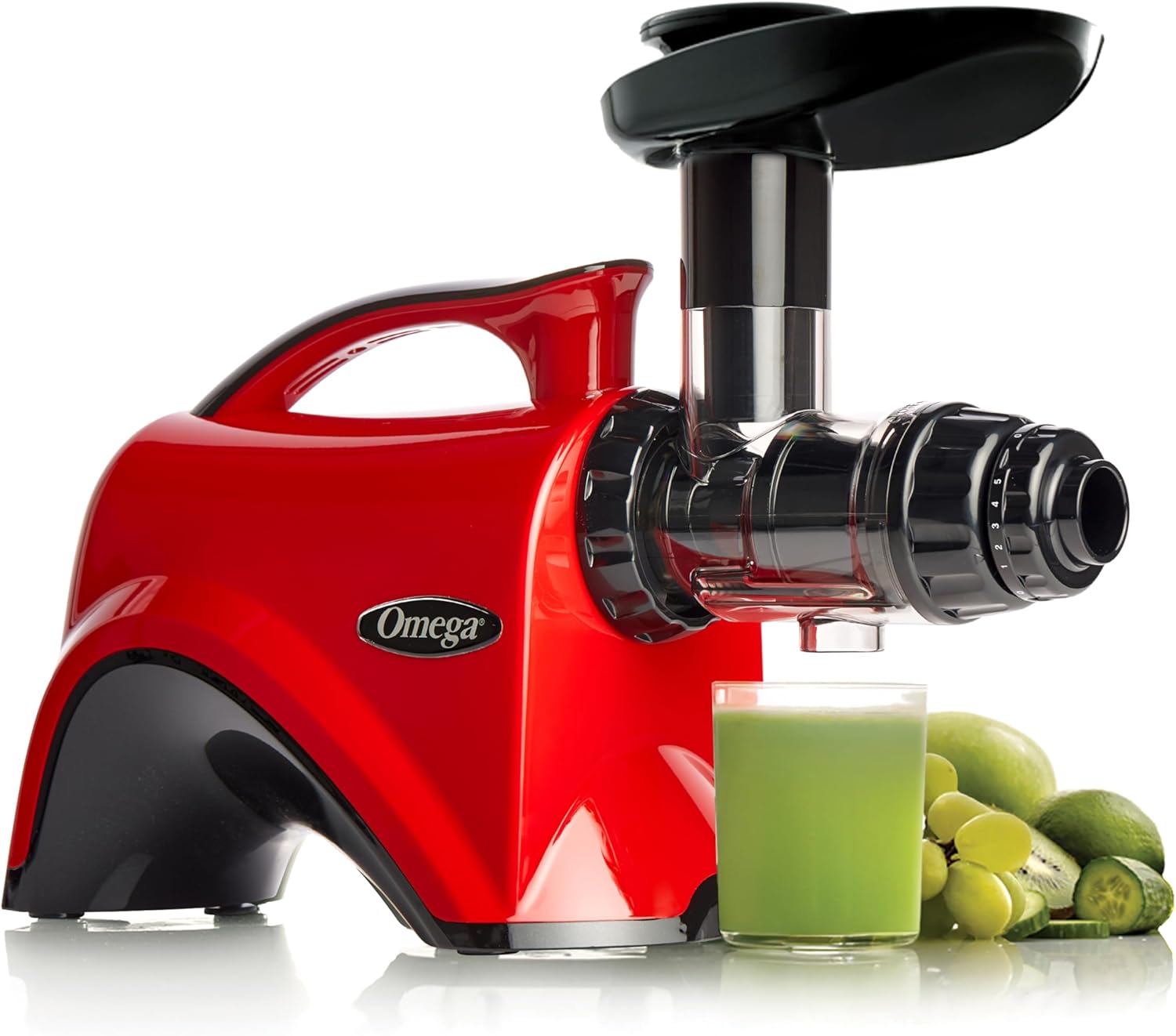
| Wattage | 150 watts |
|---|---|
| Power Source | Corded Electric |
| Voltage | 120 |
| Number of Speeds | 1 |
| Capacity | 0.9 liters |
The Omega Nutrition System NC900 is a single-auger, cold-press juicer that runs at 80 RPM to minimize heat and oxidation while extracting juice from fruits, vegetables, leafy greens and wheatgrass. It is used for batch juicing and also functions as a nutrition center: the included nozzles and cones let you make nut butters, baby food, pasta, and plant milks in addition to juice. Notable features include a dual-stage masticating extraction, five adjustable pressure settings to boost yield, a larger feed chute than some Omega models to reduce prep time, continuous juicing with automatic pulp ejection, and a fairly powerful 150-watt motor. Practical benefits are higher nutrient yield and quieter operation compared with centrifugal machines, plus multimode capability that turns the unit into a small food processor for specialty tasks. Trade-offs are hand-wash cleanup, a relatively slow throughput suited to planned batch juicing rather than quick single servings, and a heavier, more countertop-dominant footprint that needs storage space.
Best for: Buyers who want a versatile, nutrient-forward juicer that also doubles as a small nutrition/food-prep system and who plan to make batch juices or a variety of homemade nut milks and purees.
Less Ideal for: People who need a compact, lightweight countertop device for occasional single-glass juices or those who prefer fully dishwasher-safe cleanup should consider other styles.
- Low 80 RPM masticating action preserves enzymes and reduces oxidation
- Dual-stage extraction and five adjustable pressure settings improve juice yield
- Nutrition system accessories expand use to nut milks, baby food, pasta and nut butters
- Larger feed chute reduces prep time compared with narrower-chute masticating models
- Automatic pulp ejection enables continuous batch juicing
- Hand wash only parts increase cleaning time compared with dishwasher-safe components
- Slower processing speed makes it less convenient for single quick juices
Verdict: Choose the Omega NC900 if you want a durable, low-speed masticating juicer that maximizes nutrient yield and doubles as a versatile nutrition system.
NAMA J2 Cold Press Juicer

| Maximum Power | 200 watts |
|---|---|
| Power Source | Corded Electric |
| Voltage | 120 |
| Number of Speeds | 1 |
| Capacity | 30 fluid ounces |
The NAMA J2 is a single-auger, cold-press juicer built for steady, high-yield extraction of fruits, vegetables, and leafy greens. Its self-feeding wide-mouth hopper lets you load a whole recipe and walk away, while the 200 W motor turns the auger slowly to minimize heat and preserve nutrients. In practice it runs quietly and handles leafy greens and firm produce with good efficiency, producing less pulp than centrifugal models and concentrating more juice per ingredient. The included strainers and containers make it straightforward to collect juice and separate pulp, and most removable parts rinse clean quickly by hand; a small brush is provided for the strainer. Limitations are a single speed and a modest 30 fl oz capacity, so very large batches require multiple cycles, and hand-wash parts mean a bit more cleanup than dishwasher-safe units. For buyers prioritizing nutrient retention and steady juice yield in everyday use, the J2 offers a capable, compact solution.
Best for: Buyers who want a performance-focused masticating juicer that maximizes juice yield and nutrient retention for regular home juicing sessions.
Less Ideal for: If you need to process very large volumes at once or want multiple motor speeds and dishwasher-safe parts, this model may not be the best fit.
- Self-feeding wide-mouth hopper for hands-free loading
- Cold-press single-auger design that preserves nutrients and reduces pulp
- Quiet 200 W motor optimized for slow extraction
- Includes strainers, juice and pulp containers, and cleaning brush for turnkey use
- Only one speed so no variable extraction control
- 30 fl oz capacity means larger batches need repeated runs
Verdict: Choose the NAMA J2 if you want a compact, hands-free masticating juicer that prioritizes high juice yield and nutrient-preserving cold extraction.
TUUMIIST Cold Press Juicer TM-580SJ
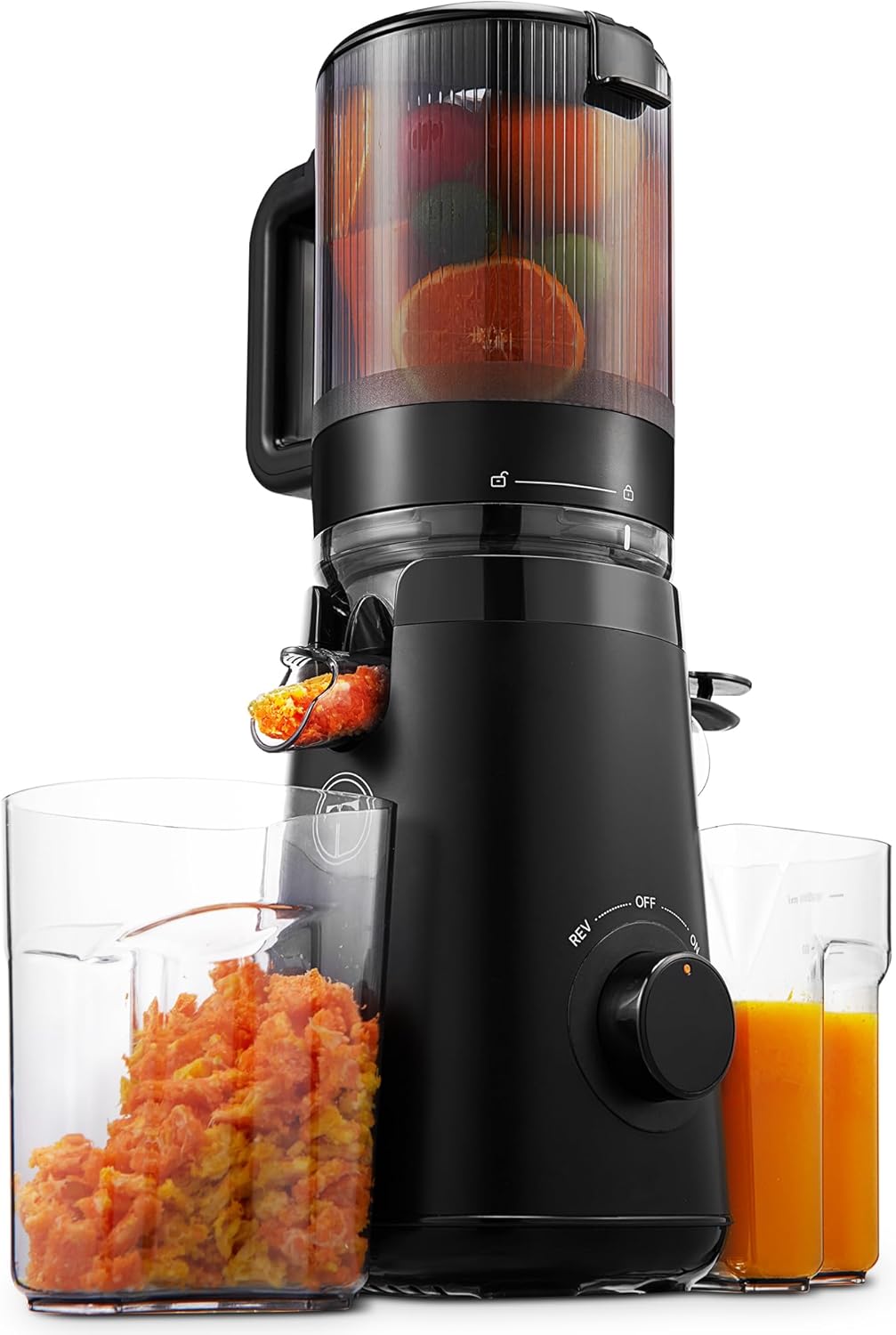
| Wattage | 300 W |
|---|---|
| Number of Speeds | 55 RPM |
| Power Source | AC |
| Voltage | 120 V |
| Special Features | No Mesh Filter, Whole Fruit Processing |
The TUUMIIST TM-580SJ is a budget-friendly cold press masticating juicer built for straightforward home juicing. It runs at a slow 55 RPM with a 300 W motor to squeeze juice from whole fruit and vegetables through a wide 5.8-inch feed chute, which reduces prep time because you rarely need to chop produce. The single-auger design and no-mesh-filter claim aim to maximize juice yield and preserve nutrients, and the unit ships with a cleaning brush plus cups for juice and pulp. Assembly is simple and parts are dishwasher-safe or hand-washable, though correct alignment of the hopper is required for reliable operation. Practical downsides include modest motor power compared with higher-end models and mostly ABS construction rather than metal for some wear points, so expect this to be fine for daily household use but not for heavy commercial workloads. For people who want easy whole-fruit juicing with decent yield and simple cleaning, it delivers solid value; buyers who need industrial durability or the fastest output should consider heavier-duty alternatives.
Best for: Buyers who want a practical, easy-to-use home masticating juicer that saves prep time by accepting whole produce and prioritizes nutrient-rich, higher-yield extraction over heavy-duty commercial performance.
Less Ideal for: Users seeking a rugged, commercial-grade juicer for frequent high-volume use or those who prefer full metal construction and higher motor power should look elsewhere.
- Large 5.8-inch feed chute handles whole fruits and vegetables, cutting prep time
- Slow 55 RPM masticating extraction preserves nutrients and increases juice yield
- Includes cleaning brush and removable cups with parts that are dishwasher-safe or hand-washable
- No mesh filter design intended to simplify operation and reduce clogging
- Mostly ABS plastic construction rather than metal may limit long-term durability
- 300 W motor is adequate for home use but less powerful than premium models
Verdict: If you want a practical, no-fuss masticating juicer that handles whole fruits and maximizes nutrient-rich yield for daily home use, this model is a strong value.
Elite Gourmet EJX600 Juicer

| Capacity | 16 ounces |
|---|---|
| Maximum Power | 100 watts |
| Number of Speeds | 1 |
| Power Source | Corded Electric |
The Elite Gourmet EJX600 is a space-saving single-auger masticating juicer built for one to two servings rather than heavy use. It operates at a low 70 RPM to cold-press fruits and vegetables, producing smoother juice with less foam and slower oxidation than centrifugal models. The small 3/4" feed chute means produce must be cut into smaller pieces, but the compact footprint and included 16 oz Tritan juice cup make it convenient for quick morning juices or occasional use. It has a simple single-speed motor with overload and overheat protection, three removable parts for faster cleaning, and a cleaning brush; top-rack dishwasher safety is claimed for removable pieces though the motor base is hand-wash only. At 100 watts it is not meant for continuous heavy-duty juicing or large batches, so expect longer run times for very fibrous items. For buyers who want a low-cost, nutrient-focused cold-press option that fits small kitchens, this model delivers practical performance, but it is not a replacement for larger commercial-style masticators.
Best for: Buyers on a tight budget who want a compact cold-press juicer for occasional single-serve smoothies and nutrient-dense juices in small kitchens.
Less Ideal for: Homes that need high-volume juicing, frequent large batches, or professional-level throughput should choose a larger, more powerful masticating juicer.
- Low-speed masticating action (70 RPM) reduces foam and oxidation for smoother juice
- Compact, single-serve design with included 16 oz Tritan juice cup fits small kitchens
- Only three removable parts plus cleaning brush make cleanup quick
- Built-in overload and overheat protection helps prevent motor damage
- Small 3/4" feed chute requires more prep work and produces limited throughput
- 100-watt single-speed motor is not intended for large-batch or heavy continuous use
Verdict: A budget-friendly, compact masticating juicer that delivers smoother single-serve cold-pressed juice for small kitchens and occasional use.
ECOSELF Cold Press Juicer

| Special Features | Easy to Clean, High Juice Yield, Reverse Function, Self Feeding, Wide Feed Chute |
|---|---|
| Material | Acrylonitrile Butadiene Styrene (ABS) |
| Item Dimensions D x W x H | 7.68"D x 13.66"W x 14.96"H |
The ECOSELF cold press juicer is a slow masticating juicer built for everyday home use, designed to accept whole fruits and vegetables through its wide feed chute and push them through a single auger for gentle extraction. Its self-feeding, hands-free design and one-touch rotary control make it straightforward to operate during busy mornings, and the reverse function helps clear clogs without disassembly. The low-speed extraction aims to reduce heat and oxidation, producing smoother juice with less foam and higher nutrient retention, while the included brush and a simple three-step assembly simplify cleaning. The motor is described as high power yet low noise, so it runs quietly compared with faster centrifugal models. Expect very high juice yield and minimal waste from leafy greens and fibrous produce, but throughput will be slower than fast juicers and tougher items occasionally need the reverse cycle to clear. For buyers prioritizing consistent, daily cold-press results and easy maintenance, this model offers a balanced mix of performance and convenience.
Best for: Buyers who want a dependable cold-press juicer for regular home use and value consistent nutrient retention, quiet operation, and straightforward, low-fuss maintenance.
Less Ideal for: Anyone who needs very fast, high-volume juicing for large crowds or prefers a heavy-duty metal-built commercial machine.
- Wide feed chute accepts whole fruits and vegetables for less prep
- Slow masticating extraction preserves enzymes and reduces oxidation
- Self-feeding, hands-free design with simple one-touch rotary control
- Reverse function clears clogs and helps maintain continuous operation
- Designed for easy assembly and cleaning with included brush
- Slower juicing throughput compared with centrifugal models
- Plastic ABS construction may feel less premium than metal alternatives
Verdict: A reliable, quiet cold-press juicer built for daily home use that prioritizes high juice yield, easy operation, and low-maintenance cleaning.
EanOruus 3-in-1 Masticating Juicer E-18

| Wattage | 250 watts |
|---|---|
| Capacity | 100 fluid ounces |
| Power Source | ac |
| Voltage | 110 volts |
The EanOruus E-18 is a single-auger masticating juicer designed for heavy home use and batch prep. It accepts whole fruit through a 6.5-inch wide chute into a 100 oz hopper so you can process several quarts at once, and it ships with interchangeable strainers for juice and sorbet plus accessories for nut milk. The 250-watt AC brushless motor is described as high torque and includes auto-reverse and overheat protection to clear jams and protect the unit during longer runs. Detachable parts and a removable pulp outlet simplify cleanup, though the manufacturer recommends hand washing. Practical limits are the plastic auger and parts rather than metal components, and the unit weighs over 12 pounds which makes it less portable; also hand washing means more cleanup time after big batches. For buyers prioritizing high yield, quiet operation and the ability to make large batches of juice or sorbet, this model offers a lot of capacity and useful safety features.
Best for: Buyers who want a high-capacity masticating juicer for regular batch juicing, making nut milks or sorbets and who value quiet, consistent extraction backed by visible user feedback and safety features.
Less Ideal for: People who need a lightweight, fully dishwasher-safe juicer or who prefer metal augers and industrial-grade commercial components should consider other options.
- Extra-large 100 oz hopper reduces refills for batch juicing
- 6.5-inch mega chute accepts whole fruits to cut prep time
- 250W AC brushless motor provides consistent, quiet high-torque extraction
- Includes juice and sorbet strainers plus nut milk accessories for versatile use
- Auto-reverse and overheat protection help prevent jams and protect the motor
- Many wear components and the auger are plastic rather than metal
- Removable parts require hand washing rather than dishwasher-safe cleaning
Verdict: Choose the EanOruus E-18 if you want a quiet, high-capacity masticating juicer that handles whole fruit and multi-batch prep while offering versatile use for juice, nut milk and sorbet.
Ninja NeverClog Cold Press Juicer JC151

| Maximum Power | 150 watts |
|---|---|
| Number of Speeds | 2 |
| Capacity | 24 fluid ounces |
| Included Components | 24 oz juice jug; 36 oz pulp container; 2 pulp filters; auger; Inspiration Guide |
The Ninja NeverClog JC151 is a slow, high-torque masticating juicer designed to extract juice from fibrous fruits and vegetables with minimal clogging. It uses a 150-watt motor and an auger-style cold-press mechanism to process ingredients like kale, celery, carrots, and apples at low speed, which helps preserve nutrients and reduce foam. You get two one-touch programs — start/stop and reverse — plus two interchangeable pulp filters to choose less or more pulp depending on texture preference. The unit includes a 24 oz juice jug and a 36 oz pulp container so you can make larger batches without stopping, and an anti-drip lever that reduces spills when pouring. Cleanup is straightforward because the juice-contact parts are dishwasher safe and the design emphasizes easy assembly. The JC151 is compact enough for typical countertops, but it is not the quietest or fastest option compared with some higher-end slow juicers and the 150W motor may require the reverse function more with very dense loads. For everyday home juicing where smooth, nutrient-rich results and simple maintenance matter, this model delivers reliable performance at a mainstream level.
Best for: Buyers who want a dependable, easy-to-use cold-press juicer for daily fresh juices and batch prep and who prioritize straightforward maintenance and consistent results.
Less Ideal for: Users seeking the fastest commercial-level throughput, very high-capacity juice production, or the quietest possible operation should consider higher-end or more powerful models.
- High-torque 150W auger designed for efficient cold-press extraction of fibrous produce
- Two interchangeable pulp filters to control juice texture
- Larger 24 oz juice jug and 36 oz pulp container for batch juicing
- Dishwasher-safe juice-contact parts for easier cleanup
- 150W motor may be slower on very dense ingredients compared with more powerful models
- May need to use reverse function occasionally to clear jams during heavy loads
Verdict: A practical, user-friendly cold-press juicer that delivers reliable nutrient-rich juice and easy cleanup for everyday home use.
Choosing the Right Masticating Juicer: Key Factors to Consider
Extraction Efficiency
How much juice a machine produces from the same amount of produce directly affects running cost and waste. Machines that extract more juice from leafy greens, wheatgrass, and firm fruits reduce the volume of leftover pulp, meaning you buy less produce for the same output and get stronger, more concentrated juices.
Extraction efficiency also influences texture and shelf life. Better extraction removes more fiber and exposes less surface area to air, which helps juice keep longer in the refrigerator. For buyers who plan to store juice overnight or use it frequently, higher extraction matters more than top speed.
Motor Torque And Durability
Masticating juicers operate at low RPMs and rely on steady torque to press fibrous materials. A motor with sufficient torque prevents stalls when processing dense produce like beets or celery and reduces stress on internal components.
Durability matters because owners expect these machines to handle frequent use. Look for robust motor housings, thermal protection against overload, and designs that minimize strain on bearings and gears. A reliable motor reduces the likelihood of service or replacement over the appliance's life.
Ease Of Cleaning And Maintenance
Daily cleanup is often the deciding factor for continued use. Juicers with fewer parts, wide openings, and easily removable screens and augers shorten rinse-and-wipe time and make maintenance less daunting.
Some designs facilitate deep cleaning with included brushes and dishwasher-safe components. Consider how easy it is to access trapped pulp, whether seals are removable, and whether the unit's geometry allows complete rinsing. Lower maintenance burden increases the chance you will use the juicer regularly.
Noise Level
Noise is a practical concern for home kitchens, especially if you prepare juice early in the morning or while others are sleeping. Masticating models are typically quieter than high-speed centrifugal units, but designs vary.
Check reported decibel levels or user experience notes about humming versus loud whine. Quieter units are better for small homes, open-plan spaces, and early routines. Noise also correlates loosely with build quality; vibration-dampening design helps both sound and long-term stability.
Feed-Chute Size And Prep Time
Feed-chute diameter affects how much pre-cutting your produce needs. A wider chute reduces prep work, letting you drop in larger chunks or whole fruits, which speeds up the routine.
However, larger chutes can change the juicer's internal dynamics and affect yield or fiber handling. Balance the convenience of less prep with the extraction characteristics of the machine when deciding which model suits your kitchen rhythm.
Build Materials And Food Safety
Materials in contact with juice impact taste, durability, and safety. BPA-free plastics and food-grade stainless steel parts resist staining, odor absorption, and degradation from acids in fruits.
Sturdy materials also contribute to long-term reliability, as brittle plastics can crack under stress. Consider whether parts are easily replaceable and how the manufacturer designs seals and joins to minimize leakage and microbial buildup.
Why Choose A Masticating Juicer Over Other Types
Masticating juicers use a slow, crushing action that preserves more nutrients and produces less foam than high-speed alternatives. That makes them particularly good for leafy greens, wheatgrass, and tougher, fiber-rich produce where gentle pressure releases liquid more completely.
If your priorities are nutrition, juice clarity, and shelf life rather than speed, a masticating unit usually makes better juice. They also tend to be quieter and create pulp that is drier, which is a quick indicator of efficient extraction.
- Better enzyme and nutrient retention due to lower heat and oxidation
- Drier pulp indicates higher extraction efficiency
- Lower noise levels for early-morning use
Kitchen Footprint And Where To Keep It
Masticating juicers range from compact vertical designs to larger horizontal machines. Consider how much counter space you can dedicate and whether the unit will stay on the counter or be stored between uses. Frequent users benefit from leaving the juicer accessible, while occasional users may prefer a smaller, easier-to-store model.
Also think about weight and stability. Heavier bases reduce vibration and noise during operation but make the unit harder to move for cleaning.
- Measure counter space before choosing a size
- Vertical units often have a smaller footprint but can be taller
- Stability reduces vibration and improves long-term reliability
Pulp Uses And Waste Reduction Strategies
Drier pulp from a masticating juicer is easier to repurpose in baking, composting, or savory recipes. If waste reduction is a priority, plan how you will use leftover fiber so more of your produce contributes to meals.
Some users blend pulp into smoothies, add it to soups for body, or dry it for flavoring. If you want the least waste possible, select a machine that consistently produces minimal, dry pulp.
- Compost or bake with leftover pulp to minimize waste
- Use pulp in muffins, veggie burgers, or soups for added fiber
- Drier pulp signals higher extraction and less produce needed
Maintenance Tips To Extend Lifespan
Rinse and disassemble promptly after use to prevent dried-on residue. Regular cleaning prevents odors and microbial growth. Use the included brushes or a soft brush to clean screens and crevices.
Inspect seals and gaskets periodically and replace them if they show wear. Running a quick vinegar-water rinse through the machine can help remove mineral buildup from hard-water areas. Store parts dry to avoid mold and odor formation.
- Rinse immediately after juicing to prevent clogging
- Regularly check and replace seals as needed
- Use brushes to clean mesh and tight areas thoroughly
Recipes And Produce Tips For Best Results
Start with sturdier fruits to test extraction and then add leafy greens to see how the machine handles different textures. Alternate soft and hard items to help push fibrous material through the auger.
Chill produce beforehand for crisper juice and faster pulp separation. Cut large items into pieces that match the feed-chute and avoid overloading to maintain consistent throughput and prevent clogs.
- Alternate soft and hard produce during juicing to reduce clogging
- Chill produce for crisper-tasting juice
- Cut large fruits to match the feed-chute size
How We Chose the Best Masticating Juicer
We prioritized characteristics that affect real-world performance and ownership of masticating juicers. Key evaluation criteria included extraction efficiency, because higher yield reduces waste and saves produce; motor durability and torque, since slow-speed pressing must handle tough fibers without stalling; ease of cleaning, because frequent cleanup is the main friction point in daily use; build quality and materials, with attention to BPA-free plastics and sturdy augers; and noise level, as many buyers want a quiet machine for early-morning use. We also considered feed-chute size and design because it changes prep time, and included safety features such as reliable locking mechanisms and overload protection. We excluded centrifugal and citrus-only juicers, units with clearly insufficient motor torque for leafy greens, and models lacking essential safety and sanitation features. Where relevant, we favored machines with replaceable parts and straightforward user maintenance. The result is a selection focused on dependable extraction, practical upkeep, and long-term ownership value across typical home use cases.
Our full evaluation process is outlined in our review methodology.
FAQ
How long does juice from a masticating juicer last in the fridge?
Juice from a masticating machine often lasts longer than high-speed juice, usually up to 48 to 72 hours if stored in airtight containers and refrigerated. Freshness depends on produce type, how much air was exposed during juicing, and cold storage conditions.
Can I juice leafy greens and wheatgrass with any masticating juicer?
Most masticating juicers handle leafy greens and wheatgrass well, but performance varies. Models with higher torque and appropriate auger geometry extract better from thin, fibrous materials without stalling.
Is a larger feed chute always better?
A larger feed chute reduces prep time by accommodating bigger pieces, but it may slightly affect extraction characteristics. Consider whether convenience or maximum yield matters more for your routine.
How important is motor warranty and support?
Warranty and accessible support matter because motor repairs are costly. A longer warranty on the motor indicates confidence in durability and reduces the risk of unexpected service expenses.
Are parts dishwasher-safe?
Some components are dishwasher-safe, but many manufacturers recommend hand-washing critical screens and augers to preserve shape and prevent wear. Check care guidance for the model you choose and favor designs with simple, tool-free disassembly.
Final Verdict
When choosing a masticating juicer, prioritize extraction efficiency, motor torque, and cleaning ease because those dimensions most affect daily use and long-term value. Expect tradeoffs between convenience features like larger feed chutes and the very best juice yield. Noise level and build materials are secondary but important considerations for routine comfort and longevity. Decide first how often you will juice and which produce you use most. For regular juicing of leafy greens and hard vegetables, lean toward models with strong torque and straightforward maintenance. For occasional use, a compact, easy-to-clean unit will reduce friction and encourage consistent use.